
Fashion has always been driven by the pursuit of newness. Every season, designers are expected to present something original while maintaining a recognizable identity. However, in an industry saturated with trends, rapid consumption, and digital influence, genuine innovation has become increasingly difficult to achieve.
Buuuuuut, in my opinion Prada occupies a unique position within this landscape. Under the creative direction of Miuccia Prada and, since 2020, her collaboration with Raf Simons, the brand has redefined what “newness” means. Rather than inventing novelty for its own sake, they question the very nature of fashion, proposing that innovation comes from rethinking familiar ideas, challenging conventions, and creating new emotional and intellectual experiences.
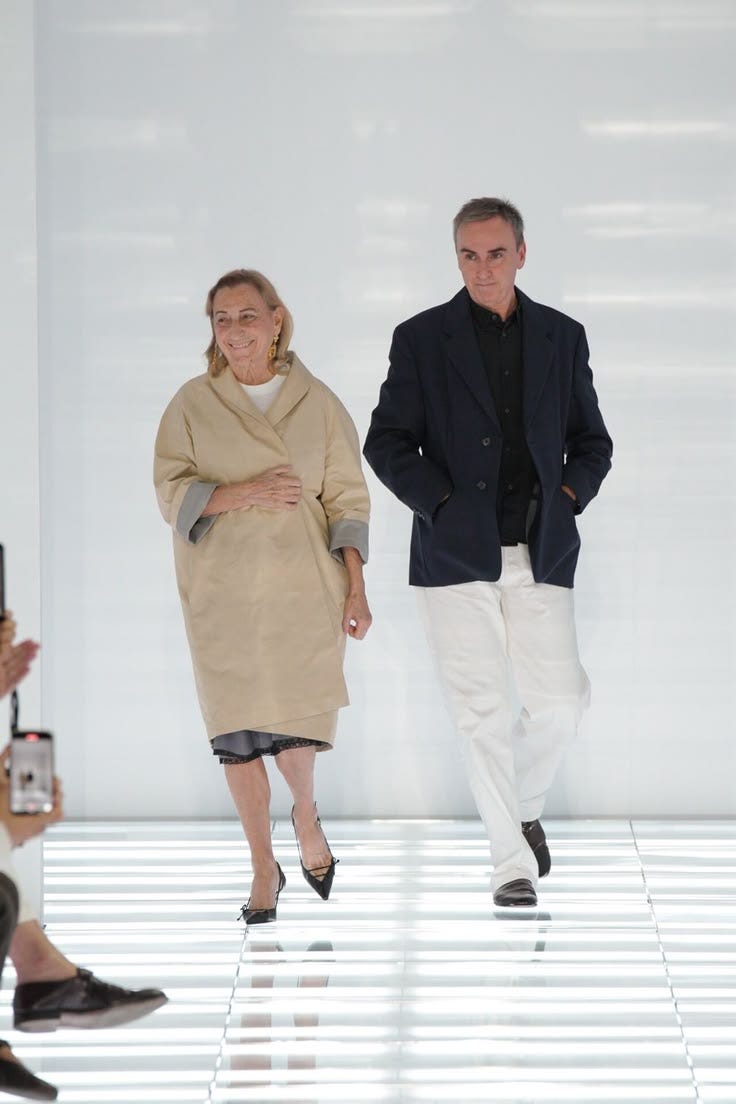
Unlike many luxury brands that rely on spectacle or seasonal trends, Prada’s approach is rooted in critical thinking. Miuccia Prada has often argued that fashion should provoke reflection rather than simply satisfy desire. Her collections resist straightforward beauty, instead embracing contradiction, ambiguity, and complexity. Raf Simons complements this philosophy with his own interest in youth culture, subcultures, industrial design, music, and modern art. Together, they have developed a creative language in which newness emerges through reinterpretation rather than reinvention.
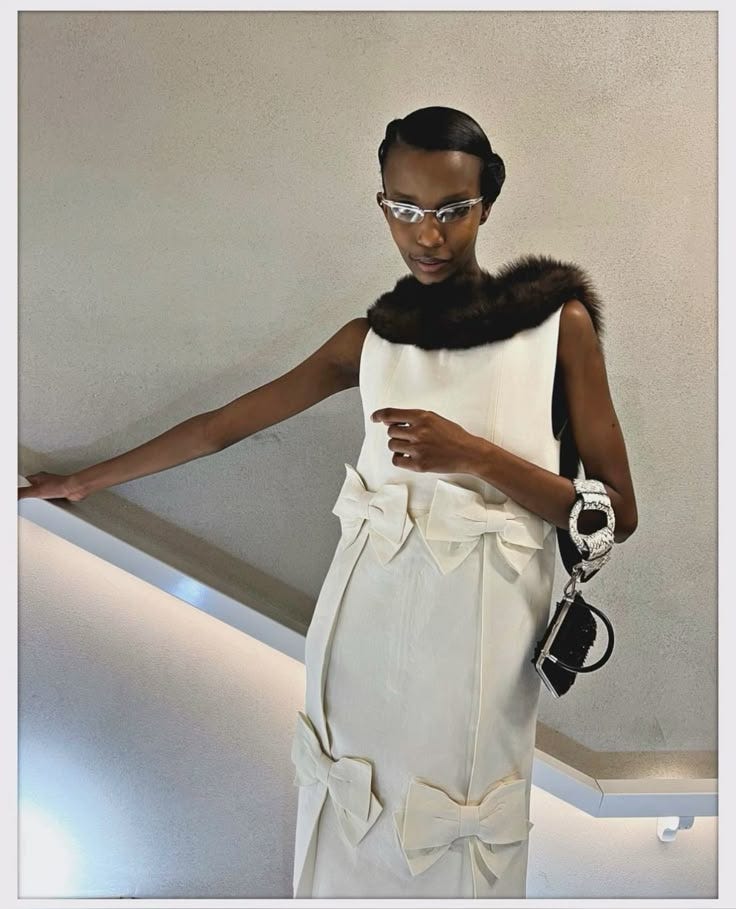
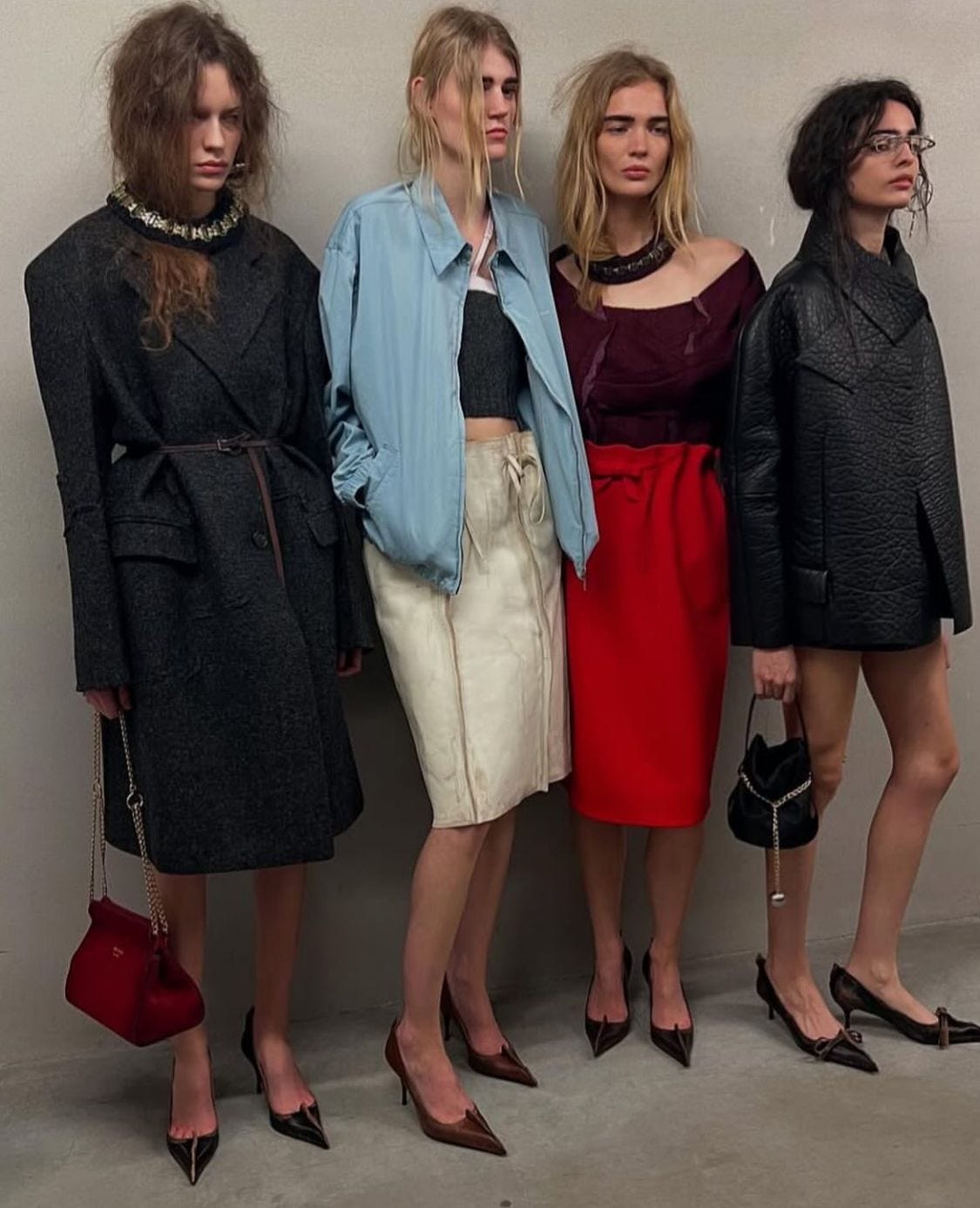
One of the most significant elements that brings newness to Prada is the concept of contradiction. Miuccia Prada has long described her fascination with opposing ideas: elegance versus awkwardness, femininity versus masculinity, luxury versus utility, tradition versus futurism. Rather than resolving these opposites, Prada allows them to coexist within the same garment. A perfectly tailored wool coat may be paired with nylon accessories; delicate embroidery may appear on utilitarian workwear; evening dresses may be worn with heavy boots. These juxtapositions create visual tension, forcing viewers to reconsider established ideas of beauty and sophistication.
This strategy reflects a broader postmodern approach to design. Instead of pursuing harmony, Prada celebrates complexity. Fashion becomes less about achieving perfection and more about revealing the contradictions that define contemporary life. The result is clothing that feels intellectually stimulating rather than merely decorative.
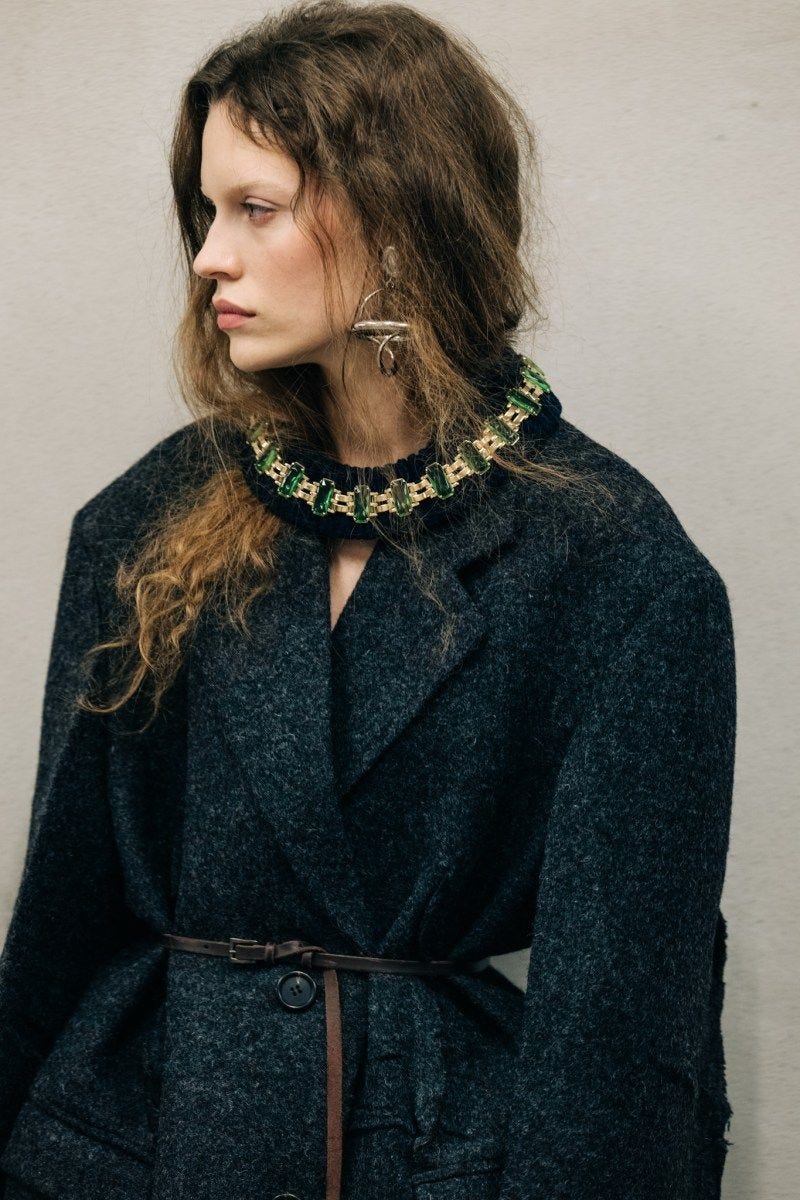
Another source of innovation is their redefinition of beauty. Traditional luxury fashion often emphasizes perfection, glamour, and idealized bodies. Prada deliberately challenges these conventions by embracing what Miuccia Prada famously described as the “ugly” or the “unattractive.” Colors may intentionally clash, proportions may appear awkward, silhouettes may exaggerate the body instead of flattering it. Rather than rejecting beauty altogether, Prada expands its definition, suggesting that beauty can emerge from discomfort, imperfection, and unexpected combinations.
This philosophy distinguishes Prada from brands that rely on conventional attractiveness. Instead of designing garments that simply please the eye, Prada creates clothing that demands attention because it resists immediate understanding. The viewer is encouraged to question why something feels strange before recognizing its elegance.
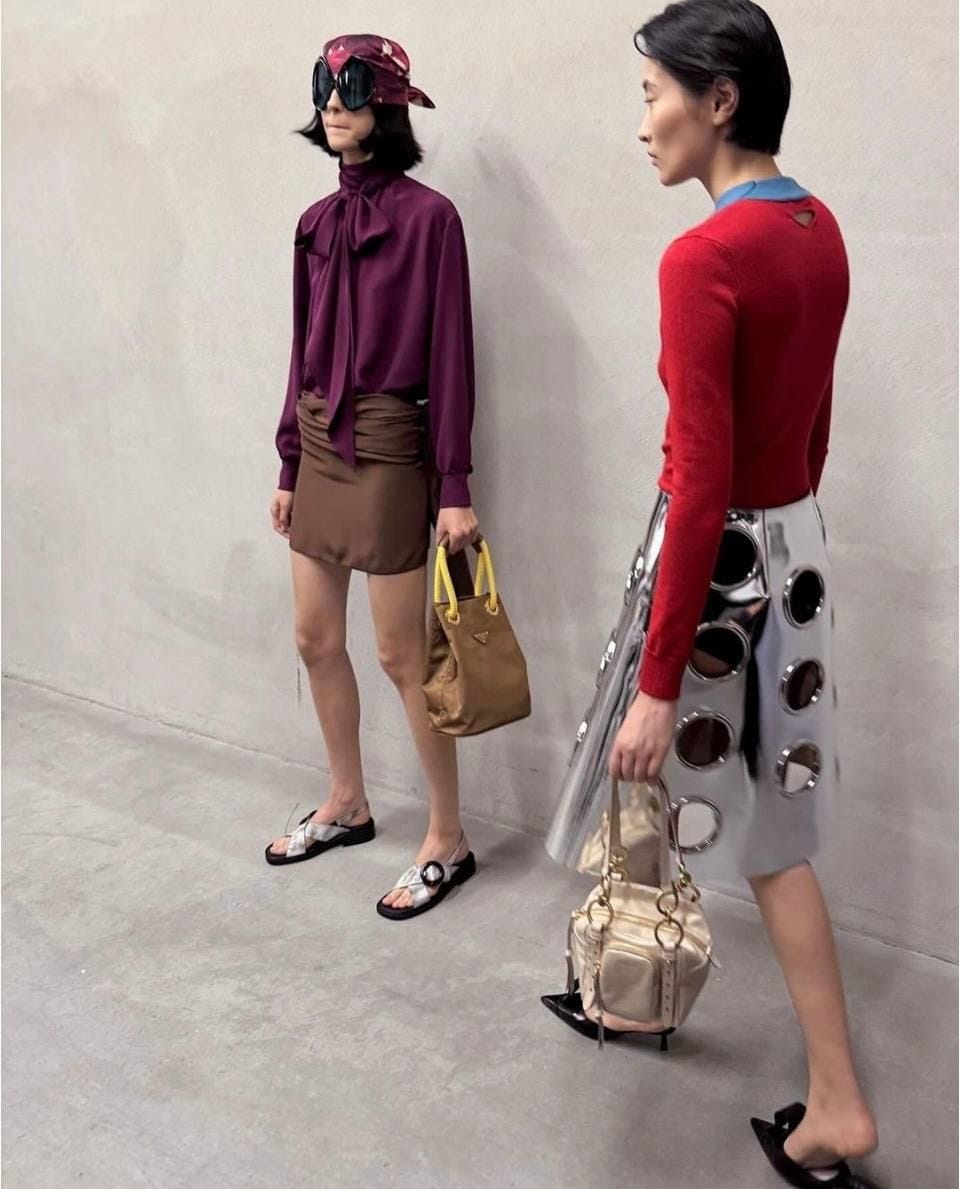
Their collaboration also introduces newness through the dialogue between generations. Miuccia Prada and Raf Simons come from different cultural and professional backgrounds. Miuccia’s work has always been shaped by political thought, intellectual discourse, and feminist ideas, while Simons emerged through youth culture, music, minimalism, and contemporary art. Their partnership therefore becomes a conversation between different experiences of modernity.
Importantly, this collaboration is not based on compromise but on productive tension. Instead of blending their styles into a uniform aesthetic, they preserve their individual perspectives. Collections often reveal traces of both designers simultaneously: Miuccia’s fascination with historical references and irony alongside Simons’ architectural precision and emotional minimalism. This creative exchange generates originality because each designer continually challenges the assumptions of the other.
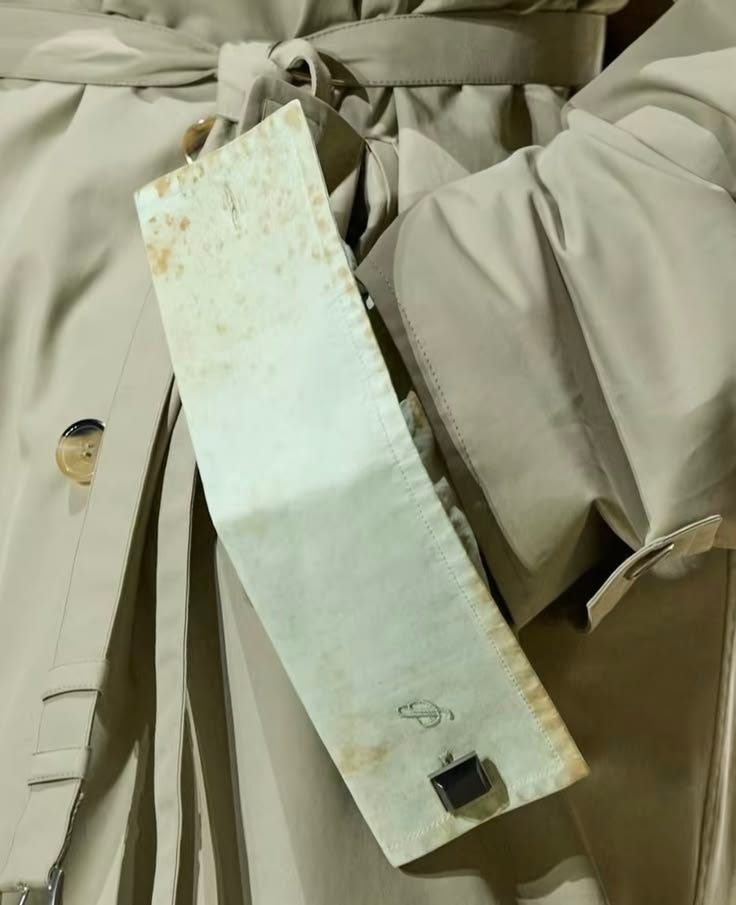
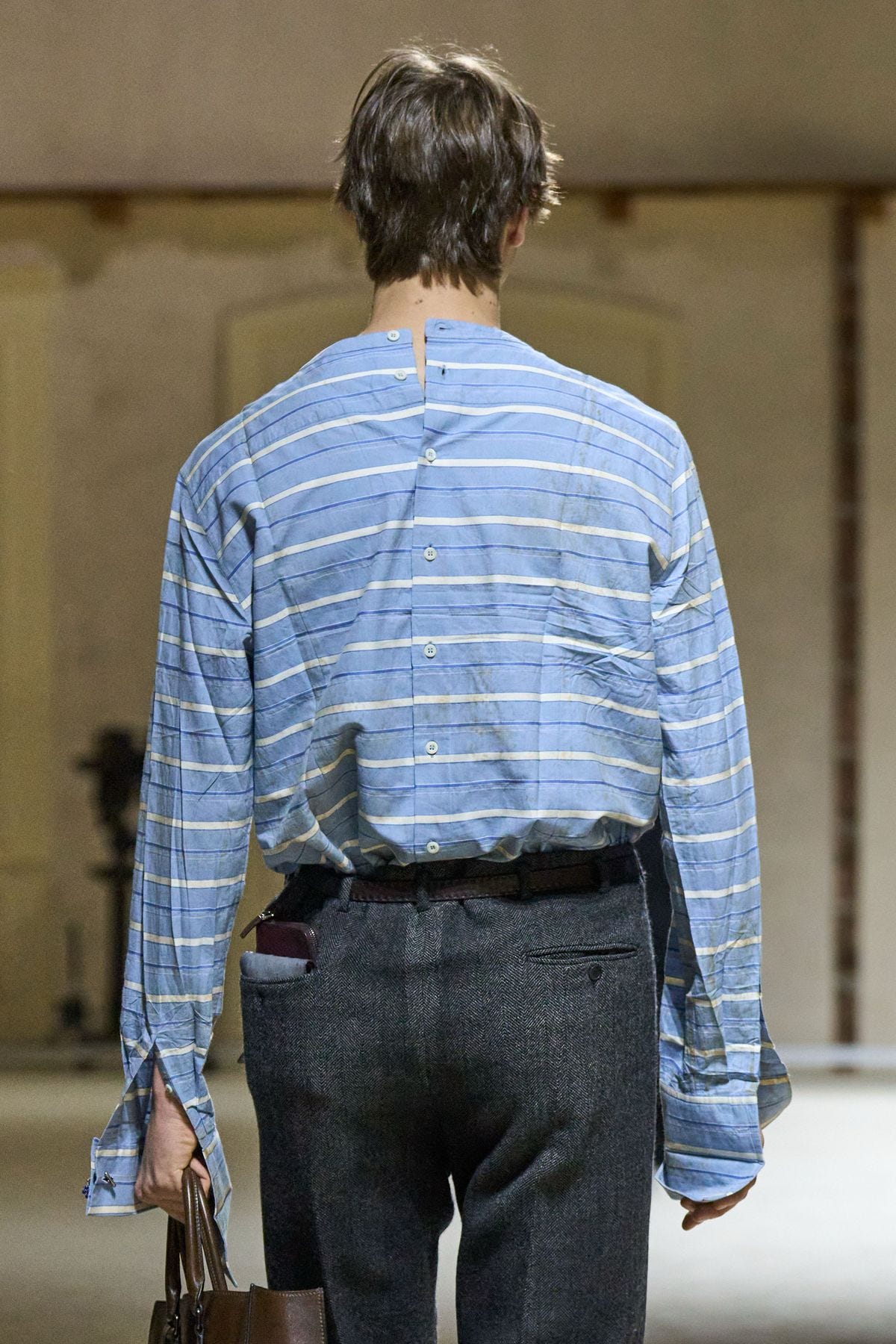
Newness also appears through their reinterpretation of historical dress. Prada rarely invents completely unfamiliar garments. Instead, it revisits archetypes—school uniforms, military jackets, bourgeois tailoring, workwear, knitwear, and evening dresses—and transforms them through unexpected materials, proportions, or styling. This process demonstrates that innovation does not necessarily require inventing new forms but can emerge from changing the context in which familiar forms are understood.
For example, uniforms, traditionally associated with conformity and discipline, become expressions of individuality through unusual proportions or luxurious materials. Classical tailoring is softened by technical fabrics, while traditionally feminine garments are stripped of decorative excess. In this way, Prada constantly negotiates between memory and modernity.
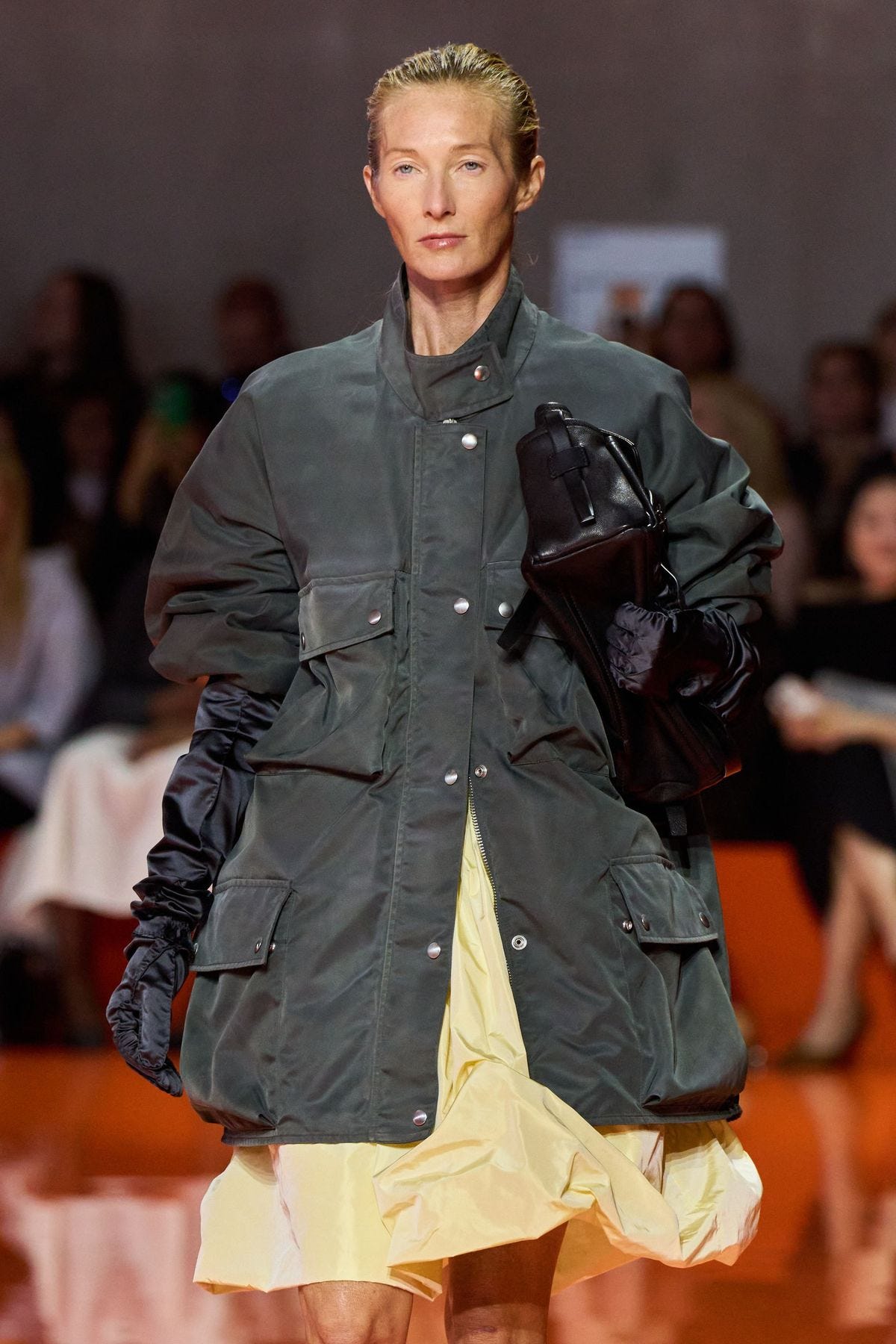
Material experimentation represents another important dimension of Prada’s creative process. Since the late twentieth century, the brand has challenged conventional definitions of luxury through its use of industrial materials, particularly nylon. Originally associated with practicality rather than prestige, nylon became one of Prada’s most recognizable signatures. This decision transformed perceptions of luxury itself by suggesting that value lies not only in rare materials but also in innovative design.
Equally significant is their treatment of silhouette and proportion. Instead of following the body naturally, Prada often creates garments that reshape it. Oversized tailoring, exaggerated shoulders, elongated sleeves, cropped jackets, and unconventional layering all disrupt familiar proportions. These alterations encourage the wearer to experience clothing differently, emphasizing movement, volume, and architectural form rather than conventional fit.
Such experimentation reflects the influence of architecture and industrial design within Prada’s creative vocabulary. Garments function almost as constructed spaces rather than simple coverings for the body. Fashion becomes an exploration of form, structure, and spatial relationships.
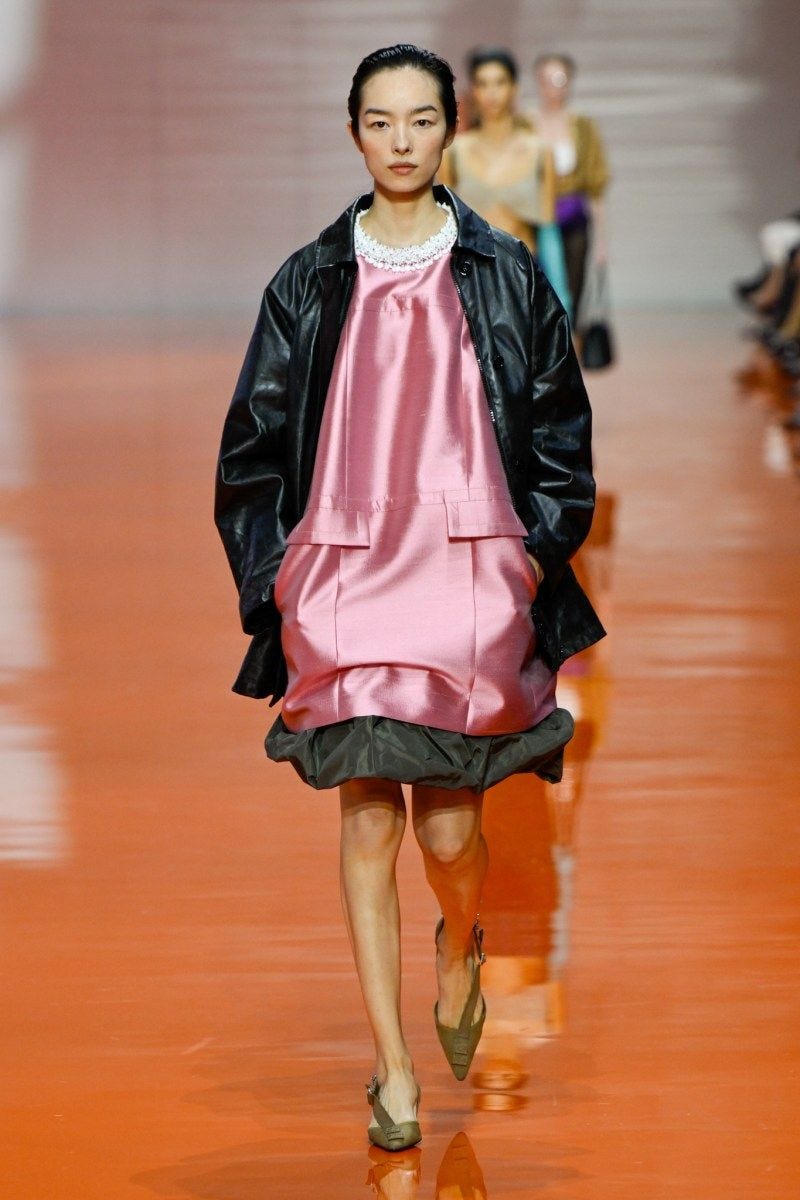
Another defining characteristic of their work is the emphasis on emotion over trend. Many fashion brands respond directly to market demand or social media aesthetics, producing collections designed for immediate visual impact. Prada often moves in the opposite direction. Their collections ask emotional and philosophical questions: What makes clothing meaningful? How does dress shape identity? How do garments communicate vulnerability, authority, intimacy, or uncertainty?
This approach explains why Prada’s collections frequently become more appreciated over time than immediately after their presentation. Rather than offering instant gratification, they invite continued interpretation. Newness therefore becomes intellectual rather than purely visual.
The runway itself functions as another medium for innovation. Prada’s fashion shows are conceived as immersive environments in which architecture, sound, lighting, and performance contribute equally to the narrative. Minimalist interiors, industrial materials, domestic settings, or surreal environments transform the runway into an extension of the garments’ ideas. Fashion is presented not simply as clothing but as part of a broader cultural conversation.
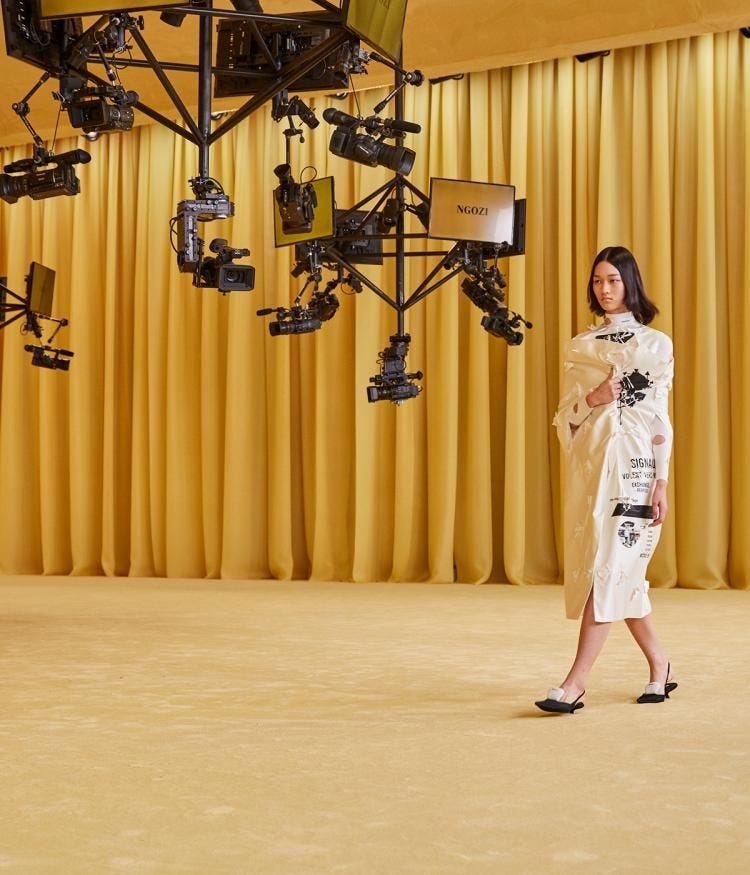
Perhaps the most radical contribution of Miuccia Prada and Raf Simons is their rejection of the assumption that newness requires constant disruption. Instead of chasing novelty, they cultivate evolution. Every collection develops ideas introduced previously, refining rather than abandoning them. This slower process contrasts sharply with today’s accelerated fashion cycle and demonstrates that innovation can arise through continuity, reflection, and sustained experimentation.
Ultimately, Prada’s newness lies not in producing clothes that have never been seen before, but in changing the way fashion is perceived. Through contradiction, intellectual inquiry, material innovation, historical reinterpretation, collaborative dialogue, architectural thinking, and emotional storytelling, Miuccia Prada and Raf Simons have established a model of creativity that resists superficial trends. Their work suggests that the future of fashion is not defined by endless novelty but by the ability to rethink existing ideas in increasingly meaningful ways. In doing so, Prada continues to demonstrate that the most enduring innovation is not visual shock, but the transformation of how we understand clothing, beauty, luxury, and identity.
xx
No posts
Comments
Nothing yet. Say the first thing.
Sign in to join the conversation.