
Thanks for coming back to DBake Squared. Dave unfortunately wasn’t able to put out his piece last week—things came up—so I’ll be moving along with discussion of Dune, this time the themes in Villeneuve’s movie. (Parts I and II discussed the book.) I’m going to break this up into a number of smaller posts. This week will briefly summarize the story Villeneuve tells about Paul. Subsequent weeks will focus on what got lost, with some thoughts about the nature of adaptation.
So, first of all, the movie is amazing. Yes, it changes the story in substantial ways. Most of the changes are good, I think. They help emphasize themes in the story that earlier adaptations have missed. At the same time, the movie captures these themes by simplifying. Quite a bit is lost in the translation from one medium to another. I’m (mostly) okay with that. Villeneuve and his team obviously understand the book well, and in that respect I think the movie is comparable to an on-the-surface even less faithful adaptation: Bladerunner. That movie changes almost everything about the original novel, Do Androids Dream of Electric Sheep, but it does so in a way that emphasizes the themes and ideas for a different medium.
The changes also give both directors more freedom to visually reimagine the story, giving us shots like this:

Or this:
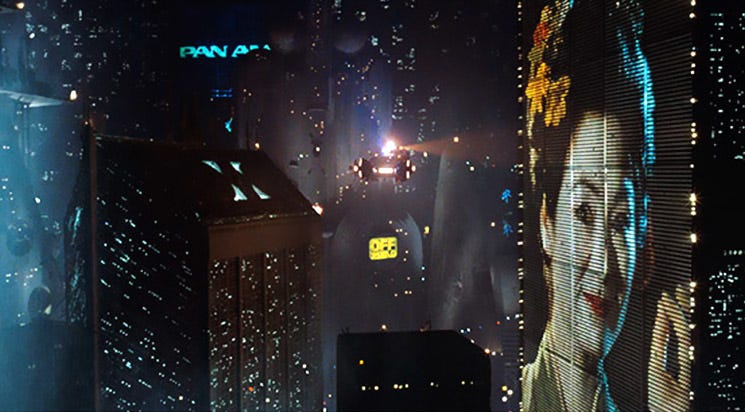
And I think that is the way the movie succeeds most spectacularly. Villeneuve is a visual genius and this is an amazing visualization of the world of Dune.
As an aside, the David Lynch Dune has, whatever its faults (and oh boy does it have faults), some great visualizations as well:
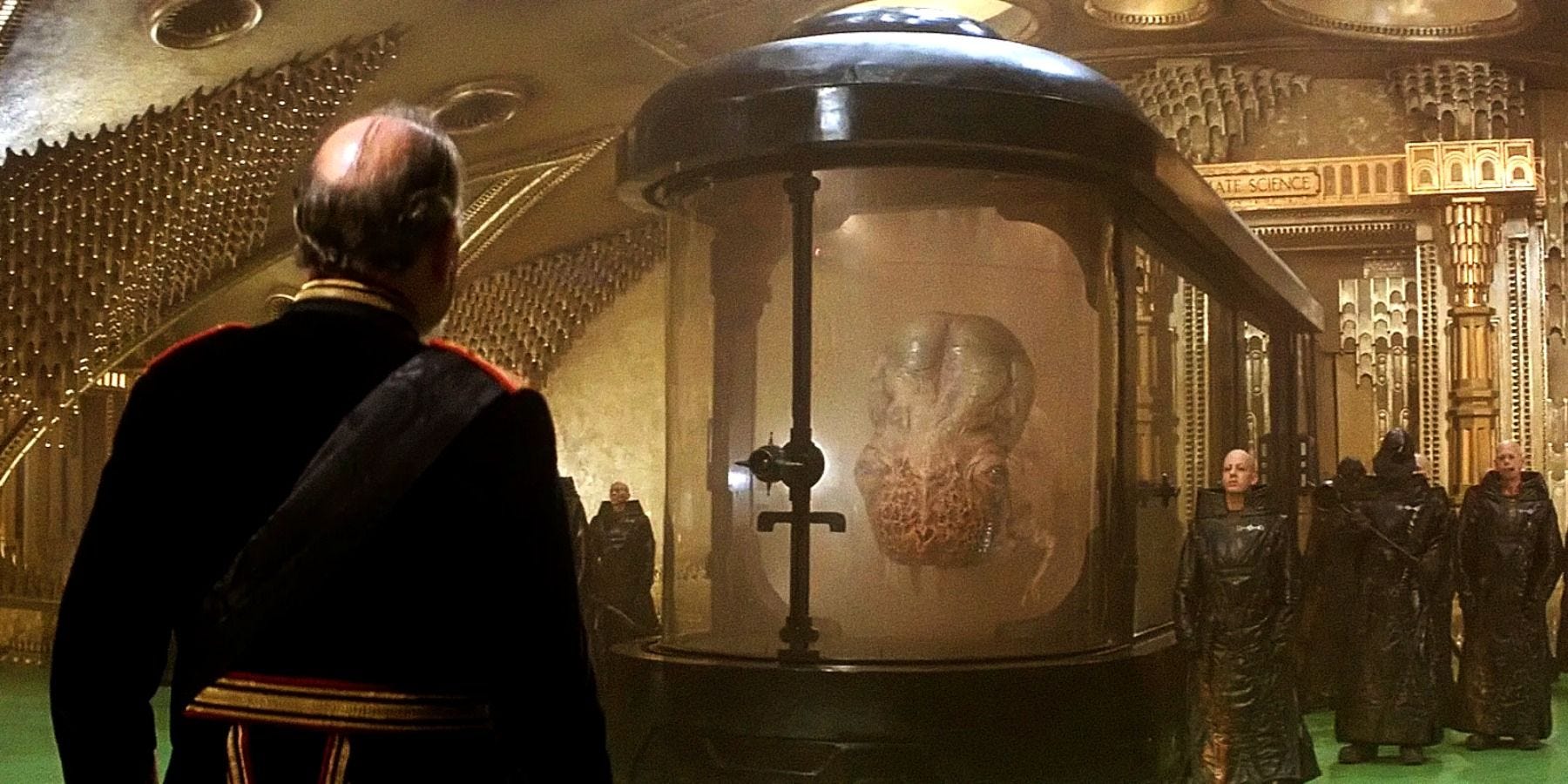
But the Dune universe is one in which every gain is also a loss. And so, as much as I loved it, there was a part of me that regretted the changes. I knew they were coming. I knew when Dune, Part One was announced years ago that they were coming. I wanted to see the real ending of the book on screen. I want Paul, his eyes turned to blank cobalt pits, having fully embraced his nature as the Kwisatz Haderach, his choices alien to any human value system, suddenly incomprehensible to his mother and to Gurney, taking control of the universe by threatening to kill himself and the Fremen, because that will kill the Guild as well, while his followers watch on, cyphers staring out from blue pits of their own. I want the Dune that still includes the best scene of the book:
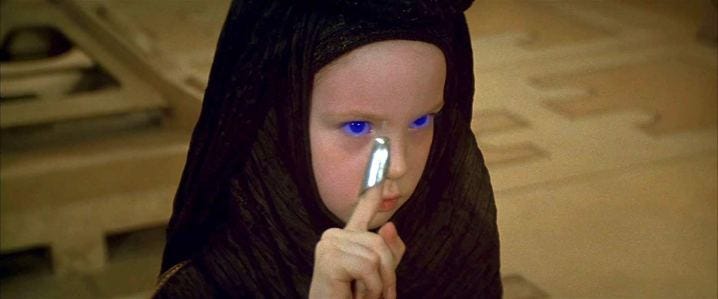
I want a talking two-year-old who sees through the vanity of human civilization, kills her grandfather, marks the enemy dead and wounded for water recovery, and is still (more or less) one of the heroes. I didn’t just want Jessica to tell me about the beauty and the horror: I wanted to see it for myself.
And yeah, “You die like an animal,” coming from Paul, is alright. But I feel like they were trying a bit too much, insisting, no, no, we can still go hard, even if we’re dropping Alia. And, you know, it’s fine. But it’s not the same. The killer psychic baby with the genetic memory of all her ancestors is Dune.
But, I knew it wasn’t going to happen like that. And I don’t blame Villeneuve. It’s really modern audiences that are to blame. You all. I just wanted to watch a story about a superhuman being who transcends good and evil and his precocious, adorable, two-year-old murder baby of a sister, but it turns out everyone is just too woke for that nowadays.
Some readers may be wondering, was there some period in the past when movie audiences weren’t too “woke” for that story? So this is where I think it would be useful to compare Villeneuve’s Dune with the now mostly forgotten 1928 adaptation. This movie has its own weaknesses as an adaptation. Herbert’s novel, for example, really grapples with the idea that there could be something problematic about a superhuman who transcends good and evil, whereas movie audiences in the 1920s seem to have taken an attitude of, “Of course, just like that Nietzsche fellow said. You know, that’s how human evolution is supposed to work.”
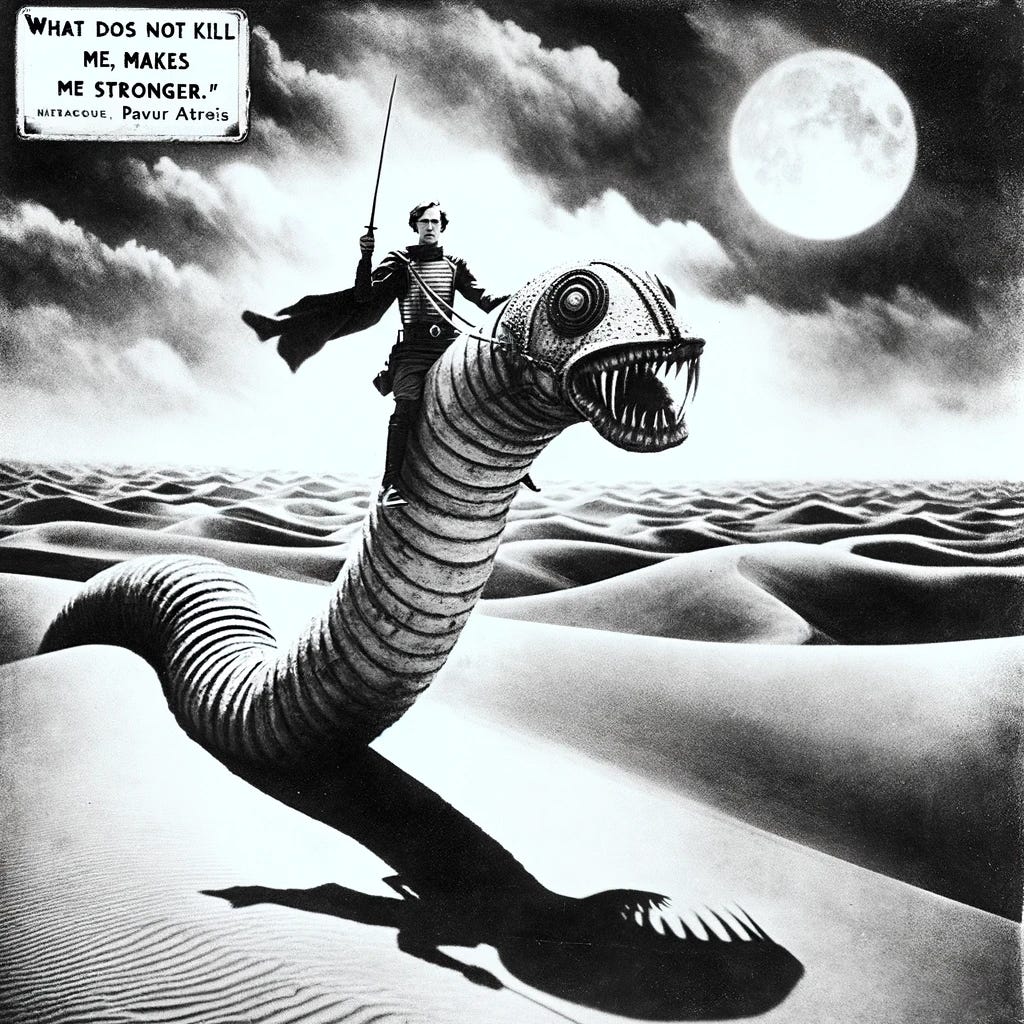
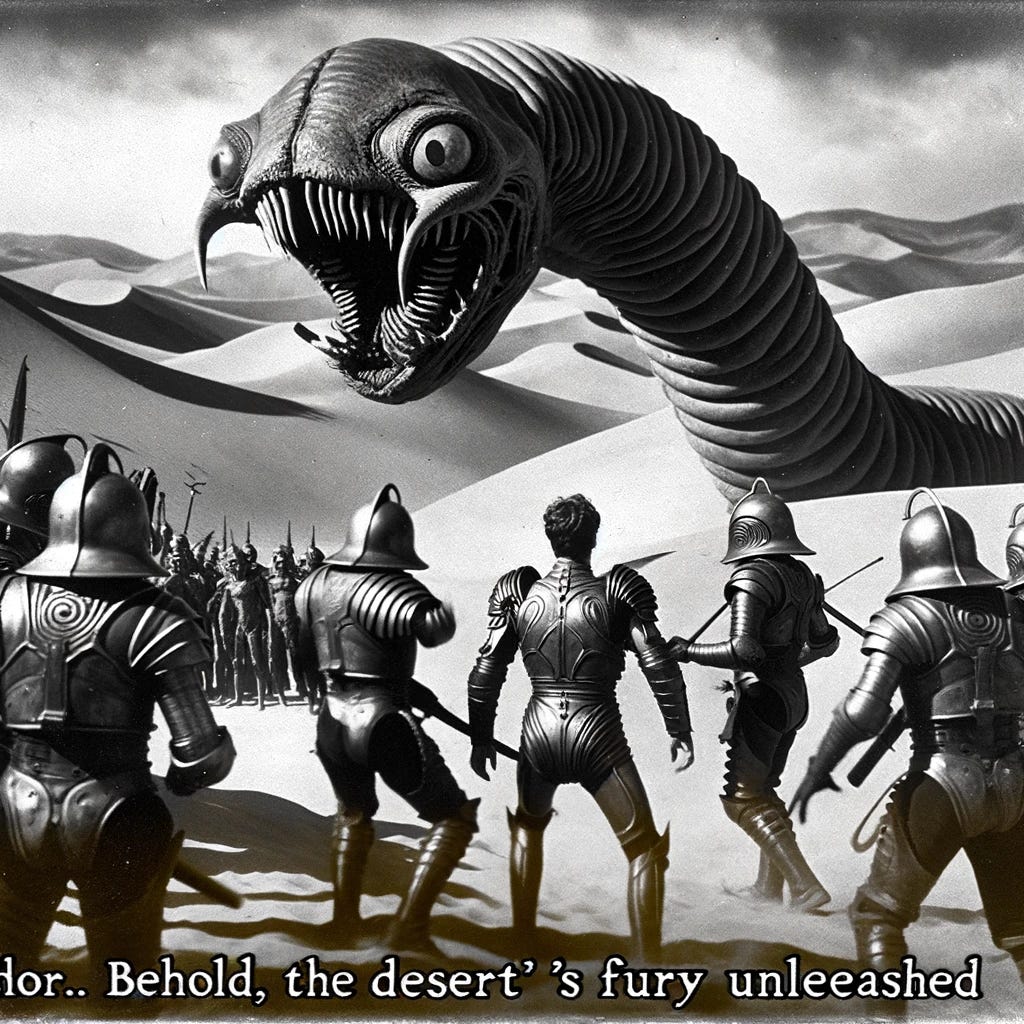
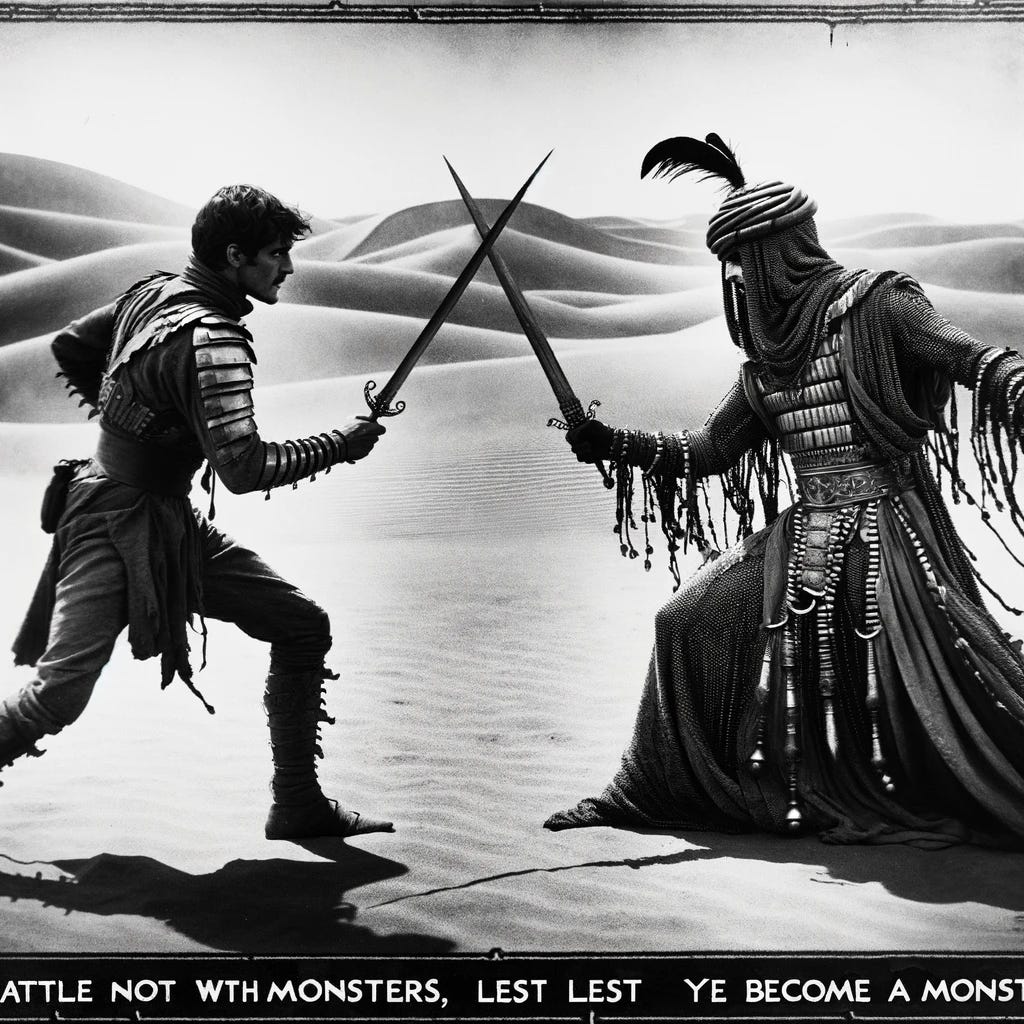
Now there is a conspiracy theory going around that this movie never existed. Usually people will say things like, “How come there is no record of this movie anywhere?” Or, “How could there be a 1928 adaptation of a book written in the 1960s?” Or, “These are obviously images made on AI.”
While these questions make sense if you don’t know much about the state of filmmaking in the 1920s, they actually betray profound ignorance about the history of movies. After the success of Fritz Lang’s Metropolis, studios were rushing to put out more science fiction, especially serious, intellectual sci-fi. While there’s tons of that now, the situation in the 1920s was actually very different. As hard as it can be to believe in 2024, in 1927 the state of sci-fi screenwriting was so primitive that it was actually cheaper to build a time machine, travel to the future and steal sci-fi books for adaptation, than to hire a writer to come up with something original.
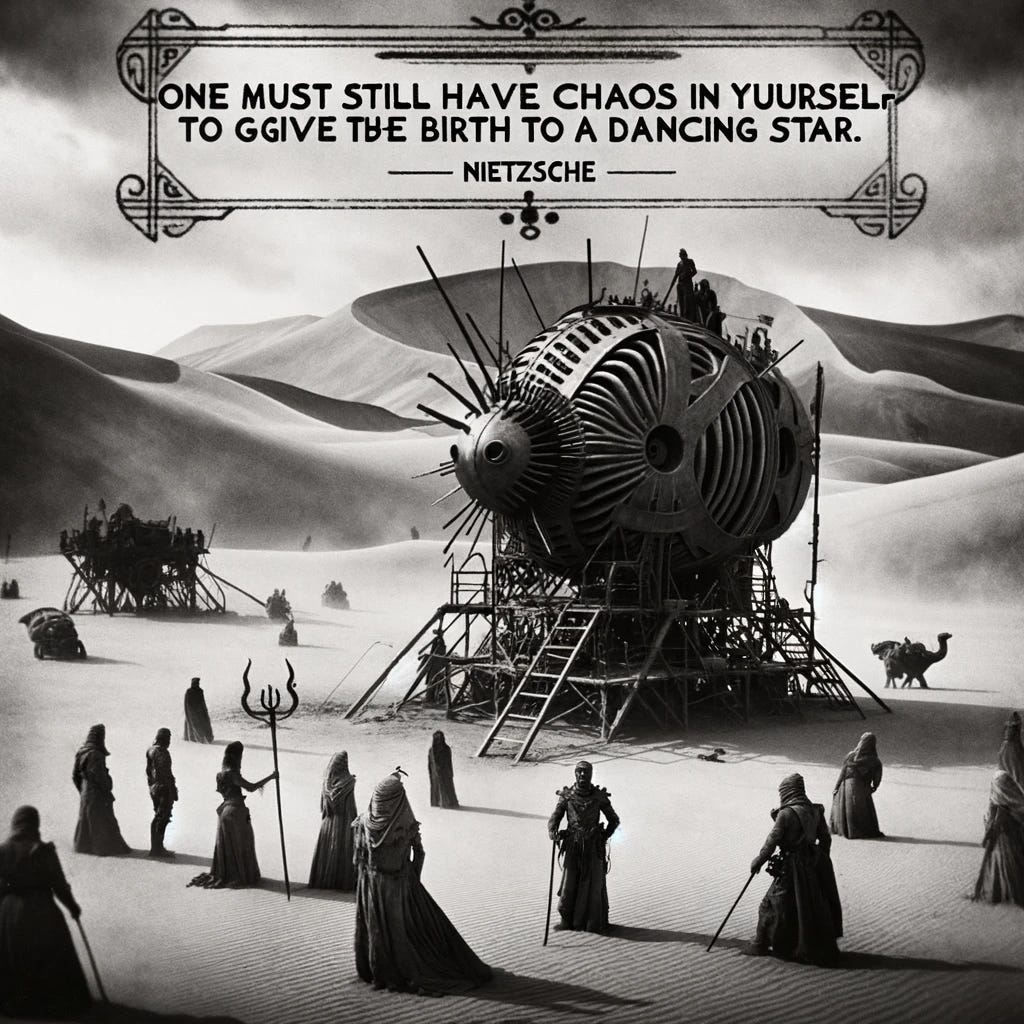
Reviews were ecstatic. With its themes of eugenics, manipulating a local religion in order to recruit an army of super-soldiers and conquer the galaxy, marrying a princess for political reasons while keeping your girlfriend as a concubine, and revenge, Dune was declared to be “a new moral tale for the 20th century, one which will inspire the ambitious young man of today to avoid the effeminacy of civilization for the harsh lessons of the wilderness, until he too can become the Kwisatz Haderach of tomorrow.” H.L. Mencken called it required viewing for the whole country.
But while the movie could seem like a tale of heroism in the 1920s, by the 1930s, its message had come to seem less appealing, perhaps even sinister, and audiences began to prefer less problematic films, like Gone with the Wind. Eventually it was forgotten, except among a few film buffs, impressed by some of its visuals as well as its status as an example of 1920s studio time-travel filmmaking, and curious whether it had any influence on the even more impressive 1950s adaptation.
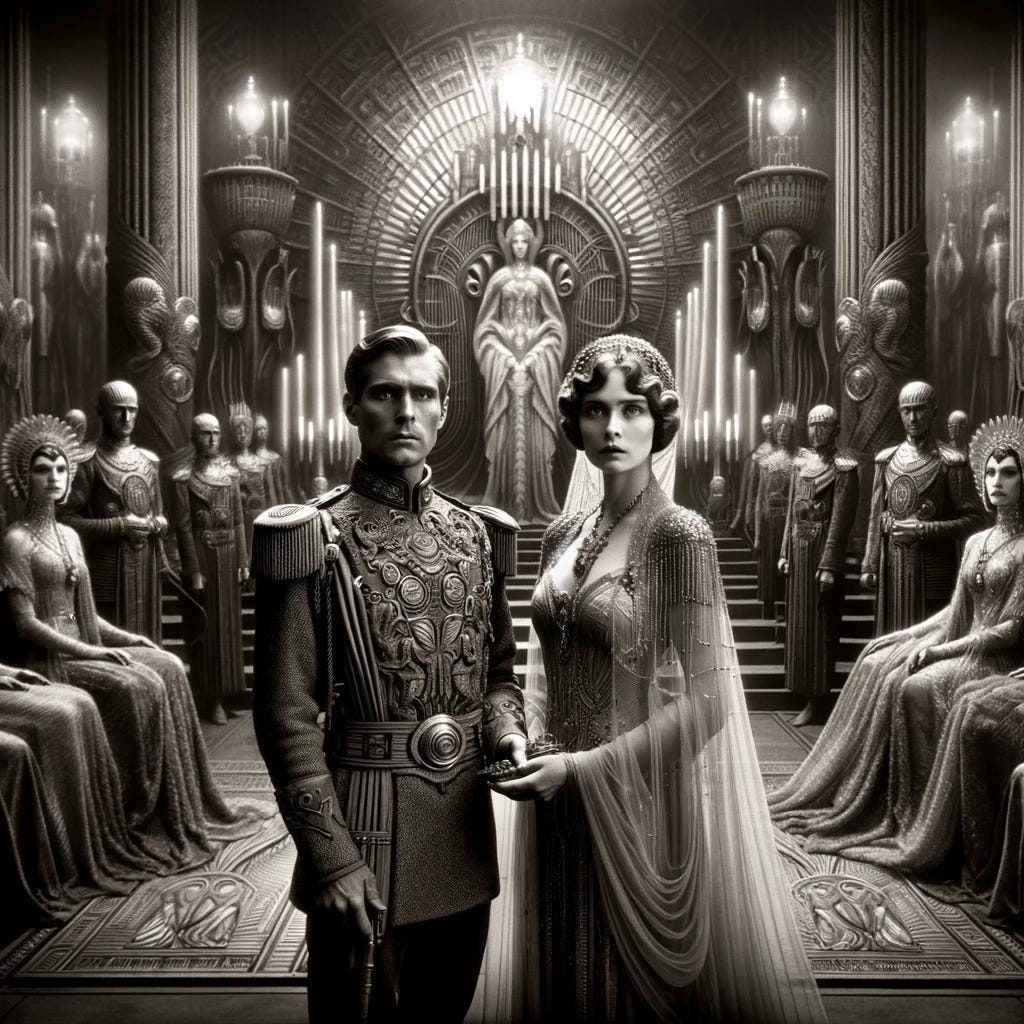
That’s enough history. I’ll move on to discussing how Villeneuve’s movie changes some of the ideas at work in the book, with occasional comparison to the silent-era adaptation for reference. I’ll start with what Villeneuve’s version tries to do in this post. A post next week will discuss what gets lost in the process.
As I wrote in a previous post, I think the new movie simplifies the story, turning it into a conventional tragedy, along the lines of The Godfather. I still think this loses much of what makes the first book unique; it is, nonetheless, closer to the book than previous adaptations, which tell the story as a victory of good over evil. Paul is much closer to a tragic hero than a victorious one, and the ending is certainly supposed to have tragic dimensions. And, as noted earlier, the second book, Messiah, tries to present Paul as an almost Oedipus-like figure, trapped by fate and blinded for crimes for which he both is and is not responsible.
Villeneuve’s movie presents Paul’s tragic tale as much closer to Michael Corleone’s. And I think this works. In The Godfather, recall, Michael is trapped in an impossible position. After the attempted assassination of his father, his choices are either to murder his father’s rivals, or wait for his father, and perhaps his entire family, to be killed. He doesn’t, in any real sense, have a choice. As the story progresses, as his brother, Sonny, is murdered, for example, it becomes clear that not only will he have to be a murderer, but he will have to lead the crime family. Ultimately, because he is intelligent and fearless—because he is heroic—he is able to wipe out the rival mob families and establish safety for his own. But this all comes at a price. He becomes cold, ruthless, isolated, power-hungry and takes more and more pleasure in revenge. The second movie completes his fall: he joined the mob to protect his family, but ultimately he destroys that family, culminating in the murder of his own brother.
Villeneuve retells Dune as effectively the same story, only now with an added layer of the problems of anti-colonialism. Paul’s father and his supporters have been murdered by the Harkonnens. The latter are now stripped of all of their signs of civilizational decadence, and distilled down to an essence of satanic cruelty—the attendants at their gladiator fight even wear horns and prance around like demons.
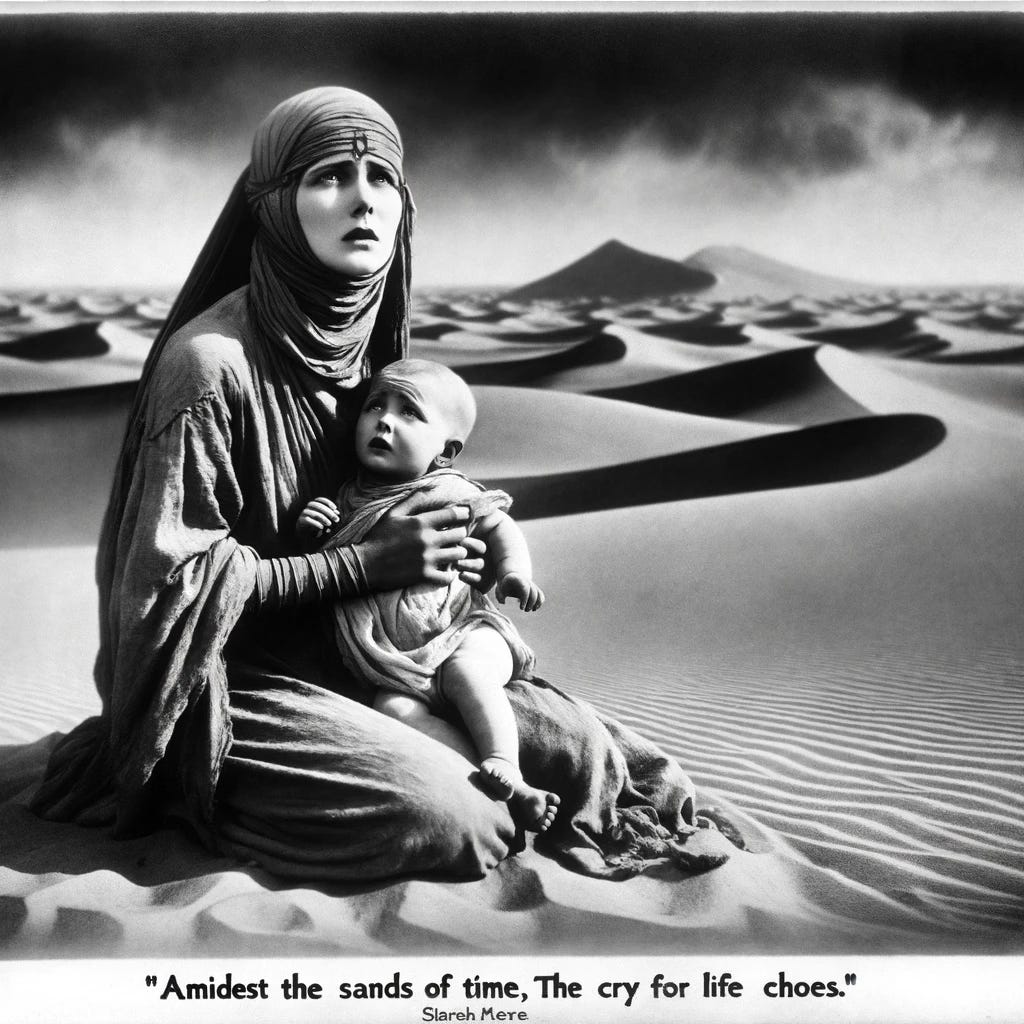
The same Harkonnens have begun a genocidal war against the Fremen, who have taken Paul and his mother in. Paul learns from the Fremen, and they learn from him, and so they are able to wage an effective guerrilla war against their enemies. Paul also comes to identify with the Fremen, with their ideals of equality and freedom. But the Harkonnens adopt even more brutal methods, and so Paul faces a similarly impossible choice. He can let the Harkonnens wipe the Fremen out, or he can exploit an old religious myth, taught to the Fremen precisely so that they could be better controlled: he can pretend to be their messiah and use the dark religious energies latent among them to defeat the Harkonnens.
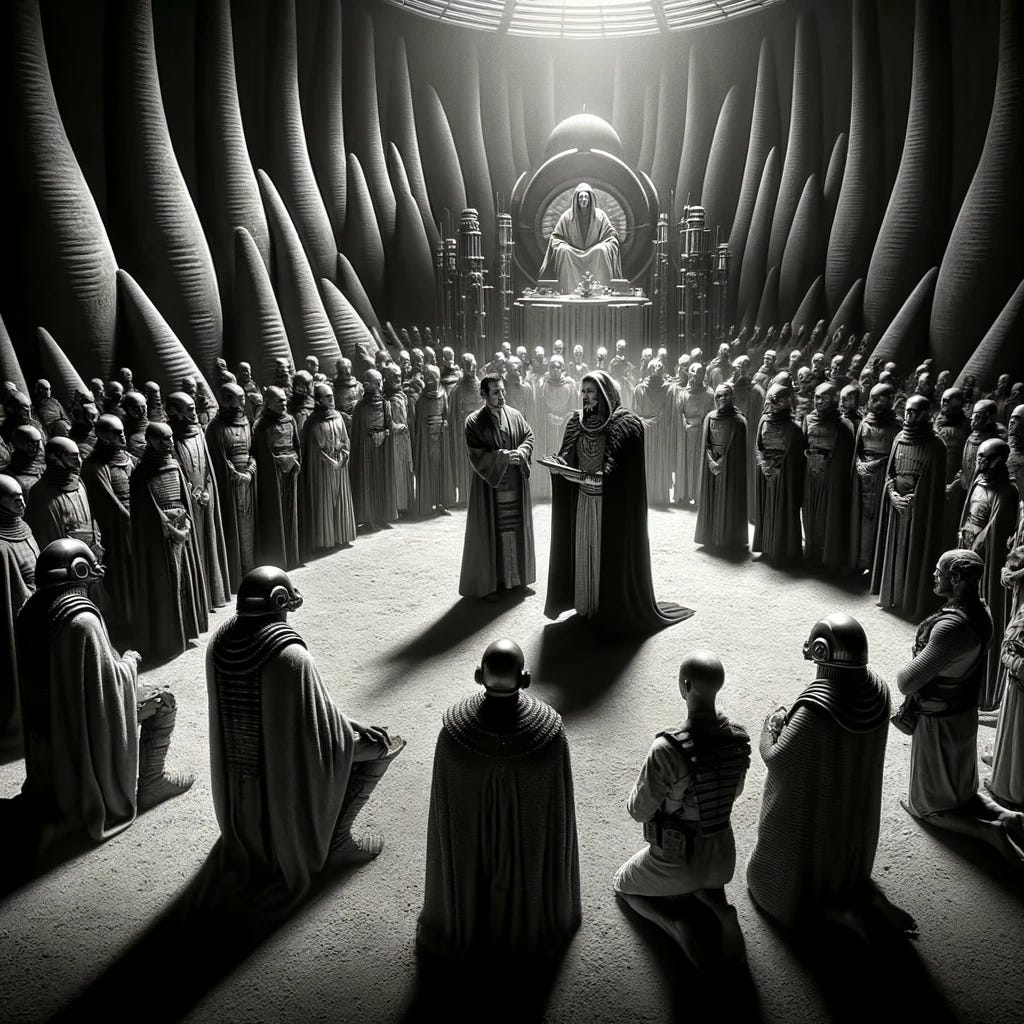
And it works. The Harkonnens are defeated. But it also kills the dream of true equality and freedom. The Fremen now see Paul as their God-ordained emperor. What’s more, Fremen zealotry will result in a bloody holy war, one which Paul must embrace to solidify his precarious rule.
This is an excellent pairing down of the story, one that focuses on the revenge saga and the complex feelings about decolonization that inform the book. The book is animated by a sense that the Fremen deserve their freedom—they deserve it if anyone does. And yet their freedom may be a horrible thing for the rest of the universe, even if the rest of the universe is grotesque and corrupt, and certainly in no way worthy of keeping them in subjugation. The movie drops some of these anxieties. It has to. In the book, the real source of the anxiety is that the Fremen are hyper-violent super-warriors, thanks to generations spent in the brutal desert of Arrakis. But presenting that anxiety would have been impossible. The movie would have had to spend much more time getting the audience to sympathize with that culture despite its violence, and frankly there’s a substantial risk that the film’s message would simply come across as racist.
But there are other anxieties about the process of decolonization that are still alive and with us. Yes, the Fremen deserve their freedom, but is there a way for that freedom to happen that doesn’t depend on and further empower violent religious fanatics? The movie also emphasizes a more contemporary anxiety, one that is in the books, I think, though you have to look harder for it. Official colonial powers left the Middle East long ago, and yet western nations continue to decide much of the region’s politics. Will the supposed liberation of the Fremen simply mean trading one set of foreign masters for another—trading Harkonnen for Atreides? Or, since the movie is explicit about Paul’s ancestry, trading Harkonnens for other Harkonnens, Harkonnens who are better at coopting Fremen culture.
This isn’t quite the same as Frank Herbert’s story. But it’s close. Paul’s victory is a brutal, ambivalent thing, something earlier adaptations missed. The filmmakers get the importance of Paul’s Harkonnen ancestry in the story, something else that earlier adaptations missed. The scene where Paul finally convinces the Fremen that he is their messiah is terrifying, just as the Paul of the final chapters is terrifying. The Lynch and the Sci-Fi adaptations completely lose this. At the same time, the movie never fully abandons Paul. He may be hungry for power and revenge, but he is also trapped, as the only alternative to holy war is, it seems, the extermination—or at least the endless subjugation—of his adopted people. He makes the wrong choice (maybe), but in his situation, who would make the right one?
No posts
Comments
Nothing yet. Say the first thing.
Sign in to join the conversation.