
No one else noticed her. She dashed past the window, a flash of steely grey catching my eye. Then with delicious accuracy she slowly opened her wings to sweep up to the branch, and landed in a dead stop. Pure, perfect, control.
I briefly imagined dropping from that window myself, wings hugged close for speed, then spreading them free to arc up through the glum cloud, away from the stuffy office.
January involved some pretty intense training at work, but the sight of that powerful Sparrowhawk darting through the car park was enough to remind me that no matter where you are, nature is close at hand, we just need to look, and be open enough to see.
Our gardens are one place where nature can be wholly accessible, no entrance fee, no travel, no opening hours involved. We can invite nature in with our actions, which can be as simple as providing a dish of water or a single bird feeder, or more complex, like choosing to grow specific wildlife friendly plants, or creating mini habitats, ponds and wild areas. It doesn’t have to happen all at once, and it can certainly evolve over time.
I believe it’s really important to see what you already have and work from there. Just to take some time in your outside space, to have a look and appreciate the wildlife already present. Then think about what might be missing, is there enough shelter, or nesting opportunities, is the space accessible or connected to the wider area? Once you know what you’d like to achieve, you can start taking small steps to get there, maybe make a gap or two under the fence to allow wildlife in, build up a little log pile in a quiet corner, or install a nest box. Have a look around a local garden centre for some plants - quick tip - when you visit a garden centre in spring and summer, keep an eye out for the plants that the bees and butterflies are actually using there - they will show you which plants and varieties they prefer. Then work from there, and repeat the process. If you already have a variety of nectar producing plants for example, what about adding caterpillar food plants to support the whole lifecycle. Gardens are always a work in progress, and making small changes and additions for wildlife really can make a big difference. In the UK our domestic gardens cover 502,757 hectares1, that’s (potentially) a lovely big nature reserve!
It was the RSPB’s Big Garden Birdwatch last weekend, I’ve taken part for many years now and always welcome the excuse to sit and watch the garden for an hour. It’s really easy and fun to take part, you don’t need to be an expert. It’s not a competition, and it’s important to remember that in science, a nil result is still a result - the Long-tailed tits that didn’t appear in your hour may well be over at your neighbours down the road, hopefully they are counting too, this helps to give an indication of population densities, so don’t worry if you feel like you are ‘missing’ some birds in your count!
I spent an enjoyable and relaxing hour perched upstairs to get a good view, with a nice hot coffee, here are my results:
Blackbird: 2
Blue tit: 2
Goldfinch: 2
Great tit: 1
Greenfinch: 3
Robin: 1
Much quieter than normal. It has got me thinking about what I can do to improve the space for wildlife this year. It’s only a tiny garden, but I already have a hedgehog house, log pile/brash heap (ever expanding), solitary bee house, nest box (used in alternating years by Great and Blue tits) and I grow a mix of native and non-native plants to provide nectar, pollen and seed. I’m lacking in the water department, with no pond, but I’m hesitant to install a full pond in a garden that I might not be care taker of long term, perhaps I could create a boggy area instead? I’d also like to grow some caterpillar friendly plants too, so time for some research!
Later I sat in my hide, (well ok it’s just the shed actually), with my camera to try and photograph some of my visitors:
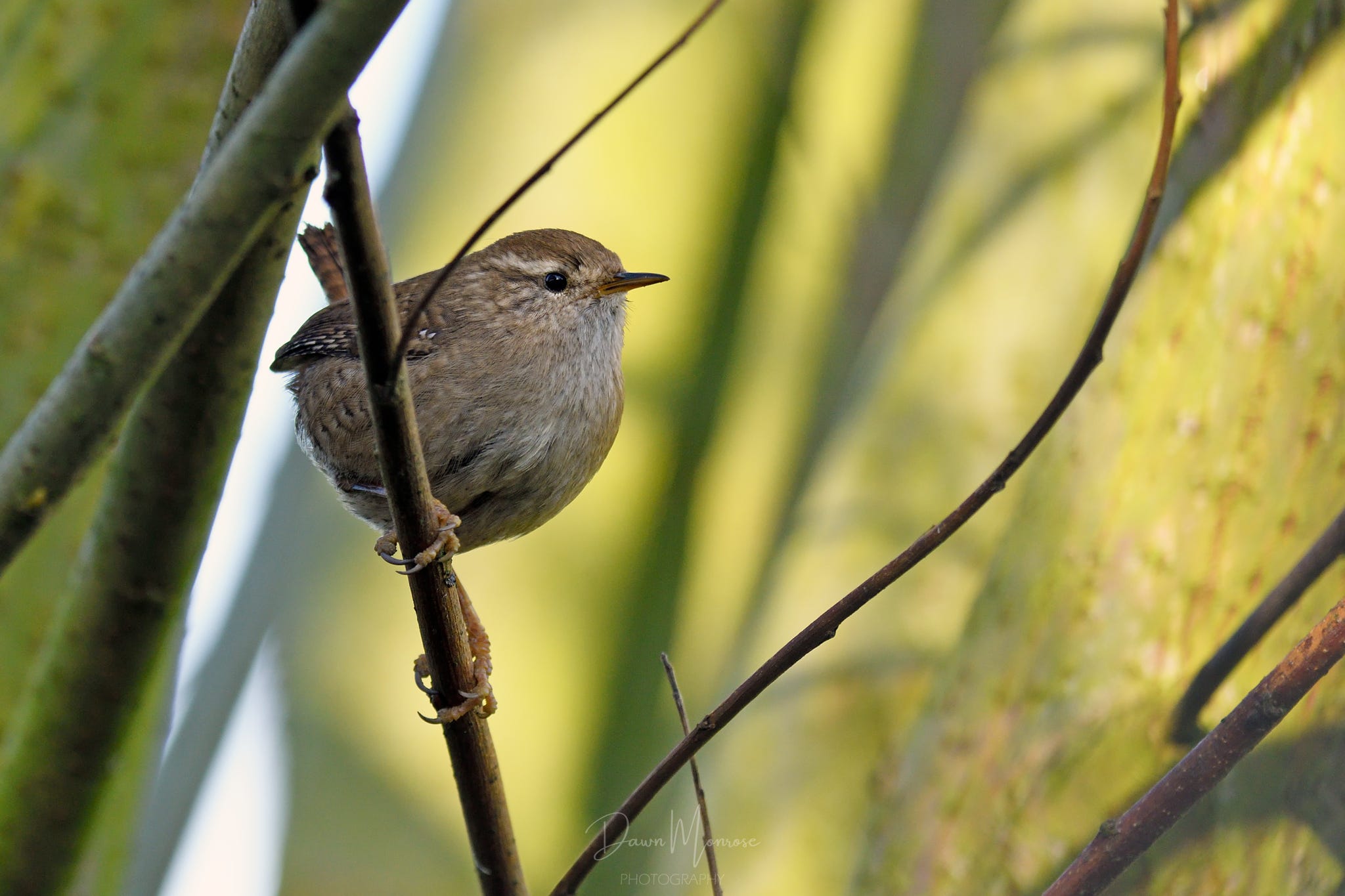
This little Wren popped out of the undergrowth to perch in the willow tree, I’m always amazed by how these tiny birds survive the winter. After about an hour I decided to head back indoors for a cuppa. Strangely quiet in the garden, and I’m not sure why, perhaps the local Sparrowhawk had been around, or maybe the birds are finding better offerings elsewhere?
Did you take part in the birdwatch? Leave a comment and let me know what species you saw!
Thanks so much for reading, please do like, share and leave a comment, I’d love to hear from you!
Until next time,
Dawn.
Comments
Nothing yet. Say the first thing.
Sign in to join the conversation.