
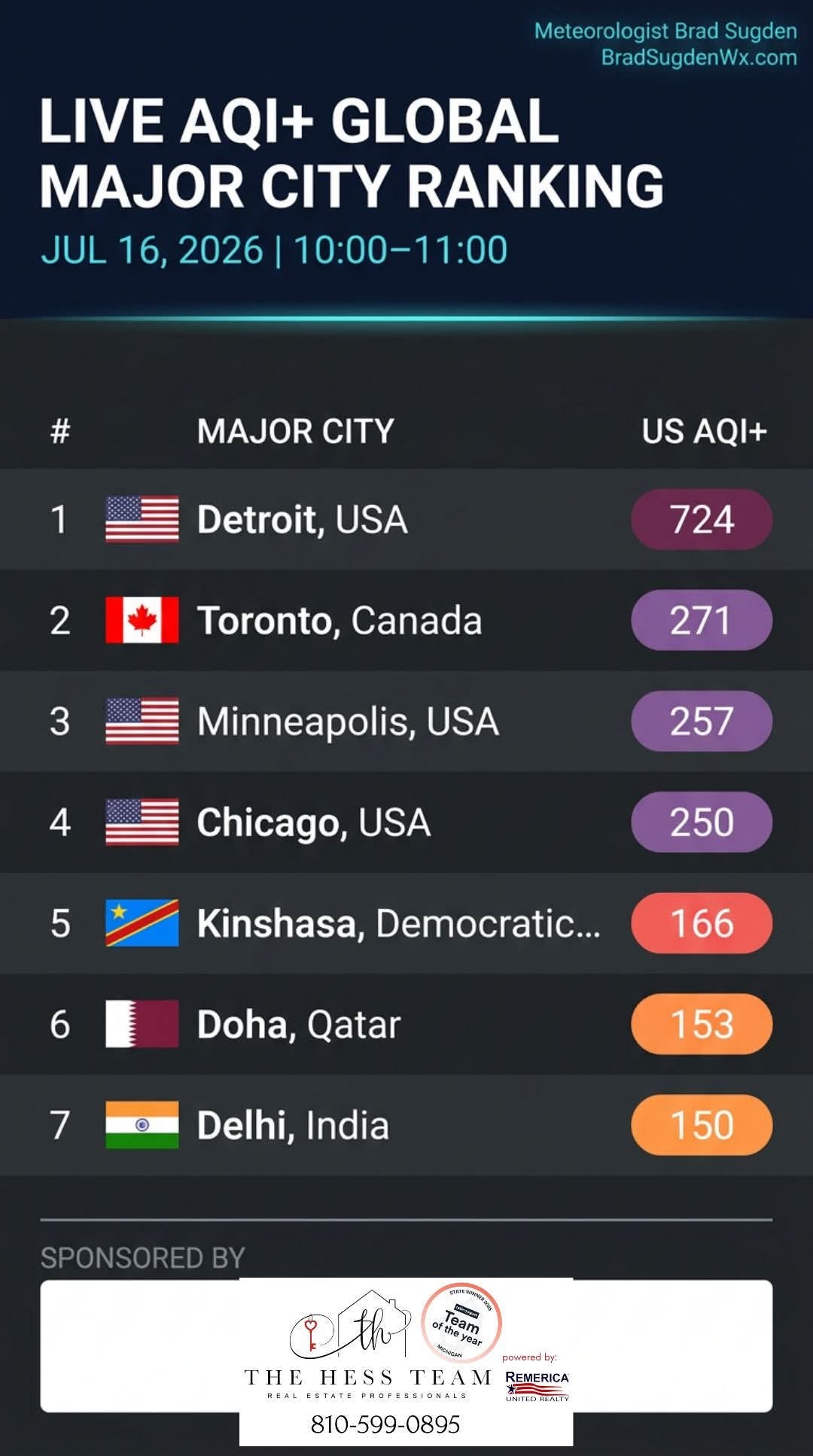
Large swaths of the Midwest and Northeast are covered by smoke from Canadian wildfires this week. For a brief period of time, Detroit had the worst air quality on planet Earth.
As someone with a heart condition, I try to be extra careful during this time. I’ve cancelled any plans to leave my house and wore an N95 mask when I had no choice for a brief excursion. The filters in our air conditioner are rated 14 MERV, and I’ve been hugging the air purifier like it’s my long-lost friend.
Even with these precautions, I find myself getting short of breath with minimal exertion like carrying a laundry basket or unloading the dishwasher. I’ve been extra generous with rest breaks as I move through the day.
The Air Quality Index is in the Hazardous range, which means that it’s dangerous for all groups, not just sensitive people. However, this also means that it is extraordinarily dangerous for those of who are in the sensitive range.
The American Heart Association (AHA) warns smoke exposure from the Canadian wildfires heart problems or worsen existing ones.
Studies have linked smoke exposure to an increased risk of sudden cardiac arrest and a higher volume of visits to local emergency rooms for other cardiovascular disease-related causes.
According to the AHA a study found that exposure to heavy smoke during wildfires raised the risk of out-of-hospital cardiac arrests up to 70%. Risk was elevated for both men and women, among adults 35-64 years old and in communities with lower socioeconomic status.
That same study said ER visits increased 42% for heart attacks and 22% for ischemic heart disease within a day of exposure to dense wildfire smoke. Increase was most notable for adults age 65 and older.
People with underlying cardiovascular disease risk factors may be at risk for an acute cardiovascular event when exposed to wildfire smoke.
Smoke from wildfires -- which are burning more of the Northern Hemisphere as Earth warms -- attacks nearly every system in the human body, killing tens of thousands of people a year, numerous medical studies show.
It attacks the body immediately, spiking asthma cases with increased ambulance runs within hours, and swamps emergency departments in a day or so with people suffering from heart attacks and other cardiovascular and lung issues.
On average 24,100 people died each year in the Lower 48 states between 2006 and 2020. On a global scale, wildfire smoke particles cause 677,745 deaths annually, with almost 39% of them children under age 5.
That’s a staggering number. Although the study did not differentiate between people with underlying cardiac and respiratory problems and healthy individuals, I believe it is safe to assume that worse results occurred for those with preexisting health conditions.
As I’ve addressed in previous posts, the disabled population is also more like to live at or below poverty levels. This means that we have fewer resources and are less well-equipped to tolerate such environmental threats as wildfire smoke and excessive heat, both of which had encroached upon Michigan this past week.

I am extremely fortunate. Because I’m married to my husband, I live in a home with air conditioning and own a good quality air purifier. I don’t need to leave my fresh air oasis for a while.
Many others are not so fortunate. If the have the ability, they can go to the library and use the air conditioning to escape the toxic air for a while. But the library has to close at night. Maybe you can roam a 24-hour big box store late at night, but you have to sleep sometime. Even cooling centers close down for the night.
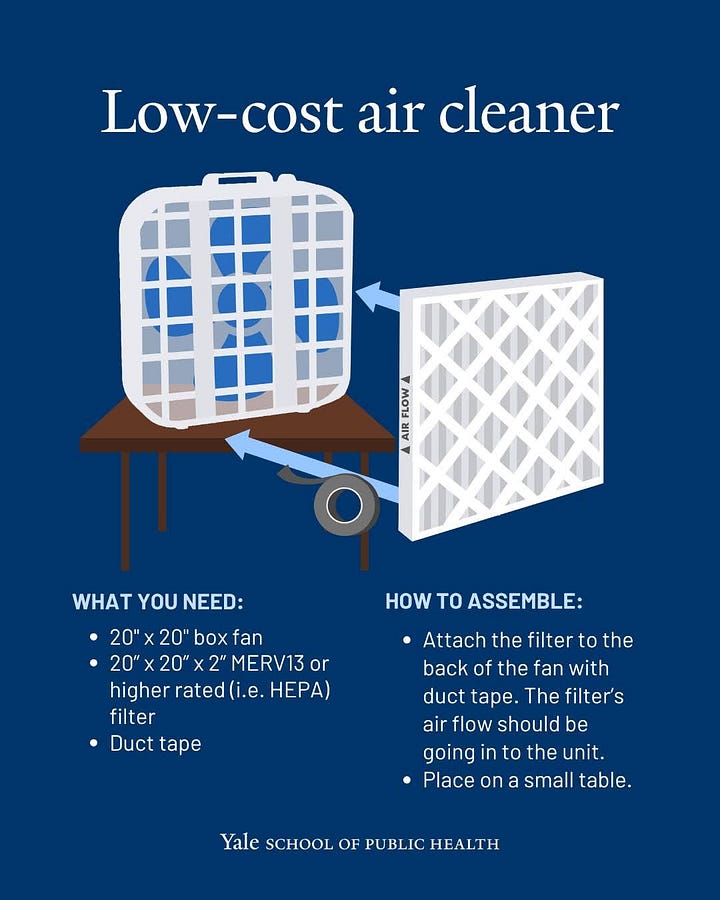
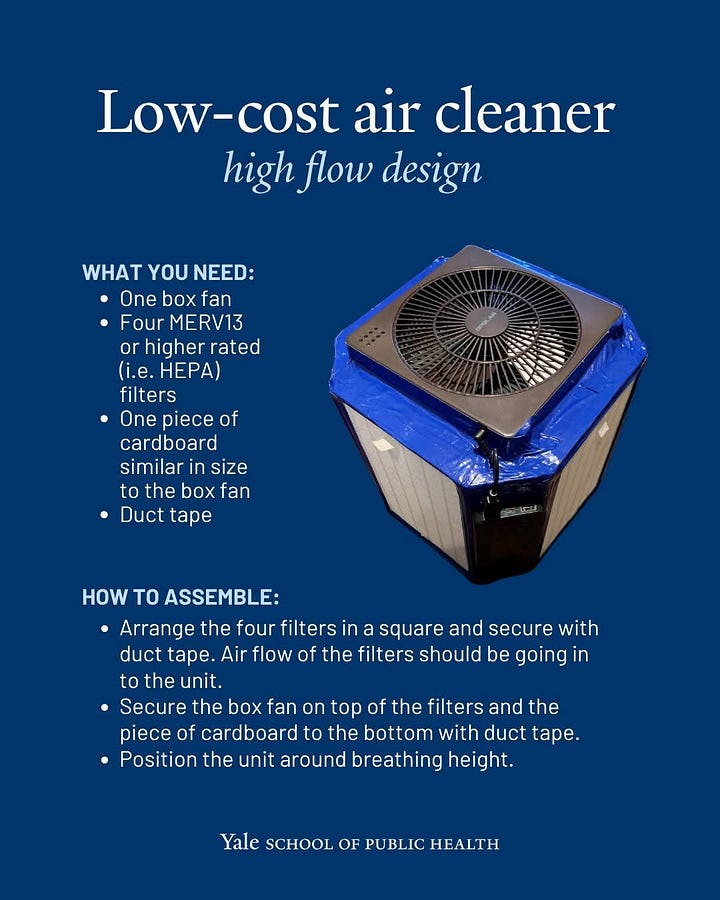
If you are struggling with the air quality and don’t have or can’t afford to buy an air purifier, below are a couple suggestions from the Yale School of Public Health. These might be something you could make to share with others who might need them.
Hang in there. It looks like we’re in store for poor air quality for quite a while as the wildfires continue to blaze.
Let me know in the comments what your Air Quality Index (AQI) has been this past week and how you have dealt with it.
Comments
Nothing yet. Say the first thing.
Sign in to join the conversation.