
Why does a Catholic church seem so different on Good Friday? It’s not just because the tabernacle door is left ajar. It’s because Someone is missing.
Of course, it took time for Christians to begin to understand the meaning behind Jesus’ words at the Last Supper. The Catechism of the Catholic Church (no. 1379) explains how our understanding of Christ’s presence in the Eucharist has developed over time:
The tabernacle was first intended for the reservation of the Eucharist in a worthy place so that it could be brought to the sick and those absent, outside of Mass. As faith in the real presence of Christ in his Eucharist deepened, the Church became conscious of the meaning of silent adoration of the Lord present under the Eucharistic species.
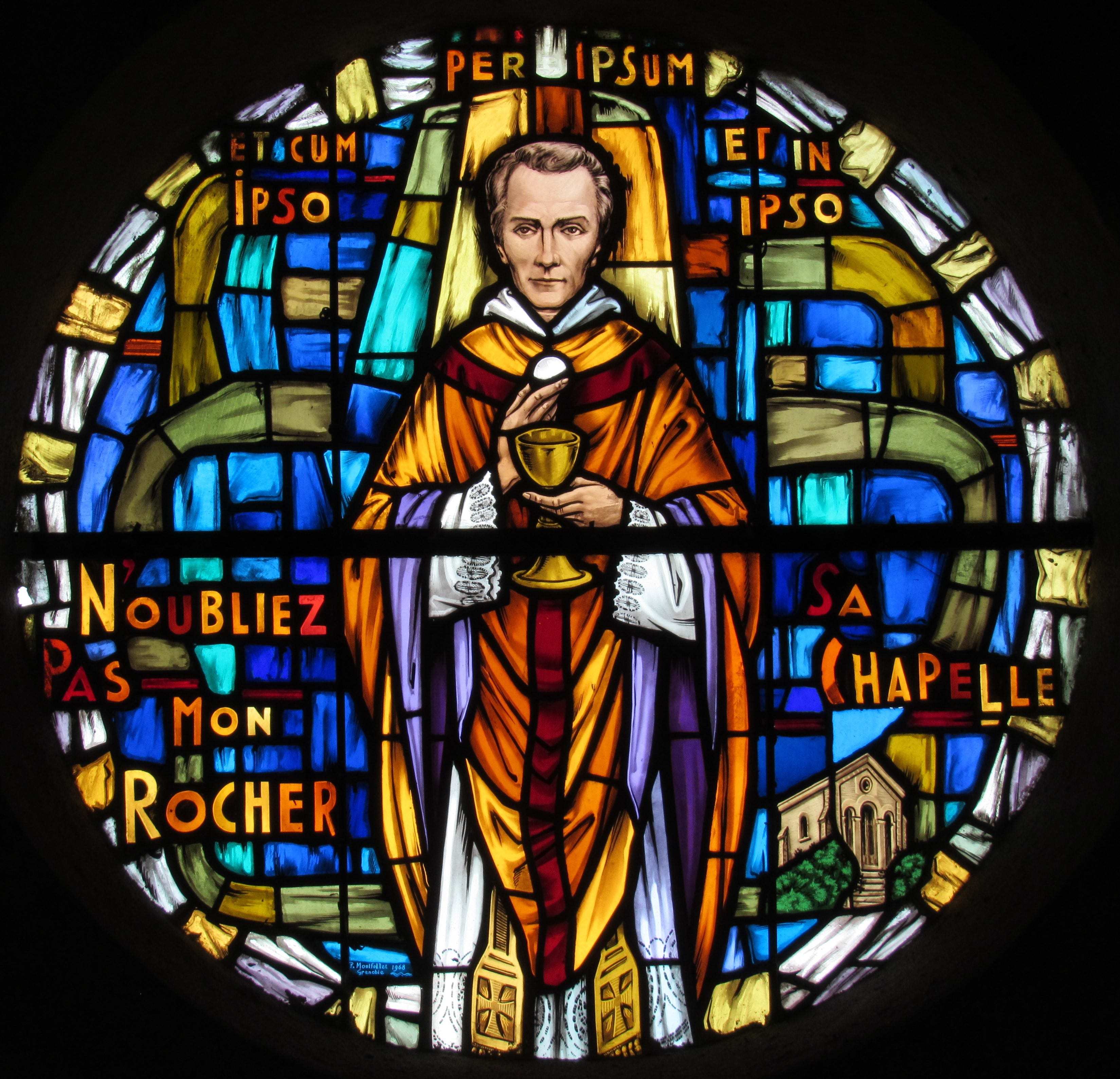
These words in praise of Eucharistic Adoration could have been spoken by Saint Peter Julian Eymard (1811-1868), who wrote that “the Eucharist has been the dominant thought of my life.” [1]
Peter—or Pierre, to the French—was born in a village in the French Alps. His mother was a devout Catholic who took her children with her on her daily visits to pray before the Blessed Sacrament.
Even as a little boy, Peter loved to pray. If his family couldn’t find him in their home, they knew he was in the parish church, praying before the tabernacle. He begged to receive his First Holy Communion for several years, and when he was finally allowed to receive the Eucharist for the first time, he afterwards traveled seventy miles to make a pilgrimage at a shrine in thanksgiving. He was thirteen years old.
Peter was certain that God was calling him to become a priest, and everyone agreed. Everyone except for Peter’s father, that is, who was a successful blacksmith and expected his son to follow in his footsteps. Peter begged for permission to go to seminary for years. Finally, after many prayers and through the intervention of a supportive priest, his father finally relented.
Seventeen-year-old Peter left immediately, and three years later, he was ordained a diocesan priest. However, Peter had always had a strong devotion to the Blessed Mother, and when he heard about a newly formed order called the Society of Mary, he requested permission to leave the diocese and join that order. Peter’s bishop did not want to lose such a zealous priest and repeatedly refused his request. Finally, the bishop gave in. “I have given sufficient proof of my high esteem for the Society of Mary,” the bishop grudgingly wrote, “in giving it such a priest.” [2]
Peter had been uncomplainingly working as a diocesan priest, despite hunger and poverty, in rural communities. Now that he was a Marist priest, sharing in their charism of establishing “a Marian Church, a Church with the heart of a mother beating at its center”, he shared his love of the Blessed Mother with the laity. Catholics recognized that Peter was a modest, humble, and kind man, a self-sacrificing priest, and an eloquent preacher, and they were inspired by him. In time, he became the superior of a Marist college, organized a group of lay Marist tertiaries, and served as the provincial superior of the Marists. He also began promoting devotion to the Eucharist.
As a superior, his duties included traveling throughout France to perform visitations at Marist communities. During these visits, he encountered several churches which were practicing extended Eucharistic Adoration. Although he loved the Marist order and his brother Marist priests, it dawned on him that there was no religious order dedicated to venerating our Lord in the Blessed Sacrament. He could not stop thinking about that fact. He became convinced that founding such an order was something he must do, even though he would have to leave the Marists.
So he did. However, trials multiplied as soon as he left the Society of Mary. Many people assumed he had been dismissed from the order and ignored him. His first followers soon abandoned him. Peter always suffered from poor health, and he had no money. Initially his plan seemed to doomed to fail.
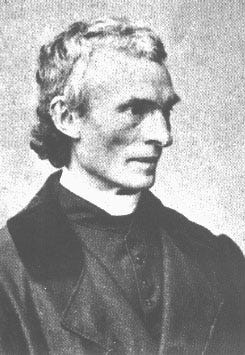
But, of course, it was not a failure. Both men and women wanted to follow him, and he founded religious congregations for both. He and his followers encouraged devotion to the Eucharist, frequent reception of the Eucharist, and Eucharistic Adoration. Peter himself wrote many works to help Catholics develop a greater love for the Real Presence.
For example, Peter prepared many children for their First Holy Communion, telling them how close our Lord was to them.
But do you not know that you have a Friend always at hand? always ready to help you? He is here. He is Jesus Christ. He is ever near you. But when you are in church you are in His house. Look at him here. He is out of His tabernacle, listening to us who are speaking of Him, waiting to hear what you have to say to Him. [3]
What do you do at the end of Mass? Saint Peter has a suggestion.
The most solemn moments of your life are those you spend in thanksgiving, when the King of Heaven and earth, your Savior and your Judge, is yours, fully inclined to grant all you ask of him.
Devote half an hour if possible, to this thanksgiving, or, at the very least, fifteen minutes. Rather than abridge your thanksgiving, it would be better, if necessary, to shorten your preparation instead; for there is no more holy, no more salutary, moment for you than when you possess Jesus in your body and in your soul. [4]
(Note that Peter himself, according to witnesses, typically spent two hours in prayer preparing for Mass and two hours in prayer in thanksgiving after Mass.)
Acts of desecration toward the Eucharist are, sadly, not merely a recent tragedy. It was sadly common in nineteenth century France. For example, one day a priest brought Peter several consecrated hosts that had been stolen by a Freemason. The man had kept them for ten years and finally handed them over to the priest. When Peter saw the hosts, he felt sick. He exposed the hosts for Adoration for two days and spent almost the entire time on his knees, praying before them in reparation.
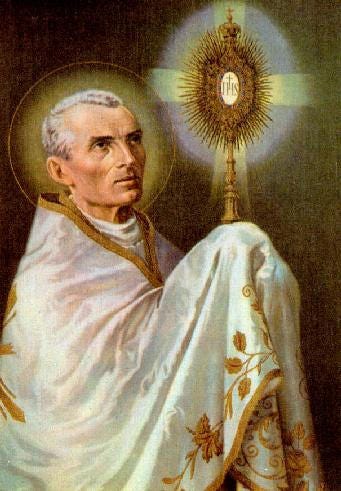
While there are times to pray in reparation for sins—for our own sins or those committed by others—there are also times that we should pray in joy. Or as Saint Peter succinctly put it:
Happy is the soul that knows how to find Jesus in the Eucharist and in the Eucharist all things! [5]
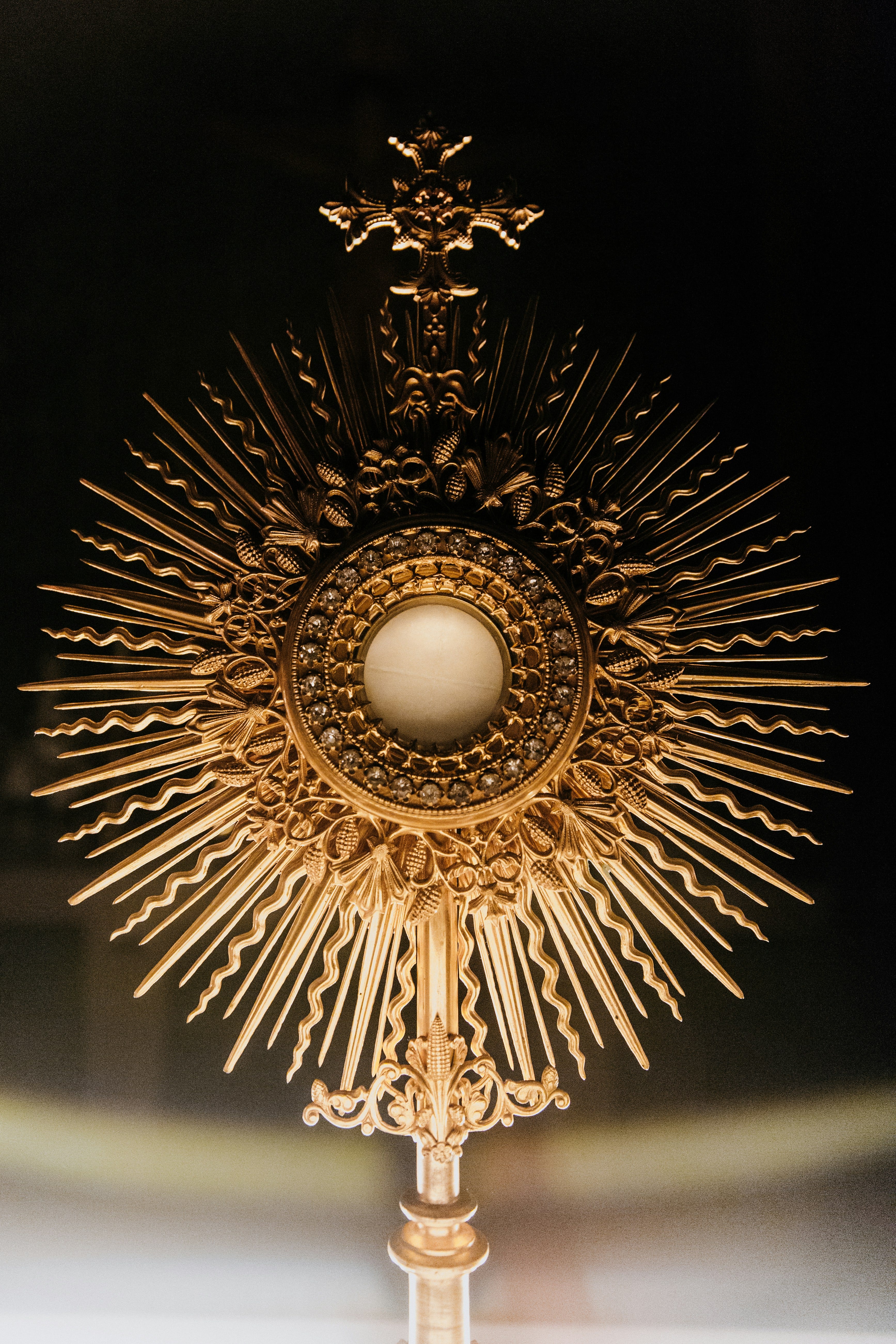
Saint Peter Julian Eymard died on August 1, 1868, of a stroke. May he intercede for us from Heaven that we too might find true happiness in the Real Presence of our Lord.
[1] Albert Tesniere, SSS, Pierre-Julien Eymard: The Priest of the Eucharist (Silverstream Priory: The Cenacle Press, 2023), 1.
[2] Rev. Constantine Kempf, SJ, and Rev. Francis Breymann, SJ, The Holiness of the Church in the Nineteenth Century (New York, 1916), 178.
[3] Tesniere, 47.
[4] Peter Julian Eymard, How to Get More Out of Holy Communion (Manchester: Sophia Institute Press, 2000), 133.
[5] Peter Julian Eymard, In the Light of the Monstrance (Cleveland: Emmanuel Publications, 1947), 180.
Comments
Nothing yet. Say the first thing.
Sign in to join the conversation.