
Few weeks ago, Ethereum celebrated 10th anniversary. I find it unbelievable. When I read its white paper 11 years ago, to include it to my thesis which got published few months before the Network release, little I had known about the true consequences of this beast unleashed. Even though I did try to predict it. If you want to read it you can find it here. Looking back I feel lot of cringe reading it. Back then when I started to write it, there was literally only one video of Vitalik talking about it on Youtube. My understanding of it was indeed limited.
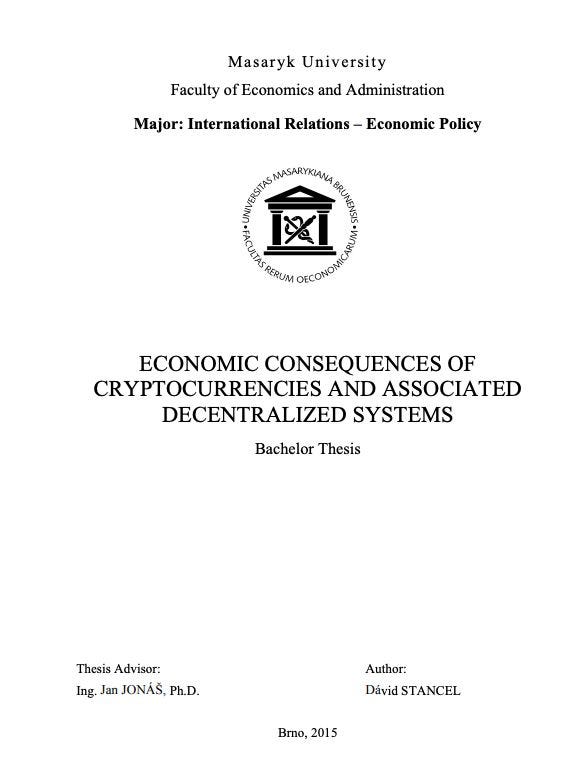
But My intuition told me this is going to be big. Back in the days the meme for Ethereum was "Bitcoin on steroids". I think I haven't heard this since 2016. Now we all understand that it is not like Bitcoin, and its design principles and goals are indeed quite different. Nonetheless, they both transform the financial system, even though in different ways. Bitcoin establishes a new paradigm in the monetary system, and Ethereum redesigns the way financial system operates. (Check e.g. our Cork Protocol)
Even after over a decade of researching and building on these systems, I have never been more excited about them! I summed up 10 years of Ethereum in this article, unfortunately, it is in Slovak only.
In his latest conversation with Peter McCormack, Balaji argues that the west is falling, and China is rising. One of the reasons for that, especially in the EU, is overly cautious approach to any innovation with strong preference for security, and low appetite for risk. Unfortunately, innovation — the driving force of progress — has always been risky.
Brussels has spent years tightening the screws on crypto, sometimes with unintended consequences. The European Union’s Markets in Crypto‑assets (MiCA) and Transfer of Funds Regulation (TFR) entered into force on 30 December 2024. That means every crypto‑asset service provider (CASP) must identify customers and share sender–receiver details for each transfer. Some EU exchanges have responded by disabling withdrawals to self‑custody wallets altogether, effectively “achieving compliance through exclusion.” Users are being pushed outside the regulated perimeter, into offshore or unregulated environments. Please one round of applause for Mrs. Ursula von der Leyen.
It doesn’t have to be this way. Reports suggest only a minority of EU providers had implemented the Travel Rule by mid‑2025, and that Europe’s rigid interpretation is pushing users into offshore and unregulated environments. Rather than doubling down, regulators should revisit the European Banking Authority’s guidance and adopt a risk‑based approach. Critically, rules should not require CASPs to identify owners of wallets they do not serve; self‑custody is a security feature, not a bug.
The EU has recently finally realized that they need to reform GDPR. Many business have been unable to comply with it. It only my naive hope that we will see this level of self-reflection also in MICAr, and other EU directives. My wet dream is to reform FATF as well. If you don’t know what it is, well, it kinda impacts you everyday. Check Stephan Liverra Podcast on this topic.
The EU Inc initiative is one of the lights at the end of the tunnel. This is a grassroots initiative pushing for a pan-European startup entity under the European Commission's "28th regime" framework. It's essentially a standardized legal structure that would allow startups to operate seamlessly across all EU member states under one unified set of rules, rather than navigating 27 different national legal systems.
This could:
- standardize investment documents (similar to US SAFEs)
- harmonize employee stock option schemes (ESOP)
- simplify cross-border operations
It offers the promise of a single European corporate law, but given the empirical experience, it could easily end up with simply layering yet another statute on top of an already complex regulatory environment. Actually, unfortunately, the current proposal of implementation for this idea from the European Parliament is doing exactly that.
Luckily, European entrepreneurs still can speak up! And luckily again, even though EU makes it really hard for EU citizens to comment on the proposal, AI agents can help us here. AI Battling bureaucratic One of their best use-cases I have seen so far. If Europe wants to be competitive it will need to choose: enable innovation or risk losing the innovators.
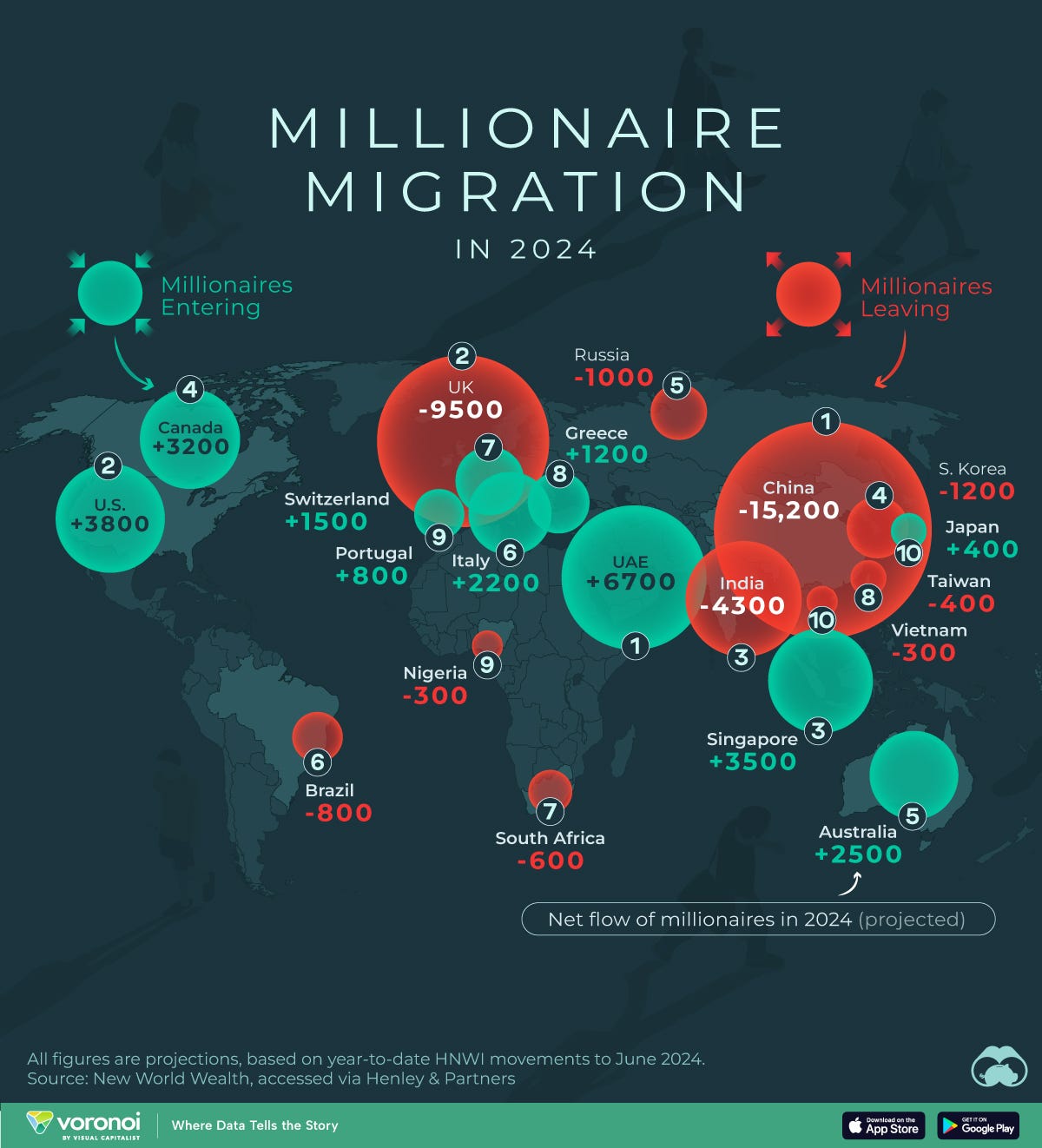
Visual Capitalist’s global millionaire migration map for 2024 shows a surge in talent leaving high‑tax regions for countries that embrace entrepreneurship. Those flows matter because capital and human capital tend to cluster. Where wealthy migrants go, new schools, incubators and legal experiments follow.
The end of July was remarkably positive in the US when it comes to their stances on crypto. Bunch of new laws were passed. I wrote a little more about them in my blog. SEC also approved in-kind Bitcoin ETF redemptions which is kinda a big deal as it allows ETF investors withdraw BTC without selling (and possibly triggering capital gain tax).
On top of that Saylor continues in his buying spree. Recently he came up with a new scheme for issuing debt instruments and turning that capital into Bitcoin. And if you want you can use for your advantage to print some cash flow. Of course, Strategy is by far not the only company buying BTC to their treasury anymore. While they were first to start exactly 5 years ago, hundreds have joined them since then. Interestingly enough, the last months have sparked similar trend in ETH too. Increased demand for ETH has been reflected also in the ETH inflows, and higher price appreciation in the last 3 months.
The right direction in regulatory trends in the USA has been confirmed also by the flow of money. Or more precisely, the flow of people who have them. Every month hundreds of millionaires move to US. Even though in this competition UAE is the clear winner, followed by Singapore.
Speaking of Singapore. I am moving near because I am fascinated by the concept of The Network State. And currently there is no better place to be on Earth to experience materialization of this idea into reality, than Network School. Indeed Ethereum and Bitcoin are going to be inevitably founding infrastructure based on which Network states will operate. As Nation States grow not only in bureaucracy and inflexibility, but obsolence as well, proto Network States have been forming online in the past years. And I beleive they will be forming the future of governance in the upcoming decades.

I have decided to move to Network School because I find it an amazing place to spend time in, learn, grow, work out, meet people, and build a company in. It is getting pretty hard to get there, if you want to get shortlisted use this link for my audience. I organized the first Network State meetup in Slovakia in July. Recording of which you can find here. I am doing another one in September in Prague. If you are interested register here!
My friend Jesse mapped out the Network States Initiative nicely here. All these projects will be at the Network State Conference on October 3rd. Right after the biggest crypto event in the world - Token2049. For which you can now get your tickets with 15% off. Use the code:MEETME15. I am going to attend both, and hope to meet you there, please let me know if you re going. Happy to grab a coffee.
The conviction of Tornado Cash co-founder Roman Storm for operating without proper money transmission licenses sends a chilling signal to crypto developers. The verdict implies greater legal jeopardy for those working on privacy solutions, despite privacy being among the industry's most pressing requirements. If you want to dive deeper into it check it out here.
Speaking of developments in the privacy space. Years back when I started to invest, one of my thesis was that privacy will be appreciated by the markets. Unfortunately, this turned out to be rather failed thesis so far. Pivx, Zcoin, Zcash, Monero, Beam, Grin, MaidSafe (now Autonomi) were all my bags once. All disappointed. One of my favorite white hat hackers —Frank Braun— wrote a nice piece about his evolving views on Zcash. It is nice to see it finally got a wallet with consumer-grade UX, that even enforces shielded addresses. The wallet is called Zashi. I would still be cheering more for Monero, but the most recent events are worrisome.
On this topic, one of the technologies that I am very excited about are zkTLS proofs. You can understand them basically as programmatic screenshots that can help us verify lots of data we currently verify with docs and screenshots, cryptographically. Which could dramatically increase our privacy. One of my mates from a16z CSX 24’ cohort wrote a nice write up on this tech.
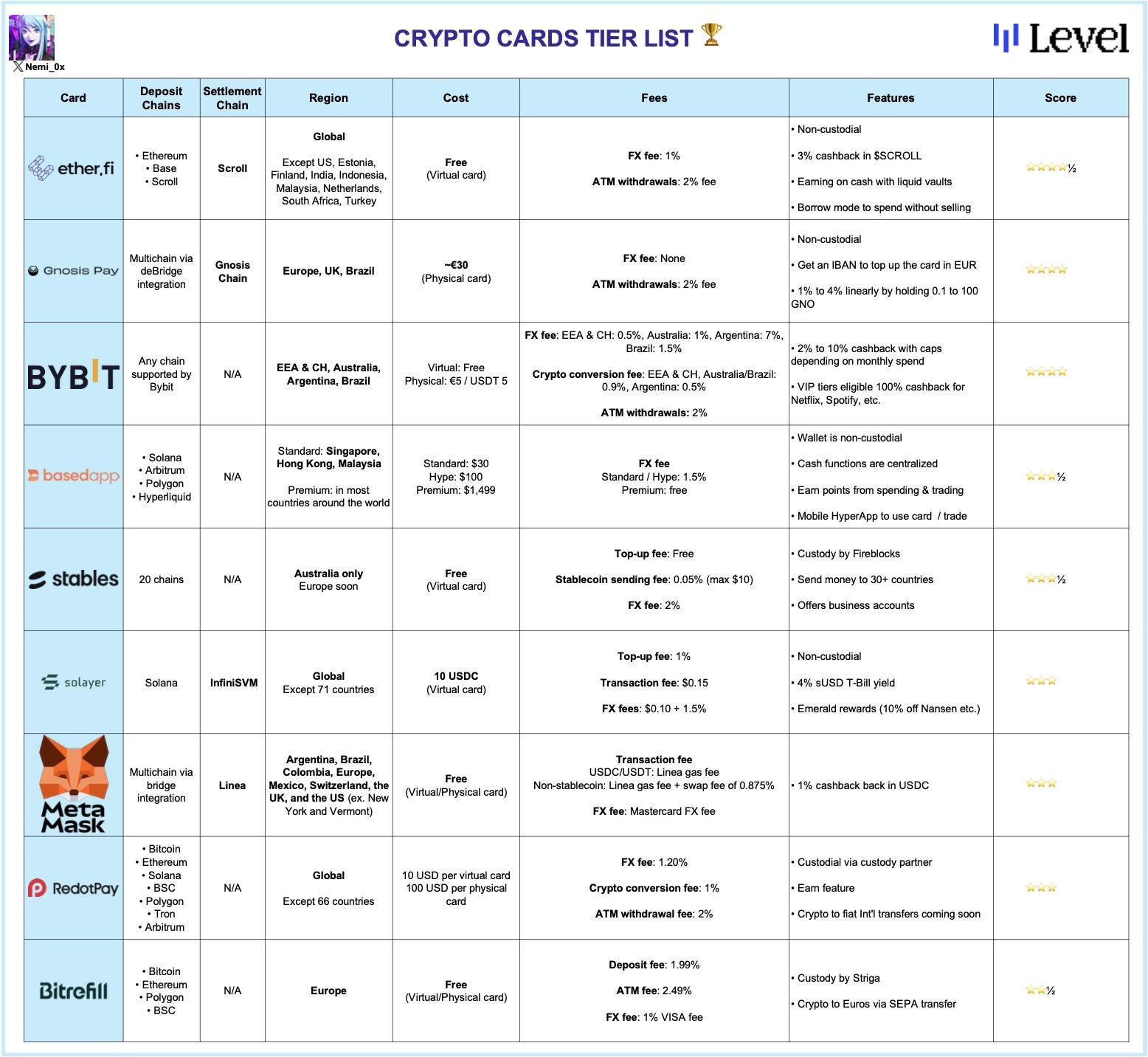
If you want to capitalize on the pumping crypto, there are now bunch of card providers that let you do so quite conveniently. My favorite ones that I recommend are EtherFi and Gnosis. Also, I released my new website, and added my latest recommendations when it comes to crypto services. Another one that I enjoy a lot is also Firefish — a company that provides P2P Bitcoin-backed loans. It can be very useful these days. And while we are at recommendations, I’d slip in here one that is non-crypto. Elizer Yudkowsky, the OG of AI, is releasing a book, and chances are that it is going to be pretty epic and important to read for anyone who wants to comprehend the implications of the technological progress we are experiencing. You can preorder it now.

No posts
Comments
Nothing yet. Say the first thing.
Sign in to join the conversation.