
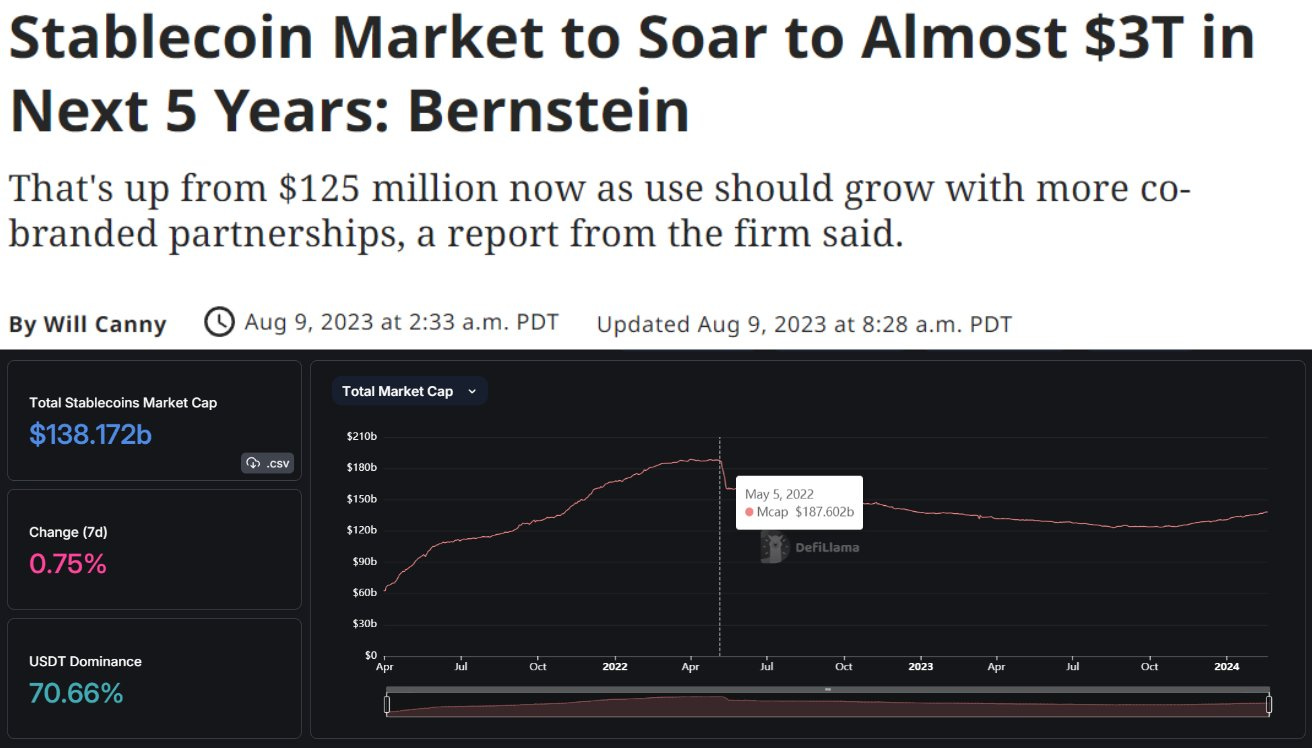
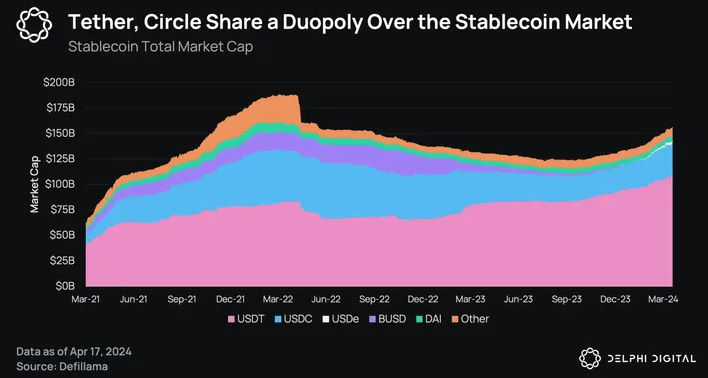
The stablecoin arena is set to experience disruption. While Tether, the stablecoin OG, has slowly overtime become the most profitable company per employee in crypto, its competitors have had hard time to keep up with its market cap of more than 100 billion USD.
The market has been longing for more decentralized version of stable coins. The FIAT-backed stables have been so far the clear winner. Crypto-backed companions like Dai, have struggled to scale their market cap even though it is fairly adopted within the DeFi space.
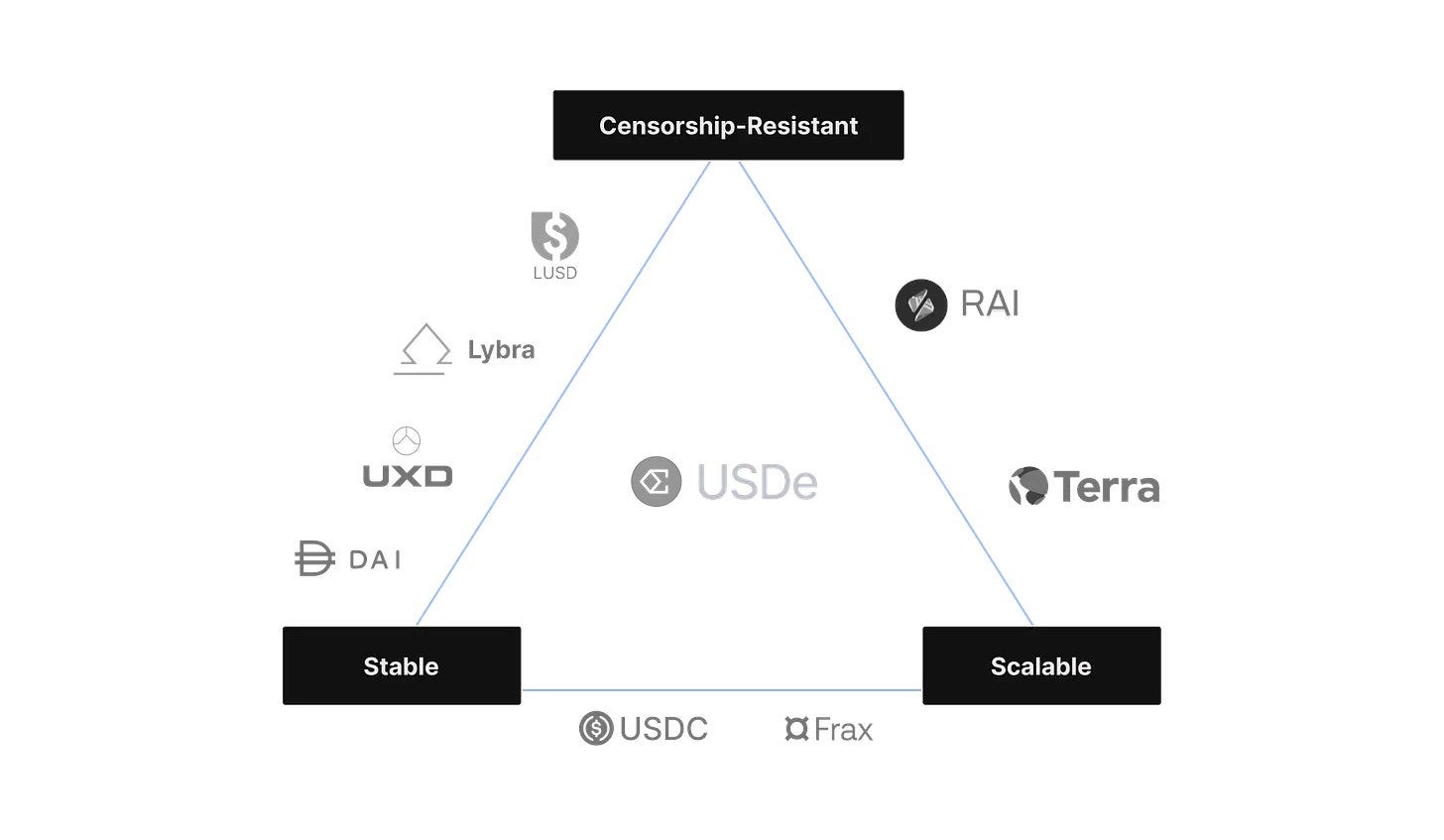
The fall of Terra/Luna has effectively buried the faith in algorithmic stables, that could achieve high capital efficiency, and decentralization. The last few weeks have been exciting in DeFi as Ethena Labs released a new type of stable asset $USDe - that could make the waves within up and fast growing industry.
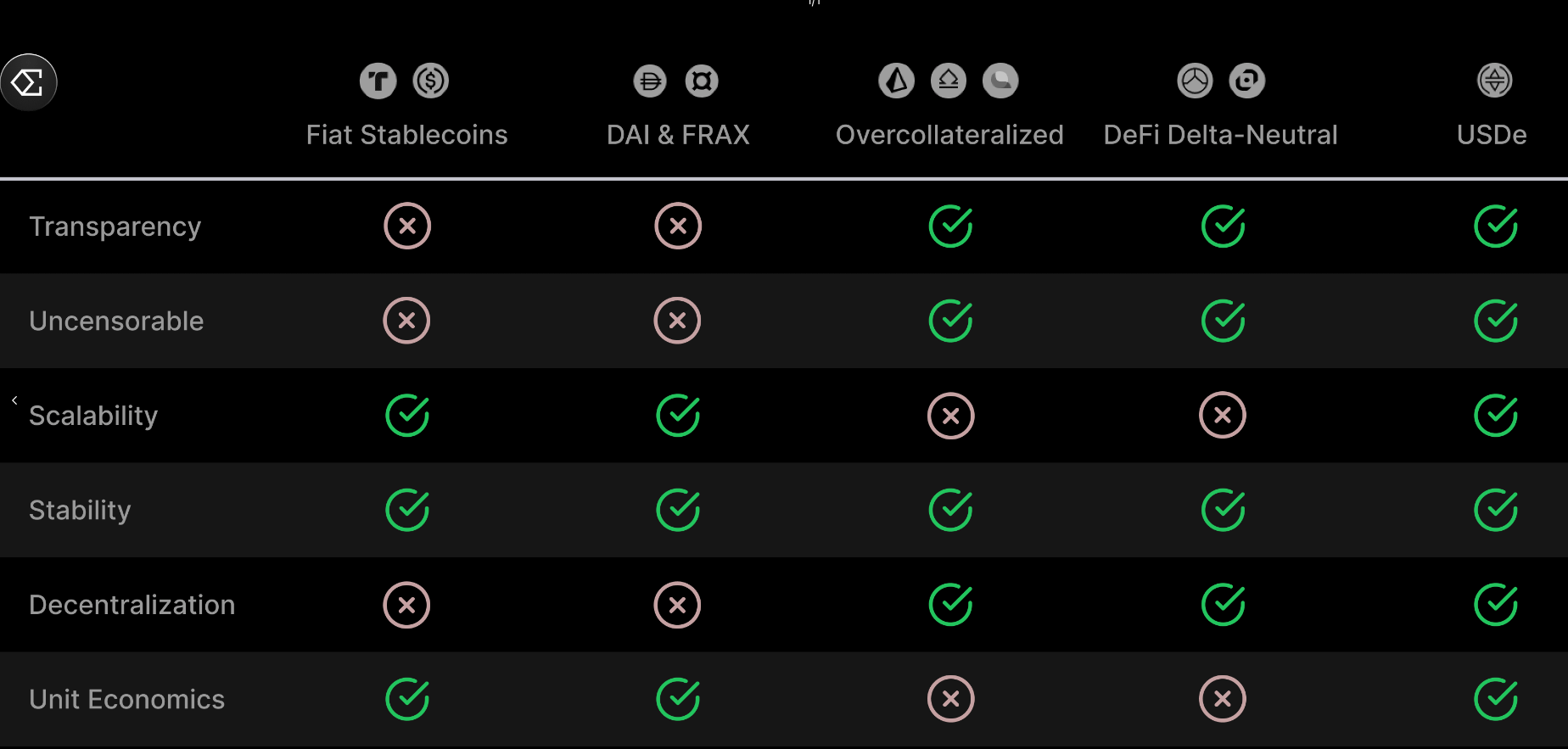
Ethena is redefining the crypto landscape with its synthetic dollar protocol, $USDe, built on Ethereum and distinct from traditional stablecoins. Described more accurately as a structured derivative product, $USDe offers a revolutionary, globally accessible 'Internet Bond,' fully transparent and backed on-chain. Unlike typical financial offerings, it sidesteps traditional banking, ensuring scalability, censorship resistance, and stability through innovative delta-hedging of staked $ETH as collateral. This isn't just an adjustment to existing systems; it's a complete overhaul in crypto-financial stability. It's the first on-chain crypto 'bond' that acts like a dollar-based savings account for users around the world.
Ethena has ingeniously tokenized what's known as a 'delta neutral' carry trade on Ethereum by creating a stablecoin, USDe. This not only stabilizes its value against Ethereum's fluctuations but also harvests carry yield, positioning itself as an internet bond with a distinct internet-native yield.
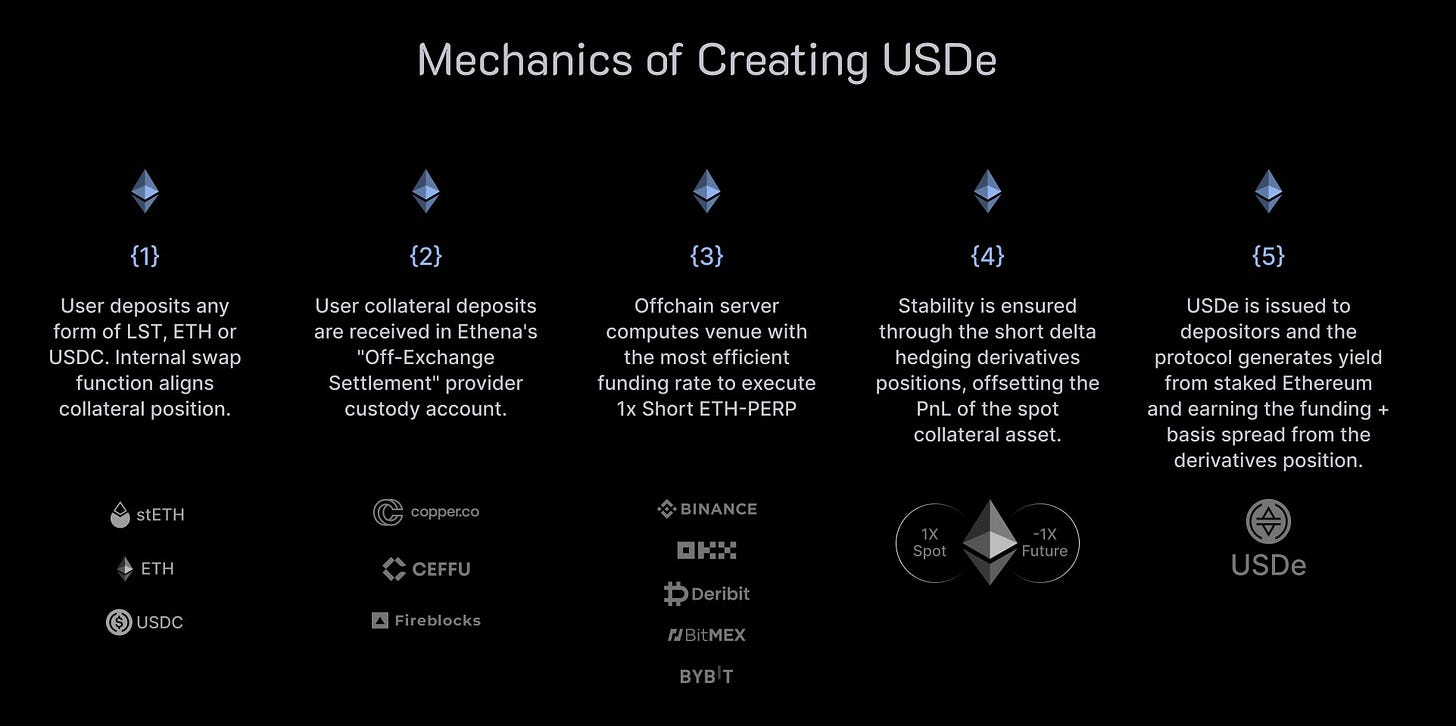
Here's a breakdown of the mechanism :
Users deposit stETH into Ethena's protocol.
This stETH is then sent to a custodian, such as Fireblocks or Copper, to secure the assets. Concurrently, the value of the stETH is shared with various centralized exchanges.
Ethena's protocol then undertakes to short Ethereum perpetual futures contracts on these exchanges, using the deposited stETH as collateral. This strategy effectively neutralizes the delta, or the sensitivity of the position's value to the price of Ethereum.
The resultant position is that the protocol holds a long position in stETH while maintaining a short position in ETH perpetual futures, creating what's known as a delta-neutral book.
The collateral behind USDe consists of this delta-neutral position, which ensures stability and reduces risk.
This brings us to staked USDe (sUSDe), which is Ethena's yield bearing bond, combining the staking yield from stETH with the basis yield from the short positions. Specifically:
The stETH provides a positive carry as it accrues staking rewards.
The short position in ETH perpetual futures generates funding yield due to the mechanics of futures contracts.
If executed correctly, this strategy allows the protocol to generate positive yield from both components of the trade (stETH yield plus basis yield), effectively passing on a combined and enhanced yield to the holders of USDe. This sophisticated financial orchestration not only offers stability but also an attractive yield, leveraging the full potential of DeFi innovations. I encourage you to dive into the docs if you're interested in more details at Ethena Docs.
I guess a lot. As much as I applause to the innovative approach of Ethena, and support it. Truth be told there is a bunch of things that can go wrong here.
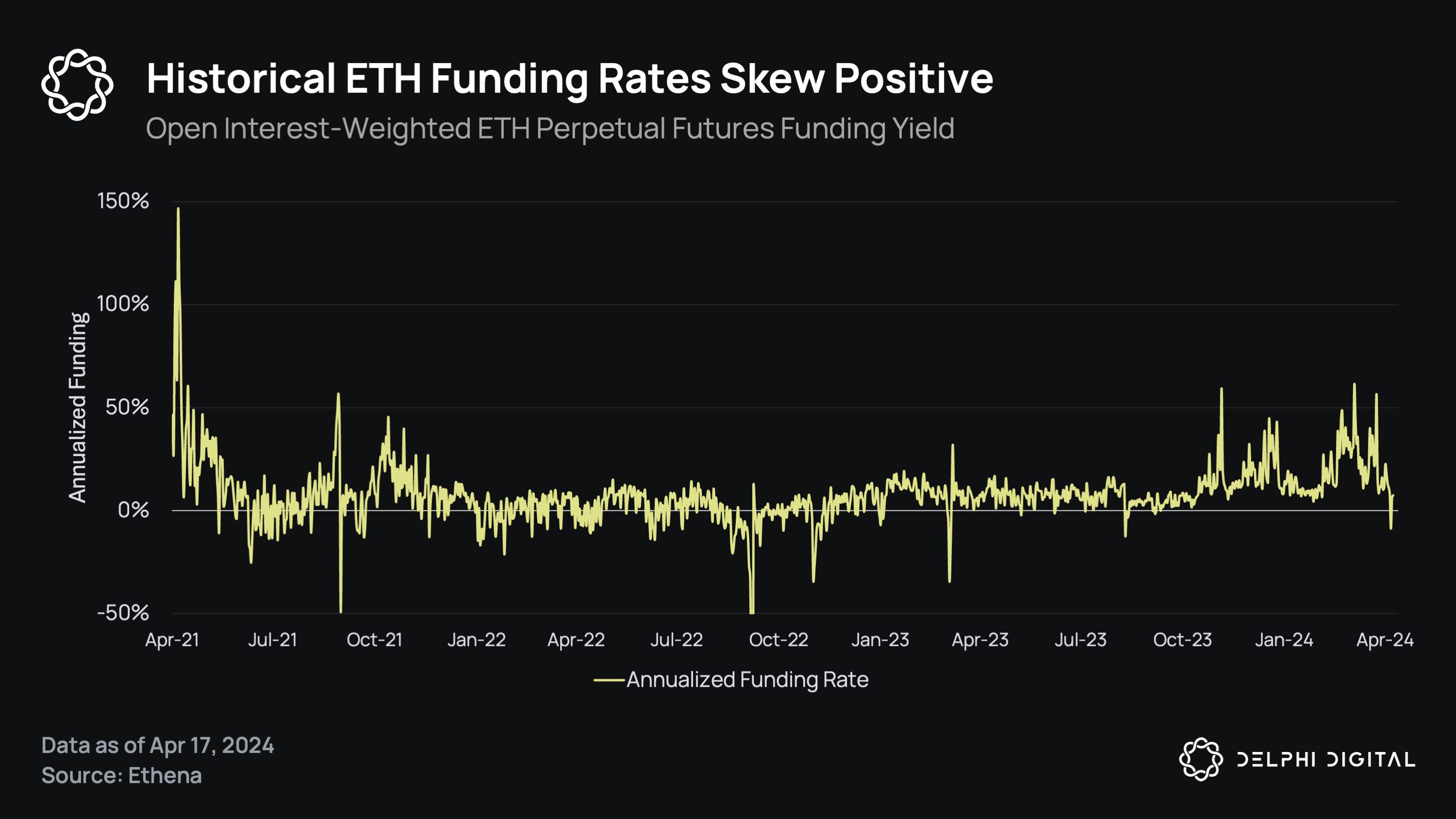
Funding Risk: Ethena benefits from funding rates when they are positive, but it could also face periods of negative funding rates, reducing overall protocol yield. To buffer against such downturns, Ethena has established an insurance fund, akin to the yield reserve used by the Anchor Protocol, to support yields on days when funding rates are unfavorable. While in general, 90% of the time the rates are positive, let’s see if Ethena can sustain itself over the the hostile, however short, periods of negative rates.
Liquidation Risk: Ethena uses staked Ethereum, specifically stETH, to collateralize short positions on ETHUSD and ETHUSDT Perpetuals on centralized financial (CeFi) exchanges. There's an inherent risk due to the asset mismatch between the collateral (stETH) and the derivative's underlying asset (ETH). Historically, the largest spread between ETH and stETH was 8% during the $LUNA depeg event in May 2022. A divergence to 65%—a scenario not yet observed—would pose a significant liquidation risk. The risks will amply if LRTs will be adopted as the collateral.
Custodial Risk: Ethena relies on third-party "Off-Exchange Settlement" providers for the custody of its backing assets. This reliance introduces a risk associated with these custodians' operational capabilities, which are critical for Ethena’s ability to effectively manage deposits, withdrawals, and delegation to and from exchanges. Any disruption in these services could impact the trading operations and the functionality of minting or redeeming USDe.
Exchange Failure Risk: Ethena's strategy involves trading derivative positions on centralized exchanges like Binance, Bybit, Bitget, Deribit, and Okx. The risk here is similar to what was witnessed with FTX's collapse; if a key exchange becomes insolvent or inaccessible, it could severely affect Ethena's ability to manage its risk exposure effectively.
Collateral Risk: The collateral for USDe is stETH, which differs from the underlying asset in the perpetual futures positions, which is ETH. If a significant bug were discovered in the LST (liquid staking token) smart contract or a loss of confidence occurred, it could prompt a rush to exit or swap out of stETH. Such a scenario would likely result in long exit queues at staking protocols like Lido and a rapid drying up of liquidity on both decentralized finance (DeFi) and centralized finance (CeFi) exchanges. Moreover, the stETH liquidity matter a lot for the peg. USDe can not scale to $100B without sufficient stETH liquidity.
LST De-peg Risk:
Particularly the less liquid tokens could face de-peg in the event of slashing, or market liquidity crunches which could destabilize the whole system. In managing these risks, Ethena employs a strategy that involves holding a smaller percentage of LST collateral. Moreover, Ethena's protocol stipulates that it will only start to face incremental liquidations if the value of its collateral drops below a certain "maintenance margin." This margin is dynamically adjusted to increase with the size of the derivatives position, adding an additional layer of risk management.Oracle Risk:
Ethena employs a sophisticated internal PMS to accurately assess and assign values to collateral or assets received during the processes of minting or redeeming its USDe stablecoin. This system is comprehensive, pulling data from a variety of sources including Ethena’s own trading venues, decentralized finance (DeFi) exchanges, over-the-counter (OTC) markets, and reputable oracle providers such as Chainlink and Pyth. Additionally, the system is fortified with backup oracle feeds, providing an extra layer of security and reliability.Smart Contract Risk:
Even though most of the Ethena’s complex operations are off chain. The project is not immune against possible smart contract failures. Smart contract vulnerabilities are a significant source of security breaches within the DeFi sector and the broader cryptocurrency landscape. Ethena has proactively sought to minimize these risks by engaging with several top-tier auditing firms, including Zellic, Quantstamp, Spearbit, Cantina, Pashov, and Code4rena. These comprehensive audits are crucial in identifying and rectifying potential security flaws before they can be exploited. In addition, Ethena announced a public bug bounty program on Immunefi.
There is roughly $10 billion in ETH open interest (OI) across CEXs and the all-time-high ETH OI is $13 billion. Ethena scaling into DAI’s size with the current market structure would mean adding $5 billion of short-side interest on top of only $10 billion outstanding long and short OI. This would result in a decrease in funding rates (if not pushing heavy negative) which dampens the yields for Ethena.
Ethena recently added BTC as additional collateral to further augment Ethena’s scalability. While BTC has no embedded yield like stETH and thus is slightly less attractive as a collateral asset, it adds a fresh $16bn of OI for Ethena to tap into.
BTC derivative markets are growing at a faster pace than ETH and offer better scalability and liquidity.
This will allow to scale the maret cap of USDe to $7.2B, base donthe current OI data. This can be significantly boosted if the price of ETH and BTC will rise. This is good news as demand for a synthetic dollar that yields 30% will likely keep growing.
It seems, Ethena learnt a lesson from the similar projects such as UXD and Lemma’s USDL, that failed predominantly because of relaying on DEXs that lacked liquidity and introduced security risks, that turned out to be fatal.
After rapidly scaling supply from zero to over $2.2B in less than a month, USDe is now the fastest growing “stablecoin” of all time. Due to Ethena’s well executed airdrop the protocol launch counts as one of the most successful ones in the crypto history. Moreover, Ethena is also on track to become one of the most profitable protocols in DeFi.
By democratizing access to the delta-neutral basis trade and allowing it to seamlessly compose with the rest of DeFi, Ethena has been able to find early product-market-fit addressing the market’s insatiable appetite for yield. Simultaneously, structuring USDe as a “synthetic dollar” has allowed Ethena to take full advantage of the inherent network effects that come with being a monetary asset. USDe’s delta-neutrality means that only $1 of collateral is needed to mint 1 USDe. Consequently, Ethena is able to scale more effectively than CDP stablecoins such as DAI.
As Ethena gains traction, its success may ironically lead to more efficient markets, which could decrease the demand for the carry trade that underpins its core product. Initially, Ethena has a valuable window during which it can leverage the carry trade to bootstrap the protocol. Yet, the sustainability of this model is uncertain as the market dynamics evolve toward equilibrium.
The long-term viability of Ethena likely hinges on its ability to continuously identify and integrate new opportunities and form strategic partnerships to prevent users from executing these trades independently. While Ethena may enjoy rapid adoption by capitalizing on current market inefficiencies to offer high yields on USD, the challenge will intensify as the market becomes more efficient.
Stakefish, a premium ETH staking provider, hires a Web3 full stack engineer
They hire also for general role so make sure to check it out
Nethermind, a Web3 security firm, hires for Business Development role
P0X Labs, creting the Ethereum’s L2, Manta Network, hires for a product manager.
We at Cork Protocol are looking for senior Solidity Dev and/or CTO
ETHBratislava takes place on 10-11 May 2024! These two days will bring you wholesome experience filled with 300 attendees, 30 speakers, and a dozen teams of hackers! The conference as well as hackathon will revolve around hot topics and trends in crypto right now such as ETH Scaling, Privacy Solutions,, Governance Models (DAO), RWA & Tokenization, Liquid Staking & Restaking. This event is supported by Ethereum Foundation, and will be followed by similar events in Berlin and Prague. Make sure to check it out!

That’s all for now! As always I will appreciate your feedback on this post, as well as ideas on what kind of topics you would be interested in seeing in the future!
Don’t forget to subscribe and share with friends 🙏 and see you soon!
Links for your convenience:
Coinstory Book | My Youtube
Twitter | Instagram | My Web
Introduction to Cryptocurrency Course (Slovak)
Ethereum, DeFi, NFTs & Metaverse Course (Slovak)
No posts
Comments
Nothing yet. Say the first thing.
Sign in to join the conversation.