
by David Stalling
When I’m feeling down, I like to go for walks — through the woods, up in the mountains, along a stream, or even just around town — with one simple goal: find something that sparks my curiosity. I look for one thing that intrigues me enough to make me want to learn more. Researching nature, wildlife, and natural history helps pull my mind away from whatever is bothering me. Learning makes me happy, and curiosity is often the best medicine I know.
So I’m going to share some of those discoveries here:
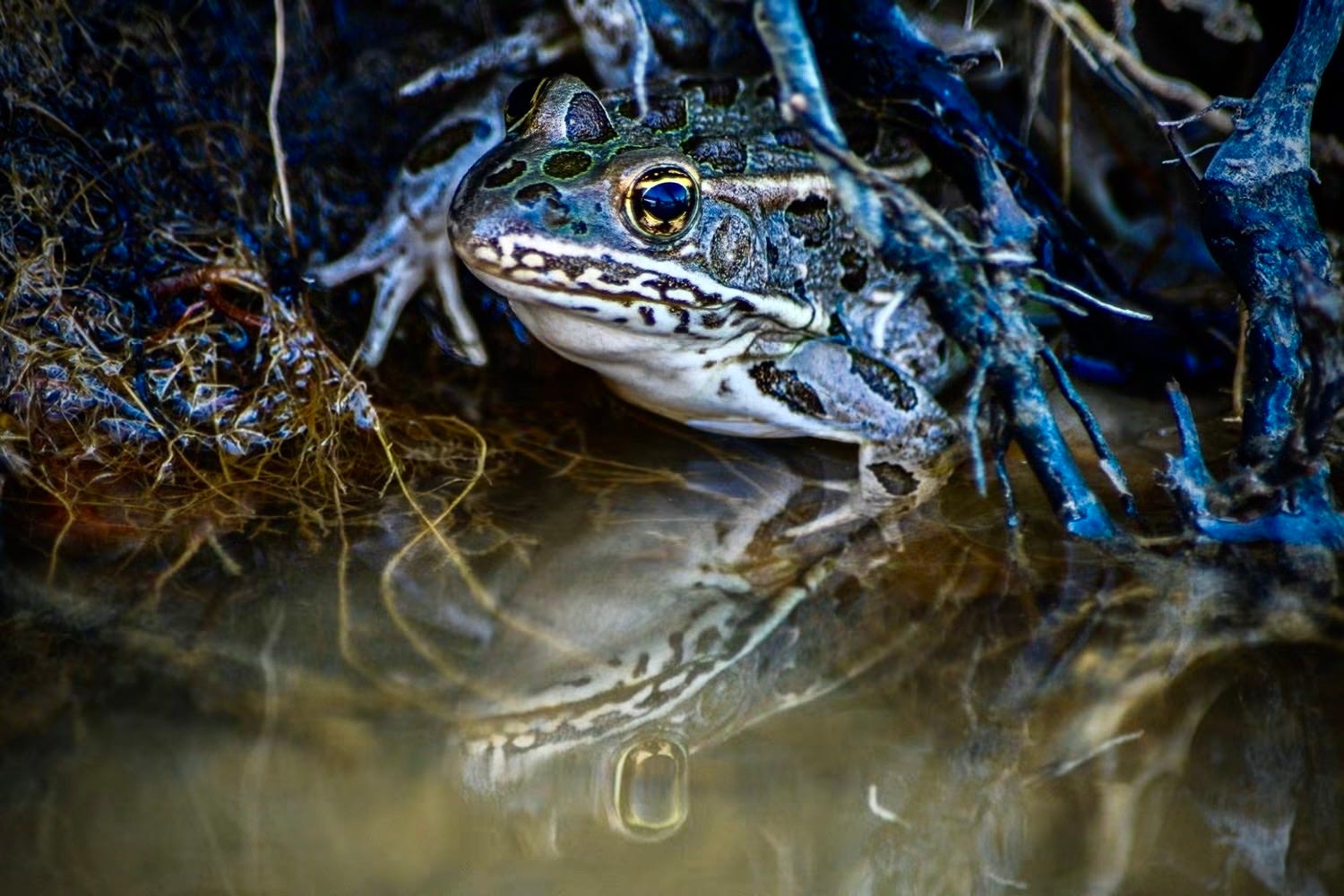
While walking along the Missouri River in Central Montana, I found an interesting, beautiful frog I hadn’t seen before. So I learned what I could, and here’s what I found out.
It’s a Northern Leopard Frog, Lithobates pipiens, and once I started looking into it, I realized I had stumbled across one pretty interesting little amphibian.
The first thing I noticed is the spots. Northern Leopard Frogs are usually green, brownish, or sometimes yellow-green, with large, dark, rounded spots surrounded by lighter-colored halos. They also have pale ridges running down their backs that give them a distinctive look.
They aren't huge frogs—generally around 2 to 4 inches long—but they can make some impressive jumps for such a little animal.
And this frog was right where you might expect to find one.
Northern Leopard Frogs like wetlands, ponds, marshes, riverbanks, wet meadows, and grassy areas near water. They are sometimes called “meadow frogs” because they spend plenty of time away from the water, especially during the warmer months, hunting through damp grasslands and fields.
Which brings up another thing I found interesting: these frogs are hunters.
They actively search for food, often after dark. Their menu includes insects, spiders, worms, and small snails. Larger frogs may even eat other frogs and, occasionally, small snakes or birds. Tadpoles have a much simpler diet, mostly feeding on algae.
Then there is the whole matter of being a frog in Montana.
Northern Leopard Frogs have a huge range across Canada and the northern and western United States. Historically, they occurred from the northeastern part of North America all the way west to British Columbia and south into parts of the western United States.
But a large range doesn't mean they're doing well everywhere.
Northern Leopard Frogs remain common across much of eastern and central Montana, including the prairie and plains country around the Missouri River. West of the Continental Divide, however, their numbers have declined dramatically, and they are considered a Species of Concern in western Montana.
The reasons for those declines aren't completely understood, but habitat loss and degradation, drought, agricultural runoff, and disease—including chytrid fungus—have all been concerns.
Reintroduction efforts in places such as the Flathead Valley have successfully established a viable population, showing that recovery may be possible.
This wasn't just some random frog sitting beside the river. It was a native Montana amphibian that has managed to remain common in parts of the state while disappearing from much of its former western range.
And then there is the winter.
Northern Leopard Frogs don't head south when Montana gets cold. They spend the winter underwater, down in the mud at the bottom of ponds, streams, springs, and other permanent water bodies where the water stays liquid beneath the ice.
Come spring, they get busy.
Breeding takes place in shallow, quiet water. Females can lay hundreds or even thousands of eggs in large clusters. The eggs hatch into tadpoles, and if everything goes right, those tadpoles transform into little four-legged frogs in roughly three months.
So in one Montana summer, a frog can go from a tiny egg in a blob of jelly to a spotted little predator hopping through a meadow.
That's one of the things I like most about walking along rivers and trails. You never really know what you're going to find.
You can walk past a cottonwood, watch an eagle overhead, look out across the river—and then suddenly there's a beautiful little spotted frog sitting there like it has been waiting for you to notice it.
No posts
Comments
Nothing yet. Say the first thing.
Sign in to join the conversation.