
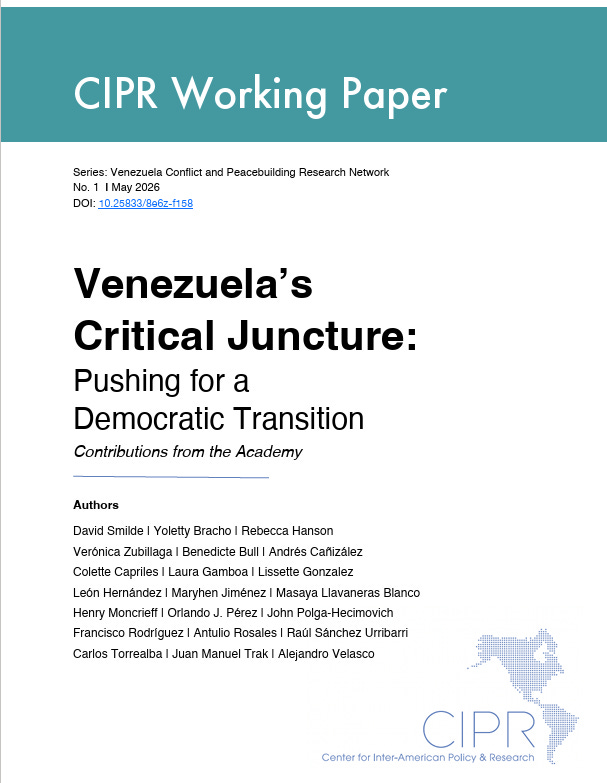
Some of you have noticed that I have been a little absent from this Substack in recent months. That is absolutely not because I haven’t been thinking and writing about Venezuela. Since February, I have been working with a group of 21 academic colleagues on a report called Venezuela’s Critical Juncture: Pushing for a Democratic Transition.
The authors are a group of Venezuela scholars with their own lines of research, but who have been collaborating in something called the Venezuelan Conflict and Peacebuilding Research Network which we formed last year. In early February, frustrated by the course of events in Venezuela, we decided to set aside our existing research projects and write about what needed to happen for Venezuela’s current political transition to actually become a democratic transition.
[Above is a live interview I did with César Miguel Rondón regarding the report. We did it by phone on a train from Paris to Brussels, so the audio quality leaves a little to be desired.]
Our goals with this document are twofold. First, we want to expand the discussion beyond economic stabilization and the demand for elections. In doing so we are pushing back against some of the leading ideas about democratic transitions that focus on elite pacts and getting to elections. Those issues are undoubtedly important, but it has become clear in recent decades that they are not enough.
Just taking a look at the Arab Spring—much heralded at the moment as a historical transition to democracy across the Middle East and North Africa—we see that five of the six countries that saw transitions are not democracies in any meaningful sense of the term. The most common result of a transition from authoritarianism is a new form of authoritarianism or some sort of suboptimal “feckless democracy” or competitive authoritarianism.
For a transition to a sustainable democracy that guarantees citizen control and government accountability in Venezuela, a much broader set of reforms will be needed. Reforms in Venezuela’s main democratic institutions, justice system, armed forces, and public security are necessary. As well there need to be processes of reform within the main political coalitions that can help them manage internal and external pluralism. Citizen participation and mass communications need to be given the liberties necessary for them to provide the context for democratic debate and mobilization.
A second goal is to broaden the spectrum of social and political actors involved in Venezuela’s current political process. Decisions are basically being made between the Trump administration and the Delcy Rodriguez government. The opposition led by María Corina Machado has been marginalized and is fighting for relevance. Inside and outside of Venezuela there are opposition actors and Venezuelan citizens who have varying political strategies but have been either quietly working or sitting on the sidelines.
As well, countries in the region such as Colombia, Brazil and Mexico have done little to engage this transition. Nor have the European Union and individual European countries that were constructively engaged from 2018-2024. We think it is essential for more actors to be engaged in more discussion and more debate about what needs to happen in Venezuela.
The idea of “critical juncture” is used in political science and political sociology to describe temporal contexts in which decisions are made that have a fundamental impact on the following decades or even centuries. With this in mind, we are publishing this as a working paper now rather than waiting until we have it in final form. Developing a broader discussion with more voices that will force the main power players—the Trump administration and Rodriguez government—to attend to the democratic demands of Venezuelans, is an urgent task.
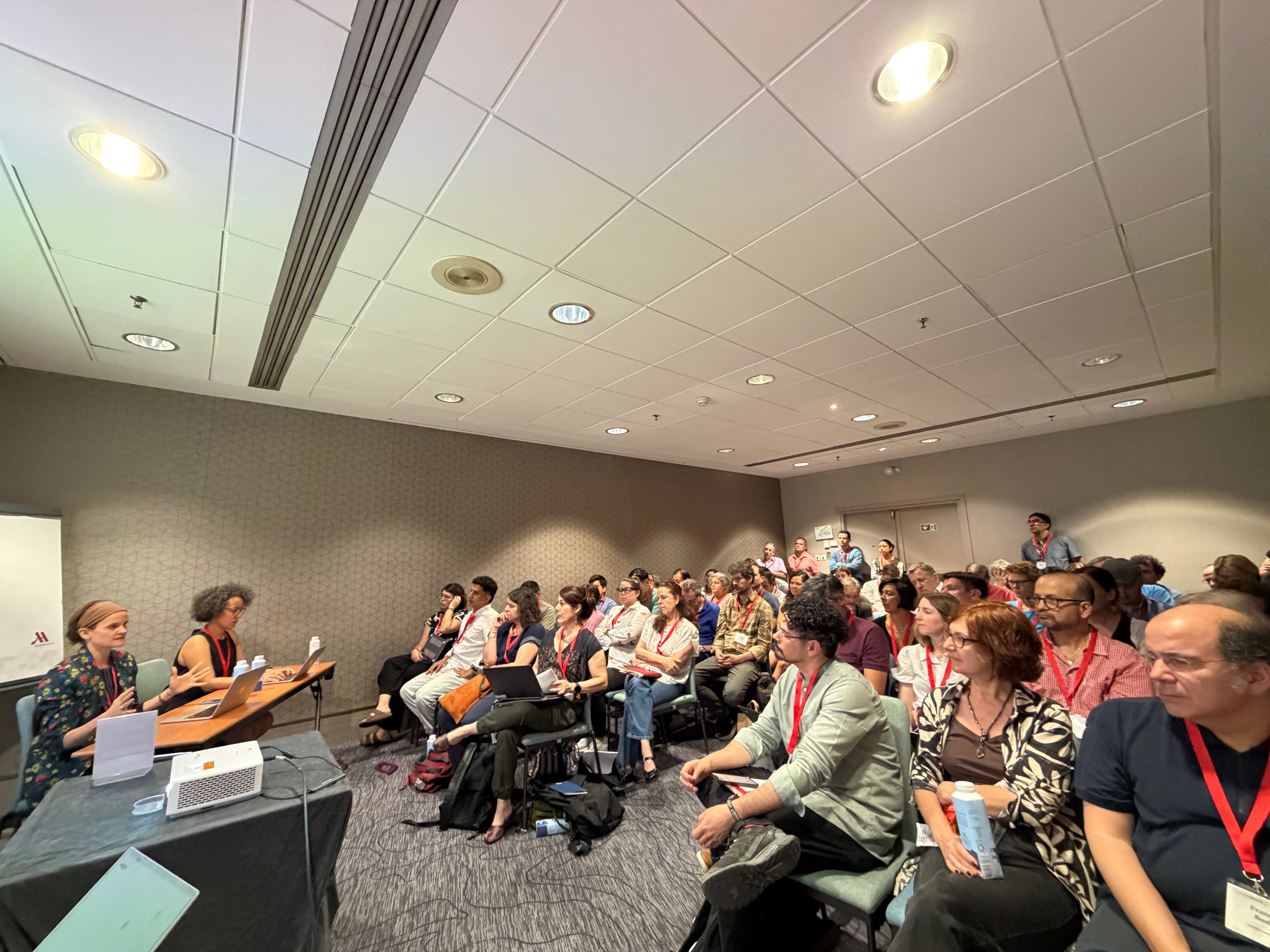
We presented the report to a standing room only crowd at the Latin American Studies Association Congress, have talked to a number of diplomatic delegations, and have several more presentations scheduled or in the works
Please promote, discuss, debate the report. Praise is much appreciated, but so is critique, especially when it leads to exchanges that can develop understanding and refine our knowledge and arguments.
No posts
Comments
Nothing yet. Say the first thing.
Sign in to join the conversation.