
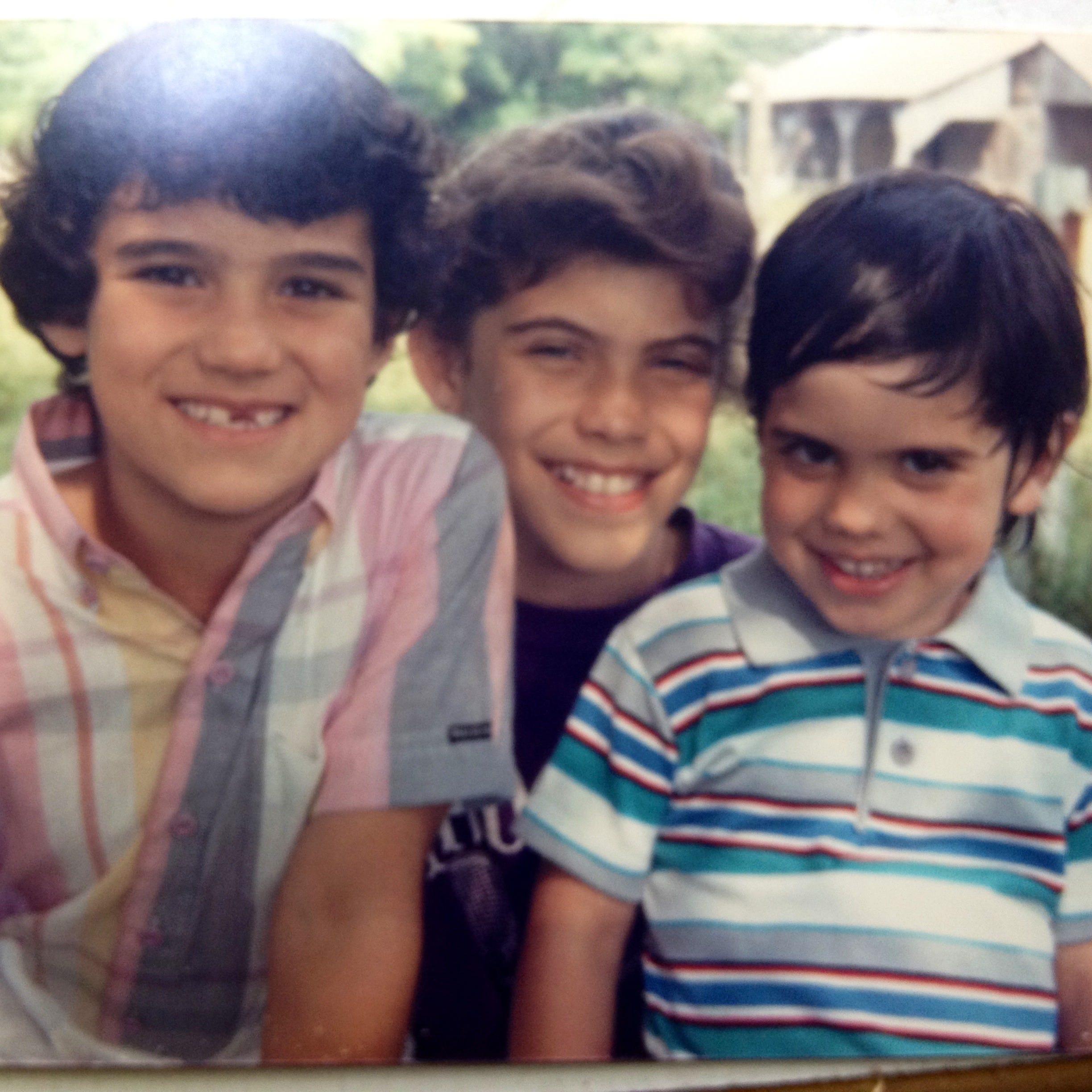
The air in Bardstown, Kentucky, is often filled with the sweet, yeasty scent of the “angel’s share”—the portion of bourbon that evaporates from the charred oak barrels of the local distilleries as they age in rickhouses. It is a town built on heritage, where family lines and last names get carried around like side arms.
But what happens when you’re me? What happens when your roots run through the very founding of the city where you were born and raised, but also through a faraway land that has been the bête noire for Americans since 1979? What happens when your origin story is too convoluted for the locals to understand?
You write a novel.
A Thousand Touches is my attempt to reconcile the dissonance my heritage generates. It is a story born of the friction between the bluegrass of Kentucky and Iran’s capital city at the foot of the Alborz Mountains. Writing it wasn’t just an exercise in creative storytelling. It was a necessary exploration of what it means to grow up hybrid in a world that demands monoliths.
The Dedication: To the Hyphenated Lives
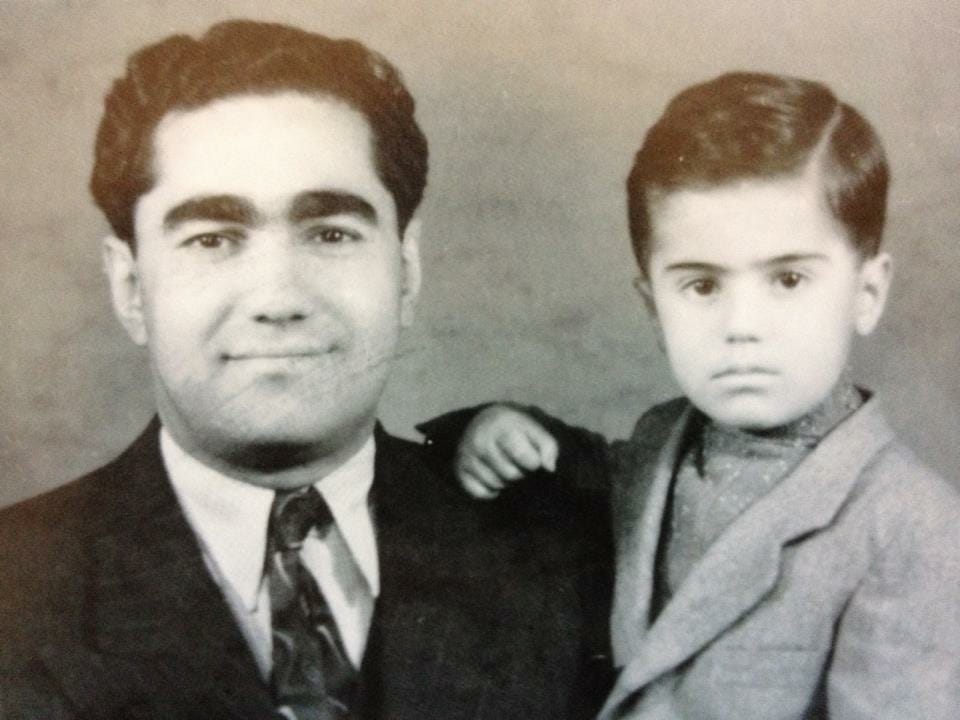
At the very front of the book, before the first chapter even begins, I placed a dedication that serves as the moral compass for the entire project:
To all the children of diaspora forced to live hyphenated lives in a world ill-prepared for their hybridity.
Yeki bood, yeki na bood.
That Persian phrase, which translates literally to “one was, and one was not,” is how every traditional fairy tale begins. It’s a linguistic acknowledgment of duality—that something can exist and not exist simultaneously. For Cyrus Soltani, the protagonist of the novel, and for myself, that is the defining state of being.
Growing up biracial in the American South, my siblings and I sat in a weird and uncomfortable gray area. We were local enough that everyone knew us, but foreign enough that a classmate in the hallway might aggressively whisper that you are “Japanese” simply because their vocabulary of otherness lacks the word Iranian. (That’s a true story, by the way, one I’ll share in a later essay). We were forced to become cultural diplomats—unofficial “Middle East Whisperers”—explaining regional geopolitics to people who only look at the map when gas prices go up.
I wrote this book because I wanted to capture the exhaustion that comes from straddling those worlds. I wanted to write about the silent calculations of a teenager who just wants to play soccer, but instead has to figure out if the casual racism of the people around him is an immediate threat or just another Tuesday.
Controlling the Ball, Controlling the Narrative
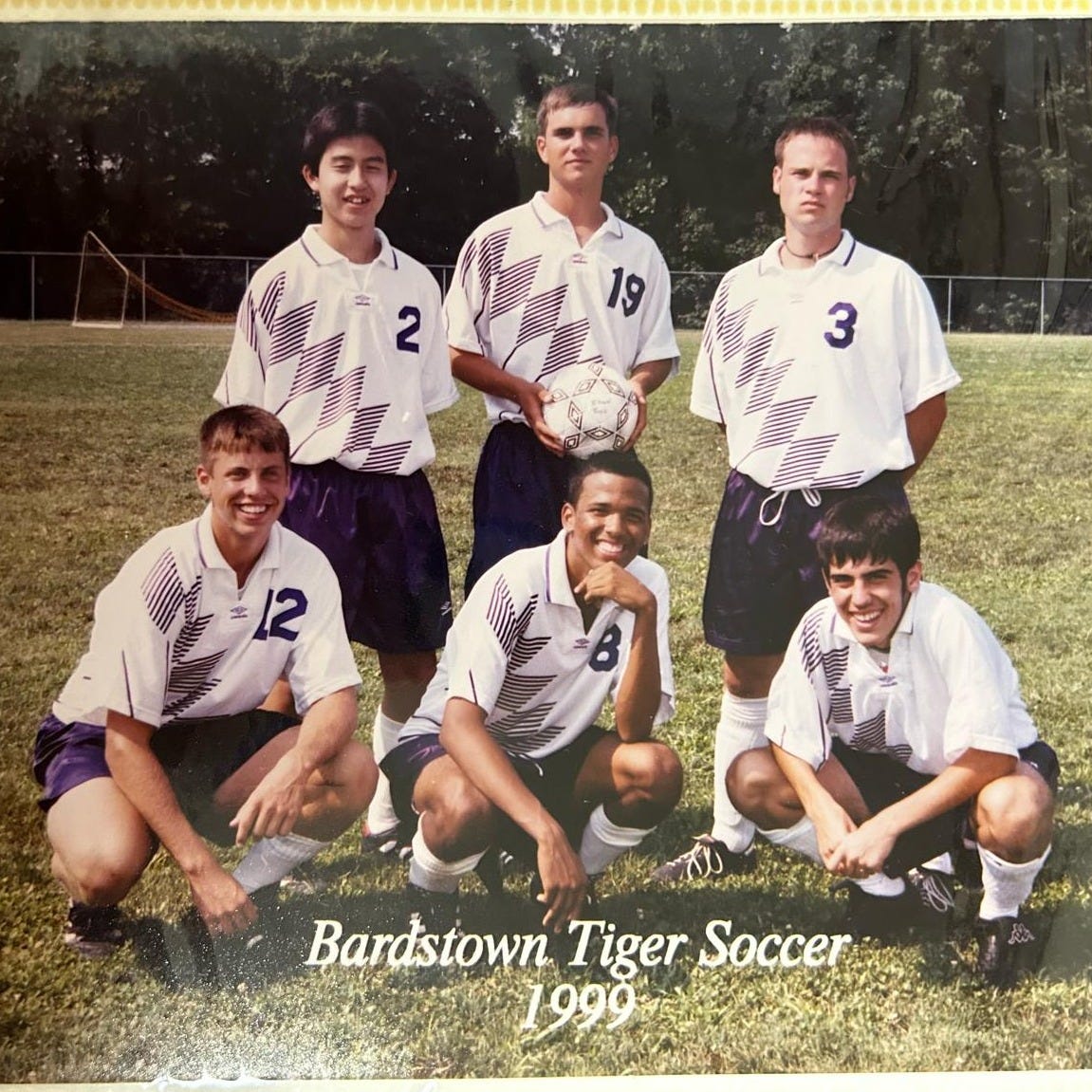
That exhaustion needed an outlet, and for Cyrus, it was often the ball. For that reason, the title of the novel, A Thousand Touches, operates on three levels. On the pitch, it is a literal exercise. Cyrus, a hyper-focused midfield engine, spends his pre-game ritual juggling the ball. First with his feet, then up to his thighs, and finally with his head.
“I lost count at 1000, but that was about twenty minutes in. I ran out of fingers.”
For an athlete like Cyrus, those touches are about absolute control. When the world around him was spinning—when his father retreated into a sullen silence, when the post-9/11 shadow was lengthening over his small town, and when his teammates were sneaking sips of bourbon at team cookouts—the ball was the only thing that obeyed him.
When he first starts to fall for Isabella, it comes from those brief moments when she touches him. His reactions elicit new feelings and emotions while signaling change is coming.
There is a literary lineage to the title as well. It was used in one early-20th-century critique of William Makepeace Thackeray’s style. The critic suggested that he worked not by bold strokes but by “a thousand touches scattered through a thousand pages.”1
But also, it wasn’t just critiques of Thackeray’s works. Other authors have discussed how characters are developed over time, as opposed to through immediate, up-front physical descriptions.
It was a perfect depiction of how identity is constructed for an Iranian-American kid growing up in the rural South, a kid who is, like the old Persian fairy tales insist, both one and not one at the same time. You do not wake up one day and suddenly understand your place in the world. It is built incrementally, touch by touch, through:
The smell of Ralph Lauren Polo cologne fighting with sour mash in the front seat of a BMW SUV.
The scratchy texture of an old Shahin Tehran F.C. jersey kept as a talisman.
The rhythmic clank of a heavy screen door as it slams shut.
I wanted to show the accumulation of those touches. How the small, seemingly insignificant moments of a Kentucky upbringing form the armor a young man needs to survive.
The Riddle of the Immigrant Father
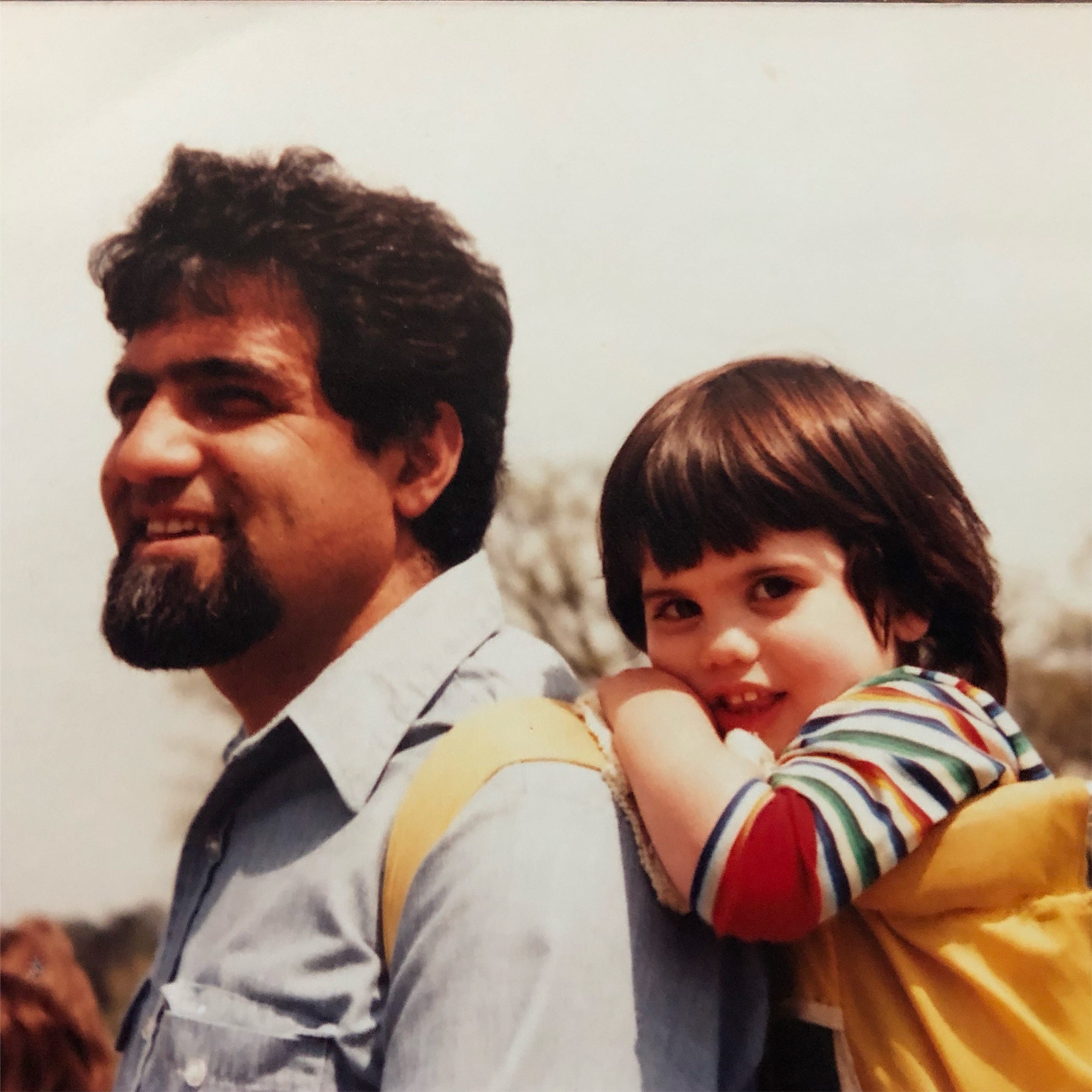
At the heart of the novel is the uneasy, and often not so silent, tension between Cyrus and his father, Dr. Karim Soltani.
Dr. Soltani's past is carried around like a dark cloud, and it often works in contradiction to his public persona. He is Bardstown’s esteemed orthopedic surgeon, driving a shiny new black BMW, yet he cannot fully outrun Persian-accented English. He is a man who cusses like a sailor during sports matches, drinks whiskey, and married into a Catholic bourbon dynasty—yet he breaks down in tears while listening to a random call to prayer segment on NPR.
“Baba, you okay?” I asked.
“Go back to sleep. You have worked hard this week.”
I wanted to write about the veil that so many immigrant parents use to create a barrier between their past and their children. Dr. Soltani’s silence isn’t malicious. It is protective. To look back at Iran is to invite a paralyzing grief into a life he has meticulously reconstructed in Bardstown.
But for the children of the diaspora, that silence is often a black hole. It leaves us (and Cyrus for that matter) with faded, black-and-white photographs hanging on a hallway wall without knowing the stories behind them. It leaves us without the narratives that keep us tethered to our heritage, forcing us to march forward without knowing the ground we are walking on.
The opening breakthrough in the novel comes not from family, but from an outsider. Isabella, the Italian exchange student, asks Karim a simple, disarming question: What was it like growing up in Iran?
And suddenly, the veil begins to open. Karim tells the story from his childhood. It is a story of class, of safety nets, and of a childhood that actually existed before the trauma of migration.
I wrote it that way because I wanted to show that sometimes, it takes a stranger to translate our own families to us. Isabella, coming from her own tightly knit village of Montepulciano, where “everyone is in the wine business,” understands the weight of legacy. She doesn’t carry the familial baggage that Cyrus does, which allows her to ask the questions Cyrus has spent a lifetime avoiding.
The Underbelly of Southern Hospitality
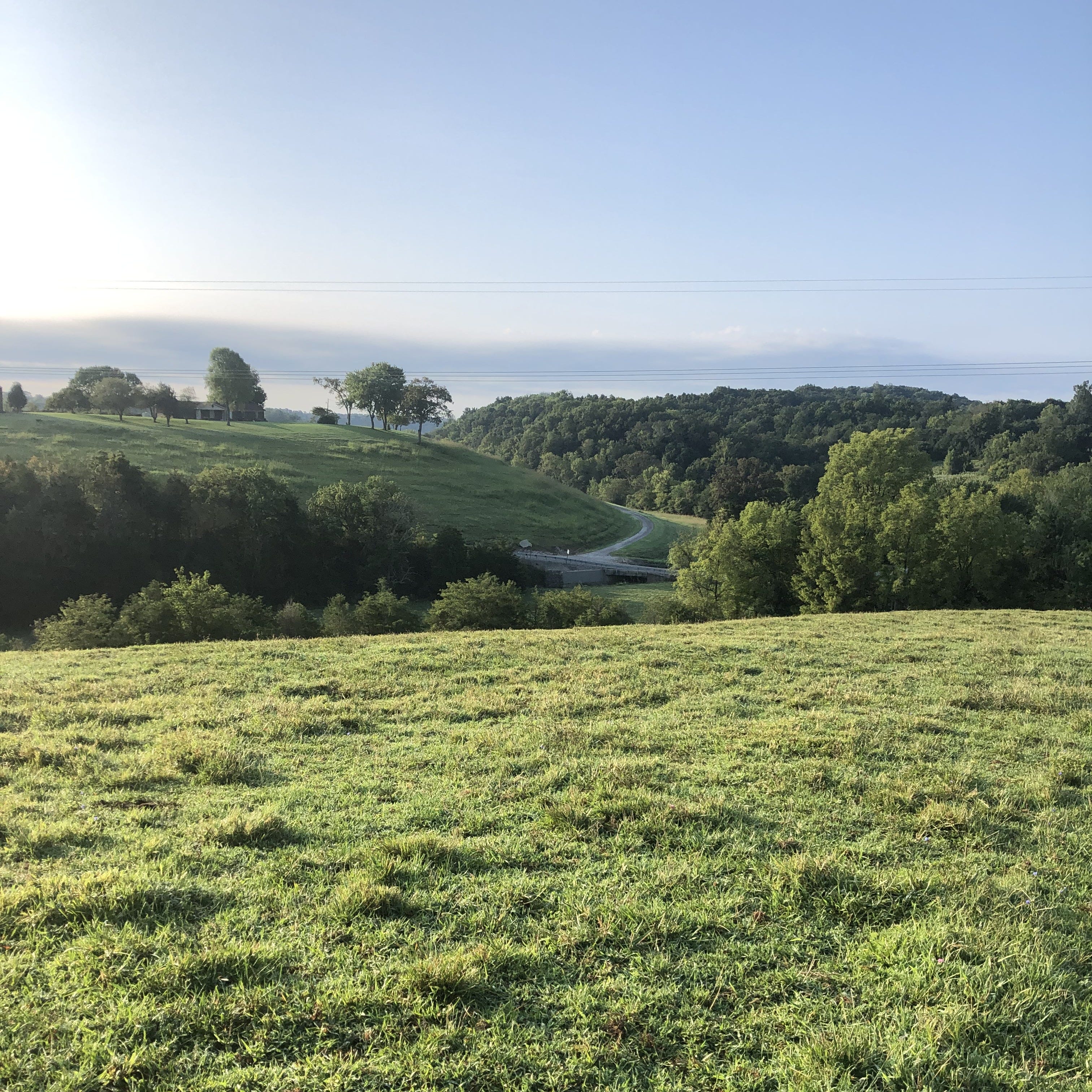
There is another side to Southern politeness that I felt urgent to deconstruct. Bardstown is a beautiful place, filled with historic buildings, blooming honeysuckle, and neighbors who will help you clear a fallen tree after a storm. But that same clannishness can curdle instantly into something hostile.
Something changed in the aftermath of 9/11. Enmity that was just below the surface came bubbling out. For Cyrus, it culminates in the match against a fictional school, Stephen Foster High School—a game that ceases to be about soccer and becomes a proxy war for the town’s anxieties:
“God damned camel jockey, out here thinkin’ he’s better than us. Fuck you, Cyrus.”
Writing the sports scenes in A Thousand Touches allowed me to explore the physicality of prejudice. It is one thing to read about systemic bias. It is another to feel a late, dangerous challenge while the opposing fans cheer. The field becomes a microcosm of the country.
When Cyrus scores his penalty kick with a cheeky Panenka—chipping the ball down the middle while the goalkeeper dives helplessly to the side—it is his ultimate act of defiance. It is the moment he stops playing by their rules of respectability. He stands before the jeering crowd, arms spread wide like Eric Cantona, saying: I am still here. You cannot break me.
But as his mother, Alice, gently reminds him on the drive home, success won’t necessarily cure bigotry.
Why I Had to Write This Book
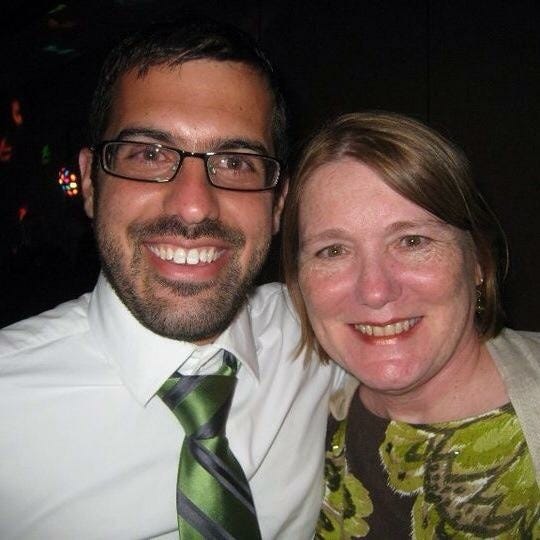
Ultimately, A Thousand Touches is a love letter to the messy, unresolved realities of growing up.
I didn’t want to write a novel where issues and problems were magically resolved. That’s not how life works, especially not in places where history is heavy and change is slow.
Instead, I wrote it to capture the lightness that comes when you finally stop trying to fit into everyone else’s boxes. It is the lightness Cyrus feels when he is sitting in Kreso’s restaurant with Isabella, lacing his fingers through hers, realizing that while he may never truly belong to Bardstown, he doesn’t need their consent to exist.
We write to remember, but we also write to let go.
By putting Cyrus’s story on paper, I wanted to give a voice to every kid who has ever stood in a high school hallway, caught between two heritages, trying to figure out which version of themselves they’re supposed to be today.
To those kids, I say: you don’t need anyone’s permission. The narrative is yours to write.
A Thousand Touches releases in late October.
If Cyrus's story is one you've been waiting to see on a page, you can sign up for my mailing list to stay up to date.
If you've ever felt like a "brought-in" in your own hometown, I'd love to hear about it in the comments.
This essay — and the novel — were both written for you.
Don’t forget to share widely.
Of note: Pangram AI detection has spit out various numbers each time I checked this piece. I wrote this myself and used AI, as I do with all my other pieces, to help polish the essay, searching for typos, grammatical errors, and issues relating to flow or structure. Pangram flagged content that I hacked out myself, quotes from my own novel, and lines I’ve typed before as purely AI-generated content. Nevertheless, I’ve kept AI detection on for transparency purposes, but I wanted to address it first to alleviate any questions.
GK Chesterton’s Masters of Literature: Thackeray (1909), where he contrasts the character description styles of Dickens and Thackeray. Dickens preferred a dramatic introduction, while Thackeray’s was more gradual.
“Dickens introduces a character with a plunge; he gives you a dark lantern flash of him at once. You see Lord Jones as a tall man with a hook nose and a white neckcloth... But Thackeray worked entirely by diffuseness; by a thousand touches scattered through a thousand pages. It is a method which depends upon lengthiness... Even the bodily description of his characters is scattered and disseminated. You do not know what a character looks like until you have known him for three years; then you suddenly remember that he has red hair or a squint, because the author happens to mention it as an afterthought.
...He is the master of allusive irrelevancy. He describes a character not by what he says or does, but by the endless small things that happen around him, the casual impressions he leaves upon others, and the quiet, cumulative atmosphere of his daily life.”
I found this by googling references to ‘a thousand touches’ in literature. In all honesty, I stumbled upon it as I was hoping to avoid issues with my title. But it seemed apt to lean on after the fact, and as it’s clear there were other usages of the technique, to slowly build a character or storyline, I continued.
Comments
Nothing yet. Say the first thing.
Sign in to join the conversation.