
I just cannot anymore…
But I will.
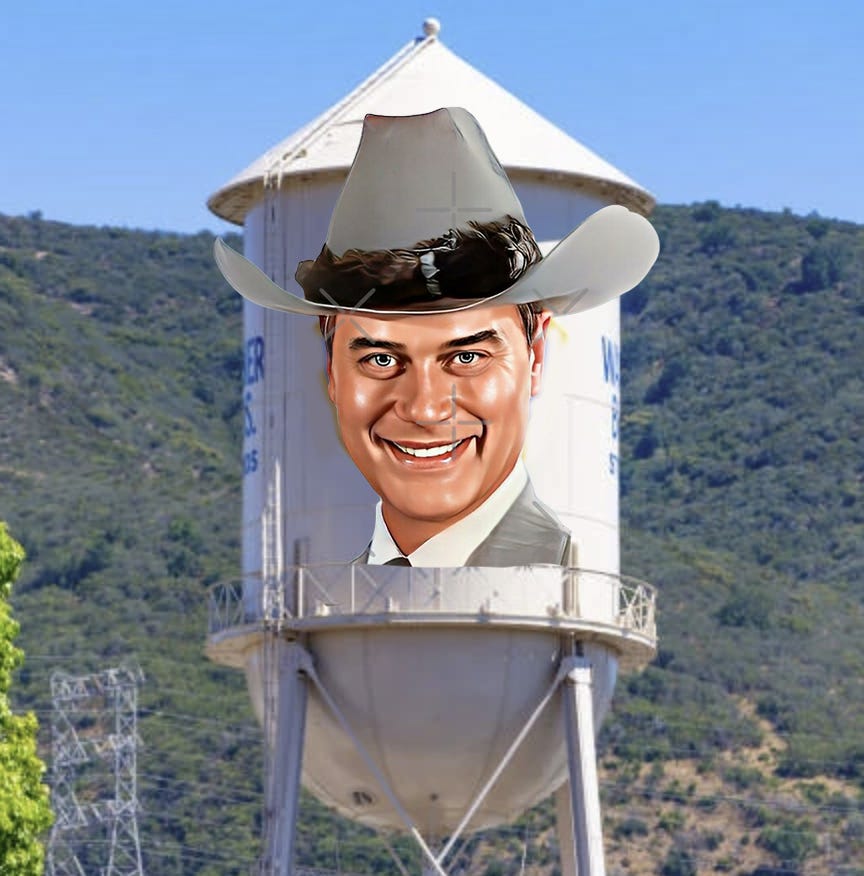
We are now a year into the “Who Shot J.R.?” of the movie and television industry.
Everyone has an opinion, but no one really knows what will happen.
David Ellison has, in the midst of all of this drama, managed to pull off his version of the Access Hollywood bus “Grab ‘em by the pussy” moment with his threat, made in “private” then spread by a loyal base of Gossipteers™, that he might move Paramount to Tennessee or Texas if he doesn’t bag his Burbankian prize.
This should be - or would have been in any other time - disqualifying.
I own the smallest studio amongst the majors… and if you don’t allow me to consume a studio that is 3x the size of the one I just bought for 12x the purchase price of this one I now own, I will take my studio away from the home of the industry and take it somewhere else, thus embodying every fear you ever had about outside industries controlling your industry.
Or not… you just have to let me do what I want or I will hold this over the entire industry’s head as leverage.
To be 100% clear, the italicized comment above is of my creation, based on the attitude I am reading into it… David Ellison has never said those words.
Of course, there is nothing illegal about being an unyielding aggressor in business. Business is full of them. They are admired. Some become presidents.
One of the things that is really hard about this situation is that people who have worked for David Ellison seem to mostly like David Ellison. He says he loves movies and people who have worked with him seem to agree on this. Gotta love a movie lover.
On the other hand, when you make comments - which we all know are being spread intentionally, not by some unfair leak - like “I’ll move the whole company,” not only does it place an instant Snidely Whiplash mustache on you, relentlessly twirling the ends in evil delight, but it makes it hard to take you seriously ever again.
The piece David Ellison wrote for the New York Times Op-Ed section, published just 12 days ago, is another one of these double-edged swords. His words, not mine.
He wrote, ”I believe that anyone who oversees a news organization — I am chief executive of Paramount, which owns CBS — shouldn’t put a finger on the scale, especially on matters involving his own company.”
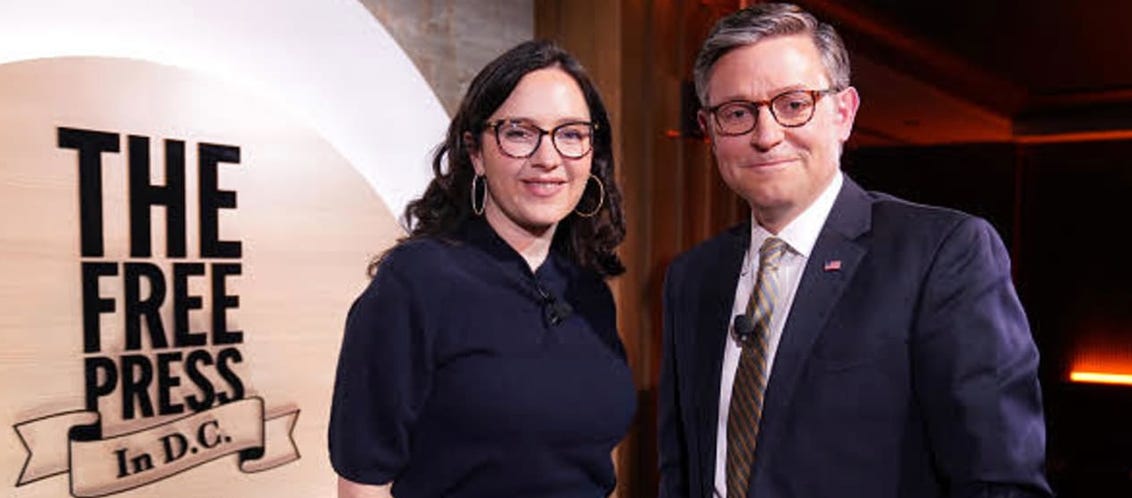
But it would be hard for any objective person to not believe he did just that in hiring the television-experience-free Bari Weiss, wildly overpaying for her newsletter business, The Free Press, and handing her the reins of CBS News… where she instantly started putting her finger, her thumb, and a bunch of Trump gold coins on the scale. I think it’s only fair to say that her show of bias on, for instance, The CBS Evening News, has lessened over the months. But at the same time, she has undermined the most profitable news show ever - and often the most profitable show of any kind - on CBS, 60 Minutes, handing it to another TV beginner to run next season and losing much of her staff behind and in front of the camera.
He wrote, “(A) combined Paramount-Warner would account for less than 20 percent of all watch time — competing every day against Netflix, Amazon, Apple, which are all companies whose resources dwarf ours.”
Part of my gets what he is trying to say here. But a bigger part of me fears that this makes clear that Mr. Ellison’s perception of the industry he bought into and is trying to buy further into is skewed. Neither Amazon nor Apple have invested or shown any sign of investing more resources into their content platforms than any Major studio today… or for that matter, Netflix.
Netflix is projecting revenues of about $50 billion in 2026 and an Operating Income of about $17 billion. Paramount Skydance is projecting $30 billion n revenue and Operating Income of about $2 billion. It doesn’t seem that the annual expended resources are dwarfed.
He continues, “Include YouTube’s user-generated content in that math, and our share would drop to around 13 percent.”
Yes… but Paramount is in no more than passingly in the user-generated content business. YouTube gets a remarkable amount of attention and amazing ads revenues as a result of their model. But while the tools of revenue production are similar (ads), the studio and Google/Alphabet are not really in the same business of creating or delivering content.
Ellison writes of “Hollywood,” “That machinery is in trouble. Hollywood is losing ground to technology platforms whose algorithms reward the loudest voices. The work is leaving, especially from California — where I grew up and where I’m raising my family — draining the deepest pool of creative talent ever assembled.”
Putting aside the threat to leave California, which was hummed about before the op-ed, but became hot gossip after the op-ed, if the machinery is in trouble, why did he buy Paramount and why does he want a bigger piece of the machinery?
I have a hard time understanding why anyone would want 25% or so of an industry that they think is “in trouble.” If the fix is getting out of the business the Major studios are in, why make that your platform?
I have referred to the Netflix possibility with WB many times, because they are not in most of the businesses that WB is in… not in television and not in theatrical. A merger would not just make them bigger in the same areas they are already very big, but it would expand the model. If they just maintained WB under Netflix ownership, it would be more than adding the numbers for the 2 companies together. It would expand the range of the whole. I do not see the PSKY deal as offering a similar extra kick. And for me, the idea that they would invest more than $50 billion in doing anything less than that is pure madness. It is an argument, but it’s not a rational argument.
But they are not in play at this time. David Ellison’s PSKY is.
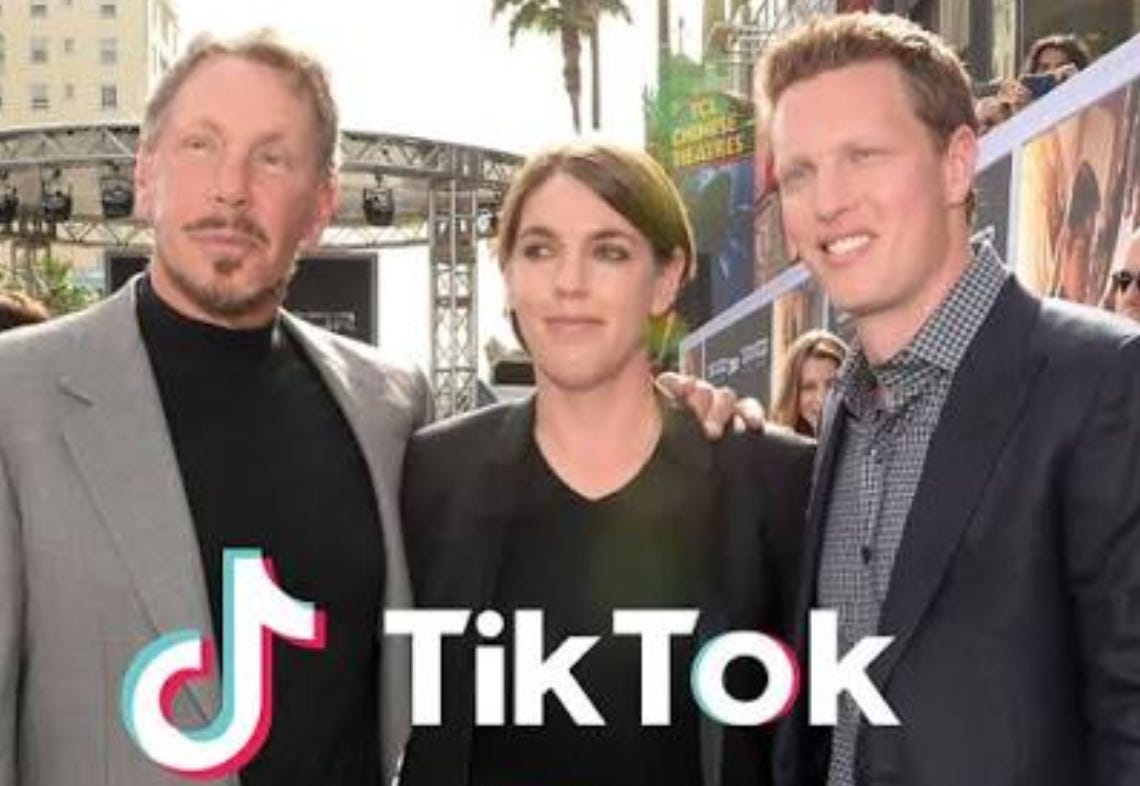
When Ellison refers to “technology platforms whose algorithms reward the loudest voices,” is he referencing YouTube or Tik Tok (which his father now owns in America, btw) and what do these almost exclusively self-generated content businesses have to do with Paramount or Warner Bros Discovery?
I don’t seek to diminish the value of these “technology platforms,” for their own revenues, but also as promotion platforms for the machinery of Hollywood as it currently stands. I don’t know what percentage of advertising on YouTube, Tik Tok, and Instagram comes from Hollywood, but I bet it’s significant.
It is true that Netflix, the leader in Streaming, is experimenting with integrating short-form, podcast, and self-generated content on its platform. There’s money to mine there. Others, like Disney, are experimenting with this format as well. But is this the brightest future of growth at Netflix? Unlikely.
But I ask again… if the future, in your mind, is user-generated content, why are you investing in movie and television studios and long-established longer-form distribution platforms?
IP is used for memes and integrating into many forms on these platforms, yes. But how much actual revenue does this convert into? Think residual checks on a series in the 90s that isn’t wildly popular.
But there is some positive here…
Ellison writes, “Since I took over Paramount, we have nearly doubled our theatrical slate from eight films last year to 15 and greenlit 40 new or returning series for Paramount+, our streaming service. You can expect 90 series from our television studios in 2026. We raised our content investment by $1.5 billion.”
Huzzah!!! I make no claim that David Ellison & Co has done anything less than starting the resurrection of a company, Paramount, that had been doggy-padding through the business (aside from CBS) for many years.
The passions and aggressions of Sumner Redstone narrowed around the same time he handed the reins of Paramount to Brad Grey, who hired a lot of great people along the way, but never really built the company. His deal with DreamWorks was temporary, for the most part. CBS thrived under Les Moonves, but in the moment of re-integrating CBS with then-Viacom/Paramount, he was MeToo-ed (not unreasonably) and send to the showers (by himself and with a pile of cash).
The company survived, separately and together, but never really thrived after DreamWorks left, in part because the highest powers at the company became risk averse. Ellison got a bargain from a ready-to-exit Shari Redstone with the studio/CBS and I applaud his efforts to support and rebuilt both.
The commitments we have made for the proposed Paramount-Warner extend that trajectory: 30 theatrical films a year; 170 television series annually, for our own platforms and for our competitors’; more than $30 billion in annual content investment.
Great. How much of increase is this, really, not compared to the lowest moments of Paramount, but more broadly? According to media reports, Paramount spends over $15 billion a year on content now. And Warner Bros Discovery spends almost $20 billion.
But back to the sharper edge…
Comments
Nothing yet. Say the first thing.
Sign in to join the conversation.