
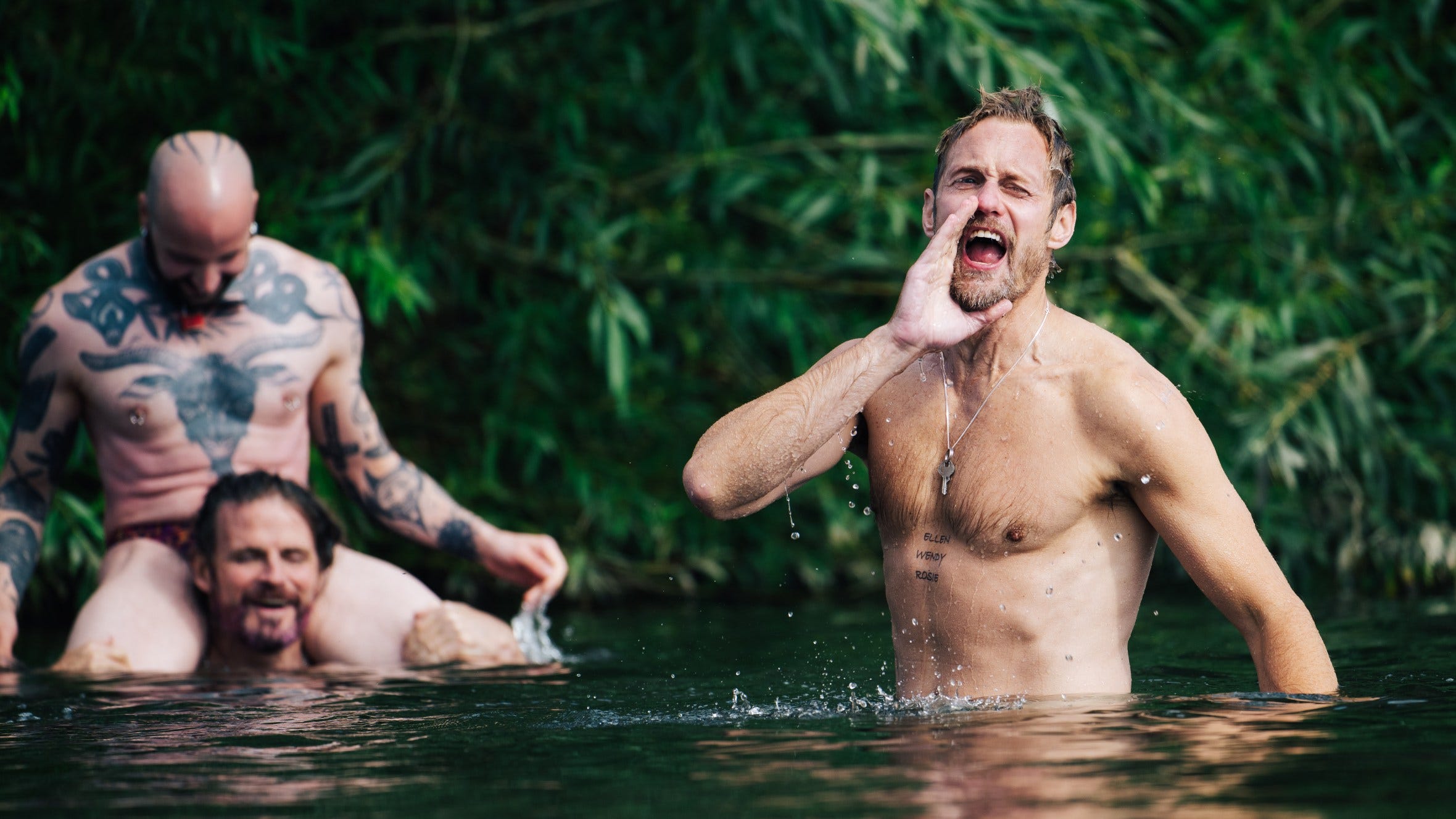
The underworld descent? The seduction of the Innocent? How do you describe this genre, in which the innocent heroine is seduced by the dark master, becomes culpable, and breaks free? At the end of Mean Girls, Lindsay Lohan’s Cady accepts that she is a bitch. She can no longer judge the Plastics, but coexist with them in a new, harmonious ecosystem. Toni Collette’s Muriel stages a pageant of lies to make possible her becoming in Muriel’s Wedding, but at great cost. Her racy Sydney lifestyle cost her every one of her relationships, and she must make amends. But that doesn’t mean she’s going back to her shitty hometown. She was right to go to the big city, right to cut her hair and strike out. It’s time to hit the road. Same with the novel Bones & All, which ends with the wandering cannibal Maren alone, unreformed in her bloodlust, but at least owning what she is and always has been.
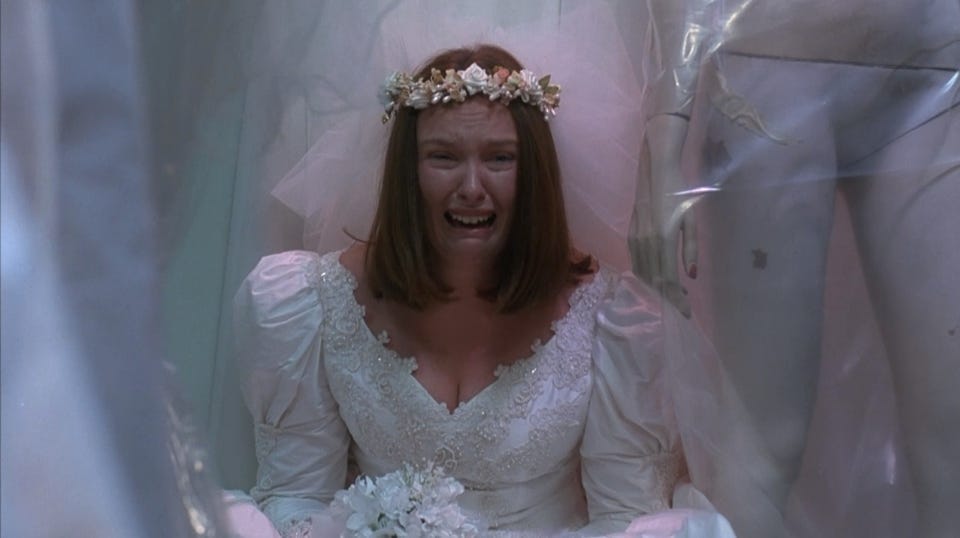
It takes a steady hand to stick such a landing, to not enforce a moralistic summation at the last minute. It’s this level of mastery which keeps the original Devil Wears Prada from becoming a classic. Anne Hathaway, the master of the movie makeover, plays the tedious Andy Sachs, who must embrace her potential to meet the demands of her dominator, Meryl Streep’s Miranda Priestley. The work fuels her, but she can’t succumb to the savagery of the industry, and so Andy leaves Miranda’s world of manipulation behind.
And then, she crawls back to mediocrity, and to the arms of Adrian Grenier. For his approval, she has to take it all back: the ambition, the devotion to her career, even the embrace of high style. It’s a silly surrender of power, considering that Grenier plays a chef in Manhattan—a class of swine who, as anyone who has worked in a New York restaurant can tell you, are not exactly moral arbiters. It’s cheap.
Pillion, I am delighted to say, takes us to hell, but this Eurydice won’t look back at the last minute. Harry Melling plays Colin, a virginal dweeb who catches the eye of Hades Incarnate on Christmas Eve. His new overlord is Ray (Alexander Skarsgard) an aryan phantasm who recruits him as his new sub, servant and houseboy. Ray rules over a small and specific kingdom (one I know nothing about), a pack of BDSM bikers in small town England. His treatment of Colin is cruel, even in the world of domination and authority, and, fortunately, we’re spared any dramatic monologues or flashbacks to his childhood. Pluto is Pluto, and his majesty comes from mystery. It’s Persephone whose transformation we’re witnessing, and it feels like Colin wakes up before us, each chakra coming online a little at a time, until he’s a real person, with his own desire and destiny.
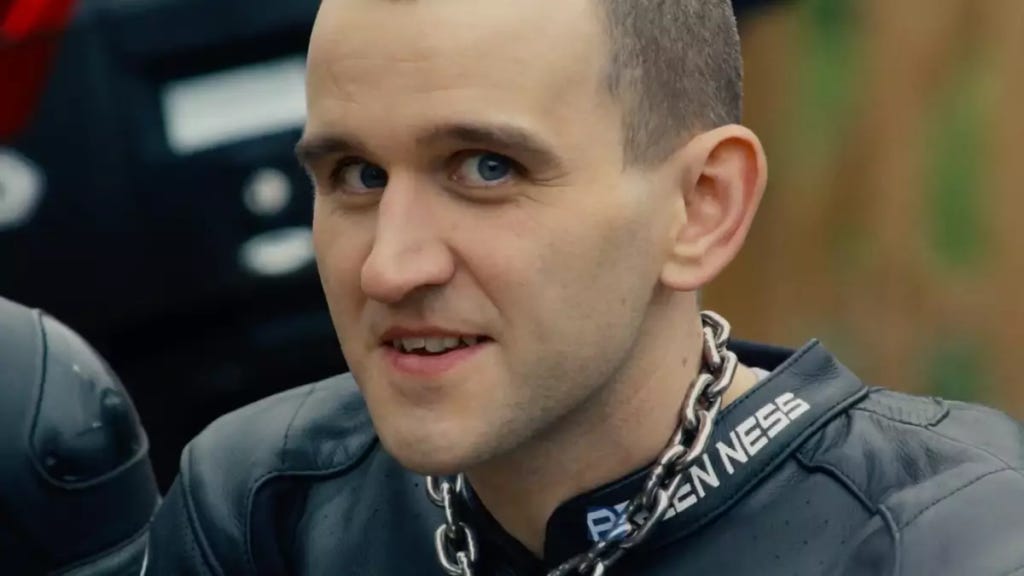
Pillion’s writer/director Harry Lighton doesn’t write off BDSM, or wrap up Colin’s descent in a trite lesson, as with Winona’s lame final voiceover in Girl, Interrupted. When Colin introduces Ray to his supportive, but sexually infantilizing parents, we’re not force-fed false acceptance. This isn’t about coming out, but coming into one’s own, and happens by fucking. Some doors can’t be unopened, nor should they be. Colin has only just begin his initiation.
As for Andy Sachs, twenty years later? We find out, in The Devil Wears Prada 2, that Andy has indeed made it as a journalist, chasing hard stories around the world, fighting for her values, choosing her job over family and relationships. Sounds like an interesting evolution, one that Hathaway has the flint for. This self-realization would make a middle-aged Andy a powerful foil against her former tormentors, Emily (Emily Blunt) and Streep’s Priestley.
But, regrettably, Hathaway pounds hard on likeability, and her character remains impossibly dough-eyed and devoid of complexity. In one scene, we see the real Hathaway, the side which made her such a fucking phenomenal Catwoman. But it’s a mere flash of Lilith, and then back to Disney Land.
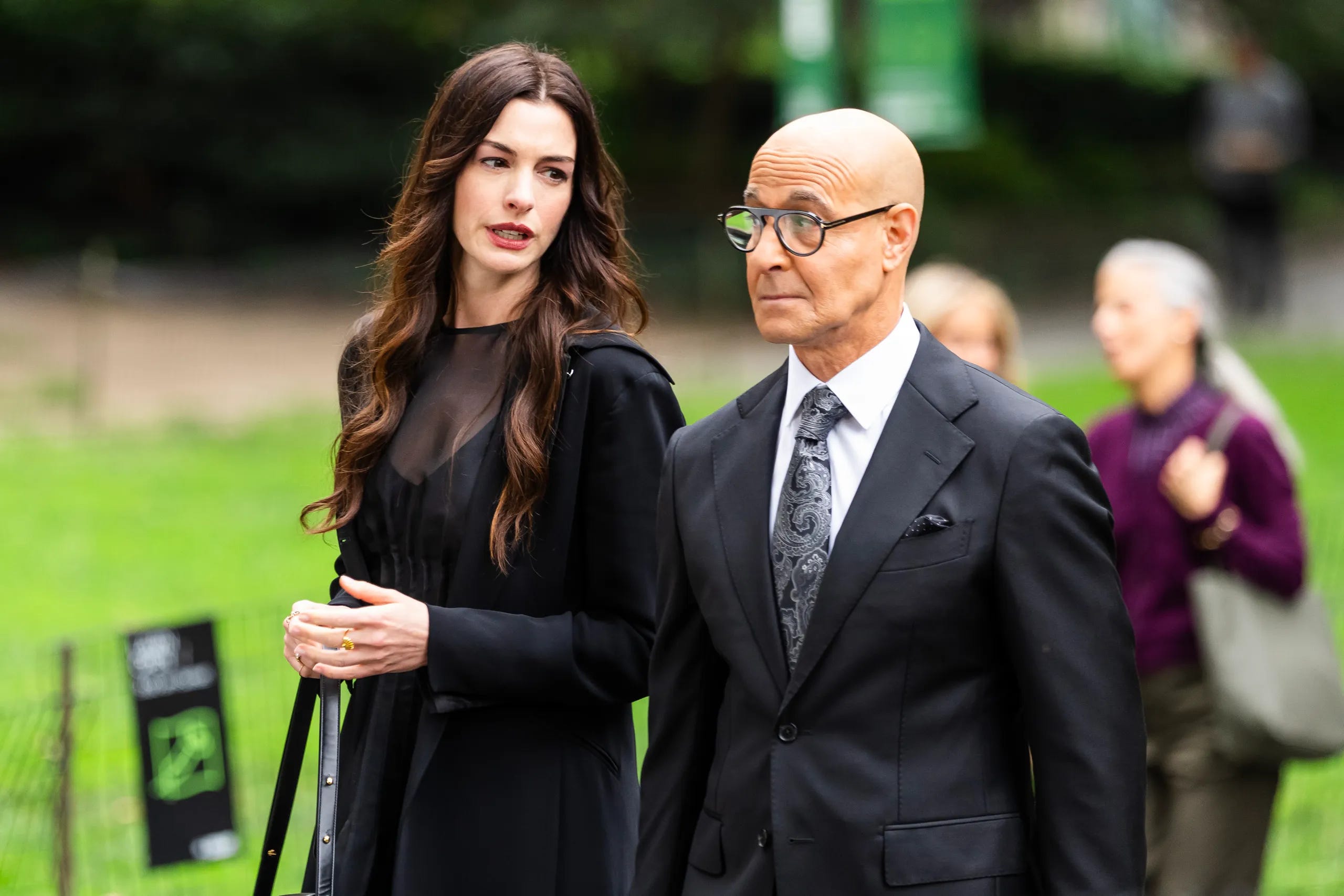
By 2026, The Devil Wears Prada 2 has solved its politics: this time, its women don’t apologize for loving their work. But what are they working for? A dying industry? A leg up? A legacy? There may be an interesting movie here, glimpsed intermittently, about a queen watching her kingdom crumble. We have a lot to base this one on: years of reportage on the fall of media, and, more interestingly, on the false lifestyle that Condé Nast’s staff have long lived, even without the capital to finance it. But, be it in deference to nostalgia or to its predecessor, The Devil Wears Prada 2 fears change. The costumes and soundtrack slap, the players show up, and some of the one-liners made us laugh. But what’s the point, if after 119 minutes, or even twenty years, we’re to end up back where we started?
I wanted to share my latest two podcast episodes (now in higher video quality), of which I’m very proud. You can subscribe on Spotify and Apple as well.
The first breaks down the pagan holiday of Beltane (May 1), and talks, without much subtlety, about the power of the penis as a paintbrush, and the lost potential of the sacred masculine.
And then I get into AI, The Comeback, and the future of human originality, with an exploration of Pluto in Aquarius. I hope you like it.
Books are open through June. You can claim 20% off a spring reading with the checkout code BELTANE.
See you around the May Pole, and at the burning of the Tower,
David
Comments
Nothing yet. Say the first thing.
Sign in to join the conversation.