
This post is part of the Soul Talkin’ series
The recent release of a duet (“Where Is Your Heart”) between Dionne Warwick (whose music was the catalyst for my ‘discovery’ of R&B and soul music back in 1964) and the ever-soulful John Legend served as a reminder of my first meeting with John in 2004 and this interview I conducted with him in 2010.
The subject of our conversation was the then-recently released album “Wake Up!” which was a collaboration with The Roots. In listening back to the interview I was struck by how - in many ways, sad to say - how uncannily relevant the choice of songs for “Wake Up!” including “I Can’t Write Left-Handed” (originally recorded by Bill Withers), “Compared To What” and Nina Simone’s “I Wish I Knew How It Would Feel To Be Free” is for the world we’re in today, politically and socially….
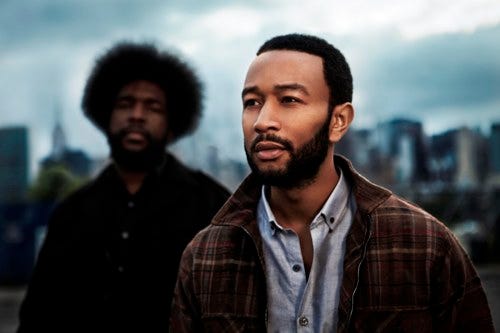
(This is the modified transcript of the original interview)
David Nathan: Well, I’m really, really thrilled today to welcome a gentleman who - I was just sharing before the interview proper - I first met at the time of the release of his first album on Columbia. And we were recollecting how we met at a Starbucks in Beverley Hills, and then John played me the first album, and then a few days later called me back and said, “I have another song to add, which is ‘Ordinary People’.” And as he said, the rest is history. The reason for our interview today, of course, is the brand new album which John has done with The Roots called “Wake Up! “And so first, I want to welcome you to Soulmusic.com, Mr. Legend.
John Legend: Thank you, David, it’s a pleasure to talk to you again. It’s funny hearing that story about me playing you the first album. I still remember the excitement that I had back then. And it’s funny, ’cause each time I do a new album I still have that same excitement, and a little bit of anxiety, waiting for the public to get it and to see how they react: see how it sells, see how the critics look at it, and see how the fans feel about it. And I have that same feeling now, as I’m about to release this album.
DN: Yes. Well, that’s the perfect segue way into me talking to you about this, because clearly it is quite different from the three albums you’ve done before, even though the common factor is you.
JL: Yeah, the common denominator is me, but this album certainly has its own feel and its own flavour. And in some ways it takes me back to my roots as a kid, growing up singing gospel music. The singing style that I used as I approached this album is most like the gospel and soul music I grew up listening to. I think I touched on that on my first album, Get Lifted, and I’ve touched on it, some, throughout my career, but never to this full extent with this album.
This is truly a deeply soulful album. And it’s gritty and it’s organic in a way that none of my albums have been to this point. And it was really fun doing it with The Roots. This is the first time I’ve ever done a full album with one live band and—apart from actual live concert recordings—and doing it with The Roots was a phenomenal opportunity for me and I’m glad I was able to do it.
DN: Well, the first question that I have is the most obvious, given what you’ve just shared: when you presented the idea to the record company, which I’m sure you did at some point, did you have any trepidation or concern about how they would respond?
JL: You know, what’s funny is, they were really excited about it. Maybe because the top people at my label are British, but …
DN: Yeah—that’s the reason…
JL: But they all have, kind of, this affection for classic soul music and this desire to see me get in touch with my roots—no pun intended whenever I use the word roots outside the name of the band. But I think there was an excitement, really, at the label, to see me do this kind of cool, passionate project—really something that was gritty and soulful. I think they were into it. And the funny thing is, I think they think it’s going to sell really well, even though it’s not really something that’s targeted toward contemporary radio—not really in the mainstream of what’s going on in black music, or pop music, right now. I think we all think that, hey, we just might sell a lot of copies of this—I think a lot of people might want to hear this.
THE CHOICE OF SONGS ON ‘WAKE UP!’
DN: Obviously, I’ve listened to it prior to talking to you. For someone who grew up on the same songs and who remembers them from, some of them, from when they were first released—I’m a little older than you!—it’s really great, I mean great, to hear some of these songs reinterpreted and to hear them being brought to an audience who would never have heard them.
The particular examples for me, I liked “Little Ghetto Boy”; the Nina Simone “I Wish I Knew How It Would Feel to Be Free” and the Bill Withers song [“I Can’t Write Left-Handed”]. I want to spend a few minutes talking to you about that. Because I haven’t heard that song since that live album that he did at Carnegie Hall, which of course you reference in the speaking—
JL: Yes, back in ’73, I believe.
DN: Exactly, exactly. So I have a few questions, but we’re going to start with that one: I’d like you to talk and tell the people who are going to be listening to this interview a little bit about what that song’s about, and why you chose it.
“The overall theme for this album is one of political and social engagement and awareness, talking about what’s going on in the world and what we need to do to make the world better…”
JL: Well, you know, the overall theme for this album is one of political and social engagement and awareness, talking about what’s going on in the world and what we need to do to make the world better. And you can’t talk about that without talking about war, because particularly Americans and Brits as well, have been sending our troops overseas to do a lot of the world’s fighting. And politicians in the White House and on Capitol Hill, and at 10 Downing and in the Parliament there, they make the decisions about who goes to fight, but the people that actually go to fight are the young men and women in the armed services. And when Bill Withers was writing the song [“I Can’t Write Left-Handed”],the war was the war in Vietnam.
But as any student of history knows, America has been in some sort of war for much of its history, fighting somebody. That means we’re always in the process of fighting someone, and losing lives, and maiming and injuring our young people, and having them come back with post-traumatic stress. And all these things are impacting our soldiers and our veterans. So we wanted to talk about that on this album.
And this song, “I Can’t Write Left-handed” is such a powerful, kind of bluesy dirge, almost, for this soldier who is still alive, but he’s disabled—he’s lost the use of his right arm and his right hand, and he can’t write left-handed. It’s all because he was shot in his shoulder in Vietnam. And it’s such a powerful song to begin with.
In our interpretation of the song are the passion and the power for the song—for our interpretation of the song really grew with us performing it live. We actually cut a version of it, mixed it, mastered it, and were ready to put it on the album, then decided to re-cut it based on what we were doing live to really up the ante—really drive home the emotion of the rendition that we did. And if you listen to it, and obviously you have, there’s this long jam at the end that’s such a… I think it’s the emotional centrepiece of the album.
DN: Yeah, it is, absolutely. Absolutely.
JL: In a lot of ways, once we get past the first four or five minutes of the song, it’s not really very similar to Bill Withers’ rendition. But it’s something we decided to take and make our own, and really deliver on the emotion and the pain that that soldier might feel.
And hopefully it will arouse some emotion in people. Because I think what happens a lot of times, particularly with war right now as opposed to back then when we had a draft—right now, if you’re not a soldier, if you’re not a family member of a soldier, then you don’t have any fear of going overseas; you don’t have to feel any pain as a result of the decisions made to go to war.
We got a tax cut when we went to Iraq, so Americans didn’t have to make any sacrifice to go to Iraq and wage a war of choice. I wanted to record this song as, really, an emotional plea for people to really pay attention: that war really is hell and war has real consequences, even if you don’t feel them personally. I want you to feel them as we play this song.
DN: Well, two questions: first, were you familiar with the song, or was it a song that the members of The Roots brought to your attention?
JL: It was a song they had brought to me. I had heard it before, but it wasn’t something that I knew very well and had really internalized.
DN: And do you anticipate that the song will also, I assume, resonate with all the people who’ve come back—all the men and women who’ve come back from Iraq and Afghanistan?
JL: No, I never try to speak for soldiers. I’ve done a song called “Coming Home” that really spoke to a lot of soldiers and their families, and I actually performed it at a military tribute on television the other day, and it was really emotional for a lot of soldiers. And so, you know, I’ve tried to do things in the past to honour their sacrifice, even if I don’t agree with the policy-makers that sent them there.
This song certainly is attempting to do that; and hopefully, it does have an effect on them and it does minister to them in some way. Hopefully it speaks to those who didn’t go, to in some way try to convey the emotion and the gravity of war to people who didn’t go.
CLASSIC RECORDINGS REVISITED…
DN: Now, how many of the songs on this album were you familiar with before you recorded them? Obviously, aside from the one that you wrote.
JL: I knew “Little Ghetto Boy”, I knew “Wholy Holy”, I knew “Wake Up Everybody”, I knew “Straighten It Out”, which was a Pete Rock & CL Smooth song that was based on a sample of “Our Generation”, the Ernie Hines song, but I didn’t know the original Ernie Hines song. I didn’t know “Hang On in There”; I’d heard “Hard Times” before, but I didn’t really know it that well. So I knew some of them, I knew “Compared To What” - I’d heard in several versions on different stations by different artists.
So I knew, probably, sixty percent of the stuff. And then Ahmir, ?uestlove from The Roots, his record collection is about seventy thousand deep, so— He is quite the collector, quite the music historian, and so he was really responsible for providing the shortlist of songs for us to choose from. And then I got involved once we’d narrowed it down to maybe twenty or so.
DN: Was it tough, choosing songs?
JL: No, really I just looked at it as, does this feel good? Does this feel like it will add some variety to the album and stay with the feel of the album? And does it sound like something I could sing well; deliver well? And we also wanted to stay away from the picking the kind of obvious canonical songs.
We picked a few songs that were true hits and classics—like “Wake Up Everybody” and “Compared to What” [which] were fairly popular songs in their day. But a lot of these were not super-popular and they were kind of overlooked, and I think that was part of what we were trying to do was shine a light on some things that were overlooked and refresh them for a new generation.
DN: Well, what I find particularly intriguing is that what you’ve done as an album that, for me, is very courageous—from my standpoint, it’s very courageous to do something like this—because we live in a different era. Although I grew up in a time when people like Nina Simone and Curtis Mayfield were making records that were relevant to that time, even though there are people in hip-hip that have done that, I would say that there hasn’t been an album in recent times that was as… well, that appealed to people beyond hip-hop, let’s put it like that—
JL: Sure.
DN: I think it’s very courageous of you and The Roots to do something like this, and I certainly, personally, commend you for it.
“I was explicitly trying to connect the hip-hop generation with the classic soul aesthetic. And this album goes even further by going straight to the source and covering some of those great songs…”
JL: Well, it’s interesting, because I think hip-hop has always looked at classic soul as an inspiration. When you look at who hip-hop artists sample the most, it tends to be the Al Greens or Curtis Mayfields or James Browns, or the Aretha Franklins of this world, or even the more obscure artists like Baby Huey and “Hard Times”; like Ernie Hines with “Our Generation”.
So I think hip-hop and soul have always had a relationship—hip-hop and classic soul. And even my career has been a manifestation of that relationship to some degree, particularly with my first two albums. I was explicitly trying to connect the hip-hop generation with the classic soul aesthetic. And this album goes even further by going straight to the source and covering some of those great songs.
THE MOST CHALLENGING SONG…
DN: What was the most challenging song on this album for you to record? Emotionally challenging…
JL: It’s scary trying to cover Marvin Gaye and Aretha Franklin at the same time [laughs].
My version of “Wholy Holy” on this album is kind of covering both of them, because it’s originally Marvin’s song and we used some elements of his lush arrangement—the kind of sexy side of it—but we also brought in some of the gospel elements from Aretha’s version from Amazing Grace.
That is certainly a challenge, as a vocalist, to even try to be in the same conversation as those two people. Certainly was a challenge, and it took me a while to hone in on the vocal approach I was going to take for it. So that took a little bit, and it was certainly a challenge.
RECORDING WITH A BAND…
DN: How was it, working with a band?
JL: It was great—it was fun. Working with a band was certainly different from anything I’d done before. I’d never done a kind of back-to-back—I mean, front-to-back collaboration with one set of players. I’ve never recorded it in a way that was fully interactive and live.
Whereas before I’ve used a lot of live instruments, it’s usually been multi-tracked and done separately, in the way that most people record albums now. But we really did it like they used to do it: we recorded the rhythm section, got a good take, and then cut the vocal to it, you know? In that way, it was really a classic recording method for these classic songs.
DN: So you were there for the whole process?
JL: Oh yeah, there were a few songs that the band cut without me, and maybe I overdubbed piano or something, just because I was scheduled in the studio. But I tried to be there for the whole process.
DN: Right. Now you mentioned before about—when you were talking about “I Can’t Write Left-handed”—about doing something live. So have you been doing some of these songs already, with The Roots, in live performance?
JL: Yeah, that’s part of why the arrangements changed. “Hard Times” we rerecorded based on what we were doing live; “Little Ghetto Boy” we rerecorded based on what we were doing live, and “Hard Times” was like that as well.
“It’s the most soulful material I’ve done to date, when it comes to something that’s really raw and gritty and really close to the original aesthetic of the artists we were covering. It may challenge some of them to listen to me with a slightly different ear than they listened to some of my earlier material.”
DN: Now how do you think the people who first became aware of you through songs like “Ordinary People” will respond to this album?
JL: Well, this is certainly heavier material than anything I’ve done before, topically speaking. It’s more serious in that regard. It’s the most soulful material I’ve done to date, when it comes to something that’s really raw and gritty and really close to the original aesthetic of the artists we were covering.
It may challenge some of them to listen to me with a slightly different ear than they listened to some of my earlier material. But I think that a lot of people are missing soul right now—they want something real, they want something with some depth. And pop music is very synthetic right now. R&B and hip-hop, even, have been very influenced by that trend and tend to be very synthetic right now. And I think a return to some more depth and more soul is overdue, so here we go [laughs].
DN: [Laughs] Well, I know we don’t have an unlimited amount of time, so I wanted to try to cram in as much as we could. I’d hate to tell someone this is your best record, because we don’t know what’s coming next. But certainly from my perspective as someone who grew up on this music, it is your best record…
JL: Well, thank you.
“You can’t market-test your creativity. You can’t wait and see how people like this to decide how you’re going to write the next song, you just have to write it and try to make it the best you can write it.”
DN: Well, I hear you but I also hear the songs which I remember—many of which I remember—and I do think it’s brave. And my question is: will you wait and see how this does to see if you’ll do another one like this, or is this the beginning of another chapter in your career, in terms of doing these kind of records?
JL: I don’t know yet. It’s an interesting question. I don’t think I’ll base if off of sales or anything, but I do care about how the audience receives it. So you know, I’m curious to see how they receive it. But you can’t market-test your creativity. You can’t wait and see how people like this to decide how you’re going to write the next song, you just have to write it and try to make it the best you can write it. You have to, you know, work with the best people and the best producers and try to make great music no matter what; music that’s going to stand the test of time. And you know, I do like having my singles on the radio.
That’s part of what keeps my career going, it keeps me selling tickets to my live shows and it makes me have more flexibility and freedom to do what I want to do creatively. So I do want songs to play on the radio, but I have to do it my way. I have to do it in a way that feels truthful for me. And to me, that means it’s gotta be soulful to some extent. That doesn’t mean it has to be classic soul—it doesn’t have to sound like the sixties and seventies every time, but it does need to have soul, in a broader sense of what that word means and not just in a specific time and genre. And so that’s what I’ll be trying to make on the next album and the next album.
“There’s a certain truth when you push yourself like that that is conveyed to the audience, and the emotion is conveyed to the audience, and I want that to be there in the next album and the next album and the next album after that.”
What I think has been cool about this album that I think will influence me on future albums is me getting in touch with all the elements of my voice, and the edges of my voice, and pushing my voice to really capture the passion of the lyrics. That’s something I want to carry to the next album, for sure. And that’s what I mean when I talk about [it], I want it to be soulful. There’s a certain truth when you push yourself like that that is conveyed to the audience, and the emotion is conveyed to the audience, and I want that to be there in the next album and the next album and the next album after that.
DN: Sure. Well, I have one final question—I could ask you many more, but I’m going to be respectful of your time—but I do want to ask you this: as I was reading the bio that goes with this record, it does reference the fact that this record was—the idea for it, the germ, the seed for it—began during the electoral campaign of 2008. And obviously, a lot’s happened since.
JL: Yes.
THE TIMING OF THE ALBUM’S RELEASE…
DN: And as I noted in the bio, it said that you waited a year, you and Ahmir to decide to go further with it, ’cause you wanted to see what would happen politically.
JL: I don’t know that I agree with that statement—I must not have edited that bio correctly! ’Cause we weren’t waiting to see what was going on politically. I was out marketing Evolver, I had a big hit with “Green Light” and was touring and went right around the world. And I didn’t have time to work on another album [laughs].
We had started it back then in the couple months before Evolver came out, but once it came out I had to go full force into marketing that. And so I had to wait until all that was done and then come back and finish it. But I knew I wanted to come back and finish this album. I was excited by the idea of it; we had already laid down a bunch of the rhythm tracks; I had even cut a few of the vocals, and my management, the label—everyone was excited about the prospect of this album.
And so, I wasn’t waiting for any political circumstance, one way or the other. But even having said that, it’s interesting that I feel that even now more than ever, these lyrics are still relevant, even more so than in 2008.
Because when you look at some of the conflicts that are being had between the right and the left in this country; between those who are for progress and those who hearken back to the old America that was less diverse, less inclusive and more challenging for minorities, these conversations are very real right now. They’re very meaningful to a lot of people right now, and I think this album will help put our perspective on some of these issues.
DN: Yes. Well again, I want to thank you, I want to congratulate you, I want to say thank you for doing something that to me is, as I said before, courageous, brave, but absolutely soulful, so I know that people for Soulmusic.com in particular are going to be listening out for this. And we do look forward to it. Now you are currently out on the road with The Roots?
TOURING WITH THE ROOTS…
JL: We are—I don’t know if you guys are familiar with the show Late Night with Jimmy Fallon, which is one of the NBC late-night shows in the States but The Roots are the house band for that show, so that means most weeknights they’re working, doing that show. We can’t fully tour in the kind of classic sense. But we have been able to do quite a few live shows together on weekends, and close enough to New York we can do them even on weeknights when they’re working. And then they also have weeks they have off for hiatus for the television show. So we’re finding time to perform live together, and it’s really been a phenomenal experience.
People that know me well and have been to a lot of shows say these are the best shows they’ve seen us do, and some of the best shows they’ve seen by anybody, seeing us together, me and The Roots. And so I’m really, really excited to play some more live shows with them whenever we’re able to do it, and we will come to England and do that as well.
DN: Great. Well, it’s always a pleasure, speaking with you.
JL: My pleasure. And thanks for keeping the torch alive with the soul music, I’m glad we have people like you are out there championing what’s going on in soul music.
DN: Well, thank you.
I’ve added bonus material from my review of the show John and The Roots did in London in November 2010, available for paid subscribers…
Here’s a preview:
“It isn’t often that a multi-platinum artist chooses to play a small, intimate venue in London, a reality usually dictated by the need to severely reduce said artist’s fee! But John Legend has never been one to follow tradition, witness his latest album, the brilliant “Wake Up!” set created with the super-talented Roots.”
Upgrade to paid to read the review!
JOHN LEGEND & THE ROOTS AT THE JAZZ CAFÉ, LONDON, NOVEMBER 28, 2010
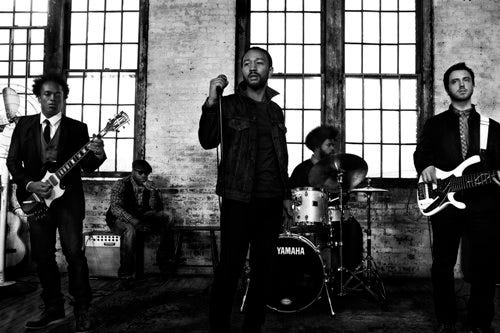
It isn’t often that a multi-platinum artist chooses to play a small, intimate venue in London, a reality usually dictated by the need to severely reduce said artist’s fee! But John Legend has never been one to follow tradition, witness his latest album, the brilliant “Wake Up!” set created with the super-talented Roots.
I admit that going in, I was a little biased: “Wake Up” is my favorite album of 2010 and was obviously the focus of the show – which followed a successful night at The Hammersmith Apollo, a venue that holds at least four-six times the number of people jam-packed into the Jazz Café.
John and The Roots, augmented by a trio of female background vocalists, kicked everything into high gear with a funky, hard-edged “Hard Times,” the Baby Huey song also written and recorded by Curtis Mayfield and after John shared that the last time he had played the venue was several years ago, he launched into a biting reading of “Compared To What,” a song I first heard by Les McCann back in the late ‘60s, revived by Roberta Flack on her first Atlantic album.
John’s intro to Donny Hathaway’s classic “Little Ghetto Boy” (which featured – as did a number of tunes – rapper Black Thought) made reference to the greats of soul music (Nina Simone, Marvin Gaye, Mayfield and Hathaway, all of whom are represented with songs on “Wake Up!” ) – and gave me cause to pause, realizing that I had interviewed three of that illustrious quartet.
That John and The Roots have chosen to revive the music of these musical giants is truly outstanding: not only are they being ‘introduced’ to a whole new generation but for old school folks like me, these tunes are a reminder that while there may have been many changes politically, socially and economically since the late ‘60s and early ’70s, the challenges that everyday folks face pretty much remain the same. Food for thought.
Other selections from “Wake Up” included “Hang On In There” and “Our Generation” before John and co. – obviously having a good time, spurred on by the enthusiasm of the packed house – launched into “Humanity,” the reggae cut (originally done by Prince Lincoln).
Legend knows the importance of balancing his latest work with his own contemporary classics, clear that while most of those gathered for this unique gig would probably be aware of “Wake Up!” the exclusion of tunes like the haunting “Again” (from his 2006 sophomore album ), the still-infectious “Used To Love U” (the first hit from his 2004 debut CD) and the Legend anthem, the plaintive “Ordinary People” was essential.
Sandwiched between the latter two tunes was the timeless Philly soul chestnut, “Wake Up Everybody,” whose lyrics are as relevant today as they were back in the ‘70s: indeed, Legend’s somewhat risky choice to step away from the relative comfort of the pop and mainstream success he has enjoyed over the past six years by doing his current album of social message songs was fully justified by the inclusion of this song as well as the unquestionable standout of the evening.
In our interview for Soul Music.com a few months ago, John and I spoke at length about Bill Withers’ pointed anti-Vietnam War song, “I Can’t Write Left Handed.” As potent as the track is as the highlight of “Wake Up!” the live performance of the tune is riveting and edgy – with superb musicianship from The Roots, in particular drummer Ahmir ?love’s who was absolutely spectacular alongside keyboardist James Poyser and guitarist (Captain) Kirk Douglas –is indeed one of the best performances I’ve ever seen by a contemporary artist.
Having lived in the U.S. for most of my adult life, I know the musical phrase ‘going to church’ well and Legend and his musical cohorts took us there with the kind of orgasmic energy that can be heard on many a Sunday morning when the spirit hits!
“I Can’t Write Left Handed” was tough to follow but a required encore set included the ever-popular “Save Room” (from “Once Again”), a detour into the Stevie Wonder songbook for “I Love Every Little Thing About You,” the obligatory “Green Light” (from John’s third CD, “Evolver”) and finally, an uplifting, rousing “Shine,” the one new Legend composition on “Wake Up!”
I have been fortunate to have seen so many wonderful live shows over my past forty-five years – yup, forty-five – and unquestionably, John Legend and The Roots’ performance at The Jazz Café will stay etched in my memory banks and consciousness for a long time to come and was certainly one of the best this decade.
© 2010, 2026, David Nathan. All Rights Reserved.
Comments
Nothing yet. Say the first thing.
Sign in to join the conversation.