
I can’t recall the last time I used the word ‘exquisite’ to describe music…or anything else for that matter! It’s not a common term even for diehard and ‘veteran’ lovers like myself. If I use the word, I use it sparingly: the good ol’ Cambridge Dictionary offers a few definitions: in thinking about what prompts this particular piece about three women who fit, in my own estimation - and not even being remotely ‘humble’ about it - the term ‘genius,’ I opt for ‘flawless in craftmanship’ or in this case, ‘craftwomanship’!
I wax lyrical in recognizing one of the obvious aspects of the undeniable artistry of Roberta Flack, Nina Simone and Aretha Franklin: each woman, beyond distinctive vocal dexterity, displayed the kind of musicianship born of an innate sense of natural ‘knowing’ coupled with the discipline of constant practice, evidenced in the ability to accompany themselves on the keyboard. Rare, indeed, in the times we live in and in truth, rare even back in the day….
Whether in the recording studio or in live performance - at least early on in each of their illustrious careers as ultimate cultural icons and musical trailblazers - Roberta, Nina and Aretha could and indeed did set the pace and tone for a performance from the very first note played at the piano.
What specifically inspired this particular post is a recent 2-LP, 1-CD set, part of a series drawn from performances at the famed Montreux Jazz Festival in Switzerland, one year away from celebrating its 60th anniversary. The subject of this beautifully-crafted and curated 2026 release: Roberta Flack, gloriously captured during five performances at Montreux between 1971 and 2008.
There is something very special that happens when a gifted artist is experiencing their ‘dharma,’ variously interpreted as ‘one’s life purpose or calling’ expressed with an undeniable sense of joy and fulfilment.
Listening to Roberta in the wonderous setting created by the Festival’s founder, the late Claude Nobs, I am struck by the varied emotional components that informed her live performances, impacted by the bond between the musicians she chose to have accompany her and the energy from the enraptured audiences whether in 1971, 1972, 1990, 2005 or 2008.
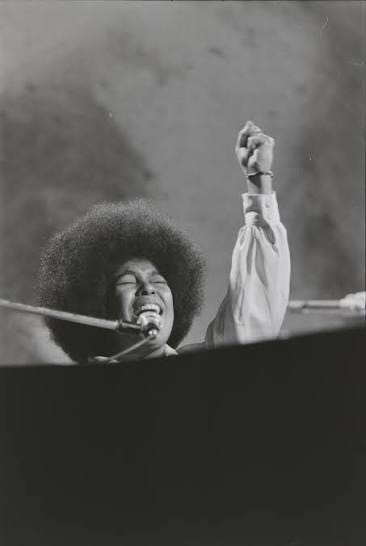
Particularly notable on all 13 selections - all previously unreleased - is that Roberta accompanies herself at the piano, something that in later years, was not always the case, much like Nina and Aretha, who also tended to move away from entire performances at the keyboard (sometimes stating that being behind the piano felt like a ‘barrier’ in connecting with audiences).
While her three of her most famous and popular recordings - “The First Ever I Saw Your Face,” “Feel Like Makin’ Love” and “Killing Me Softly With His Song” (all from Roberta’s performance in 2005 at the Montreux Auditorium Stravinski) - are included in full effect, it is the other selections that speak to the brilliance of Roberta’s interpretive skills of music by a diverse range of composers, including Marvin Gaye, Irving Berlin, Barry & Robin Gibb, Leonard Bernstein & Stephen Sondheim and Michael Ruff.
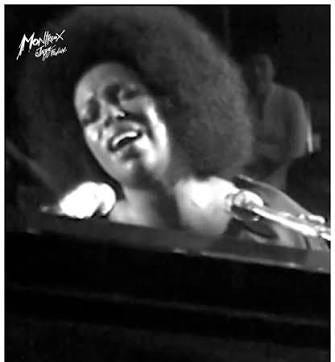
I have no wish to create a track-by-track review here - although I could! Rather, I’ll focus on a couple of Roberta’s performances that - from seeing her in concert at different times on both sides of the Atlantic - are outstanding. “I’d To Be Baby To You,” from the pen of Morgan Ames, was on Roberta’s 1977 Blue Lights In The Basement LP and on this live rendition, it moves with jazzy sensuality; “Sweet And Gentle Rain” is a rare beauty: written by Stuart Scharf, who recorded it in 1975 with Roberta as a producer; while “More Than You’ll Ever Know” - dedicated to Atlantic Records’ co-founder Nesuhi Ertegun, who worked directly with Roberta on various projects through her 25-year tenure with the label - is gorgeous, a song that was popularized by smooth jazz artist/songwriter Michael Ruff, with Roberta’s live version her only recording of the song, tenderly sublime.
Interesting to note that my original premise this post was the ‘glue’ that bound Roberta, Nina and Aretha was their formidable creativity as unparalleled musicians who set the tempo, mood and feel in live performance and in the studio by accompanying themselves on the piano, for, on The Montreux Years, we find songs that have common links with all three legends.
The Bee Gees’ “To Love Somebody” provided Nina with a major UK hit single in 1968 (as an aside, with thanks to me and my sister Sylvia who suggested RCA Records release it as a follow-up to her Top 5 charted rendition of “Ain’t Got No/I Got Life”) and became the title of her 1969 LP; while Roberta’s interpretation on her 1971 album Quiet Fire ached with soulful yearning as it does as a superb highlight on the Montreux set.
It is the Leonard Cohen chestnut, “Suzanne” that captured the imagination of Nina, Roberta and Aretha, with all three having recorded it within a few years of each other (Nina in 1969, Roberta and Aretha - whose version remained unreleased for decades until 2007 - in 1973).
On The Montreux Years, Roberta’s reading of “Suzanne” is a hypnotic Afro-flavoured highlight of her 1972 performance with some of New York’s ‘A’ list musicians including percussionist Ralph MacDonald, guitarist Eric Gale, bassist Jerry Jemmott and pianist/organist Richard Tee.
Truth be told, I’ve never been a major fan of ‘live’ albums, with rare exceptions, including Aretha’s pioneering Amazing Grace and Nina’s At Town Hall, the first LP that drew me into the world of Simone.
Not simply because Roberta Flack’s presence in my life as a scribe and beyond that, as an ever-encouraging mentor for my work as a singer and songwriter, has left an indelible and unforgettable impression, I am enthralled by the magic and majesty captured on this wonderful reminder of her brilliance as a live performer.
Big kudos to Suzanne Mino Koga and Joan Martin, Roberta’s longtime managers and Fraser Kennedy (for BMG Rights Management) for providing a lasting testament to Roberta’s legacy with this project.
Grateful.
You can purchase The Montreux Years here
© 2026, David Nathan, All Rights Reserved
Comments
Nothing yet. Say the first thing.
Sign in to join the conversation.