
I teach a graduate-level course at Harvard University’s Extension School called “Fact to Fiction” in which students learn how to apply the skills of a journalist when writing novels and fictional short stories. I encourage my students to think like news reporters, to craft clean, straightforward prose while exercising a keen eye for real-world details that can make their stories all the more believable. A key lesson is learning how to start a story with a bang.
A good opening in my opinion--what journalists call a “lede” (and, yes, that’s how it’s spelled)—is little different from an avalanche that starts out as a snowslide and quickly builds momentum as it rolls downhill. Powerful fiction is no different. To be effective, it must engage the reader from the get-go.
Forget opening with some big chunk of exposition that explains what happened before the story begins. No pussyfooting around. No easing into it. That’s called throat-clearing. Think about when you go to a concert. Do you really want to listen to the band tune up while the lead singer run through their scales? I’m guessing not. The same is true with fiction. Immediacy and impact are what we want. Give the reader the impression straight away that they’ve stumbled into something exciting. Be brief. Be original. And think cinematically.
Kurt Vonnegut believed in starting his stories “with an event that will create a reaction” on the reader’s part. Gabriel Garcia Marquez envisioned his openings as a “kind of invitation to a journey.” Likewise, Margaret Atwood has compared the beginnings of her stories to “the opening of a door” the reader must step through. I couldn’t agree more with all of them. But as a writer of murder mystery novels, I’d go one step further: A good beginning must also implicitly pose a question: Who got killed, why did they get killed, and who killed them? Along with that question comes an implicit promise to the reader that says, in effect, “Read to the end, and you’ll learn the answers to those intriguing questions.”
Consider Gone Girl by Gillian Flynn. The novel opens with a question about what happened to Amy. Stick with me, dear reader, Flynn implies, and you’ll find out.
Or Stieg Larsson’s The Girl with the Dragon Tattoo. It opens with the unresolved disappearance of Harriet Vanger. This prompts readers to wonder about her fate. Stick with me, dear reader, Larsson implies, and you’ll find out.
Or the opening of The Couple Next Door by Shari Lapena, which hints at the mysterious circumstances of a missing baby, casting suspicion on her parents. Stick with me, dear reader, Lapena implies, and you’ll find out.
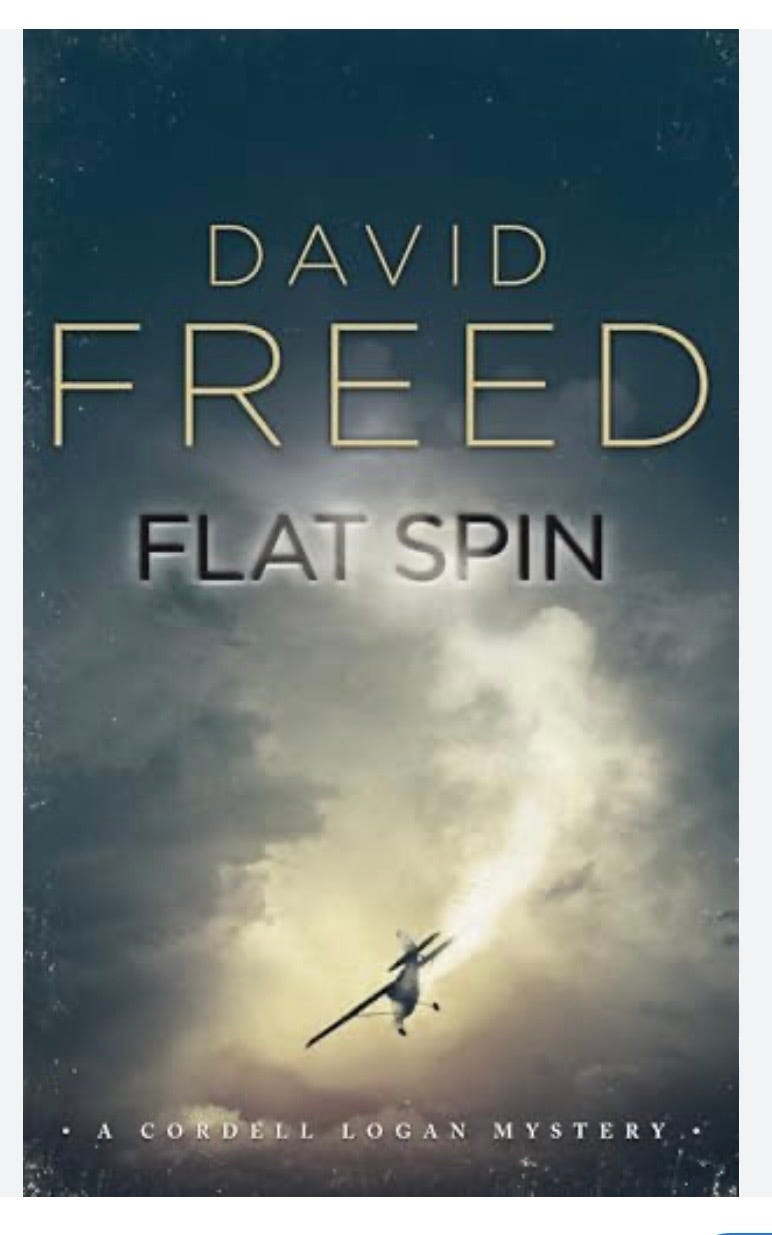
Authors generally agree that the few paragraphs are the most important ones. They’re designed to set the hook, to get readers so interested in your story such that they won’t be able to put down the rest of it. Getting those lede paragraphs right isn’t easy. I routinely rewrite mine dozens of times. Here’s what I finally settled on with Flat Spin, my first Cordell Logan mystery:
Arlo Echevarria opened his door in flip-flops and a foul mood. “You got the wrong address, dude. I didn’t order any pizza.”
The Domino’s guy stood there mutely on the front step, cap pulled low, face obscured in the dim buttery glow of Echevarria’s jelly jar porch light, cradling a pizza hot pouch in both arms like it was baby Jesus.
“What are you, deaf? I said you got the wrong address.” Echevarria went to push the door closed, but the Domino’s guy blocked it with his foot, drawing a blue steel semi-auto from the red vinyl pouch.
Echevarria yelled, “Wait a—”
Boom.
The .40-caliber hollow point splintered rib bone and mushroomed through Echevarria’s left lung, blowing a kebab-size chunk of flesh out his back and dropping him like 164 pounds of wet laundry.
Boom. Boom.
Slugs two and three made pulp of Echevarria’s liver and spleen. The coroner would deem all three wounds potentially fatal. Any cynical street cop, which is to say, any cop, would deem them all sweet, sweet shooting: three rounds, center mass, square in the 10-ring.
The Domino’s guy tucked the pistol up under his shirt, then calmly gathered his spent brass, depositing each casing in the hot pouch before disappearing into a pleasantly temperate San Fernando Valley evening. The tang of cordite lingered on the breeze with the perfume of night-blooming jasmine.
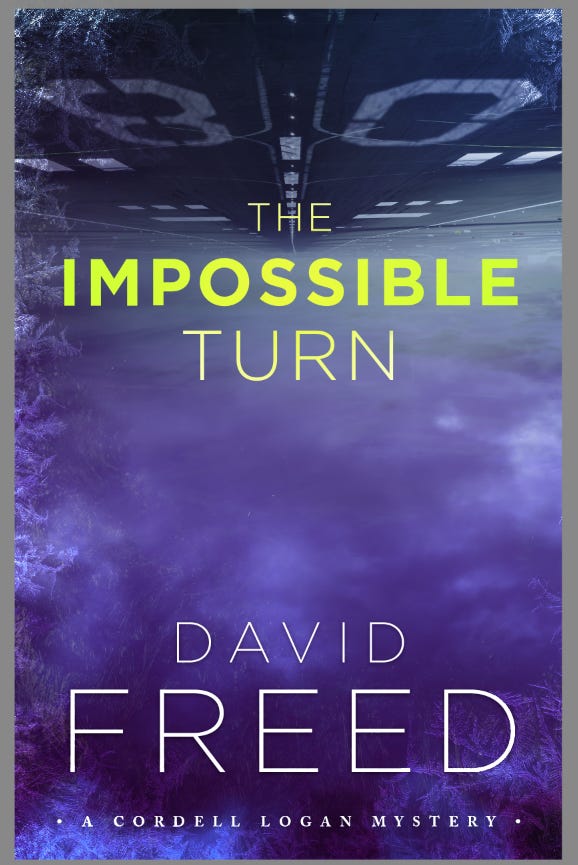
And here’s what I came up with for The Impossible Turn, my eighth and newest Logan mystery, which debuts in April 2027.
His name was Pinocchio but everyone in Orta San Giulio referred to him affectionately as Signore Bizzarro. His massive head was that of a Great Dane, while the rest of him was pure basset hound wrapped in unshorn sheep. The locals joked that he’d been put together by their provincial council, whose squabbling members never could seem to agree on anything. Yet for all the wisecracks made at the expense of his jumbled genetics, no one disputed his unrivaled nose. Which was why it was Pinocchio and not some other mutt from the village who found the body.
Neither opening pauses to explain who these people are or how they arrived at this moment. Instead, each immediately poses a question that compels the reader to keep going. That’s the hook every novelist should strive for.
The opening paragraphs of a novel aren’t there to impress the reader with how much you’ve thought about your story. They’re there to persuade the reader to keep turning pages. Every sentence should create momentum. Every paragraph should deepen curiosity. Every detail should earn its place.
Readers don’t need to know everything you’ve invented before Chapter One begins. They only need enough to make them wonder what happens next. The rest can wait.
Journalists have always understood that readers owe us nothing. If the opening doesn’t grab them, they’ll turn the page—or nowadays, click on something else. Novelists face exactly the same challenge.
Don’t begin with explanations. Begin with movement. Begin with conflict. Begin with a question that demands an answer. Once you’ve convinced readers they’re in good hands, they’ll happily follow you almost anywhere.
By all means, spend weeks outlining your backstory. Build elaborate family trees. Invent childhood traumas, political systems, magical histories, and every detail of your fictional universe.
Just don’t make the reader sit through all of it before something interesting happens.
Nobody buys a concert ticket to hear the band tune up.
No posts
Comments
Nothing yet. Say the first thing.
Sign in to join the conversation.