

Can the gospel be too big?
When the missional church movement was a thing, twenty years ago, this question bordered on heresy. We, in the movement, regularly cautioned that the gospel was not only about what Jesus can do “for me.” It is about the transformation of our very way of life into God’s Mission for the world. We therefore regularly resisted any temptation to reduce the gospel to anything that might be “user-friendly,” transactional, or consumerist. The gospel must be big, and people must be invited into it. The Mission of God (Missio Dei), so we proclaimed, must be all encompassing and all believers (new and old) must be welcomed as participants in it. For a lot of us, this holds true today.
Yet for all the good in this, there is a danger in this approach. In protecting the bigness of the gospel, we risk making the life we have in Christ inaccessible to those outside of it. We don’t provide an entry point related to their particular circumstances that enables them to enter the gospel that, granted, is this grand story of what God has done, and where He is taking the world, in Christ. And so we unintentionally make the gospel too big with no connection point to the day-to-day life of the people we seek to invite into the gospel.
The Traversing Back and Forth Between Small and Big
These are bold and easily misunderstood words. Yet to say the gospel can get too big reminds us of the balance we need in presenting the gospel to the world. We certainly endanger the gospel when we move too fast to make the gospel compact and easy to understand. Yet we can also endanger it when we try to protect its cosmic dimension at all costs making it incomprehensible to those who are in need. Being the gospel in the world therefore demands a continual traveling back and forth from the grand scope of all that God is doing in Christ to the simple offer of salvation to the stranger. And then of course, we must return (hopefully with the new convert) back again into His grand Mission all over again.
Noted missional theologian Darrel Guder addressed this subject when he asserted that the church is always in the process of reducing the gospel, in order to translate it into a given culture. In translating, or contextualizing, the gospel, we inevitably emphasize certain aspects of it over others. In the process sometimes we devolve into absolutizing this one particular version of the gospel that we have located ourselves in. This is prompted by the instinct to control the gospel. Make sure it is right! But, and this is a big “but,” giving into this instinct leads us to reduce the gospel instead of leading people into the whole of the gospel. Guder calls this the “challenge of reductionism.” This is why Guder calls for the ‘continual conversion” of the church, where the church must always reinhabit each new context with the gospel that takes shape for its particular time and place.[i]
The Other Error
Guder’s “challenge of reductionism” can also work in reverse. We refuse to reduce the gospel, to locate that entry point into the whole of the gospel for a given context and person. Instead, we pound away at the grand story of what God has done, is doing and where God is taking the whole world, never connecting to the existential crisis of the person or the context we’re connecting with.
For me, in the Chicago suburbs over twenty years ago, this is the error that happened to me. My refusal to reduce the gospel, particularize the gospel, resulted in a refusal to meet people where they were at with the gospel. Being upset with the mega-church’s accommodation to consumerism (this was my rage in the late 90’s) I was refusing to condescend (lower myself) and speak a gospel that could be heard by the ones afflicted by the cultural ills of consumerism? By insisting on keeping the gospel big, I refused to translate to the level where it could be met in the particulars of daily life in the suburbs.
My wife and I moved to the northwest suburbs of Chicago over 25 years ago to plant a church. The northwest suburbs of Chicago sprawl across hundreds of square miles with highways, tollways, subdivisions, monster shopping malls, gated communities and corporate offices. Thousands of cars move manically along the expressways with people trying to get to their respective homes, work or children’s sport programs. It is a life of busyness, consumerism and user-friendly relationships. Its break-neck pace pulsates so heavily that it is difficult for any one person living there not to be swallowed up into it.
These same forces pull on churches as well. There is the constant seduction to fall in line and make the gospel as convenient as possible for people on the move. As we planted the first seeds of our church in this place, I was repulsed by the expectations to frame the gospel into something that could fit into people’s schedules or provide immediate spiritual benefits to anyone struggling with the suburban lifestyle.
In response to the sins of suburbia, I went to the other extreme. I got almost phobic over our church becoming a supermarket-like pseudo community providing spiritual goods and services to all comers? With too much self-assurance, I preached sermons on how the church must define its very existence as the extension of God’s Mission in the world. In the great formulations of missional thinkers Newbigin and Bosch, I proudly taught that the church was an extension of the Trinity gathering the world into Himself. The Mission of God will be our very identity and source of resistance to the consumerism of the suburbs. Its cosmic scope will dwarf the forces that seek to shrink our vital gospel into some banal conformity with the suburbs.
My intentions were good, and of course Bosch and Newbigin still sound as good to me as ever. But how does a gospel this big become comprehensible for the lost persons of the suburbs? How does this incredible vision of God’s work meet those of us caught up in consumerism, poor on time, devoid of relationships, with little energy left after 6 p.m. to attend to the Mission of God?
The Back and Forth
In those first few years of ministry at Life on the Vine Community, a couple named Jack and Suzanne (not their real names) came to us with divorce papers in hand asking for help. They knew little of the gospel. They had no time for church. Their art careers were the center of their lives and they couldn’t imagine it any other way.
I offered Jesus. The whole gospel. I warned that Jesus would demand everything. Jesus the Lord of the world must become Lord of their marriage, Lord of their art, Lord of everything. That if you give up art as being the center of your life, your very identity, your art can in turn become the blessing God can use for His Mission. Give up your life to Christ, to find your life in Christ. Though I still hold dear every one of these truths, this message did not meet the moment. It was too big for these folk who knew nothing of the majesty of the risen and reigning Christ.
Nonetheless, Jack somehow managed to hang out with a group of us meeting for confession and prayer every Monday night. One ugly sin after another would come up in Jack’s life (as for us all). Together, we would deal with each sin working out the repentance and forgiveness of Christ into this man’s life. There were some holy moments. Jack saw some progress in his life. Jack had been caught up into an entry ramp of knowing Jesus as the savior and sanctifier of his soul.
But months went by, and the sins would come back. One night as Jack’s marijuana addiction was being dealt with for what seemed like the hundredth time, two of the men lashed out. They let go of some anger and asked him if he was serious about Christ. If not, they said, he should excuse himself from the group. Jack soon wandered away.
Some might be quick to say that Jack rejected the gospel. I hesitate to make that judgement. From my purview, Jack couldn’t get the bigness of the gospel he was invited into. Our discipleship had failed.
Jack thought he was doing what he was supposed to do – confess sin, repent and receive forgiveness, go home and try harder. Yet each time the forgiveness and repentance would somehow become the means to the same old ends. The sanctifying deliverance offered in the gospel of Jesus couldn’t take root because Jack was still doing it all for some immediate benefit to himself. It was a transaction. Jack never made the connection to the big Gospel, that God has come in Christ and made Him Lord, and He now rules over the world, restoring all things, and must rule over all things until the completion of the Mission (1 Cor 15:25). Jack needed a gospel that met him in addiction, but also needed a gospel that led him to the whole Gospel, that led him from knowing Jesus as the manager of his-self to the total transformation of his-self in Christ’s rule. Jack could not grasp the bigness of the gospel.
For me, Jack illustrated the central problem: the bigness of the gospel was inaccessible to someone caught up in the consumerist structures of suburban life. He needed a smaller gospel to meet him in his moment. But this gospel that can meet him where he’s at, must eventually lead him to the big Gospel or it will become stuck. Without the big Gospel, the smaller version of the gospel always becomes reduced to what the gospel could do “for me.” This back and forth must become part of a discipleship that starts with the small but always leads to the big, that offers a specific entry point to the Gospel that can then lead to entire journey of the whole Gospel, what God is doing in Jesus Christ to transform the world.
Missional Conversions and the Need for a New Way
I used to regularly be asked about the numbers of conversions in missional churches, churches founded on God’s mission, missional communities, presence in neighborhoods for the gospel. I hesitated to even answer the question, because I believe conversions in missional settings take longer, and they often happen outside the church ‘program’ per se. I’ve experienced this.
Missional churches by definition tend to go to so-called “post-Christendom” settings where people have no initiation to the Christian faith at all. For any new convert there must be a journey. It starts in an existential moment of crisis, loneliness, emptiness., etc., etc. These moments take many different shapes and sizes depending upon context. But this starting point, enabling an entry point to the gospel, must not become the ending point. It must lead to knowing Jesus as Lord of the world bringing the whole world to Himself. This kind of conversion happens over time. It often happens as strangers spend daily life with Christians learning the story of our lives in Christ. It must start at the point of context in someone’s life, and only then lead eventually to the whole.
For this reason I have suspected that missional churches need a different kind of evangelistic tool that balances the hugeness of God’s Mission we live in while still inviting people into personal conversion at that existential moment of need in their lives.
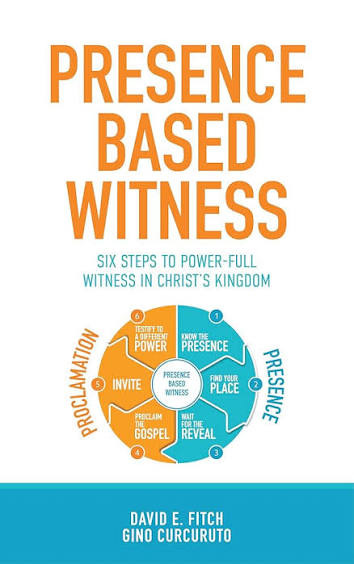
It would be a tool that would start with understanding the way God works through His presence in us, among us, and between us. People would learn how God is present in all our interactions with people, social situations, even social injustice. This tool would then move towards learning how to be present in a place of hurt, pain and lostness. Learning how to listen. Then, maybe the hardest of all, this tool would teach how to wait patiently for the reveal of God’s work. All this leading to an entry point.
When God reveals what he is already at work doing (us Holiness people call this ‘prevenient grace), when someone or some thing happens that reveals the Holy Spirit’s work, the next part is being a witness to what God is doing. This includes proclaiming the gospel, the good news, inviting someone in to the making of Jesus their Lord and deliverer. Here is where the gospel gets small, specific, particular, an enrty point to the whole Gospel. There are many entry points. This tool would teach this as well. But this entrance experience to knowing Jesus must always lead to Jesus, the whole Gospel, of what God has done, is doing and where God is taking the whole world (1 Cor 15:1-16).
Such an approach to evangelism will always start out by listening, learning discerning the Spirit, what God is doing in a place, in a person’s life, in a social situation. The gospel becomes “small” as it engages the smallest places, every experience of brokenness, every nightmare of social injustice in our neighborhoods, but over time, it will lead to the whole Gospel, the big big big Gospel of God reconciling the whole world to Himself in Jesus Christ (2 Cor 5:19).
I’ve written a small book, with Gino Curcuruto, on what such an approach might look like, and how to train congregations into it. (you can find it HERE). I also have a book coming the end of next year dealing with the theology and practice of ‘The Many Gospels.’ Such a process is needed for a renewal of gospel witness in our time. And in such a process, not only will the gospel reach new places, but every church involved will undergo itself a “continual conversion,” and new embodiment of the gospel for each time and place.
If you’re interested in these kinds of explorations into the intersection of gospl, culture, culture issues, then you’ve come to the right place. Subscribe for free to be notified (since I post only twice a month)
[i] This paragragh is drawing from Guder’s classic The Continuing Conversion of the Church Grand Rapids: Eerdmans Pub, 2000)
Comments
Nothing yet. Say the first thing.
Sign in to join the conversation.