
Must denominations end? I don’t think so. But we are in a time of immense disruption as denominations grapple with the massive shifts among the cultures of North America that have seen the shift from a majority Christian North America turning to one that is now a mission field. As a result, I suggest, denominations must move from being preservers of a history to engagers of the cultures, extenders of a history into new cultures for the gospel of Jesus Christ. A couple years ago I addressed this on this substack HERE.
By cultural engagement, I do not mean cultural accommodation. I’m much too anabaptist in my theology for this. In my opinion, accommodation has already proved to be another form of non-engagement. And although the prototype protestant liberalism of the last century served to maintain a church, preserve its relevancy, as long as the society was by and large ‘Christian,’ those days are over. We need a church capable of extending the gospel into mission, not make the gospel amenable to the society’s modern social developments.
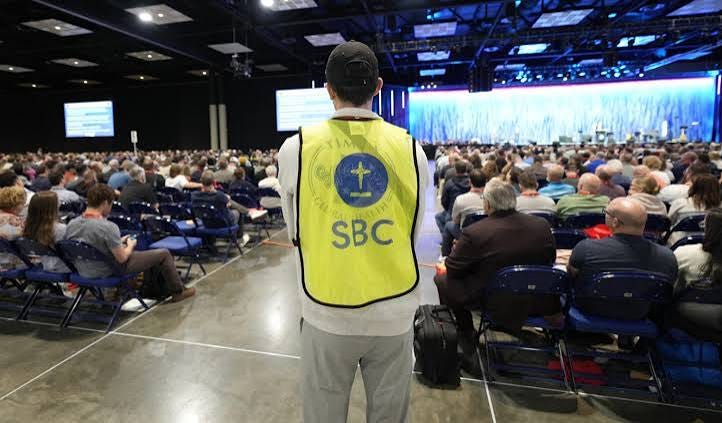
This will be no small task. It will take a leadership of a different kind. We are seeing the Southern Baptists, the C&MA in Canada, and many other denominations in massive disruption. The leaders are caught in between preserving what is and becoming what must be. Many denominations are shrinking. Some are a few short years from dying. Many are losing their best and brightest leaders of the younger generations, a sure sign of crisis and diminishment of the future. It’s obvious we need transformational change.
I believe denominations must make spaces for young leaders to develop in conversational think-tanks where mature leadership can dialogue with young leaders and skillfully, prayerfully, mutually, discern the times. I believe denominations must move from preservatory authority, that exerts power over issues of conflict in order to preserve, to transforming authority that allows Christ to move among a Spirit-filled mutuality that engages the new worlds with the gospel. It carries much risk. But denominations, once birthed out of renewals, should return to those renewal impulses. These denominations must now take their histories, with all the distinctives learned, and develop/extend them further for a church in mission to meet the challenge of our time.
I’ll have more to propose in future posts, but for now I offer the following piece to spur us on. It’s an afterword I wrote for a book that Jon Coutts and Heather Renee Morgan edited entitled ‘Looking Back, Leaning Forward: Wrestling With a Church’s Story’ (found HERE) The book attempted to wrestle with my own denomination’s (C&MA) challenges in the midst of the changing culture of Canada. I’ll have more to say on all this in future posts (this won’t be a series). Subscribe to this substack if you’re interested (it’s free).
Extending the Four-Fold Gospel for the Mission of God Into the Places Where We Live
The time for denominations has come to an end. At least that’s the opinion of Peter Leithart in his 2016 book The End of Protestantism [i]. Denominations divide the church, he said, and they no longer serve a useful purpose. But I am not so sure. Many denominations birthed new doctrinal insights, what we call distinctives, and have lived them with wisdom through many bumps along the way. This wisdom may be worth preserving and extending into new worlds. I believe the “four-fold gospel” is one such distinctive, and I am encouraged by the work done in this collection of essays to deepen our understanding of it and extend it into new challenges and contexts.
Birthed from within Christendom, denominations were sources of sustenance and revival for churches in North America. Whether it be justification by faith alone, entire sanctification, the filling of the Spirit, practices of discipleship, divine healing, or yes the fourfold gospel, denominations elevated these beliefs that reinvigorated the Christian faith. These convictions became distinctives that spurred renewal across the Christian body as a whole. Denominations of course did other things like sustain immigrant populations in their churches of their origins across the ocean. And they organized missions to extend the gospel to unreached peoples around the world. All of this happened within the so-called Christianized world of North America. But today, as this world grows secular, denominations find themselves in a new cultural situation. Denominations must shift. They must now become mission organizations to very cultures they find themselves in.
This does not mean however, that denominations should leave behind the distinctives of their origins. Each denomination is a stream of tradition containing much learned wisdom over time distilled in its distinctives. Denominations, I contend, must take these most treasured distinctives and carry them forward, extend them into the cultures in which we find ourselves. This is what mission churches do.
And so, it is into this moment that the writers of Revisiting the Gospel speak. Canada, an increasingly secularized country in the West, is a field of mission. The writers of Revisiting are extending the four-fold gospel of the Christian and Missionary Alliance into the changing contexts of Canada.
I thank God that He has been at work in the Christian and Missionary Alliance of my heritage in Canada for over a century. And so we don’t simply leave all of this behind. We bring it forward into dialogue with the many challenges that the current cultures present us with. We take our treasured distinctives, that have shaped our lives, and extend them. We listen to the challenges of our cultures, and in an act of dialogue we seek to faithfully extend these beliefs, deepen them, translate them in a way that expands them into the places we find ourselves in.
We do this work faithfully, out of Scripture, in much prayer, after much listening, in submission to the Lordship of Christ as lived in a church. Our new cultures may challenge a belief that has borne so much fruit in our history, but in response we listen, we dialogue, we learn and grow, deepen our understanding, and extend this belief among new people, languages and contexts. This is what a people in mission do. This is what I take Revisiting to be doing and it is so important for our churches, our children, the future of the renewal of Christian life in post Christendom for the witness to the gospel of Jesus Christ. The Christian and Missionary Alliance must do this or die.
It is amazing to see the compelling impact of the four-fold gospel around the world since the turn of the last century. Donald W. Dayton, historian of evangelicalism, described the four-fold gospel as “the organizing principle,” the “internal logic,” that permeated” evangelicalism and set into motion the various Holiness and Pentecostal movements of the 20th century.[ii] The fourfold gospel has been an exposition of the gospel that has impacted the spread of Christian churches world wide. It is essential that we the inheritors of this gospel, the people of the Christian and Missionary Alliance, do this work of extending its message into new territories, engage, and learn from new contexts, gain an understanding of place, language, time, so that Christ the savior, the sanctifier, healer and coming king be revealed and known in the places where we live that have emerged beyond the colonialist monolith culture of Christendom.
When Ray Aldred helps us see in Jesus, the creator who restores creation by entering creation, who by his presence, in the meal, enables us to remember the traumas, injustices of our past differently, not forget them, but in and through them move us toward life and healing, Dr. Aldred is extending Jesus as savior into the world of sin, trauma, and pain that we are so desperate for. When Heather Morgan engages Simpson’s understandings of divine healing via a disability-informed lens, she enables us to see both the weaknesses of past formulations, malformed ways of seeing the body that inhabit our churches as well as see divine healing in new and deeper ways that not only open new pathways for physical healings but also pathways for church communities to be transformed by the ways of mutual interdependence made possible through Jesus Christ. Pastor Morgan is doing more than simply acknowledging a problem, or a misstep in prior articulations of divine healing. She is extending the doctrine of divine healing into our new contexts. In this way, the whole volume of Revisiting broadens, deepens the four fold gospel into new places and contexts.
Denominations come and go. History shows that many will shrink and die as they defend the past at all costs. But some will take the deep learnings of its founding, listen and discern the movement of the Spirit anew, and extend these learnings into new times, new places, new contexts, new struggles, for the mission of God.
I see God using this volume to these ends. May these explorations of the four-fold gospel extend it into new territories, but with new lens, igniting the flame of His Spirit among us to proclaim the gospel of the risen Jesus into new places, new times all across the country of Canada and beyond. We pray may it be so!! In the name of the Father, Son and Holy Spirit, Amen.
[i] Peter J. Leithart, The End of Protestantism: Pursuing Unity in a Fragmented Church (Grand Rapids MI: Brazos Press, 2016)
[ii] Donald W. Dayton, Theological Roots of Pentecostalism (Grand Rapids: Zondervan, 1987). 173-74.
Comments
Nothing yet. Say the first thing.
Sign in to join the conversation.