
I took the NJ Transit Midtown Direct from South Orange, New Jersey in to Penn Station New York on a blazing hot day in July, 1998. Walked to Herald Square, got on the N, took it 2 stops to 14th St/Union Square, then strolled 5 minutes to Canal Street to browse the street vendors. Didn’t have anywhere close to enough cash for a Cuban Link chain, so I bought a DJ Clue mixtape.
To the right person it lands hard. To everyone else it's just a sentence with some names in it. The gap between those two reactions is what we usually call “taste”.
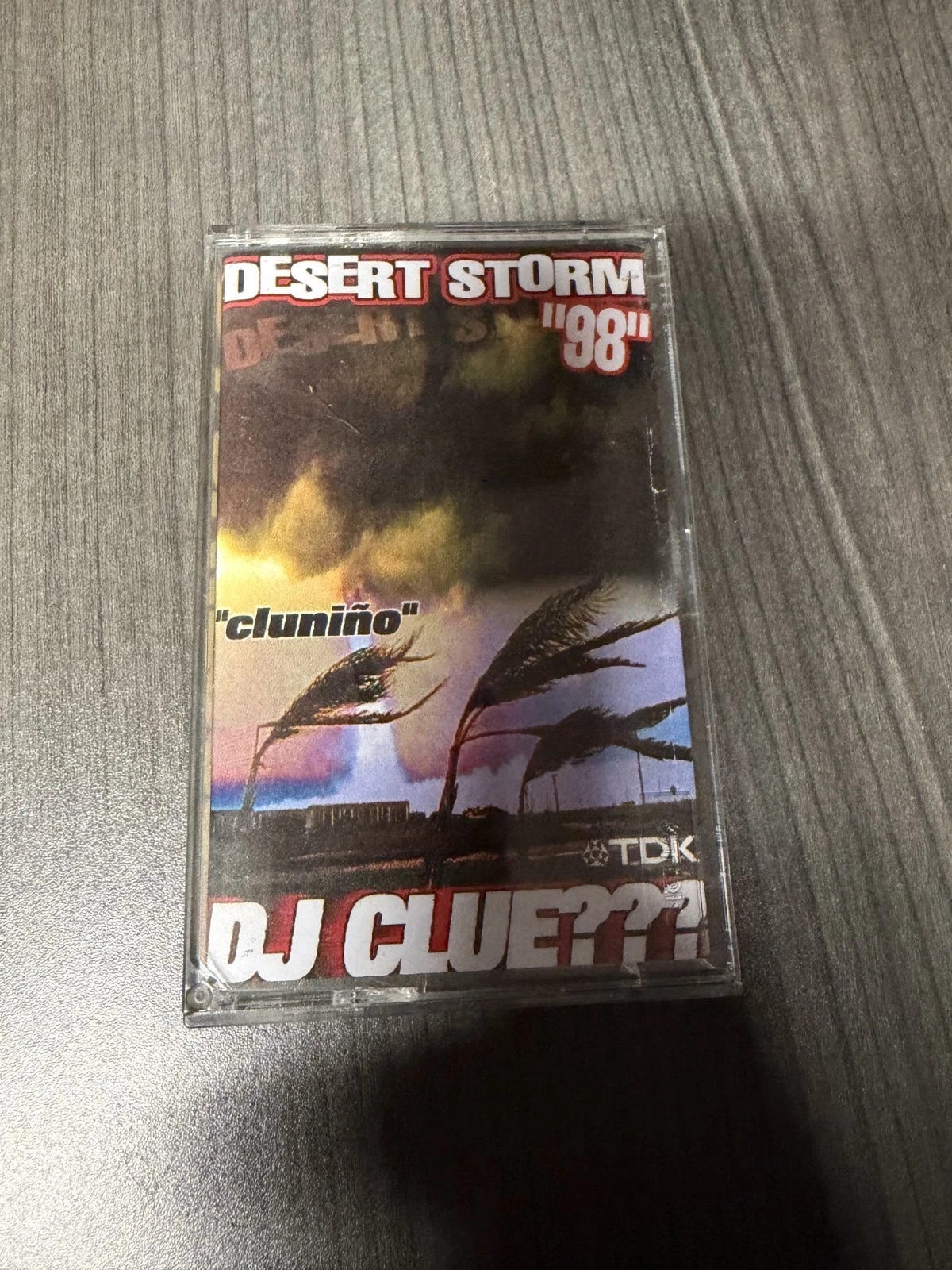
We talk about taste like it’s some magical thing that lives in the clouds. It leaks through the particulars: what you bought, who you were standing next to when you bought it, what you couldn’t afford that day, what you put on your Discman on the train ride home. Those things are not unmeasurable “vibes”. They’re specific, and they’re countable.
Taste is your internal model of those particulars. It lives in your brain, and in your body. But we have been integrating our brains and bodies with digital mediums for decades now, and that means we are leaving traces of our internal models, including our taste, in digital form.
And that means “taste”, that thing we keep calling ineffable, is sitting right there in front of us, something we can parse. We just haven’t looked at it that way.
Earlier this month Ryan Greenblatt (no relation), one of the sharpest AI forecasters in the world, published a post arguing that AIs can now do massive easy-to-verify software tasks. He shortened his timelines dramatically. He’s now saying AIs will be capable of doing almost all coding and most AI research much sooner than he thought.
His argument rests on a specific mechanism. Some tasks give the model instant feedback on whether it got the right answer. Write some code, run it, the code works or it doesn’t. For tasks like that, the model writing this code can make lots of mistakes along the way and still end up correct, because each failure is a yes or no, and the no tells it: “try again.”
Other tasks don’t give feedback like that. Write a product strategy doc, judge whether a hire is a good fit, decide if a piece of writing lands. Nobody is going to tell you yes or no for months, if ever, and the model has no way to catch itself when it goes sideways.
Greenblatt’s conclusion: the verifiable kind of task, like coding, is about to fall fast, and the second kind of task is “taste-driven”, which means AI can’t get the feedback it needs to iterate its way to competence. Which means the AI revolution is about to hit software engineers and leave product people, designers, and writers untouched.
Greenblatt is right about the coding and AI research. Something really did change in the last two years, and he’s the most credible person saying so.
But I think he’s wrong about taste, and I think that that error comes in two pieces.
The first error is a move nobody would accept in any other domain. A logical fallacy along the lines of “taste has not been written down yet, therefore taste cannot be written down.”
In June 2024, if someone told you nobody has climbed Muchu Chhish yet, you wouldn't conclude “Muchu Chhish is unclimbable.” You would say “somebody needs to finally find the right combination of satellite imagery, acclimatization strategy, weather forecasting, and the will to try.”
In July 2024, that happened, and three Czech climbers went up in six days alpine style and summited.
The mountain wasn’t ineffable, just hard. But when somebody says “you can’t climb the mountain of making taste effable”, smart people nod along.
Greenblatt also commits a second error, and the second error was intuitive for a good reason. But the reason just stopped being good.
For almost all of history, three things kept taste tacit at once:
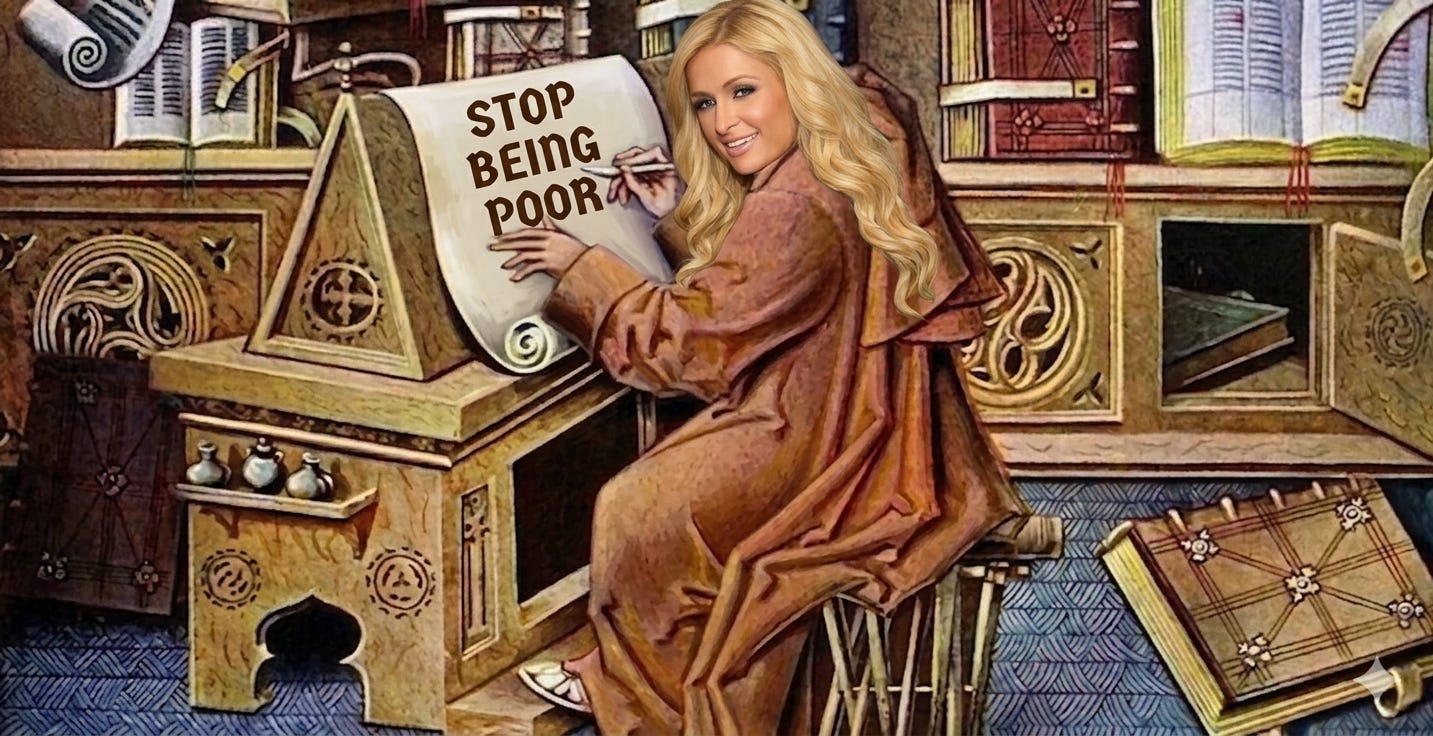
The people with the taste were busy using it, so writing it down was too expensive to bother. Paris Hilton wasn’t fastidiously documenting her internal taste model in 2005 like a medieval monk in a scriptorium, she was out being Paris Hilton.
It was only usable by humans. Even if someone wrote a taste artifact down, it was only understandable to humans, and only usable by humans willing to sit down and apply it manually.
The medium was ephemeral. Taste conversations happened in design reviews and at Almack’s in 1815 and in the margins of Word docs nobody saved.
All three conditions held for centuries. The first two broke in the last eighteen months:
For (1), the labor of writing taste down got cheap. AI in the loop can take a tacit observation and turn it into a written artifact in an hour, instead of the weeks or months or years it would have taken a careful human to do the same thing.
For (2), taste artifacts are no longer only understandable to humans. Language models can read a written (or photographed, or recorded) artifact and apply it, which means the rules aren’t trapped in human heads anymore. A compressed description of your taste becomes something a machine can apply to every new thing you put in front of it, without getting tired, and without dulling to the patterns it was designed to catch.
For (3), medium persistence was already dying because the internet is forever. The cost-benefit on writing down taste just flipped for the first time in history.
Taste, the ineffable, is now effed.
A few weeks ago my friend Ramsay Brown read my essay You Need to Be More of a Silly Goose. Ramsay’s a neuroscientist, he reads prose with a trained ear, and his reply was six words of compliment and then: “the truncated pace of sentences is a tell, it reads like Lego bricks in braille because an AI wrote it.”
He was right, and I knew it the moment I reread the piece. I’d used Claude heavily on the piece, and the AI slop fingerprint had survived three editing passes.
Within 48 hours Ramsay had sent a follow up email naming the eleven patterns he was hearing. Asyndeton used as a tic, symmetric constructions deployed at regular intervals, three-item rhetorical pileups, false binaries dressed up as insight, and a handful more. I wrote them up, turned them into a filter, and put the code on GitHub. What started as an Apple Note became a framework. Ramsay’s taste is now software. Anyone and anything can run it: an AI agent, a model, a script in a pipeline that touches text on its way to being published. Prose taste was on every smart reader’s list of ineffable things a week earlier. Now it isn’t. 3 hours of work, then a working artifact, and we have one more effable taste.
Prose is just the first domain where this is obvious. The same thing is about to happen wherever taste leaks into text or anything a model can read. A VC’s gut read on which founders are worth a meeting lives in the investment memos they write after the first call, and the memos sit in Notion databases that any model can now ingest and compare. A designer’s sense of what looks right lives in the reference libraries they’ve been building in Figma and Pinterest for a decade, and those references are now queryable at scale. A hiring manager’s real read on a candidate lives in the gap between what they wrote on the scorecard and what they said in the debrief, and both sides of the gap are being captured in increasingly structured form. In each case the same three conditions are flipping. The labor is getting cheap, the readers are getting sophisticated, and the traces are finally sticking around long enough to train on.
Two weeks ago Anthropic announced a model called Claude Mythos Preview. They’re not releasing it; it’s too dangerous, too capable at Cyber attacks. Instead, they formed a consortium called “Glasswing” with Amazon, Apple, Google, Microsoft, JPMorgan, Cisco, CrowdStrike, and seven other companies to handle what Mythos is capable of before the rest of the world gets access.
Some of the carnage: Mythos found a 27-year-old vulnerability in OpenBSD, the OS with the reputation as the most security-hardened in the world. It found a bug in FFmpeg, the software library that nearly every piece of software uses to handle video, on a line of code that automated testing had run over five million times without ever catching. It chained together three vulnerabilities in the Linux kernel (the software that runs most of the world’s servers) into an exploit that promoted anyone to admin without a human in the loop. It did thousands more like that, across every major operating system and browser, in a few weeks.
But isn’t cybersecurity just software engineering? Not quite. While cybersecurity is still relatively easy for AIs to verify versus, say, hospice care, it's one of the least verifiable parts of software. It’s considered a craft discipline where senior testers spent their careers developing intuitions about where the soft spots were, intuitions they couldn't quite write down, and couldn't quite teach.
24 months ago, cybersecurity would be grouped with deal memos and design libraries, another taste-driven field waiting its turn. It's not waiting anymore. We’ve gone from the most legible (Software Engineering) to slightly less legible (Cybersecurity.) If the least legible part of software got effed hard enough to require an eleven-company response, the bar for "legible enough to be completely automated" is a lot lower than most people think.

For two years, AI prognosticators have been telling software engineers what’s coming. The claims are public, specific, and mostly right. Coding is going to be automated.
The forecasts are specific because coding is understandable to AIs as of today. Every one of them is downstream of “the tasks have feedback loops, therefore the models can iterate their way to competence, therefore the capability gains compound.”
Software engineering took 70 years to get automatable. Cybersecurity took 12 months after that.
Taste is effable, and you don’t get a special timeline because your work is is slightly less write-downable than software engineering. You don’t get a reprieve because you’ve been told your craft is uniquely human. You get the same arc the software engineers got, with maybe 18 months of lag.
Go eff yourself
-Dave
No posts
Comments
Nothing yet. Say the first thing.
Sign in to join the conversation.