
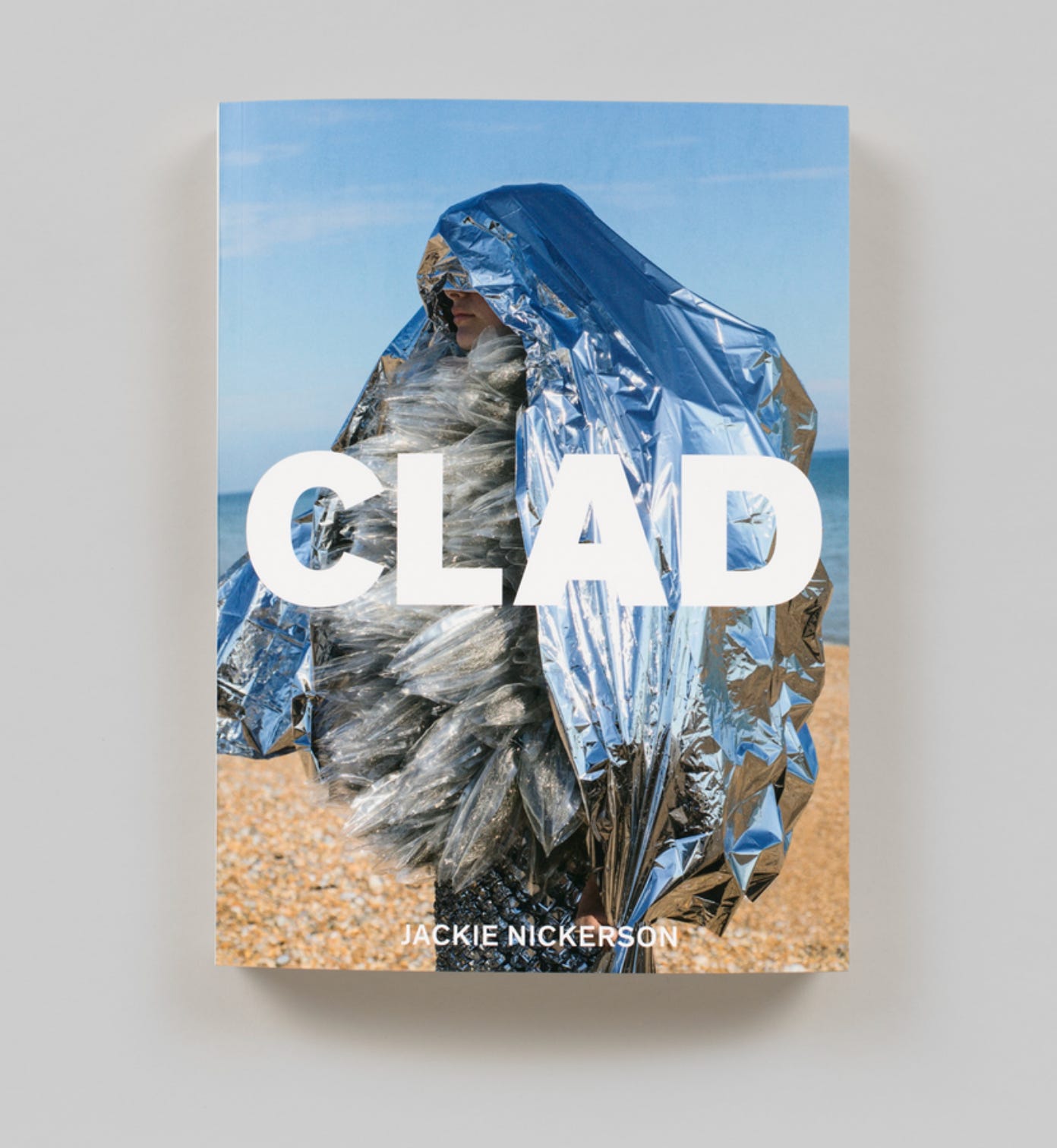
Jackie Nickerson made one of my favorite books of the new millennium in 2002 with Farm, her photographs of workers in Zimbabwe, Malawi, and South Africa on their way to and from work in the fields. Many of the pictures were casual but meticulously observed, full-length portraits in the style of August Sander. Others were close-ups that drew our attention to details in the improvised layers of cloth and plastic. Intended to protect the workers against thorns and broken branches, their clothing’s clashing colors, patterns, and textures looked startlingly, brilliantly avant-garde—inspiration for Rei Kawakubo’s next Comme des Garcons collection and countless fashion stylists.
Nickerson was already working as a fashion photographer when she made Farm, but her new book, a hefty, compact brick titled Clad (Steidl), is her first to collect the editorial (and some advertising) images she made since the mid 1980s for Vanity Fair, Dazed, POP, Interview, Allure, and various editions of Vogue, among many others. Nickerson’s talent is her versatility. Picking up from Farm, she often wraps models like fragile shipments. But she doesn’t have a “look,” so every new shoot feels fresh and spontaneous and a book of more than 400 of them never gets boring. It is, however, quite strict. There are no captions, no dates, no page numbers, no IDs at all, just seven pages of thank yous at the end. So, no distractions from the work itself, which finds Nickerson agile and playful but always focused and often surprising. It helps that the layout is as versatile as she is and often gives the pictures a physical presence as Polaroids, stacked test proofs, tear sheets, and open magazines.The mood might be anti-fashion (or at least anti consumerist glam), but the result is one of the year’s best, most rewarding fashion photo books.
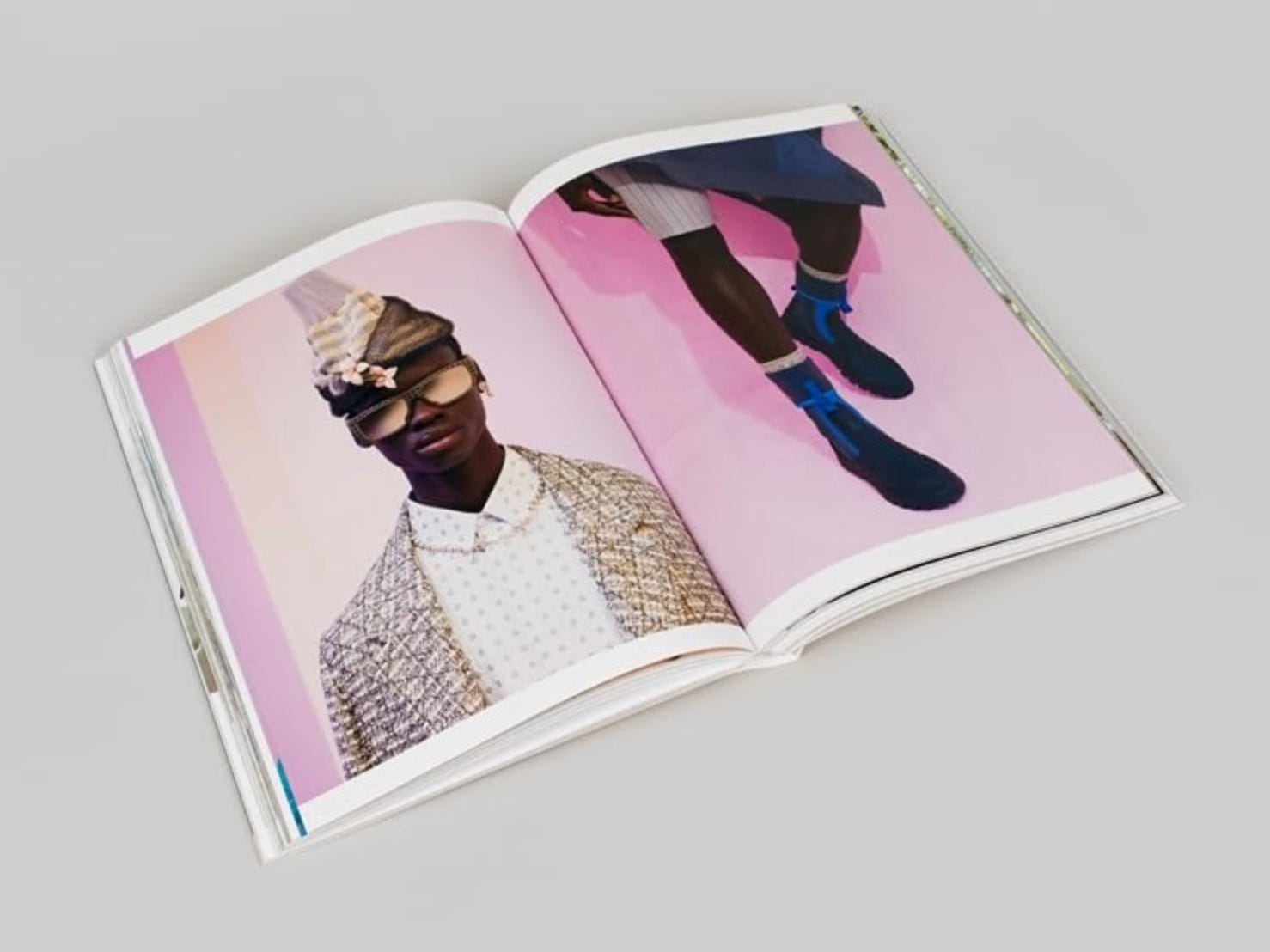
CLAD by Jackie Nickerson is published by Steidl.
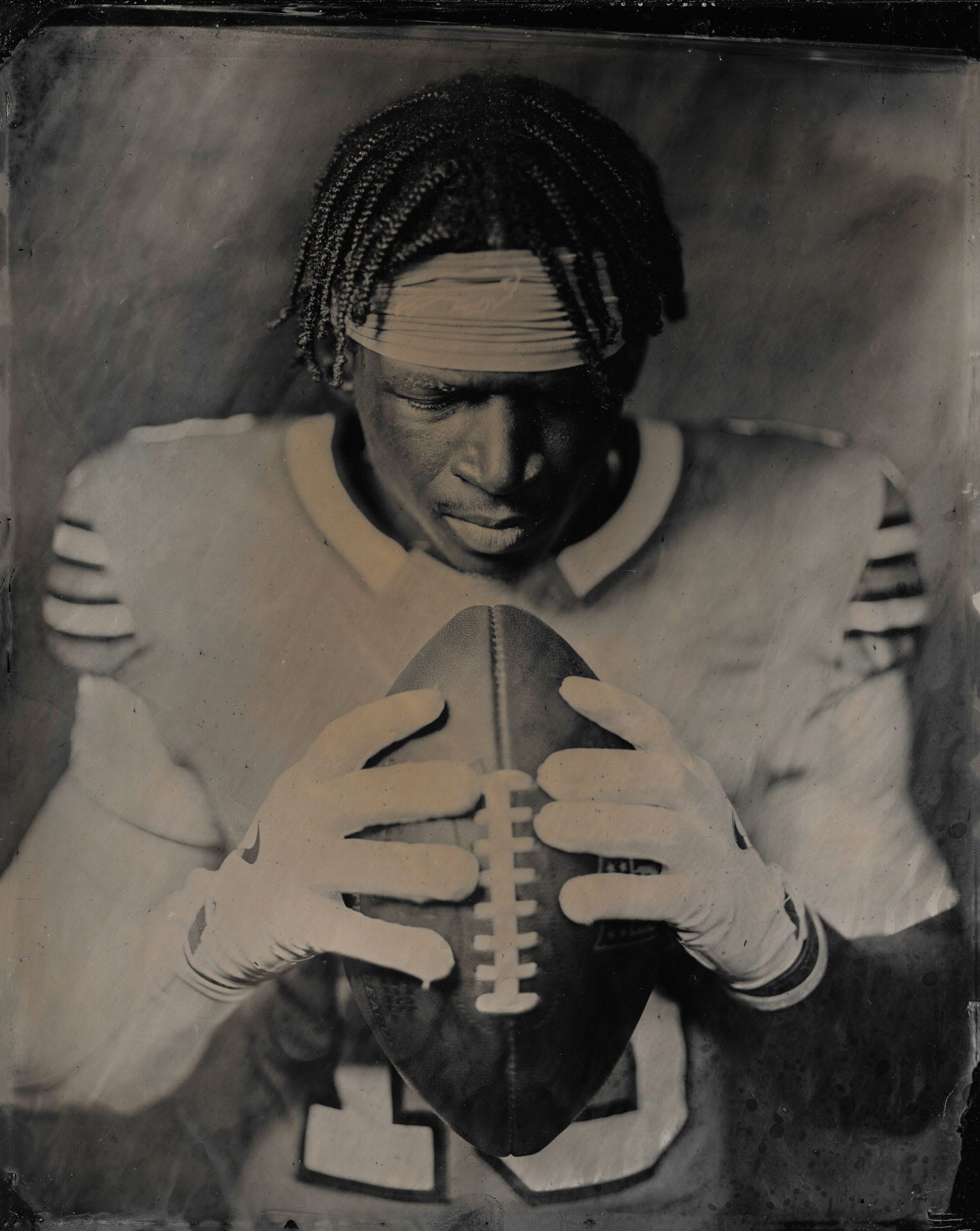
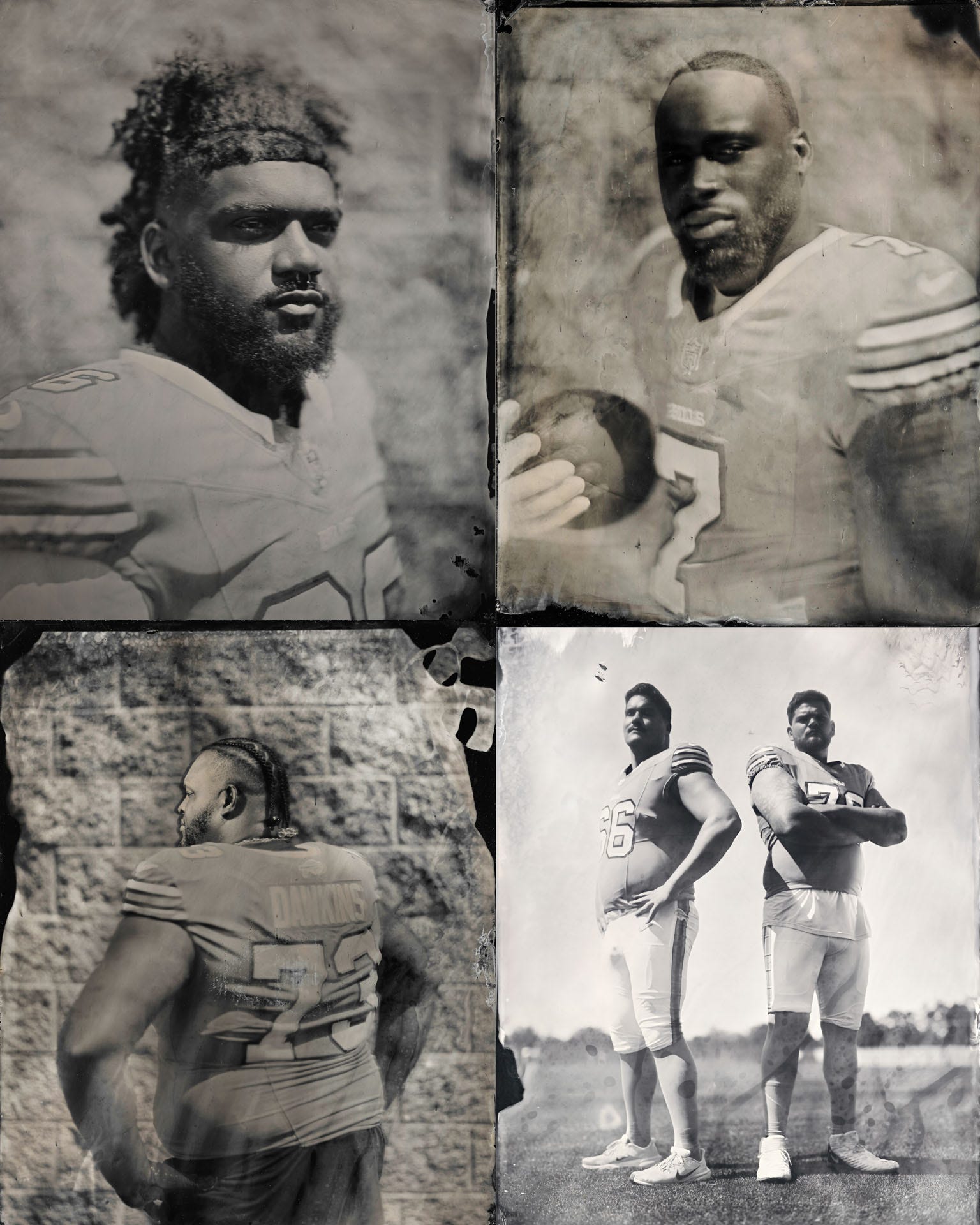
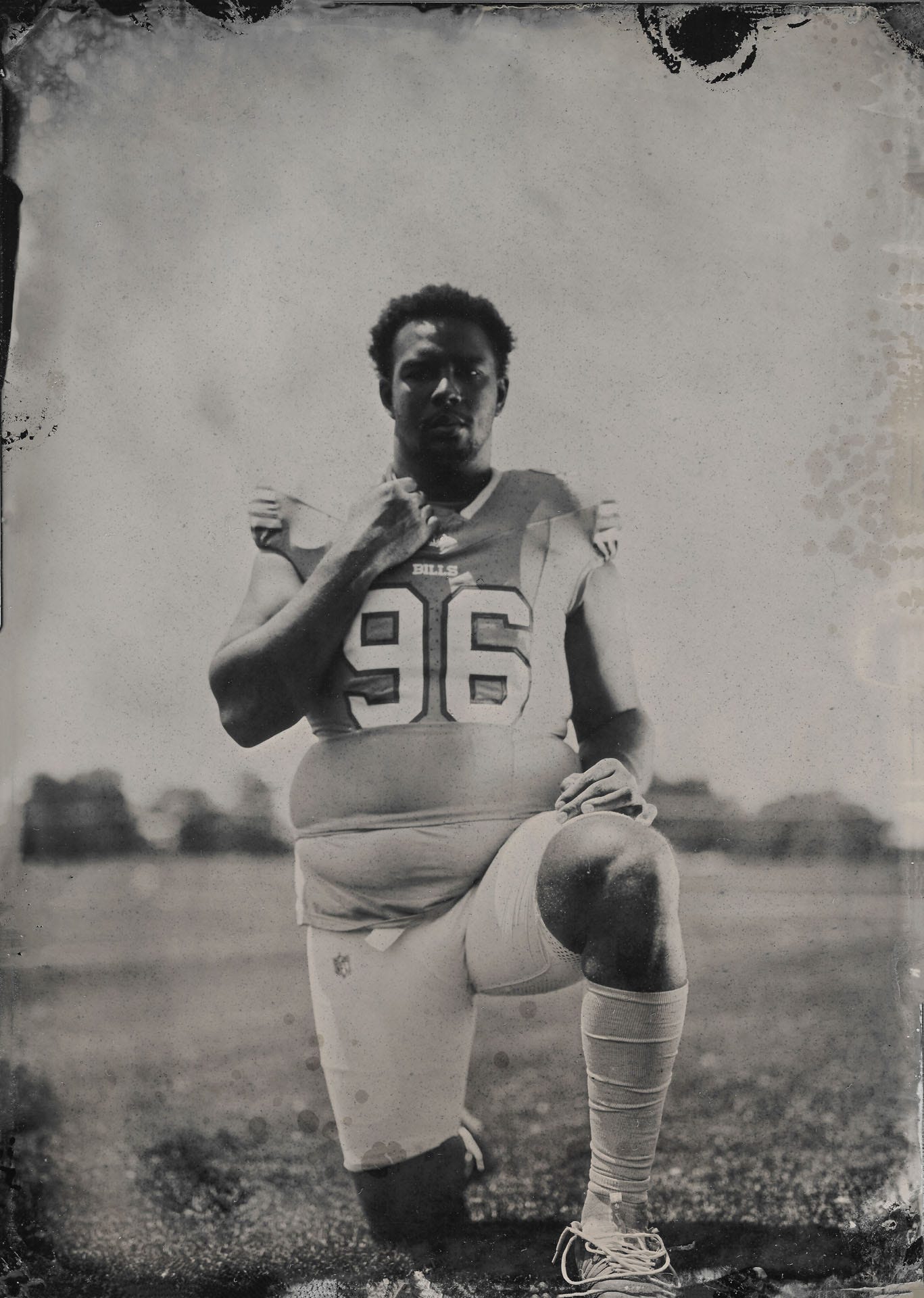
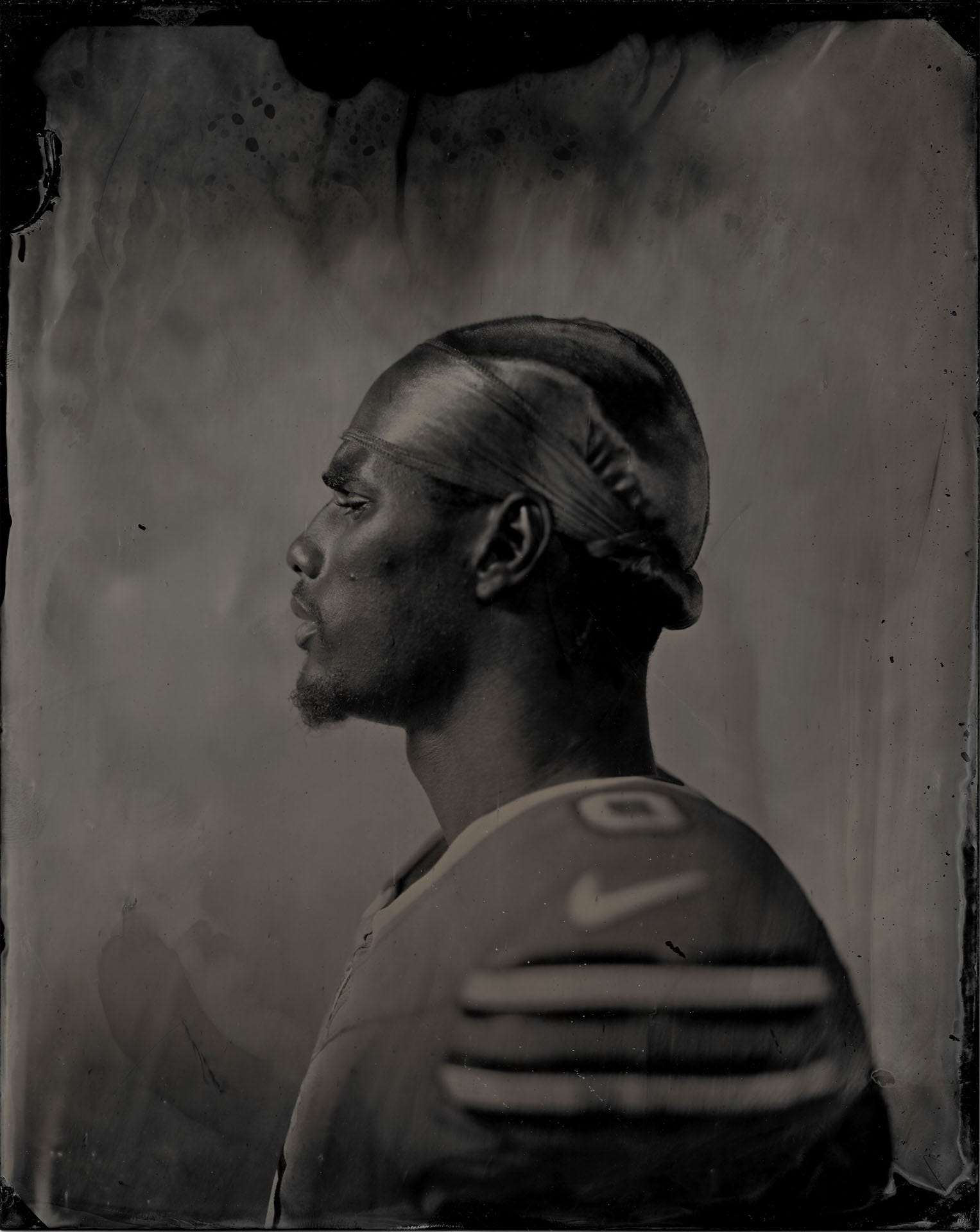
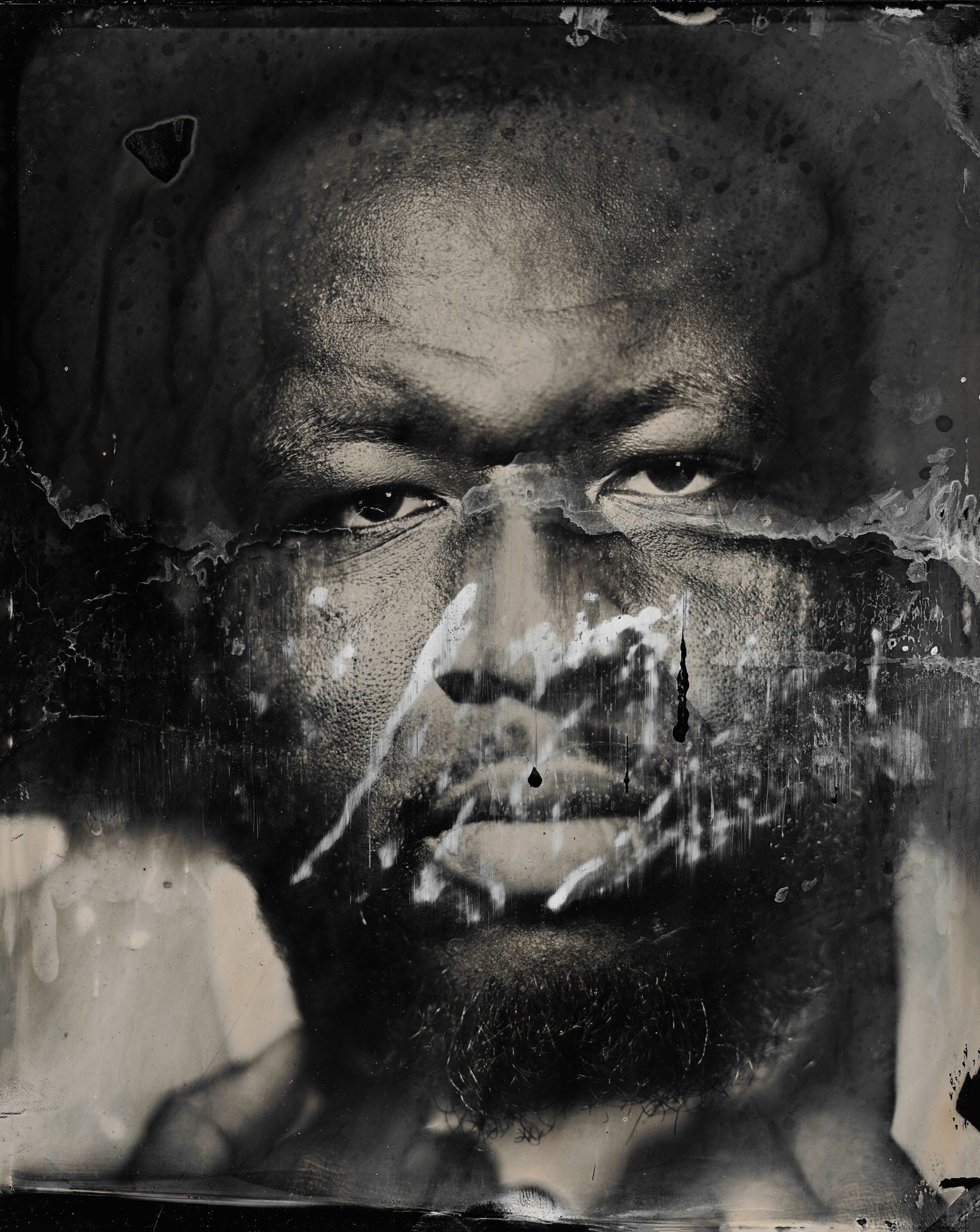
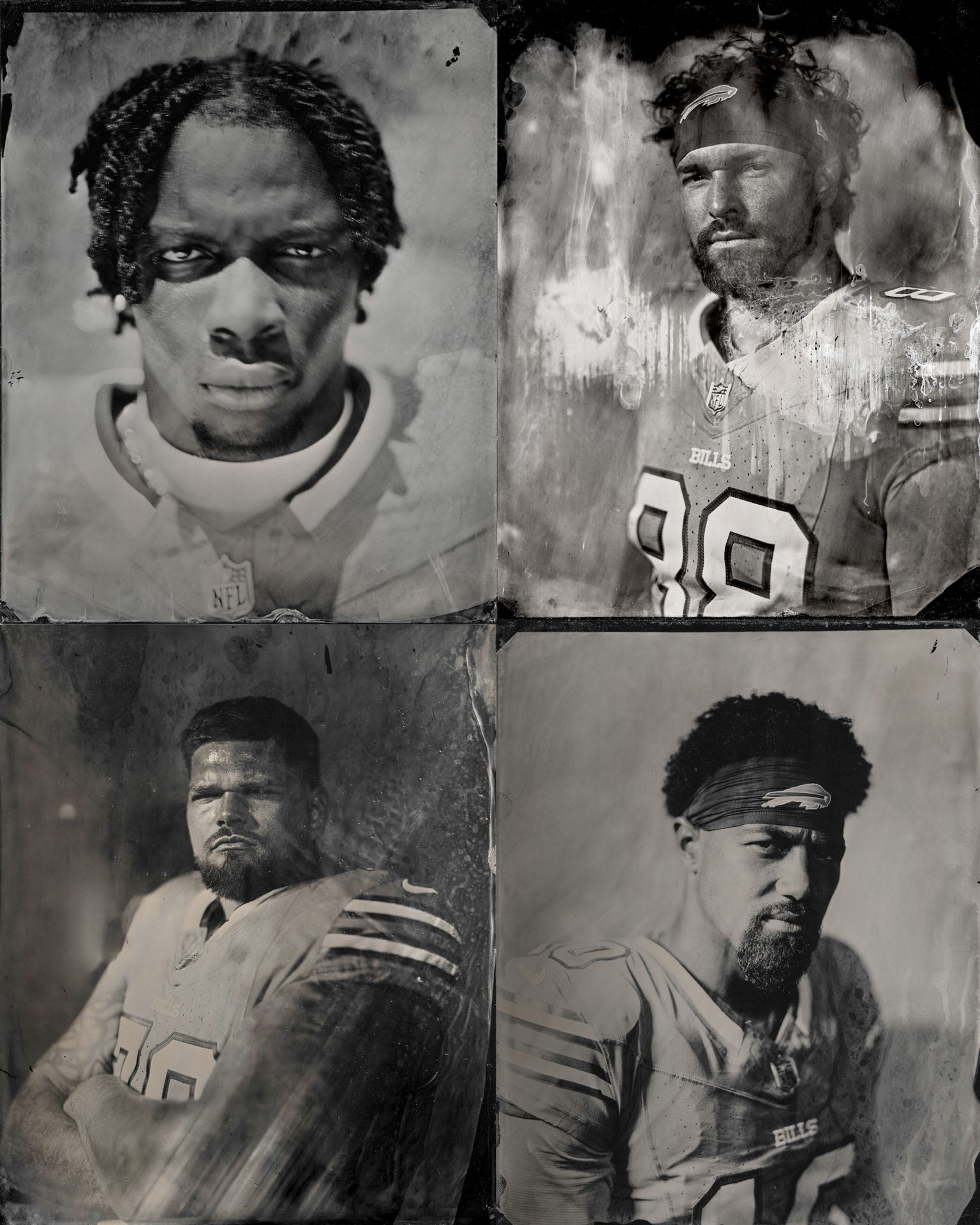
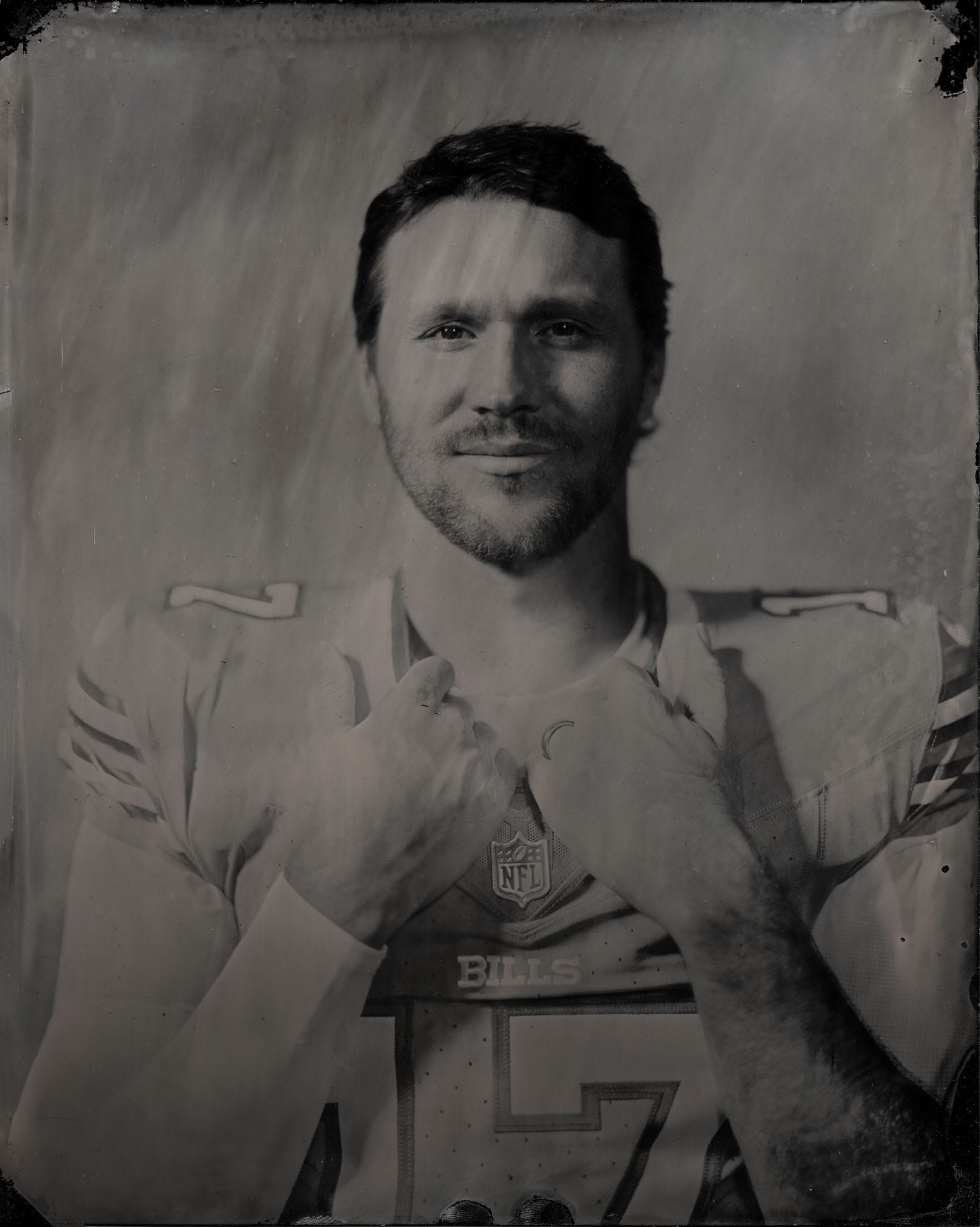
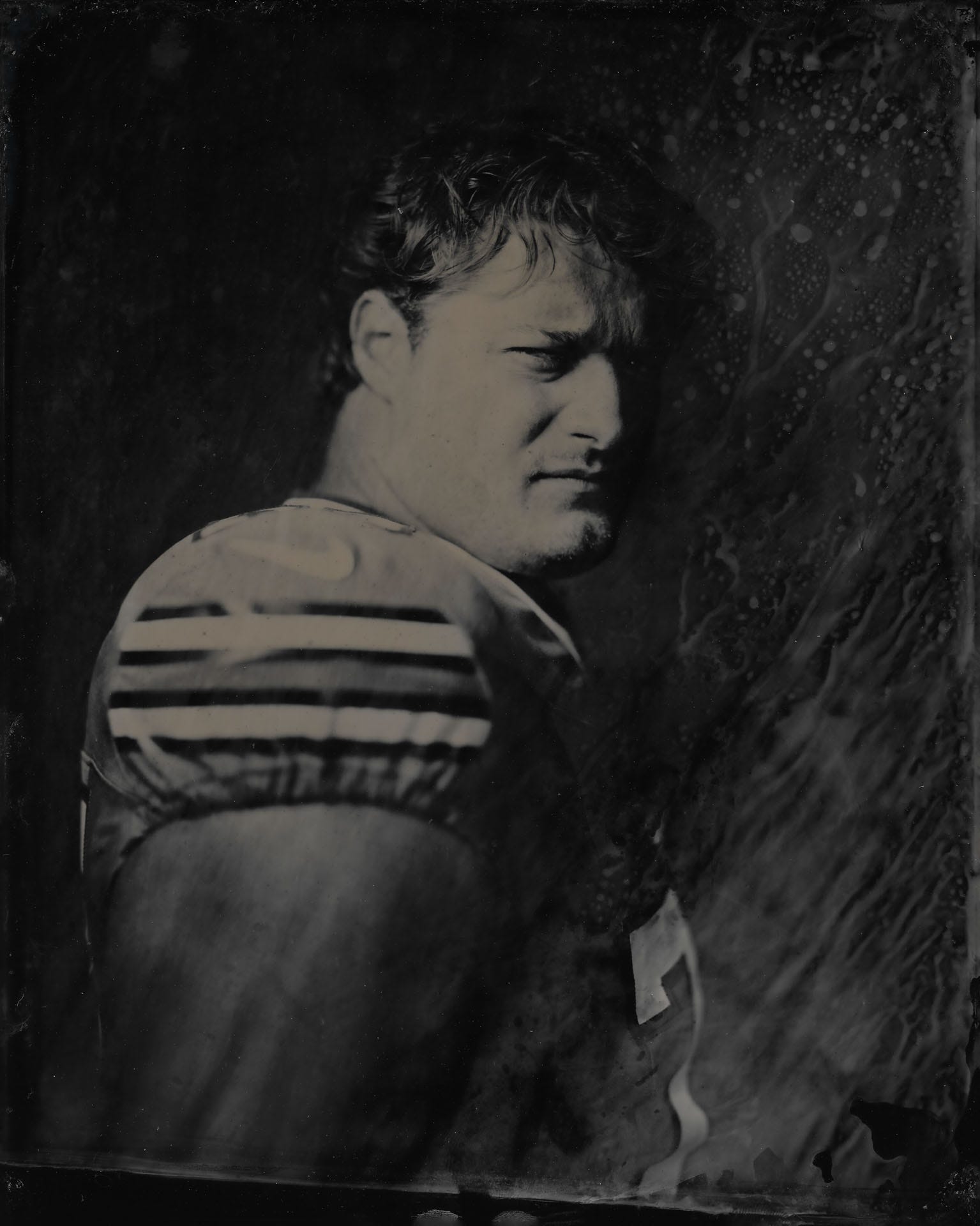
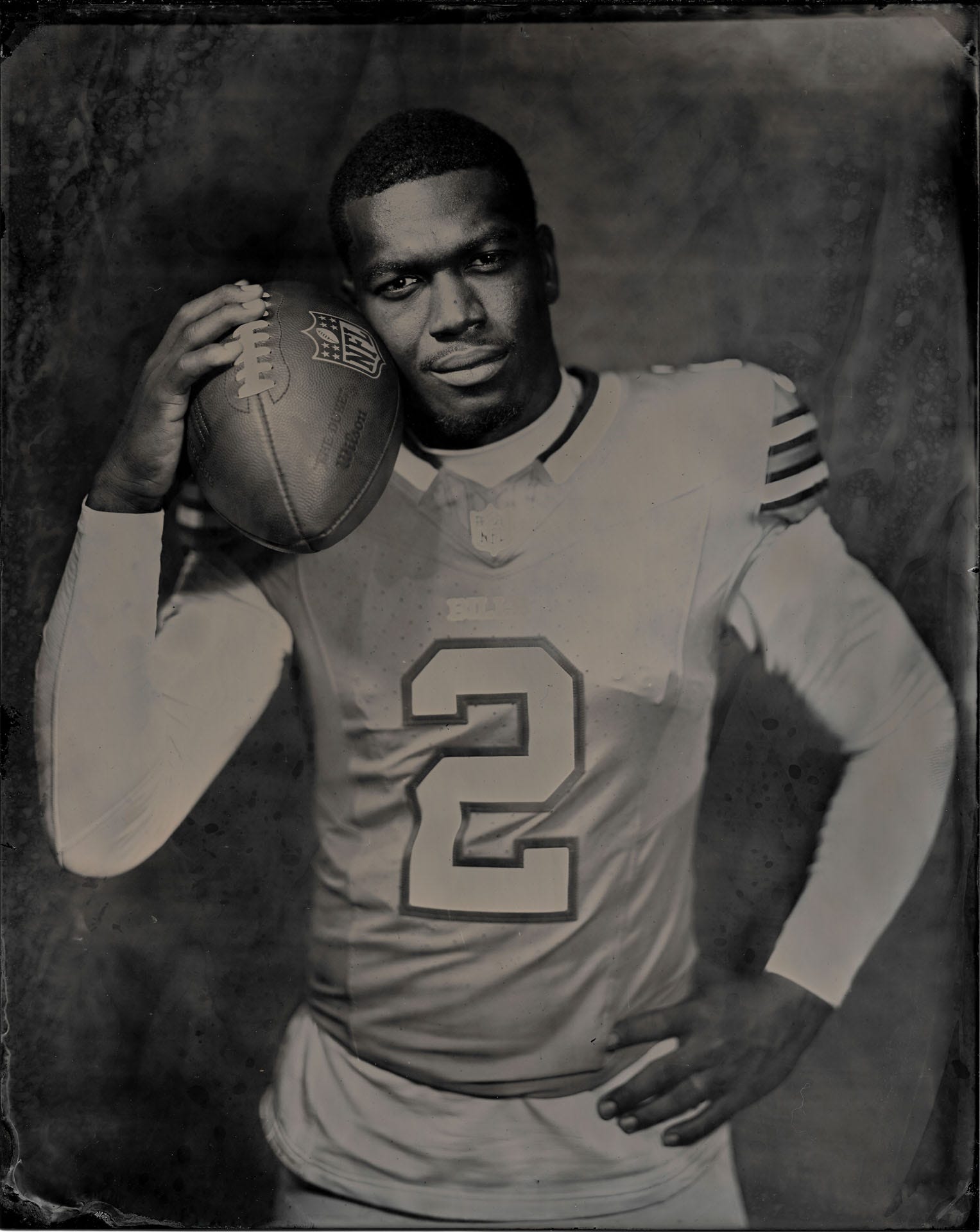
“On June 8th in Orchard Park, New York, the Buffalo Bills held Media Day.
The practice facility was filled with photo and video crews. More than a dozen sets were built across the space. Lights flashed. Cameras clicked. Assistants moved fast. Each player had a handler with a checklist. They moved from station to station, crossing off each stop as they went.
It felt like a gauntlet. A mosh pit of strobes, cameras, cables, and people.
There was not much time. Every set had to work fast. Every photographer had to be ready. The pressure was real. But pressure makes diamonds.
My set was different.
I was making tintypes using wet plate collodion, a photographic process from the 1850s. Each image begins on a metal plate. The plate is coated by hand with chemistry, then made sensitive to light in a silver nitrate bath. It must be exposed in the camera while still wet. Then it is developed by hand in trays, right there on set.
The players were blown away by the large 8x10 accordion camera. They leaned in to watch the plates develop. For a moment, the rush of Media Day stopped. They watched their images appear slowly in the chemistry. They smiled. They laughed. They pointed.
It became more than another stop on a checklist.
Through my lens, the players became warriors. Gladiators. Modern superheroes of strength and speed. There was power in them, but also stillness. The final images had the feel of another time. Part Buffalo Bill. Part Billy the Kid.
Old process. New legends.”
Clay Patrick McBride is a senior lecturer at Rochester Institute of Technology. He has been commissioned to make photographs by Rolling Stone Magazine, Sports Illustrated, New York Magazine, Blue Note Records, Sony Music, and Def Jam Recordings and has made portraits of LeBron James, The Red Hot Chili Peppers, Metallica, Norah Jones, Jay Z and many others. @clay_patrick_mcbride VIDEO
THIS WEEK’S RECKONING OF THOSE WHO ARE ON OUR MIND: A GATHERING OF THE INFLUENTIAL, THE CLEVER, THE SILENT, THE TRULY ORIGINAL, THE TENACIOUS.
Eelco Wolfe
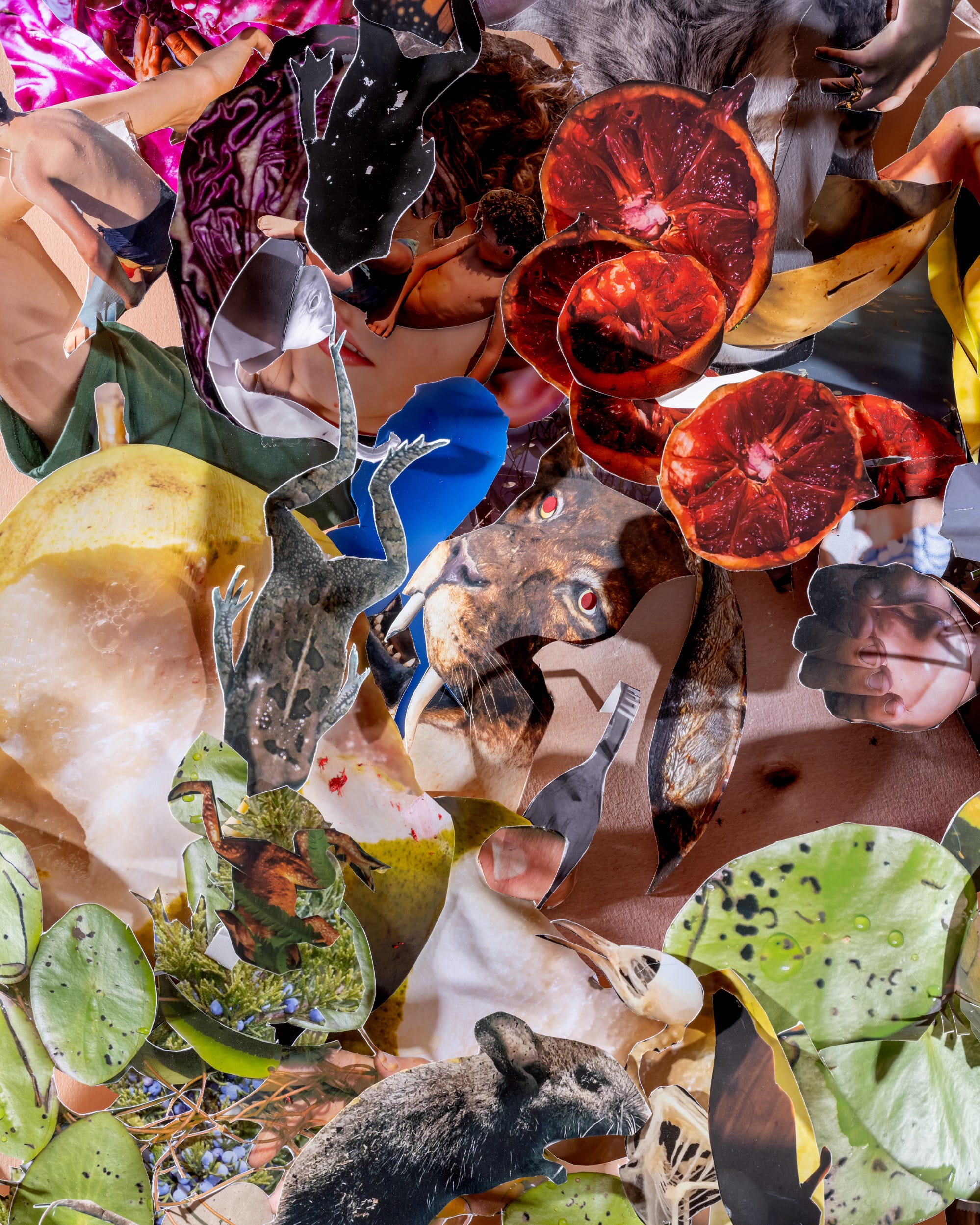
“There are dead mice in there, cheeseburgers, a sabre-toother tiger, endangered fish. It’s this compost of the way that I’m experiencing life.”
Elizabeth Pedinotti Haynes’ piece is called Maybe You Were Once Made of Something Unkind. From a distance, it resembles a huge bouquet, or a cornucopia spilling from the wall. Gradually, its shadowy thickets resolve into a Lilliputian scene: sunbathing children perch beside frogs and earthworms; vermillion grapefruit halves climb like bougainvillea through a forest of silverware and human limbs.
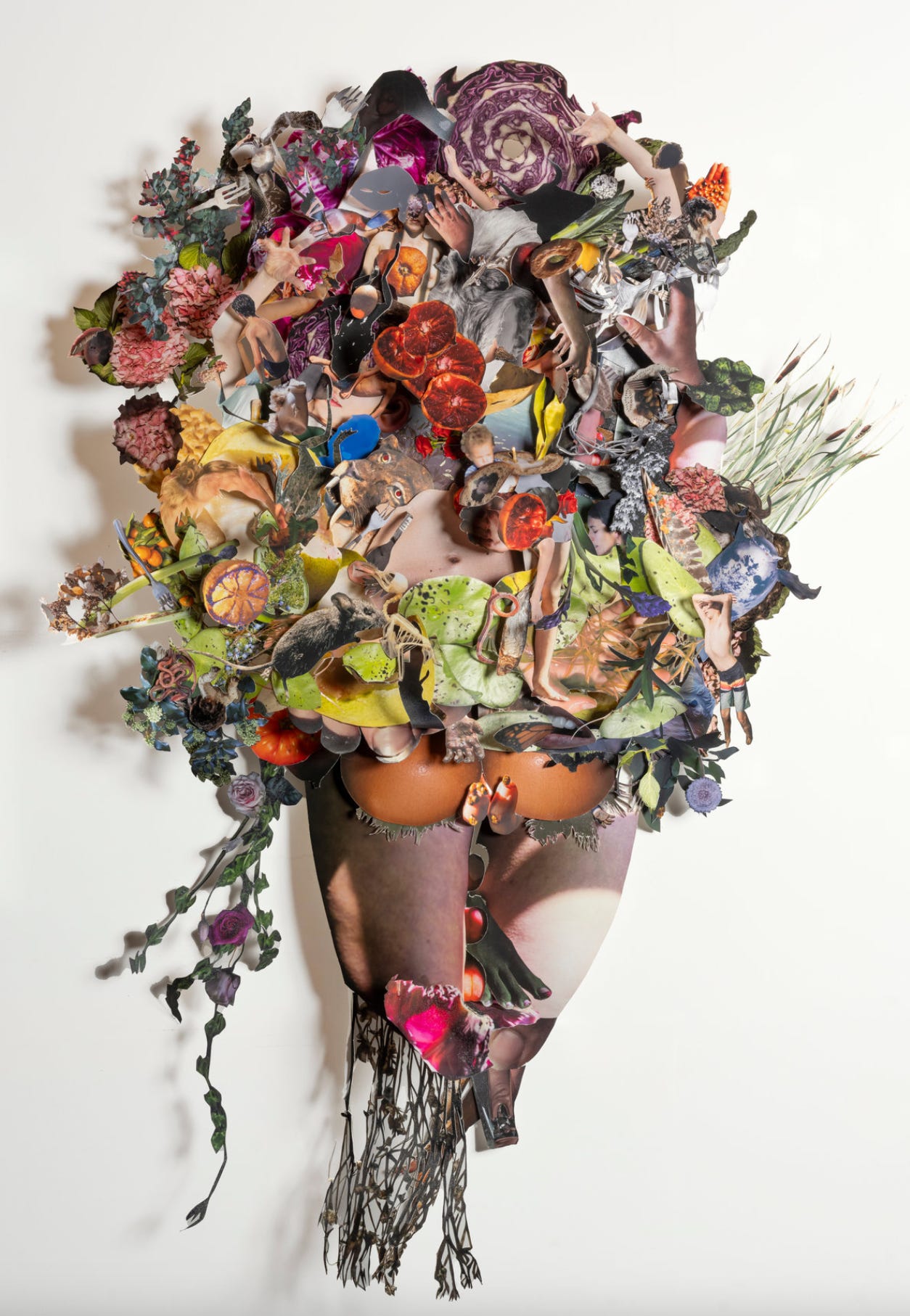
“In the quiet moments, like washing dishes,” Elizabeth says, “All kinds of images flash through my mind. It’s a conglomeration of thoughts and experiences. I was trying to make those internal feelings external, in a way. Cutting them apart and putting them together helps me understand where the anxiety is.”
Haynes’ practice is intertwined with her family life, stalked by the vagaries of the modern world. She transforms the labor of being a mother into artistic gestures: folded laundry blocks the door, green tomatoes get nailed to the wall. Bees swarm all over her underpants, and a tiny gun shows up in the dustpan after sweeping the house. While this take on the daily chores might seem a little edgy, I think we can all relate to the way the mind toys with chaos these days.
Jan Groover’s kitchen sink photos were all pure forms and shining surfaces, painterly ripostes to the tedium of domesticity. But Elizabeth’s kitchen is shaggy with life, some foraged, and some meticulously cut from her own printed archive. A paper bird sits on a real branch. A paper frog floats languidly next to the morning’s dishes. Tiny portraits of her children traverse fields of scattered fruit.
Photo cutouts are doing all kinds of work in these compositions. There’s a lot of doubling, a lot of visual puns. Is that a paper-thin onion skin, or the skin of an onion printed on thin paper? Hard-edged shadows play against the clean slices of an Exacto blade. Elizabeth equates these juxtapositions to the way recollections and daydreams circulate through our minds: “I’m interested in the way memories function as a visual medium. Cutting them out slowly and meditatively is a way of reflecting on the subject matter itself.”
This spring, Elizabeth has been busy editing her first publication with Saint Lucy Books, which is slated for release this fall. In between meetings, she started playing around with the cutouts left over from years of photography. “It was very organic.” She said, “I started pinning them on a board, but they weren’t quite sitting flat. I loved how they cast shadows on each other, and I realized that what I wanted was that three-dimensional space.”
Dia:Beacon used to have a sculpture by Meg Webster called Stick Spiral, an enormous whorl of flowering branches gathered from the woods nearby. My four-year-old son liked to sit with me in the middle, pretending we were tiny birds. There’s something about Maybe You Were Once Made of Something Unkind that reminds me of that experience. It’s immersive, a maelstrom of cuttings, vines, pieces of old work and new forms of life, all climbing past the picture frame and out into the world itself.
Of course, Meg Webster uses real branches, not photos. I raised the possibility that Haynes’ practice might be leading her away from making photographs at all, but she doesn’t see it that way: “Taking apart my photographs makes me like photography better, it makes me more interested. I think my desire to rip things up and remake them is related to the images we see every day, the images that are designed to lull us into a state of despair. We’re all animals, we all have dopamine receptors, we’re all being chemically manipulated by a lot of the imagery out there right now. In my work, in order to retain my own humanity, I have to push against that.”
I mentioned the recent film, Peter Hujar’s Day, and that Hujar seemed so luxuriantly broke, so pleasantly bored in that pre-digital era, lazing in the sun all day, waiting for the phone to ring, waiting until it was time to sit on the floor eating Chinese takeout.
Elizabeth texted me back: “That sounds like paradise. I remember a summer when I was 10. I was so bored I watched a spider crawl from the ceiling to the floor for two hours.”
I’m never bored anymore, I worry. Last night I got stuck between the dishwasher and kitchen sink, procrastinating, doomscrolling through a galaxy of sunglasses, sports cars, crispy pork bellies, cures for insomnia. This seems to be the nature of our brains these days, tossed along in the rush of our own memories and the unrelenting allure of the feed. It’s a maelstrom of a different sort, a tentacle of pictures caressing thoughts, an algorithm sharpening its teeth just for me.
What do we do with so many images? How do we keep anything from them? There’s an agency in Elizabeth’s approach that I find inspiring. She lingers tenderly over everything she sees, but there’s a knife in her other hand.
Colin Beattie is an artist and curator and whose recent curatorial effort ‘Give Me One Good Reason for Leaving the House’ will be at CPW Kingston this summer.
In a fun talk given at the Chinati Foundation in 2001, Dave Hickey (via Leo Steinberg) offered one of the sharpest descriptions I’ve encountered of the relationship between light, time, and technology in Renaissance and Baroque painting. Describing the “ahistorical light” of Raphael — built up through thin translucent glazing and presenting saints and Madonnas in “source less, ambient, shadowless illumination” — Hickey argued that High Renaissance painting created “a condition in which the light and the light source are one.” This timeless glow was then contrasted with the time-bound, raking streaks and angled shadows cast by the very real light sources (a window, a candle, a flash of lightning) in Baroque painting. High Renaissance light shines in a timeless state, Hickey concludes, while Baroque light fixes fleeting situations in a flash. “The angle of the shadows, the source light, all reflect the ongoing flux of historical time.”
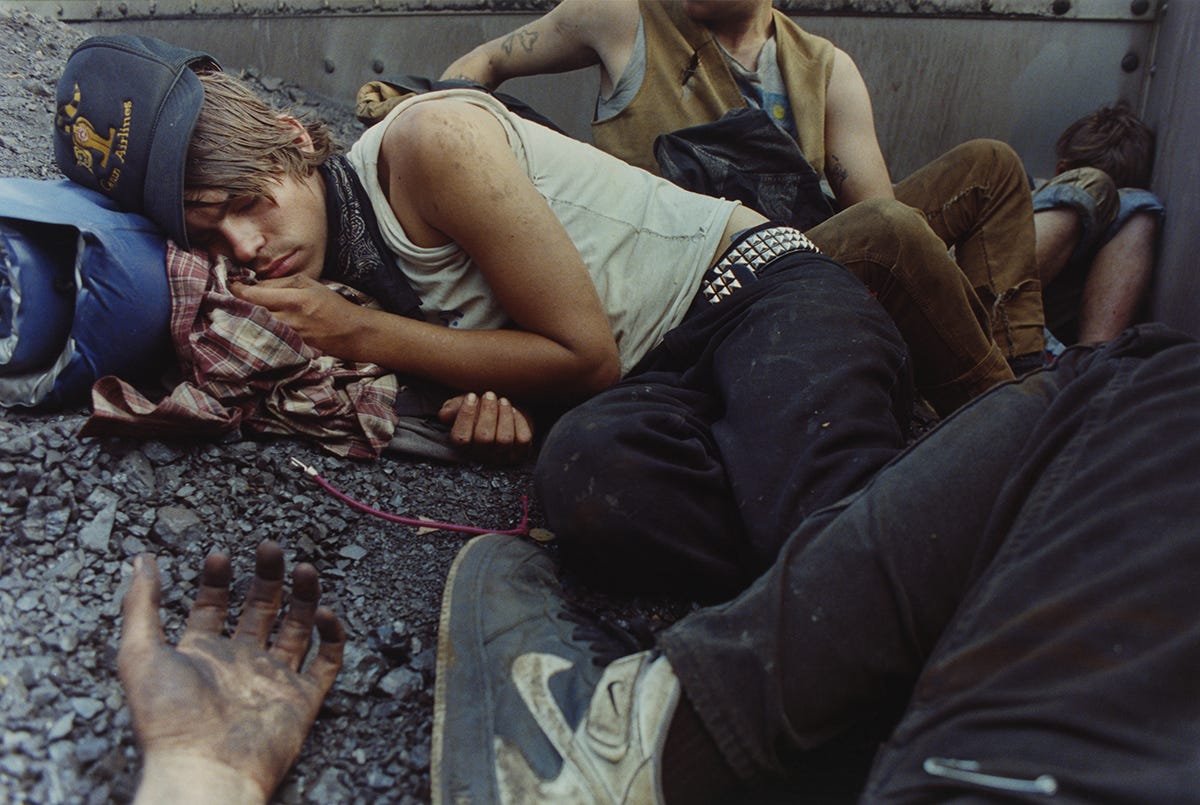
Religious subject matter aside, the distinction Hickey describes offers a revelatory approach to the two bodies of Mike Brodie’s work currently on display at Casemore Gallery in San Francisco: the eternal, source less light of his crusty youth as a train-hopping hobo, seen in his first book “A Period of Juvenile Prosperity” (2013) and the streaking, time-based light of his later work in “Failing” (2025). The former is freighted (couldn’t help it) with the dirt, desperation, and gorgeous delirium of Edenic youthful abandon. The latter is less young exodus than survival after cataclysm.
Notice the angled horizon of #5060 (2025) from “Juvenile Prosperity,” a scene of two gorgeous and bedraggled train riders, one named Soup, dipping down from the upper left towards the right. They crouch comfortably within their own peaceable kingdom that careens through golden fields beyond a river. Despite the diagonals, everything is balanced, the warm light washes across the image from the left, setting them and the grain and the train aglow. This fleeting of serenity is belied by the fact that there really is no comfortable place for them to sit, and Brodie’s perch is equally precarious, shot as it is from another train car. Yet everyone is caught in a moment of stillness as the world thunders past. “FREE” reads across the dirty fingers of the kid closest to Brodie and, by proxy, us, as a brazen declaration of escape.
Though shot with the same Nikon F3 as the earlier series, the second room in Casemore is darker, more controlled, more austere. The landscape is fixed, the horizons high and often level, but the view is askew, as if Brodie doesn’t quite fit in a truck and not a train. The ahistorical light of the past haunts these timebound scenes like smog: we see a shot of the road stretching towards snowy peaks as a hawk glides by in “Winnemucca, Nevada” (2012-2023). The hood and windshield of the truck, from which this was shot, frame the landscape like the confines of a cell. The bird is free, and Brodie trucks in earthly time.
Nearby, we see the tailgate of the same truck, a Dodge, on fire (Burning Tailgate, 2012-2023) with a splintered plank jutting out towards us in a sharp diagonal worthy of Caravaggio’s earthly theatrics. In the center of the gallery, a porcelain nativity scene rests in a dirty Styrofoam box covered in years of grime. On the wall, a large print (Nativity 2012-2023) hangs that displays a man in white, covered in sweat, holding the very same nativity scene in his sore-ridden arms. Brodie came across this scavenger dumpster-diving and ended up with the photo and the nativity scene that we encounter in the show. The only difference between the set in the photo and that in the gallery is that the infant Christ figure has been rotated, and the lambs have moved around. Nearby, two lambs cower in a modern manger, spotlit against a dark, dirty, wooden wall. They exude light but cast raking shadows.
Brodie lived the life he learned to shoot in “A Period of Juvenile Prosperity” and many of his muses have died. Anyone who has experienced the early death of a loved one understands how fragile youth’s state of grace really is. Photography may momentarily suspend a person outside historical time, bathed in the eternal glow Hickey describes, but death always reasserts itself. The photograph remains luminous after the body vanishes.
Ted Barrow, PhD, is an art historian who works as a lecturer, writer, and curator in San Francisco. In addition to publishing regularly about art, Barrow hosts a show called “This Old Ledge,” that explores the history of the built environment of skateboarding.
Comments
Nothing yet. Say the first thing.
Sign in to join the conversation.