
The single most iconic men’s suit is usually said to be Cary Grant’s in North by Northwest, though a friend insists the more elegant garment belongs to Anthony Perkins as the doomed Joseph K. in Orson Welles’s adaptation of The Trial. You could try to draw a line from Perkins’s fitted jacket and notched collar to Kafka’s perfect sentences, but the stronger signification is thematic: the suit is a symbol of bureaucratic conformity and mute submission to power. The writer Wayne Koestenbaum has said a suit is like a coffin.
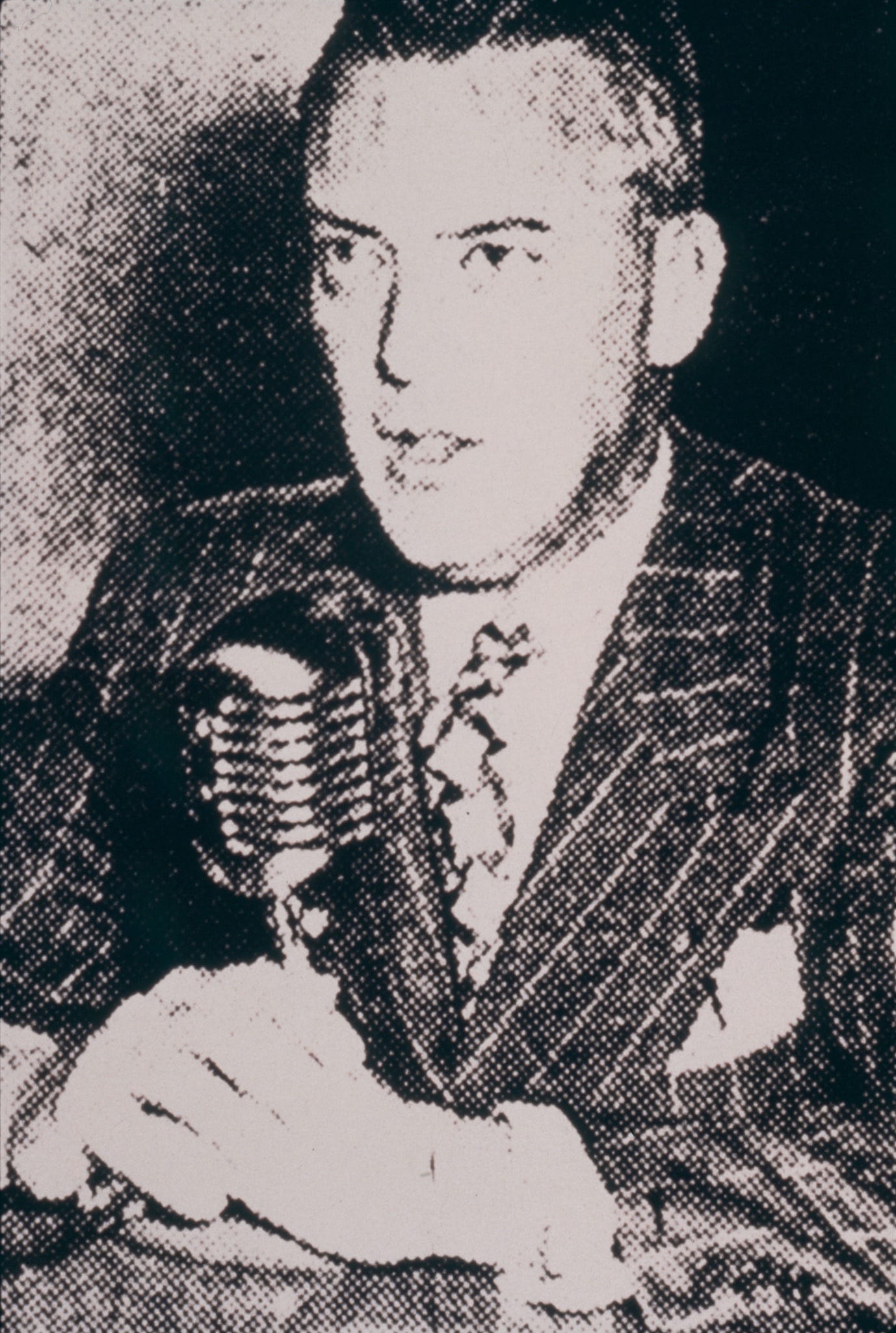
In Lewis Baltz’s The Deaths in Newport (1989-1995), a newly digitized photo essay with recorded voiceover, closing this week at Gallery Luisotti in Los Angeles, the suit in question is dark, double-breasted, and pinstriped, and the man wearing it is the artist’s father, Charles Baltz. The occasion is the famous Overell murder trial of 1947, where Baltz Sr., took the stand as a witness for the prosecution. As the local mortician, he was the first to examine the bodies of Walter and Beulah Overell after the couple’s yacht was blown up in Newport Harbor, allegedly by their 17-year-old daughter and future son-in-law. A photo published in the Los Angeles Examiner shows Baltz, described as a“square cut man with silvering hair,” delivering his testimony: the Overells were killed hours before the boat exploded, deflating suspects’ alibi (they were ashore when the blast went off). When asked by an attorney how he made the determination, he replied: “rigor mortis.”
The deadpan is sadly apposite. Charles Baltz, a severe alcoholic, would die of cirrhosis within a decade of the trial, and by the late 1980s, Lewis Baltz’s own life was deteriorating. He struggled to find work in LA, having returned from a life in Europe—an attempt to save his foundering third marriage—and felt increasingly dissatisfied with his career as a documentary photographer. The Overell investigation was a project he’d pitch, unsuccessfully, to the Newport museum as a way of supporting himself, but he admits that his truer interest was a quest for a “secret past.” He long believed that he—Lewis—was present in the courtroom for his father’s testimony. It had been Charles’ greatest professional achievement, and he wanted his wife and baby son there—so Lewis surmises, unconvincingly. Though he is clearly impressed with the “dapper mortician” whose immaculate suit and necktie “look oddly contemporary,” the praise stops abruptly there. Under cross-examination Baltz’s credibility withers: “The defense counsel correctly criticized his methodology as inaccurate, unscientific, and subject to so many variables as to be hardly more than folk medicine.”
What’s best about The Deaths in Newport is the way it moves from personal exigence—a son’s attempt to reconstruct a scene he may or may not have witnessed—into the sort of oblique social commentary Baltz often liked to perform. He, for example, details the Attorney General’s attempt to exploit the trial politically (a failure when the couple was acquitted) and alludes to the era’s pulpy obsession with vice and salacious “true crime” narrative. Spread over nineteen long weeks, the trial was full of publicity stunts, leaked documents (the suspects’ sexy love letters), and surprise witnesses. It was broadcast on the radio, and appeared daily in the LA papers—Hearst’s Examiner especially—attracting gawkers from afar. Press clippings show a beach bunny at the courthouse, in swimsuit and high heels, demanding to “see the show.”
The photo historian Andrew Witt, who co-curated the new exhibit, sees the trial’s tasteless extravagance as a natural fit for Baltz. Like the suburban tract houses and faceless industrial sites he photographed, true crime mixes the appeal of forensics (“rooted in forensis, the forum,” Witt explains, “where evidence is publicly presented”) with a more cosmetic photogénie (“the seductions of newsprint and commercial iconicity”). The Deaths in Newport includes dozens of other pictures which drive the idea home—large format prints of the yacht’s shattered deck, a spread from Life Magazine. There are also several photographs Baltz took over the years, such as 11777 Foothill Blvd., Los Angeles, an undemonstrative view of the intersection where the LAPD assaulted Rodney King.
As for Newport: the white Republican Orange County of Baltz’s childhood represented, in Baltz’s caustic phrasing, “something horribly amiss.” Over the next decades it would be swept up in waves of “bulimic” Southern California development. The goal for Baltz was to discover what lay beneath so many “vast tracts of featureless stuff,” though real certainty remained impossible. The suit is like this too: concealing—entombing—the body, but liable to split at the seams. As Witt points out: “Baltz had caught a loose thread in his own past and pulled at it to see what might come undone.”
nicholas gamso is a regular contributor to frieze, Art Monthly and e-flux. A book of his essays Art After Liberalism was published by Columbia University Press in 2022.
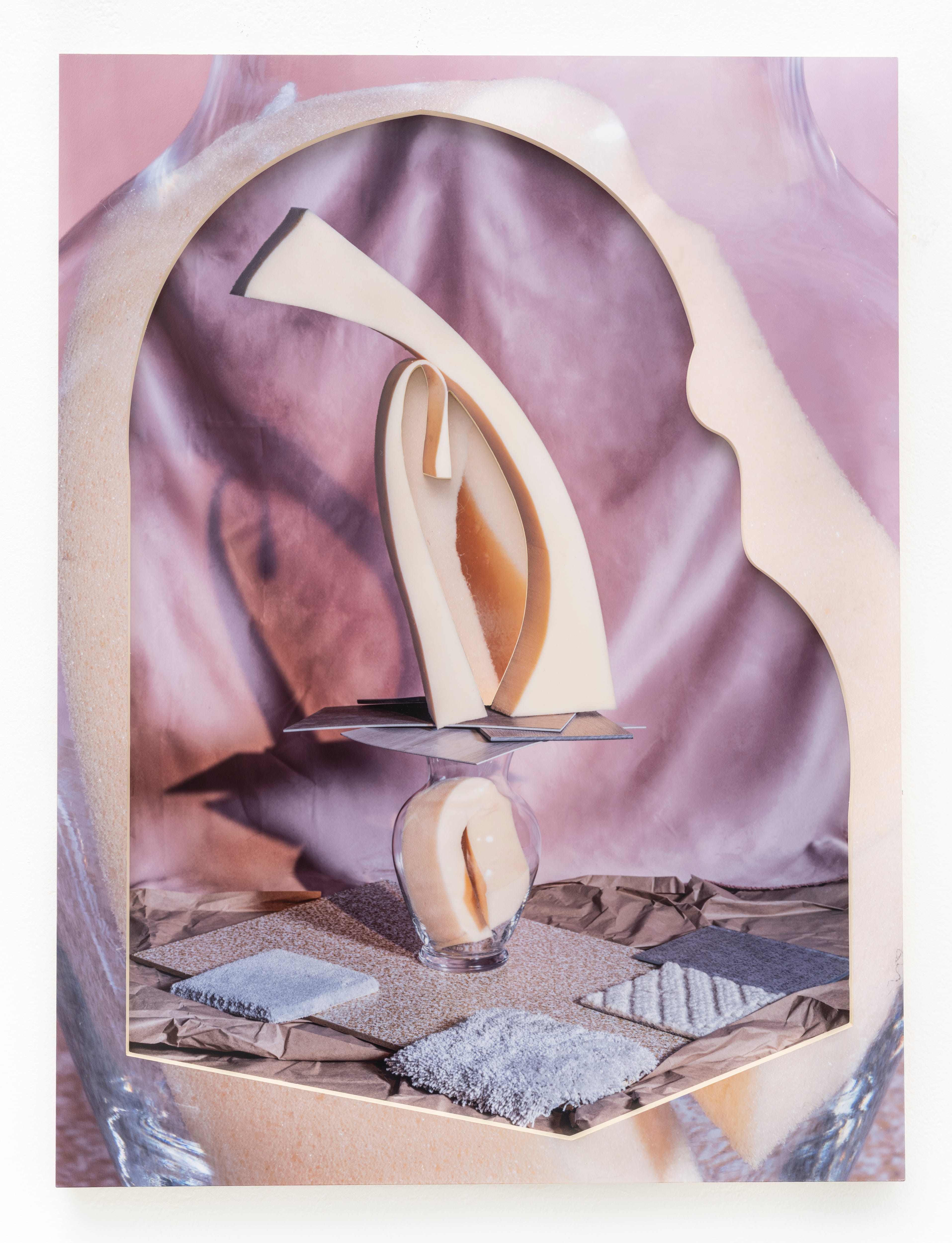
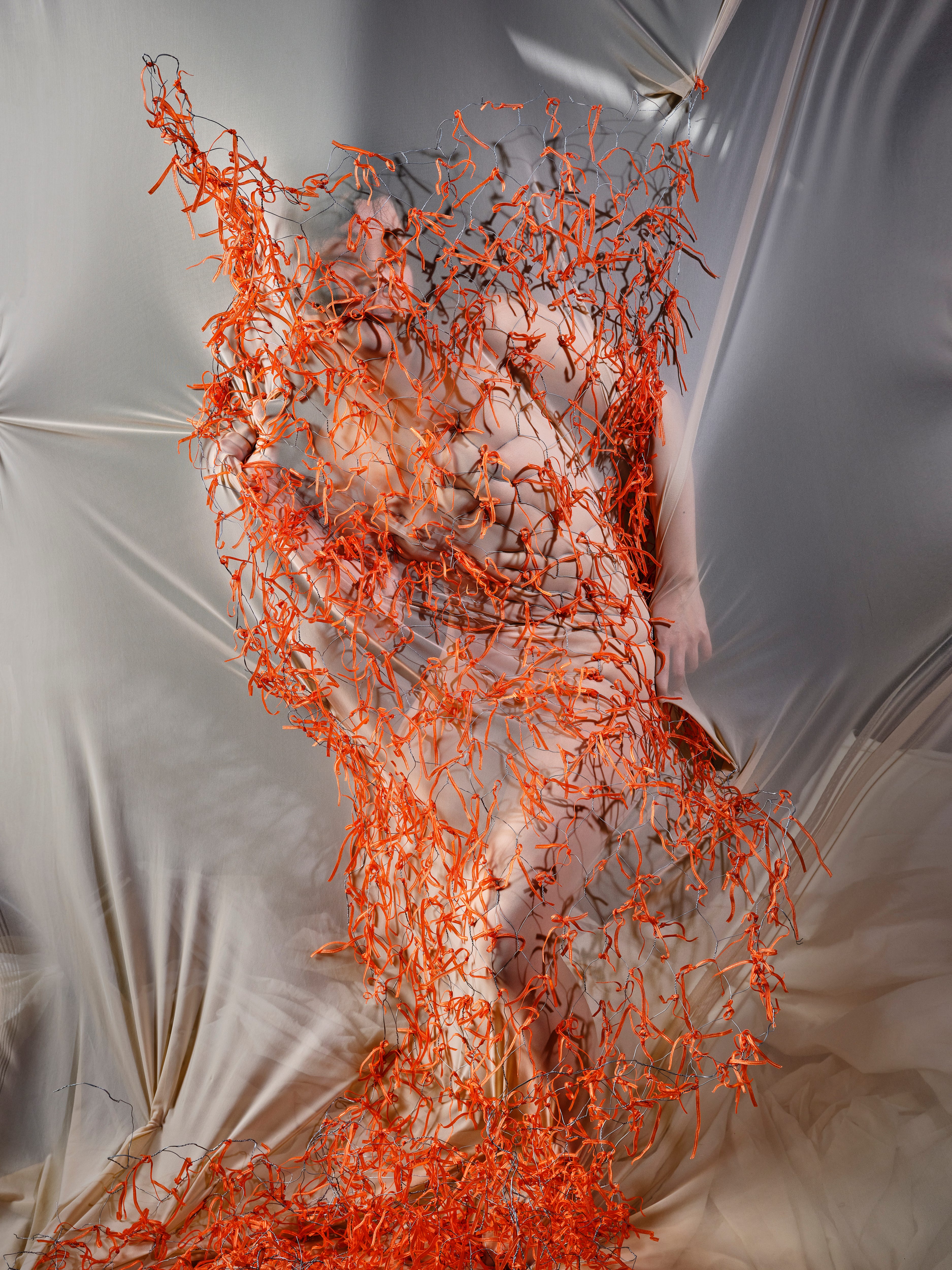
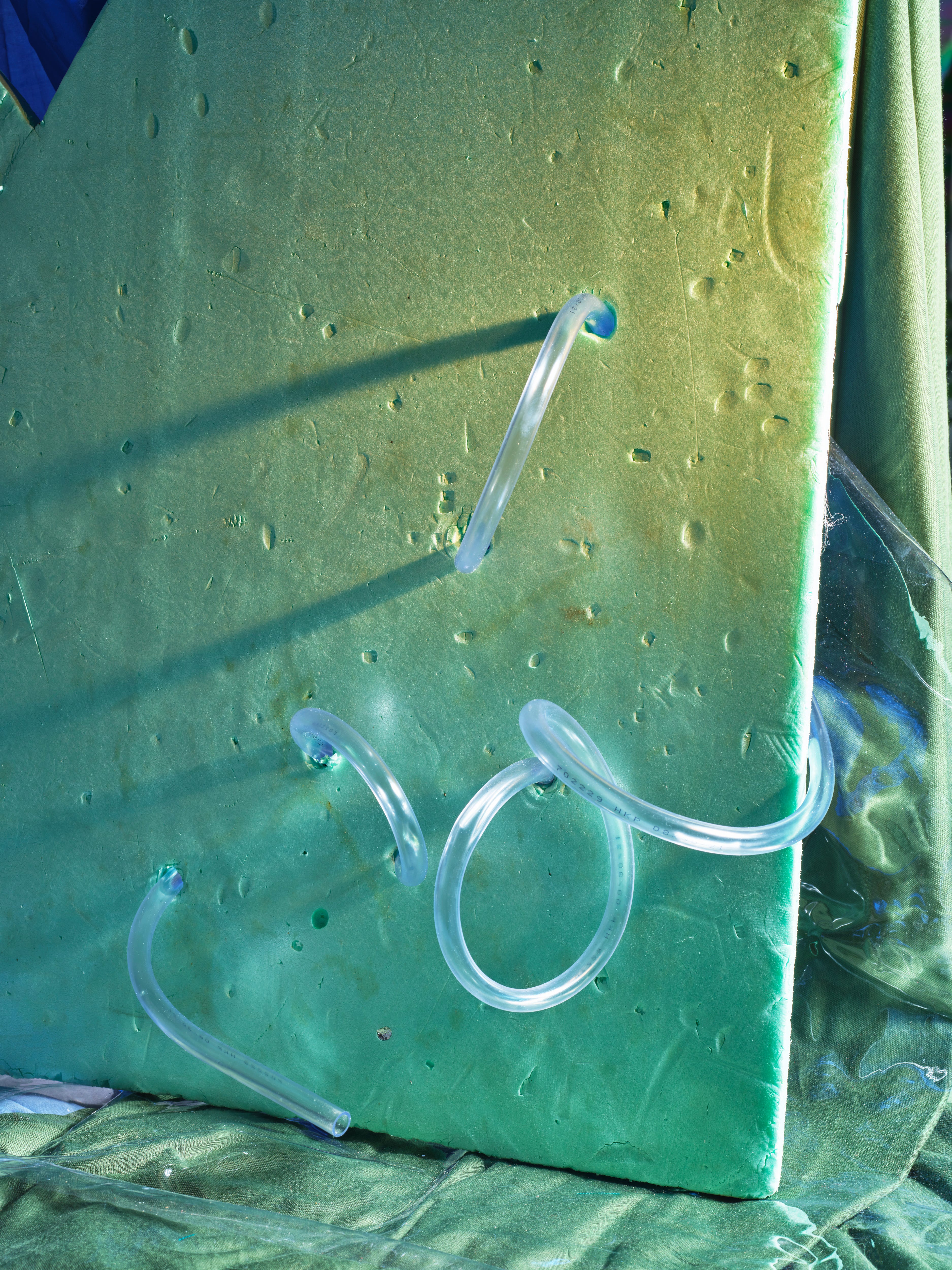
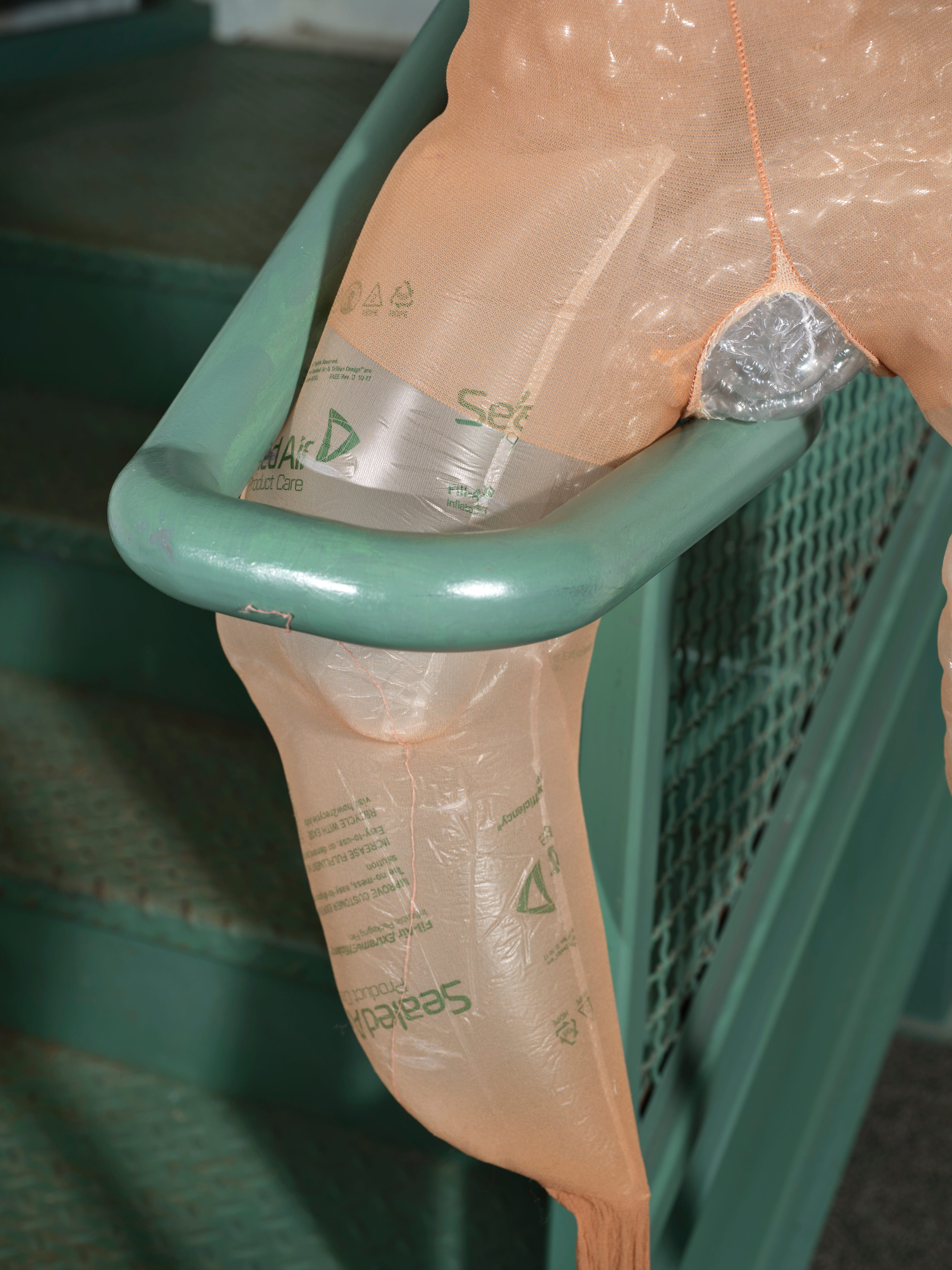
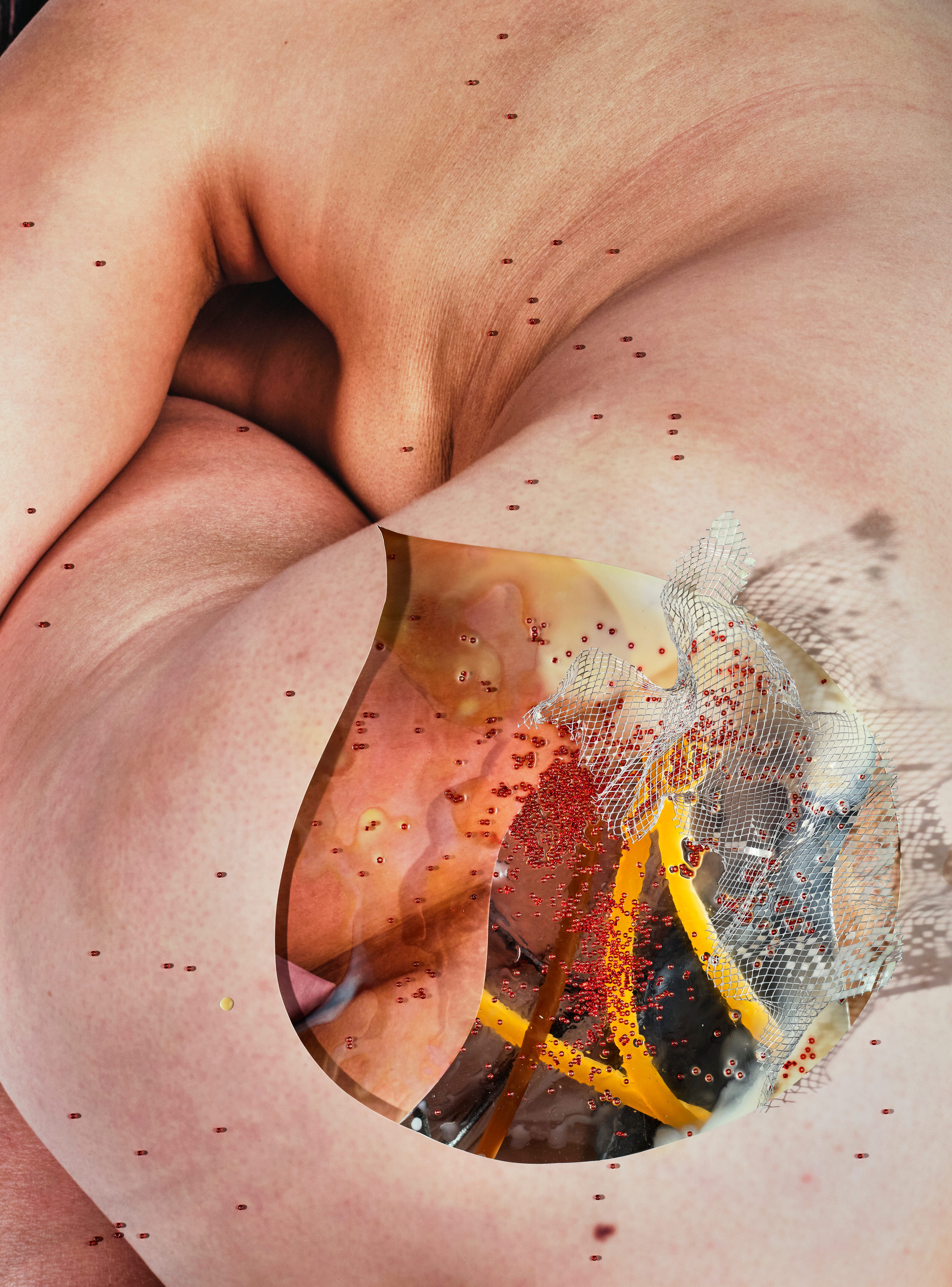
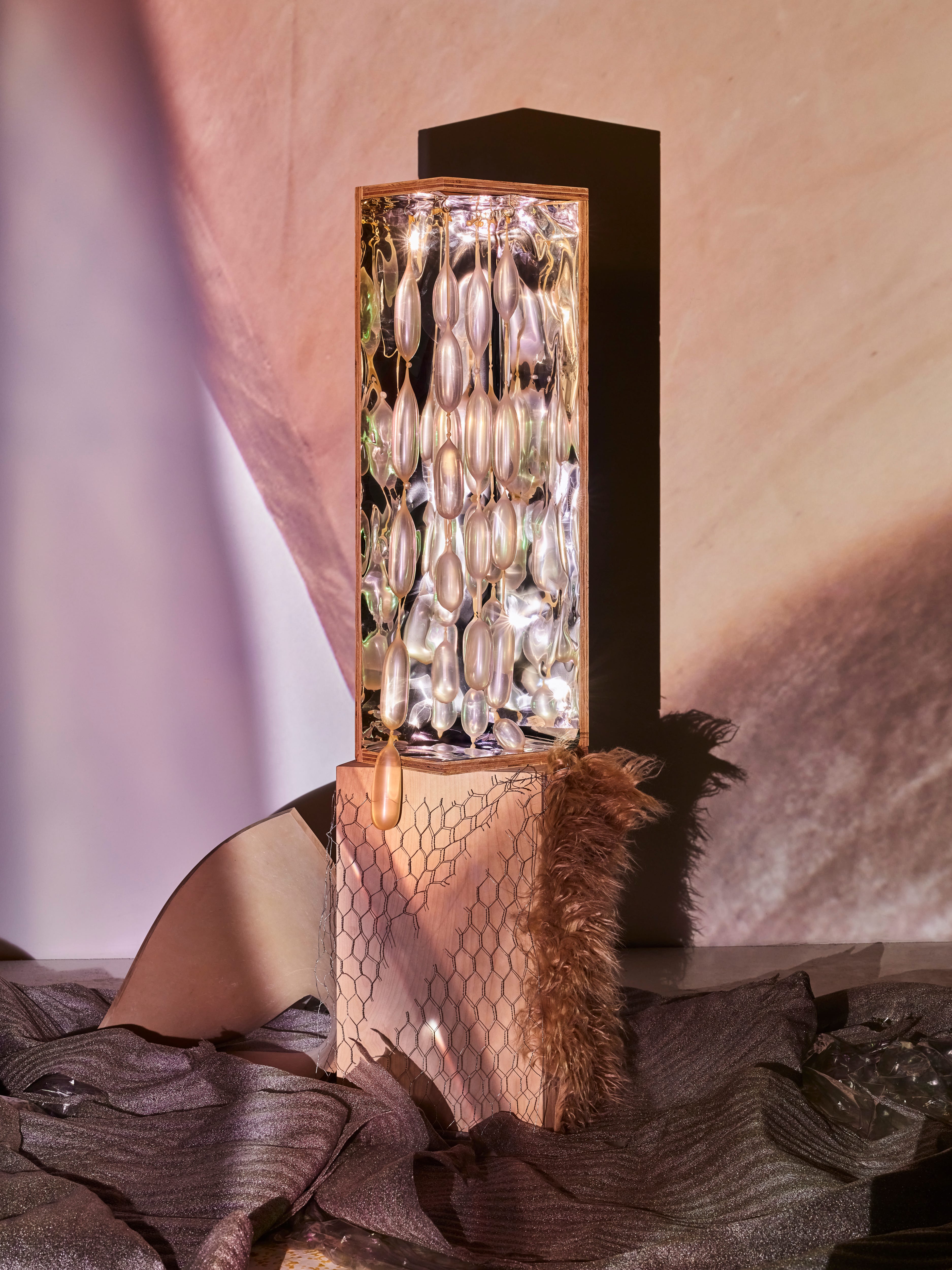
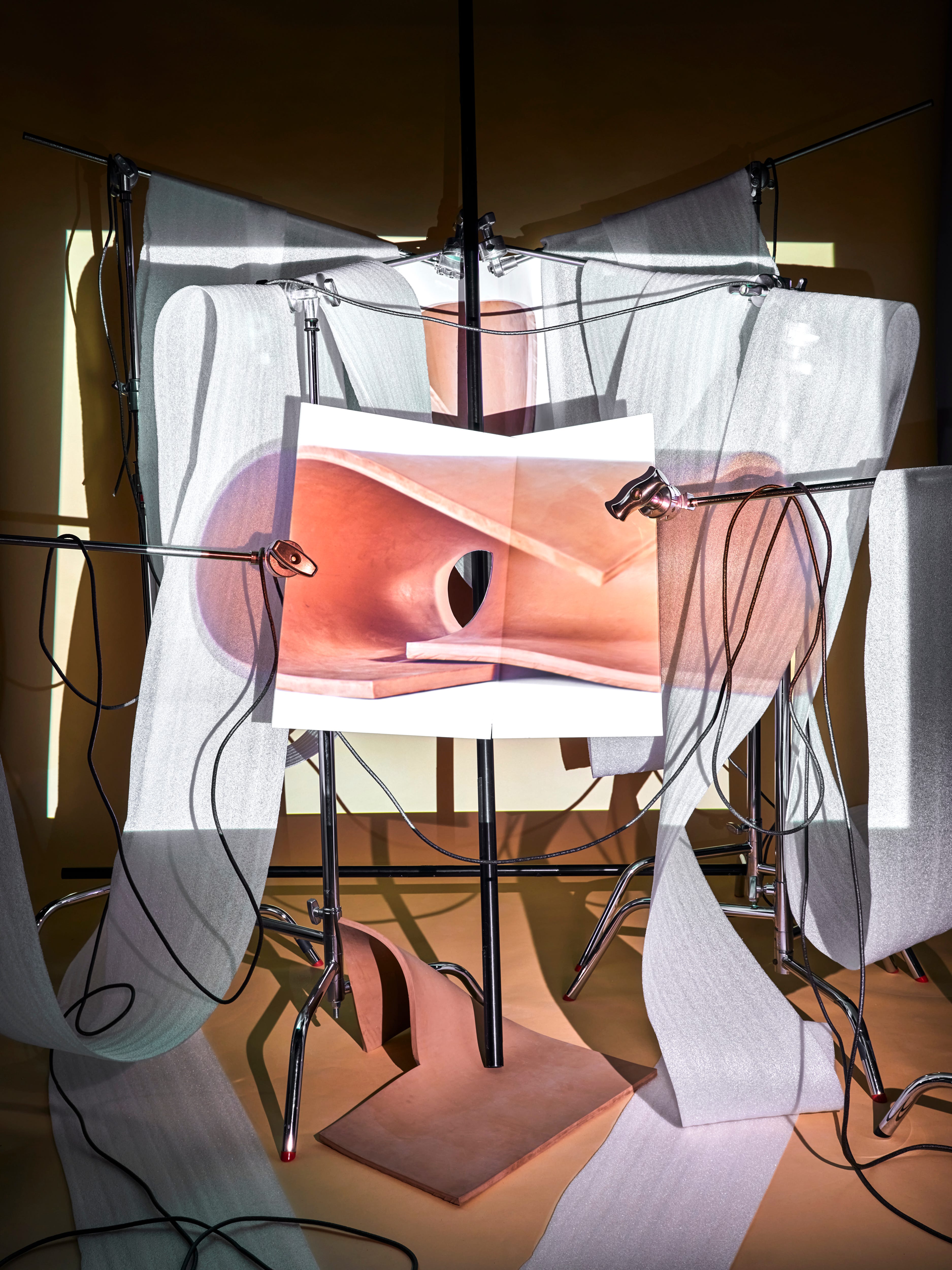
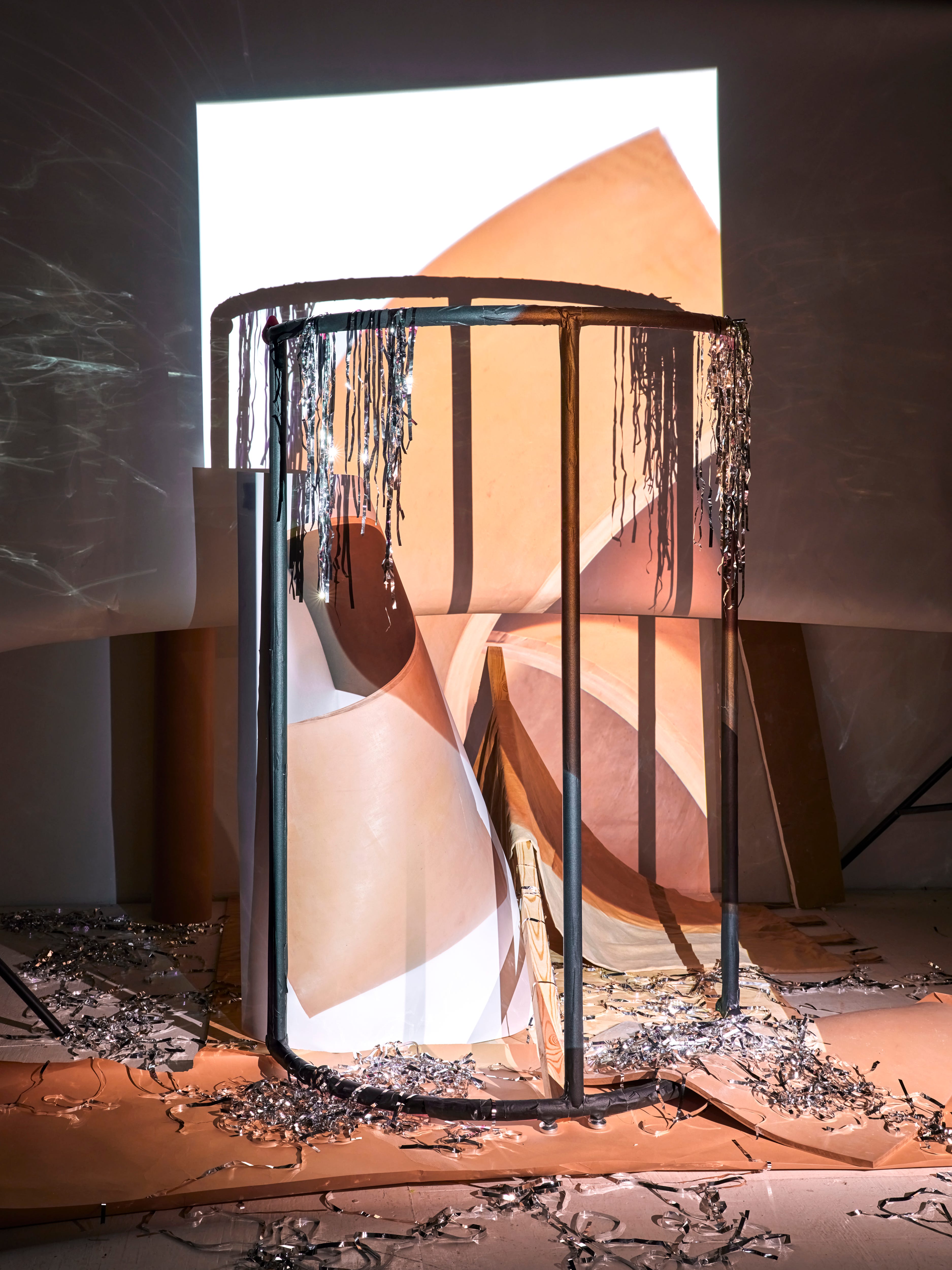
“My work merges staged photography with surreal still life and self-portraiture to explore the liminal boundary between image and object, the corporeal and the psychological, across photographic and sculptural forms. I build multidimensional assemblages from found and discarded materials gathered from everyday life, twisting them into contorted, precarious configurations around partially obscured bodies. Through a continuous cycle of photographing, dismantling, and reconstructing, the work becomes a site where distinctions between body and object dissolve into a fluid state of embodiment, exploring the haptic interplay between physical materiality and photographic illusion.
These constructed scenes function as psychological landscapes that echo bodily transformation, positioning the body as a symbolic bridge between material experience and inner states. By reconfiguring ephemeral, single-use materials into sites of vulnerability, femininity, and impermanence, the work reflects my ongoing negotiation of belonging, adaptation, displacement, and identity within the immigrant experience.”
Yi Hsuan Lai is a current resident at Skowhegan School of Painting & Sculpture. She has been awarded residencies at Light Work in Syracuse, and Vermont Studio Center. A recent solo exhibition was Rubber, Rubber at SoMad in New York in 2025.
PLEASE CONSIDER A PAID SUBSCRIPTION
There are reasons for thinking of photographs in musical terms. Music and photography each perform a galloping pas-de-deux with form and content. Every glandular schoolchum has heard Walter Pater’s dictum, in The School of Giorgione: “All art constantly aspires towards the condition of music.” But they may have missed the message: “For while in all other kinds of art it is possible to distinguish the matter from the form, and the understanding can always make this distinction, yet it is the constant effort of art to obliterate it...”
Music, specifically instrumental music, moves us without cupping us by the shoulders and ushering us to the aisle seat of a subject. It crams, collapses, distends, distorts our sense of the flow of the world and makes us close our eyes and imagine our own movie. The scientific term for this inner cinema is “Phantasia.” Try to recall the first segment of Disney’s Fantasia, when Leopold Stokowski steps up in silhouette and begins conducting the Philadelphia Orchestra. We see a flattened, but depictive rendition of humans making music, specifically Stokowski’s orchestration of Bach’s Toccata and Fugue in D-minor, written, most think, for the organ. These shadow musicians grind out the toccata but when the fugue begins, about three minutes in, the figures fade into an image of pulsating, stormy sky. Cascading bows, strings and bridges merge with lighting flashes, glissandos to northern lights and fireflies. We are invited to see the music in depictive space, although only barely, in some proto-depictive space, as if there were a phase of evolution where everything looked like a Kandinsky. In fact, critics were weirded out by it, and Bosley Crowther, in the New York Times, is intent on describing the piece not as exactly depictive but “illustrated abstractly on the screen with brilliant colors flowing and merging, lacy figures cometing through space, a sky-writing cipher tracing patterns and sprays of falling stars. It is intended, obviously, to create the necessary mood of reverie, of immaterial detachment necessary to the complete comprehension and enjoyment of the entire program.” Crowther also declared Fantasia “as terrific as anything that has ever happened on a screen.”
Trying to talk about the form of a photograph is hard. I teach students who’ve chosen photography as a life’s study, who, after four years of weekly critique, barely can. The content is so outrageously vivid that its form, its delivery system, is often an afterthought. I like to ask the question this way:
Content is what you are saying. Form is how you are saying it.
Together, they direct us to feeling. And it is in service to these feelings that I like to think about photographs in musical terms. In a way, music with words best mimics the complicated doublespeak of photographic speech. What does the singer have to say? How are they delivering this story to us?
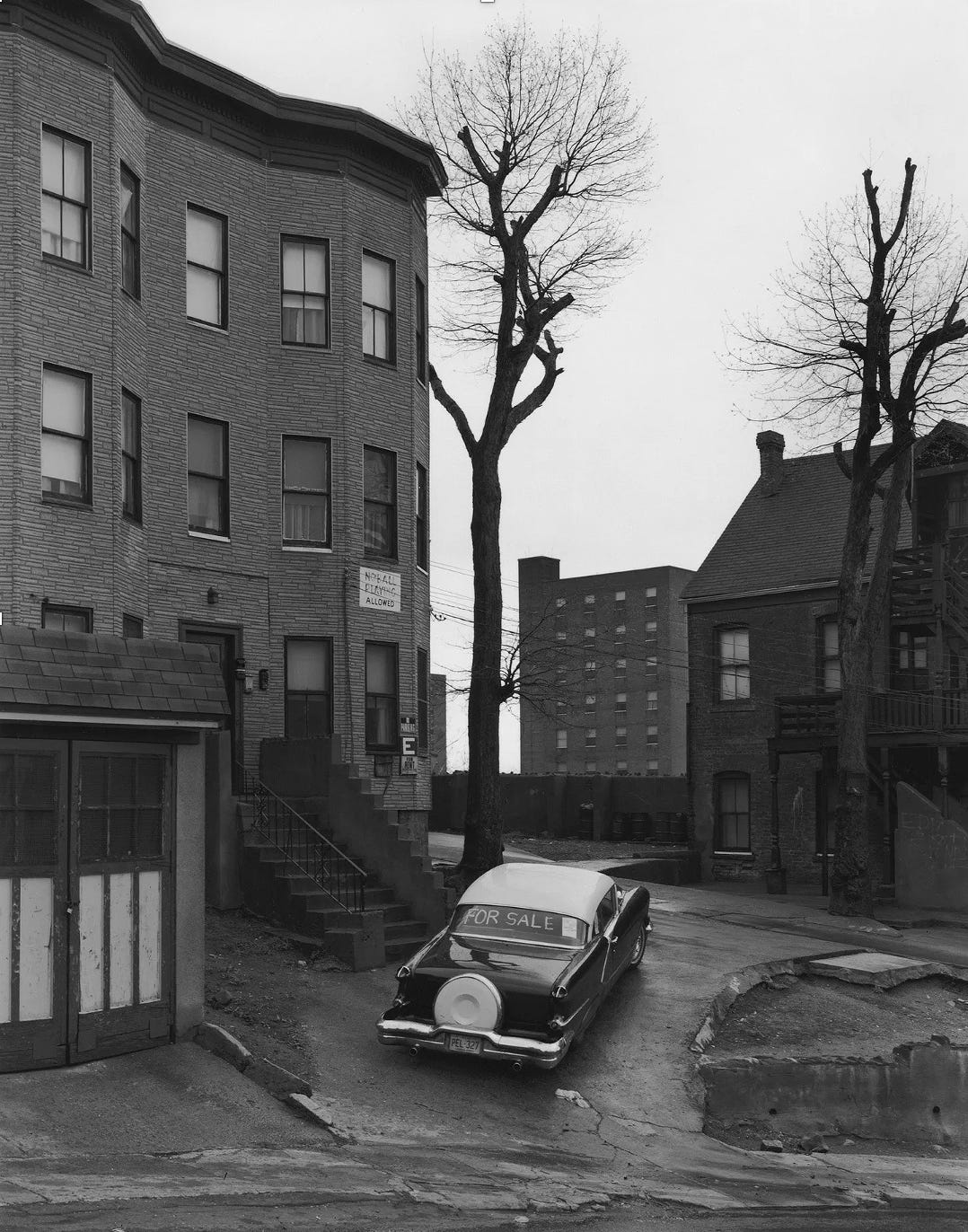
So, I’d like to embark on a series of PHANTASIAS: PLAYLISTS FOR PHOTOGRAPHS and photography books that may symphonize and animate forms and contents and feelings in this most straight spoken medium. I’ll start here, with a photograph by George Tice from 1969. Here are the musical correspondents.
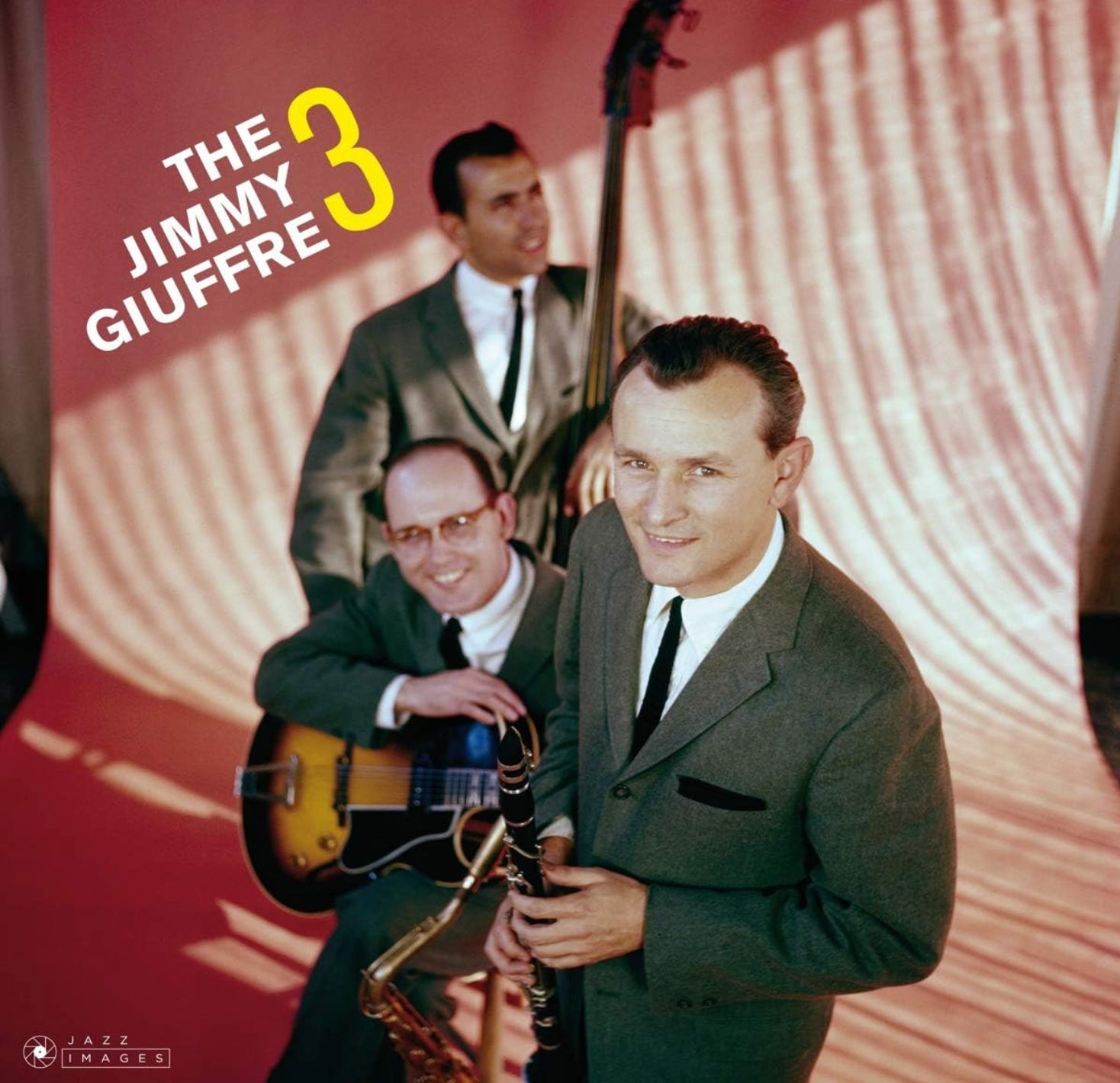
Jimmy Giuffre Three: “Two Kinds of Blues” (Atlantic, 1957)
I chose this opener because of the staccato shifts between the slower, emotive sections and the more upbeat pivots. In general, there is no artist that paints a velvetier picture than Giuffre, and this tune, from his first solo effort on Atlantic Records, matches the tonality of the photograph. I always think of this picture as being about the idea of KILTER ( a word whose etymology is unknown), where the car, parked up and to the right, messes with the Cartesian geometry of the picture, like someone putting a knee into the back of your straightened knee. LISTEN
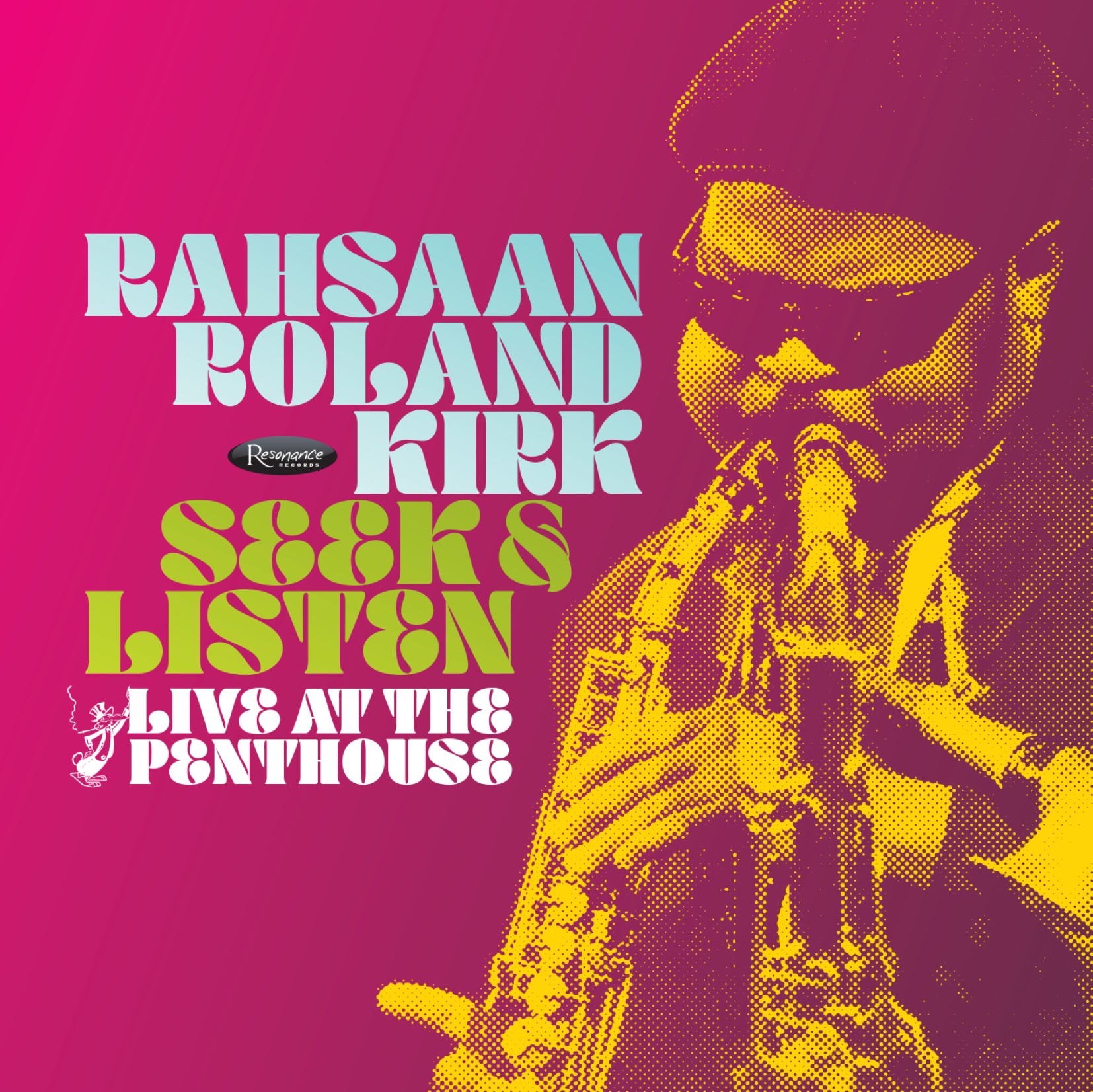
2. Raahsan Roland Kirk: “A Flower is a Lonesome Thing” (Atlantic, 1968)
More transpositions of smoothness and roughness. The arrangement of this record, which came out the same year the photograph was made, wants to envelop us in dulcet tones, but Kirk’s wacko celestial kazoo tone refuses to play along. The same way that the gorgeous, post-rain monochrome of the print plays against the sad, urban decay of the scenario. LISTEN
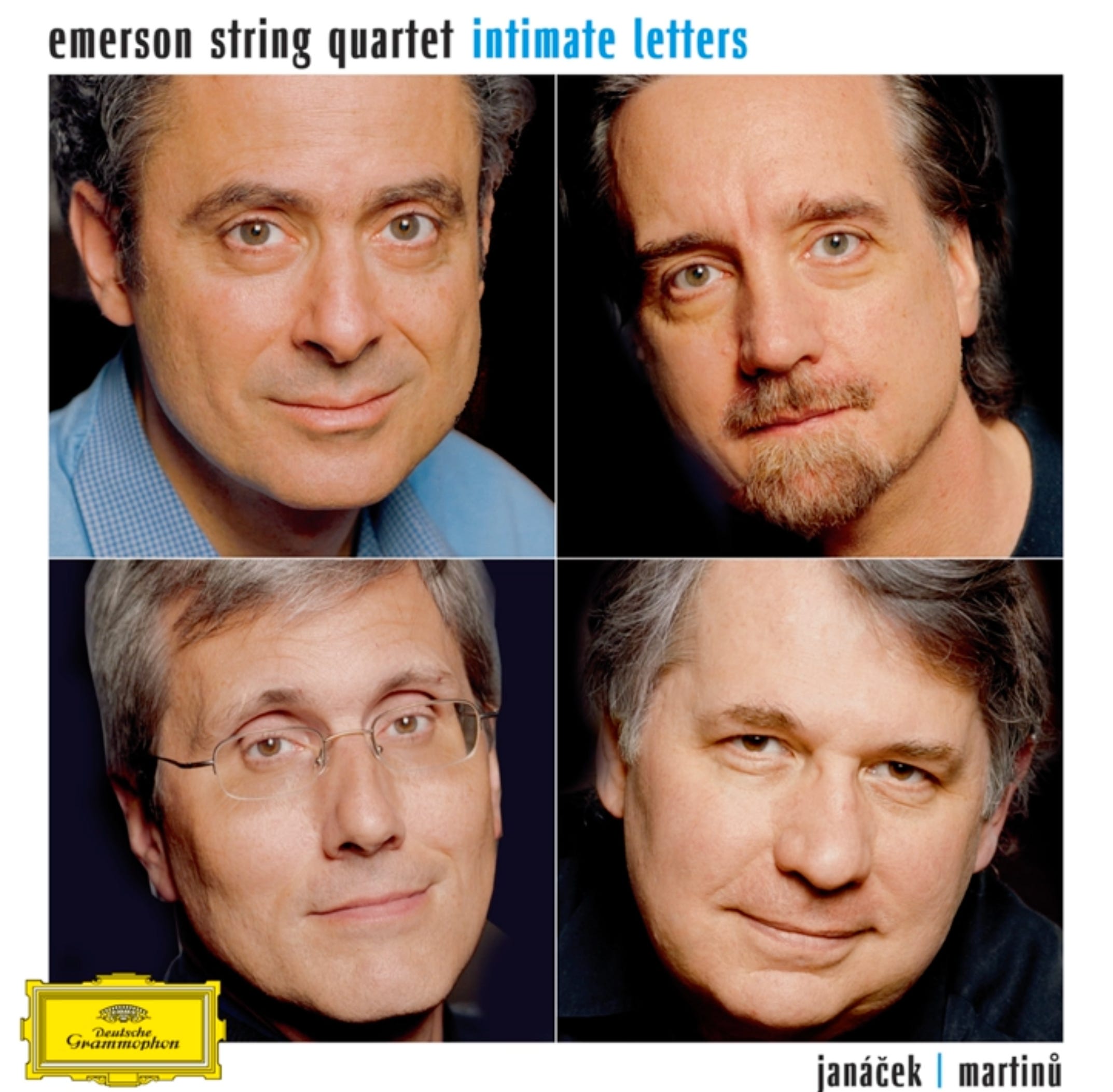
3. Leos Janacek: String Quartet No. 2, Intimate Letters JW 7/13 Adagio (Deutsch Gramophone 2009)
The more I looked at the picture the more I heard chamber music, specifically a string quartet. And no quartet came to mind more than Jancek’s second. It was written as a love letter for a much younger woman, and there’s no doubt in my mind that whatever affairs occurred in the house we are looking at, none of them worked out. But the eternal hopefulness of the camera, which is always saying “YES” to everything it sees, feels hopeful despite the rain and lack of shine. Just as there is powerful middle European sadness that shadows every note in this love letter with delicious discord. LISTEN.
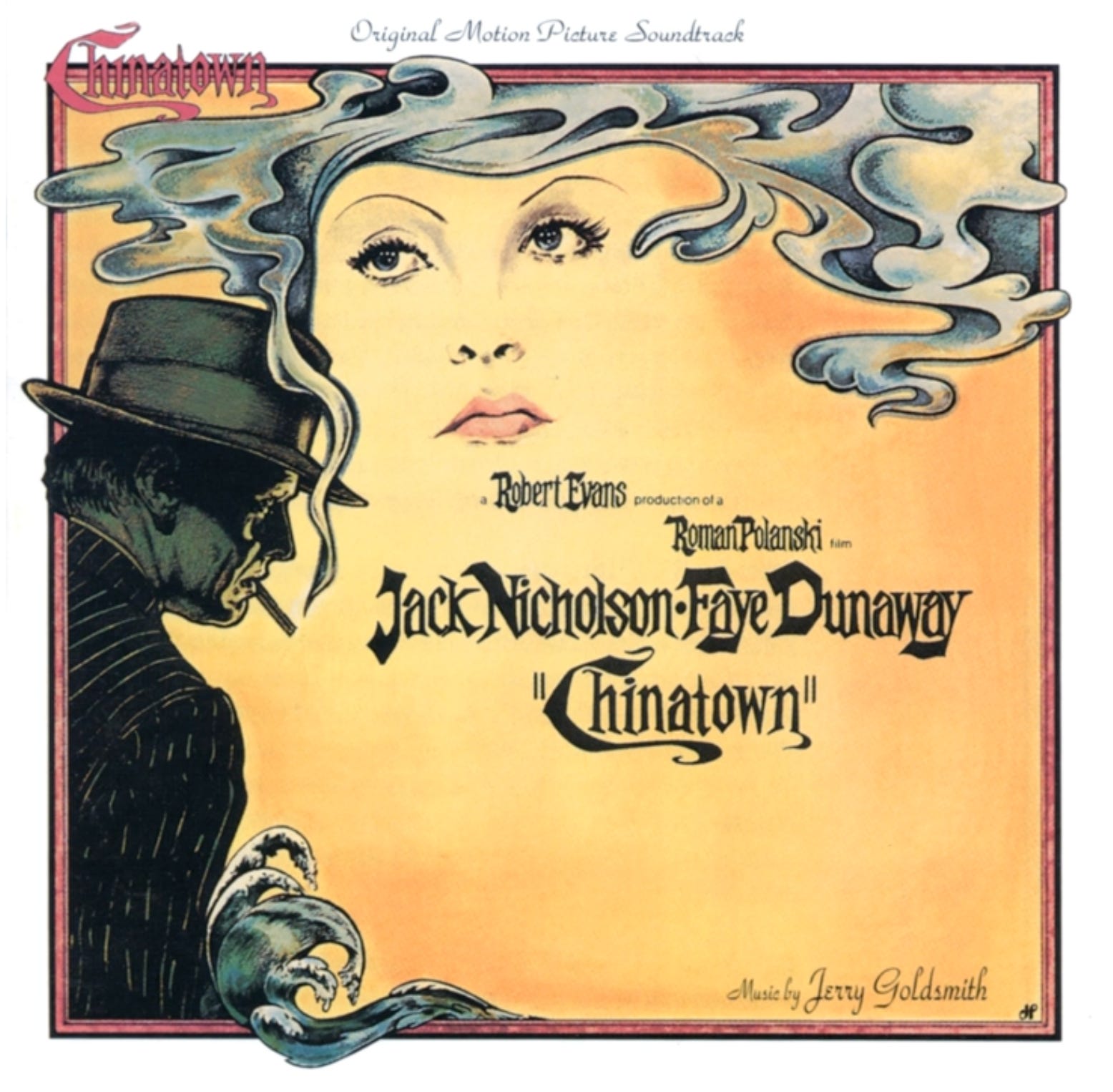
4. Jerry Goldsmith: “Noah Cross” The Chinatown Soundtrack (Geffen 1974)
OK. So, the word “cinematic” is perhaps the most overused word in discussions of photography, but I’ll order it up for this picture, despite its lack of staging, theatricality, or lighting. The picture is cinematic because it draws us into an enfolding environment, gives us space to walk into, and places us in the first person vision of the protagonist. We are walking up to this house with its for sale, 15-year-old DeSoto (just old then, not “vintage”), an unhopeful travelling salesman, a truancy officer, a process server, pretty certain the interaction won’t be easy, and we will be back in the larger world, where things exist despite our business. LISTEN.
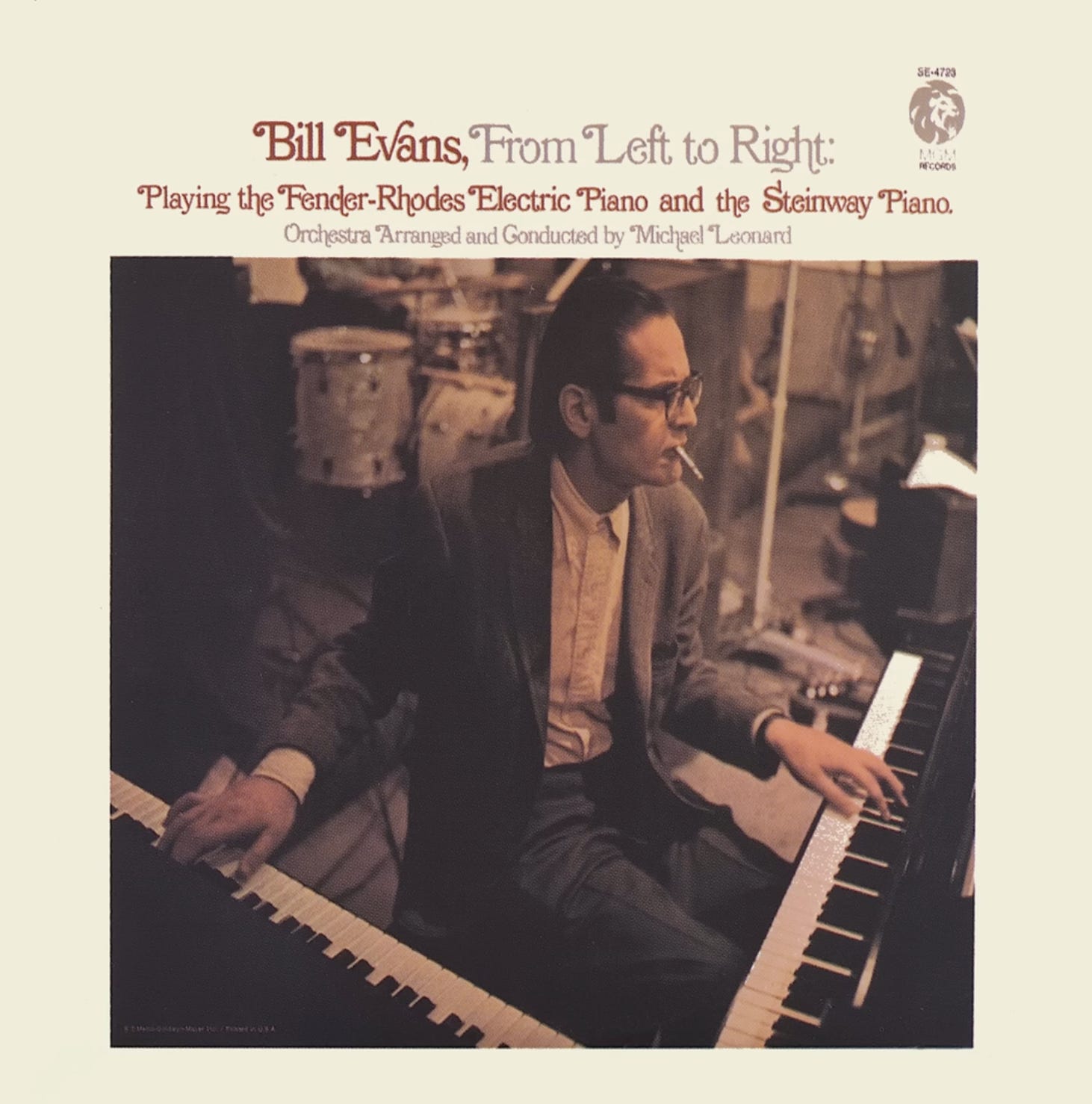
5. Bill Evans: What are you Doing The Rest of Your Life (From Left to Right) (UMG, 1971)
There is no picture more New Jersey-ish than this one, so I chose the greatest NJ artist of all, Bill Evans. (Sorry Springsteen fans). I love this record, where he plays both eclectic and acoustic piano, which mirrors the virtuosity and calm remove of the photograph. I love the thought of Tice (Newark) and Evans (Plainfield) meeting and talking the pleasures of northern Jersey. LISTEN.
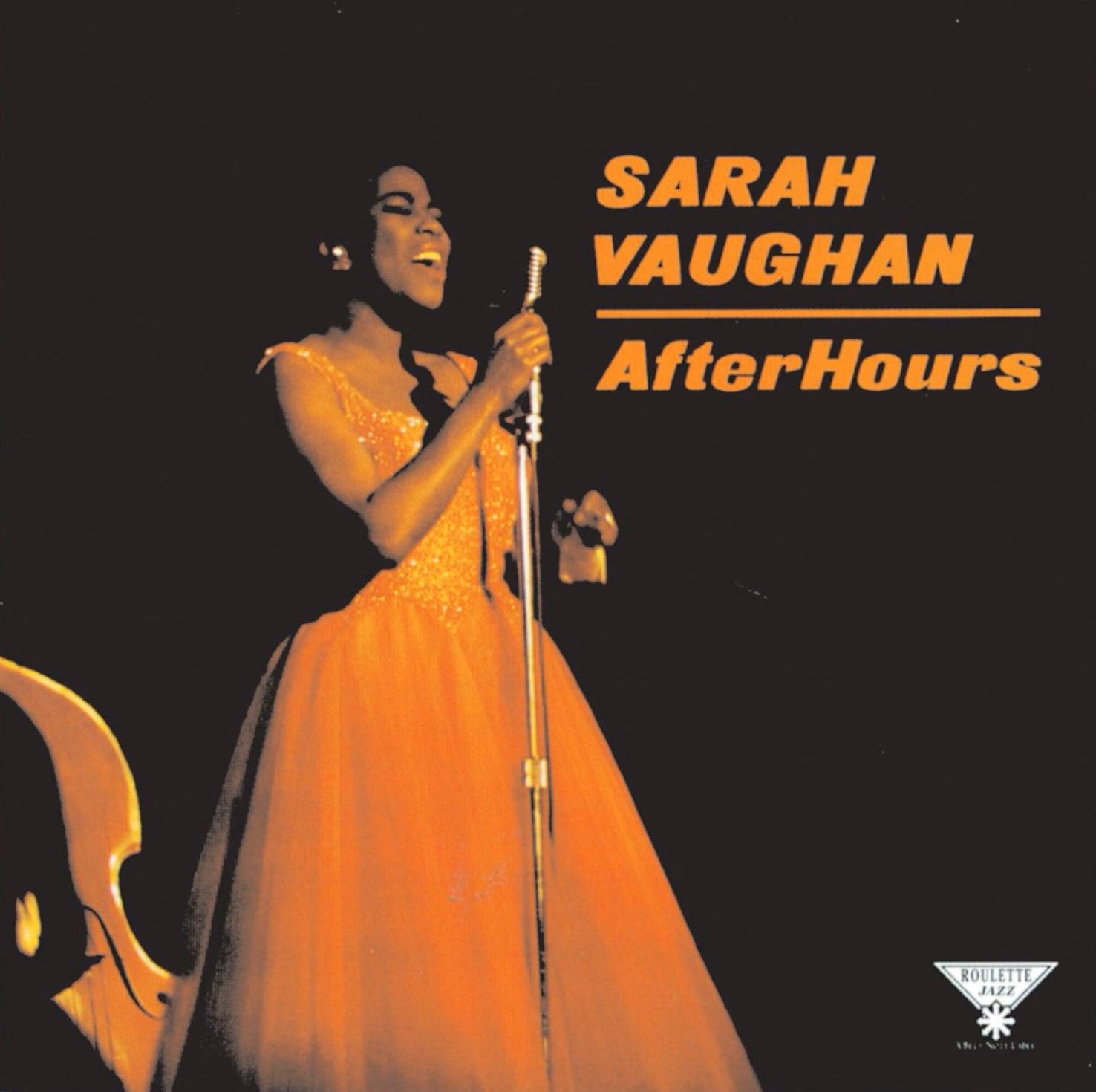
6. Sarah Vaughan: If Love is Good To Me (Parlophone Records, 1961)
One thing about Tice is CONTROL. Ther’re is scarcely a brick out of place, nary an unintentional tonality in this picture, and when I think about that kind of control I go to Sarah Vaughan. This record, from a 1961 studio recording, is the rare chance to hear Sassy with a small group backing, namely guitarist Mundell Lowe (who went to college with Bill Evans and gave him his first work in New York) and bass player George Duvivier. LISTEN.
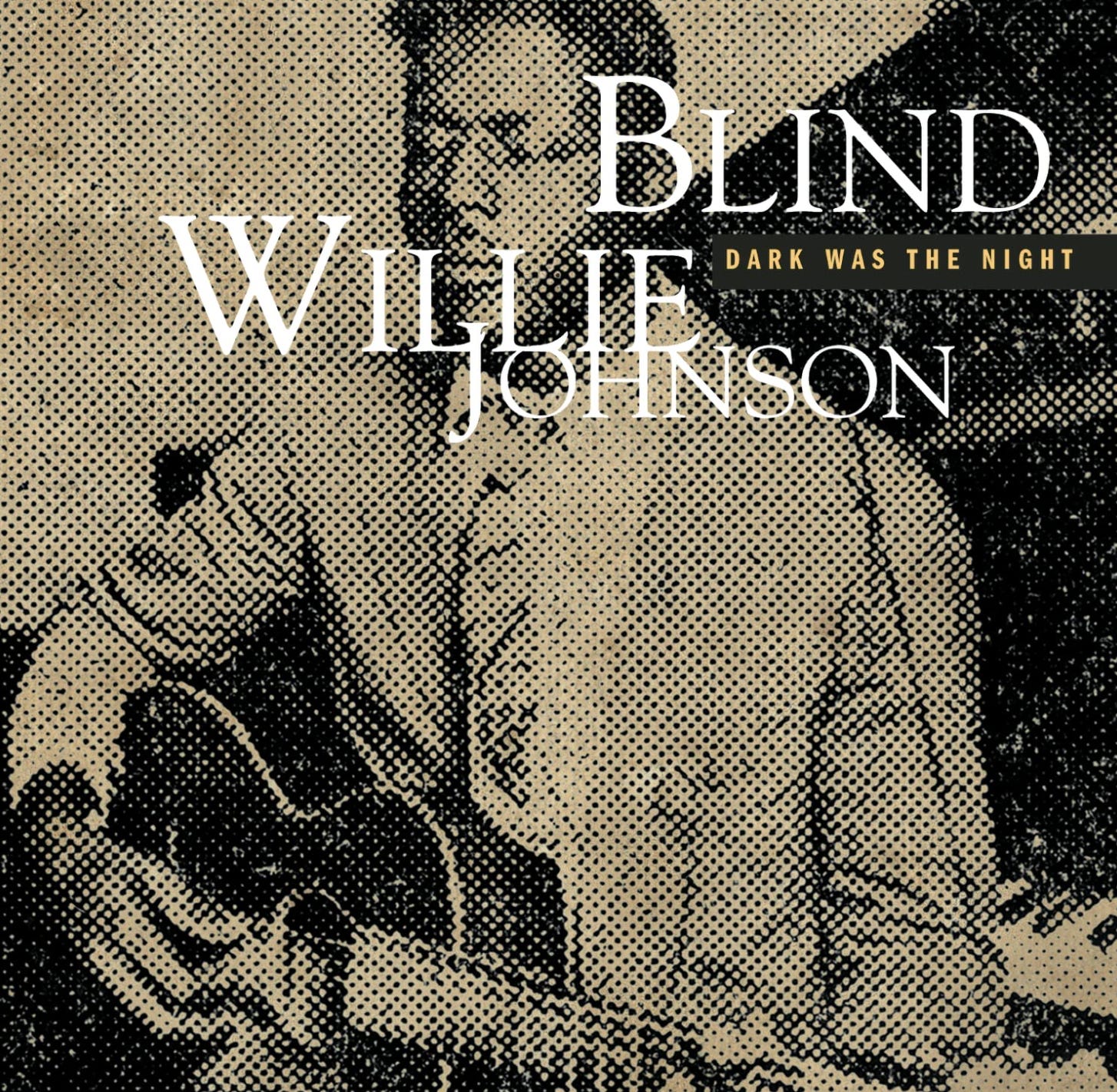
7. Blind Willie Johnson: Dark was the Night (Sony Legacy, 1998)
The more I look at this picture the more solitary it becomes. There’s no one in it and although there are signs of humanity and human social structure, the only presence in the picture is Tice himself. Photographers are solitary figures. Only one person can press the shutter. And this song, lonely in performance, structure and sentiment, is also on the Voyager’s golden record, which passed out of the solar system a few years ago and is waiting for an alien with a killer stereo system to find it. LISTEN.
Tim Davis has taught photography at Bard College since 2004. He has published several books of his photographs, and most recently “I’m Looking Through You” (Aperture) in 2021. His photographs are in the collections of the Metropolitan Museum of Art, Whitney Museum of American Art, and The Hirshhorn Museum, among many others. His new book ‘Normal Town’ will be out soon.
PLAYLIST AND YOUTUBE AND PLAYLIST SPOTIFY
THIS WEEK’S RECKONING OF THOSE WHO ARE ON OUR MIND: A GLOBAL GATHERING OF THE INFLUENTIAL, THE CLEVER, THE SILENT, THE TRULY ORIGINAL, THE TENACIOUS.
Opening to coincide with Photo London, Sarah Moon’s latest exhibition with Michael Hoppen Gallery is a survey of previously unseen works made in the last twenty years. The exhibition is her fifth with the gallery and comprises a surprising mix of both her more recognisable fashion imagery, alongside a less familiar set of urban landscape photographs.
Propped up behind the front window, the first image you encounter is a mid-length black and white fashion portrait. Shot in Moon’s slightly blurred style, this enchanting image (“Avril pour Elle 2”, 2003) depicts a faun-like figure, her breasts exposed above a zigzagged corset with her hair split into two serpentine bunches, twisted in loops and jutting from her head like a set of horns. The unforgiving glare of the midday sun blasts against the frame’s white mount and casts long dark shadows from the windowpane across the surface of the photograph.
After relocating to a new space in Holland Park, Michael Hoppen now occupies a more compressed and intimate exhibition space. Works are arranged closely together, somewhat jumbled up and at times exposed to glaring shadows from the gallery’s glass-fronted window. Yet this kind of informality possibly suits Moon’s work; her timeless photographs of fleeting beauty call for a more careful viewing and, in this somewhat subdued setting, the prints leap from the gallery’s grey walls.
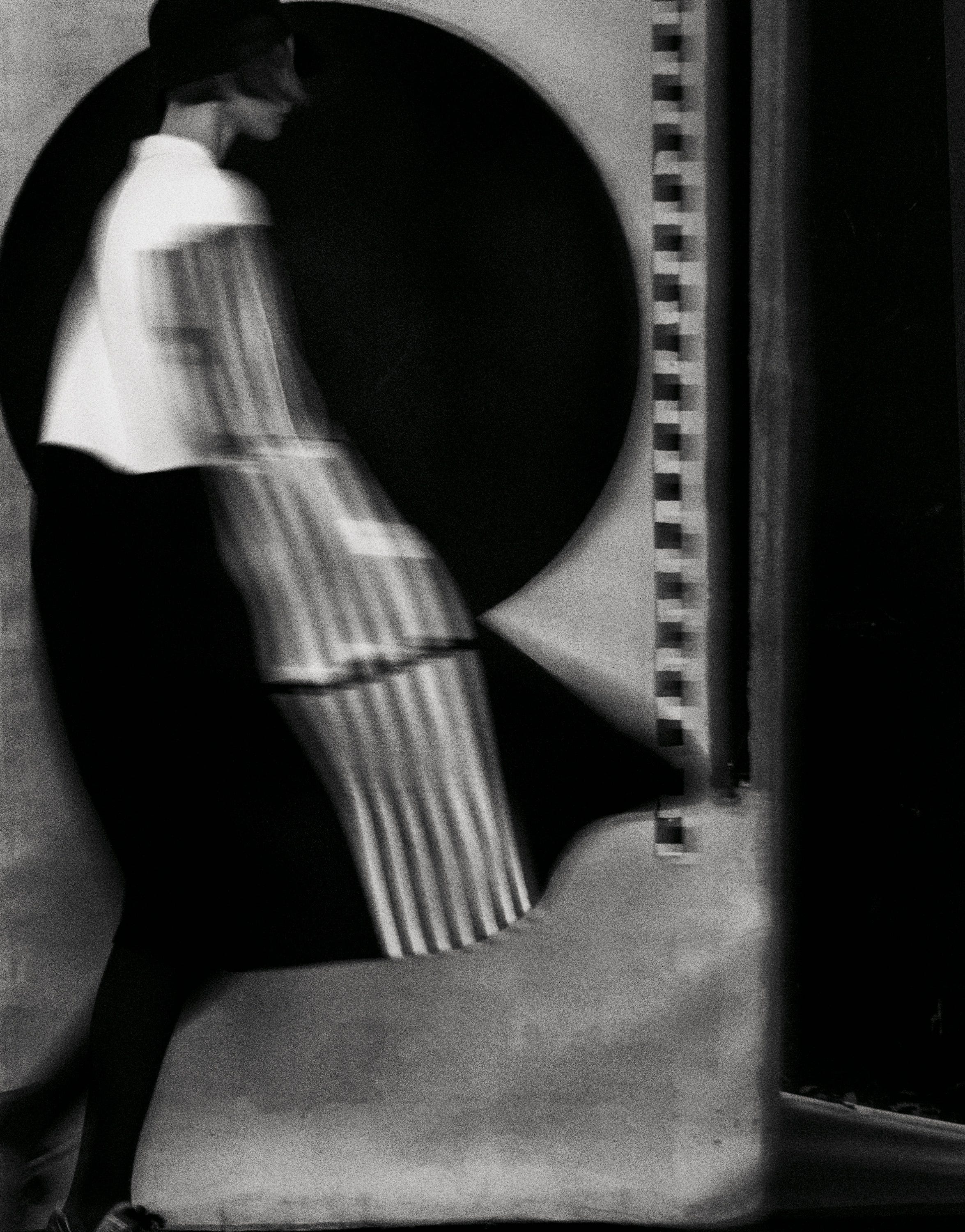
As you would expect from a Sarah Moon exhibition there are numerous examples of her fashion portraits, images that have become a staple of her oeuvre. What is most interesting about this set of photographs, however, is the inclusion of a group of less familiar landscape works. In her portrayal of people or animals, there is always a trace of movement, blurred edges and soft focus that lend the images a quiet that moves beyond observation towards something more impressionistic. In the urban landscape photographs however, everything remains completely still, hard architectural edges cut rigid black lines through the frame. One photograph (“The Shadow, New York” 2022) shows the tops of houses peppered with clusters of chimney pots, which line up along narrow ledges and look like something from the set of The Cabinet of Dr Caligari.
In her studio aesthetic the subject appears delicate and dreamlike, yet in her photographs of the outside world, Moon’s vision is much harder, dystopian almost. One of the exhibition’s most impressive images is an elevated view of the railway junction at Gare de Lyon in Paris. The photograph (“Gare de Lyon”, 2023) has no horizon, instead Moon’s perspective looks down onto the scene as a sea of overhead cables and wiring fades into the smoggy distance. Beneath the electrical lines, an expanse of overlapping train tracks meanders through the frame. Despite the total absence of movement, there is a real sense of energy to the image, as a sea of spaghetti-like lines writhes across the frame.
In an exhibition without a clear curatorial theme, there does not seem to be any obvious sense to where this is going, or exactly what it is Moon is trying to say. Yet the more closely you look at these ostensibly unconnected works, the more their aesthetic sensibility begins to converge. In Moon’s fashion photography the model and the clothes are what dominate, yet in the background shapes and angular lines echo those of her urban scenes. Moon’s sensitivity to the way that light falls across surfaces is ultimately what binds these disparate worlds. She once said in an interview that she took “almost the same picture for twenty years”, and yet, here at least we see some different pictures emerging. You get the feeling that fashion is merely a means to an end, and for Moon, the opportunities to make photographs are infinite.
Oliver Eglin is a photographer and writer based in London. His critical writing has appeared in PORT Magazine and he was recently Artist in Residence at Guyan Huaxiang Art Center in Zhejiang, China.
Comments
Nothing yet. Say the first thing.
Sign in to join the conversation.