
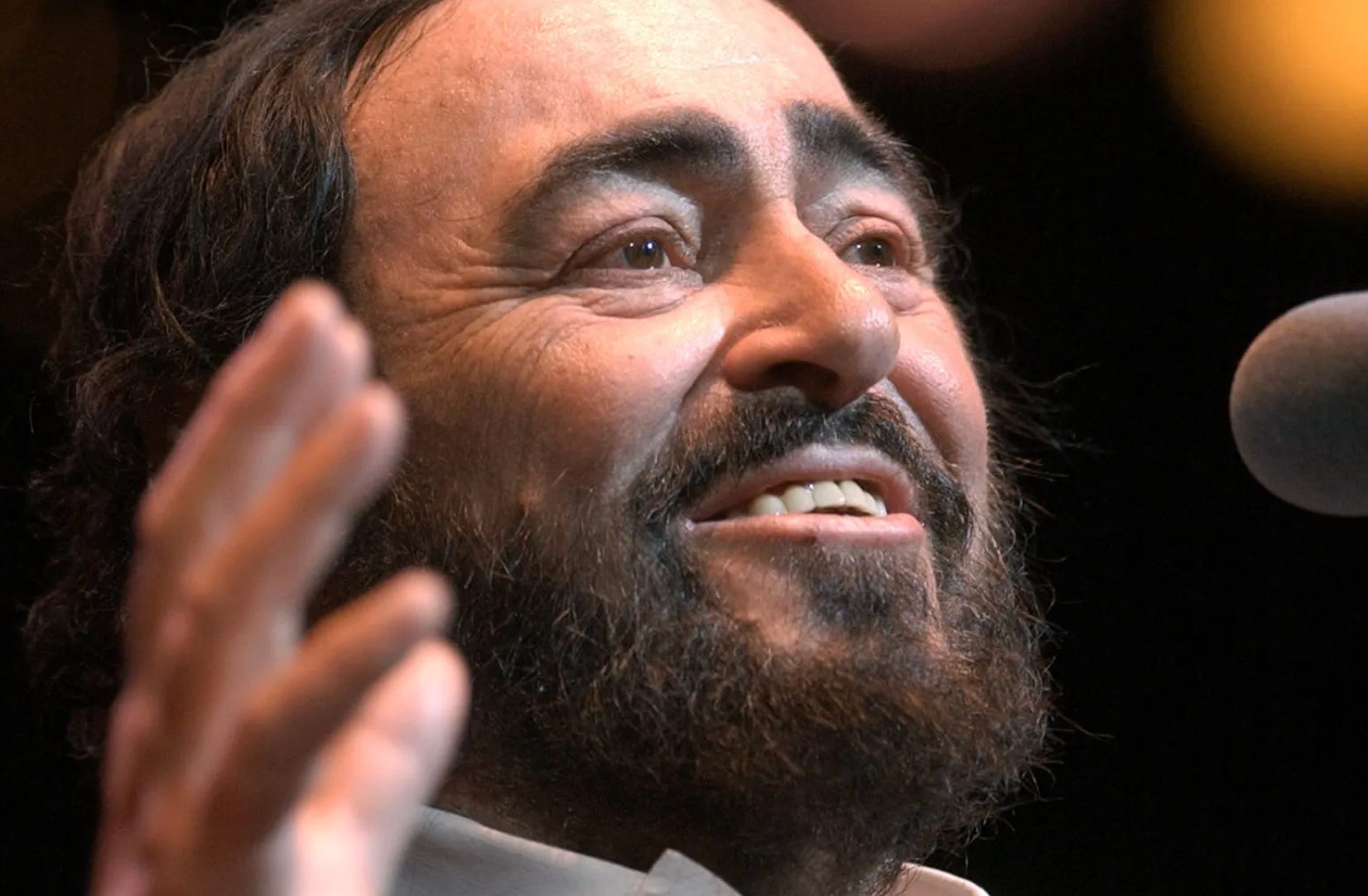
His name was Brian.
A short child, a bit chubby in the face. A round face.
The kind bullies liked to pick on.
As such, he pretty much kept to himself.
An average student. Nothing extraordinary.
Except for one thing.
Brian would stand alone, at recess, and sing opera perfectly.
Loudly, and brilliantly.
At first, nobody paid any mind. Who was this kid, anyway?
Singing? Alone? In the schoolyard?
But then, children started to gather round him, and listen.
To everyone’s shock, he knew the words.
He could even sing in Italian, even though, he was definitely not Italian by ancestral heritage.
He was Polish!
Gradually, as the weeks wore on, more and more kids would gather around him at recess.
They wanted to hear him sing.
“What will you sing for us today, Brian?” they would ask.
He would tell them, and then proceed to sing it, perfectly.
Well, as perfectly as a kid can, eh.
It was believed, Brian must have listened to opera records, over and over. We’re talking obscure Italian opera singers, from the 1940s and ‘50s.
How else could he have learned the words, of a foreign language.
But even then, professional actors must study their lines. Not memorize, mind you, but study them.
Just try to memorize a poem or a song, try it sometime. See how hard and how long it takes.
It’s bloody hard!
Actor Michael Caine said the only way to remember lines, is, to get the script, and say the lines over and over at home.
Until you know them by rote.
It takes a certain confidence to do that, of course.
Look at the incredible performance Caine gave opposite the great Laurence Olivier, in Sleuth.
It was nominated in four Oscar categories, but lost out largely to a film called The Godfather.
Addressing movie mistakes directly, Caine said on his craft, "The mistakes are gold. They are an opportunity to have a new moment, a surprise... the idea that there's a mistake becomes part of the scene."
Actor Andy Garcia recalls working with imposing star Sean Connery in The Untouchables.
Fifteen minutes before his scene, Connery showed up on set still dressed in golf attire, having shot 18 holes nearby.
Connery hit every mark, every line, perfectly.
Garcia was amazed.
He congratulated the veteran Scottish actor, saying, how incredible it was for him to go golfing and then show up and do everything so well.
Connery paused, looked at him and said in his thick accent: “I’ve been to the barbecue before.”
The great Marlon Brando, a giant of the cinema, was famous for not remembering his lines.
In the famous scene where he rails against his wife lying in a coffin in Last Tango In Paris, Brando had posted notes all over the place.
Yet no one would be the wiser, watching that scene, which stands out as one of the most powerful in cinema history.
And lastly, the brilliant Pete O’Toole once said, “If you don’t know your lines, you don’t know your character.”
Line learning isn’t about drilling words into your brain, he said, it’s about discovering meaning. Intention. Rhythm. Energy.
Because when the lines live in you … you stop acting, “you start becoming.”
It’s just speculation, but perhaps Brian had what is called, an eidetic memory. Otherwise known, as a photographic memory.
Because what he was doing was nothing short of remarkable.
Whether he went on to operatic success, or, betrayed his dream, like most of us do, and ended up sitting at a desk, we will never know.
People with such amazing memories, sometimes end up working in the spy game.
Or, they’re good at playing cards. Or perhaps other gambling endeavors.
By the way, Charles Deville Wells, an English con artist and gambler famously "broke the bank" of Casino de Monte-Carlo 10 to 12 times in the summer of 1891, winning over a million francs in just a few days.
His incredible winning streak inspired the famous 1891 music hall song "The Man Who Broke the Bank at Monte Carlo," though he ultimately died in poverty after losing his winnings and serving time for fraud.
Strangely enough, the great Luciano Pavarotti memorized his extensive repertoire primarily by ear, repetition, and rote.
Famous for famously not reading traditional sheet music, he relied on his phenomenal auditory memory, specialized vocal coaches, and exhaustive rehearsal.
A golden rule Pavarotti lived by was that a singer must "hear the note in the mind one second before singing it."
This premeditation meant his mind and body were already organized for the exact pitch before he physically produced the sound.
In other words, you either have it, or you don’t.
And young Brian had it.
Comments
Nothing yet. Say the first thing.
Sign in to join the conversation.