
It felt like I had ropes tied from my butt to my knees, so tightly that my run became a shuffle. After one gradual downhill mile on the course, I looked at my watch. Fifteen minutes. I was going to be too slow to finish the 37th yard in time. After over 150 miles, I felt quite good, but my glutes were too sore, and I think I may have had my training to blame.
After running 64 yards at the U.S. National Championships in 2024 and experiencing a "fiery" sensation in my legs that caused me to exit the race, I was looking forward to another backyard event to push past this limit. I also knew that 64 yards would be much too short to get into the World Championships in 2025. From looking at the at-large list, it was clear that about 82+ yards would make the cut. I thought I could make this standard, and I also knew it would take two runners to make this happen.
After perusing the 2025 backyard ultras that would be competitive enough to get there, it looked like I had to choose between the following races:
Dead Cow Gully
Capital
Suffolk
Attracting four runners who had gone past 100 yards and a long list of other competitive backyarders, Dead Cow looked to be the most competitive race. It had also gone to 102 yards before. But it did not align well with my schedule, and it was hard to justify the price of traveling to Australia for this race.
Capital made a lot of intuitive sense. Living in D.C., it was as close as I could get to running in my own backyard, and it had gone 75 yards before. But with a less backyard-resume-rich field than usual, a history of bad weather, and its yards never going into the 80s, it felt more like a gamble (side note: it ended up going 43 yards with Scott Snell winning).
Suffolk had gone into the 80s in three separate years, the course was quite flat, the weather looked quite good each year, and some of the world’s best were signed up for it, such as Lukasz Wrobel, John Stocker, and Claire Bannwarth.
Something I look for when signing up for any running event is personal excitement. "Am I excited for this?" I ask myself. If not, I find less motivation in training and the event itself. I want running to be fun, and I want the event to be the reward for my hard work in training. This went into my decision to choose the race. After assessing the pros and cons of all the races, I decided that Suffolk was the best for me, and it had the added advantage of being my first international vacation with my girlfriend (which we were truly excited about).
After failing my second FKT attempt at the C&O Canal Trail—this time making it 168/185 miles (the first attempt was about 72 miles)—I did a training block that closely resembled the one before I won with 60 yards at Queeny Backyard in 2024. I peaked at just over 150 miles a week and did two 40-mile runs at about 7:30/mile pace. Then I had a generous three-week taper into the race. The main difference was that because Suffolk was nowhere near as hilly as Queeny, I decided to forgo the hill and stair training and focus on running on flat terrain. Training went well, and I felt strong and confident.
Towards the end of the block, I became more interested in and knowledgeable about who was running at Suffolk. First, I learned that Lukasz was not running due to his recent 116-yard effort. Next, I learned Claire would likely not run in the race due to injury. Lastly, the week of the race, I learned that John was not going to run due to not being in sufficient physical condition.
Normally, as a race gets closer, my excitement increases substantially! But with each piece of information I learned about who was not attending Suffolk, my excitement for the race unfortunately decreased, and so did my confidence that the race would go far enough for me to qualify for Big’s. One of the scenarios that kept creeping into my head at night was that the race would end around 60 yards, and I would not be able to continue further, being the last one standing. Though being the last one standing obviously means winning, in my mind it isn’t the goal. Winning a backyard does not motivate me. Pushing my limits does. Qualifying for Big’s does.
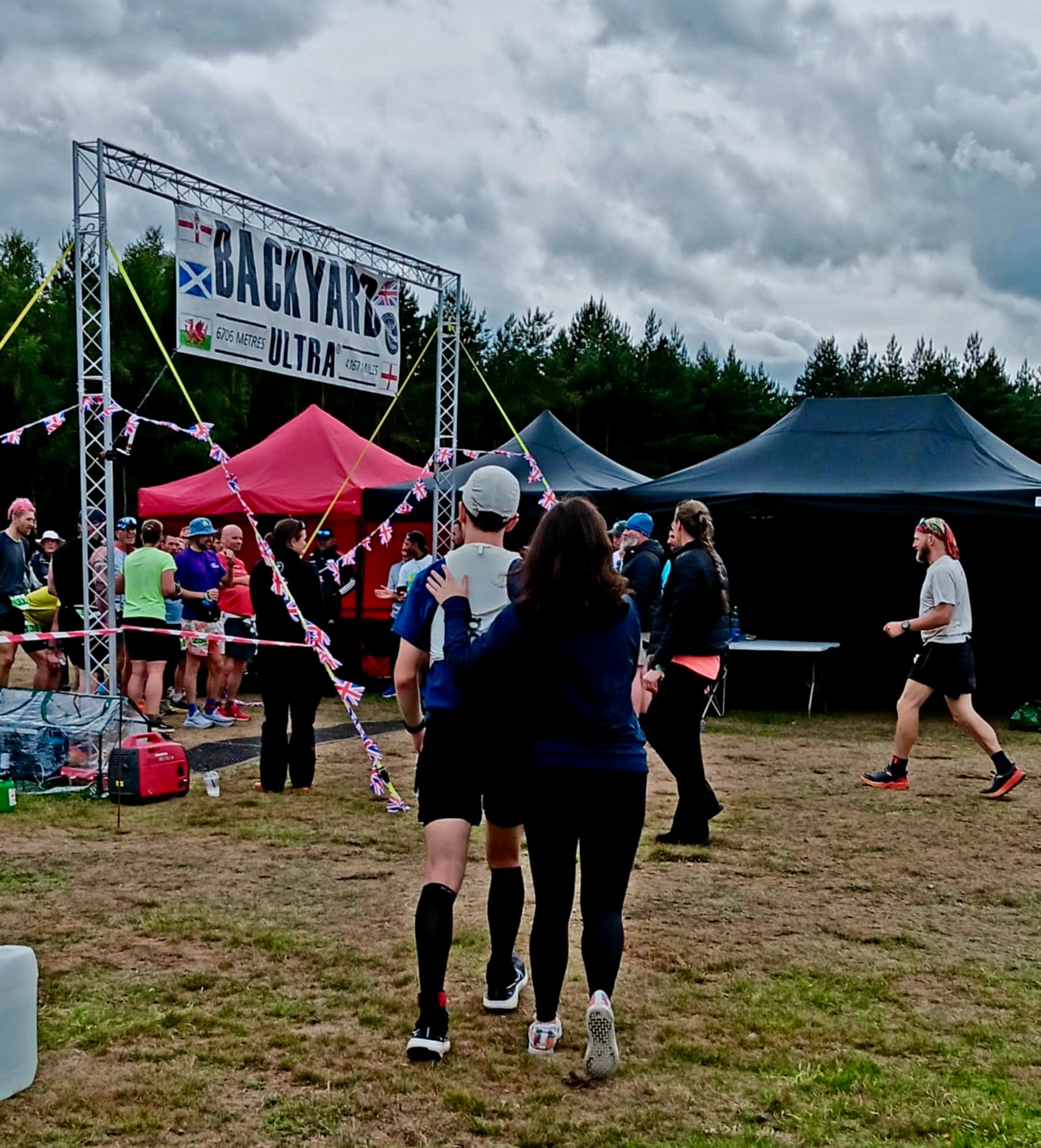
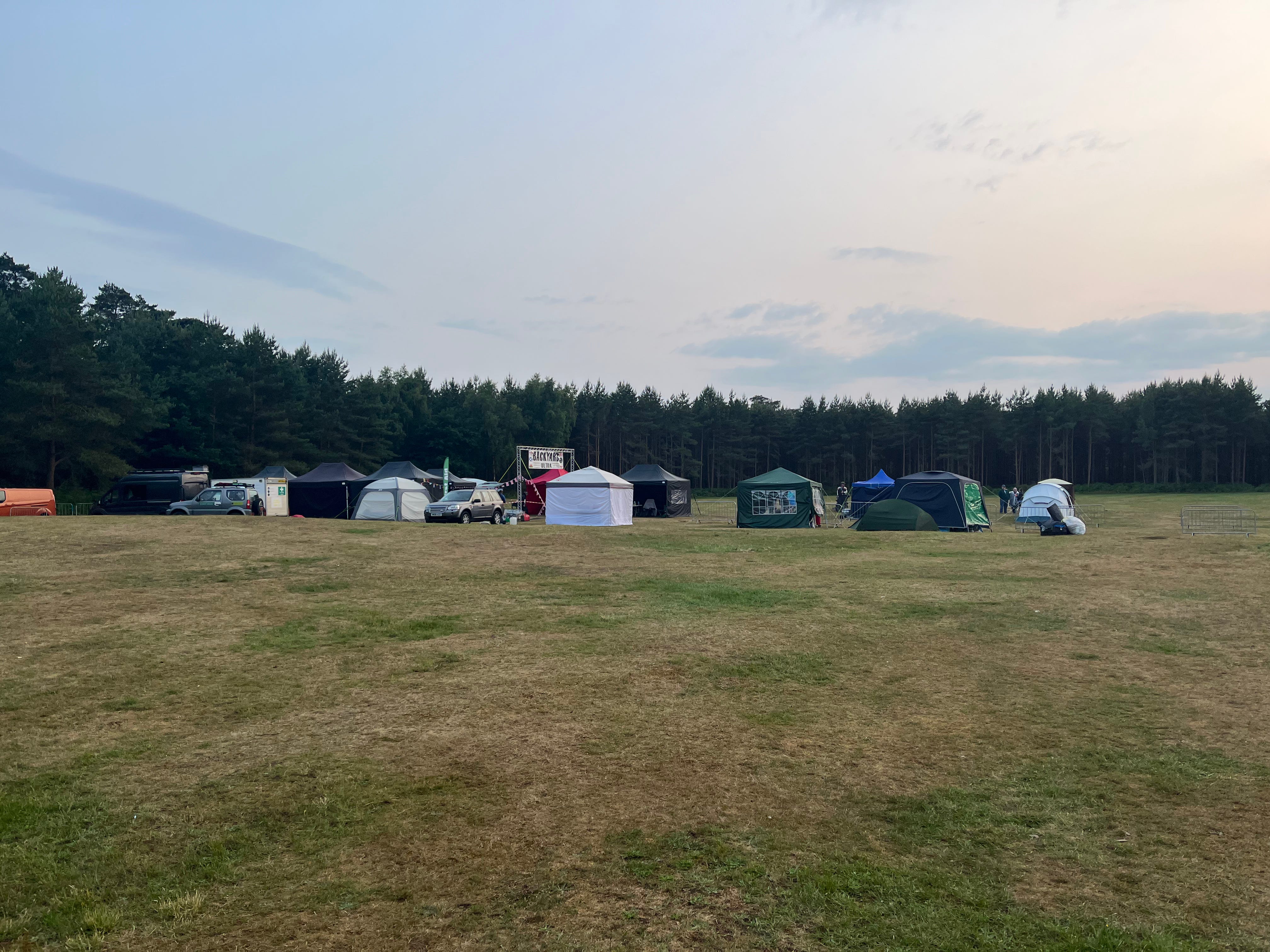
After a pleasant beginning of our vacation in Amsterdam, Oxford, and then Cambridge, my girlfriend, my mom, and I showed up to Thetford Forest the morning before the race would start at noon. It was a little rainy, but the temperature seemed perfect. Normally I might have a little nervous energy, but this time I had absolutely none. Though my personal goal gets higher and higher, with each backyard I do, I become less and less nervous. I become more and more calm.
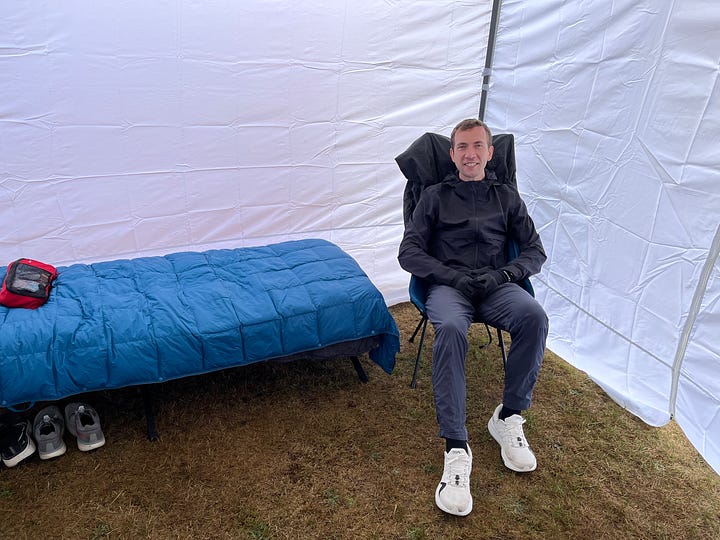
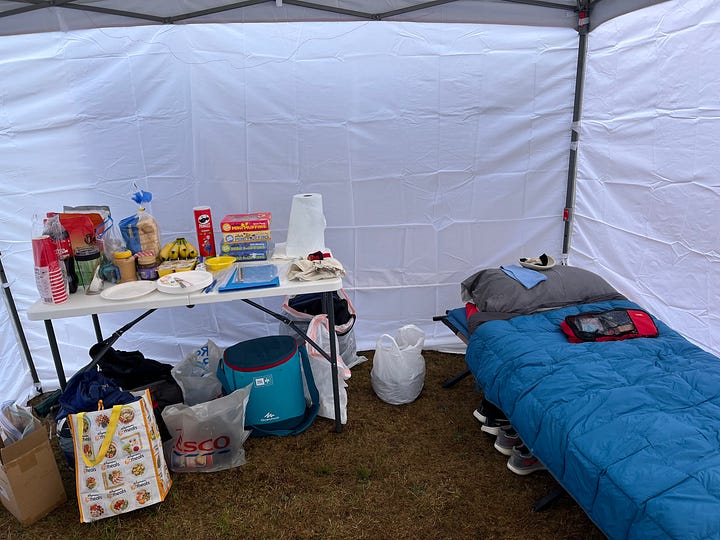
How was the course? The course began with a gradual downhill on a gravel path that lasted a bit over a mile. Next, there was about a half-mile long uphill climb on a dirt track that, though not very steep, was in my opinion not very runnable at all. It was very rare that I saw anyone do anything more than a power walk here. This part of the course was quite pleasant, but if there’s anything to blame for the course being slower than it could be, it’s this part. After this, there was a mixture of wide gravel and dirt/grass for the remainder of the course. This was virtually completely flat. There were plenty of 90-degree turns that would mix up the repetition. After lots of left and right turns, the final stretch was a very wide, straight one-mile gravel path that was sloped downward on both sides. So ironically, even though the path was very wide, I would see almost everyone run straight down the center of it in a single-file line.
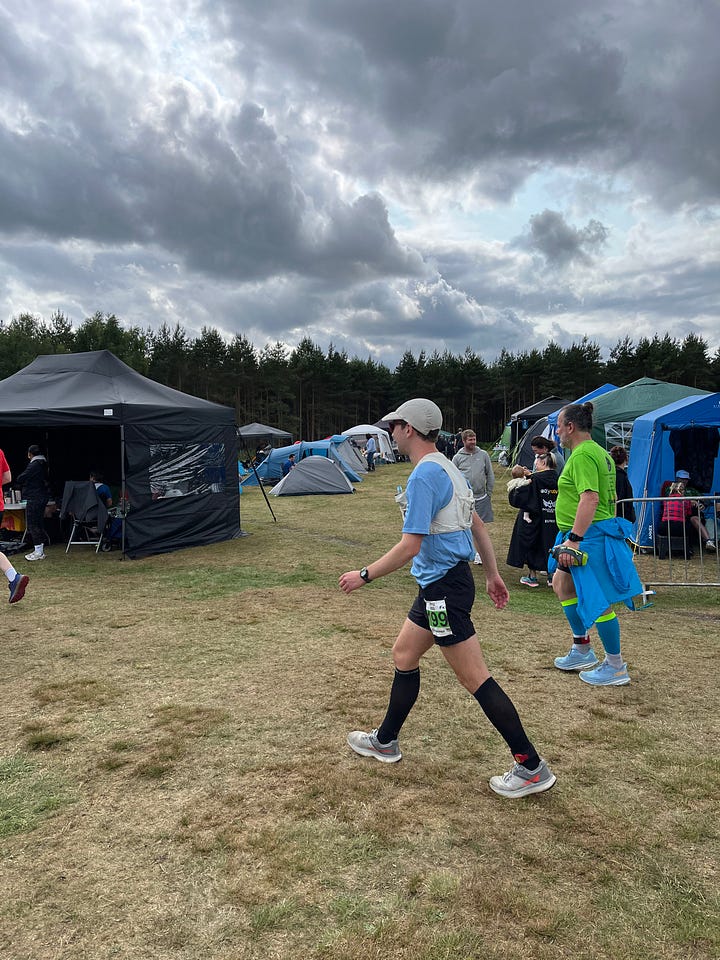
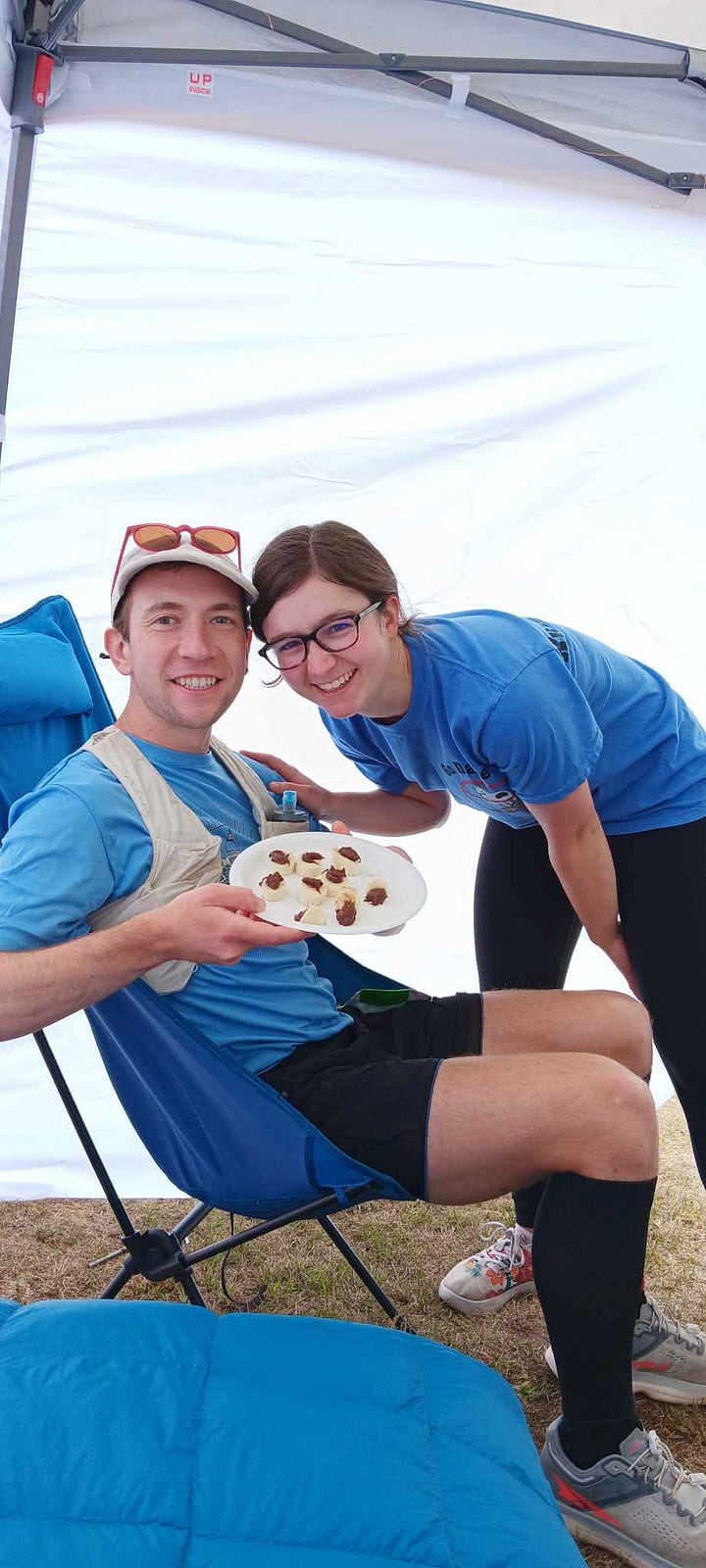
Due to the structure of this specific race, I realized quite quickly that this would be harder mentally than usual. Most backyards start in the morning (between about 7 and 9 a.m.), but this one started at noon. Because of this, it always felt like I had completed more yards than I actually had due to the time of day. Additionally, since the race took place further north than the States, the sun would rise between 4 and 5 a.m. This once again made it feel like I had completed more yards overnight than I actually had.
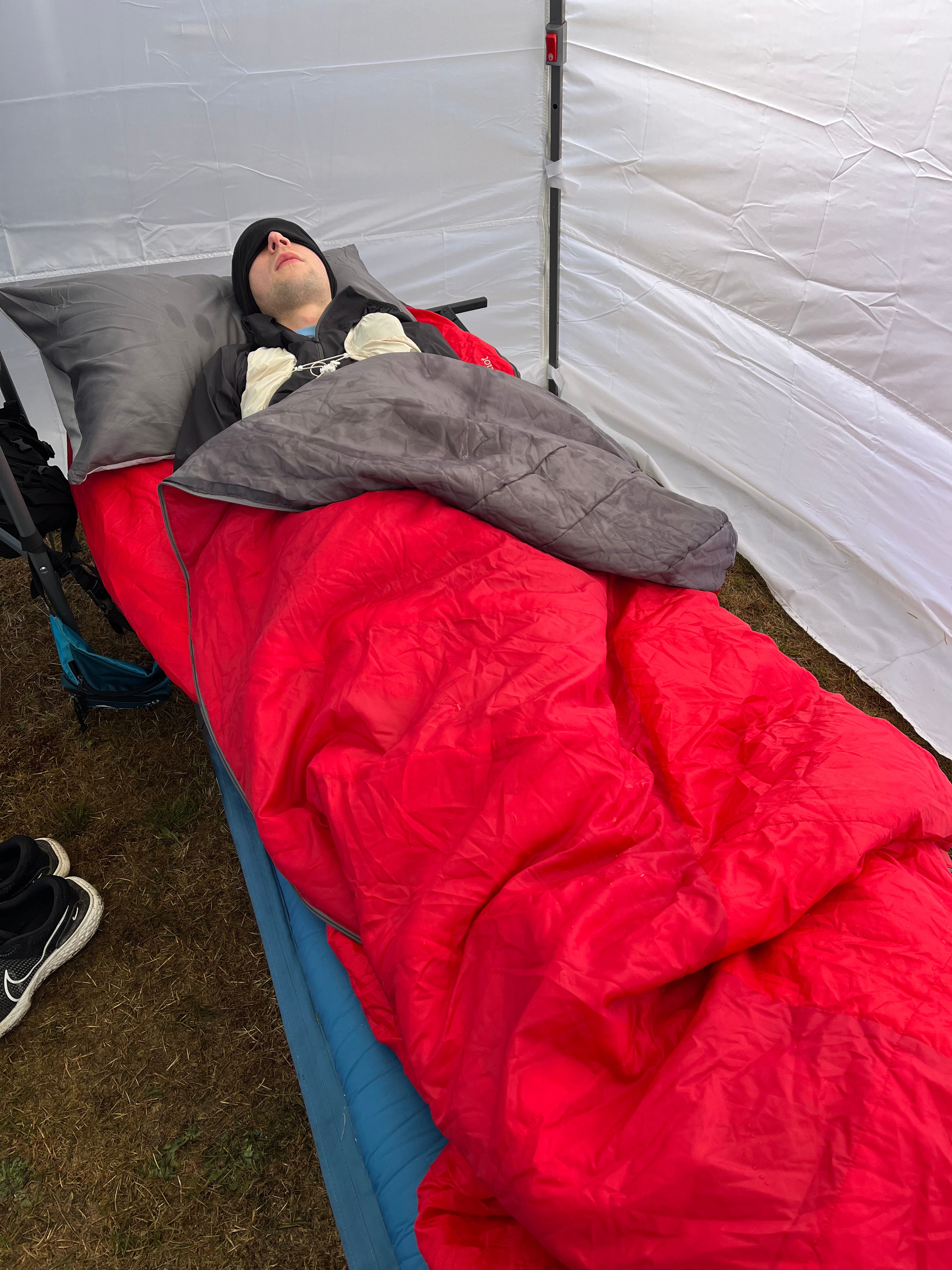
Something I loved about this experience was that my friend from Seattle, Tyler Rocha, came and ran the race with me. He’s a consistent, friendly energy that I got to run beside often in the race. We were the only two Americans in the race, and it was always funny when people were surprised to hear our accents.
Sometime during the first night, Tyler began to experience lots of chafing issues and some mental struggle, and I would often talk to him, offering any advice I could throughout the race.
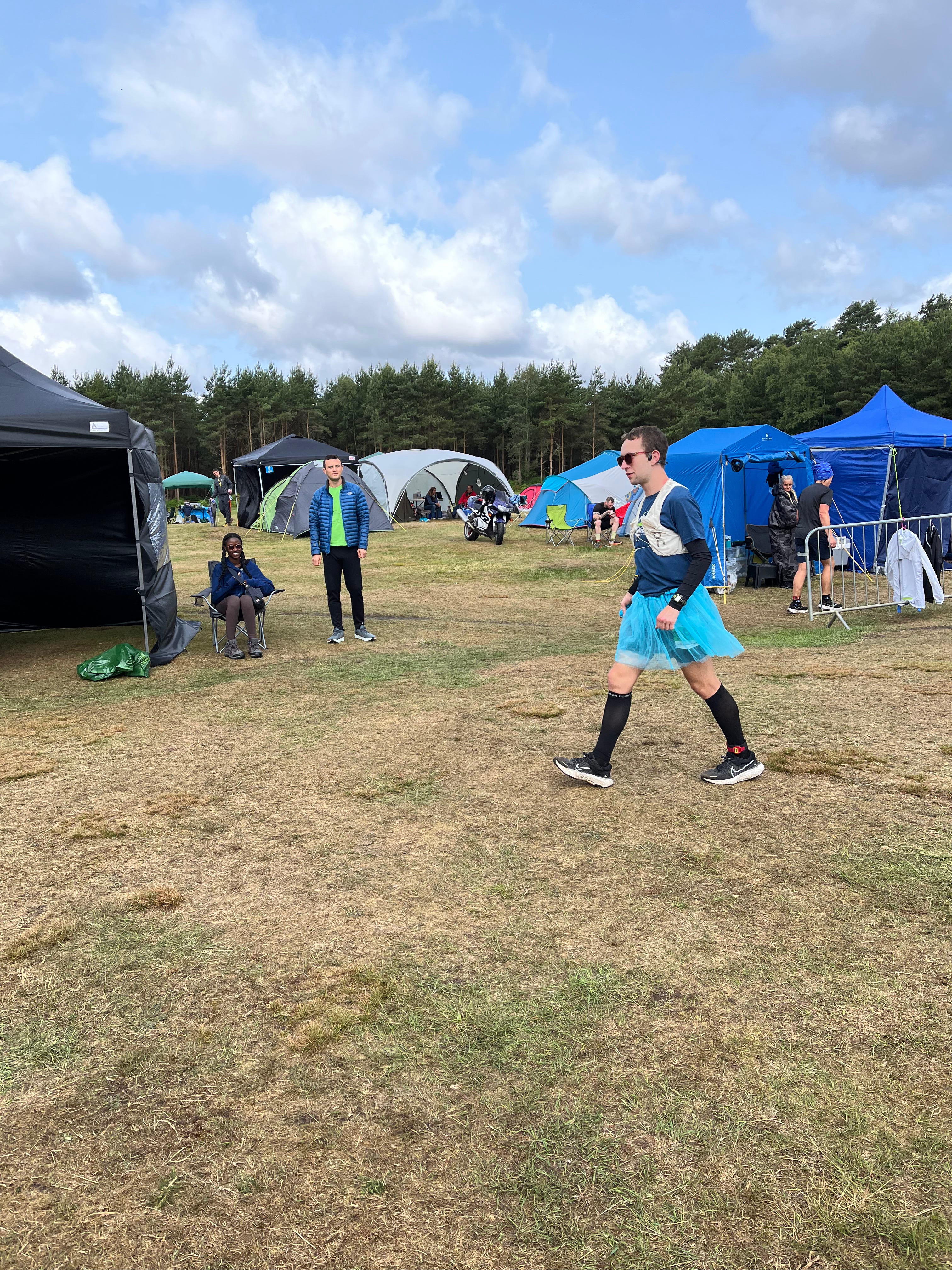
When yard 24 came around, just as I predicted, the number of runners in the 375-person race began to sharply dwindle. With a relatively small number of 28 runners still in the race after 24 hours, it confirmed my belief that the number of runners who start a backyard event does not necessarily correlate with the number of yards the race will go.
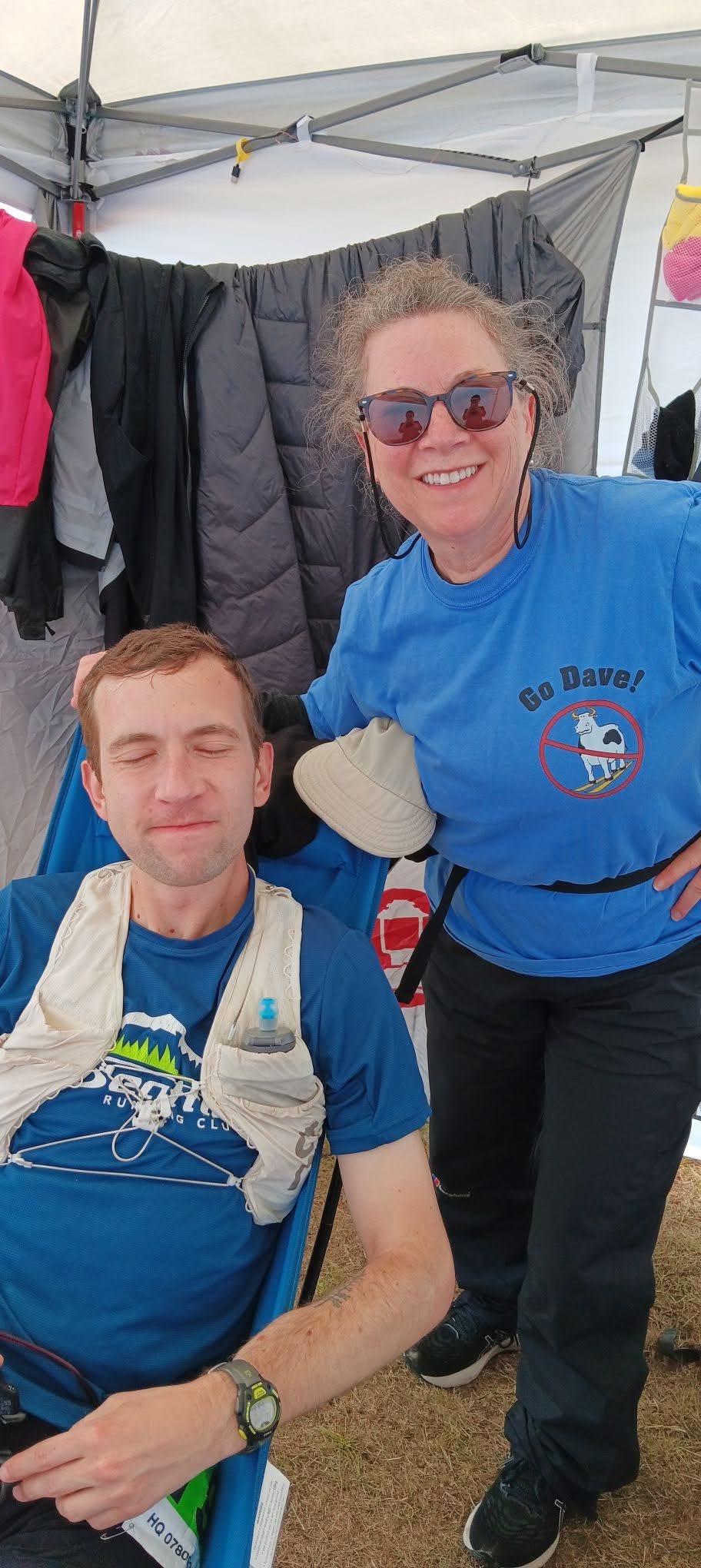
With each following yard, it seemed like large groups of people were dropping right and left. After 30 yards, only 10 people completed the next.
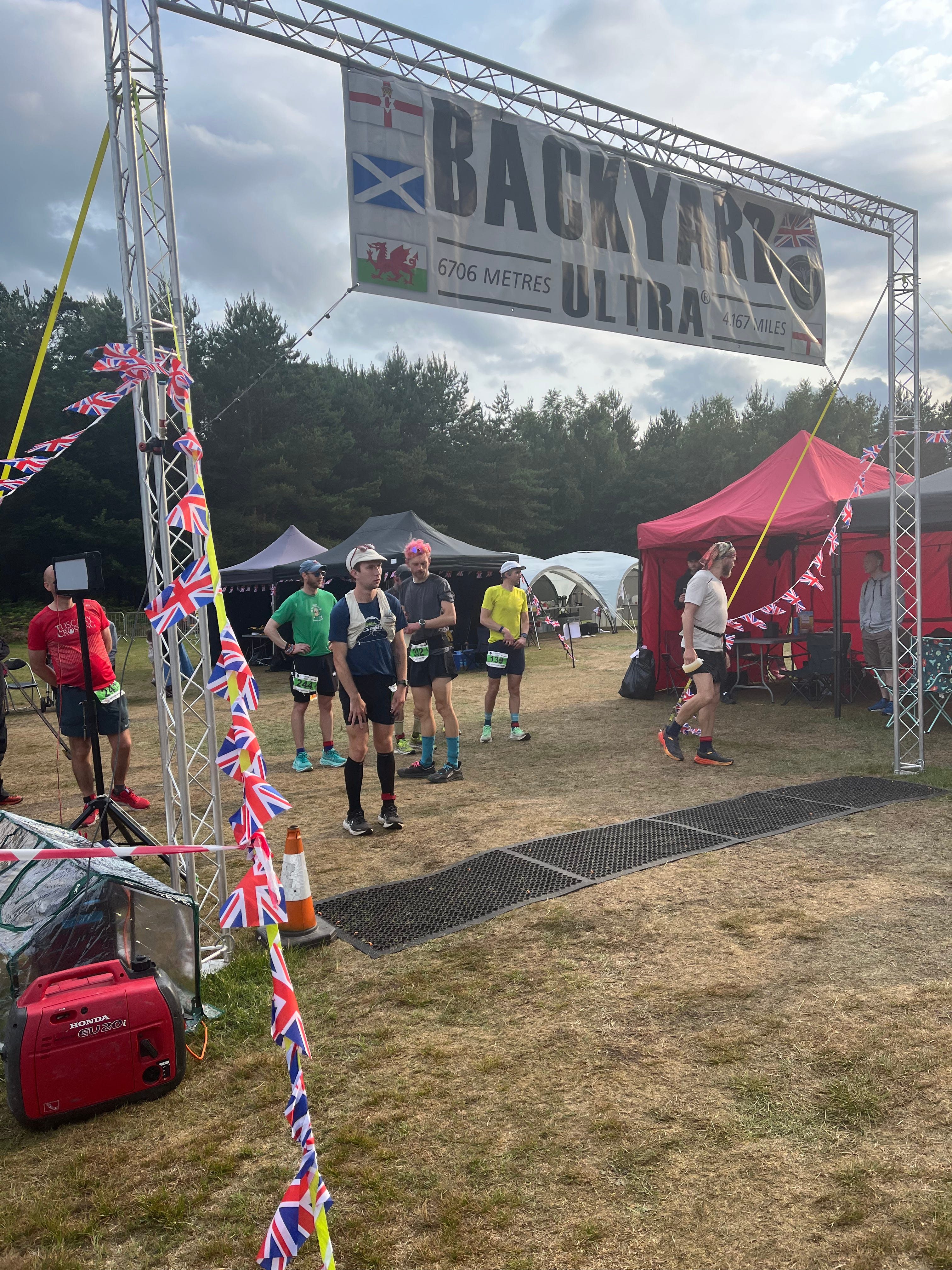
At around this point, I noticed that my glutes were getting much more sore than usual. It was something I had never experienced before in any ultramarathon. However, I was still running quite well.
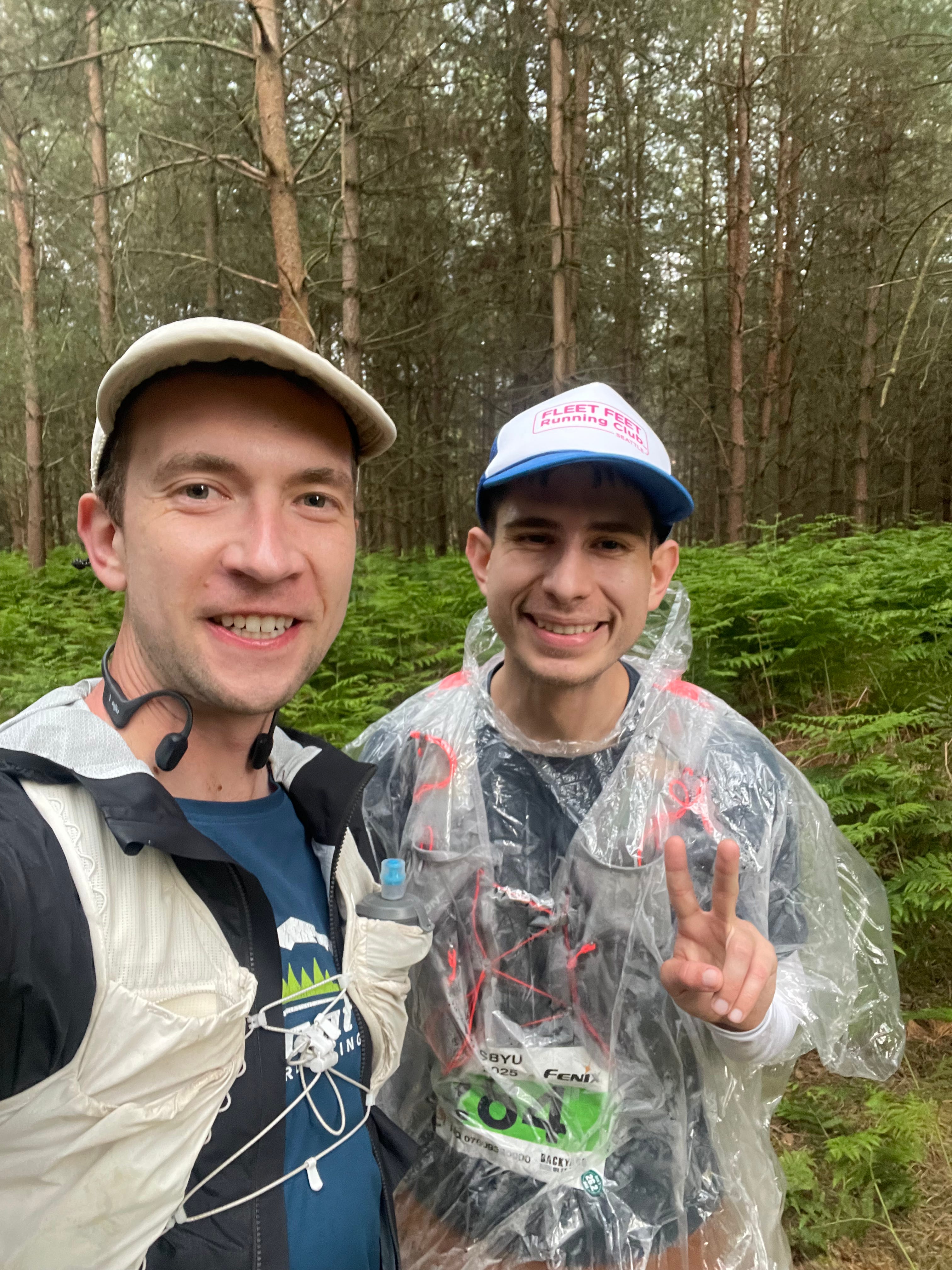
Any stomach issues? I basically had no issues at all for the entirety of the race. My nutrition plan was doing wonders, and my energy levels felt very high.
Any chafing issues? I had absolutely zero chafing issues the whole race. I attribute this to using T8 Commandos + Tri-slide anti-chafe spray, which I applied every three or four yards.
Any sleep issues? Before the race, I was getting plenty of sleep. Even though I did not sleep at all during the first night of Suffolk, I was feeling well rested. The second day I was feeling more rested than I think I ever had in any other backyard. However, with my fatigue from my sore glutes, I took caffeine much earlier than usual (perhaps sometime early into the second day)—at Big’s I had my first caffeine after 50 yards.
So after completing 34 yards, Tyler pulled the plug due to unprecedented chafing and mental struggle.
It was down to just six runners. Of the last five companions, I mostly talked to Jan Voorspoels, Tobias Taylor, and Andy Imms. They were all running right around my pace, and were all social and kind. Though Nima Javaheri and Nicholas Cutts were also in the race at this point, they were often pretty far ahead of me besides the first mile or so. During this time, I found them to be either just out of earshot or more focused and quiet.
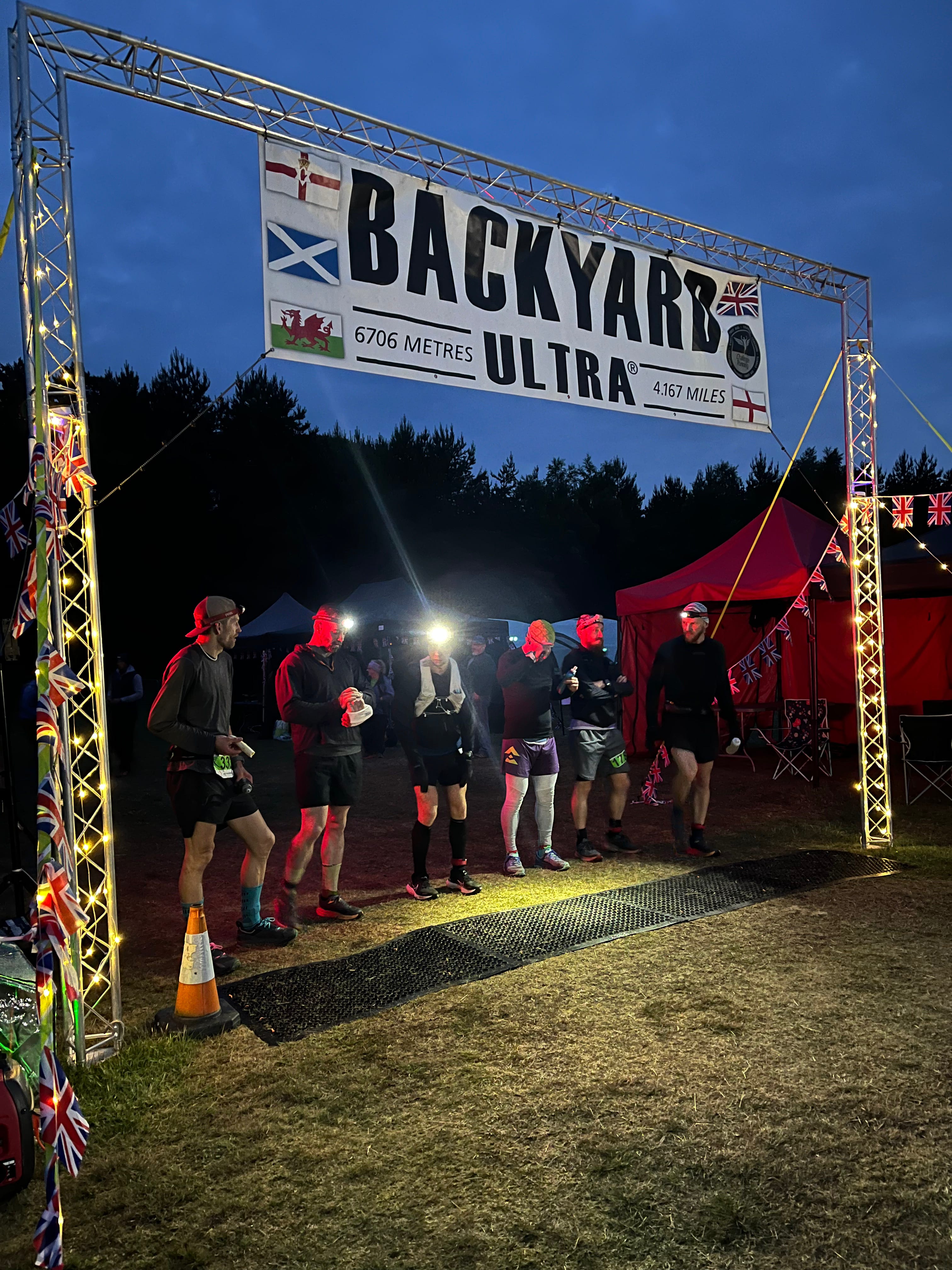
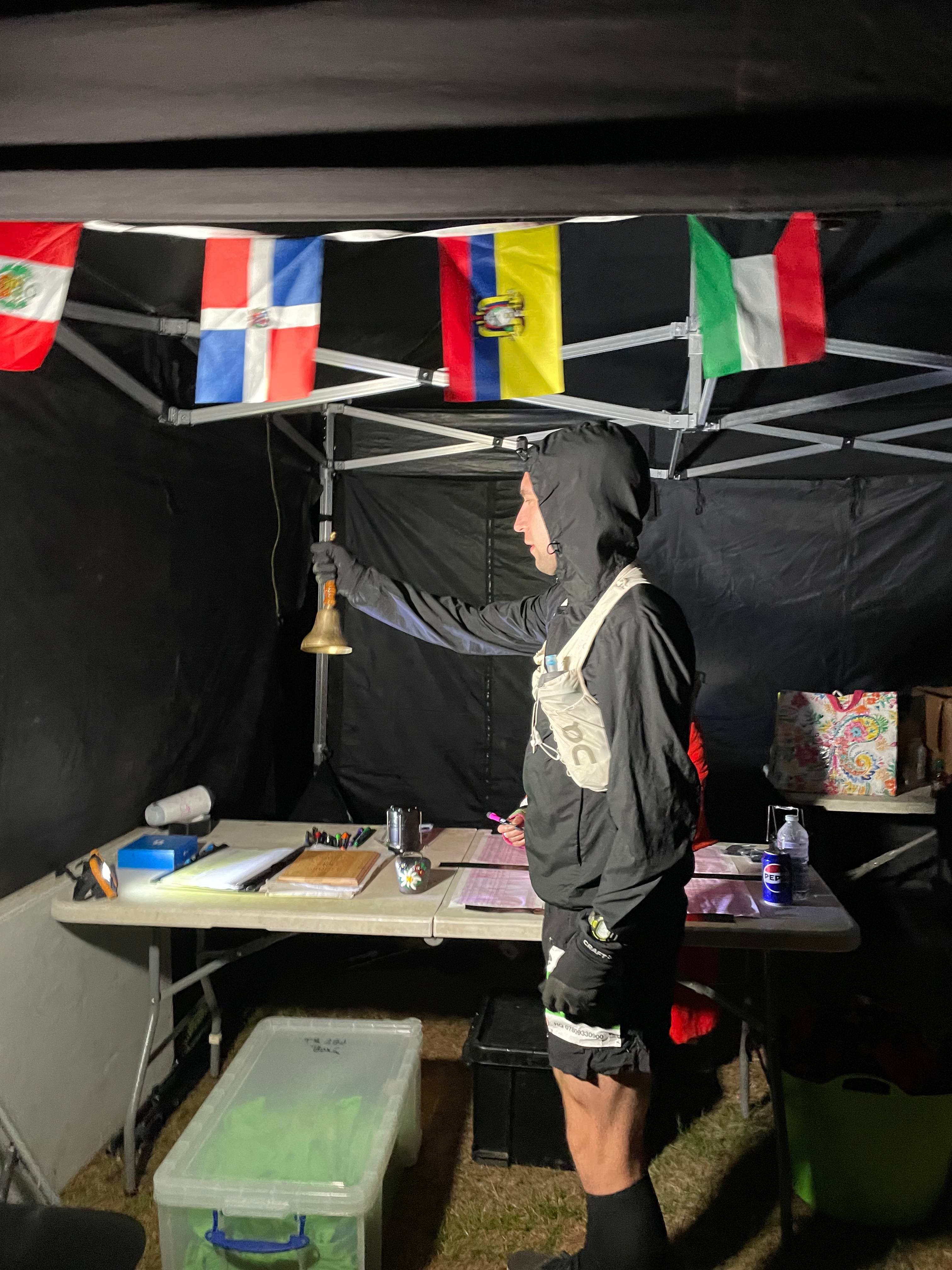
Halfway through yard 36, I could feel that my glutes were seizing up sharply. They just didn’t have the range they needed to move at the pace I desired. After a lot of shuffling and walking, I thought I was going to time out. But after 56 and a half minutes, I finished the yard, went to my tent, and applied some emergency cream on my glutes designed to get them to relax. I started yard 37, and it was just down to five now. Nicholas Cutts had dropped. But I was moving so slow. I tried my best to pick up some speed. Then Tobias passed me at about a half mile, and I was alone. I looked at my watch after about one mile, and it read 15 minutes. I knew I would not finish the loop in time.
I called my mom and told her that I had turned around and was walking back to the start. She was shocked. My girlfriend was on her way back to the Airbnb we rented and was preparing for some rest so she could be awake on the third day of crewing the race. After my mom relayed the information about my quitting the race, she was shocked as well. This was not the plan.
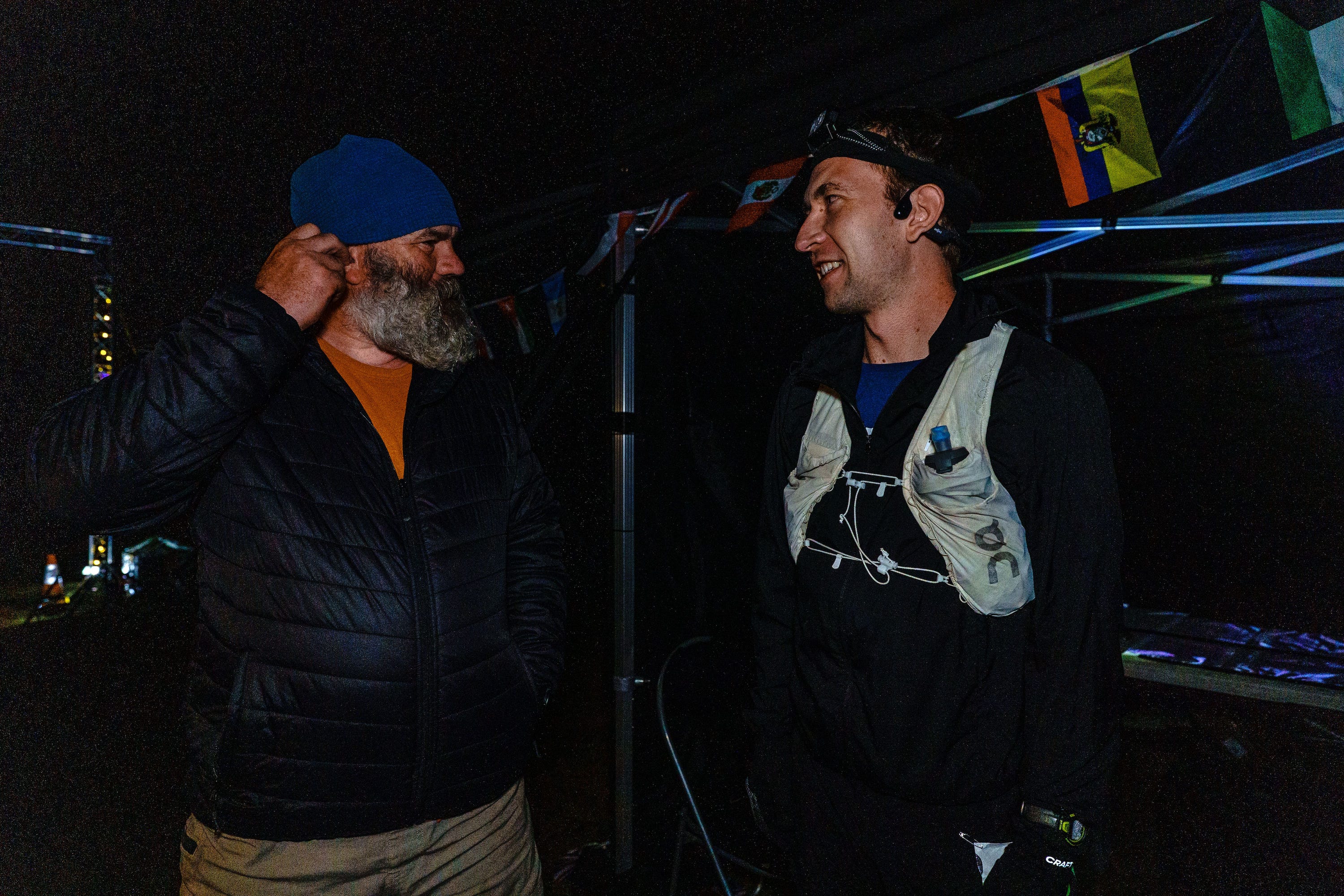
My crew and I met in the dark of the night on the course, and I walked back to the start line. Everyone was surprised to see me there. My race was over. My goal severely unmet.
After showering, sleeping, eating, and returning to the race, we saw the race begin to come to a close. Only Nima and Jan began yard 49, and I could see Nima dealing with leg pain and limping a bit. Nima was the best in Switzerland and already had a spot at Big’s due to being his nation’s champion last October. His best was 59, and I was worried he’d be short of his goal. Only Jan finished after 49 yards and looked quite fresh and triumphant.
Though Suffolk did not have a field of runners that looked to go the distance to qualify for Big’s, if I was still in the race with Jan, I think the race may have gone far enough. Jan looked quite good. I also learned after the race that I was not the only one with a huge goal: already qualified for Big’s through being a national champ, Nima had a new goal of breaking through the 100-yard barrier. Had I known this before the race, it’s possible my confidence would have been higher that the race would go really far. I thought that since he was already qualified for Big’s, he would not have as much desire or pressure to go the distance.
All this being said, one thing is clear to me: My glutes were undertrained, and something needs to change.
So this was my shot to get into Big’s in 2025, and I did not make it. So what’s next?
For a few days after the race while touring London with my girlfriend, I was actively thinking about what was to come. What was I excited for? What races do I want to do? I originally only planned for one thing: making it into Big’s in 2025, and now that was no longer a reality. Now there was space in my brain to recalibrate.
After considering point-to-point races, timed races, FKTs, and backyards, I decided the following:
I want to make the Backyard U.S.A. team in 2026.
I still really want to complete this C&O FKT in Maryland/D.C. since it’s one of my goals for the year.
Running in Andy’s Backyard Ultra (my dad & sister’s race) this year for fun seems like a good idea – also, I’ll be attending the event regardless (last year I watched the race).
Maybe trying out the W&OD 45-mile FKT in Arlington, VA, would be fun.
Timed races seem really appealing, but the travel and time allocation for them don’t seem to fit well for the remainder of the year. I may have to look at these again later.
A lot of point-to-point races are either quite expensive or just don’t appeal to me for some odd reason.
So what race(s) to compete in to make the U.S.A. team in 2026? I’m really just looking at the silver ticket races:
9/27/2025 | Babbit's | Flagstaff, Arizona
11/22/2025 | Summitt | Marble Falls, Texas
2/28/2026 | Queeny | Eureka, Missouri
3/28/2026 | Capital | Lorton, Virginia
4/24/2026 | Banana Slug | Wilsonville, Oregon
7/18/2026 | Ode to Laz | Holly, Michigan
8/15/2026 | Tartarus | Spokane, Washington
I eventually came around to eliminating Babbit’s and Summit from contention since I don’t think I have the time to do them this year considering the travel time and that I already took a good amount of time off for Suffolk. I then considered doing Queeny again: I already have a spot from winning the race in 2024, and I actually quite enjoyed the course (though it is difficult)… but the big problem is that it’ll end up being less than a month before the race I really want to do: Capital.
Capital is a no-brainer! My only real complaint from the race was that it was during a pretty hot time of the year, and now it’s moved to a much cooler time of year: March! Travel time is super convenient as I live in the D.C. area, and I love basically everything about the race. It will be my second time attending, and I think it may go very far this time around, which is always a big bonus for a backyard race.
What if Capital ends up being short of my goal of making it on the team? Banana Slug will be too close to Capital, so I’m really just looking at Ode and Tartarus. Due to travel convenience, I think it’s very likely I’ll be doing Ode regardless of how Capital goes.
To reiterate, I’m looking at doing the following:
Take some time to build a solid foundation through the whole summer.
Make an attempt at the W&OD FKT (likely September).
Compete in Andy’s (October).
Make a third attempt at the C&O FKT (September or November).
Run in Hellgate 100K if I get accepted to the race (December).
Build a solid block of training for Capital (Jan–March).
Compete in Capital (March).
Build another solid block of training for Ode (April-July).
Compete in Ode to Laz (July).
Hopefully qualify for Big’s & thus train for it (July-October).
So that’s my plan! Still looking at doing more backyards (I still think it’s the “Golden Age of the Backyard Ultra”). But Suffolk taught me a valuable lesson that I had previously taken for granted: I should never show up to a backyard ultra without deliberate strength training for my glutes (and all leg muscles for that matter).
Until next time.
-Dave
Comments
Nothing yet. Say the first thing.
Sign in to join the conversation.