
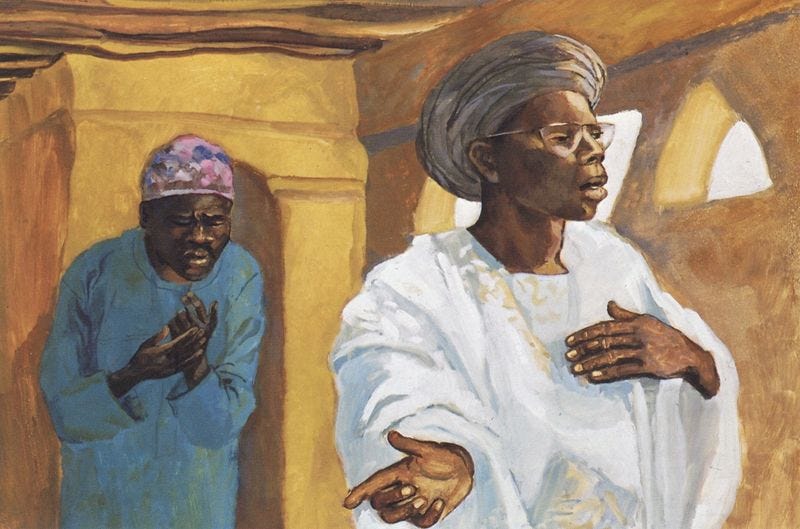
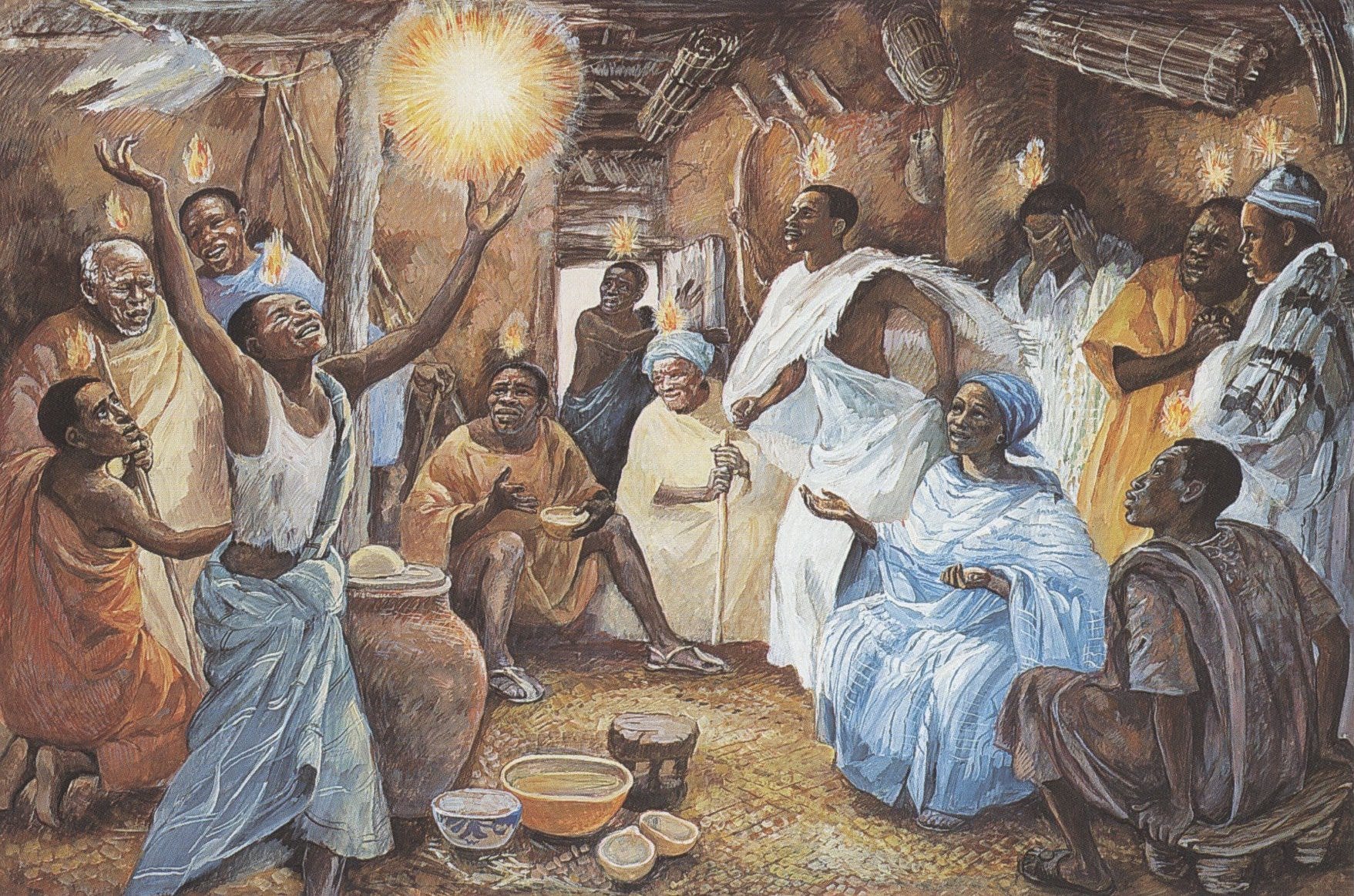
Last week I began a series on Building a Pastoral Library on a Bicycle Budget. I used Alex Mukulu’s illustration from his play, “30 Years of Bananas” to point out that often the most accurate assessment of history often comes not from the ones who are elite experts but from those who are vulnerable.
Where Have All the Church Libraries Gone?
·
Aug 21

I am beginning a series on my Substack entitled, “Building a Pastoral Library on a Bicycle Budget.” The first post is “Where Have All the Church Libraries Gone?” As I begin this series memories of Alex Mukulu’s play, “30 Years of Bananas” fills my mind.
A benefit of our family’s humble circumstances as we returned to the United States fourteen years ago is that we processed America at the grassroots level. A key task in reestablishing myself as a preacher was rebuilding my pastoral library. That task showed me what American Christians were reading overtime and, in many ways, explained the decline of Christian influence in the West. Though often disappointing there were moments that required laughing at ourselves. A key discipline amid painful discovery is a healthy sense of humor.
Please laugh with me at one of my first attempts to rebuild a pastoral library.
My years in ministry in Africa brought a transition to my reading habits. When I was young, I tried to read as many contemporary how to ministry books as possible. Besides trendy ministry stylistic books I read Christian self-help books. I also read in my devotions the latest devotional books.
Then came lots of disappointments with Christian leaders. I noticed that often the most morally flawed leaders were pietistic. God’s name too easily flowed off their lips. I came to see that those who spoke for God without wrestling with him often were creating smokescreens to hide bad behavior. I came to be intuitively distrustful of pietistic platitudes that lacked lament, theological thinking, and accountability to help a community thrive.
I also came to see that many of the problems communities faced were far too complex to be solved by simple 3-point plans. A community’s struggle often grew out of generations of time with a variety of unpredictable factors. I had found that the Christian self-help genre typically only worked for well-educated upwardly mobile white families in America. Practically, it justified their light health and wealth gospel leanings but kept the vulnerable poor. I saw it as generally historically inaccurate and contributing to a prophetically failed American Church.
Lastly, I stayed in ministry long enough to start to see that trendy ministry paradigms often were based on anomalies that rarely could be reproduced. Whole industries developed around marketing trends that for most ministers didn’t fit their context. Even the trends often within a few years were outdated or would shift to the opposite trend.
With all those changes within myself, I came to realize that the most enduring ideas would come from old sources. My pastoral library in Africa increasingly was made up of many Bible translations, Bible study helps, commentaries, history, theology, and only ministry how to books that were quoted after being read frequently for years. When I realized, I would need to rebuild a pastoral library to do ministry well in the United States I went looking the weighty sources.

In the summer of 2013, our family was traveling and we spent a few days with my brother, Tim’s family in Texas. While there I visited a friend who was on staff at a local mega-church. (This mega-church would years later have her high-profile celebrity pastor fall into disrepute.) At the time I was still infatuated with mega-churches. In fact, I had used mega-churches as a model for growing urban churches in Africa among thought leaders. My friend arranged for me to spend an entire day with him at the mega-church. Practically, there were lots of odd meetings that brought little benefit. I was overwhelmed over and over again at the fast conversations, massive facility, and constant whiz bang activity.
However, there was a possibility that looked like it would be a long-term benefit. The mega-church would allow me as a missionary to wander through their bookstore and freely take what I wanted. I thought maybe I would get a quick score and rebuild a substantive pastoral library.
However, their bookstore was a disaster for good theological thinking. I spent about 30 minutes walking through the bookstore. It was filled with pietistic and self-help books. Many of the books were best sellers in the Christian publishing genre. I had no interest in almost every book I saw in the bookstore.
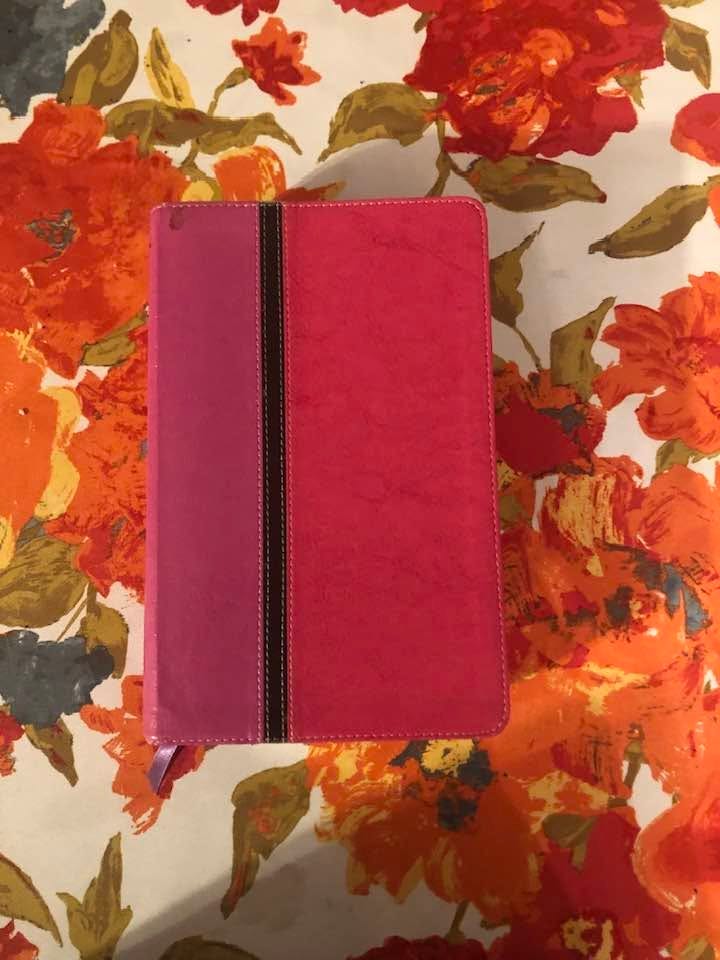
What I was interested in finding was a multiple of Bible translations, Bible study aids, history books, theology books, and commentaries. The mega-church bookstore had a small section with Bibles. My friend let me get the expensive ones. I found a Bible in a box that had an New International Version and The Message translation plus a few study notes. I took it. That book was the only one I willingly took from mega-church’s bookstore.
When I got back to my brother’s home I unpacked the Bible. It was pink. I was so disoriented that I hadn’t noticed that I had taken a “Women’s Study Bible.” My sister-in-law, Landra affectionately made fun of me. The most endearing memory I have of the experience is how we all laughed so hard at my reverse culture shock. That Bible now sits in my library. It comes off the shelf almost every week if I am preaching. I’m thankful to have it. That Bible is a starting point for most of my present sermons. Besides getting me reading Bible texts and seeing how translations differ it reminds of a glimpse into the American church.
A church built around meeting emotional needs with little theological depth is a recipe for disaster no matter how you cut it. There would be no easy path for me to rebuild a substantive pastoral library or to establish our family as middle class professionals. However, we would laugh and celebrate a lot. We shared the joy of the Lord with the wisdom of the poor.
Mungu akubariki (May God bless you),
Daudi (Dave)
Here are some posts I have read in the last few weeks that are very insightful for those who see America as a mission field:
The Rwandan Community participated in the Northern Plains Ethnic Festival in Dickinson North Dakota with a multiple of ethnic groups who immigrated generations ago as well as contemporary immigrant communities.
Peggy Noonan at the Wall Street Journal had a key quote to ponder related to corruption in American governance, “When corruption is allowed, it governs not today but tomorrow too.”
Public health in the United States continues to struggle as two people recently died from measles.
Many rural hospitals, schools, and skilled nursing homes in remote areas are dependent of immigrant labor and concerned that the cost of their visas may increase to an unsustainable $100,000.
Some of our immigrant friends in North Dakota who have become American citizens have been unable to process their spouses immigrant visas for some time and there is no foreseeable resolution.
Thanks for reading! This post is public so feel free to share it.
No posts
Comments
Nothing yet. Say the first thing.
Sign in to join the conversation.