
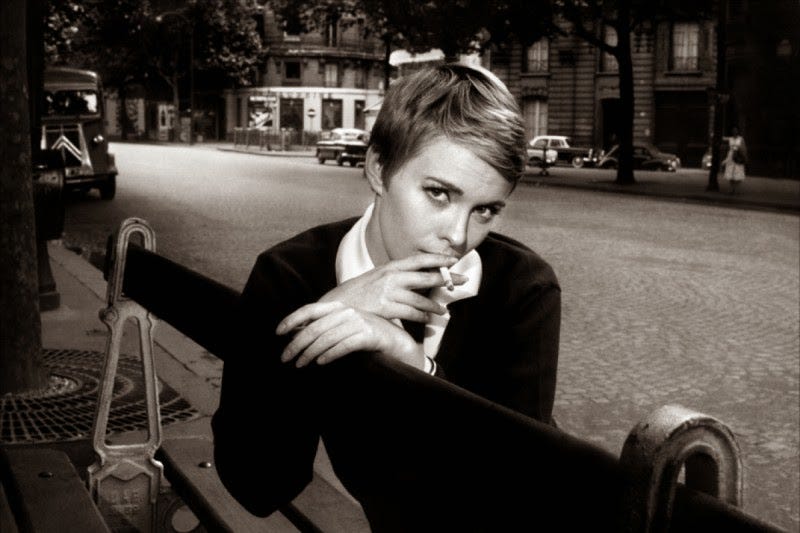
I’m writing about the song ‘Take Five’ by the Dave Brubeck Quartet, and starting with actress Jean Seberg because why not? She appeared in some great films – including but not only Jean Luc Godard’s À bout de souffle (the English title is Breathless). Plus Seberg had such a troubled life, and needs to be remembered. Also, if you follow the trails, she has a personal connection to ‘Take Five’.
I could have started with something much more obvious. For example; ‘Take Five’, taken from the album Time Out, was first released as a single by the Dave Brubeck Quartet in the Autumn of 1959. It was the first jazz album to sell a million copies. The writing of the song ‘Take Five’ is credited to Paul Desmond, the group’s alto sax player. The ‘Take Five’ single sold solidly for months (hitting peak sales in the UK at the end of November 1961, two years after it was released); it’s the biggest selling jazz record of all time. You’ll have heard it. Even if you think you haven’t, you have...
Here’s an audio clip of ‘Take Five’ from a Dave Brubeck Quartet concert, live in Belgium in 1964.
0:00
-2:50
Navigating through all the histories around ‘Take Five’, I discovered a meeting between sax player Paul Desmond and the actress Jean Seberg. A shorter than short romance. An exchange of gifts. A poem stolen by the Daily Mail. And a parting of the ways.
Paul Desmond and Jean Seberg met in 1957. Seberg was on a promotional tour of the USA to boost interest in the new film Saint Joan (screenwriter Graham Greene, director Otto Preminger). She was eighteen years old; it was her first film role, the lead role.
Born and raised in Marshalltown, Iowa, Seberg’s route into acting began at High School where she had a supportive speech and drama teacher called Carol Hollingsworth. Hollingsworth later recalled that Seberg “could play straight or character, and she was very smart and took direction well”.
Something which stands out in her early life, is that aged 14 she signed up for the US civil rights organization NAACP. She never deeply analysed why she was drawn to civil rights causes, other than expressing “a kind of alienation” she felt in her teenage years. It was certainly a move that marked out to be more nonconformist and politically aware than most of her peers in Marshalltown.
As for her love life, her biographer, Gary McGee, was told by one of Seberg’s schoolfriends “She was funny. She had crushes”. One particular crush that turned into a more formal a relationship was with a young man called John Maddox who she met in the Summer of 1956.
In June 1956, she’d graduated from high school, almost immediately securing an apprenticeship at a theatre in Cape Cod, Massachusetts, the youngest actor in a cohort of about forty. Within days, she was given a lead role in a production, cast opposite Maddox. He was her first serious boyfriend.
Her starring role in Saint Joan came after the production company and the director Otto Preminger put out a nationwide call for young actresses to apply for the title role. This process had a high profile in the media; it’s said that eighteen thousand young women applied. The search even went as far as Manchester – Preminger auditioned some eighty young women at the Midland Hotel at the beginning of October 1956.
At the end 1956 Seberg had completed filming Saint Joan. She’d had a mixed and sometimes depressing experience. Preminger was a bully, but he had form, and was generally one of the most unloved people in the film business.
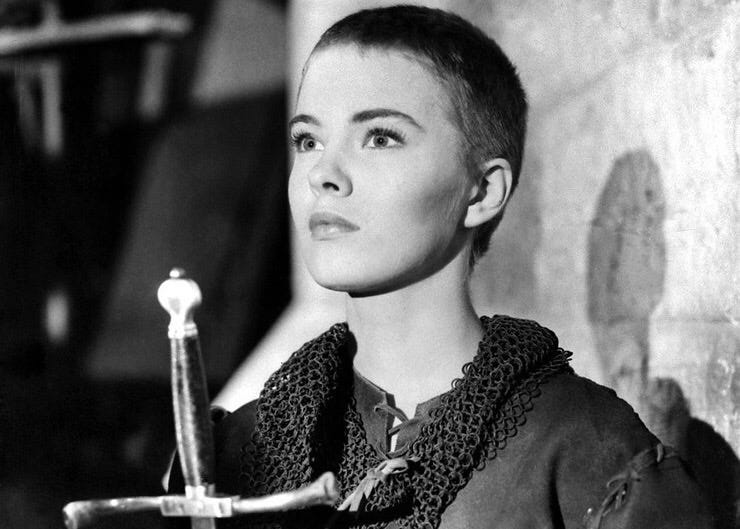
Between the filming of Saint Joan and the premiere of the film, the next project for Preminger as director and Seberg as star began; a film version of Bonjour Tristesse, a novel by Françoise Sagan published in 1954. For young French women, particularly, it was a sensational, generation-defining book. The French establishment found it controversial, even provocative; especially in the honest and morally ambiguous way Sagan deals with sex. Among enthusiasts for questioning, questing fiction, Bonjour Tristesse is often put in a similar category to Salinger’s The Catcher in the Rye; post-War, pre-Sixties novels featuring disaffected youth in their late teens. Seberg had read the Sagan at high school.
The premiere of Saint Joan took place in Paris on 12th May 1957. Looking back at the reception, the hype had been huge and ripe for a backlash, and, perhaps inevitably - given the taxing nature of the role, the raised expectations, and Seberg’s inexperience – the film, and her performance received a generally negative response. Some of the criticism of Seberg was nasty. Time magazine called her “drastically miscast”.
With a critical and commercial failure on his hands, and an imminent release in the USA in the schedule, Preminger needed to dilute the negativity and asked Seberg to embark on a tour of twelve cities in twenty-seven days doing radio and print interviews. It was on the tour that she met Paul Desmond.
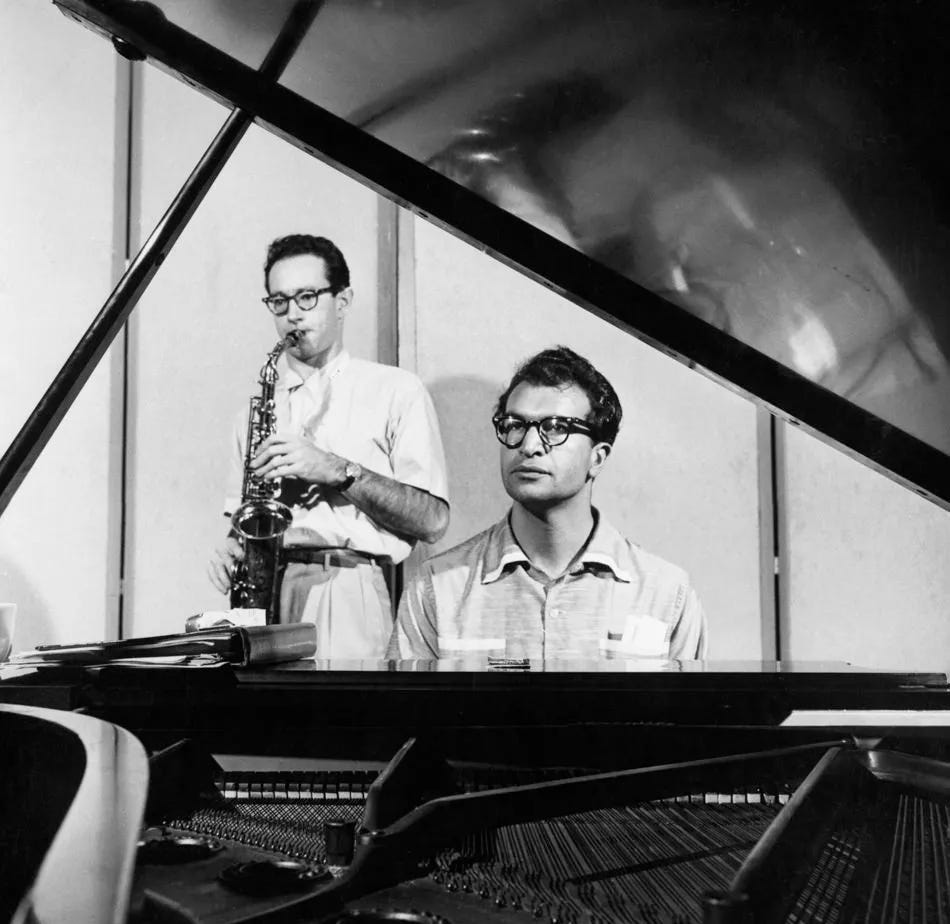
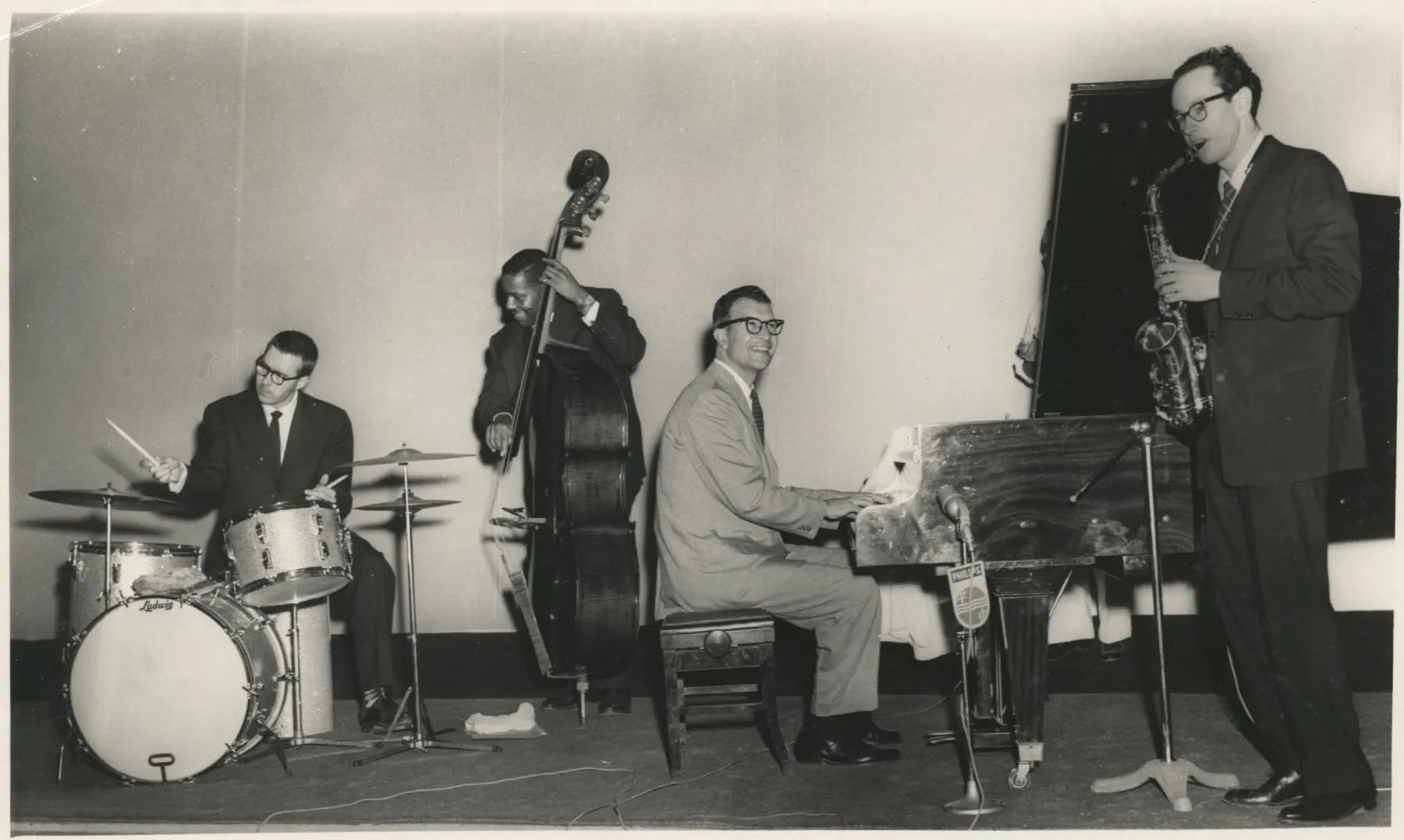
Paul Desmond was then a leading light in the Dave Brubeck Quartet. Influential jazz writer Nat Hentoff described Desmond’s alto saxophone sound as “cool, sensuous, melodic”. His sax playing and Dave Brubeck’s piano were a sparkling marriage. Desmond’s melodic, lyrical, sensuous tone worked well as a counterpoint to Brubeck’s playing, and his rhythmic inventions and polytonal stylings. Brubeck later expanded on this; “From the very first, we seemed to possess an uncanny ability to anticipate and read each other’s musical thoughts”.
Paul Desmond was born in San Francisco in 1924; he was thirty-two at the time he met Seberg (she was eighteen). His father, Emil Breitenfeld, was a very able pianist. Paul’s grandparents had emigrated from Bohemia in Central Europe; although their forebears had a Jewish background, none of the immediate family identified as Jewish. His mother Shirley’s family were Irish Catholics.
Paul Desmond is remembered for charm, bookishness, and a dry sense of humour. Friends of his around the time of his encounter with Jean Seberg, recall he didn’t smoke pot, but he’d had at least one phase of heavy amphetamine use. He smoked cigarettes and liked Dewar’s whisky. He was popular with women, and he liked to have a girl on his arm. Commitment was not a thing he much cared for when it came to women though. The itinerant life of a touring musician suited him.
For all his wit and warmth, and socialising, several people in his work life, particularly, considered him a very solitary person. The writer Gene Lees, as well as proclaiming “There is not a musician alive I admire more”, called him “the loneliest man I ever knew”.
Once America joined the Second World War, Desmond’s turn eventually came to join the armed forces. He reported for duty at the HQ of the Ninth Service Command, knowing he’d never be called into combat because of his terrible eyesight; he admitted he was “no earthly use to anyone” and also not particularly patriotic. Within a few weeks in the Army, his Benzedrine use soared. He sourced tablets via a nurse at the base hospital. He used to crush the tablets, put them in a salt shaker, take it to breakfast with him, and then order scrambled eggs and sprinkle it all over them.
Desmond’s childhood had been unsettled by his mother’s poor mental health. Shirley’s mental illness manifested in several ways, including a phobia of disease and dirt; a kind of “cleanliness fetish” according to Paul’s younger cousin, his Uncle Frederick’s son, Rick. Rick knew Paul well – such was the severity of Shirley’s distress, Paul was sent to live with his Uncle Frederick’s family in New York for four years, returning home at 16 years-old.
The habit of exchanging letters with his father had begun when he was with Uncle Frederick and continued when he was drafted into the army, and, later, when he was on tour with the Brubeck Quartet. At some point in 1952, Desmond’s father sent him a copy of The Catcher in the Rye, published a year or so earlier, telling his son “I’m rapidly going broke buying copies of it for miscellaneous friends here and there”. Desmond adored the book, and took up the habit of giving copies to people. In 1955, shortly after they’d become friends, Desmond gave Salinger’s book to the music critic Doug Ramsay, who later became his biographer.
Desmond never wrote his memoirs, but he did leave a very short autobiographical notes, including a stark sentence about the late 1940s; “Out of army in 1946, married shortly after, starved quietly for several years”. Desmond had met Duane, a show-girl, backstage. She described him as “gorgeous”, with “black almond-shaped eyes”. He was reading Coming of Age in Samoa: A Psychological Study of Primitive Youth for Western Civilisation, a 1928 book by the pioneering anthropologist Margaret Mead. Her opening line to him? “Hey, a musician who reads?”.
He always expressed great affection for his wife, and the feeling was mutual for sure, but the marriage just seemed to just fizzle out somehow. The autobiographical note is succinct and just a little bewildered maybe; “Loving wife left quietly in 1949”.
Desmond met pianist Dave Brubeck briefly during the Second World War, and then again afterwards. After a few early differences - including a period when Brubeck banned Desmond from visiting him at home - in 1951, Desmond became a part of the Dave Brubeck Quartet.
After the War, in the evolution of jazz, the orchestrated big band sound was losing its attraction. On the East Coast, bebop - characterised by a speedy tempo, complex syncopation, space for improvisation, and unexpected chord changes - was going overground, pioneered by the likes of Dizzy Gillespie and Charlie Parker. In San Francisco, where the Brubeck and Desmond were operating, a “cool” West Coast sound was beginning to develop, laid-back and lyrical.
In the new era, Charlie Parker was the alto sax supremo. In 1954, Paul Desmond told him “I think you did more than anybody in the last ten years to leave a decisive mark on the history of jazz”. Years later, Brubeck discussed Desmond in relation to the great Charlie Parker; “Of all the alto saxophonists of his day under the influence of Charlie Parker, Paul was the one who struck out on his own path and found his own sound, integrating in his improvisations a great sense of melody, harmonic and rhythmic invention – and wit”.
Brubeck was four years older than Paul Desmond. In 1942, he married Iola, an energetic and intelligent woman who had a good grasp of the music business including work as a jazz lyricist. She encouraged the Quartet to book college gigs. It opened-up yet another new performance space for jazz; which had already spread from nightclubs and speakeasys, into concert halls. And laid the groundwork for the Dave Brubeck Quartet to build a big audience among America’s (predominantly) white college kids. Their breakthrough, the 1953 album Jazz at Oberlin, was recorded at Oberlin College in Ohio.
At the end of 1956, there was a new drummer in the Dave Brubeck Quartet, Joe Morello. The double bass player in the Quartet at the time was Norman Bates, although by the time ‘Take Five’ was recorded, Eugene Wright had taken his place.
Seberg met Desmond, I’m guessing, during the last days of May 1957. I’ve not been able to establish exactly where they first met, but it’s a fair assumption it was in San Francisco, where Desmond lived. Certainly their second, and I think last, meeting was in San Francisco where he gave her a bracelet with some musical notes engraved on it.
One of Desmond’s earlier passions was for the actress Audrey Hepburn, although they never met. She became a fantasy figure for him; he’d written a song inspired by her called ‘Audrey’ back in 1954. Brubeck had a very stable relationship with Iola (and, eventually, six children together); the difference in their relationships with women were often remarked on by them and others. In fact, despite Brubeck and Desmond’s outstanding musical match and deep friendship, they diverged on many matters, including food. Of yoghurt Desmond said, “I don’t like it, but Dave is always trying things like that. He’s a nutritional masochist. He’ll eat anything as long as he figures it’s good for him.”
Seberg in 1957 was definitely still prone to crushes as she had been just a few years earlier at high school. I’m not sure either of them envisaged a relationship and there’s no indication anything physical occurred between them. Seberg wrote to a friend that Desmond was too old for her and she didn’t find him good looking, but there was a connection, and he had something attractive about him; he was, she reported “just beautiful”.
The shenanigans before, during, and after Saint Joan, plus the demands of Columbia Pictures for her to do more than her share of publicity had already put Seberg in the spotlight; press and media interest in her became intense. When she arrived in London mid-June for the European premiere of Saint Joan, the newspaper reporters were there, and photographers took pics. In at least one of the photographs Seberg can be see clutching a copy of The Catcher in the Rye. I’ve dug deep into the story and given the timeline and Paul Desmond’s love for The Catcher in the Rye, plus the idiosyncratic history of his father and him buying the book for people, it’s very possible Desmond gifted her the copy she took on the plane.
Our age scrutinises people in the public eye relentlessly, but that’s not a new thing, especially for young female film stars. Was she smiling, why wasn’t she smiling? What about her haircuts, her clothes? And, most of all, what about her boyfriends, the real ones, and the ones the press tried to associate her with, or spread rumours about?
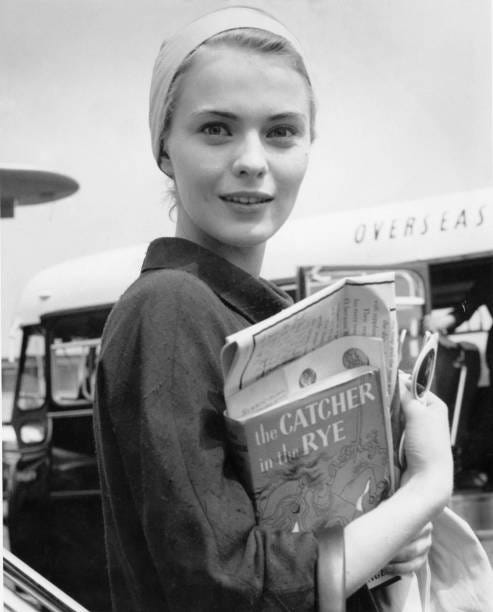
The paparazzi at the airport that day not only snapped The Catcher in the Rye but also some words she’d written in the margins of a newspaper. The Daily Mail focussed in on the words, and enlarged them, discovering and then publishing what appeared to be a poem. Understandably, Seberg was angry about this intrusion.
I run too fast
I fly so high
I hit so hard
Too wide my eye
Too full my heart
Too deep my pain
So short the kiss…
The papers knew nothing of her connection to Paul Desmond but he was very much on her mind at that point. Seberg wrote to a friend about the happiness he had created in her life, but also admitted to being depressed. The depression she was feeling was partly, I guess, as a result of the emotional chaos of trying to make sense of what was going on between them. The vivifying insanity of an unrequited crush.
On the set of Bonjour Tristesse down in the South of France, Seberg made an ally and friend; Mylène Demongeot. In the film, Seberg plays Cecile, the daughter of Raymond (David Niven); Demongeot is his French mistress. Seberg and Demongeot buddied-up to protect themselves from Preminger’s callousness.
The happiness she’d been feeling as a result of a connection with Desmond was lingering, even, for a while, when he ghosted her. She had sent him flowers, but he’d not acknowledged receipt of them, didn’t answer her phone calls from Nice, and not been in touch in any way. In Doug Ramsay’s extended biography of Paul Desmond, there’s no mention of Jean Seberg - she’s erased - but Desmond’s infatuation for Audrey Hepburn is covered over several pages.
Meanwhile, filming Bonjour Tristesse with Preminger, Seberg was living something of a high life. In St Tropez, she received an invitation for lunch at the mansion of a rich local called Paul Louis Weiller where the guests included Charlie Chaplin. A week or so later, the cast had a break for a few days and Seberg travelled to Paris and stayed in the opulent Hotel Prince de Galles on Avenue George V.
Whilst in Paris she was invited to meet Marlon Brando. She wrote a report of the encounter with Brando in a letter to her parents (asking them “don’t let the papers get this”), telling them the two talked for three hours and that Brando “has an unlimited curiosity about everything”. To another correspondent she said they’d discussed her problems with Preminger, and Brando told Jean he “wouldn’t work for that bastard, not even for ten million dollars”.
Back filming Bonjour Tristesse, Seberg met François Moreuil, holidaying on Wieller’s estate. They began dating, which included sneaking off down to nightclubs in St Tropez. In a letter to Dawn Quinn, she analysed the Paul Desmond situation; “Well, it took me a long time to realise it, but everything ended as soon as I left San Francisco. He didn’t write, didn’t call, didn’t do anything. And I became a very bitter girl.”
If, after the crush, there was a crash, Seberg walked away unscathed. In the same letter she tells her friend “I’ve met someone who has taken his place wonderfully - a tall, thin, very black-haired Parisian lawyer named François Moreuil”.
When the Bonjour Tristesse cast and crew moved over to Shepperton Studios for the last bit of filming, François followed Jean to London. She’d told friends she was in love, jokingly admitting they’d probably sigh “Oh no, not again” and laugh if she said “Ah, but this time is different”. Indeed, though, it did seem to be different - they married in the late Summer of 1958.
By this time, Bonjour Tristesse had been released, to what might be described as “mixed” reviews, especially in the USA. However, the reception in France was positive. According to Garry McGee, her biographer; “Jean was slowly becoming the darling of France”. One particular critic (and future film-maker), François Truffaut of the influential anti-establishment magazine Cahiers du Cinema, hailed her as “the best actress in Europe”.
In the Summer of 1959, two years after their brief encounters, both Seberg and Desmond began work on the creations which would be the making of the reputations, and ultimately their most celebrated work. ‘Take Five’, and À bout de souffle, directed by Jean-Luc Godard (his first feature) and co-starring Jean-Paul Belmondo.
The first day of filming À bout de souffle was August 17th 1959. Godard was so different to Preminger, by all accounts Seberg found Godard’s free-wheeling, under-planned, semi-improvised directing style a little odd; the world behind-the-scenes is all wonderfully captured in the recent Richard Linklater film Nouvelle Vague.
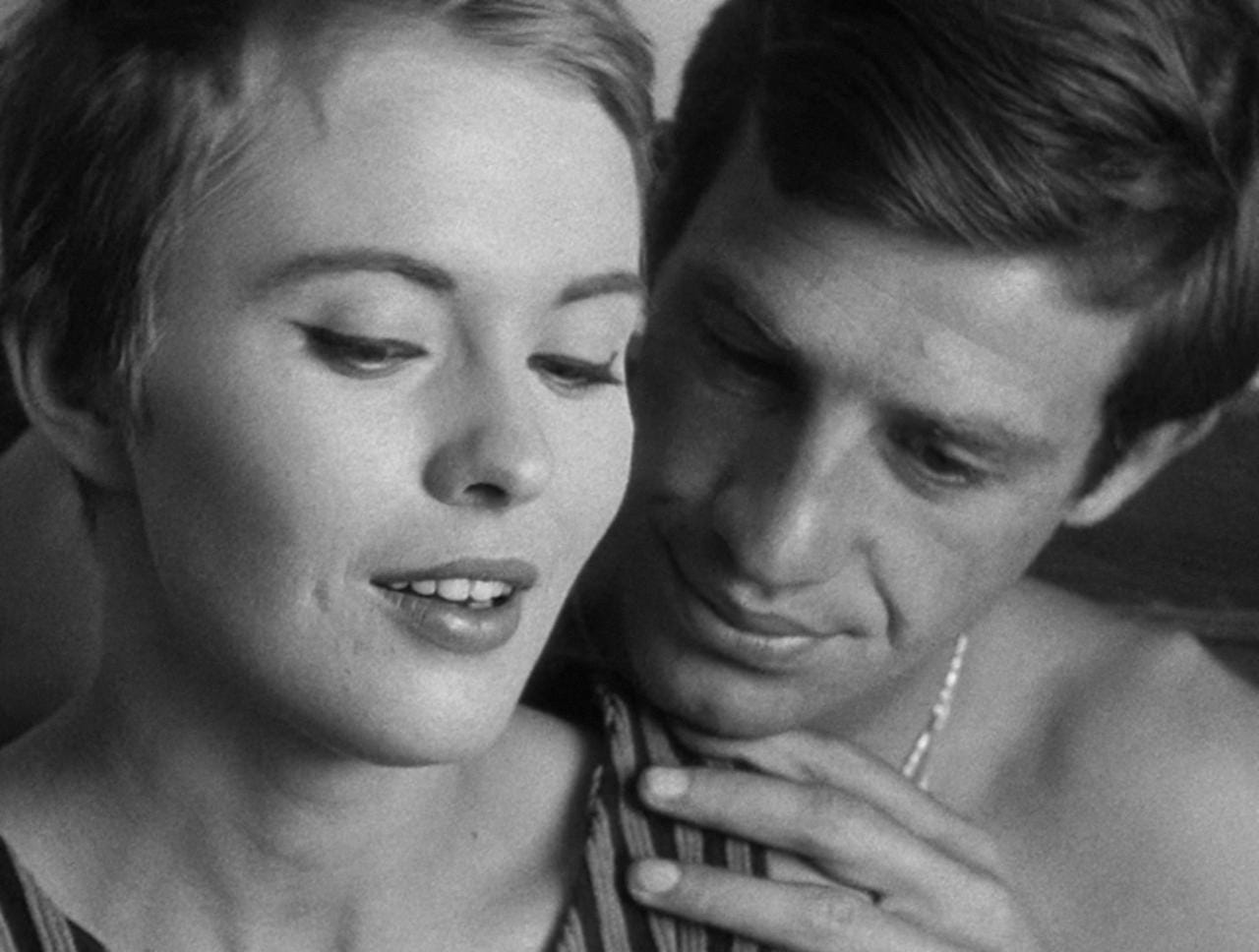
Groundbreaking is an underwhelming word for Godard’s film. Belmondo plays Michel, on the run after killing a policeman, and Seberg plays his girlfriend Patricia, a young American who sells the Paris edition of the New York Herald-Tribune while waiting to enrol at the Sorbonne. Her relationship with Michel isn’t very deep; while often revelling in their time together, she also seems ambivalent even hard-to-get. The nature of their young love is much harder to define than we’re accustomed to in a film, especially in a “gangster” film. But no harder to define than the relationship between Paul Desmond and Jean Seberg.
À bout de souffle isn’t just a key film in the French New Wave, but influenced cinema over the decades that followed. There’s the technical aspect - jump-cuts, film-making on the fly - and historical and analytic significance; the detached attitude, the ironic humour, the mix of philosophy and entertainment. A film released in 1960 that, in tone at least, seems closer to 2020 than 1950. A pre-drop-out film about a couple at one remove from society and several from responsibility. But, strangely, not bothered about creating the suspense intrinsic to crime capers.
Brubeck and Desmond took an unorthodox approach to the Time Out album; albeit in a mild way compared to a couple of other albums released in 1959; Mingus Ah Um by bassist Charles Mingus, and The Shape of Jazz to Come by Ornette Coleman. The latter, especially, threw a grenade into the world of jazz.
On Time Out, it was Brubeck’s intention to use a different time signature for each track, which was very unusual. ‘Take Five’ is such a beautiful instrumental, although lyrics were added at a later date (regrettably, I would say), but with its unconventional time-signature, it broke with industry opinion about what was, or could be, commercial. The recording sessions for the album spread through June and July 1959. Time Out was completed on August 18th, 1959, the day after filming À bout de souffle began.
Paul Desmond continued to work with Dave Brubeck, but also with the likes of Gerry Mulligan and Jim Hall. Over the years, although the artistic qualities of the Dave Brubeck Quartet have been questioned – despite, or because of, the huge commercial success of ‘Take Five’ - artists of the calibre of Charlie Parker went on record to heap praise on Paul Desmond. Another of the greats, Charles Mingus, was one of the people who stood by him at the end, when Paul was dying.
When Paul Desmond was killed by lung cancer in 1977, aged 52, his will requested that royalties from his songs, including ‘Take Five’, should be passed to the American Red Cross. It’s believed the Red Cross has subsequently received more than $6 million from Desmond’s royalties.
Seberg’s story moved towards a tragic end. She extricated herself from the marriage with François Moreuil (their differences included political disagreements), then married Romain Gary, settling on rue du Bac in Paris. Having supported NAACP as a young teenager, she was supporting the Black Panther Party at the end of the 1960s, triggering one of the most extraordinary episodes of politically-motivated harassment in American history, targeting her career and mental health. This FBI campaign included phone tapping, surveillance, blacklisting her from Hollywood, and feeding stories to the press; including fabricating a rumour that the father of the child Seberg was pregnant with in 1970 was a Black Panther member, Raymond Hewitt, and not her husband.
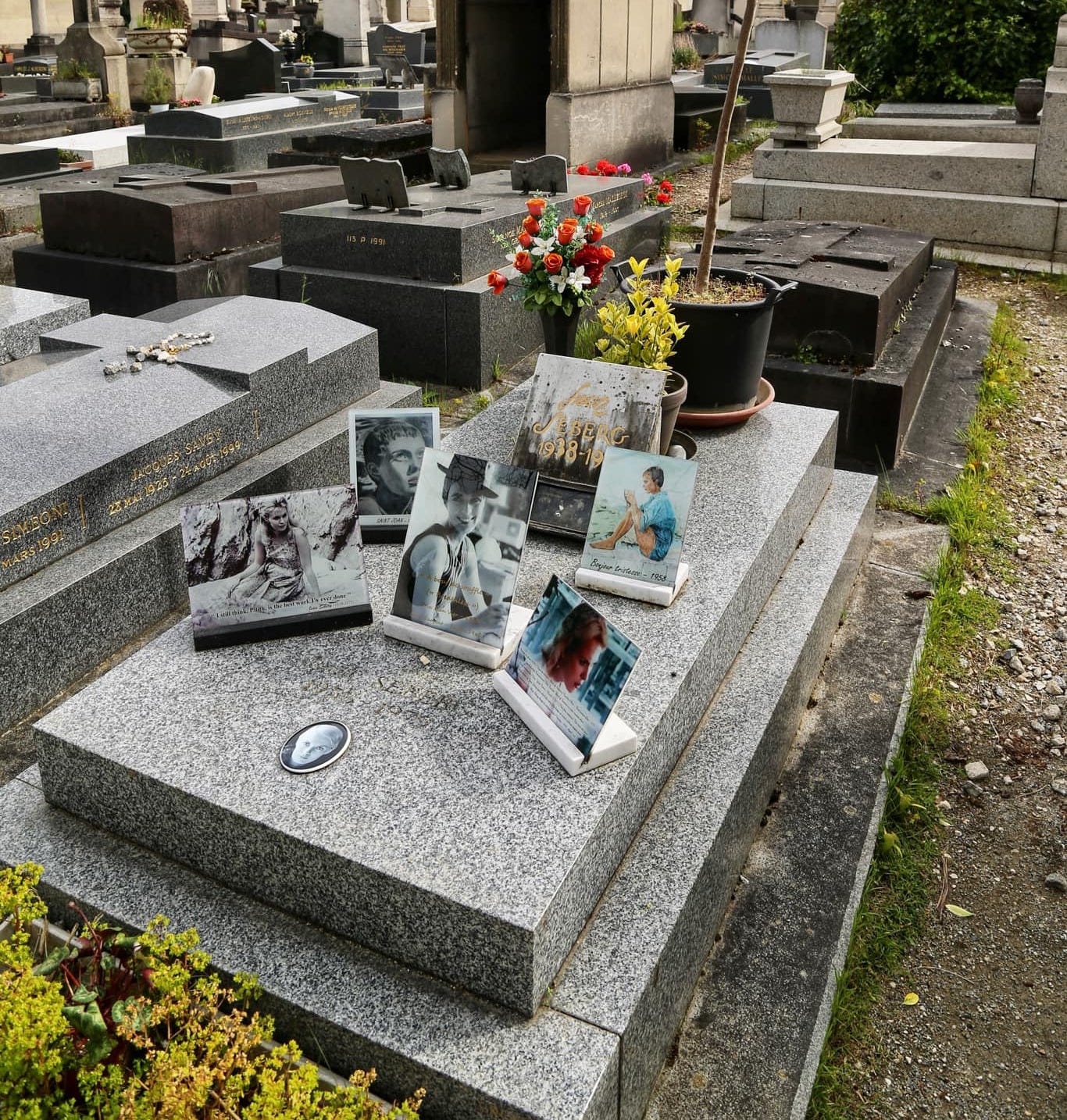
The stress from this scrutiny and deliberate sabotage led Seberg into premature labour; then her baby girl died after just two days. Seberg’s life spiralled downwards. Romain Gary always maintained that the FBI activity directly contributed to her death by suicide in 1979. She died alone in her parked car in Paris, and is buried in the cimetière de Montparnasse.
I hope to return to the Jean Seberg story soon. Currently, I’m still trawling through a four hundred page pdf; the FBI’s Seberg files.
Often when I go visit the Paris, I make my way to the cemetery in Montparnasse and pay my respects to a young, idealistic, gifted and spirited woman surrounded by people wanting to clip her wings. She flew so high and hit so hard.
Further reading
Comments
Nothing yet. Say the first thing.
Sign in to join the conversation.