The world demands that Jews explain, litigate, and apologize for our survival. Up here on the northern border, watching the deranged-and-deranged-adjacent screeching global mob, the only real answer left, I think, is Walken's.
There is a moment in Martin McDonagh’s Seven Psychopaths where Paulo (Zeljko Ivanek) is taken by surprise by the sudden appearance of Hans (Christopher Walken), draws a shotgun, and barks: “Put your hands up!”
Walken doesn’t flinch. He just looks at him with that signature, unblinking detachment:
The exchange short-circuits the gunman entirely. The whole machinery of intimidation relies on the target accepting the role of the trembling victim. The moment you refuse to play along with the script, their leverage vanishes:
Lately, watching horrific, disturbing, and depressing updates of the raw, venomous sewage and bile being spit at Jews and the Jewish State around the globe, that incongruous desert showdown and Walken's dismissive reply has been playing on a loop in my head.
To be clear: this isn’t about looking down on our brothers and sisters in the Diaspora who are “suddenly” bearing the brunt of a vicious, violent and ugly cultural, political, and online assault. We worry for them, and the tragic inversion—where we in the Middle East fear for the physical safety of Jews walking through London, Toronto, or Manhattan—is deeply felt.
This is aimed directly at the howling lynch mob.
It is aimed at the fierce, deranged online hatred and the bomb, gun knife, and megaphone-wielding zealots who have completely detached from reality. The hysterics have gone so far beyond parody—a nonstop, spittle-flecked and foaming loop of “genocide, starvation, colonialist, apartheid”—that they genuinely believe their noise has broken us. They think we’re sitting here quaking in our boots, sweating over their approval, frantically drafting defensive essays and fervent “Letters to the editor” to prove our right to exist.
We aren’t.
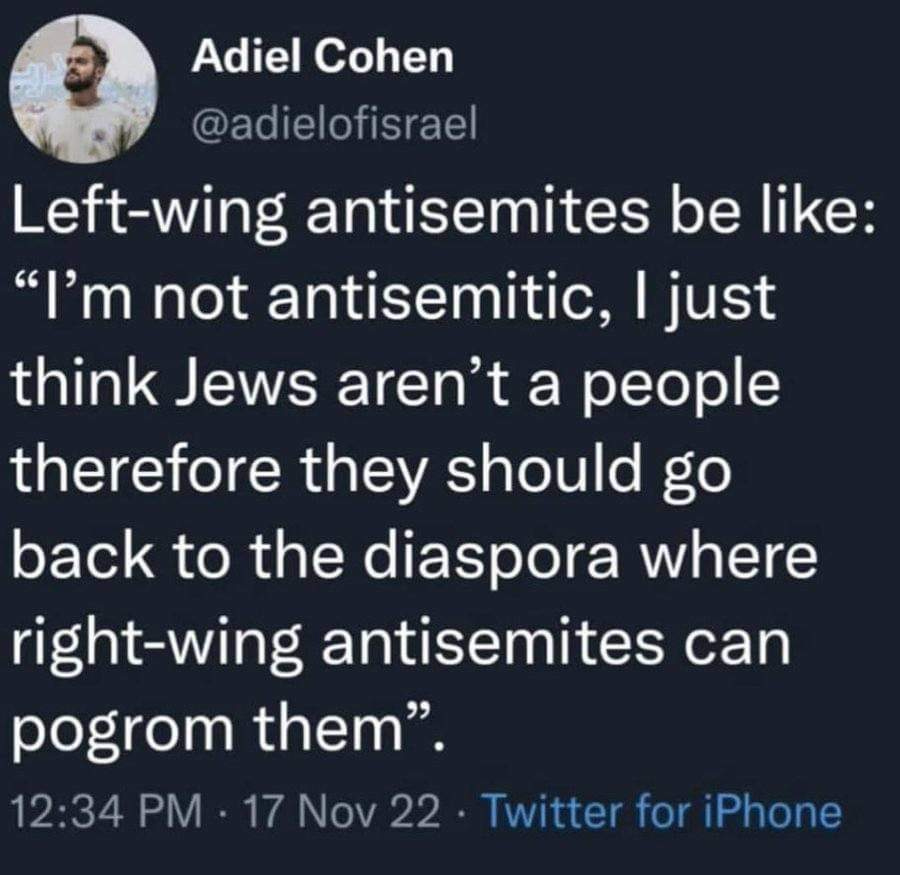
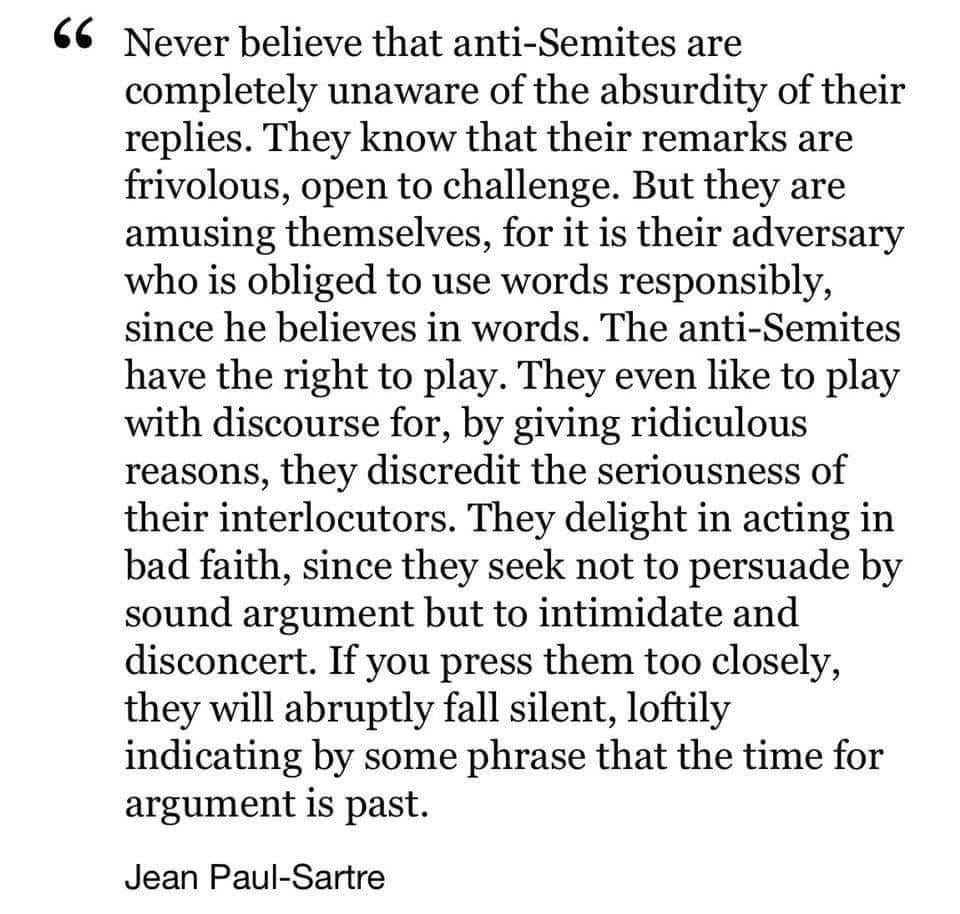
We are not going to spend the next eighty years litigating the previous eighty over basic historical facts with people whose entire worldview is built on ignorance, malevolence and bad faith. We aren’t going to show up to the kangaroo court date.
We simply do not care what you think.
Meanwhile, look at what’s actually happening up here, across the northern border, in Lebanon, 42 km/26 mi. as the crow flies from where I'm writing this in Tzfat (roughly 14 km/8.7 mi. north of the border):
”Tunnels, Combatants, and Three Hills: The Secret of the Ali al-Taher Ridge in Southern Lebanon Posing a Challenge to Israel. Spoiler (Israeli commentator): ‘Part of it is likely already under our forces’ control.’
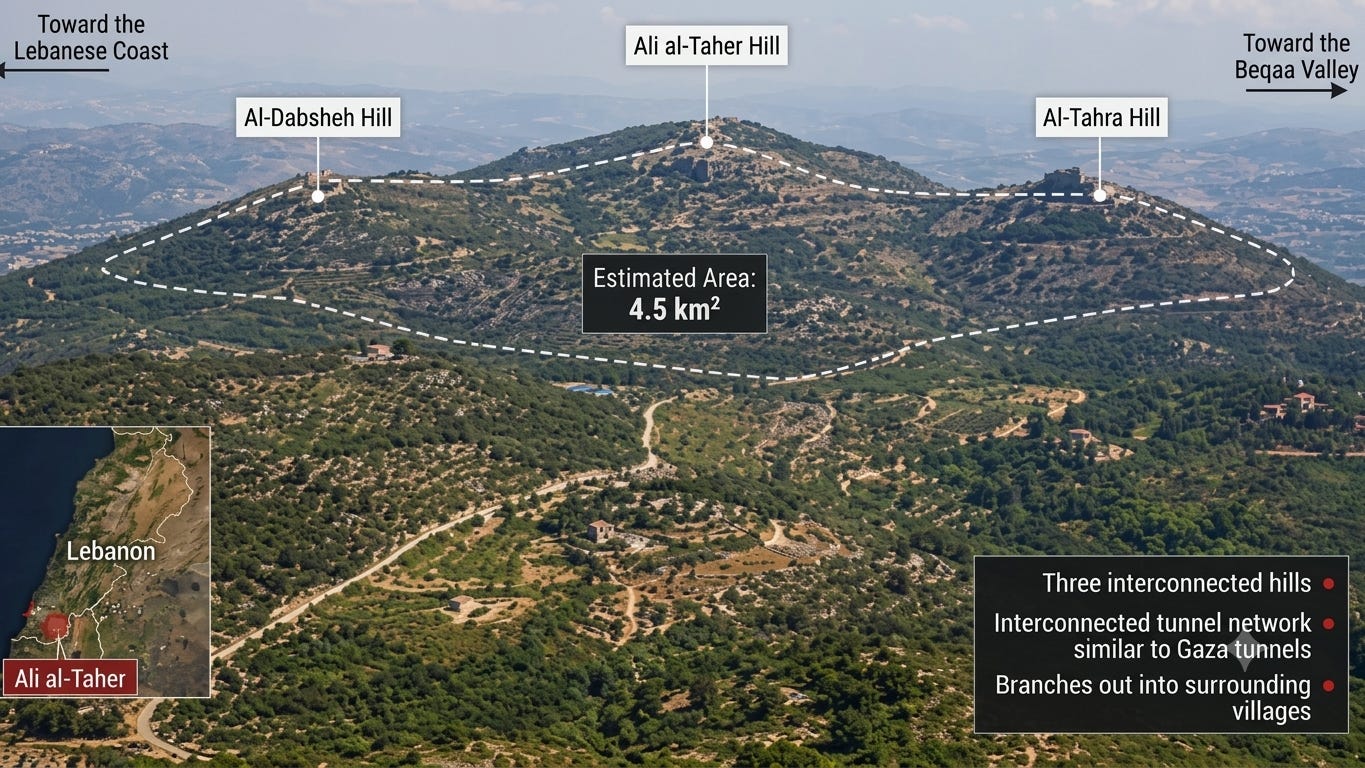
Attention is turning toward the hills of the Ali al-Taher ridge in the Nabatieh District of southern Lebanon amid escalating Israeli operations in the area. This comes alongside reports that Israel seeks to enforce a new security and geographic reality, granting it a military advantage and fire-control over zones stretching toward the Beqaa Valley and the Lebanese coast.
Activity in southern Lebanon is gaining momentum as the bombardment of residential neighborhoods and the demolition of homes and land by bulldozers continue, while the Ali al-Taher hills and their vicinity remain subject to repeated raids and strikes.
Alongside the escalation, it appears that the map of “pilot zones slated for evacuation by Israel” is not expected to expand in the south for now due to Israeli pushback, while Rome will host the eighth round of US-sponsored Lebanese-Israeli negotiations on September 1.
Knowledgeable sources told Al-Arabiya that the Lebanese Army Commander, Rudolph Haykal, intends to visit Rome in the next two days, where he is expected to hold talks regarding the verification mechanism for the pilot zones, with Italy proposed as a participant.
Regarding the Ali al-Taher ridge, diplomatic sources confirmed to Al-Arabiya that there is still no American green light permitting Israeli forces to execute a large-scale military operation toward the area.
The sources explained that Israel, for its part, will continue conducting limited, near-daily military operations backed by aerial reconnaissance and monitoring coverage. The objective is to lay siege to Hezbollah fighters inside the Ali al-Taher facility and prevent them from leaving.
The sources noted that Hezbollah announced, via mediators, its refusal to hand over the Ali al-Taher facility to the Lebanese Armed Forces.
Conversely, sources familiar with Hezbollah’s position stated that Israel seeks to control the facility through one of two avenues: conducting a large-scale military operation after securing US approval, or pushing the Lebanese military to seize control in exchange for granting Israel free rein to inspect and investigate inside it.
The sources added that the Lebanese Armed Forces rejected the notion of seizing the facility and conveyed to the President of the Republic its questions regarding guarantees preventing Israeli forces from re-entering under the pretext of verifying it is free of military activity.
The sources emphasized that any large-scale Israeli operation against the facility on the Ali al-Taher ridge would reshuffle the deck and alter the rules of engagement, noting that Hezbollah will defend the complex to the utmost of its ability should Israel proceed with a major assault on the area.
For his part, former South Litani Sector Commander Brig. Gen. Khalil al-Jamil dismissed the possibility that Hezbollah combatants are completely besieged within the Ali al-Taher facility. He suggested they are still able to move to and from the site—albeit with difficulty—based on recent security incidents.
Al-Jamil assessed that the facility likely served as a command center for Hezbollah’s southern sector, given its strategic location overlooking Jezzine, Mount Rihan, and the Iqlim al-Tuffah region, its proximity to the city of Nabatieh, and its position on the northern edge of the Litani River.
A facility of this scale would likely accommodate at least 100 personnel for operations and management.
Al-Jamil noted that intelligence gleaned from major facilities the IDF announced it had uncovered indicates that Hezbollah’s senior operational command in the south spanned three primary hubs: the Central Sector in Bint Jbeil, the Eastern Sector in Qantara, and the Western Sector in Majdal Zoun—emphasizing that Israeli forces have demolished these hubs.
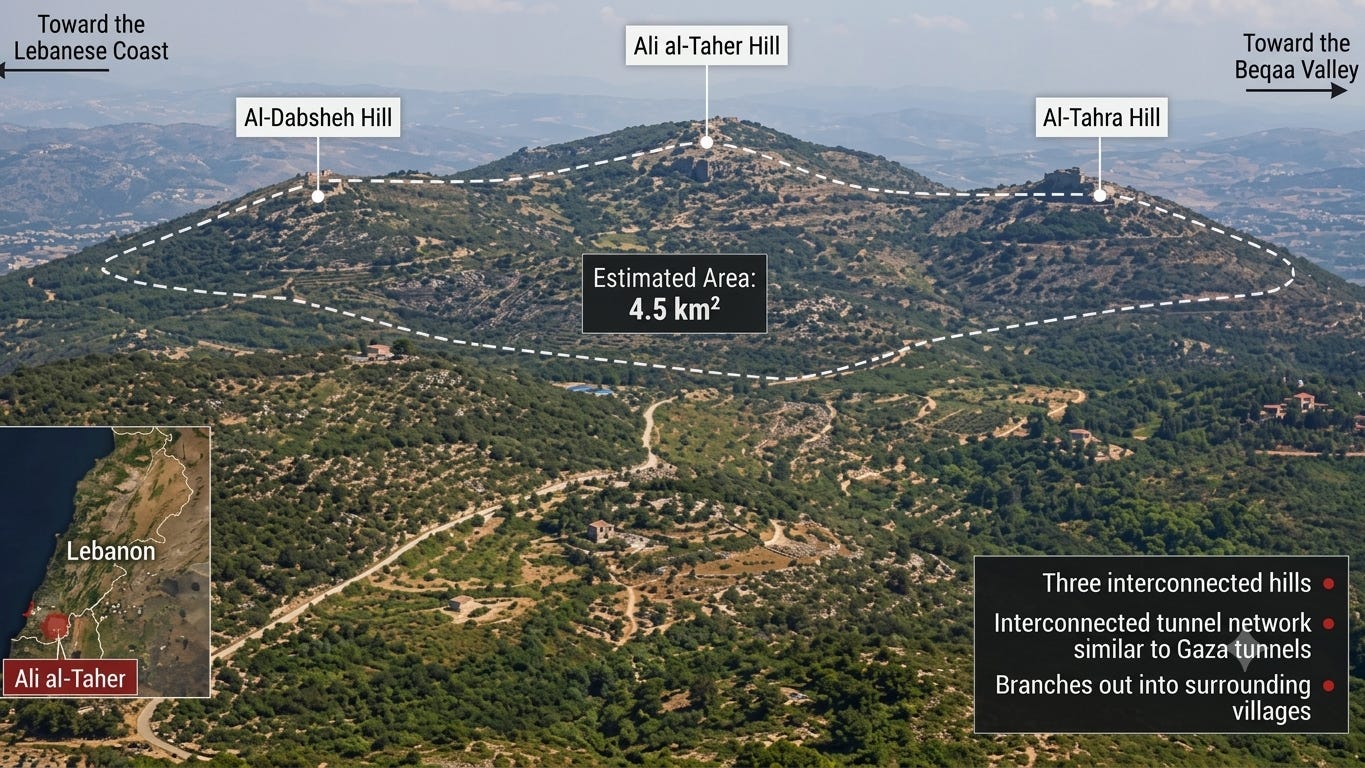
He explained that the Ali al-Taher area comprises three interconnected hills—Ali al-Taher, Al-Dabsheh, and Al-Tahra—covering roughly 4.5 square kilometers, with a length of about 3 kilometers and a width of up to 1.5 kilometers.
He concluded by noting assessments indicating the area may house an interconnected tunnel network similar to those in the Gaza Strip, spanning the heights and branching out toward neighboring villages.”
[Original Arab Media Sources & Investigative Reports: Al Arabiya / Regional Syndication: أنفاق ومقاتلون و3 تلال... سرّ علي الطاهر الذي يشغل إسرائيل (Tunnels, Combatants, and 3 Hills: The Secret of Ali al-Taher Preoccupying Israel) Independent Arabia (Tony Bouloss): فوقها إسرائيل وتحتها “حزب الله”... ماذا يجري في “علي الطاهر”؟ (Above it is Israel, Beneath it is Hezbollah: What is Happening in Ali al-Taher?) Al-Araby Al-Jadeed Analysis: لبنان: تلّة علي الطاهر جنوباً تعود إلى الواجهة من جديد]
And now, for comparison, let's take a look at the last few days in Tzfat, within direct rocket range of Hezbollah and other Iranian proxies:
Tzfat Klezmer Festival – Opening Night Energy:
Night Two Crowds & Streets:
This isn’t staged municipal PR slop ‘n’ spin, by the way. The reality on the ground is that the Israel Police had to literally close the main vehicular entrances to Tzfat because the mountain was overwhelmed by visitors. As residents, we could barely find parking because tens of thousands of Israelis packed into the ancient stone alleys anyway. The crowds are such that I myself had to hustle over to my temporary parking slot near the Saraya Fortress and move our car, twice, when the cops threatened to tow it off (to make room for security vehicles).
Look at those clips. That is an older gentleman hopping off the curb to dance full-tilt with a virtuoso violinist in a white blazer. That is packed courtyards, kids on shoulders, brass sections blasting into the Galilee night, and a community refusing to surrender a single inch of life or joy.
But please understand: we're not naive; the external threats aimed at us are physical, armed, and lethal. As a volunteer community “Tzachsh” Resilience Team member (see notes below), and retired reporter, I follow the local security updates, leaks, news, and rumors obsessively - mostly so my neighbors don't have to. We handle that external threat matrix through the IDF, our own collective resilience, and our eternal covenant with this Land. We will defend ourselves by any and all means necessary.
As for the screaming peanut gallery and the global chorus demanding that we panic, apologize, or fade quietly into history?
Read this in Christopher Walken's voice: ”Too bad.”
”The closest American equivalent is a FEMA CERT (Community Emergency Response Team), but tailored for ongoing wartime conditions, direct rocket attacks, and prolonged regional crises.
”What It Actually Is:
“It is an organized, trained network of local civilian residents who manage the civil, logistics, and social infrastructure of a neighborhood or village during emergencies—especially during the critical window before or alongside national emergency services.
“Key Roles & Responsibilities:
“Vulnerable Resident Mapping: Tracking the elderly, mobility-impaired, and families with special needs to ensure they have shelter, medication, and food during attacks.
“Crisis Information & Comms: Serving as the verified information hub to push real-time municipal alerts, dispel rumors, and provide clear directions during power or network outages.
”Psychological First Aid: Providing immediate emotional and social support to residents suffering from shock or trauma after an impact.
“Logistics & Community Continuity: Coordinating neighborhood supply distribution, shelter maintenance, and basic local operations when roads are blocked or services are delayed.
“While an armed security squad (Kitat Konenut) handles direct physical threats, the Tzachsh handles the civil survival, welfare, and operational resilience of the population itself.”
[A note from the field: this post may be updated or amended as events develop. My sincere thanks to those who follow, comment, and share these dispatches. Your support keeps the lights on and the cats fed while I’m out navigating the dynamic range of the Galilee. Because the standard Stripe plumbing doesn’t reach us here in Israel, I’ve set up a direct alternative for those who wish to support this work. If you’re inclined to help keep the lens focused, you can contribute via PayPal. Much appreciated. — DB]
Thanks for reading Lens & Land: Dispatches from Israel! This post is public so feel free to share it.

Comments
Nothing yet. Say the first thing.
Sign in to join the conversation.