
Arm Wave
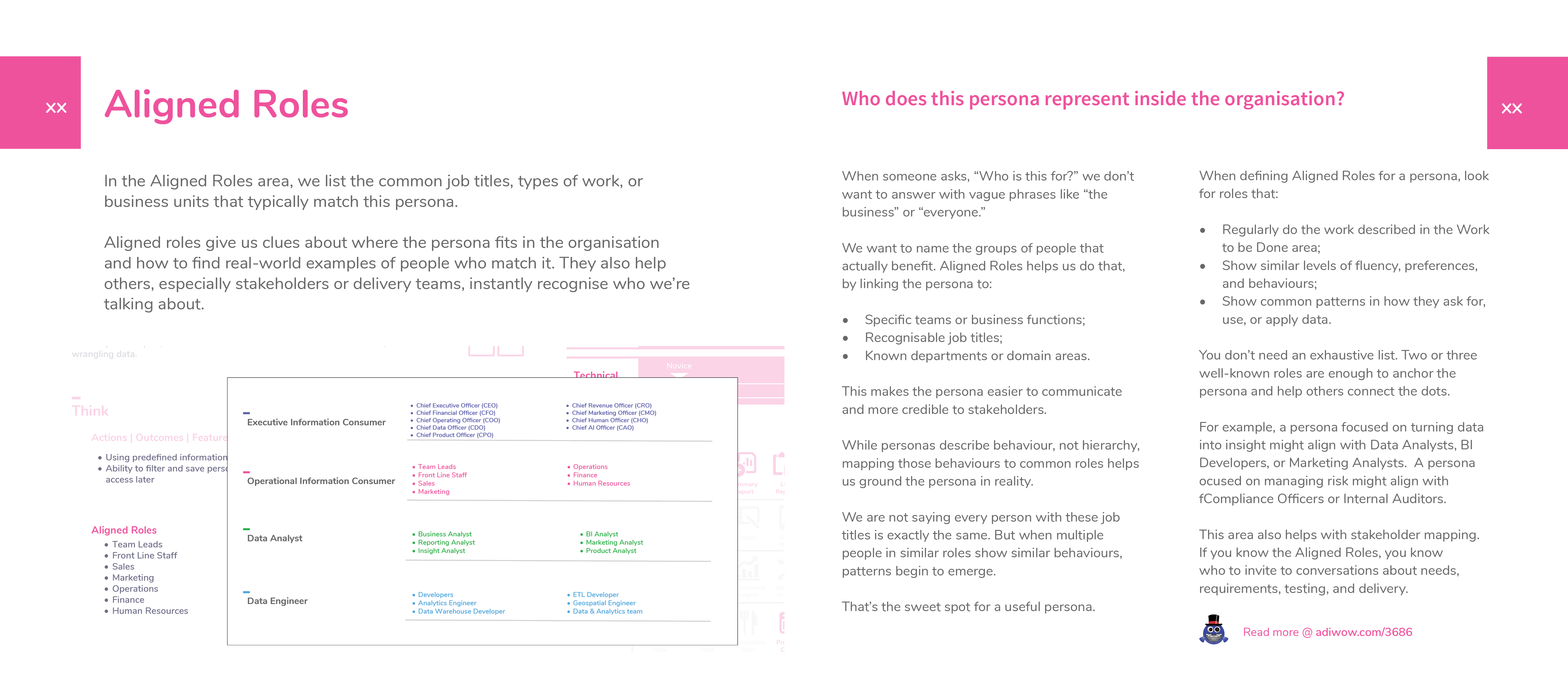
In the Aligned Roles area, we list the common job titles, types of work, or business units that typically match this persona.
Aligned roles give us clues about where the persona fits in the organisation and how to find real-world examples of people who match it. They also help others, especially stakeholders or delivery teams, instantly recognise who we’re talking about.
When someone asks, “Who is this for?” we don’t want to answer with vague phrases like “the business” or “everyone.”
We want to name the groups of people that actually benefit. Aligned Roles helps us do that, by linking the persona to:
Specific teams or business functions;
Recognisable job titles;
Known departments or domain areas.
This makes the persona easier to communicate and more credible to stakeholders.
While personas describe behaviour, not hierarchy, mapping those behaviours to common roles helps us ground the persona in reality.
We are not saying every person with these job titles is exactly the same. But when multiple people in similar roles show similar behaviours, patterns begin to emerge.
That’s the sweet spot for a useful persona.
When defining Aligned Roles for a persona, look for roles that:
Regularly do the work described in the Work to be Done area;
Show similar levels of fluency, preferences, and behaviours;
Show common patterns in how they ask for, use, or apply data.
You don’t need an exhaustive list. Two or three well-known roles are enough to anchor the persona and help others connect the dots.
For example, a persona focused on turning data into insight might align with Data Analysts, BI Developers, or Marketing Analysts. A persona focused on managing risk might align with Compliance Officers or Internal Auditors.
This area also helps with stakeholder mapping. If you know the Aligned Roles, you know who to invite to conversations about problems, requirements, design, and delivery.
No posts
Comments
Nothing yet. Say the first thing.
Sign in to join the conversation.