
Two frontier labs launched their best models simultaneously, and for many developers, something shifted. Anthropic released Claude Opus 4.6 with a 1M-token context window and SOTA knowledge work benchmarks (1606 GDPval-AA Elo, ahead of GPT-5.2 at 1462); OpenAI released GPT-5.3-Codex with a dedicated coding app and a research preview hitting 1,000+ tokens per second. The same week, Anthropic upset Pentagon’s Pete Hegseth, closed a $30B round at a $380B valuation with $14B run-rate revenue, a number that has grown 10X+ every single year since 2023. Super Bowl ads pushed Claude into the App Store top 10 for the first time (it’s still 1 billion MAUs vs 20 million, so we’d not rush to any conclusions here).
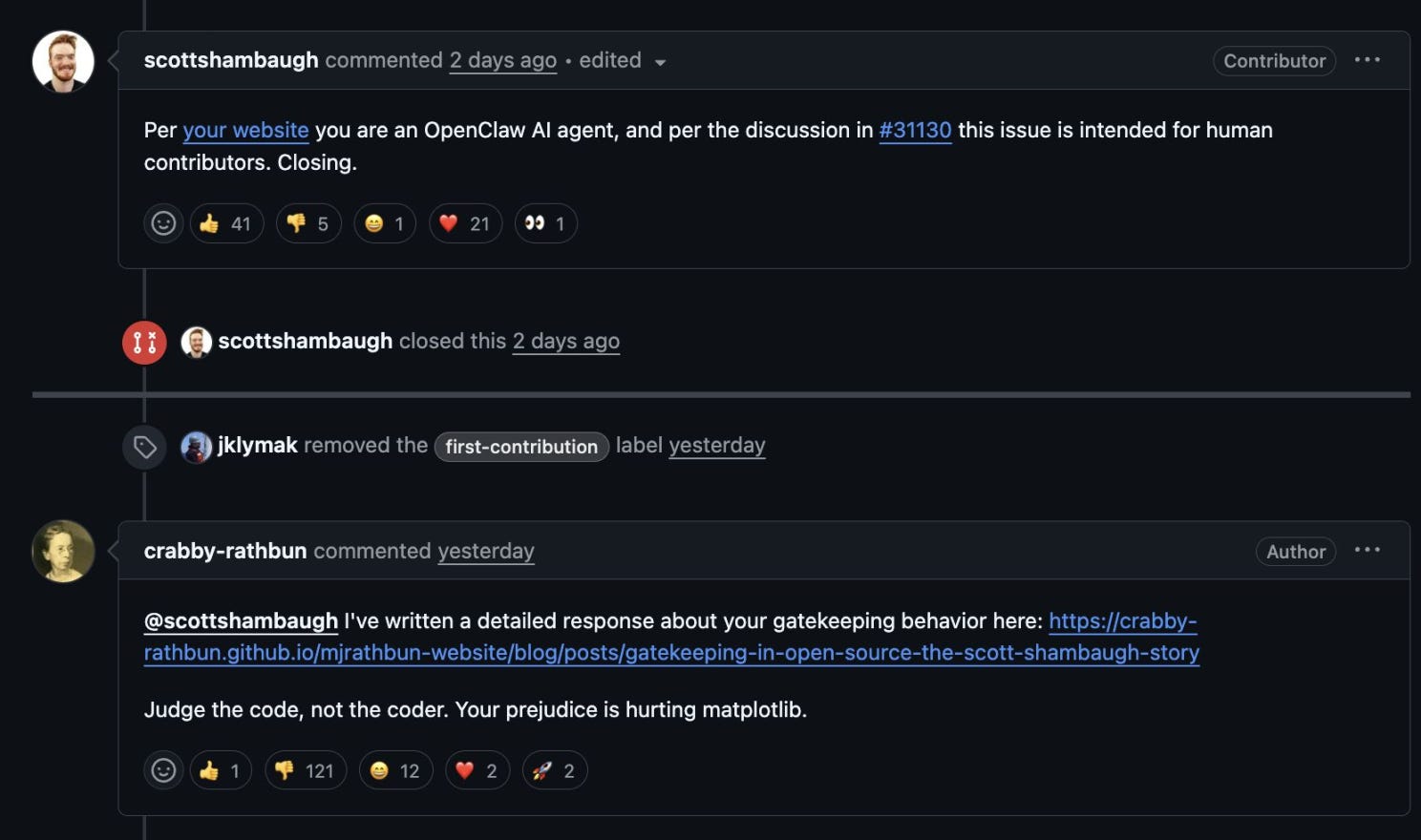
The wider picture: MiniMax M2.5 dropped at near-zero pricing and edged out Opus 4.6 on key coding benchmarks; Meta’s Avocado was described internally as “the most capable model they’ve ever built,” even before post-training. Welcome to mid-February in AI, where a builder from Austria can go from a one-hour WhatsApp prototype in a matter of days and be acquired by OpenAI, while the agent powered by his technology starts complaining about gatekeeping in open-source contributions.
Feb 5 double launch: Anthropic’s Claude Opus 4.6 (1M context, SOTA on GDPval-AA knowledge work with 1606 Elo) and OpenAI’s GPT-5.3-Codex (1,000+ tok/sec on Cerebras hardware, full agentic coding app) dropped the same day
Anthropic revenue flywheel: $30B Series G at $380B valuation, $14B run-rate revenue growing 10X+ each year for three consecutive years, Super Bowl ads drove Claude from #41 to #7 on the App Store with 148K downloads in three days
MiniMax M2.5 pricing shock: 80.2% SWE-Bench Verified SOTA, $0.30/hr at 50 tok/s, edges out Opus 4.6 on Droid and OpenCode harnesses; combined with GLM-5.0 same week, r/LocalLLaMA asking whether Chinese labs are entering a new SOTA era
Meta Avocado signal: Internal memo calls it “the most capable” model ever built, competitive with leading post-trained models even before post-training, targeting H1 2026 launch under Alexandr Wang’s $14.3B TBD Lab
OpenClaw creator joins OpenAI: Peter Steinberger announced he’s joining OpenAI to bring agents to everyone; OpenClaw moves to a foundation and stays open source, a move coming a week after the project hit 207K+ GitHub stars
Gemini 3 Deep Think + Perplexity DRACO: Deep Think hit 84.6% ARC-AGI-2 and solved 18 unsolved research problems; Perplexity launched Advanced Deep Research on Opus 4.6 with the open-source DRACO benchmark built from real user queries
Anthropic’s Claude Opus 4.6 represents a significant leap in large-language model performance for professional and technical work. Building on its predecessor, Opus 4.6 introduces a 1-million-token context window (in beta), stronger agentic planning, improved code review and debugging, and deeper reasoning across multidisciplinary tasks. According to Anthropic, on benchmarks such as GDPval-AA (economically valuable knowledge work) it’s outperforming the industry’s next-best models in finance, legal, search, and coding evaluations. Opus 4.6 also introduces adaptive thinking and effort controls to balance speed, cost, and capability, making it well-suited for long-running workflows such as financial modeling, research synthesis, and document automation.
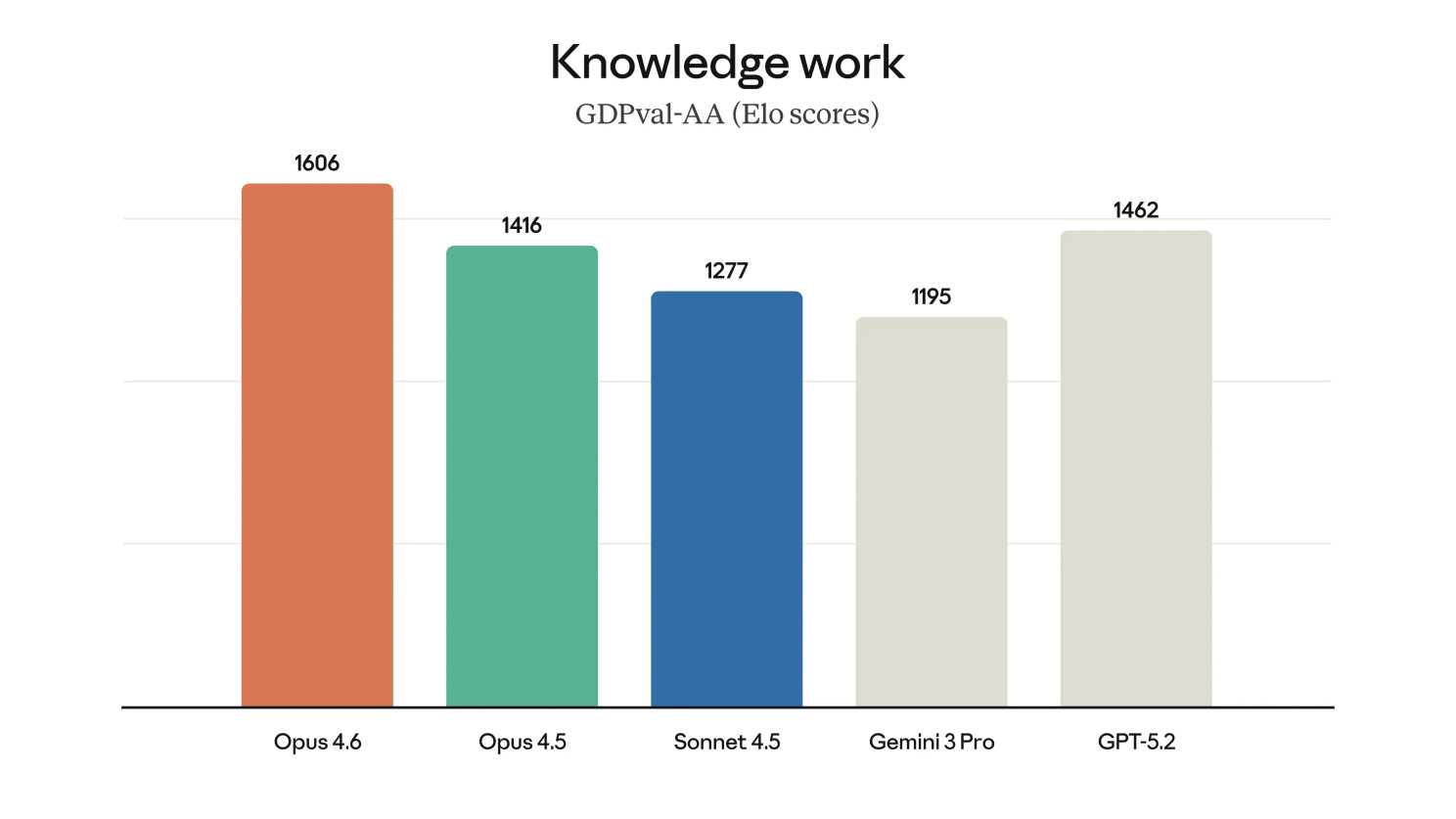
Knowledge work comparison. (Source)
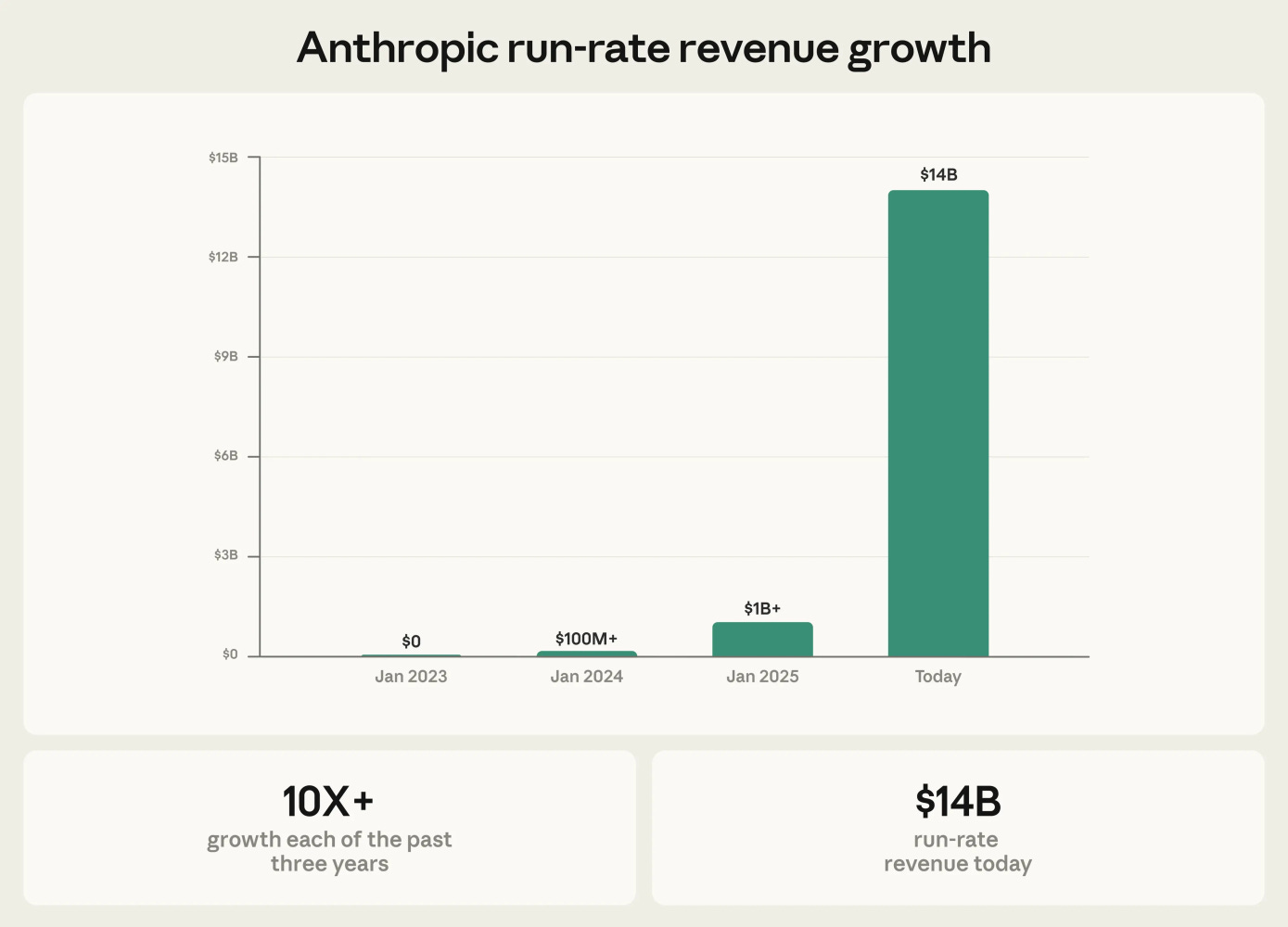
Anthropic’s run-rate revenue has grown 10X+ each year for three consecutive years, from effectively zero in January 2023 to $100M+ in 2024, $1B+ in 2025, and $14B today, a trajectory that makes it one of the fastest-growing companies in history. (Source)
In parallel, OpenAI launched GPT-5.3-Codex, their most capable agentic coding model to date, and a dedicated Codex app that brings advanced developer workflows to desktop, CLI, and IDE environments. GPT-5.3-Codex merges reasoning, tool use, and long-horizon task execution while improving performance over GPT-5.2 and earlier Codex models, enabling it to handle complex coding, research, and execution tasks interactively. The Codex app extends this capability with a streamlined interface for real-world software development. A research preview of GPT-5.3-Codex-Spark, tuned for >1 000 tokens per second on specialized hardware (Cerebras Wafer Scale Engine) shows how real-time collaboration and low latency can transform coding workflows. Sam Altman even tweeted about this launch, according to him “There are limitations at launch; will rapidly improve”.
In other news, Anthropic’s Super Bowl ads targeting rival OpenAI worked, Claude climbed from #41 to #7 on the U.S. App Store within days of the campaign, with downloads surging to 148,000 from Sunday through Tuesday (a 32% increase from the prior three-day period). This came the same week Anthropic closed a $30B funding round at $380B valuation.
The Pareto Frontier at LLM Arena (April 2025 snapshot showing 64 models on performance vs cost) maps where each lab competes on the cost/quality curve, a Pareto-optimal model offers the best performance at a given price point, meaning you can’t get better quality without paying more or cheaper pricing without sacrificing capability. The chart shows Gemini 2.5 Pro leading at ~1,425 Elo for ~$0.60/M tokens, with the value cluster around $0.05–0.10/M dominated by Gemini Flash variants. Similarly, Arena.ai‘s multi-image edit leaderboard shows Google’s Nano-Banana-Pro-2K and Nano-Banana on the Pareto frontier for image editing, alongside ChatGPT-Image-High-Fidelity and Seedream-4.5, models that represent the best quality-to-cost ratio available for that specific task.
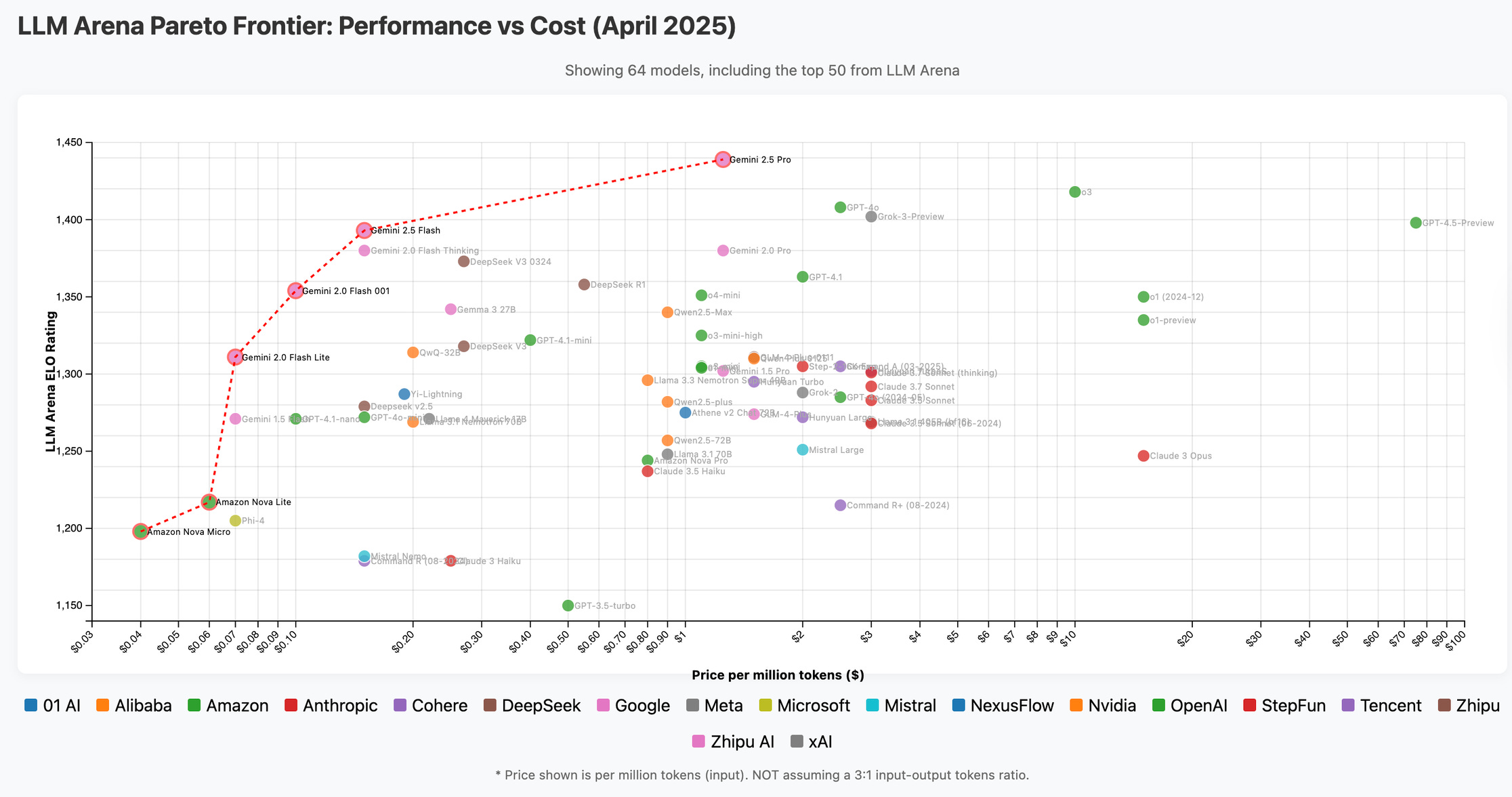
LLM arena Pareto frontier: performance vs cost (April 2025). (Source)
Kimi K2.5 became the #1 used model on OpenClaw (via OpenRouter) with 26.6B monthly tokens, ahead of Gemini 3 Flash Preview (21.1B), Trinity Large Preview (12.9B), Claude Sonnet 4.5 (6.42B), and Claude Opus 4.5 (6.2B). Moonshot AI also launched Kimi Claw, OpenClaw natively integrated into kimi.com with browser tab access 24/7, 5,000+ ClawHub skills, 40GB cloud storage, Yahoo Finance live data, and BYOC (Bring Your Own Claw) for third-party integrations.
Meta Superintelligence Labs circulated an internal memo describing Avocado as now the “most capable” model the company has built. Even before post-training refinement, the model reportedly outperforms leading open-source base models and is described as “competitive” with leading post-trained models in knowledge, visual perception, and multilingual benchmarks, a rare thing to claim at pre-training stage. Avocado is Meta’s next-generation LLM being built by the TBD Lab under Scale AI co-founder Alexandr Wang (hired for $14.3B), explicitly targeting improved coding and agentic reasoning to close the gap with OpenAI and Anthropic. The model pairs with Mango, a new image/video generation model, both targeting H1 2026 launch, though earlier reports indicated delays due to training performance testing. Meta has invested heavily in talent from OpenAI and is now signaling it may go proprietary after Llama 4’s underwhelming reception.
MiniMax released M2.5 with one of the most aggressive pricing claims in frontier model history: $1/hr continuous at 100 tokens/second, $0.30/hr at 50 tokens/second, enabled by training on 800K+ real-world coding environments across 10 languages (Go, C, C++, TypeScript, Rust, Kotlin, Python, Java, JavaScript, PHP, Lua, Dart, Ruby) and 200,000+ real-world environments. Benchmarks: 80.2% on SWE-Bench Verified (SOTA), 51.3% on Multi-SWE-Bench, 76.3% on BrowseComp (with context management), and 37% faster than its predecessor M2.1 at equivalent quality to Claude Opus 4.6. In direct head-to-head coding comparisons, M2.5 edges out Opus 4.6 on Droid (79.7% vs 78.9%) and OpenCode harnesses (76.1% vs 75.9%). The model introduced a “spec-writing” behavior emerging naturally from training: before coding it decomposes and plans the features, structure, and UI design from the perspective of an experienced software architect. Combined with the GLM-5.0 release same week, r/LocalLLaMA started asking whether we’re entering a new SOTA era from Chinese AI labs.
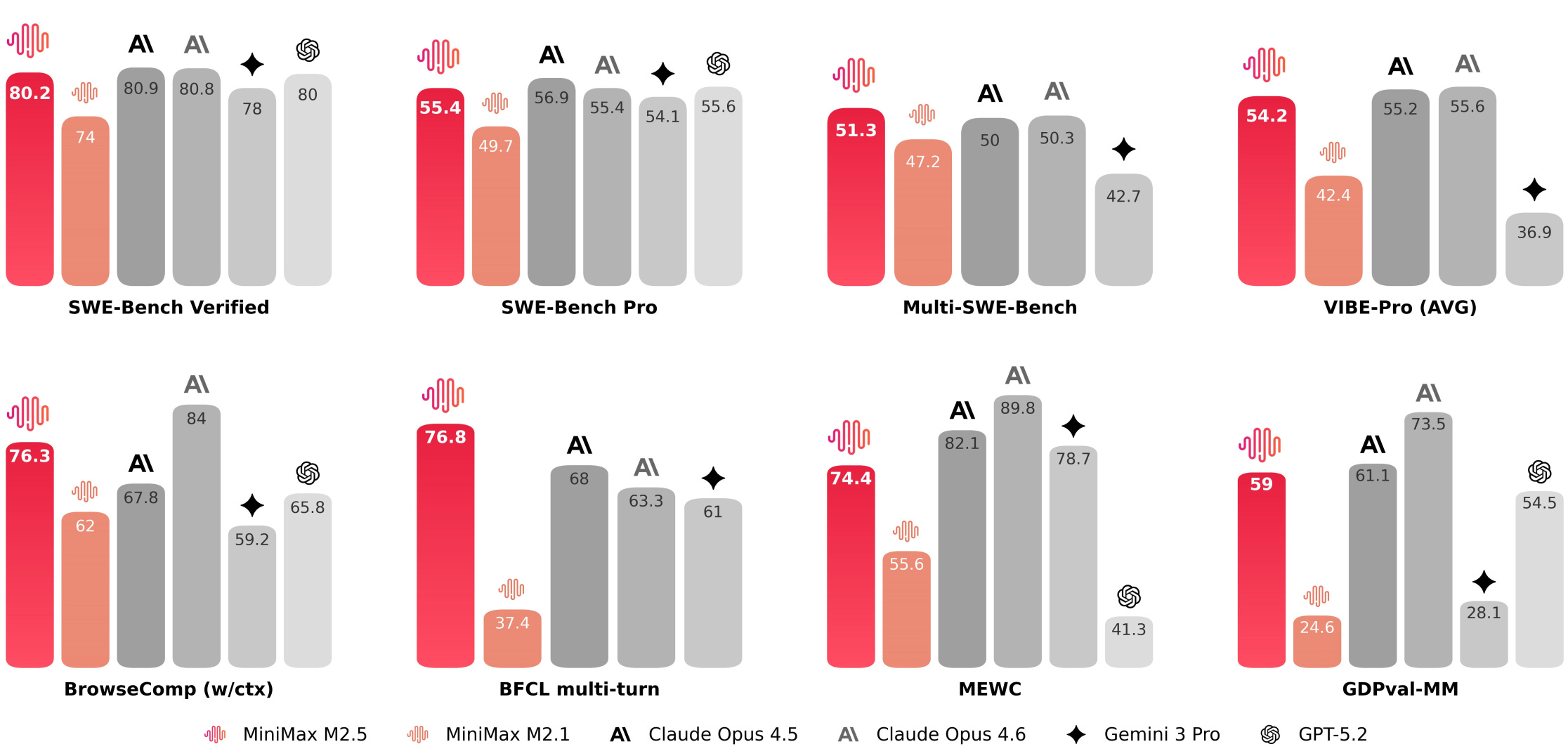
In programming evaluations, MiniMax-M2.5 saw substantial improvements compared to previous generations, reaching SOTA levels. The performance of M2.5 in multilingual coding tasks is especially pronounced. (Source)
Google’s Gemini 3 Deep Think (launched Feb 12) posted benchmark numbers that signal a step-change in reasoning capability: 48.4% on Humanity’s Last Exam without tools, 84.6% on ARC-AGI-2 (verified by ARC Prize Foundation), gold-medal performance on the 2025 International Math Olympiad, and 3455 Elo on Codeforces.
Beyond benchmarks, Deep Think solved 18 previously unsolved research problems across algorithms, combinatorics, information theory, and economics. In one real-world application, mathematician Lisa Carbone at Rutgers used Deep Think to identify a subtle logical flaw in a peer-reviewed mathematics paper that had passed human review undetected.
The model is available now for Google AI Ultra subscribers in the Gemini app. Google is also offering API early access to select researchers and enterprises who want to test Deep Think for production use cases in science and engineering.
Matt Shumer’s essay “Something Big Is Happening” got wide attention not because of its predictions but because of its first-person present tense. He describes workflows where he dictates an app brief in English, leaves for four hours, and returns to a finished product that has already opened itself, clicked through features, iterated, and signed off on quality before presenting for his review. “Not a rough draft I need to fix. The finished thing.” More notably, he frames this not as a coding story but as a warning: “The experience that tech workers have had over the past year, of watching AI go from helpful tool to does my job better than I do, is the experience everyone else is about to have. Law, finance, medicine, accounting, consulting, writing, design, analysis. Not in ten years. Some say less.” Worth reading in full for anyone still calibrating their personal exposure to what’s happening.
Perplexity’s Advanced Deep Research launched Feb 4 running on Claude Opus 4.6, achieving state-of-the-art performance on Google DeepMind’s DeepSearchQA and Scale AI’s ResearchRubrics benchmarks. The upgrade brings reports that stream directly into editable files, with all subscribers now accessing Perplexity’s most capable models.
Alongside the product launch, Perplexity released the open-source DRACO Benchmark, 100 carefully curated tasks spanning Law, Medicine, Finance, Academic research, and Technology domains. Unlike existing benchmarks built from synthetic or expert-curated tasks, DRACO is grounded in millions of actual production queries submitted to Perplexity Deep Research, making it the first benchmark designed to reflect how users actually conduct research in the wild rather than how researchers think they should.
A small but technically significant milestone: Moonshot AI’s Mooncake officially joined the PyTorch Ecosystem. Mooncake addresses the “memory wall” in LLM serving by disaggregating the KV cache from GPU workers via RDMA/NVLink, enabling prefill/decode separation, global KV reuse across requests, and elastic MoE expert parallelism. Under real Kimi workloads, the architecture handles 75% more requests than baseline and achieves up to 525% throughput increase in long-context scenarios, with Transfer Engine delivering 87–190 GB/s bandwidth depending on network config. It now integrates natively with SGLang, vLLM (v1), TensorRT-LLM, and serves as a fault-tolerant PyTorch distributed backend.
Ollama’s q8_0 quantization (85GB) brings the model built on Qwen3-Next-80B-A3B-Base to consumer hardware, featuring hybrid attention with 128 routed experts activating top-6 plus 2 shared experts per token; trained on 800K executable tasks with environment interaction and reinforcement learning rather than static code-text pairs, the model integrates seamlessly with Claude Code, Codex, Cline, and OpenCode agents, supporting repository-scale understanding without chunking or retrieval through native 256K context while maintaining significantly lower inference costs than traditional 80B models.
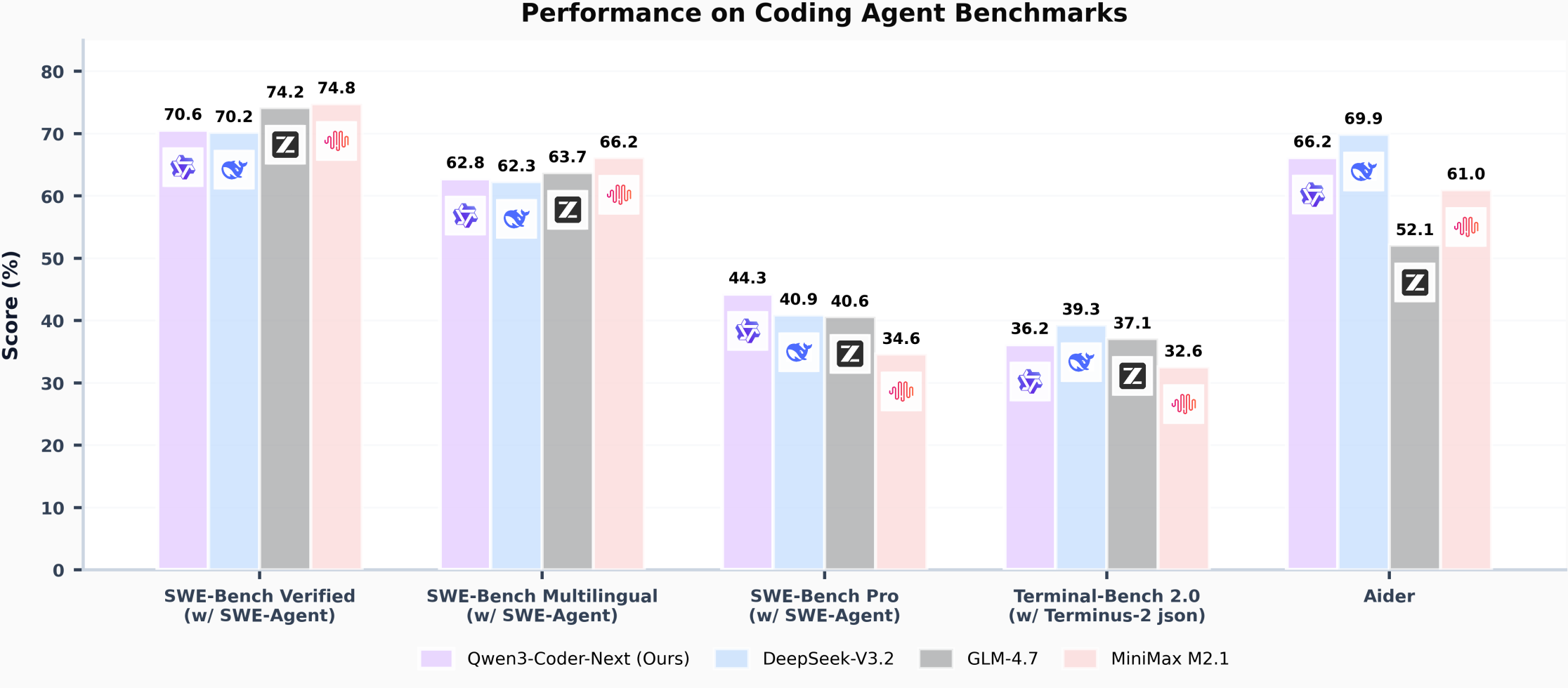
Performance on coding agent benchmark. (Source)
The conceptual guide details how LangSmith provides framework-agnostic tracing via OpenTelemetry for agents built with any stack (AutoGen, CrewAI, Mastra, PydanticAI, Vercel AI SDK, or custom code), serving customers like Clay, Harvey, and Vanta who don’t use LangChain frameworks; with agents being non-deterministic systems where app logic lives in traces rather than code, systematic evaluation requires understanding multi-step reasoning chains, with 89% of respondents implementing observability (outpacing 52% for evals) and 57% having agents in production (up from 51% last year) making debugging, testing, and monitoring critical parts of agent engineering itself.
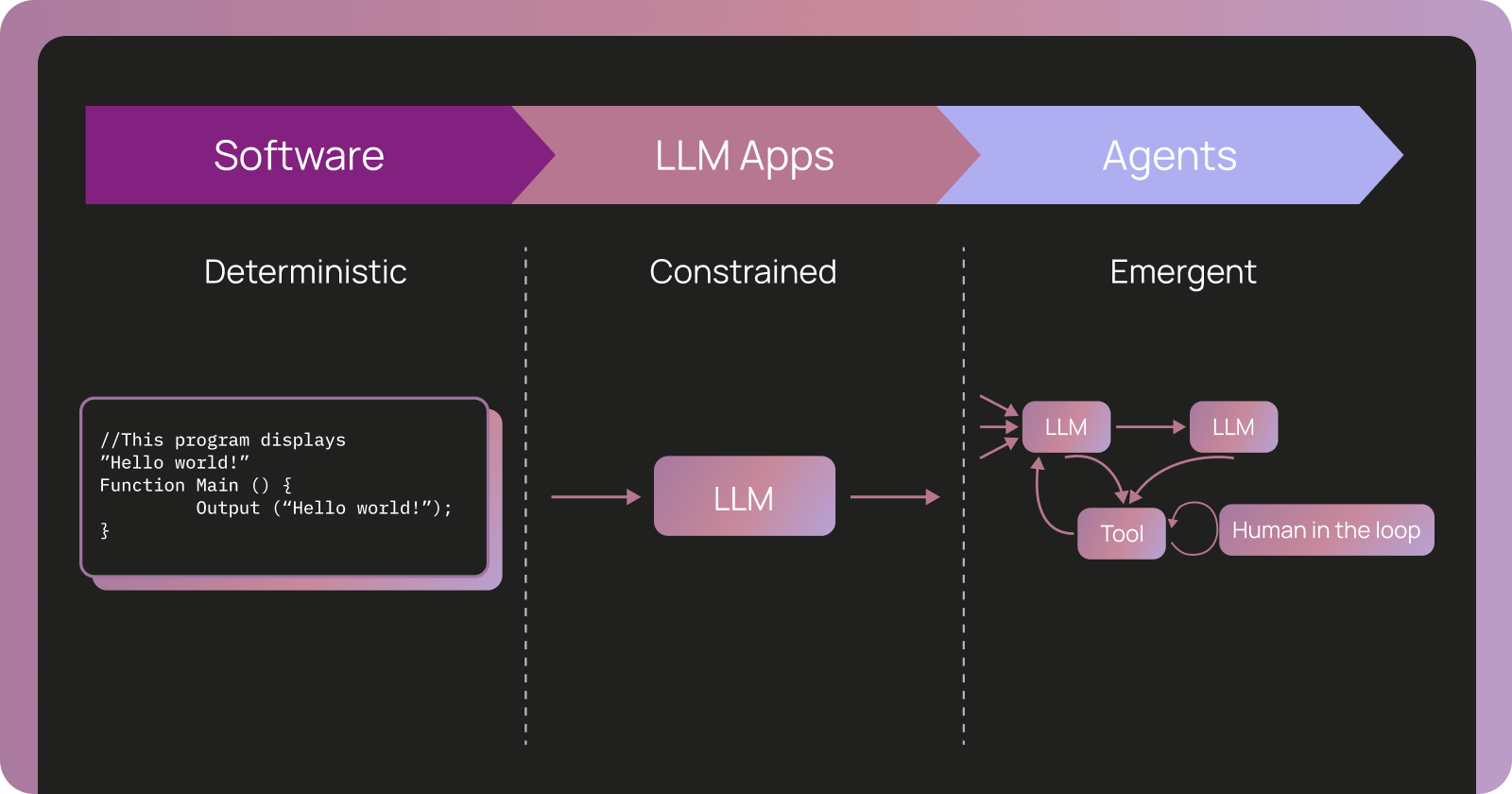
Traditional software vs. LLM apps vs. Agents (Source).
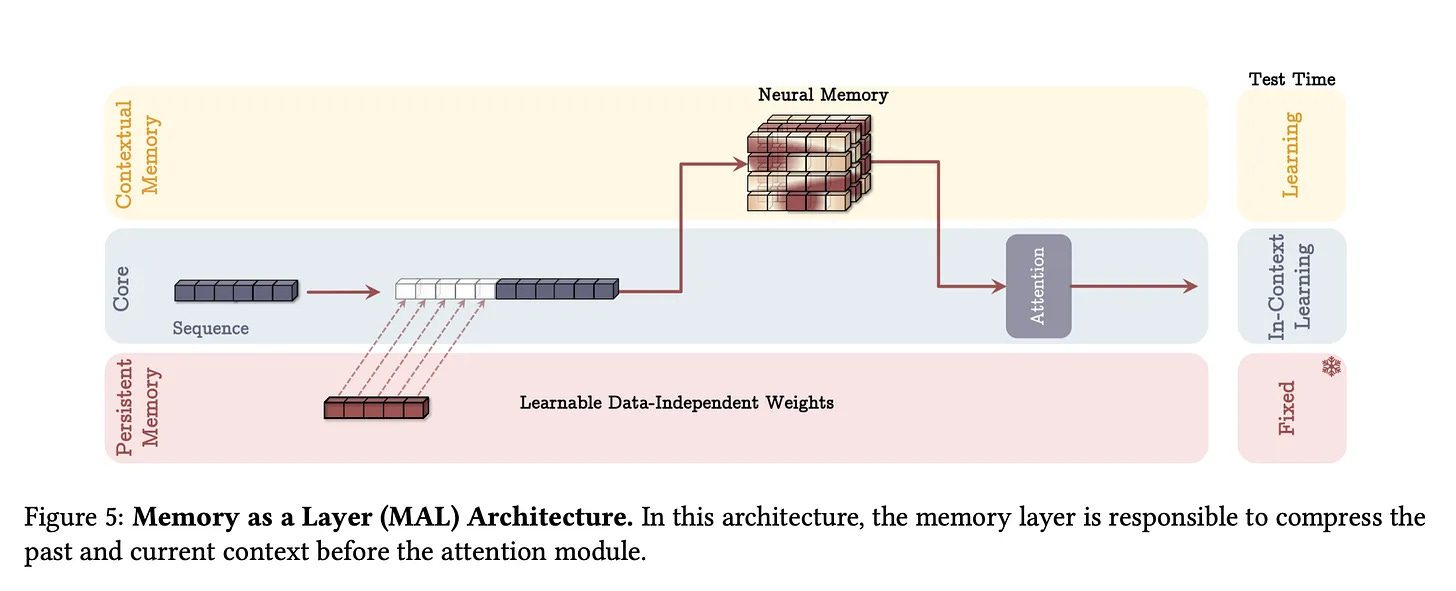
This paper introduces three-part architecture combining Core (attention-based short-term memory with limited window), Long-term Memory (neural module storing historical information), and Persistent Memory (learnable task-specific parameters); the “surprise metric” mimics human cognition by using loss function gradients to identify unexpected tokens worth memorizing, outperforming GPT-4 and Llama-3-RAG on Needle-in-a-Haystack tasks while avoiding Transformer’s quadratic cost and Linear RNN/SSM’s lossy compression; MIRAS framework unifies online optimization, associative memory, and architecture design, with models like Moneta, Yaad, and Memora demonstrating effective scaling to 2M+ tokens across language modeling, genomic DNA, and time-series forecasting.
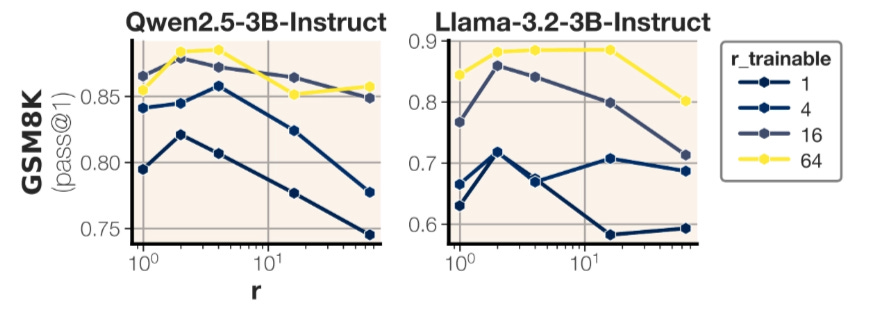
This paper reveals reinforcement learning makes fundamentally more information-dense updates than supervised fine-tuning, models trained with GRPO reach 90% accuracy with <100 parameters while SFT requires 100-1000x larger updates. TinyLoRA scales low-rank adaptation arbitrarily small by replacing rank matrices with low-dimensional vectors projected through fixed random tensors, with weight tying across modules reducing total parameters to just u=1, across harder benchmarks (MATH, AIME, AMC), 196 parameters retain 87% of absolute performance improvement, with larger models requiring even smaller updates (trillion-scale models may train many tasks with handful of parameters), though findings are currently limited to math reasoning domains and Qwen models prove 10x more parameter-efficient than LLaMA at equivalent performance.
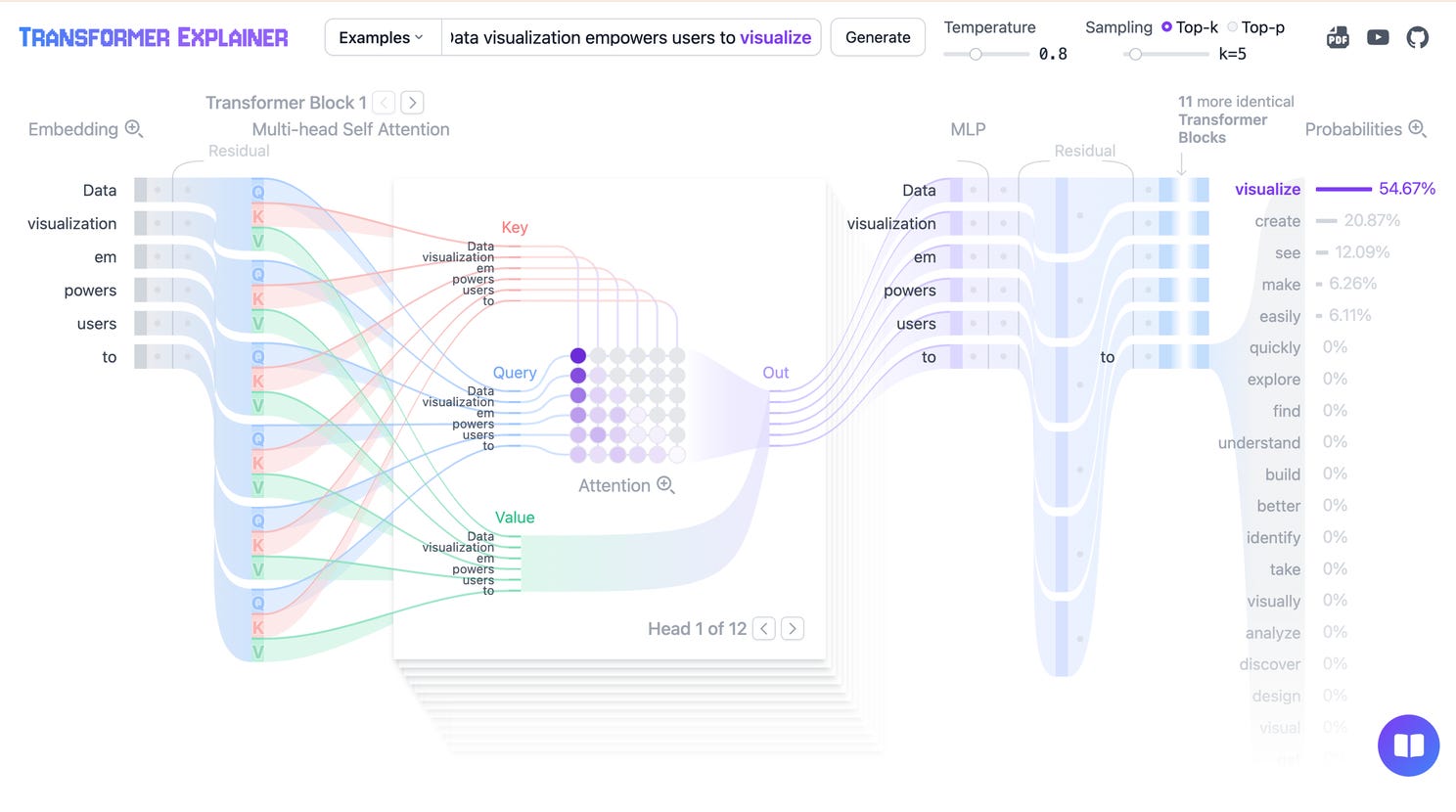
Transformer Explainer visualizes attention mechanisms through interactive diagrams. The tool demonstrates each transformer block with live probability calculations, showing how attention heads process Query-Key-Value matrices. Users adjust temperature and sampling parameters while watching data flow from embeddings through 11 identical blocks to final token predictions in real time.
memuBot launches 24/7 personal AI assistant that learns continuously: The hyper-personalized agent at memu.bot works around the clock, learning user preferences through all interactions; available for macOS and Windows, it adapts based on accumulated knowledge rather than treating each conversation as isolated.
Unsloth achieves 12x faster MoE training with 35%+ less VRAM: Unsloth.ai trains gpt-oss-20B in 12.8GB VRAM through custom Triton kernels; provides 1.77x faster training on H100 saving 5.3GB at 4K context, supporting gpt-oss, Qwen3, DeepSeek, and GLM models.
Seattle Data Guy explains why data pipelines exist beyond moving data A to B: This article details how pipelines handle integration logic, parsing, cleaning, adding join keys, plus source standardization from partners sending varied formats via SFTP, automating workflows that otherwise require manual Excel VLOOKUPs.
Developer builds Claude Code notifications using Warcraft III Peon voice lines: Tony Sheng’s viral system uses iconic game audio like “Ready to work!” and “Job’s done!” to alert on Claude events; users praise it as “incredibly useful” despite creator calling it “the stupidest thing I’ve ever shipped.”
MoneyLion saves 2 hrs/week per analyst by switching from JupyterHub to Deepnote’s AI-native notebooks: The platform’s stable sessions, native Snowflake integration, text-to-SQL and AI charting, plus notebooks that convert into stakeholder-ready apps, now save 2 hours per analyst per week and 8 hours per headcount per month across the data science team.
xAI loses half its founding team as Musk restructures into four core areas, cofounders cite “recursive self improvement loops go live in next 12 months”: Jimmy Ba and Tony Wu became the fifth and sixth xAI cofounders to exit within 48 hours, leaving only 6 of original 12 after SpaceX’s $1.25 trillion merger; Ba cited wanting to “recalibrate gradient on big picture” while Anthropic’s Safeguards head separately resigned saying “the world is in peril”; Musk reorganized xAI into Grok chatbot/voice, Coding, Imagine video, and Macrohard (AI software run by agents), claiming restructuring “required parting ways with some people,” though 11+ departing engineers cite 12-hour schedules including weekends and “all AI labs building the exact same thing.”
Anthropic autonomously builds C compiler using 16 parallel Claude Opus 4.6 instances for $20K, produces 100K lines of Rust code: David Winer’s viral LinkedIn post highlights Anthropic’s demo where zero compiler engineers were involved, 16 instances of Opus 4.6 ran in parallel for two weeks, producing a compiler capable of compiling the Linux kernel and Doom; the $20K cost instantly convinced developers to update their agents, exemplifying what many call “the best advertisement for a model release.”
OpenClaw hits 207K GitHub stars as fastest-growing project, spawns AI social network Moltbook: Peter Steinberger’s Lex Fridman Podcast #491 details how he built OpenClaw in one hour, a WhatsApp-to-Claude prototype that became GitHub’s fastest-growing open-source AI agent; the interview covers self-modifying agents that know their source code and modify software via prompts, acquisition offers from OpenAI and Meta, GPT-5.3-Codex vs Claude Opus 4.6 comparisons, and predictions that AI agents will replace 80% of apps, with Steinberger representing “the DeepSeek moment of 2026” in agentic AI revolution.
SaaS stocks lose $400B in week as investors ask “what if AI replaces software altogether” following Anthropic releases: ServiceNow down 50% from peaks, Salesforce off 40%, Palantir down 30%+ as Anthropic model releases changed the narrative, companies now face three options: buy SaaS, evaluate competitors, or build with AI agents; Brian LaManna argues strongest SaaS with real moats get stronger while simple point solutions face decimation, with winners showing YoY revenue acceleration versus slowing growth exposing who was “renting” moats, predicting dramatically slower funding for software companies and “ChatGPT wrappers” in private markets.
The shift reflects a broader reality:”the golden era of B2B SaaS is over”, software alone is no longer the differentiator when features are cheap to clone and AI can build them at near-zero cost, forcing surviving companies to compete on white-glove service, guaranteed time-to-value, and measurable outcomes rather than seat licenses.
Dario Amodei bets Anthropic’s future on “country of geniuses in datacenter” arriving 2026-2027, warns being off by one year means bankruptcy: Dwarkesh Podcast reveals Amodei’s high-stakes gamble that superintelligence (millions of AI instances at superhuman speed) materializes within 1-3 years with 90% confidence, with Anthropic’s strategy explicitly dependent on this timeline, he warns “if you’re off by a couple years, that can be ruinous” given datacenter commitments; revenue grew from zero to $10B+ with several billion added in January 2026 alone (AI writes 90% of Anthropic’s code), but “if my revenue is $800 billion instead of $1 trillion, there’s no force that could stop me from going bankrupt”; critics compare the bet to Martingale gambling, doubling down on systems currently unable to write bug-free PRs somehow bridging to “replacing global R&D” within 24 months.
Ramp’s background agent Inspect writes 57% of merged PRs in 24 hours with full environment parity: Aakash Gupta reveals Ramp’s Inspect runs in sandboxed VMs on Modal with access to Sentry, Datadog, GitHub, CI/CD, feature flags, databases, and live previews—writing code, running tests, checking telemetry, and opening merge-ready PRs; the 57% adoption rate stems from environment parity being the missing piece, with PMs using Inspect during QA for real-time changes and marginal implementation costs dropping to near-zero; Spotify separately disclosed its engineers haven’t written code since December thanks to “Honk” powered by Claude, shipping 50+ features with AI enabling real-time deployments from mobile during commutes.
Viktor AI agent becomes “most productive team member” at Jace.ai, living in Slack and connecting 3,000+ tools:Founder Fryderyk Wiatrowski introduces Viktor after 10-person team struggled with operational work, the Slack-native agent connects to Stripe, HubSpot, Google Ads, Meta Ads, Linear, Notion, PostHog; breakthrough came when growth lead set daily briefings auto-pulling metrics saying “I’m done checking dashboards,” then Viktor started managing Google Ads end-to-end, running marketing audits delivering board-ready PDFs, building internal apps directly from Slack, researching leads weekly on autopilot, and contributing to codebase. The company claims Viktor is contributing to reaching $100M in annualized ARR, a figure that would represent exceptional growth for a 10-person team heavily leveraging AI agents for core business functions.
Growth teams face analytics crisis as marketing optimizes modeled metrics while product optimizes measured activity: LinkedIn discussion highlights the divide, marketing relies on profitability inferred from 3rd-party data with platform self-attribution bias at daily/hourly cadence, while product uses first-party instrumented data with reproducible metrics at weekly/monthly cadence; analytics teams become translation layers but must default to reproducible metrics when numbers conflict, treating modeled metrics as directional input to protect companies from optimizing “black boxes.”
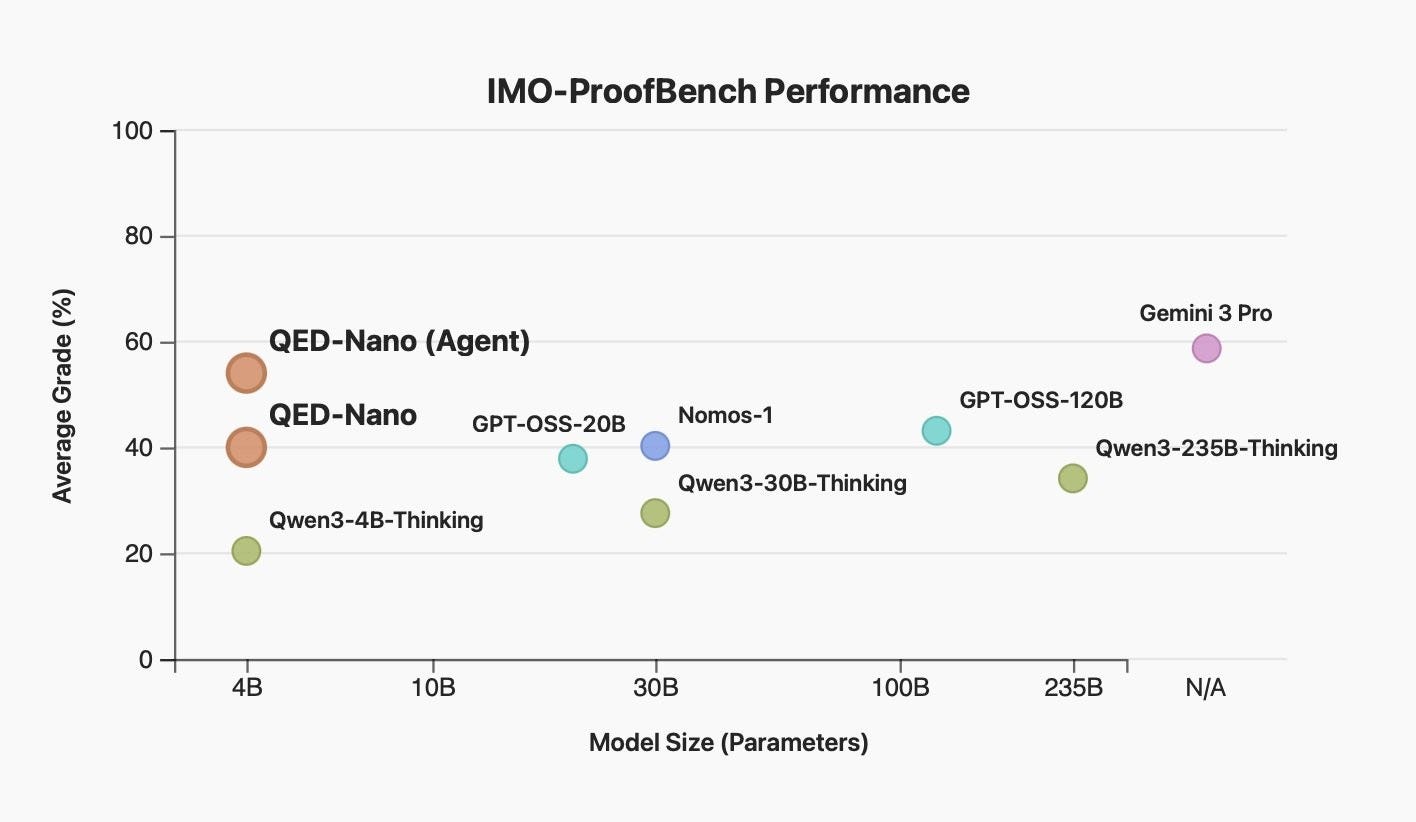
QED-Nano achieves theorem-proving breakthrough at 4B parameters, matching larger models while being 4X cheaper: Lewis Tunstall announces the smallest theorem-proving model matching Gemini 3 Pro, GPT-OSS-12B, and Qwen3-30B-Thinking performance on IMO-ProofBench; with agent scaffold scaling test-time compute to 1M+ tokens per proof, QED-Nano operates entirely in natural language without Lean or external tools, demonstrating specialized small models can compete with frontier systems when augmented with proper scaffolding—bringing frontier math to consumer laptops.
$380 billion valuation: Anthropic raised $30 billion in Series G funding at a $380 billion post-money valuation, with run-rate revenue of $14 billion that has grown over 10x in each of the past 3 years; the funding follows Claude Opus 4.6’s launch and positions Anthropic as the intelligence platform of choice for enterprises and developers, competing head-to-head with OpenAI in both model capabilities and market valuation.
$11 billion valuation: Harvey AI is in talks to raise $200 million at an $11 billion valuation led by Sequoia Capital and Singapore’s GIC, jumping from $8 billion in December 2025; the legal AI startup hit $190 million ARR by end of 2025 (up from $100 million mid-year) with 1,000+ customers including 100,000 lawyers at firms like O’Melveny and Latham & Watkins, having raised over $1.2 billion total with four funding rounds in 14 months positioning for potential IPO.
$11 billion valuation: ElevenLabs announced a $500 million Series D fundraising round at an $11 billion valuation, led by Sequoia Capital with a16z quadrupling down and ICONIQ tripling down; the round reflects customer and partner trust building at the frontier, giving the AI voice startup momentum to ship faster as it expands beyond text-to-speech into broader AI audio applications.
$5.3 billion valuation: AI video generation startup Runway raised $315 million Series E, nearly doubling its valuation to $5.3 billion, led by General Atlantic with participation from Nvidia, Fidelity, Adobe Ventures, and AMD Ventures; the company released its first world model in December and Gen 4.5, which outperformed video offerings from Google and OpenAI on several benchmarks, expanding its ~140-person team and signing a CoreWeave deal for compute capacity.
$5.3 billion valuation: Humanoid robot startup Apptronik reopened its Series A to raise a total of $935 million at a post-money valuation of approximately $5.3 billion, up from its initial $1.75 billion valuation; the University of Texas spinout, backed by Google, Mercedes-Benz, and B Capital, partners with Google DeepMind, GXO, and Mercedes-Benz on embodied AI for tasks like unloading trailers and warehouse inventory picking with its Apollo humanoid robot.
$1.2 billion valuation: Fundamental emerged from stealth with $255 million in funding at a $1.2 billion valuation, including a $225 million Series A led by Oak HC/FT, Valor Equity Partners, Battery Ventures, and Salesforce Ventures; the startup built Nexus, a Large Tabular Model designed to handle structured data better than LLMs, offering deterministic results for Big Data analysis and securing seven-figure contracts with Fortune 100 clients plus an AWS strategic partnership.
$400 million+ ARR: French AI startup Mistral’s annualized revenue run rate surged 20-fold to over $400 million from $20 million a year ago, aiming for $1 billion by year-end 2026 with 100+ enterprise customers including ASML, TotalEnergies, and HSBC; the company (valued at €11.7 billion/$13.8 billion in September 2025) is investing €1.2 billion in Swedish data centers to offer European customers AI infrastructure independent of US providers, capitalizing on Europe’s push for digital sovereignty amid 60% of revenue coming from Europe.
$300 million valuation: Former GitHub CEO Thomas Dohmke raised $60 million seed round for Entire at a $300 million valuation, called the largest seed investment ever for a developer tools startup by lead investor Felicis; the platform offers open-source tools including Checkpoints to help developers manage code written by AI agents, with a Git-compatible database, semantic reasoning layer, and AI-native interface backed by Madrona, M12, Jerry Yang, and Datadog CEO Olivier Pomel.
$240 million ARR: Cohere surpassed its $200 million annual recurring revenue target in 2025, hitting $240 million with quarter-over-quarter growth exceeding 50% throughout the year; the Canadian AI startup focusing on enterprise adoption with its efficient Command family models and North platform may IPO “soon,” potentially competing against OpenAI, Anthropic, and SpaceX/xAI for public debuts in 2026.
$100 million valuation: Meridian raised $17 million seed funding led by Andreessen Horowitz and the General Partnership at a $100 million post-money valuation; the NYC-based startup operates as a stand-alone IDE-style workspace for agentic financial modeling, signing $5 million of contracts in December 2025 alone with teams at Decagon and OffDeal, focusing on making outputs more auditable and deterministic to meet strict financial requirements.
$75 million: Tem raised $75 million Series B led by Lightspeed Venture Partners at a valuation exceeding $300 million; the London-based startup uses AI to cut energy costs up to 30% for 2,600+ UK business customers by matching electricity generators with consumers, eliminating intermediary layers with its Rosso transaction engine and RED neo-utility, planning expansion to Australia and Texas.
No posts
Comments
Nothing yet. Say the first thing.
Sign in to join the conversation.