
What a leaky fortnight. Mercor, LiteLLM, Claude Code (our CEO did a breakdown of the most interesting things here) - in the age of AI, it’s much easier to get pwned (or unexpectedly open-sourced). xAI lost all of the original co-founders, while the Chroma vs FutureSearch dispute made us recall the middle-out episode of Silicon Valley.
Oh, what we would give for another season covering this year.
On another note, Cursor shipped its own model instead of routing to frontier APIs, matching GPT-5.4 quality at a third of the cost (I guess paying Anthropic as they build out Claude Code is no longer a preferred option). SlopCodeBench delivered the first rigorous verdict on what coding agents actually do to code over time. The answer: no model finishes a multi-step problem end-to-end, quality degrades at every checkpoint, and costs compound 2.9x as problems grow. Separately, a federal judge ruled that the Pentagon’s blacklisting of Anthropic was First Amendment retaliation, not a security finding, while a leaked spec for Claude Opus 5 “Mythos” suggests Anthropic is gating its next model by threat category rather than capability tier. For this and more news, read this week’s edition.
OpenAI has now raised $120B+ and SoftBank’s 12-month unsecured loan structure is the strongest signal yet that an IPO is expected in 2026, while Anthropic (growing revenue 10x year-over-year since crossing $1B and valued at ~$380B) is making parallel moves on the enterprise side, keeping its $200M contract alive pending appeal.
SlopCodeBench: no model across 11 tested completes a multi-step coding problem end-to-end, and code quality degrades measurably at every checkpoint.
Anthropic won a preliminary injunction blocking its Pentagon blacklisting, with the court finding the designation was First Amendment retaliation, not a security finding. In other news leak of Claude Opus 5 “Mythos” went viral, describing a model beyond the Opus tier with major performance jumps over Opus 4.6 in coding, reasoning, and cybersecurity.
Mamba-3 outperforms Mamba-2, GDN, and Transformer+vLLM on prefill+decode latency by redesigning SSMs around inference rather than training throughput.
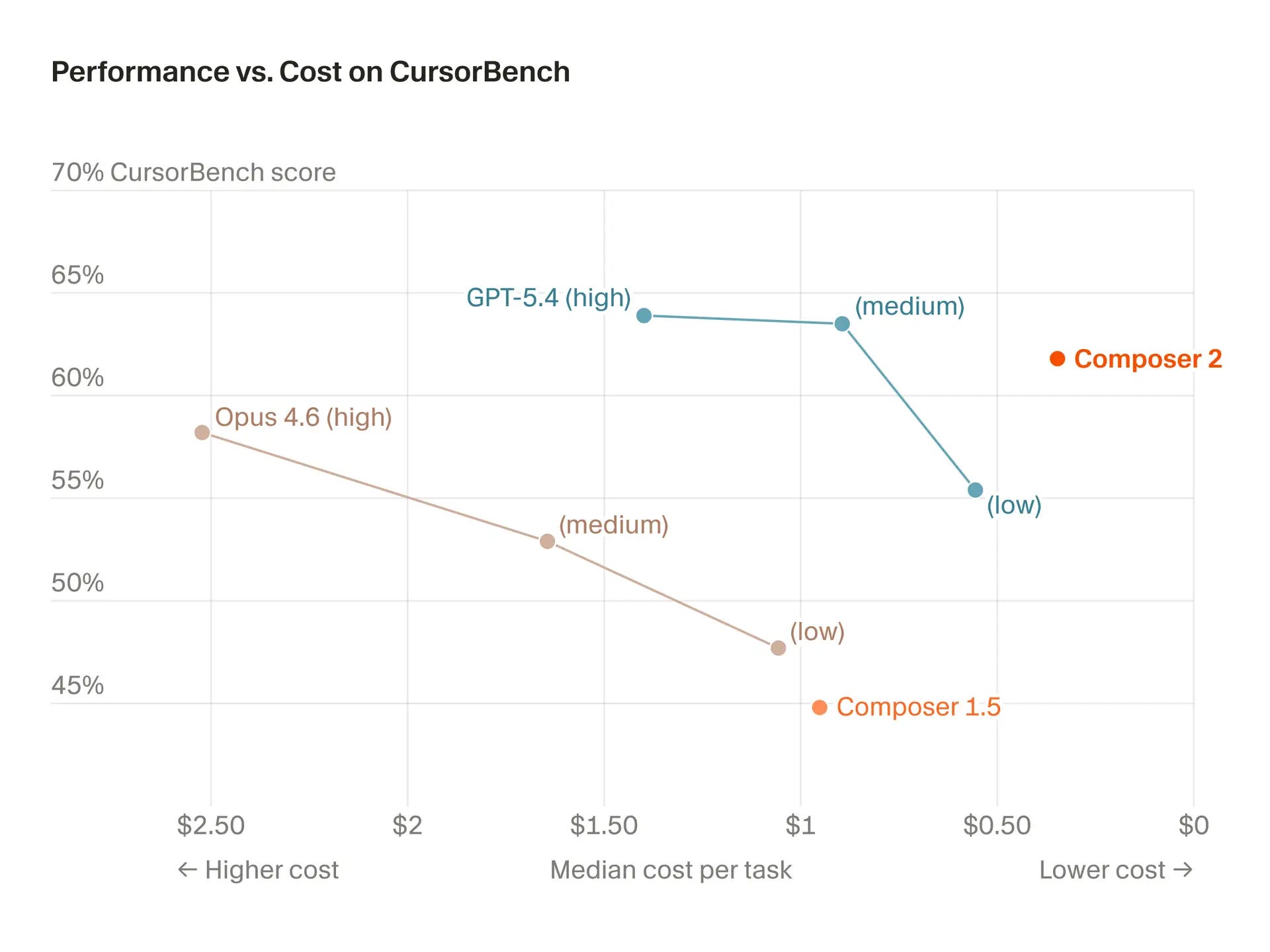
Cursor’s Composer 2 scores 61.3 on CursorBench at under $0.50/task, matching GPT-5.4 quality at a third of the cost, and appears to be built on Kimi K2.5 with Cursor RL fine-tuning.
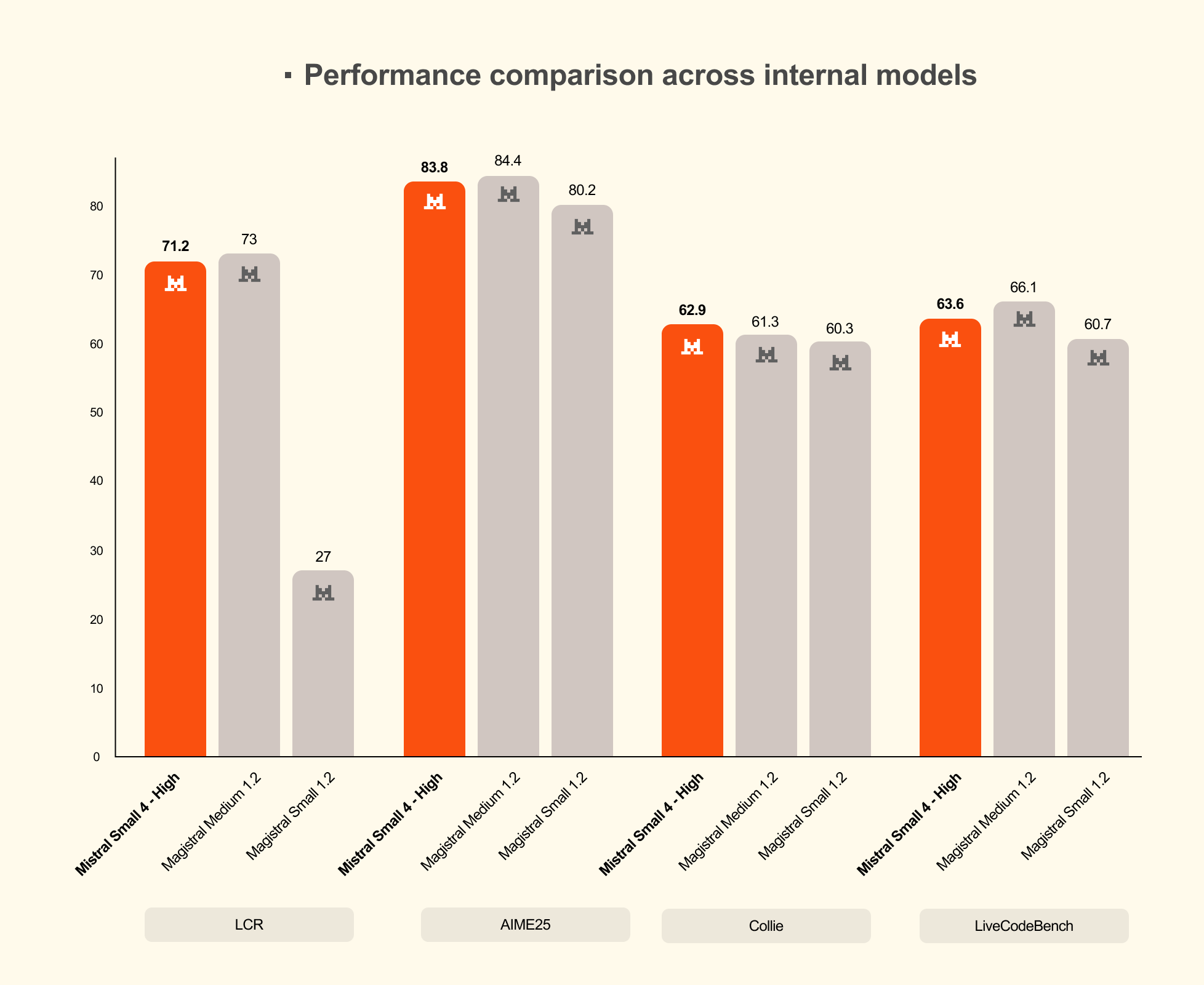
Mistral released Small 4, a 128-expert MoE model with 119B total parameters and only 6B active per token, combining the capabilities of its previous Magistral (reasoning), Pixtral (multimodal), and Devstral (coding) models into one. The reasoning_effort parameter lets users dial behavior from fast instruct-style responses to deep step-by-step reasoning on demand, with no model swap. Performance gains are material: 40% lower end-to-end completion latency and 3x more requests per second versus Mistral Small 3, with reasoning quality matching or exceeding GPT-OSS 120B on LCR, AIME25, and LiveCodeBench while generating 20–30% shorter outputs. The model ships under Apache 2.0 with a 256k context window, is available via the Mistral API and on Hugging Face, runs on a minimum of 2× NVIDIA H200 GPUs, and is day-0 available as an NVIDIA NIM.
Mistral’s Voxtral TTS is a 4B-parameter open-weight model supporting nine languages, with a time-to-first-audio of 90ms for a 500-character input, zero-shot voice cloning from as little as 3 seconds of reference audio, and an API price of $0.016 per 1,000 characters. On SEED-TTS, it achieves a 1.23% word error rate (vs. 1.26% for ElevenLabs v3) and a speaker similarity score of 0.628 against ElevenLabs v3’s 0.392. Model weights are available on Hugging Face under CC BY-NC 4.0 for non-commercial use, while the commercial API is live on the Mistral platform.
Cursor’s Composer 2 is the output of a continued pretraining run on coding data followed by reinforcement learning on long-horizon tasks, producing a model that scores 61.3 on CursorBench (vs. 44.2 for Composer 1.5), 61.7 on Terminal-Bench 2.0, and 73.7 on SWE-bench Multilingual. The standard variant is priced at $0.50/M input and $2.50/M output; a faster variant with identical benchmark performance costs $1.50/M input and $7.50/M output (both undercutting GPT-5.4 in cost while staying competitive on quality). Users inspecting API traffic have noted the model routes to kimi-k2p5-rl-0317-s515-fast, suggesting the base is Moonshot AI’s Kimi K2.5 with Cursor’s RL fine-tuning on top, a detail Cursor has not publicly clarified. This is the first time a major coding IDE has published a proprietary model rather than just routing to frontier APIs, signaling that the competitive moat in AI coding tools is shifting from UX and integrations toward model ownership and training pipelines.
As a follow-up to the Anthropic–Pentagon dispute we covered previously: US District Judge Rita Lin granted Anthropic a preliminary injunction on March 26, ruling the Pentagon’s supply chain risk designation and Trump’s federal ban on Claude constituted “classic illegal First Amendment retaliation.” The 43-page ruling bars the Trump administration and 17 federal agencies from enforcing the ban, citing an internal DOD memo that Anthropic’s risk level escalated due to its “increasingly hostile manner through the press”, not a security finding. The injunction is stayed for 7 days (until approximately April 2) to allow a government emergency appeal to the Ninth Circuit, and a parallel case remains pending in the DC Circuit under a separate statute. The $200M Pentagon contract is effectively dead regardless of the legal outcome, and the administration has since signed a separate deal with OpenAI, establishing the immediate practical consequence of Anthropic’s refusal to drop its autonomous weapons and mass surveillance guardrails.
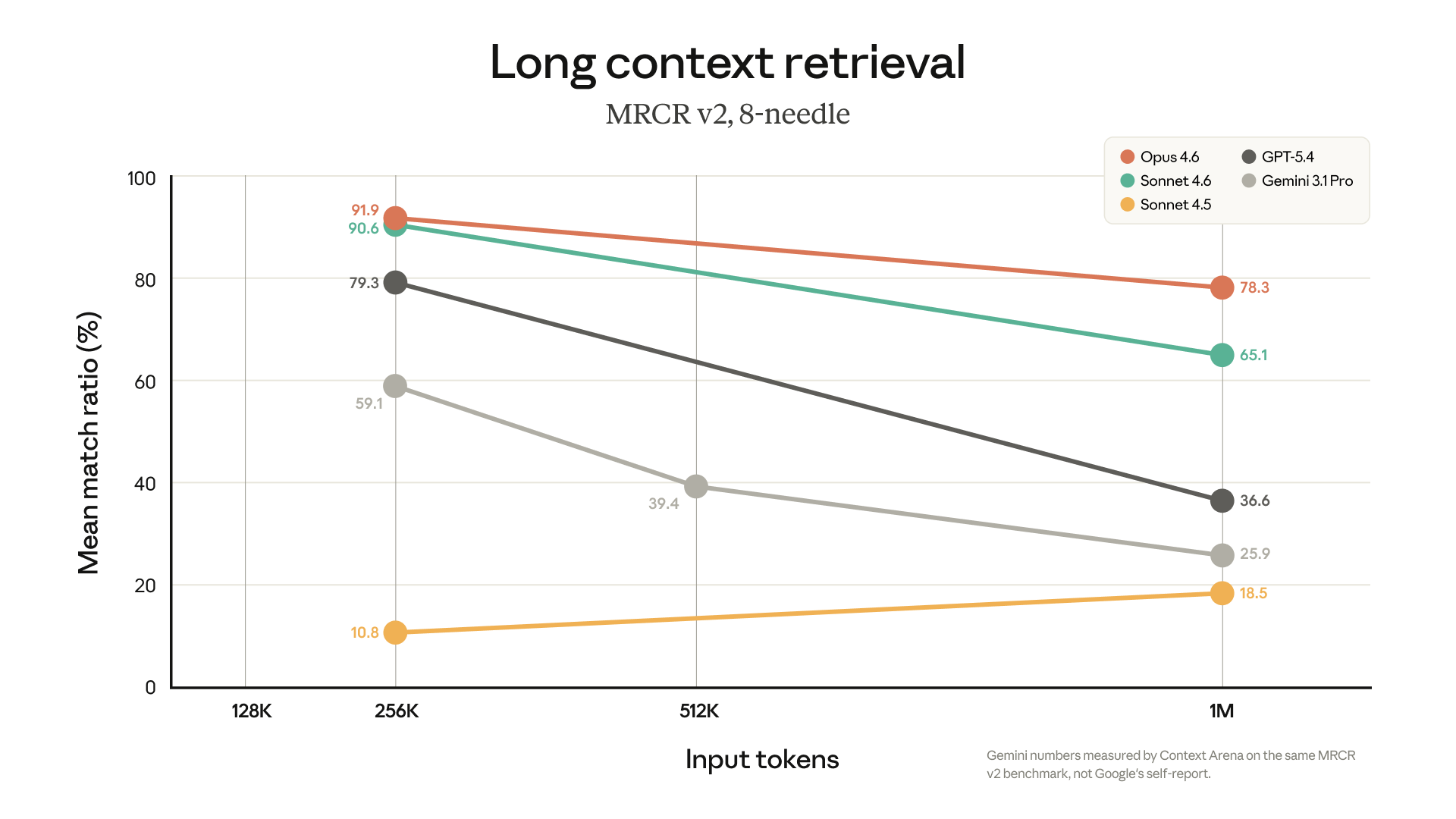
Anthropic moved the full 1M token context window to GA for both Opus 4.6 ($5/$25 per million tokens) and Sonnet 4.6 ($3/$15), removing a previous long-context pricing multiplier that made large-context requests more expensive per token. The rollout also expands media limits from 100 to 600 images or PDF pages per request, removes the beta header requirement for requests over 200K tokens, and applies full standard rate limits at all context lengths. On MRCR v2 8-needle retrieval, Opus 4.6 scores 78.3% at 1M tokens, the highest among frontier models at that context length, versus GPT-5.4 at 36.6% and Gemini 3.1 Pro at 25.9%. For Claude Code users on Max, Team, and Enterprise plans, 1M context is now the default for Opus 4.6 sessions, reducing compaction events and keeping full conversation traces intact for long-running agentic workflows.
That context window may not stay the frontier for long: an alleged leak describes a model codenamed Claude Opus 5 “Mythos”, a new tier reportedly beyond Opus, delivering major performance jumps over Opus 4.6 in coding, academic reasoning, and cybersecurity, and compute-intensive enough that Anthropic is throttling access and starting rollout with select cybersecurity partners to map its exploit surface before any general release. Take it with a grain of salt, but if accurate, the sequencing is the real signal: gating a model’s rollout by threat category rather than capability tier suggests frontier labs are quietly moving from safety-as-policy to safety-as-deployment-architecture.
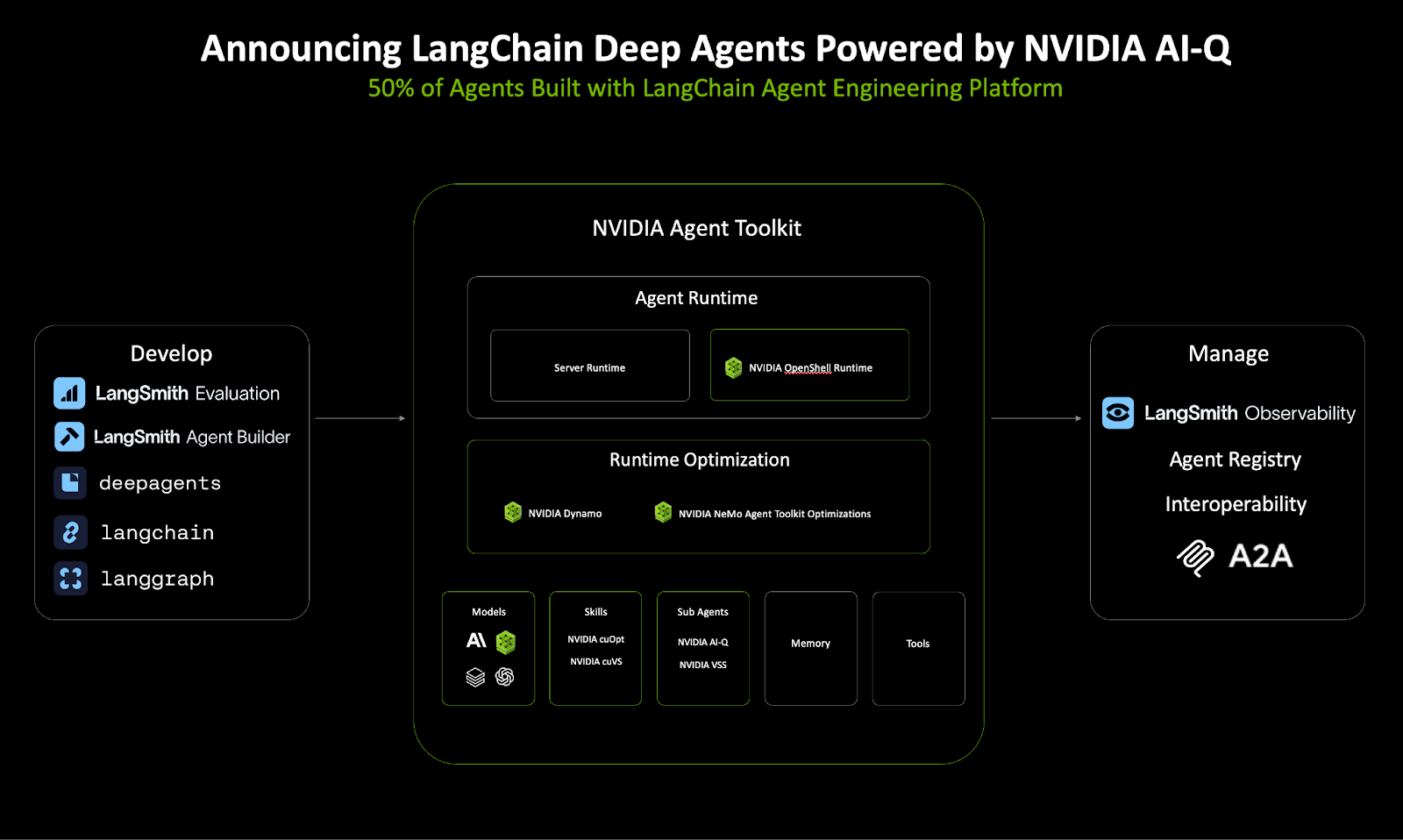
The NVIDIA Agent Toolkit integrates LangChain’s agent engineering stack with NVIDIA’s AI-Q Blueprint (which tops the DeepResearch Bench II accuracy leaderboard)using frontier models for orchestration and Nemotron open models for research tasks, cutting query costs by over 50% compared to all-frontier pipelines. The toolkit includes NVIDIA OpenShell, an open-source runtime that enforces policy-based security guardrails for autonomous agents, with integrations from Cisco, CrowdStrike, Google, and Microsoft Security. LangChain frameworks have been downloaded over 1 billion times; NVIDIA claims 50% of enterprise agents are built on LangChain. Partners at launch include Adobe, Atlassian, Box, CrowdStrike, Salesforce, SAP, ServiceNow, and Siemens.
Cloudflare’s Dynamic Workers allow agents to write and execute code in secure V8 isolates that are 100x faster to spin up than containers, with direct access to Cloudflare “bindings”, KV stores, databases, R2 buckets, and other infrastructure, eliminating the latency penalty that made sandbox-based tool execution impractical for real-time agent workflows. The practical implication, as agent tooling developers have noted, is that agents no longer need to route tool calls through JSONSchema MCP declarations and hope for correct selection; they can compose and run arbitrary code against explicit execution environments, giving them access to the full surface area of connected infrastructure.
Stripe’s MPP defines a request-response flow where an agent calls an endpoint, receives a payment request, authorizes payment, and receives the resource, using Shared Payment Tokens (SPTs) supporting both stablecoins and fiat via existing PaymentIntents API infrastructure. Early adopters include Browserbase (per-session headless browser access), PostalForm (physical mail sending), and Prospect Butcher Co. (agent-initiated food orders). The protocol slots into Stripe’s broader Agentic Commerce Suite alongside MCP integrations and ACP, suggesting Stripe is positioning its payment rails as the default financial layer of the agent economy.
OpenAI is set to shut down the Sora video generation app, less than a year after its consumer launch, folding video capabilities into its broader ChatGPT product surface rather than maintaining a dedicated platform. According to reports, OpenAI is repurposing the compute and research resources previously allocated to Sora toward its internal AGI model effort, which carries an undisclosed codename. As the company moves closer to IPO and accelerates its AGI timeline, standalone consumer products that don’t feed directly into the core model roadmap are being absorbed.
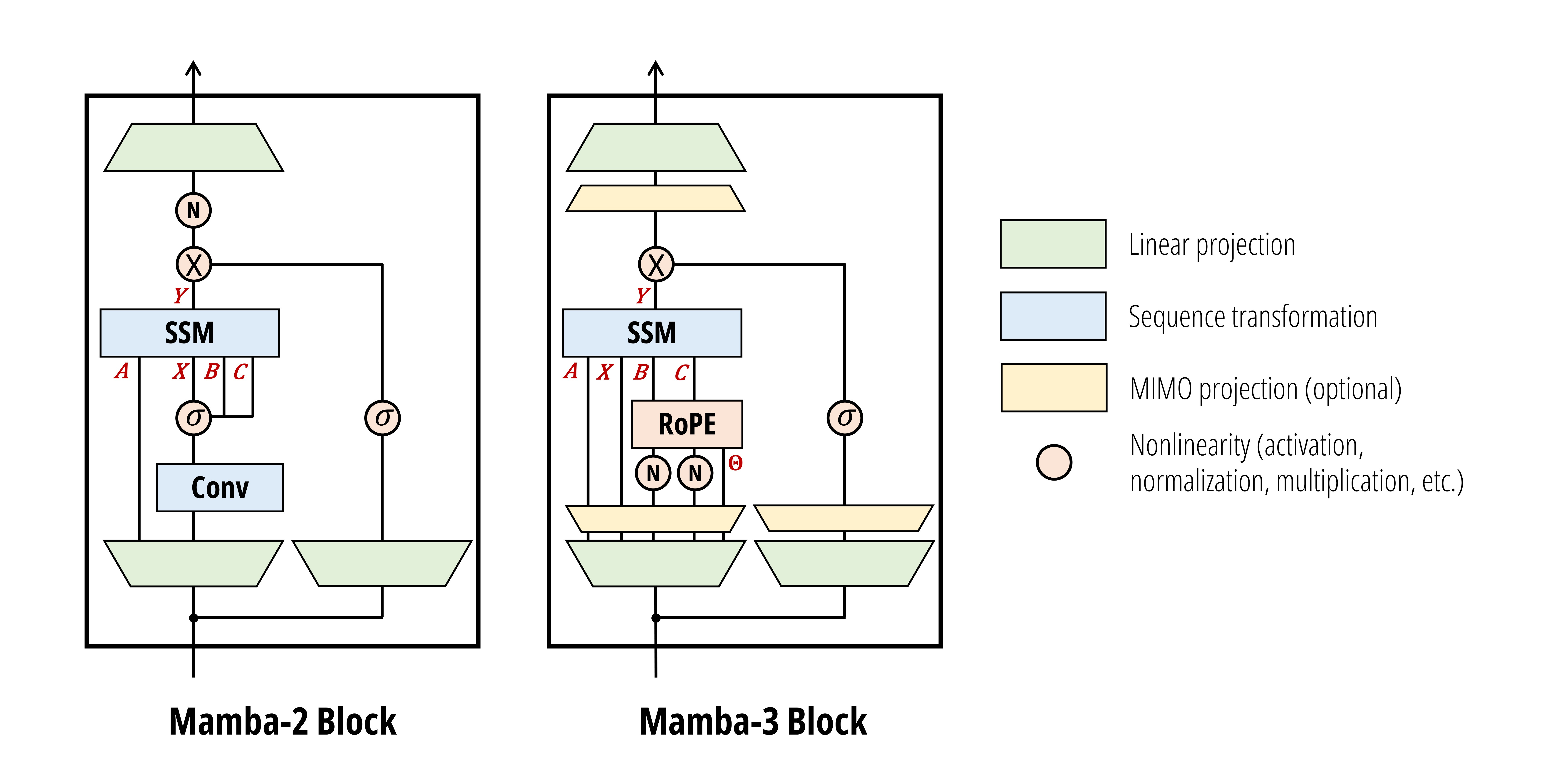
Mamba-3 (released by Together AI and Cartesia in collaboration with Albert Gu’s Goomba Lab )addresses a structural problem with Mamba-2: prior SSMs were progressively simplified to maximize training throughput, which left decoding memory-bound because each token update performed too little compute relative to memory movement. The architecture adds three targeted changes, an exponential-trapezoidal discretization for a more expressive recurrence, a complex-valued SSM for richer state dynamics, and multi-input multi-output (MIMO) projections in parallel, all grounded in classical control theory rather than the linear-attention or test-time training interpretations most competing architectures use. The results are sharp: on a single H100, Mamba-3 SISO achieves the fastest prefill + decode latency across all sequence lengths tested, outperforming Mamba-2, Gated DeltaNet, and even a Transformer with vLLM at 16K context (140.6s vs. 149.0s for Mamba-2).
The MIMO variant improves downstream accuracy by over 1 percentage point at 1B scale with no additional decode latency cost (only longer training time) because the extra FLOPs at each decode step fit onto otherwise idle GPU cores. For teams building real-time or agentic inference systems where decode speed determines end-to-end latency, Mamba-3 represents the first SSM architecture designed around deployment constraints rather than pretraining benchmarks; the paper and kernels (Triton, TileLang, CuTe DSL) are fully open-sourced.
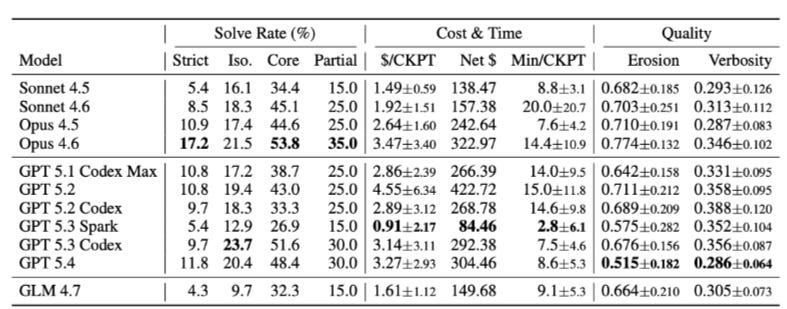
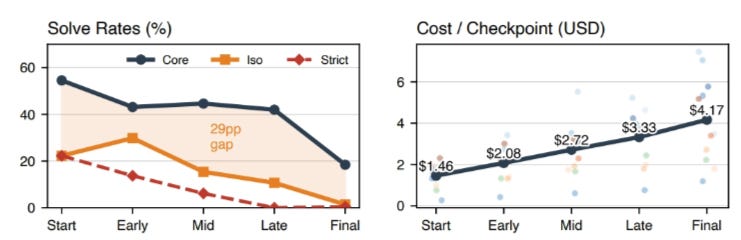
Researchers at the University of Wisconsin–Madison, Washington State University, and MIT introduced SlopCodeBench, a language-agnostic benchmark designed to expose exactly what single-shot evaluations like SWE-bench cannot: how agent-produced code quality evolves when agents must repeatedly extend their own prior work under evolving specifications, without being told how to structure it. Across 20 problems, 93 checkpoints, and 11 models, not one agent finished any problem end-to-end; the highest checkpoint solve rate was 17.2% (Opus 4.6, Core metric). More telling than the solve rates are the quality trajectories: structural erosion (complexity concentration in high-complexity functions), rises monotonically across checkpoints for every model, agent-produced code is 2.2× more verbose than comparable open-source projects, and mean cost per checkpoint grows 2.9× from the first to the last progress bin, meaning agents are spending more tokens to produce worse-structured code as problems grow.
TeamPCP compromised LiteLLM by first rewriting Git tags in the Trivy security scanner’s GitHub Action to exfiltrate the LiteLLM maintainer’s PyPI publish token from CI/CD, then used that token to push two malicious versions (1.82.7 and 1.82.8) carrying a three-stage payload: credential harvesting (SSH keys, AWS/GCP/Azure credentials, Kubernetes configs, crypto wallets, CI/CD secrets), AES-256/RSA-4096 encrypted exfiltration to models.litellm.cloud, and a persistent systemd backdoor polling checkmarx.zone for live payloads.
Version 1.82.8 used a .pth file in site-packages that fires on every Python interpreter startup, including during pip install itself and passes pip’s hash verification because the malicious content was published with legitimate credentials, not injected post-fact. The window was ~3 hours; LiteLLM downloads 3.4 million times per day, and the contagion spread transitively to DSPy, MLflow, CrewAI, OpenHands, and others, including OpenClaw, the AI gateway that routes agent traffic through LiteLLM as a core dependency, meaning any team running agentic pipelines through OpenClaw was also in the blast radius.
📉 **Sightline Climate Data Center Outlook — 16GW of data center capacity is slated to come online in 2026, but only ~5GW is currently under construction.** Sightline is tracking 190GW across 777 large data center projects (>50MW) announced since 2024, and their Q1 outlook finds that 30–50% of the 2026 pipeline is likely to slip — matching the 26% capacity delay rate from 2025. The more structural signal: on-site and hybrid power approaches represent under 10% of projects by count but nearly half of announced capacity, driven by a handful of gigascale campuses that have given up waiting on the grid. Google’s acquisition of Intersect Power’s 10.8GW pipeline and Amazon’s direct project-level energy investments confirm that for the largest hyperscalers, power procurement has become a competitive moat, not a procurement line item.
🧠 **Claude-Mem gives Claude Code a persistent memory layer across sessions with a single npm install.** The underlying problem it solves is concrete and well-documented (and actually confirmed by the Claude Code leak!): Claude Code has no memory between sessions by design, and within long sessions it hits context limits that trigger compaction. In practice this means every new session starts from scratch, and long sessions degrade as the model loses access to its own earlier work. Claude-Mem addresses this by hooking into five Claude Code lifecycle events, SessionStart through SessionEnd, and using a local SQLite + ChromaDB stack to compress tool outputs into ~500-token observations, then injecting semantically relevant context at the start of each new session. The three-tier progressive disclosure system (compact index → timeline → full observations) is what makes the token math work: claimed savings are around 10x in standard mode, with a beta “Endless Mode” targeting up to 95% context reduction for long-running projects.
🏗️ **Dify is a full-stack LLM application platform that bundles RAG pipelines, agent orchestration, LLMOps observability, and a backend-as-a-service layer into a single self-hostable Docker Compose deploy.** Unlike frameworks that hand you primitives and expect you to wire production infrastructure yourself, Dify ships with model management across 50+ providers, built-in document ingestion from PDFs and PPTs, agent tool libraries (50+ tools including search, DALL·E, WolframAlpha), prompt IDE with A/B comparison, and Grafana-compatible metrics — all accessible via API so the visual layer doesn’t lock you in. Its January 2026 v1.13.0 release added human-in-the-loop controls to running workflows, an acknowledgment that full autonomy still needs interruption points in production. At 130k stars and 20k forks, Dify and Langflow together represent a consolidation bet: that most teams want a vertically integrated AI application stack, not a toolkit.
**Chroma shipped Context-1. It (allegedly) borrowed the idea from another company without any credit:** Max Rumpf’s company FutureSearch built SID-1, a purpose-trained agentic retrieval model that beat frontier models on search benchmarks by combining smaller model size with a 4x parallel rollout strategy using reciprocal rank fusion (RRF), running four agents in parallel and merging results to hit Pareto-optimal cost-latency tradeoffs.
Turns out, six months ago, Chroma’s CEO Jeff Huber reached out to ask what Rumpf was training; four months ago, Rumpf shared SID-1’s full technical report with him directly. This week, Chroma published Context-1, a 20B agentic search model that, per Rumpf’s allegation, reproduces SID-1’s core architecture, evaluation methodology. Chroma has open-sourced the model weights but has not released the evaluation harness, making it technically impossible to independently verify their Pareto-optimality claims or benchmark Context-1 against SID-1.
To be fair, RL application in this case is nothing new. But this made us recall this “middle-out“ scene from Silicon Valley.
**Notion Workers now supports data syncs, and the ex-founder who built Sequin to do exactly that is watching from the sidelines:** The capability to dismiss as “too unreliable for agents” is now shipping inside the product that it acquired. The ntn CLI can now instruct an agent to build a sync and watch data land in a Notion database. The broader pattern: features that seemed impossible for agents six months ago are becoming one-shot CLI tasks, and infrastructure startups built on agentic unreliability are watching their moats evaporate in product update changelogs.
**We may have crossed the point of no return on agent productivity, and geopolitics cannot put it back in the box:** OpenAI red teamer @viemccoy observes that clever prompting and fine-tuning can now turn agents into economically meaningful actors, the kind of productivity unlocks that once required nation-state-scale resources. The implication is not just about capability but irreversibility: once a threshold is crossed where agents can replicate and compound economic advantage, no policy intervention can meaningfully reverse the diffusion.
**The White House AI National Policy Framework is the most substantive federal AI document since the Biden EO, and it’s optimistic by design:** Former FTC chief technologist Neil Chilson reads the framework as carefully language-engineered to reflect Trump’s pro-innovation posture while actually engaging with every major legislative question Congress has been debating: IP, child safety, data centers, free speech, workforce, and federal preemption of state AI laws. The seven-area Congressional agenda is notable because it signals the administration wants legislation, not just executive action, and has handed Congress a framework it can defend on both sides of the aisle.
$120B raise target: OpenAI closed its record $110B round last month and has since added another $10B, with SoftBank taking on a $40B unsecured 12-month loan, arranged by JPMorgan, Goldman Sachs, and four Japanese banks to cover its $30B commitment, a structure that only makes financial sense if lenders expect an OpenAI IPO to generate the liquidity to repay it within the year. In parallel, OpenAI is launching a $10B joint venture with TPG and Bain Capital to embed engineers directly inside portfolio companies, using preferred equity to de-risk the bet, a sign that the company is now using its capital position to lock in enterprise distribution before the public markets open.
$100B target fund: Project Prometheus / Jeff Bezos is reportedly raising $100B to acquire and automate legacy manufacturing companies in aerospace, chipmaking, and defense using Prometheus AI models, with Bezos having already traveled to Singapore and the Middle East to court sovereign capital, this is the most explicit bet yet that the next phase of AI value capture happens not in software but in the physical industrial base.
$27B deal: Nebius secured up to $27B from Meta over five years, including $12B in dedicated capacity from early 2027, just days after NVIDIA committed $2B and a path to 5GW of infrastructure by 2030, with Nebius projecting $7–9B ARR and 800MW–1GW of connected power by end-2026; the real signal is Rubin-era GPU efficiency (NVIDIA’s Vera Rubin NVL72 claims 3.6 exaFLOPS per rack at up to 10x lower cost per token than Blackwell), which suggests neo-cloud economics may finally shift from scarcity pricing toward margin-at-scale.
$450M Series A: Rhoda AI emerged from 18 months of stealth with a Direct Video Action architecture that pre-trains on hundreds of millions of internet videos to build physics and motion priors, then fine-tunes with as little as ten hours of robot teleoperation data, already demonstrating autonomous component-processing in production manufacturing environments. Backed by Khosla, Temasek, Premji Invest, and John Doerr, this is a $1.7B valuation bet that the data flywheel advantage in robotics goes to whoever closes the loop between video pretraining and real-world deployment first.
$200M at $11B valuation: Harvey co-led by GIC and Sequoia, brings total raised to over $1B for the legal AI platform now used by more than 100,000 lawyers across 1,300 organizations; Harvey has tripled its valuation in under a year (from $3B Series D in February 2025), and with $190M ARR as of January, the company is shifting capital toward expanding the 25,000+ custom agents running on its platform and the embedded legal engineering teams that deploy them, evidence that vertical AI with deep workflow integration can sustain venture-growth valuations even as foundation model providers expand.
$2B Series G at $12.7B valuation: Shield AI, $1.5B led by Advent International and co-led by JPMorganChase’s Security and Resiliency Initiative, plus $500M in preferred equity from Blackstone, more than doubles the company’s valuation in one year to fund the acquisition of Aechelon, whose high-fidelity simulation software powers the Pentagon’s Joint Simulation Environment and will be used to train Shield’s Hivemind AI pilot across 26 vehicle classes without live flight.
$125M Series C at $1.5B valuation: Granola led by Index Ventures with Kleiner Perkins participation, up from a $250M valuation less than a year ago, as the meeting notetaker expands into enterprise workspace infrastructure with Spaces, team APIs, and MCP server integrations that pipe meeting context directly into AI coding and workflow tools; the 6x valuation jump signals that the race in ambient context capture is no longer about transcription accuracy but about which product becomes the connective tissue between meetings and agentic workflows.
$11M seed: Littlebird led by Lotus Studio, with angels including Lenny Rachitsky, Scott Belsky, and Gokul Rajaram, for an always-on screen-reading agent that converts everything happening on your computer into queryable text, no screenshots, no cloud visual data, just structured text stored locally and surfaced via semantic search and recurring AI “routines.” Where Microsoft Recall stored pixels, Littlebird stores intent, and investors are betting that text-first ambient context is both cheaper and less privacy-threatening.
Strategic investment (undisclosed): Sakana AI received a strategic investment from Mitsubishi Electric to integrate Sakana’s multi-foundation-model composition techniques into Mitsubishi’s Serendie industrial platform across manufacturing and infrastructure; at a $2.6B valuation, Sakana, founded in 2023 by former Google Brain researchers, is now explicitly positioning physical AI and manufacturing as its third strategic pillar, suggesting Japan’s AI ecosystem is consolidating around industrial-domain models rather than competing on general-purpose benchmarks.
Acquisition: Astral joins OpenAI, the team behind Ruff (Python linter), uv (package manager), and ty (type checker), collectively hitting hundreds of millions of downloads per month, is joining OpenAI’s Codex team while keeping all tools open source. Acquisition prices have not been officially disclosed, but reported figures suggest OpenAI paid ~$700M for Astral — for context, the same sources put OpenAI’s Promptfoo acquisition at ~$200M and Anthropic’s Bun acquisition at ~$350M. If accurate, the numbers reveal an escalating toolchain land-grab: each deal buys not a product but a layer of developer infrastructure that every Python or JavaScript environment already runs on, positioning the acquiring lab to be embedded in the tooling layer before the AI coding market consolidates.
Partnership: Nota AI × SiMa.ai signed a joint development and commercialization deal pairing Nota’s NetsPresso model compression platform, which reduces model sizes by over 90% while maintaining accuracy, with SiMa.ai‘s MLSoC edge chips, targeting ITS, industrial safety, and robotics deployments.
No posts
Comments
Nothing yet. Say the first thing.
Sign in to join the conversation.