
You have probably seen reports (InterviewQuery, Bloomberry, ZipRecruiter) saying that demand for data and product analytics talent has increased over the last 2 years, especially for analysts who can work with AI, automation, experimentation, and more technical data workflows.
But even with more demand, finding a strong product analyst is still hard because the role itself is still evolving.
Expectations for product analysts have also changed a lot over the last few years. It is no longer enough to produce insights, support experimentation, or set up tracking. The role is now starting to blend with analytics engineering and ML. Historically, product analysts often had support from data scientists and data engineers for data modeling, testing environments, and statistical analysis. Today, that support layer is very thin. More often, analysts are expected to own much more of the product and data lifecycle.
Meanwhile, AI is changing what products look like and how they need to be measured. Product teams are now building conversational interfaces, AI agents, recommendation systems, enrichment workflows, and generative features that do not behave like traditional static product flows. At the same time, analysts are being asked to use AI tools to diagnose metric changes, automate recurring analysis, and explain user behavior faster.
That means the Product Analyst role is emerging in 2 directions:
The first is building analytics for AI-driven products: measuring whether AI features are useful, trustworthy, accurate, and valuable.
The second is using AI for product analytics: applying AI-native tools and workflows to analyze traditional products faster and more effectively.
In this publication, I’ll break down both sides of the role: what AI Product Analysts do, what skills they need, which tools are must-know, and how analysts can prepare for a role that sits between product analytics, data science, analytics engineering, and AI product development.

Yuchen Jin@Yuchenj_UW
Before AI, I’d spend a weekend building 1 useless app. Now I can build 67 useless apps over a weekend, each with a logo, a fancy webpage, and 0 user.
5:43 PM · Jun 6, 2026 · 268K Views
426 Replies · 555 Reposts · 8.25K Likes
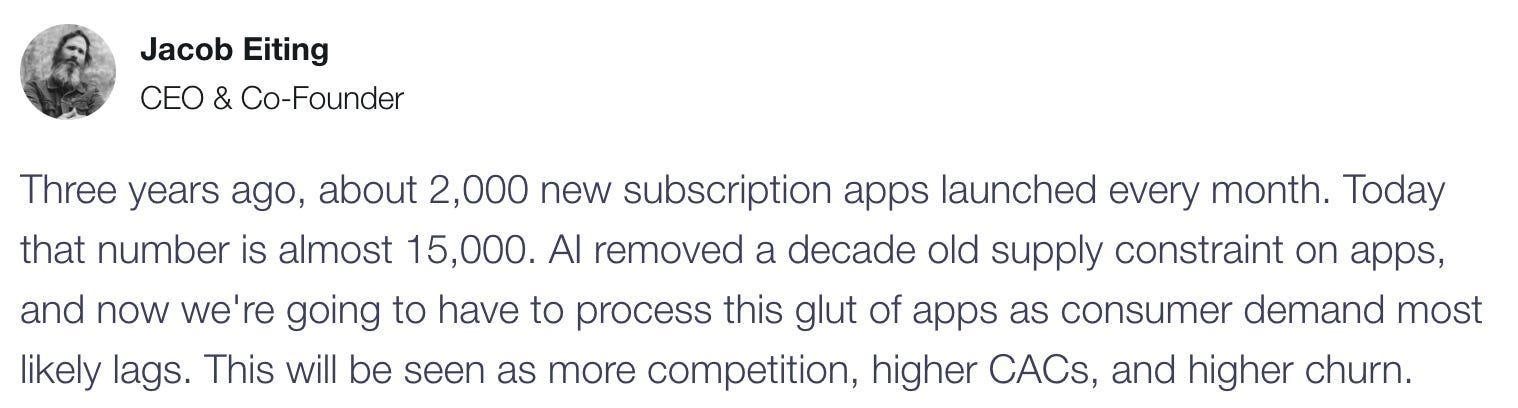
I’m sure you saw this chart too:
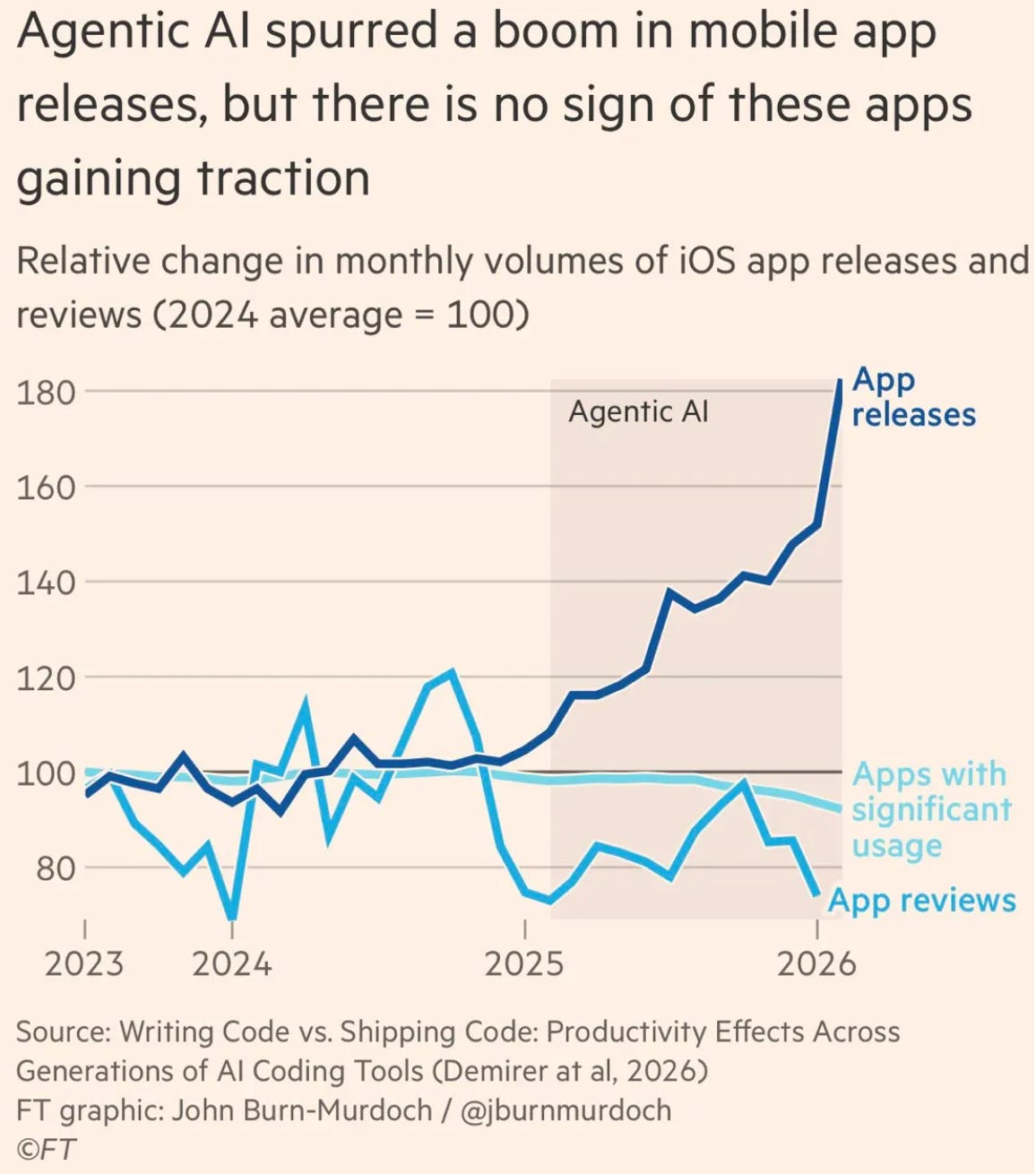
As I predicted a year ago, AI acceleration is bringing harsher competition for downloads, high mobile store rankings, market share, and, most importantly - customers. Success ultimately depends on understanding customer behavior and product usage. Only one discipline truly owns that knowledge and context - analytics. Demand for analysts will remain high, especially for product analysts.
Product analytics now mostly falls into 2 distinct categories:
Building analytics for AI products, which includes evaluating AI models and user experiences
Using AI for product analytics, which means leveraging AI to analyze traditional products faster and more effectively.
These two sides are connected, but they require different skills, responsibilities, and ways of thinking.
For the past decade, the product analytics playbook has been built around clicks, funnels, and conversion flows:
Before a product launch, teams would design tracking systems to capture key user actions, which later would become metrics (signup started, trial started, checkout completed, feature used, subscription canceled, etc) to follow a simple framework: instrument the user action tracking → translate it into a metric → measure whether the product change moved that metric.
But AI products are different.
Comments
Nothing yet. Say the first thing.
Sign in to join the conversation.