
Like many others, I have been following the recent news surrounding Anthropic.
For those who may have missed it, Anthropic announced that, due to a U.S. government export control directive tied to national security concerns, access to some of its models would need to be suspended for foreign nationals. The company stated that the order required immediate compliance while discussions with authorities continue.
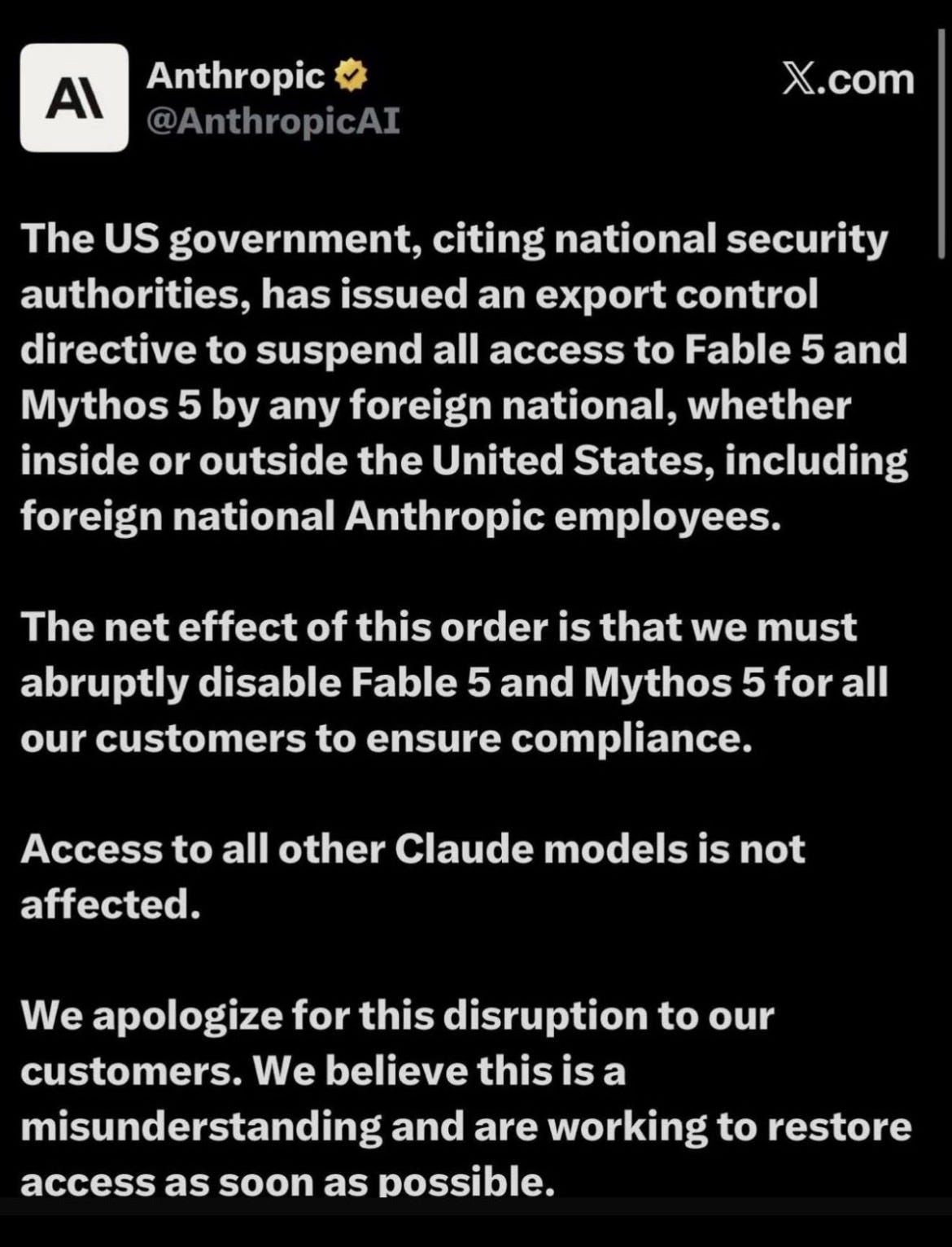
Whether this specific case turns out to be temporary, a misunderstanding, or the beginning of something larger remains to be seen.
But I don’t think the announcement itself is the most interesting part of the story. What caught my attention was what it revealed.
For years, most conversations around artificial intelligence have focused on adoption.
How can companies use AI?
How can employees become more productive?
How can governments and organizations implement AI successfully?
These are important questions, and they deserve attention. But the Anthropic situation highlights a different question; one that perhaps we have not spent enough time discussing.
What happens when the AI systems we rely on are controlled by someone else?
Many of the technologies that transformed society originated from military or government-funded initiatives. Such as:
The internet.
GPS.
Radar.
Semiconductors.
Governments understood early that technological leadership translates into economic power, geopolitical influence, and national security advantages.
Artificial intelligence is different.
Unlike the internet, GPS, or radar, the current AI revolution was not primarily born inside government agencies or military programs. It was driven by researchers, entrepreneurs, startups, and private companies.
Perhaps that is part of why governments around the world are now reacting so strongly.
For the first time in decades, a technology with potentially transformative economic and geopolitical consequences reached global adoption before governments had a chance to shape, control, or fully understand it.
And now, as AI capabilities continue to accelerate, governments are beginning to recognize what many in the technology sector have long known: AI is not just another software trend.
It is becoming strategic infrastructure.
Recently, I came across an article by Timothy Liljebrunn and Armin Catovic discussing Sweden’s AI strategy, and their argument stayed with me.
Today, much of Sweden’s AI conversation focuses on adoption. We want companies, public institutions, and society to embrace AI quickly and effectively. We want to become leaders in AI usage. And honestly, that makes sense. But their question was whether adoption alone is enough. Because when we talk about AI, we often focus on applications such as tools, assistants, products, or use cases.
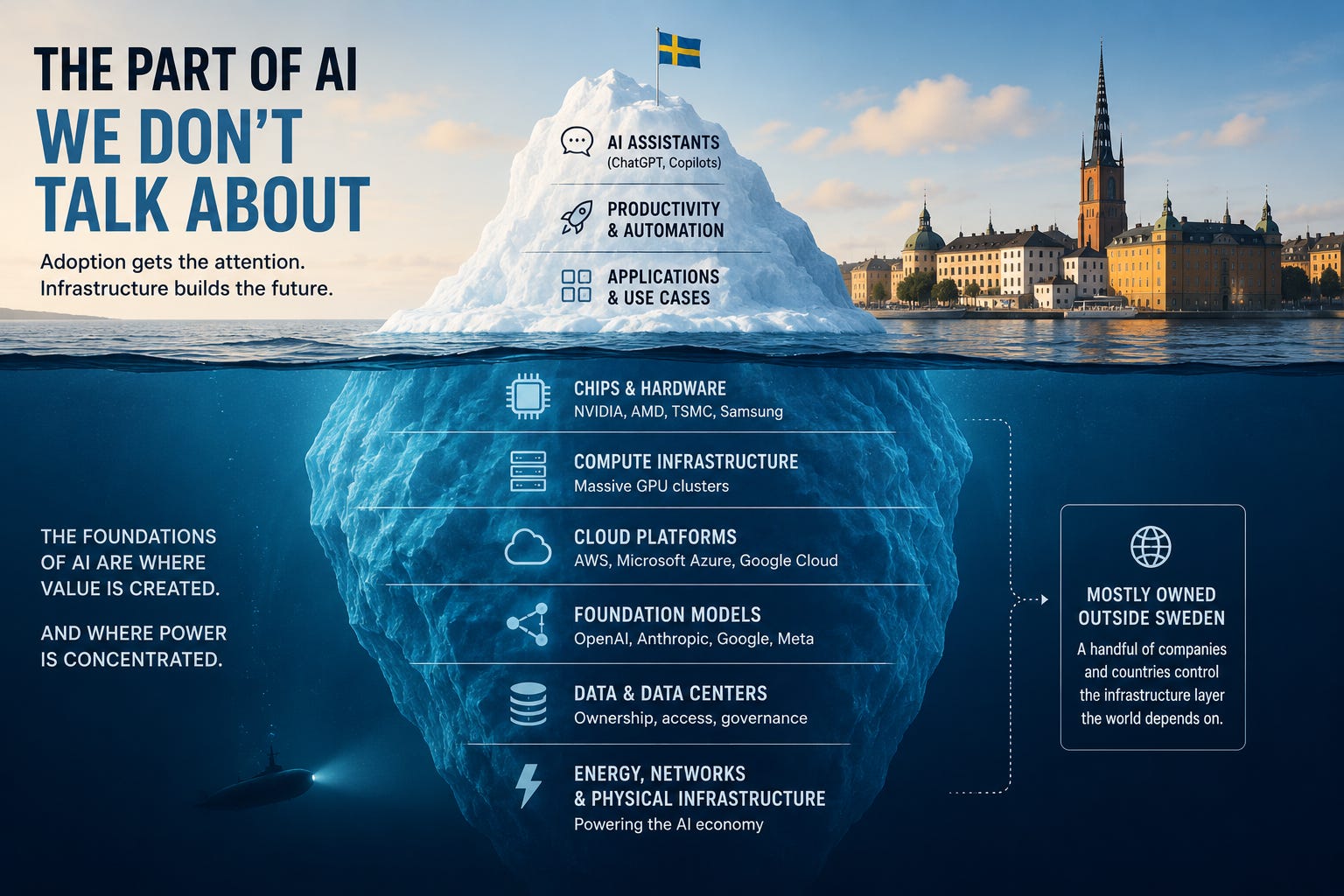
What we talk about less is the layers underneath.
The chips.
The compute.
The cloud infrastructure.
The foundation models.
The systems that make all of those applications possible.
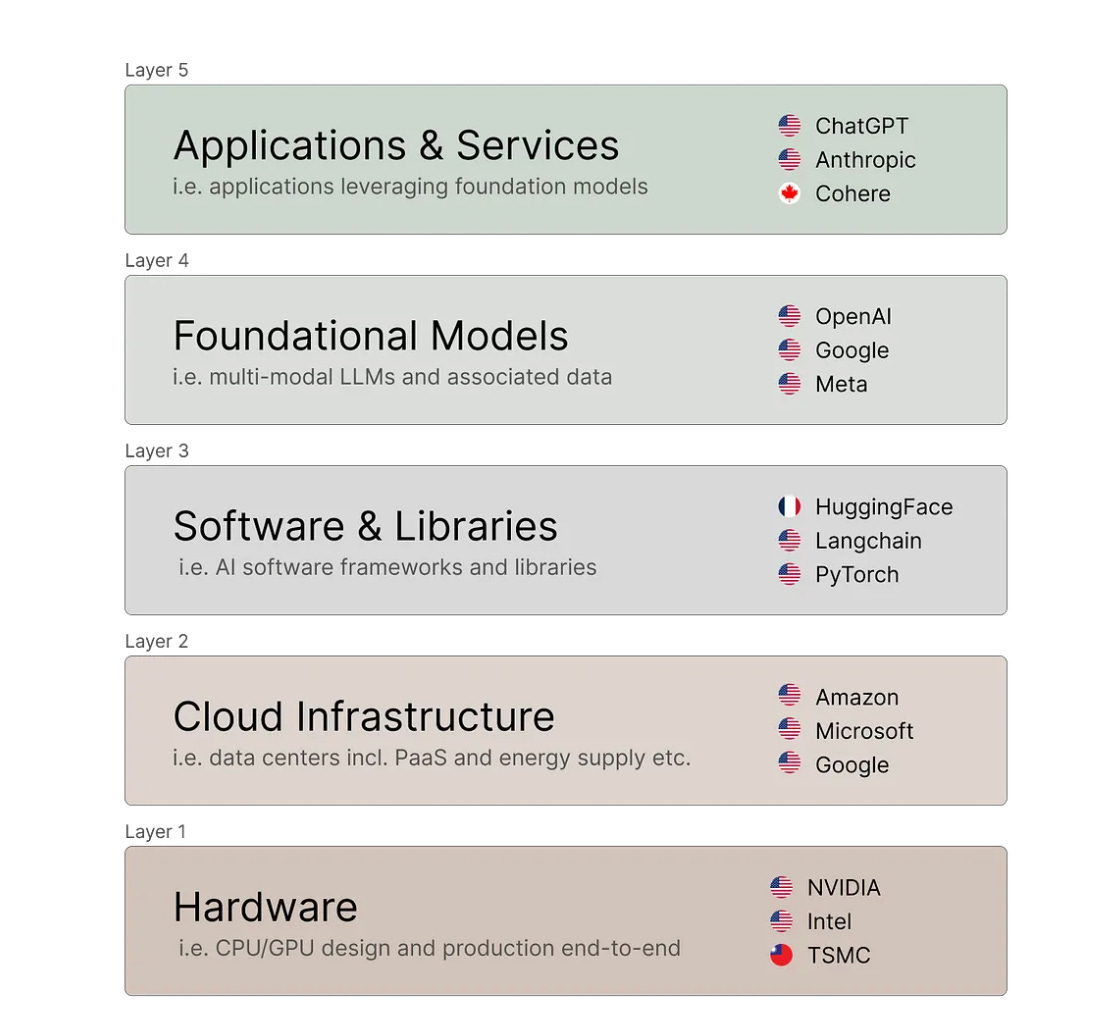
Today, Sweden is largely a user of that infrastructure rather than an owner of it. We use American cloud providers, American AI models, and American chips.
We build applications on top of technologies that we neither own nor control. That reality is not necessarily a problem today. But it raises important questions about tomorrow.
When Sweden became a digital leader, it wasn’t simply because we adopted the internet early. We invested in the foundations: broadband infrastructure, connectivity, education, research, and digital literacy.
That investment created the conditions that later enabled companies like Spotify, Skype, Klarna, and many others to emerge.
The success story was not only about using technology. It was about creating the environment in which innovation could thrive.
AI may require a similar mindset.
We should think carefully about where we want to position ourselves in the AI value chain and ask ourselves:
What capabilities do we want to own?
What dependencies are we comfortable with?
What risks are we willing to accept?
And what role should Sweden play in shaping the future of AI rather than simply consuming it?
I fully agree that adoption matters.
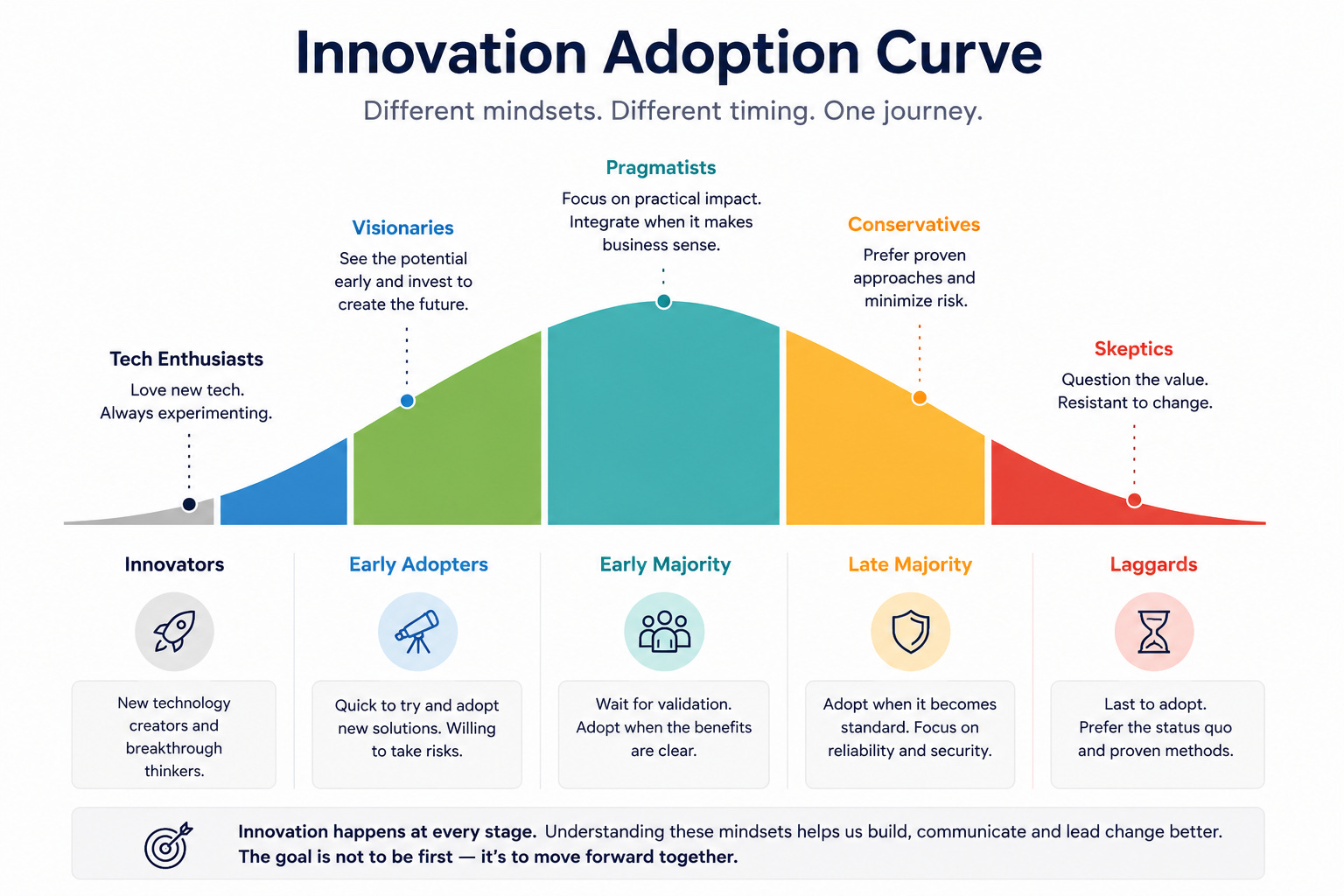
If Swedish organizations fail to adopt AI, we risk losing competitiveness and productivity. But adoption alone cannot be the entire conversation.
The recent Anthropic situation reminds us that access to AI is not guaranteed forever. Technology can become political, strategic, or subject to national interests. History has shown us this repeatedly.
The question is whether we are paying attention early enough.
The real debate is not whether AI matters. That question has already been answered. The real debate is where Sweden wants to stand when AI becomes as fundamental as electricity, the internet, or cloud computing.
Do we want to be excellent users of AI? Or do we also want to influence and contribute to the infrastructure that powers it?
I don’t claim to have the answer. But I do believe the recent Anthropic incident should encourage us to ask better questions. Because if AI truly becomes one of the defining technologies of this century, then being a user of it may not be enough.
The countries that benefit most from the AI era will not only adopt the technology. They will help shape it.
> This is written by Vanessa Andersson, for Data AI Stockholm. More about DAIS. If you would like to contribute or write to us, please reach out to me or DAIS on linkedin
No posts
Comments
Nothing yet. Say the first thing.
Sign in to join the conversation.