
Every parent dreams of a peaceful home filled with laughter, learning, and love. Yet, for families of children with disruptive behaviour disorders—such as Oppositional Defiant Disorder (ODD), Conduct Disorder (CD), or Attention-Deficit/Hyperactivity Disorder (ADHD)—daily life can feel like a battlefield. Tantrums erupt over small requests, defiance replaces cooperation, and discipline often turns into an exhausting cycle of shouting, punishment, and guilt.
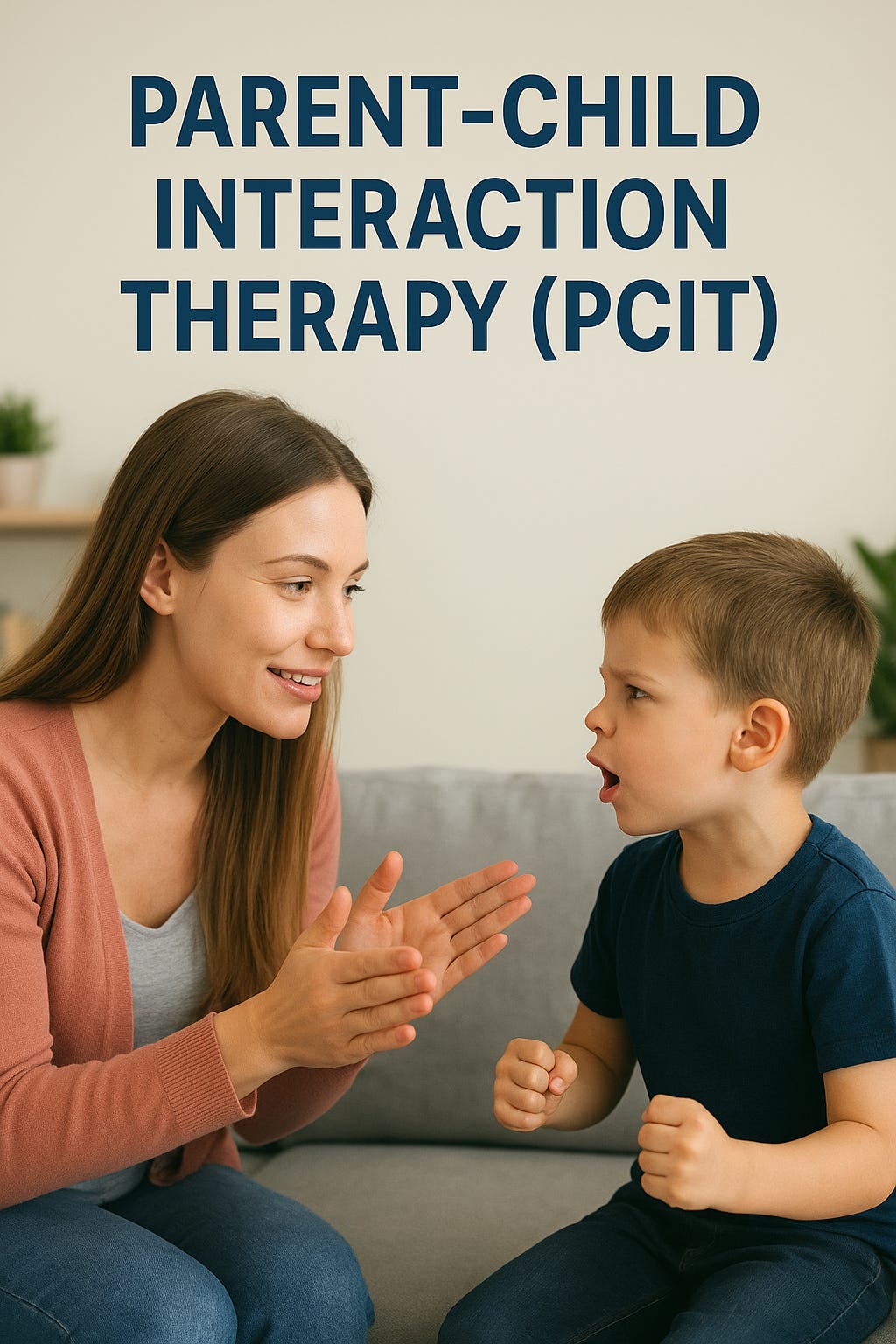
But what if healing doesn’t start with punishment, but with connection? This is where Parent-Child Interaction Therapy (PCIT) steps in—a scientifically proven approach that reshapes family dynamics, reduces disruptive behaviour, and strengthens the parent-child bond.
"The way we talk to our children becomes their inner voice." – Peggy O’Mara
Disruptive behaviour disorders are among the most common reasons children are referred for mental health treatment. According to the CDC, about 1 in 10 children struggle with persistent patterns of defiance, aggression, or rule-breaking behaviours. These behaviours are not simply “bad habits.” They often stem from difficulties in emotional regulation, impulse control, or environmental stressors.
Without proper intervention, these children face higher risks of academic failure, substance abuse, and difficulties in adulthood. More importantly, parents often feel powerless—torn between frustration and guilt, unsure of how to help their child.
“Children are not things to be molded, but people to be unfolded.” – Jess Lair

PCIT is a short-term, evidence-based intervention designed for children aged 2 to 7 years with disruptive behaviours. Developed by Sheila Eyberg in the 1970s, PCIT combines principles of play therapy and behavioural therapy.
Unlike traditional counselling, where only the child speaks with a therapist, PCIT places parents at the centre of the process. In real-time sessions, therapists coach parents—often through an earpiece—on how to respond to their child’s behaviours. The goal? To replace cycles of conflict with positive, nurturing interactions and consistent discipline strategies.
In CDI, parents are encouraged to follow the child’s lead in play. Instead of giving commands or correcting mistakes, parents practice skills such as:
Praise – “I love how gently you’re stacking those blocks.”
Reflection – Repeating the child’s words to show attentiveness.
Imitation – Joining in play to build connection.
Description – Narrating the child’s actions to show interest.
Enthusiasm – Adding joy to the interaction.
This phase strengthens the emotional bond, helping the child feel heard and valued. Research shows that children who experience CDI develop better emotional regulation and fewer tantrums.
Once a secure bond is built, the therapy moves to PDI. Here, parents learn to give clear, calm, and direct commands and follow through with consistent consequences. The emphasis is not on harsh discipline but on predictability and fairness.
For example:
Command: “Please put the toy in the box.”
If the child complies: Immediate praise.
If the child refuses: A calm, structured time-out—without yelling or threats.
This method teaches children that rules exist, but they are enforced with love and consistency, not anger.
“Discipline is not about punishment. It’s about teaching.” – Unknown
PCIT is not just another parenting fad—it’s backed by rigorous science.
A meta-analysis published in Journal of Clinical Child & Adolescent Psychology (2016) found that 75% of children showed significant reductions in disruptive behaviour after PCIT.
Follow-up studies reveal that improvements are sustained for years, even after therapy ends.
Parents also report lower stress levels, better confidence in managing behaviour, and stronger relationships with their children.
Perhaps most striking is the ripple effect. When one child receives PCIT, the overall family environment improves—siblings, too, benefit from calmer and more consistent parenting.
Traditional parenting advice often tells parents what they “should” do but leaves them alone to figure out how. PCIT changes that by offering live coaching in the moment. Parents practice skills during sessions, receive instant feedback, and see results in real-time.
As one parent in a PCIT study shared:
“For the first time, I felt like I wasn’t just surviving my child’s tantrums. I had tools that worked, and my child finally listened without me yelling.”
This sense of empowerment—of moving from chaos to control—makes PCIT not just therapy but transformation.
Like any therapy, PCIT requires commitment. Sessions often run for 12–20 weeks, and success depends on parents practicing skills daily at home. At first, it may feel awkward—especially for parents used to traditional discipline styles.
Yet, the reward is profound: a child who feels loved and understood, a parent who feels confident and supported, and a home that transforms from a battlefield into a safe haven.
“When little people are overwhelmed by big emotions, it’s our job to share our calm, not join their chaos.” – L.R. Knost
If your child’s defiance has left you feeling hopeless, know this—change is possible. PCIT shows that behaviour is not destiny. With the right guidance, children can learn self-control, respect, and empathy. And parents can rediscover joy in parenting.
"Behind every young child who believes in himself is a parent who believed first."
Parent-Child Interaction Therapy is more than a treatment for disruptive behaviours—it is a philosophy of parenting rooted in respect, love, and consistency. In a world where children face increasing pressures and distractions, PCIT reminds us of something timeless: the most powerful therapy is a parent’s voice, a parent’s love, and a parent’s presence.
With PCIT, families don’t just manage behaviours; they rebuild bonds, restore harmony, and rewrite the future—one interaction at a time.
With Love
Zara Monroe!..❤️

No posts
Comments
Nothing yet. Say the first thing.
Sign in to join the conversation.