
Imagine waking up in a familiar room, yet the faces around you blur like ghosts in a half-forgotten dream. You recognize the warmth in a loved one’s voice but cannot place their name. Dementia is not just memory loss—it is a thief of identity, a slow unraveling of time itself. For centuries, families have watched helplessly as their loved ones fade into shadows of who they once were. But today, in the age of glowing screens and artificial intelligence, a haunting question emerges: Can technology hold back the erosion of memory, or is it merely a fragile light flickering against the darkness?
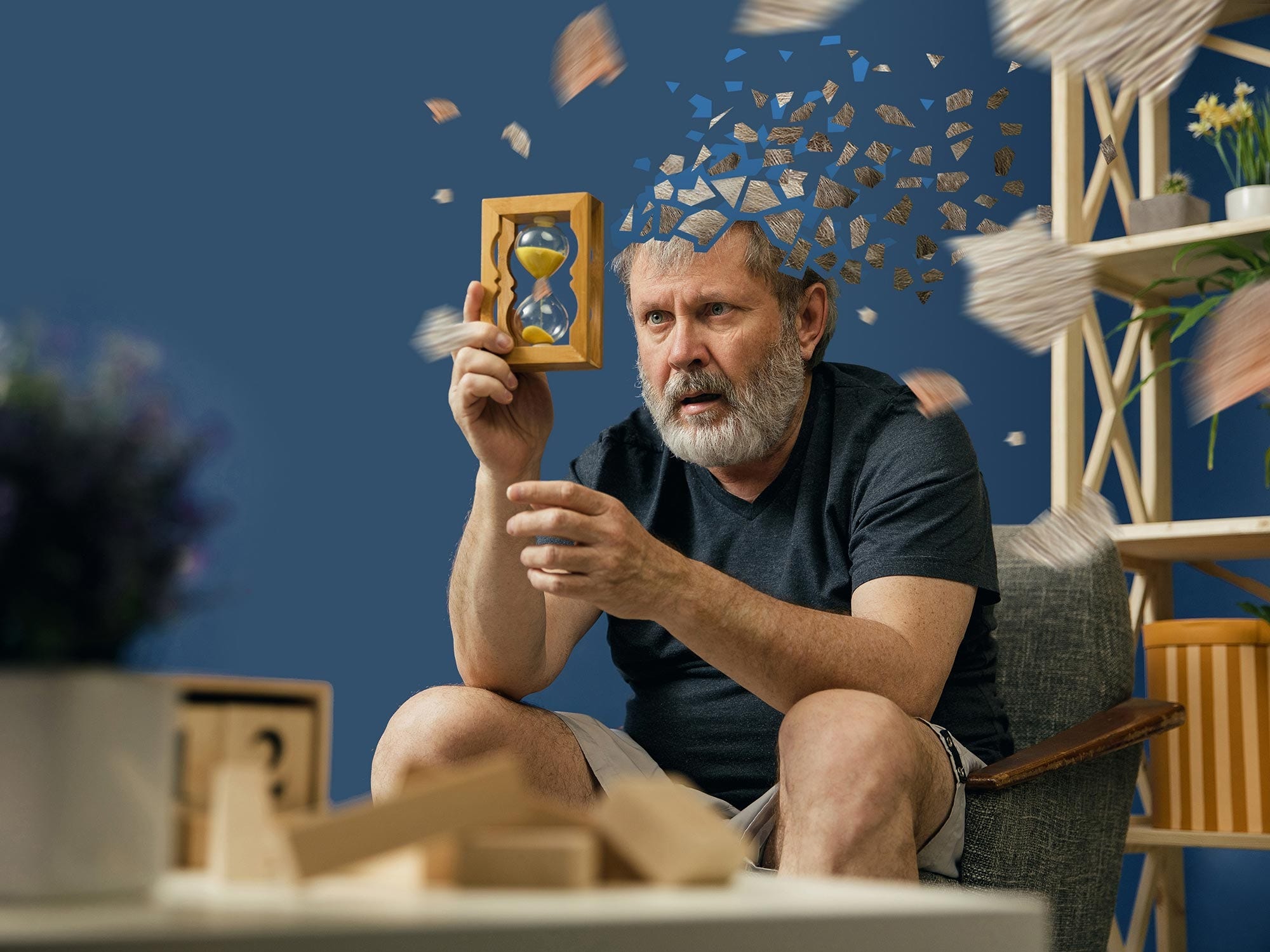
Philosophers once argued that memory is what anchors us to existence. Without it, we are adrift souls without continuity, bodies without story. Dementia strikes at this very core, dissolving not just facts and names, but the meaning we attach to them. Yet technology, born from the human hunger to control chaos, now seeks to rewrite the fate of the fragile mind. Apps, wearable devices, and AI-driven platforms promise to preserve what the brain cannot. Still, one must ask: is this salvation or a digital illusion of it?
Hidden Behaviours, People Fall for You.
Modern tools are not just gadgets; they are lifelines. Smart home assistants remind patients to take medication, AI-driven calendars repeat forgotten appointments, and memory apps store fragments of the self in glowing digital vaults. Virtual reality has shown remarkable potential immersing patients in simulations of childhood homes, favourite parks, or even wartime experiences to unlock lost memories. For some, hearing a song in a VR headset or smelling a digitally paired aroma can bring back moments thought to be erased forever.
But behind these wonders lies a subtle paradox: are we preserving the human experience, or outsourcing it to machines?
Consider Elena, a retired teacher diagnosed with early-onset dementia at 62. Her daughter uploaded decades of family photos into an AI-assisted memory app. Now, each morning, Elena scrolls through pictures that whisper stories she cannot fully remember. Sometimes, the technology succeeds—her eyes light up as she recalls the day her students decorated her classroom with flowers. Other times, the device feels like a cruel mirror, showing her reflections of a life she cannot grasp.
Here lies the duality: technology can awaken, but it can also remind us of what is irretrievably lost.
Technology is not innocent it reflects the world as we shape it. In dementia care, it can become a dark mirror. Patients may grow dependent on reminders that replace natural recall. Families may lean on apps instead of holding conversations. What was once human connection risks being digitized into robotic prompts.
There’s also a more chilling thought if memory is increasingly stored in external systems, do we risk hollowing out the very essence of being human? Are we building a world where memories live longer than the people they belong to, floating in servers after the mind has turned silent?
GIVE TIP IF YOU ARE LOVING THIS ARTICLE
Psychologically, the impact is profound. Patients often describe dementia as slipping through fog, while caregivers describe it as watching someone disappear while still standing before you. Technology offers a strange hope: a chance to hold the fading threads. But it also stirs fear fear that the person is only “alive” because a device says so.
Yet isn’t this fear as old as time? Books, paintings, photographs—all were once new technologies designed to preserve memory against death. Perhaps today’s digital tools are only an extension of this ancient human desire.
Memory is not just storage—it is meaning. A machine can store your grandmother’s recipe, but it cannot taste the love she poured into it. A device can remind you of your father’s birthday, but it cannot recreate the feeling of his laughter.
This is the philosophical crossroad: technology can preserve fragments, but can it preserve essence? If memory is both data and emotion, perhaps machines can only safeguard one half of the equation. The other half still depends on the fragile human soul.
Despite these questions, breakthroughs are undeniable:
AI-driven speech analysis can detect early signs of dementia before symptoms fully emerge.
Wearable devices track wandering patients, ensuring safety without imprisonment.
Cognitive stimulation apps use games and puzzles to exercise brain plasticity, slowing decline.
Robotic companions provide comfort, reducing isolation in patients who forget even the faces of their families.
Each innovation pushes back against the darkness, not erasing dementia but bending its trajectory.
Still, no screen can replicate the warmth of a hand held, the comfort of eye contact, or the patience of listening to the same story repeated for the tenth time. Technology may illuminate the path, but it is the human touch that gives meaning to the journey. The digital age can be an ally, but never a replacement, for compassion.
Why Women Leave Men They Still Love?
Dementia is often called the long goodbye. Technology might stretch the farewell, slow the unraveling, and preserve fragments of what once was. But the deeper truth is this: to love someone with dementia is to love beyond memory. It is to see the soul even when the story fades.
In the end, perhaps technology’s greatest gift is not in preserving memories, but in reminding us of their fragile, irreplaceable beauty. Like fireflies in the night, they glow for a moment—bright, fleeting, unforgettable.
With Love
Zara Monroe!..❤️
No posts
Comments
Nothing yet. Say the first thing.
Sign in to join the conversation.