
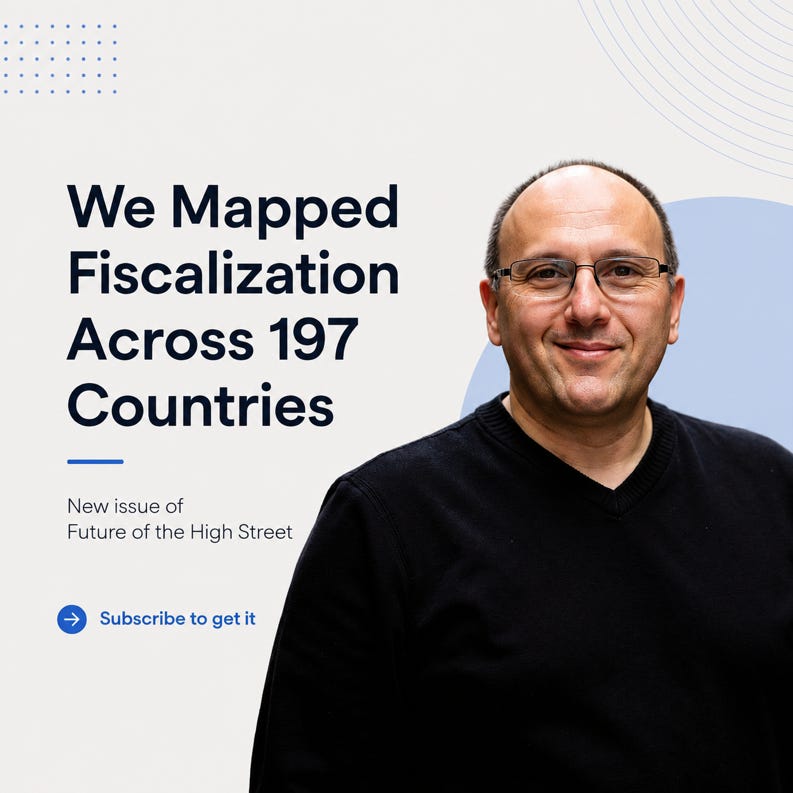
Welcome,
Lots of topics are on my desktop, and it was very difficult to decide what to include in this issue.
As Italy changed its fiscal law and it has to be implemented already next year, I decided to put some focus on the latest update of the technical specifications.
A big topic on my desk is also the new Global Fiscalization Atlas 2026, so I am bringing you exclusively some updates related to this great report. We analysed 197 countries, which means the entire world, to find out what the global status of fiscalization is and how it will continue to develop. I think it is the first report of its kind in the world.
Some recent changes around AI regulations in Europe are influencing leading LLM companies to introduce watermarks even into the text they create. In this issue, I am bringing you an overview of how this is actually done.
I will also write about a typical problem in fiscal countries: differences. This time, I took Croatia as an example.
Then there is my latest article published in Forbes about how culture is becoming a new and very important sales channel in retail.
And there is something very personal. I want to invite you to my exhibition in Seoul, South Korea. I will show one of my artworks in a group exhibition about identity. I am already very excited about that.
So, as always, this issue is a mix of fiscalization, retail, AI, technology and a little bit of art.
Enjoy it.
Just to remember, the new Italian fiscalization law is enabling retailers to use software-based fiscalization instead of fiscal printers or fiscal servers. This is already a great move, making it much easier for many retailers.
Now, the latest update of the technical specifications is fine-tuning some of the important operational features. Version 1.4, which is the latest version, brings important clarifications in the areas of meal vouchers, connection deadlines, the removal of a QR-code requirement, management documents, cloud architecture scenarios and the scope of ISO certification requirements.
Let’s discuss each of them.
Handling vouchers (Buoni Pasto) in general can be a difficult process. On one side, the retailer has to issue them and handle the VAT correctly at the moment of issuing them. On the other side, the moment when the customer uses them is also business-critical. The new version of the specifications brings more clarity.
If you are in the fiscalization world, you will know how difficult edge cases like offline situations can be. It becomes very crucial to know how you need to react in those situations and how much time you have in order to bring everything online again. Version 1.4 specifies this in more detail.
QR codes are widely used in fiscalization laws in many countries. Italy decided to remove them from the receipt. I personally think that this is good, as handling the receipt at the POS will become easier. At the same time, identification and traceability, and therefore control, could become more complex for end users and for the authorities.
Usually, a POS creates a lot of documents that are operationally needed and useful but not required by law. This change in the requirements defines exactly which documents, and in which format, are required by the fiscalization rules and which ones the POS has to create.
The complete technical part of fiscalization in Italy is designed to be vendor-neutral. Cloud solutions are allowed and possible, but not mandatory. The new version of the specifications clarifies the hybrid types of architecture better, which could make a lot of sense for many retailers.
ISO certification is an important part of the Italian fiscalization rules. The Version 1.4 update refines the scope of those certification requirements.
Overall, we can say that the new version brings more clarity to some very concrete operational requirements.
In many situations, it makes sense to also check the older versions of the requirements. By doing that, it becomes clearer how some of the features developed and why they were introduced. You can find this information in the detailed article on my homepage.
For some time already, there has been something on my desk. It is the big question of what fiscalization actually looks like across the entire world. Unfortunately, I have always had only part of the picture. Mostly Europe, partially Latin America, and that’s it. I decided to change that and analyse the entire world.
After discussions with my team, we organized a project and started many months ago to collect data, contact countries and analyse the results. And we did that for 197 countries.
The Global Fiscalization Atlas 2026 was born.
The team, consisting of Ema Stamenković, Nikolina Basić, Ivana Picajkić, Ljubica Blagojević, Vukašin Santo, led by Tara Nedeljković, did a great job and created a big picture of where fiscalization exists, which technologies are used, how complex the different models are, and what all of this means for retailers and technology vendors.
To be honest, although I have been in fiscalization for almost 30 years, many of the results surprised even me.
Let me share some of the results with you exclusively:
107 of the 197 analysed countries are already clearly fiscalized. That means 54.3% of the world.
Fiscalization is increasingly becoming a software topic: 85% of all fiscal markets use software as part of the fiscal requirements.
Fiscal hardware still plays an important role. 44% of countries in the world have it.
South America has the highest fiscalization rate: 83.3% of the countries on that continent are fiscal. Africa has 31 fiscal jurisdictions, which is almost exactly as many as Europe. Europe has 32.
But their technology models are almost opposite: 93.5% of African fiscal markets are software-enabled, while hardware is involved in 75% of European countries.
We identified 49 markets with real-time or near-real-time reporting and 43 where fiscalization and e-invoicing are linked.
37 are using QR codes and 26 have digital signatures.
Overall, we can make a simple yet very powerful and important conclusion: fiscalization is increasingly becoming part of the transaction architecture itself.
The Global Fiscalization Atlas 2026 is not just a list of countries with their main characteristics, fiscal or non-fiscal. It is a way to understand the global fiscalization landscape. It helps to recognize in which direction this compliance industry is moving, and it is a huge help for everyone who has to prepare their own business for it.
It doesn’t matter if you are a retailer that wants to expand, a solution vendor that wants to cover the world with its own solution, or a consultant who has to stay informed about the industry. This report is for you.
This book is very unique and probably the first of its kind worldwide.
It is not published yet. Dušan Lončar is currently working on the layout, design and data representation. Although it is not finished yet, I wanted to give newsletter readers this first and exclusive preview.
More coming very soon.
I will talk now about Croatia, but this situation is similar in many countries. One invoice can have several values, and all of them are linked to the same invoice. This sounds wrong and maybe even impossible, but it is not. Just think about fiscalization, payment and accounting.
This is the case, and the problem becomes especially visible when we are talking about foreign currencies. A USD 10,000 invoice can really be USD 10,000 for both the seller and the buyer. But the fiscalization system in Croatia, Fiscalization 2.0, will represent it in euros.
As the seller and buyer fiscalize the same e-invoice through different systems, they could also have different euro values. The reason could be a different exchange rate, conversion method or rounding.
When the payment is made several days or even weeks later, the exchange rate has probably changed again, and the value is different once more.
The reconciliation in this situation becomes more complicated.
Now, the real challenge is probably not the calculation itself. The real challenge is to link the differences to auditable events and situations so that they are explainable and auditable. Of course, this applies only if the differences are legitimate rather than a compliance error.
I looked into this actually quite common situation in Croatia and explained it in detail. I mapped different scenarios for retailers, ERP and accounting vendors, as well as e-invoice and fiscalization providers and platforms.
Read the full analysis: One Invoice, Several Euro Values
I am sure that if somebody asked you to count retail channels, you would think of many of them. Stores, e-commerce, social commerce, mobile apps, even agentic commerce would be there. But most probably you would not mention culture.
I truly believe that one of the most important retail channels, but at the same time one of the most underestimated, is culture.
If I give you just one example, you would agree immediately: K-Beauty.
Long before customers enter any store of a beauty retailer like Olive Young, they already know the procedures and routines, products, ingredients and the stories behind them.
TikTok, YouTube and K-Pop did that job. Through the spread of the culture, the so-called K-Wave created desire. Today, that desire lives in K-Culture.
The store comes much, much later.
If you are a retailer and think about that, you will recognise that it means demand starts outside of the store or your own brand universe. But that also means that traditional analysis and values like historical sales figures will not help you to understand what the next wave is.
In my latest Forbes Technology Council article, I look exactly at this: culture as a new retail channel. I had a special focus on K-Beauty and Olive Young, as it only recently opened its store in New York.
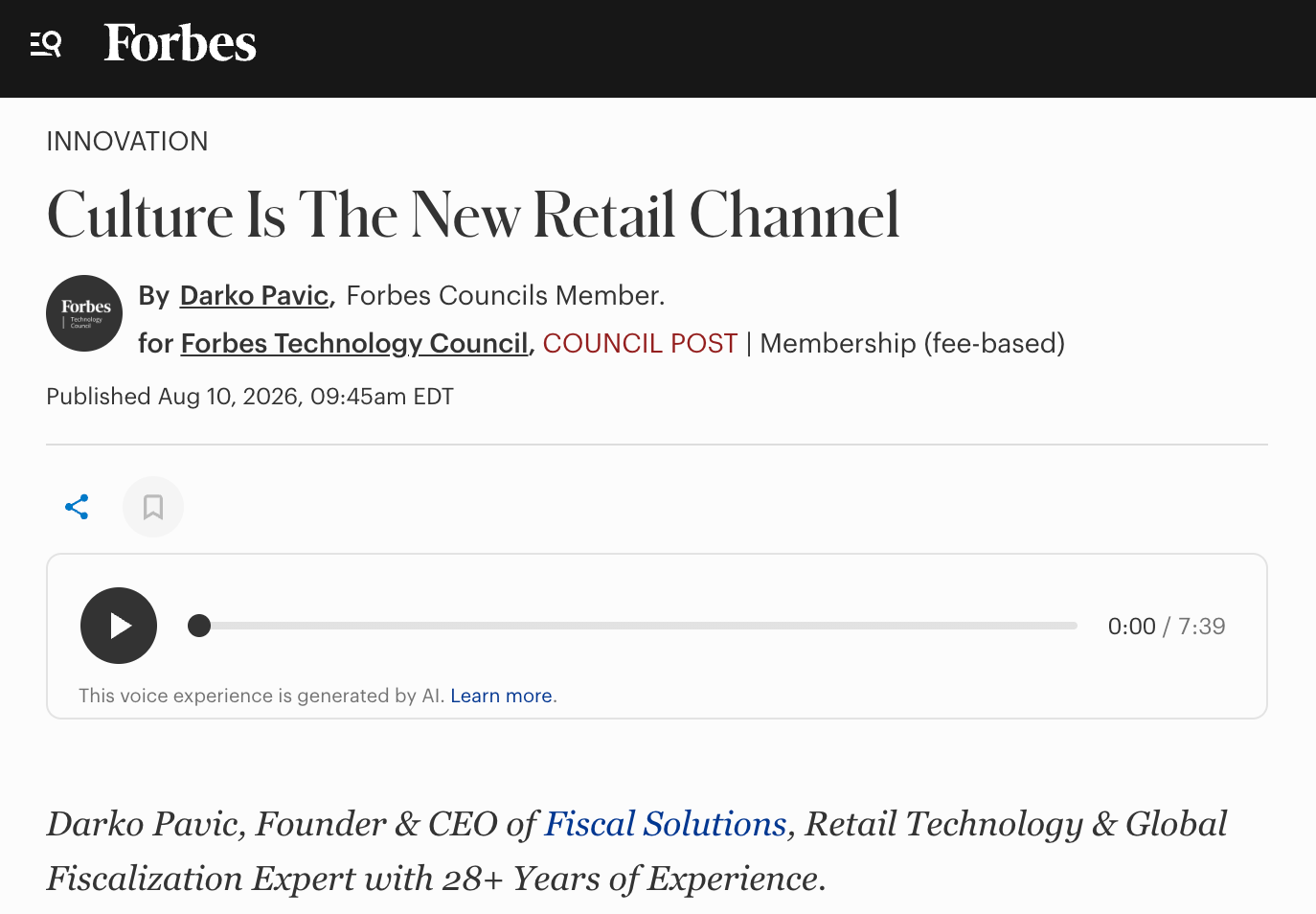
It is a great example of how culture creates desire and how retail converts it into commerce.
But what happens when culture moves faster than the retailer?
→ Read my full Forbes article: Culture Is The New Retail Channel
Some weeks ago, we also had this topic in our Retail Talks. Here is the complete recording for you.
The problem with live events on LinkedIn or YouTube is that participants are fixed, and it is very difficult to include somebody from the audience spontaneously.
But for a real discussion, this would simply be great.
Imagine live sessions where, like in radio shows, the audience can call in and join the discussion live.
Just like Coast to Coast AM was in the US. A great radio show with open lines.
Or the German call-in show Domian.
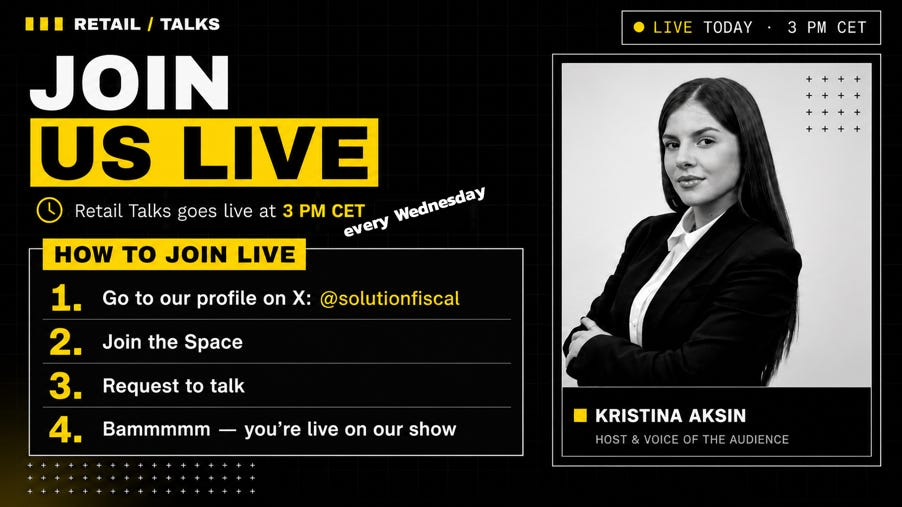
We established something similar in our Retail Talks, and last Wednesday we did it for the first time.
After the discussion about the main topic of the show, we will open the lines and let everyone join. Joining will be very easy in just three steps:
1. Go to our X account: https://x.com/SolutionFiscal
2. Join the Space.
3. Request to speak.
The hosts of Retail Talks will let you in, and you are live.
I am very excited about future discussions.
The new EU law on AI is forcing everyone who uses AI to clearly label it. That has influenced AI vendors to define strategies for how to label content created by their tools. Many of them are working on watermark strategies. Anthropic is one of the first to come up with a watermark concept even for text content.
When I first heard about it, I thought: no way, how should that work? If Claude would just add hidden characters that humans don’t see, simple editors would easily be able to recognize and even remove them.
But that is not how it works. After investigating the concept, I found the idea surprisingly interesting.
The basis is simple and rooted in the way Claude works. Claude generates text word by word. In most cases, there are several words that could be used at each step without changing the meaning. But now the watermark concept kicks in. Instead of choosing the next word totally randomly, the system uses a secret key to influence the choice. No additions to the text, no special hidden characters. The watermark is the algorithm that influences how the next word is selected from many possible options.
The reader can’t see the difference, but the watermark is there. It is part of the algorithm behind why and how the words are selected. All these word selections create a statistical pattern that is like a stamp. The longer the text is, the clearer that stamp becomes. If that statistical pattern exists in the text, it indicates that Claude was used.
This watermark can’t be destroyed by copy and paste, and even light editing would not remove it. Only if the text is rewritten in different words, and this happens for the majority of the text, will the statistical pattern change and the watermark be destroyed.
There is a problem with short texts too. If the text is short, there is simply not enough material to create a statistical pattern, and the watermark will not be there.
If Claude is doing only minor changes, like grammar correction for example, this would probably also not create a watermark. The watermark is related to the choice of words.
So I learned something new: a watermark in text does not have to be hidden inside the file. It can be hidden in the statistical pattern of how the words themselves were chosen. This is very interesting.
P.S. Claude’s watermark is based on Google DeepMind’s SynthID-Text, although the underlying idea of statistical watermarking for LLM-generated text goes back at least to Scott Aaronson’s proposal in 2022.
In a few days, I will travel to Seoul, Korea. An unbelievable megacity with around 10 million people. It will be my second time visiting it. The first time, almost 10 years ago, I was a member of the Croatian business delegation. This time it is totally different. I am traveling to the exhibition called Identity.
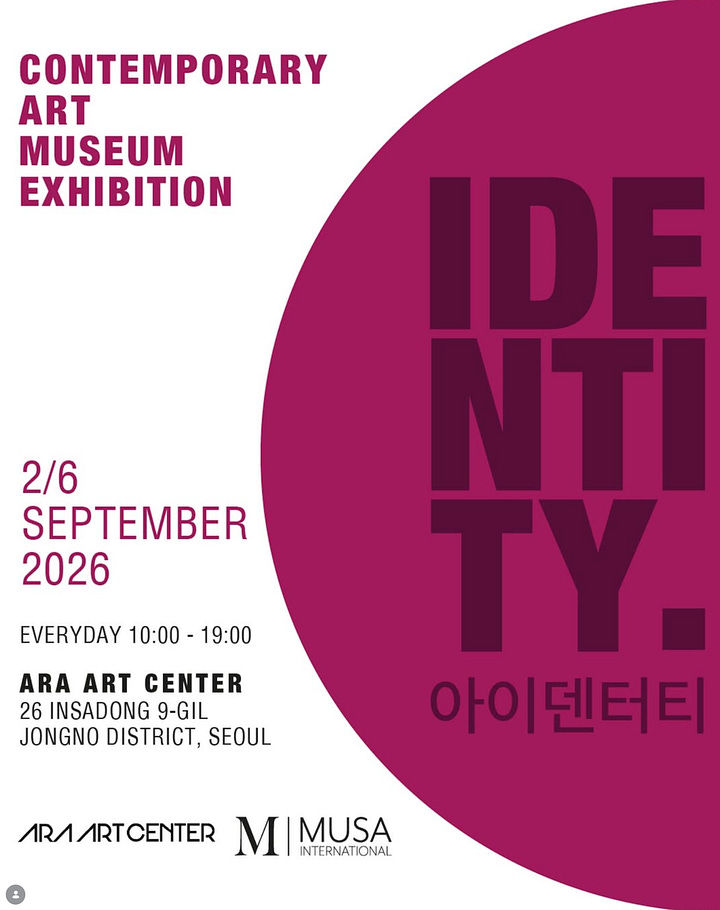
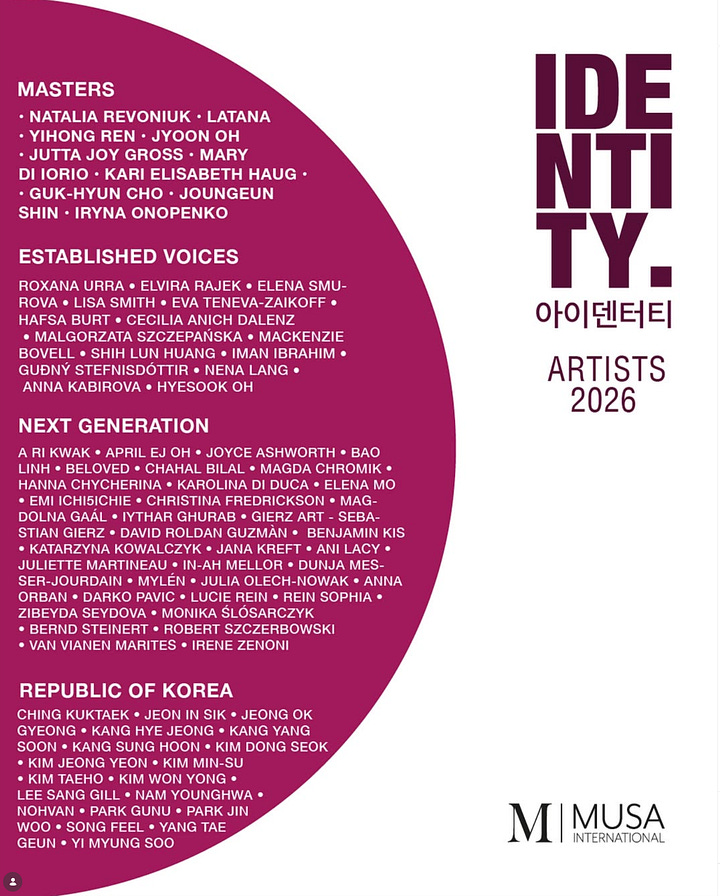
Not just as a visitor, but also as an exhibiting artist. From 2nd to 6th September, my artwork The Skin They Gave Me will be shown there. This artwork represents a very personal piece from the series Faces Without a Country.
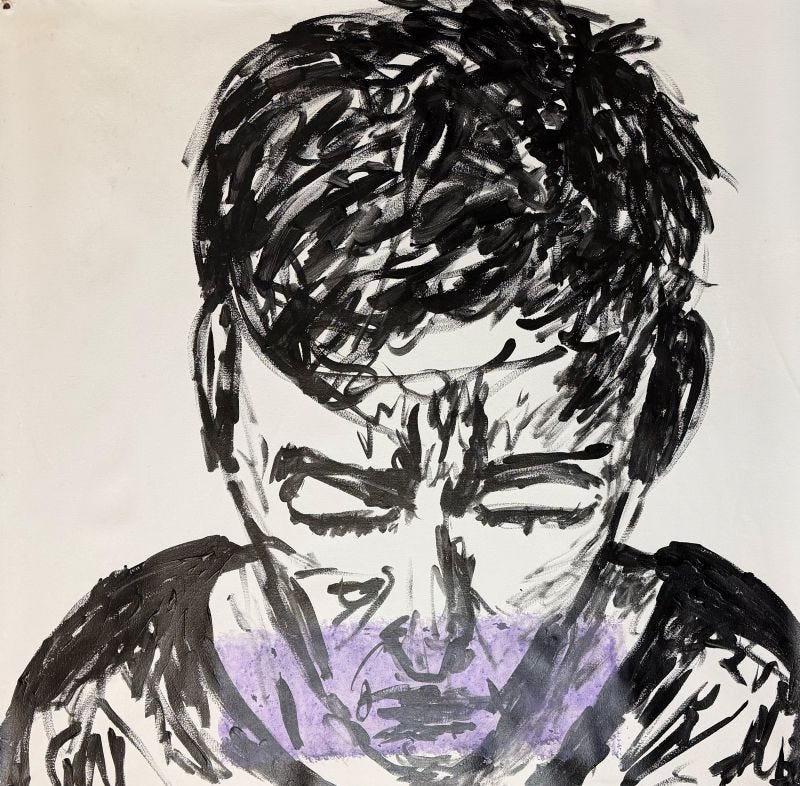
It tells my story and the story of people in similar situations who leave their home countries for various reasons. They lose their home country, but in many cases they also lose a part of their identity. Often, they receive a new identity, forced and pushed onto them. They become something or somebody they would probably never have become if they had never left their previous life.
Something else is also very interesting. I didn’t know that during the same week there are two more very famous art shows, Frieze Seoul and Kiaf SEOUL. That means Seoul will become a centre of art for a few days. And my artwork will be in the middle of it.
I am already looking forward to seeing The Skin They Gave Me hanging in a gallery in Seoul, far away from the place where its story began.
If one idea in this issue was useful, please do not only save it. Forward the newsletter to one person responsible for retail, POS, e-invoicing, fiscalization, tax technology or AI governance. That is the best way to help these ideas reach the people who can use them.
I would also like to hear from you
Thank you for reading, and I hope to see you at the next Retail Talks.
Now, you can join live and contribute with your voice, not just comments.
Darko
P.S. Future of the High Street grows mainly through readers who forward it. Subscribe or share the newsletter here.

Comments
Nothing yet. Say the first thing.
Sign in to join the conversation.