
‘We had accepted the idea of ourselves as waterborne outcasts, seafarers not yachtsmen, finally cut adrift from a shore that, we felt, no longer had a place for us’. Heading off into the fog, writer and voyager C.C. O’Hanlon reflects on a life on the ebb tide, pirate utopias through time and a boatyard where every vessel feels like a haunting. Extracted from Issue 26 - Dark Ocean, one of our new bookshelf offers setting sail this summer.
Voyaging belongs to seamen, and to the wanderers of the world who cannot, or will not, fit in. If you are contemplating a voyage and you have the means, abandon the venture until your fortunes change. Only then will you know what the sea is all about.
– Sterling Hayden, from Wanderer (1963)
I SENSE THE WEATHER AS I WAKE even before I open my eyes. The hull is still, save for a faint, gravitational shift of tension starboard, between it and the wooden pontoon to which it’s tethered. A shift of tide, not wind. The only sound is my wife’s breathing as she sleeps.
The air in the cabin is cold for a summer morning. The moisture in it has substance; you can almost swill it around your mouth. There’s a thin taste of salt, diesel and wood. Fog.
I open my eyes to peer through a perspex hatch above my head. Sky the colour of stale milk has fallen across it. I sit up, wrap my duvet around my shoulders, and check the small, brass-encased barometer and clock on the bulkhead above the foot of my bunk. 6.30am: four hours before high water.
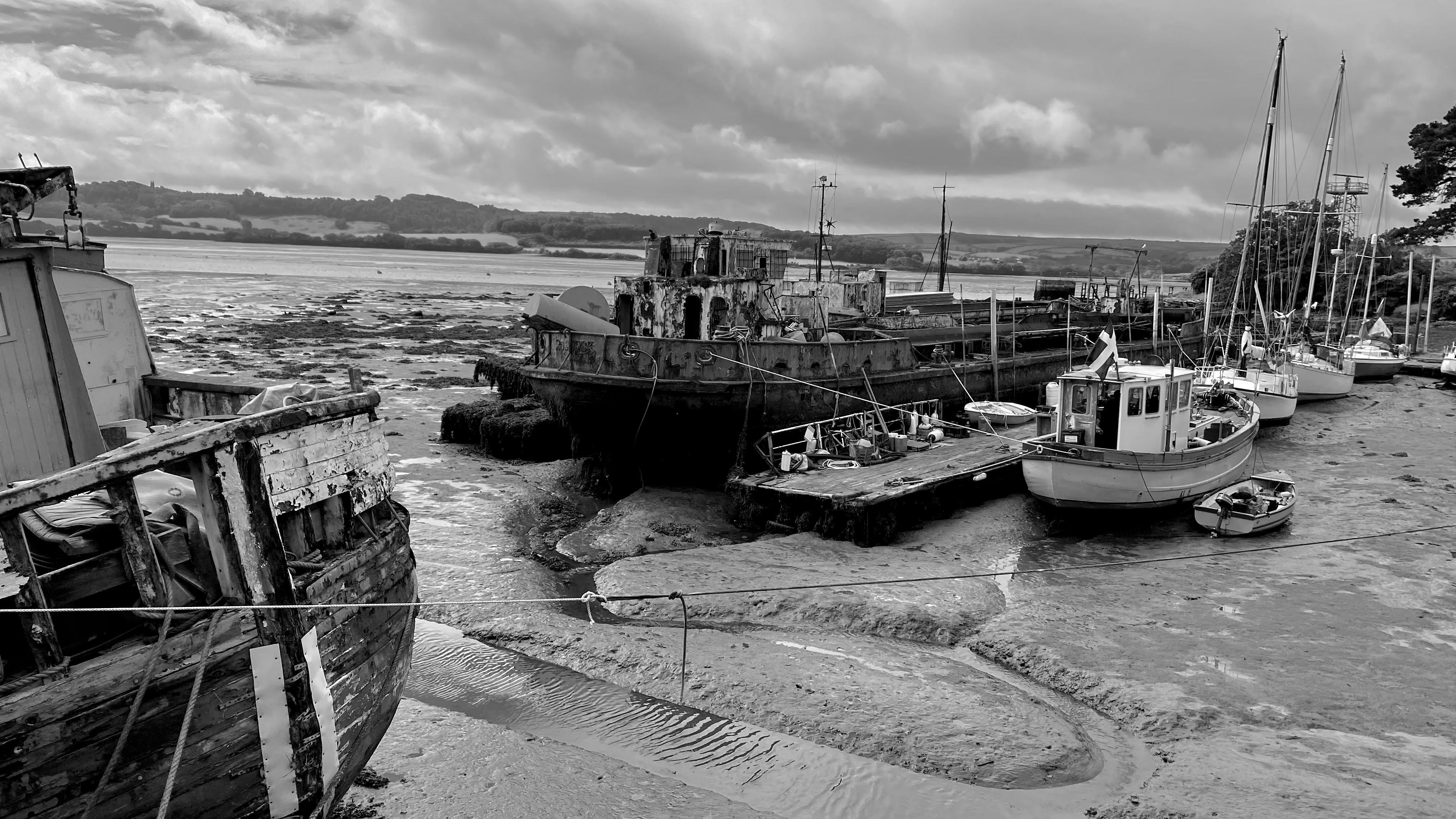
In an hour, my wife and I will warp our old sloop from its berth and sail a mile or so north-west across the Tamar estuary on the flood to thread a narrow channel edged by mudflats, at the mouth of a nearby tributary, St. John’s River, to reach a ramshackle boatyard where our boat is to be lifted ashore for repairs.
Fog and unfamiliar waters will make what might have been a careless 20 minute transit more testing. Upriver are commercial wharves and a naval dockyard. Large ships and ferries ply the buoyed, deep-water fairway in the middle of the river, heedless of small boats like ours – mere pinpricks, if seen at all, on their radar screens. In such poor visibility, the percussive thud thud of heavy diesels will be the only hint we get of their proximity and course.
Our boat has no radar. No GPS either. The VHF radio has seen better days. Wrack is an impoverished vessel, sea-worn and ill-equipped, almost half a century old, but capable enough under sail. With a fair breeze today, we can make do with a saltstiffened mainsail, steering compass, and a rough plan of soundings and a small section of shoreline that I’ve traced in pencil from a large-scale chart on the harbourmaster’s office wall.
Comments
Nothing yet. Say the first thing.
Sign in to join the conversation.