
This past year, I’ve been asking nearly everyone I talk to about their take on using AI. Are they opting in, opting out, or just using it cause it’s there? What about at school or work? Is it an option, built into the workflow, or do they even know? What worries do they have?
Survey stats on usage tell one story—it’s a straight-up trajectory. But people I ask are all over the place. There are so many angles to write about, each numerous and true to varying degrees. Everyone’s viewpoint is unique. And I’m sure you can find so many AI stories to tell too. Here, I share what I’m seeing.
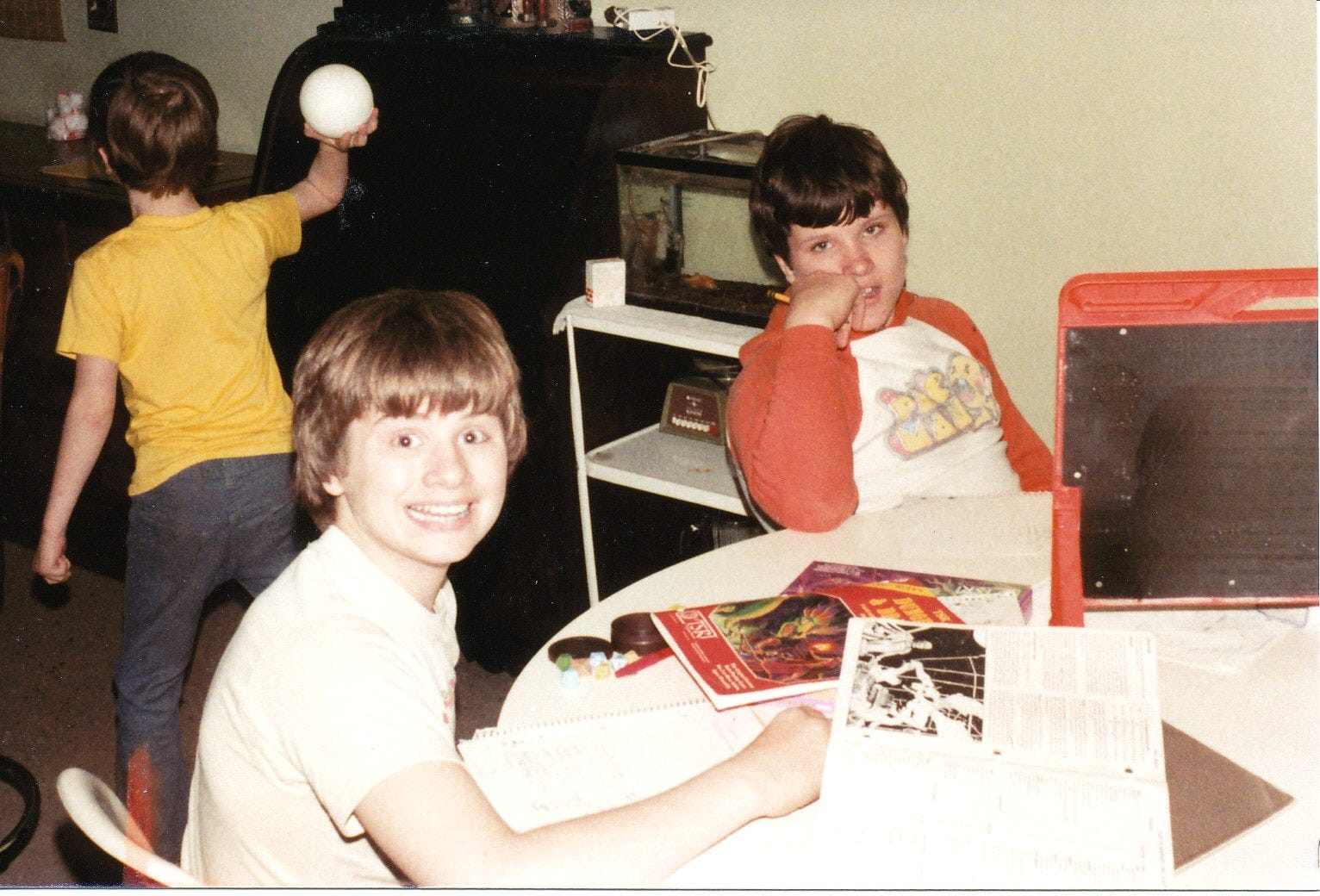
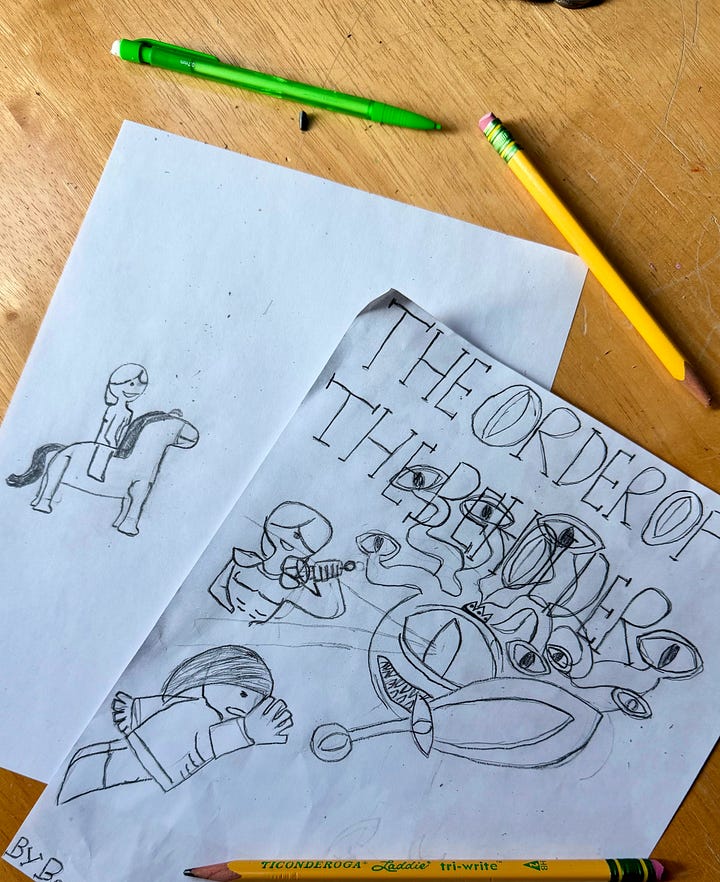
My ten-year-old is less tech-savvy than my twenty-year-old was at the same age. As I type, he’s playing with stuffed animals with his fifteen-year-old brother, making up crazy, plot-filled stories. The older one is meeting up with friends soon to play Dungeons & Dragons.
I grew up with three brothers playing video games and DnD. I live with three sons also doing similar things. My oldest son is moving out soon, though, and I’m already missing watching my three boys the same way I’m nostalgic for remembering my brothers all together. It pulls at my gut, connecting me now to back then through a fierce love for my brothers and boys. Even as life methodically moves on, sometimes in jumps, I resist letting go, just as I did before. No chatbot knows that feeling, no matter how many human words it’s been fed.
Everyone’s being AI-influenced, whether you use it or not. I’m seeing AI push people out of the box more. No one wants to sound or look AI.
The AI backlash is real, and it seems way beyond the performative kind. It seems especially strong among young people who feel like AI is stealing their own story before they even get the chance to write it.
What makes us human feels more valued precisely because it feels like it is being stolen, redefined, and housed by something very much not human.
While AI itself doesn’t spark creativity (ok I know some would disagree), the backlash to it seems to be. This I love.
Are we entering a great renaissance? A real one, not the showy, superficial trend-turning “pivots” of the past that came and left as influencers moved on. It feels different now. People want normal, organic, hands-on experiences that are DIY in more than name only and that are for their own enjoyment, rather than a follower’s split-second scroll. People want to create because they can—not to prove or signal anything, posting the receipts for everyone to see. People want work that leads to some sense of look what I did, or we did.
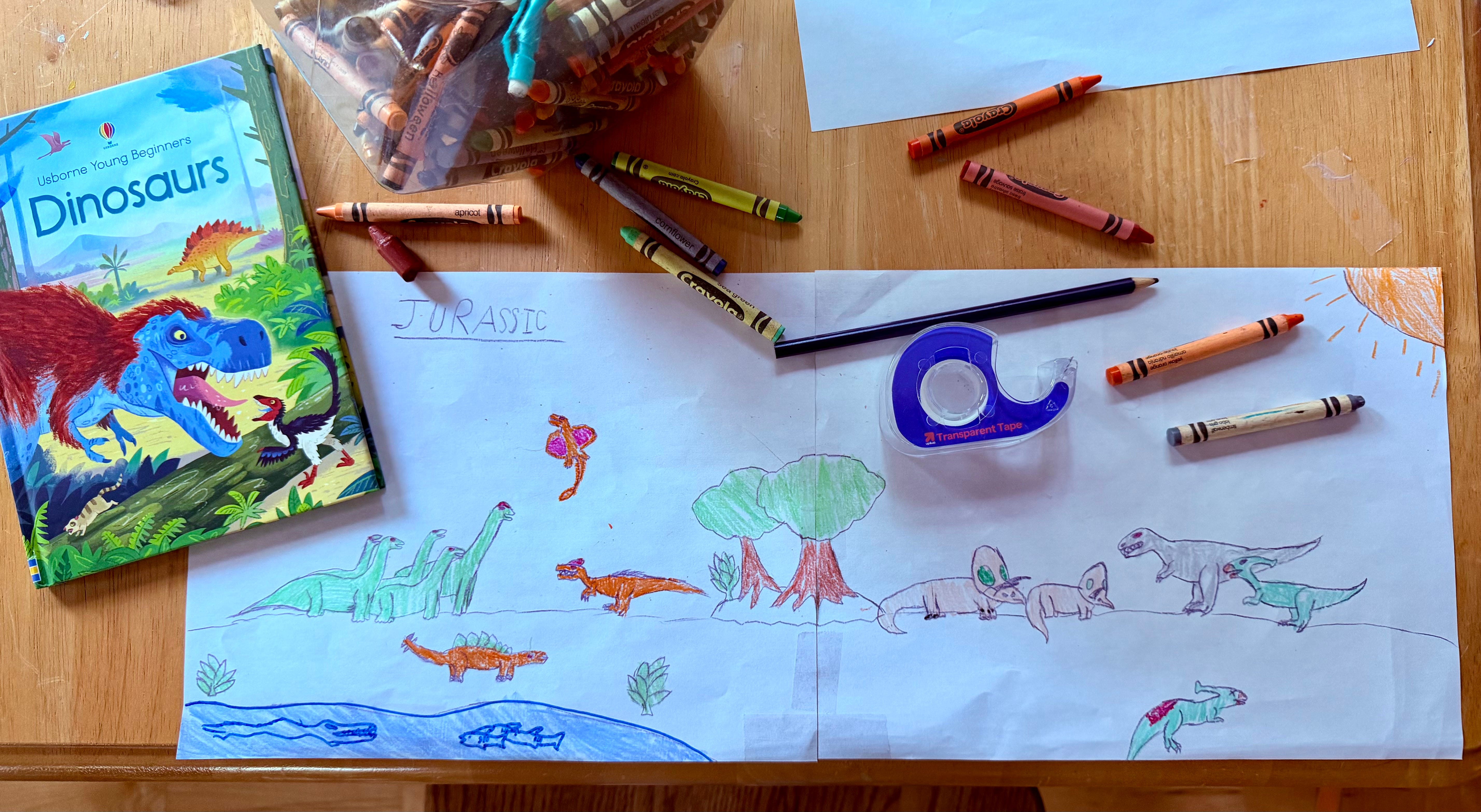
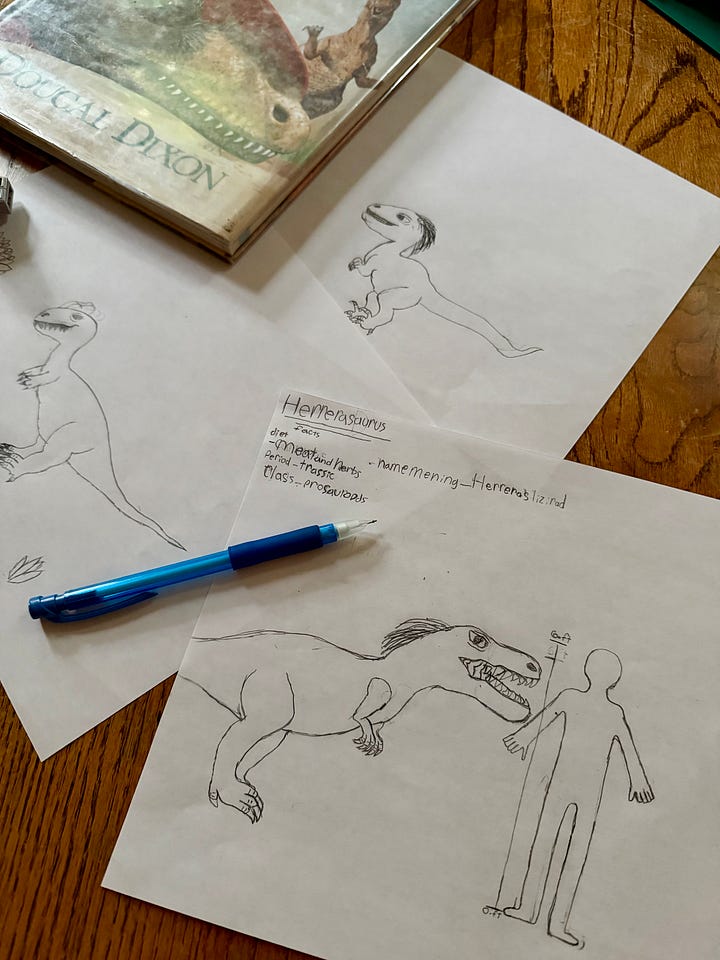
My house is a constant mess of toys, games, art projects, and crafty stuff that looks like someone is always in the middle of a makeathon. Right now, my youngest is testing out boats in the tub that he just made, piling on He-Man and a few prehistoric marine reptiles. I love hearing him play and seeing what he makes. It’s one of the most joyful parts of being a parent. Watching kids create is fun, and it’s contagious too.
Alongside this renaissance story is a surge in AI use.
More and more people are using chatbots, depending on them, and, yes, liking them. Give me what I want and give it to me now. Consumers expect that. Just look where they go. Working in healthcare and communications, I can’t ignore this or judge people for how they get information. Respect is cornerstone. Whether they ended up chatting by choice or falling into it since Google’s AI mode became the default (along with so much else online), it really doesn’t matter. Figuring out how to meet people where they’re at is key.
AI summaries have much improved and generally give reasonable answers to simple questions, though less so for complex ones. Still, a chatbot is far easier than finding a real expert you trust and can afford. And a summary is simpler than reading the links.
Even the experts are turning to chat.
In the American Medical Association’s latest survey, more than 80% of physicians reported using AI in their day-to-day practice, including generative AI to draft responses or write notes or insurance letters. OpenEvidence, the ChatGPT for clinicians (including pharmacists), is wildly popular, and older clinical decision support tools like UpToDate have rolled out their own generative AI versions.
AI is already becoming background noise. Some say it’s helpful and some say grating, but increasingly it’s unnoticed.



People aren’t only rapidly consuming generative AI; they’re outsourcing their own communication to it. An email, report, itinerary, listicle, message of any kind, for both work and personal use.
Most people are not writers and don’t like to write, so no shocker. And some types of writing are tedious time sucks with no apparent need for a human touch.
No more tapping each stroke on a phone or keyboard, building sentences one by one. Find my words for me—or better yet, give me more “polished” ones. I’m too tired to think, and I’d rather trust AI’s coherency and “voice” than my own right now. I hear that. I get that.
For some people, writing can be especially taxing. Writing anxiety is just as real and common as math anxiety. Plus, writing has an added layer of vulnerability.
I think of my brother, who struggled with dyslexia. Human help is best but hard to find, especially for adults. My daughter worked as a writing center tutor in community college, and access to free one-on-one support is so valuable. But not everyone has that. AI could have helped my brother with some types of writing communication, and I can imagine it being helpful for so many people with different types of language or learning barriers.
Concerns are obviously legitimate too, but context matters a lot.
Mistrust can apply to anything AI-generated, but it matters most when accuracy and trust are essential. There’s also a discomfort in AI-generated creative work, a yuck feeling I’d say, even if AI output were able to seem more human. You don’t need Pangram’s help to know the difference.
Actually, some people might not notice a difference. Some might even prefer an AI-generated story over a human-created one — as long as they thought a human wrote it. Have you seen this new study: Bot or not: Can people tell the difference between stories written by a human or by an AI system?
Quality aside, there’s no replacement for knowing something of interest or intrigue was human-created. There’s an intimacy that AI can’t fake.
There’s some utilitarian writing that almost no one will pay to have a human write anymore, and in those situations, it’s still important to have a human review.
The conversation about generative AI often leaves out the myriad of contexts. Not all communication carries a level of craft or accuracy that’s needed or noticed, and lots of communication tasks are ones no one wants to do. Summarizing simple, dry data to get the “gist” of something is completely different from crafting content people choose for connection, enlightenment, or help understanding and applying nuanced information with real-world consequences.
In any case, writers are responsible for every word, citation, conclusion, and context. AI can’t replace your brain or accountability and can’t be trusted as a “partner”. It is not.
AI does not have your back the same way a good human editor does. It does not care if you make a fool of yourself (and your country). Have you heard about the map mislabeling mishap?
Can you really tell with certainty if AI wrote that? 100% AI written? Um, yeah. What about 50% or 20 or 10? Maybe sort of, but not enough to assume. The finger-pointing feels McCarthyism-esque, with the weight of judgement often heavier on women.
It reminds me of the aughts when the preschool moms would apologize any time they brought Jewel-made cupcakes in. Even if it was just a homemade Duncan Hines cake, your extra labor of cracking the eggs and washing the bowl showed you cared — cared about everything (whether it mattered or not) over your own time, agency, and plans. The kids did not care whichever sugary sweet they got.
Once dads started showing up more (before 2010ish, most dads were MIA in my circles), the cupcake judgment disappeared. Dads would actually be proud of themselves simply for remembering to bring any treat in at all.
Today, I’m noticing that it’s much more common to hear men tout their AI use. If it makes sense and saves them time, then so be it. They may even feel clever for it. With women, I’m more often hearing caveats, hesitation, guilt, and over-explanations around AI use, even for minor things that make no real difference. It’s expected that men don’t like doing extra work. Women are often expected to overwork, and any shortcut makes people question her character.
Whatever anyone thinks of AI, this gender dynamic is troubling.
Many writers are now meticulously trying to remove any hint of AI, whether they used it or not, as if writers don’t have enough busy work. People who don’t want to use AI are feeling pressured to use it to prove that they’re not—how messed up is that?
The list of supposed AI “tells” that you didn’t write what you wrote keeps getting longer. It started with the em-dash. The only time I’ve been told during editing to remove all em-dashes is when I was reviewing AI-generated technical content (which meant half-rewriting it). When I write for myself, I use them as much as I want. If an editor removes them, I’m fine with that too. We have bigger things to think about.
Could intentionally trying to sound “more human” make writing less readable by actual humans?
Readability is crucial for informative communication. Writing in plain language is structured and sticks with common patterns. People are making fun of “it’s not this, it’s that” and lists of threes, the latest callouts of AI-tells. Drawing comparisons and groups of threes are common techniques in writing educational content.
Writing for humans means focusing on the people who will read it and ignoring the rest, including your own ego.
“Human in the loop” is an AI phrase that’s supposed to sound reassuring, but doesn’t.
AI is not a source of truth, but it “speaks” with absolute authority. Even physicians trained in critical appraisal—with people’s lives depending on it—need that reminder. These concerns were raised in a Viewpoint article published in JAMA by Graham T. McMahon, MD, MMSc.
Dr. McMahon explains the concern that as AI is integrated into clinical decision support, providers will be seduced by automation bias: “the tendency to accept information as true because it is fluent, confident, and coherent rather than because it has been rigorously evaluated.” As clinicians rely more on AI, he worries their own clinical judgment will weaken, and opportunities for mentorship and collective reasoning will be lost. AI-mediated learning is proficient, he notes, but it “lacks the friction that produces insight through questioning, disagreement, and perspective-taking.”
If those are real concerns for highly trained physicians, how could they not be bigger concerns for the general public, especially kids and students? Use it or lose it is one thing. Skills weaken when you don’t use them. But if AI is introduced too soon, skills might never be developed. ”Never skilling” they call it.
Never skilling can also happen from role collapse. This is happening a lot! Senior-level employees are using AI to do more basic work, work that would have been done by junior or entry-level employees. Everyone has to start somewhere, but everyone also needs a place to start. How many places is AI replacing? Anecdotally it seems more common than stats might show.
Put the two together, and you get a recipe for disaster: overly trust AI and then become totally dependent on it for thinking skills we used to have but now don’t. What human will even be “in the loop” then? Who will question it or keep it in check?
My daughter entered kindergarten in 2005, and my youngest now is 10, so I’ve seen the cultural shift from techno optimism to skepticism and even pessimism.
I opened a Twitter account in 2012. My first tweet was “hi pumpkin” tagging my daughter. Her sixth grade teacher thought Twitter was perfect platform to build classroom community. Tech and school were friends, and both were there to help the kids and parents. Tech was cool and even wholesome, like an apple.
Since then, I’m seeing schools become more tech-cautious, and parents are more questioning too. Many are also worried about the digital divide, though it’s tricky to tell who’s on which side. Anecdotally, it often seems like tech gets more heavily used in schools with less funding — tech is cheaper than teachers.
Who has access to human experts, and who gets AI instead? Temporary AI stopgaps in education, healthcare, or social services could easily become long-term “fixes”, deepening existing disparities.
Parents are pushing back. I’m noticing as a parent that for my younger two it’s been easier to set tech boundaries. Just knowing one other parent is doing the same makes it more doable. But leaving all of it up to parents is exhausting. Managing kids’ screen time is one of those things I thought would be easier before I had kids, especially once they’re teens. It’s harder than you’d think, and sometimes impossible. It’s one more area where I think parents need more grace (and help!).
AI is being voted out in some schools, or at least debated. There’s huge variance, and many don’t know what to do. Either way, AI is already changing the way many kids learn (or don’t).
For learners (of any age!), finding your own words can help you learn how to think and communicate on a topic. Messy stages are an important part of the process. But students often feel pressured to perform and fearful of making mistakes. AI to the rescue. If you’re first learning how to write, whatever a chatbot spews out is likely to sound better than what you initially come up with. Writing is hard, even for writers. But like any other skill, you need practice, lots of practice, to learn and grow. And there is no substitute for human feedback. There just isn’t.
“Just tell me how much of your paper is AI and how much is from you,” a high-performing engineering student recently told me his college professor asks students. He says no one really knows what’s okay, students and teachers alike.
Writing has always been precarious work. I remember hearing about journalists struggling in the early nineties. I switched my plans from journalism to healthcare, wanting something more stable after seeing my mom struggle on commission while also caring for my stepdad who became too sick to work.
Cable news and talk radio were drawing more attention away from reading. Chasing shrinking audiences has been happening for so long it’s hard to imagine how they keep shrinking, but somehow they do.
There will always be bookish or newsy people. It isn’t about formal education or demographics. They’re everywhere, but they aren't everyone. Not everyone likes getting lost in words. Reaching beyond that core has always required something extra.
Buy these words, and you also get—coupons, kitty box liners, gossipy fun, comics, and help finding a new job, used car, or date in search of something you’re looking for too. Or maybe you just liked the look of it on your coffee table. Newspapers meant lots of things.
By 2000, fewer newspapers dotted driveways, front stoops, and porches at dawn. I swore I’d never give up mine. No friggin’ way. But soon after 2010, I stopped renewing, only picking up a paper on weekends, and then not at all. Sure I have digital subscriptions, but it’s not the same. Clicking is very different from flipping. I’ve eaten lots of other words since then too. AI is not the only word eater around.
Don’t be precious about your words is one of the first things I learned as a new writer. If I were, I wouldn’t have bothered. Most words are wasted or never read. Virtually everything is forgotten. People who write and stick with it usually do it for the process. Writing is transformative, even if no one ever reads the words. This is often the only payback writers get.
There are far more writers than people willing to pay for words, and lots of people don’t care or notice how well sentences are crafted. The market for high-quality copy is small. Even before the generative AI surge, a lot of “working” writers were already making less than minimum wage if you add up all the freelance time spent.
Most writers have other jobs, spouses with jobs, or maybe a boatload of money. And like other creatives, intellectuals, or advocates, material motivation is probably not a primary drive. A lot of writers are really struggling to get by. The rise of AI will only make these lines more true, and I worry about a heavier burden writers will carry.
I deeply worry about fewer voices ever being heard. Writing has long been a highly underrepresented profession, and AI was trained on that underrepresentation. The spread of AI-generated content only compounds this problem.

More people chasing fewer writer jobs keeps accelerating, too. But that’s true for most any information-related type of work. The information age is coming to an end.
Current college students are deeply worried about competing in this job market. Pessimism about the future of work is echoed across majors. In fact, no young people I talk to think AI will make work easier or better, at least not without deep, counterbalancing concerns. I interviewed Gen Z pharmacy students last June, and one student told me she’s worried we’ll end up as mere “AI-checkers,” left in place only to hold someone accountable when things go wrong.
So far, AI seems far oversold in terms of what real benefits it has, like technology is so often overpromised. I’m still waiting for the Rosie robot to clean my home that felt promised to Gen X kids when we grew up, and not just the Richie Rich ones. I never thought I could “do it all” because I watched my mom try.
Sometimes it feels like people are bragging about finding an AI use case, because many uses aren’t that helpful. How much time did this really save me? And did it really make anything easier or less stressful? A bubble you say? Yeah, it feels that way. But the 2001 tech bubble bursting didn’t disappear the internet. AI is here to stay.
As a Gen Xer, it feels cyclical. Been there, done that. “Don’t ask, just do” has long been the norm: jump in, figure it out, keep up with churn. We didn’t live in a time when polishing or perfection was practically possible. Learn the gist, toggle through, pass it on, move ahead. Even if perfection were possible and you were a perfectionist, few would wait for it, much less pay you to do it.
Modern work is often no fun and never done, requiring constant pivots with few problems ever feeling solved or fixed. And most workers are just trying to keep up and keep employed.
But what happens if we really do become a George Jetson button pusher like once predicted? Will companies really pay people just to push buttons? And what happens if button pushing replaces judgement? How safe will any of us be?
AI touches on vulnerabilities and worries as well as excitement for what’s possible and fear of what’s unknown. But most of what we do is just about getting through our day in our own social circles.
I have so much empathy for the all the ways people say they feel about AI. We should expect strong and differing views, and that our own might change over time. It is okay.
Next post is my final AI post where I discuss turning AI anxiety into AGENCY. What can we actually do that might help as the information age comes to its end.
So long, farewell. “I flit, I float, I fleetly flee, I fly.” (best line in the song).

Comments
Nothing yet. Say the first thing.
Sign in to join the conversation.