

GM fellow DAO builders and enthusiasts!
This volume of the DAO Chronicler includes a bunch of updates from the wider DAOstar community.
But first, an announcement: DAOstar is contributing to the Rootstock Collective DAO as a delegate! Help bring our research-driven governance expertise to Bitcoin’s leading DeFi ecosystem by delegating your voting power to daostar.rsk (stake and delegate your $RIF here: app.rootstockcollective.xyz).
Also, our research fellowship program is officially underway! If you haven’t already, go check out our previous post for a program overview and introductions to our research fellows. Also, read on for updates on how their research is going.
Lastly, the submission deadlines for Cryptoeconomic Systems (CES) and DAO Berkeley (part of SBC 2025) are fast approaching—May 20 and May 30, respectively. Get your submissions in! May 30 is also the deadline to apply to attend DAO Berkeley.
What’s Inside ⬇️
🔍DAOstar Research Fellowship Update
🧠New DAOstar research on an identity framework for DAOs
✍️Call for papers: CES and DAO Berkeley
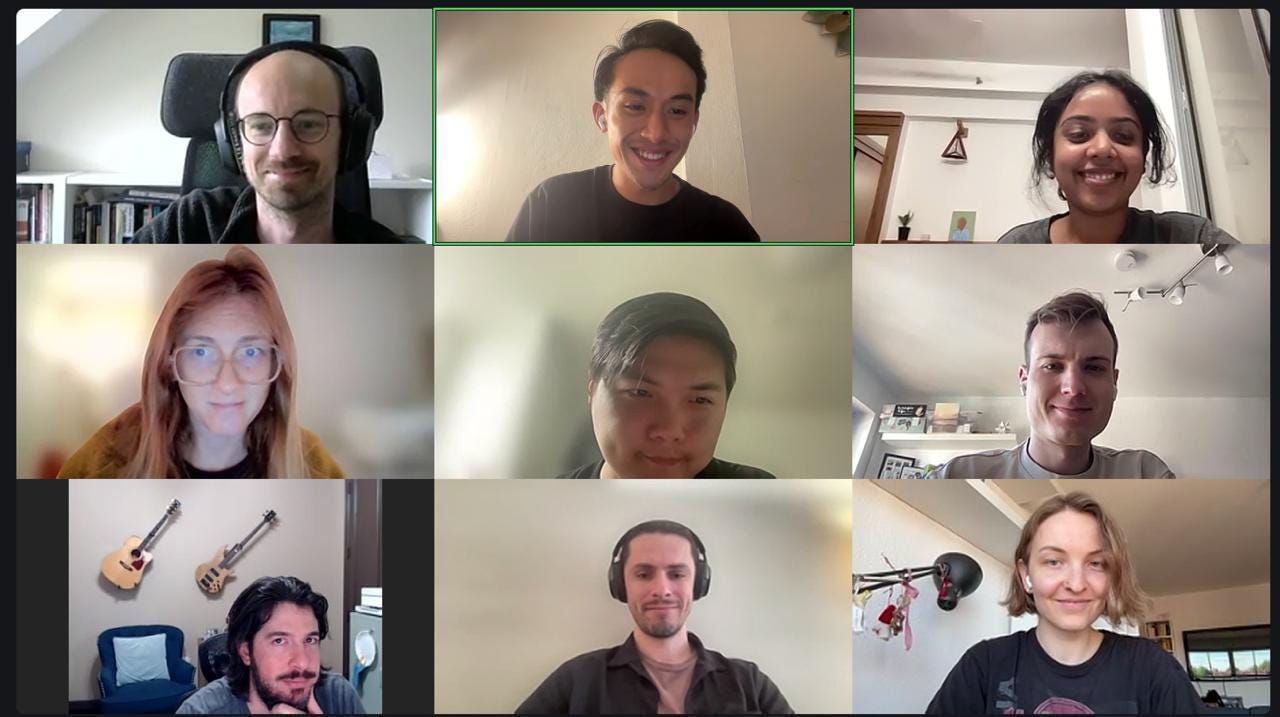
We're one month into the DAOstar Research Fellowship, and the momentum is building. Last week, we held our first check-in—an opportunity for fellows to share progress, exchange feedback, and strengthen the connections forming across their projects.
Here’s a glimpse into what some of our fellows are working on:
🌀 Social Dynamics of DAOs
Victoria and Ben spoke about the public narrative of “inclusivity” in DAOs, but the unfortunate reality of subtle exclusion, arising from various factors such as language, timezone differences, or insider norms. They are just about to begin interviews and are considering contrasting the experiences of early/OG members of DAOs with newcomers to surface potential discrepancies in the perception of invisible hierarchies.
⚙️ Token Unlocks and Incentive Structures in DAOs
Jillian and Ryan are investigating what would incentivize someone to give their all to a DAO, and are beginning this inquiry with a deep dive into the mechanisms of token unlocks. We also discussed the ratchet effect and its implications for more fair and sustainable compensation in DAOs.
🧠 DAO Governance Mapping
Teije is mapping DAO governance structures—tracking how decisions are made, by whom, and with what tools. He's exploring various on-chain data sources and designing surveys (possibly with a lottery!) to boost participation. We also discovered that some in the call had access to proprietary research datasets on DAOs, which we will share amongst the cohort.
🧾 Legally Binding Smart Contracts
Sneha is exploring how and when DAO rules and actions can become legally valid contracts. One of the key challenges she has identified is assessing intention behind any participation in a DAO, especially in an anonymous environment. Her work probes the legal gaps and philosophical questions at the heart of decentralized governance.
New research conducted by bumblefudge, founder of learningProof UG and independent research contributor, explores how we can evolve the daoURI model (EIP-4824) into a richer identity framework for DAOs. The paper asks, how can we leverage daoURI—a consistent way for DAOs to describe themselves via structured metadata—towards building a verifiable, extensible identity model that DAOs can use across jurisdictions, chains, and interfaces? “Towards a DAO ID” is an exploration of what it would mean for DAOs to have robust, trustworthy identities, and the implications for governance and legal systems.
If you’re conducting research on DAOs (or anything at the intersection of cryptography, tokens, economics, and systems design), consider submitting something to Cryptoeconomic Systems (CES), DAO Berkeley (part of SBC 2025), or both! Deadlines are May 20 and May 30, respectively.
For CES, this is a prime opportunity to contribute to a leading peer-reviewed journal in the field. If you have something that’s more of a work-in-progress, you can still submit to DAO Berkeley, which is non-proceedings.

Cryptoeconomic Systems is a diamond open-access journal spun out of MIT and managed by Metagov that welcomes interdisciplinary work spanning computer science, economics, law, and beyond. Topics of interest include, but are not limited to:
DAOs
Mechanism design
Blockchain governance
Token engineering
Privacy-preserving systems
For detailed submission guidelines and to submit your paper, visit the Spring 2025 Call for Papers.
Officially known as the SBC DAO Workshop, DAO Berkeley is the longest-running academic DAO workshop, itself part of the world’s largest scientific conference on blockchain—the Science of Blockchains Conference (formerly the Stanford Blockchain Conference).
To submit, go to daoscience.org/berkeley2025. You can also apply to join the workshop at the same link.
At DAOstar, we believe that robust decentralized governance is underpinned by rigorous research. We encourage scholars, practitioners, and innovators in the DAO ecosystem to seize these opportunities to share their insights and advance the discourse.
FOLLOW US
That’s all for now. As always, thanks for reading and subscribing to DAO Chronicler by DAOstar!
No posts
Comments
Nothing yet. Say the first thing.
Sign in to join the conversation.