
For more of Dante King’s writing, courses, and educational work, visit www.danteking.com. You can also follow Dante on Instagram @dantedkingofficial and TikTok @dantekingauthorofficial. Consider becoming a paid subscriber to support this work.
Most Americans have been taught to understand slavery as an economic institution.
Millions of Africans were kidnapped, enslaved, and forced to labor so that wealthy landowners could produce tobacco, rice, indigo, cotton, and sugar.
That history is true.
But it is incomplete.
Slavery was not simply an economic system.
It was a system of permanent internal warfare.
It was America’s first large-scale domestic counterinsurgency.
Long before the United States projected military power across the globe, it learned how to occupy territory within its own borders.
That territory was the plantation.
The occupied population was African.
The objective was not merely labor.
It was control.
Complete control.
Every military occupation depends upon information.
Who is organizing?
Who is communicating?
Who is planning to flee?
Who is teaching others to read?
Who possesses weapons?
Who can be trusted?
Who cannot?
These are not merely military questions.
They became the everyday questions of American slavery.
Slave patrols rode the countryside.
Travel required permission.
Gatherings were monitored.
Movement was restricted.
Letters were intercepted.
Literacy was often criminalized.
Religious meetings were supervised.
The purpose was not simply to punish rebellion after it occurred.
The purpose was to prevent the possibility of organized resistance before it could emerge.
Modern counterinsurgency doctrine speaks about “controlling the population.”
The plantation did precisely that.
Historians have documented slave patrols as among the earliest organized policing institutions in many Southern colonies and states.
Their responsibilities extended beyond capturing people who escaped.
They inspected passes.
They searched homes.
They dispersed gatherings.
They entered Black communities without invitation.
They exercised violence with extraordinary legal protection.
In other words, policing developed not merely to investigate crime.
It developed to preserve a racial and economic order.
Every plantation functioned as a miniature security state.
Permission governed movement.
Permission governed marriage.
Permission governed family life.
Permission governed work.
Permission governed rest.
Permission governed the body itself.
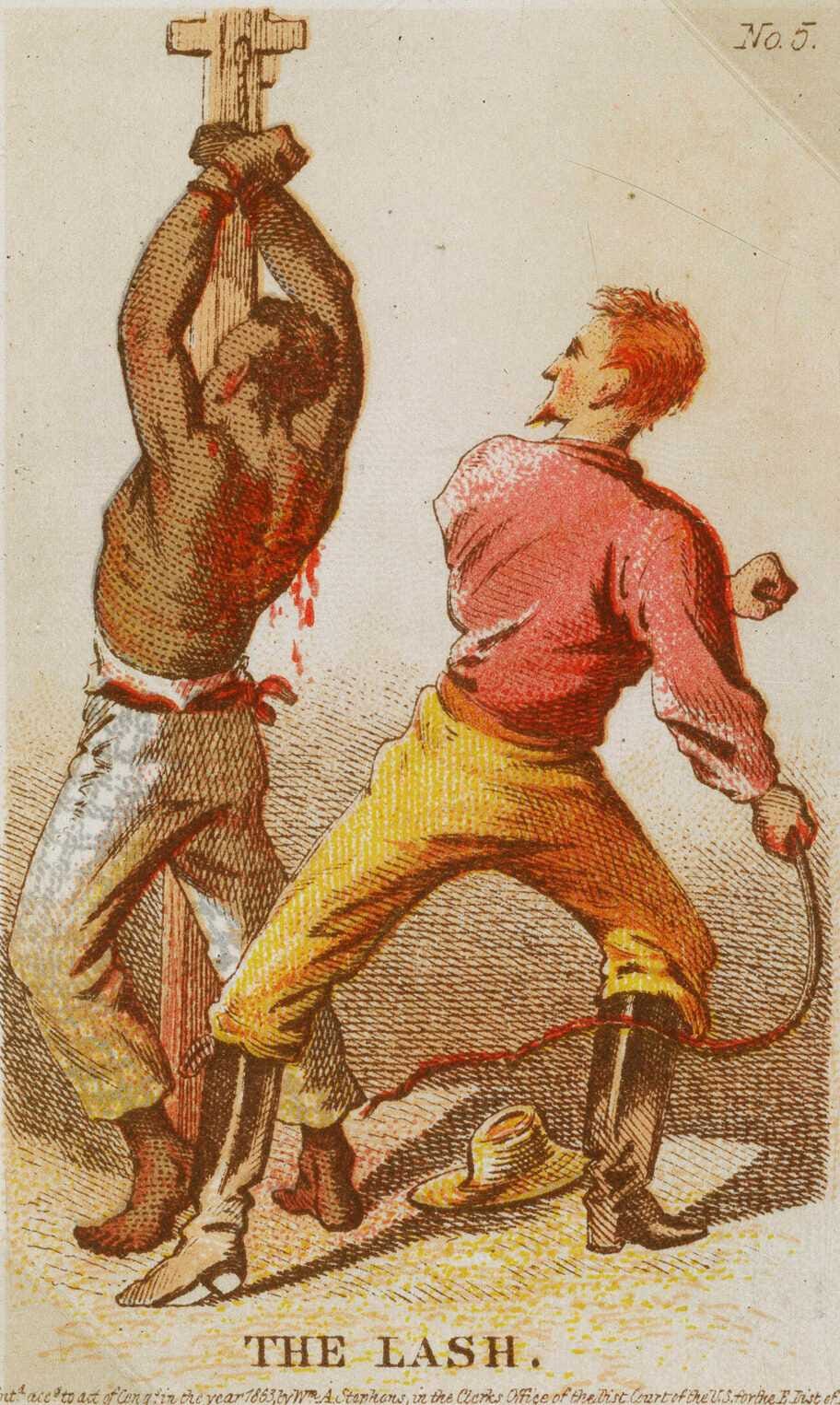
Violence during slavery was not random.
It was organized.
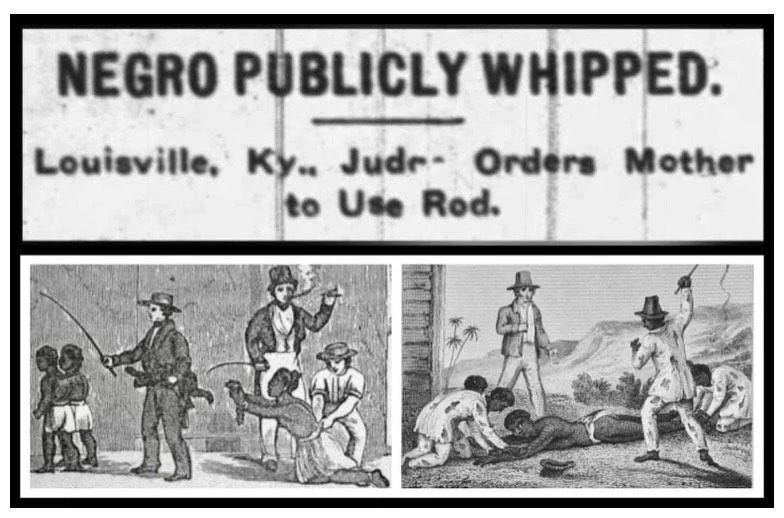
Whippings were public.
Executions were public.
Brandings were public.
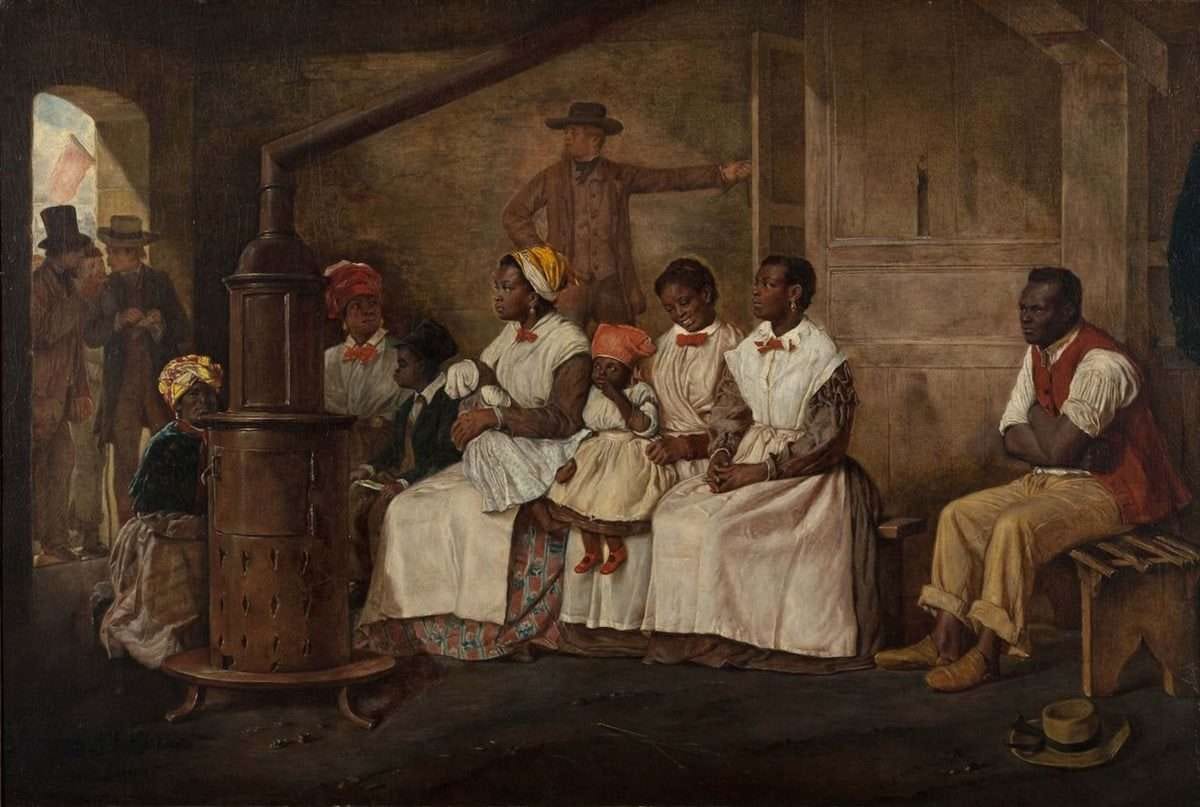
Families were separated publicly.
The objective extended beyond punishing one individual.
Punishment became communication.
Every scar carried a message.
Every hanging carried a lesson.
Every sale reminded everyone else that resistance possessed consequences extending beyond the individual.
Modern militaries sometimes refer to this as psychological operations.
The plantation perfected it centuries earlier.
Control does not require constant physical violence.
Sometimes it requires dependency.
Food rations.
Housing.
Clothing.
Medical care.
Movement.
Employment.
Every necessity remained controlled by those who exercised power.
Economic deprivation therefore became another instrument of governance.
The enslaved person’s survival depended upon remaining within a system designed to deny genuine autonomy.
The body itself became occupied territory.
Perhaps no tactic reveals the counterinsurgency character of slavery more clearly than family separation.
Children were sold.
Parents were sold.
Spouses were sold.
Siblings disappeared.
Entire kinship networks were dismantled through commerce.
This was not merely profitable.
It was politically effective.
Communities fractured.
Trust weakened.
Resistance became more difficult to organize when families could disappear overnight.
The destruction of family life was therefore not collateral damage.
It became one of the technologies through which slavery sustained itself.
Dr. Bobby Wright argued that societies reveal themselves through the behaviors they normalize.
What becomes ordinary?
What becomes acceptable?
What becomes invisible?
Slavery normalized surveillance.
It normalized suspicion.
It normalized collective punishment.
It normalized militarized policing.
It normalized the idea that one population could be governed through perpetual coercion while another experienced freedom.
Those lessons did not disappear in 1865.
Institutions carry memory.
Practices evolve.
Cultures adapt.
But organizational habits often survive the legal systems that originally created them.
Emancipation ended slavery.
It did not end the institutional logic developed under slavery.
Black Codes followed.
Convict leasing followed.
Jim Crow followed.
Lynching followed.
Redlining followed.
Mass incarceration followed.
Different institutions.
Remarkably familiar assumptions.
The question repeatedly remained:
How should the state manage Black mobility?
How should Black communities be monitored?
How should Black political organization be controlled?
How should resistance be discouraged?
Those questions echo through American history.
In Diagnosing Whiteness & Anti-Blackness, I argue that institutions inherit psychological operating systems.
They learn patterns.
They reproduce assumptions.
They normalize relationships of power.
The plantation was one of America’s first institutional laboratories for governing an internal population through surveillance, discipline, fear, dependency, and legally sanctioned violence.
It was an educational institution for domination.
Generations of white Americans learned what authority looked like.
They learned who could be searched.
Who could be questioned.
Who required documentation.
Who could be stopped.
Who could be beaten.
Who could be sold.
Who could disappear.
Power became ordinary because domination became ordinary.
Perhaps we have been asking the wrong historical question.
Rather than asking whether slavery was primarily economic or primarily racial, perhaps we should also ask:
What governmental technologies were perfected there?
What policing strategies emerged there?
What surveillance practices developed there?
What bureaucratic systems were refined there?
What psychological assumptions about authority were normalized there?
What institutional habits survived long after emancipation?
Those questions do not diminish the economic dimensions of slavery.
They deepen our understanding of its political and institutional significance.
Because if slavery functioned as America’s first domestic counterinsurgency, then it did more than produce wealth.
It taught a nation how to govern through permanent surveillance, racial hierarchy, and organized fear.
That possibility deserves far more attention than it has received.
White Imperial Masculinity: Why Domination Is Mistaken for Leadership
To learn more about Dante King’s books, educational resources, online video courses, and upcoming events, please visit:
www.danteking.com
You can also follow Dante’s work and commentary on social media:
Instagram: @dantedkingofficial
TikTok: @dantekingauthorofficial
If this article resonated with you, please consider becoming a paid subscriber. Your support helps sustain the research, writing, and educational work dedicated to examining the historical and psychological foundations of anti-Blackness, racism, and white supremacy in American culture and institutions.
Paid subscribers make it possible to continue producing in-depth analysis, public scholarship, and educational content that challenges dominant narratives and advances a deeper understanding of our collective history.
Thank you for reading, engaging, and supporting this work.
Thanks for reading! This post is public so feel free to share it.
No posts
Comments
Nothing yet. Say the first thing.
Sign in to join the conversation.