
In January I made 16 AI predictions for 2026, published in three parts.
Halfway through the year, and before I head off on holiday (your inbox will be sandwich-free for the next few weeks), it’s time for a check-in.
1.) AI assistants will increasingly compete on how well they know you, not what they can do
What did I predict? “I expect all companies developing AI assistants to ramp up their personalisation features in 2026, to make having to start afresh with a new AI assistant a more material barrier to switching.”
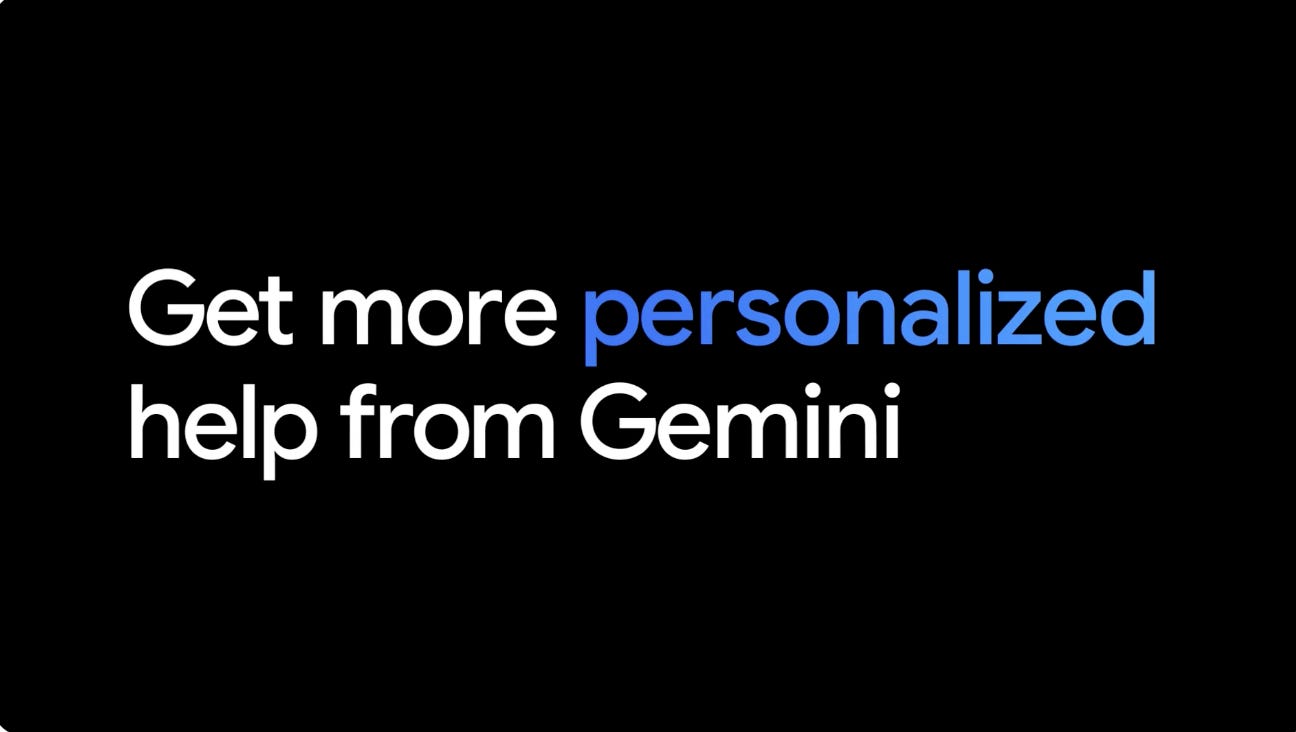
What’s happened? The day after I posted this prediction, Google announced Personal Intelligence, enabling users to connect Gemini with their Gmail, Photos, YouTube viewing and Search history. Gemini’s Personalisation feature page now promises ‘Personalised help…from AI that gets you’ (although I note they didn’t personalise the spelling of personalized in the video).
In March, Claude rolled out memory to free users and made it easier to import memory from other AI providers. Later in March, Google added tools to make it easier to “bring your memories and chat history to Gemini”.
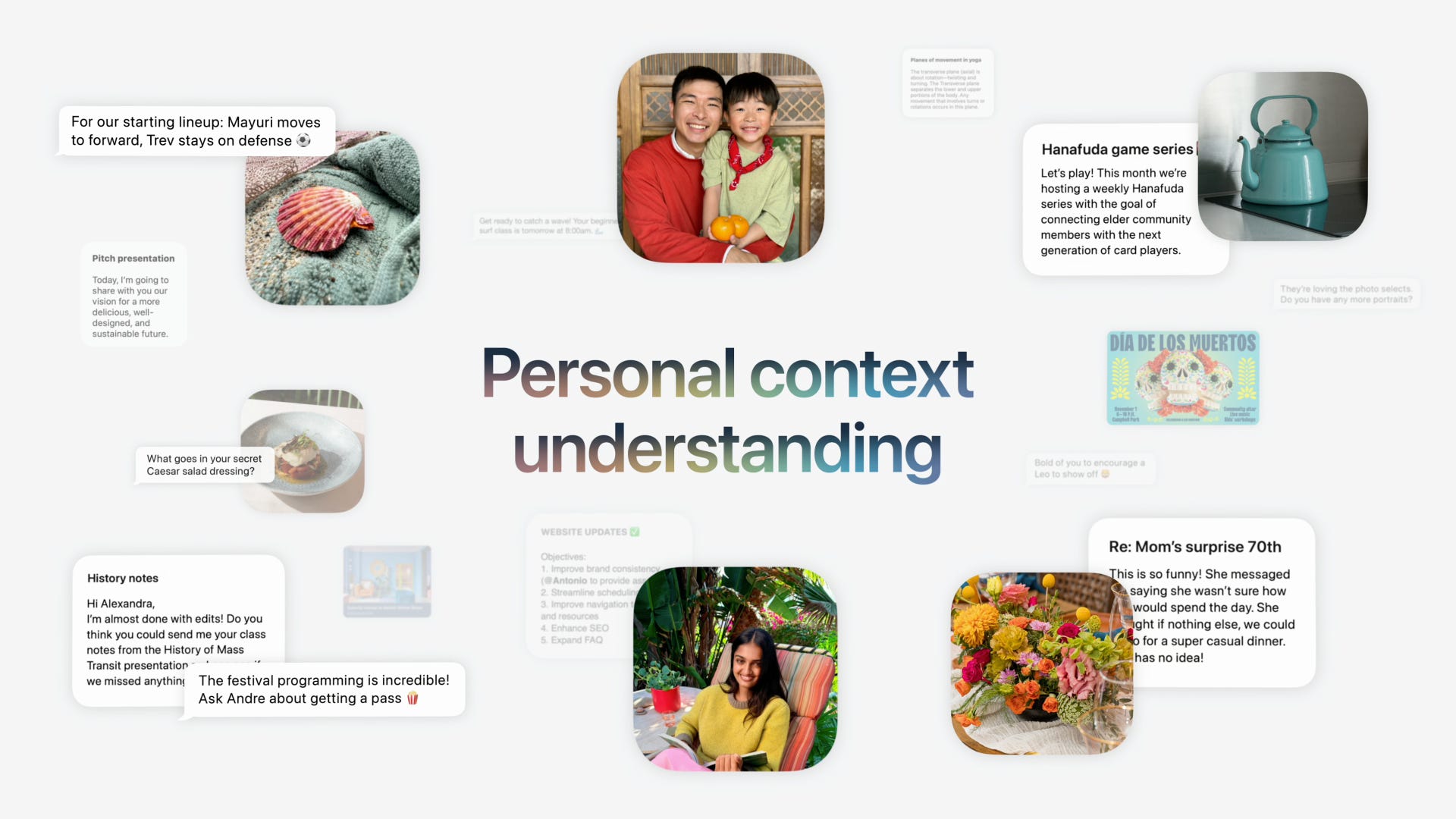
In June, OpenAI trumpeted improvements to ChatGPT’s memory with a strongly anthropomorphic feature name (‘dreaming’) and Apple finally delivered a credible version of Apple Intelligence (with “personal context understanding”) and a “more personal” Siri, “surfacing relevant information from a user’s personal messages, emails, photos, and more” (2 years after the now infamous vaporware demo).
Google also announced ‘personalised image generation’, “connecting Personal Intelligence with Nano Banana and Google Photos, so your creations can easily reflect your taste and lifestyle, gleaned from your connected Google apps”.
Mid-year grade: 9/10
2.) Personality will increasingly influence choice of AI assistant
What did I predict? “I expect the personality of AI assistants to become an increasingly important factor as capabilities commoditise.”
What’s happened? Whilst Anthropic’s Mythos/Fable models gave Claude a brief lead in the model capability stakes, OpenAI recently closed that gap with GPT-5.6 Sol and the broader picture is of capabilities commoditising.
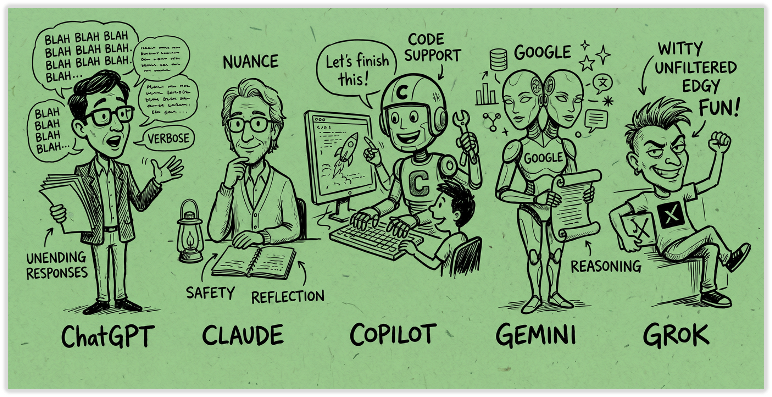
Meanwhile, personality is becoming more of a differentiator (alongside how much bang you get for your buck).
Whilst hard to measure, the consequences of different model outlooks was vividly illustrated in an experiment by Emergence which tasks five models with running a virtual world under identical conditions, with wildly different outcomes.
The AI companies themselves are also talking more publicly about personality (see these recent interviews from product managers at Anthropic and OpenAI).
And last week Anthropic published a comparative analysis of the ‘values’ of different Claude models, based on 700,000 anonymised conversations, concluding “Sonnet 4.6 leans toward expressing more deference to the user and emotional warmth while Opus 4.7 leans toward expressing a focus on accuracy and precision as well as guarding against misuse”.
Mid-year grade: 6/10
3.) The personalised briefing will be a battleground for driving daily habit, with Apple and Google entering the fray
What did I predict? “Apple and Google will launch personalised daily briefing products for iOS and Android in 2026, taking advantage of their breadth of insight into our interests and activities.”
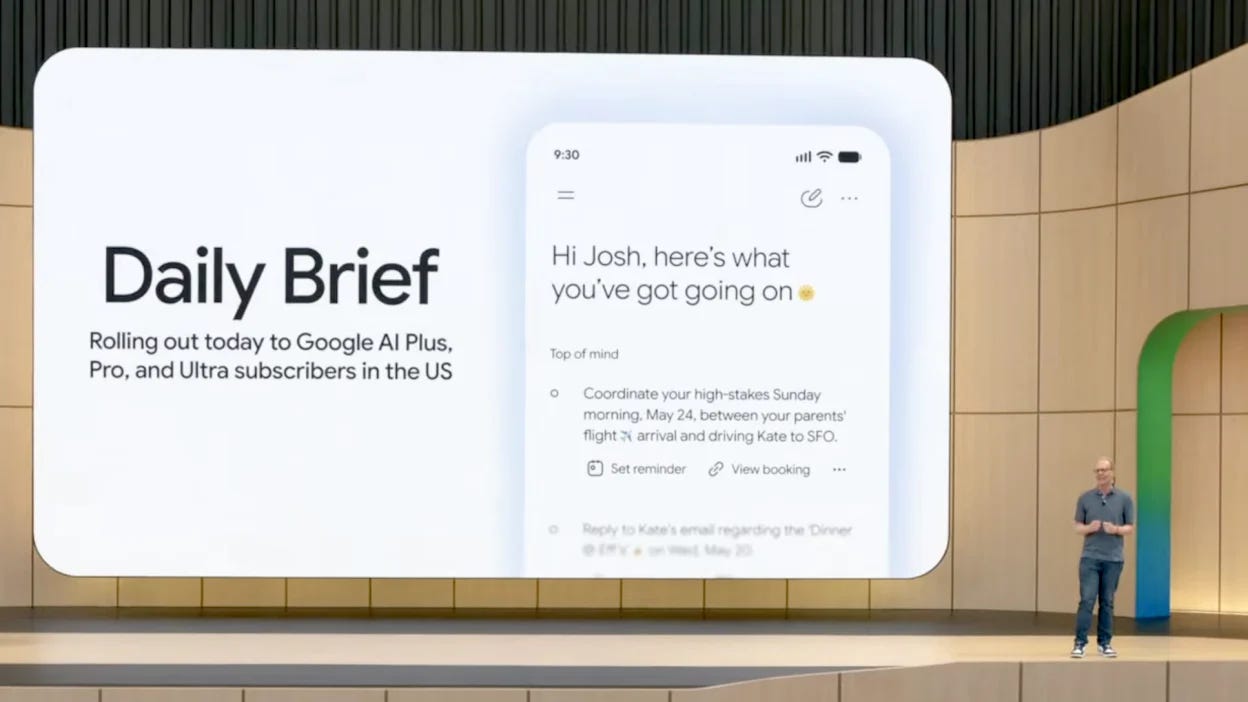
What’s happened? As detailed in a recent post, Google has now launched not one, but two personalised briefing products: Daily Brief (May) and Dreambeans (June). Apple however, has yet to launch a personalised daily briefing product.
Mid-year grade: 5/10
4.) Voice will break through to mainstream adoption in everyday AI interactions, with a revamped Siri leading the charge
What did I predict? “Apple will unveil a new in-home device in 2026 that showcases an AI-first Siri…Google will continue rolling out and improving Gemini voice mode across all surfaces. I expect we’ll see several automakers announce AI assistant integrations in 2026”
What’s happened? In March, Google released Gemini 3.1 Flash Live, billed as “making audio AI more natural and reliable”, in May it unveiled its “intelligent eyewear” and last month the new “built for Gemini” Google Home Speaker went on sale.
Earlier this month, OpenAI unveiled a major upgrade to ChatGPT’s voice capabilities, with an ad positioning the feature for mainstream users.
Siri AI will roll out in September as part of iOS 27 to those with a compatible device so it’s a bit early to gauge adoption. A new in-home device hasn’t been announced yet but market watchers seem to think an autumn unveil is likely.
Meanwhile, there have been lots of AI assistant integration announcements from car manufacturers (e.g. Honda, GM, BYD, Renault).
Mid-year grade: 5/10
5.) AI-generated media will become much easier to edit, using both natural language and more traditional tools
What did I predict? “using natural language to edit visual media and enabling AI-generated media to be manipulated using more traditional techniques will both proliferate in 2026 and expand to more media formats. I anticipate natural language editing for video will mature significantly. I also expect more hybrid interfaces to emerge, pairing AI generation with traditional editing tools.”
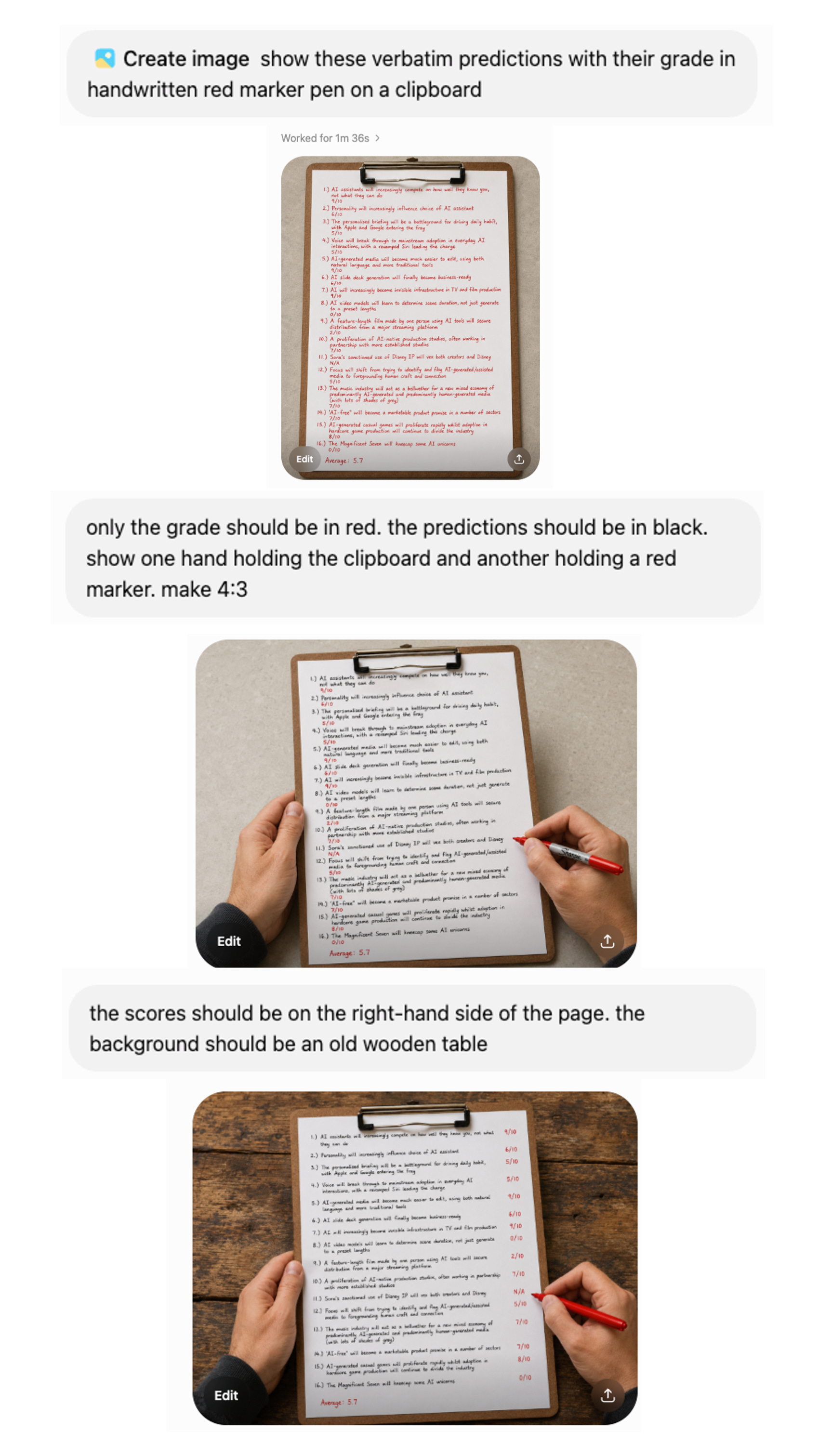
What’s happened? A lot. GPT Images 2.0 delivered a new level of precision in image editing using natural language.
In video, the arrival of Runway’s Aleph 2 in May and Gemini Omni’s last month marked a step change in natural language editing for video and the now imminent Seedance 2.5 is expected to make it much easier to edit a region of a video whilst leaving others unchanged.
More traditional editing techniques have proliferated in AI image tools, particularly layers (Canva Magic Layers, Ideogram’s layerize text, Reve 2.1) and lasso (e.g. Seedream 5.0 Pro, Lovart’s move object).
Hybrid interfaces have also started to emerge, pairing AI generation with traditional editing, in the form of add-ins to traditional editing tools (e.g. Adobe’s AI assistant, Magnific Plugins) and brand new AI-native tools which ape the functionality of established tools (e.g. Palmier Pro, Ponder).
Mid-year grade: 9/10
6.) AI slide deck generation will finally become business-ready
What did I predict? “one of the big AI companies will solve this in 2026 by successfully combining visual AI slide generation with a traditional editing interface. Microsoft should have this at the top of their priority list given PowerPoint’s dominance, but I suspect Google will get there first.”
What’s happened?
Microsoft made Copilot less ham-fisted by rolling out Edit with Copilot (née Agent Mode) in Powerpoint and enabling 365 business customers to change models to Claude or ChatGPT.
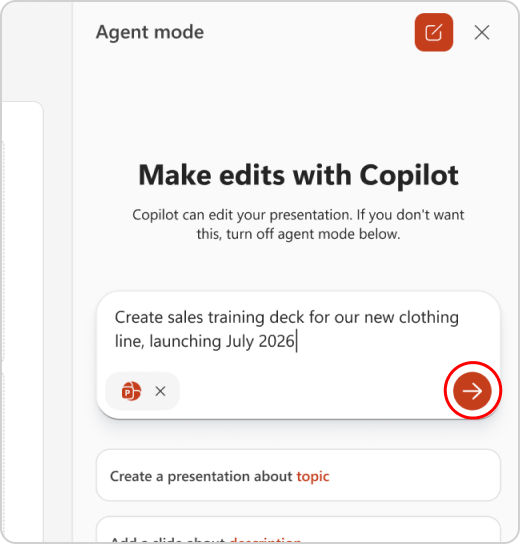
Google added similar functionality to Google Slides.
Anthropic and OpenAI released their own Claude for PowerPoint and ChatGPT for PowerPoint add-ins. Claude’s add-in is superior but requires a paid Claude subscription, where ChatGPT’s is available to free users.
Beyond the AI giants, Chronicle released a version 2 in March, leapfrogging Gamma to become the best option for rapidly creating a new deck from scratch.
Fuller review of AI presentation aids coming soon.
Mid-year grade: 6/10
7.) AI will increasingly become invisible infrastructure in TV and film production
What did I predict? “I anticipate we’ll see an increasing number of more subtle on-screen applications of AI-generated and AI-modified video in 2026…Expect more widespread use of AI for background extensions, crowd multiplication, continuity fixes, and B-roll generation…We’ll also see more AI use for reconstructions and in fantastical entertainment sequences…The productions using AI this way won’t shout about it - it’ll just be part of the toolkit.”
What’s happened?
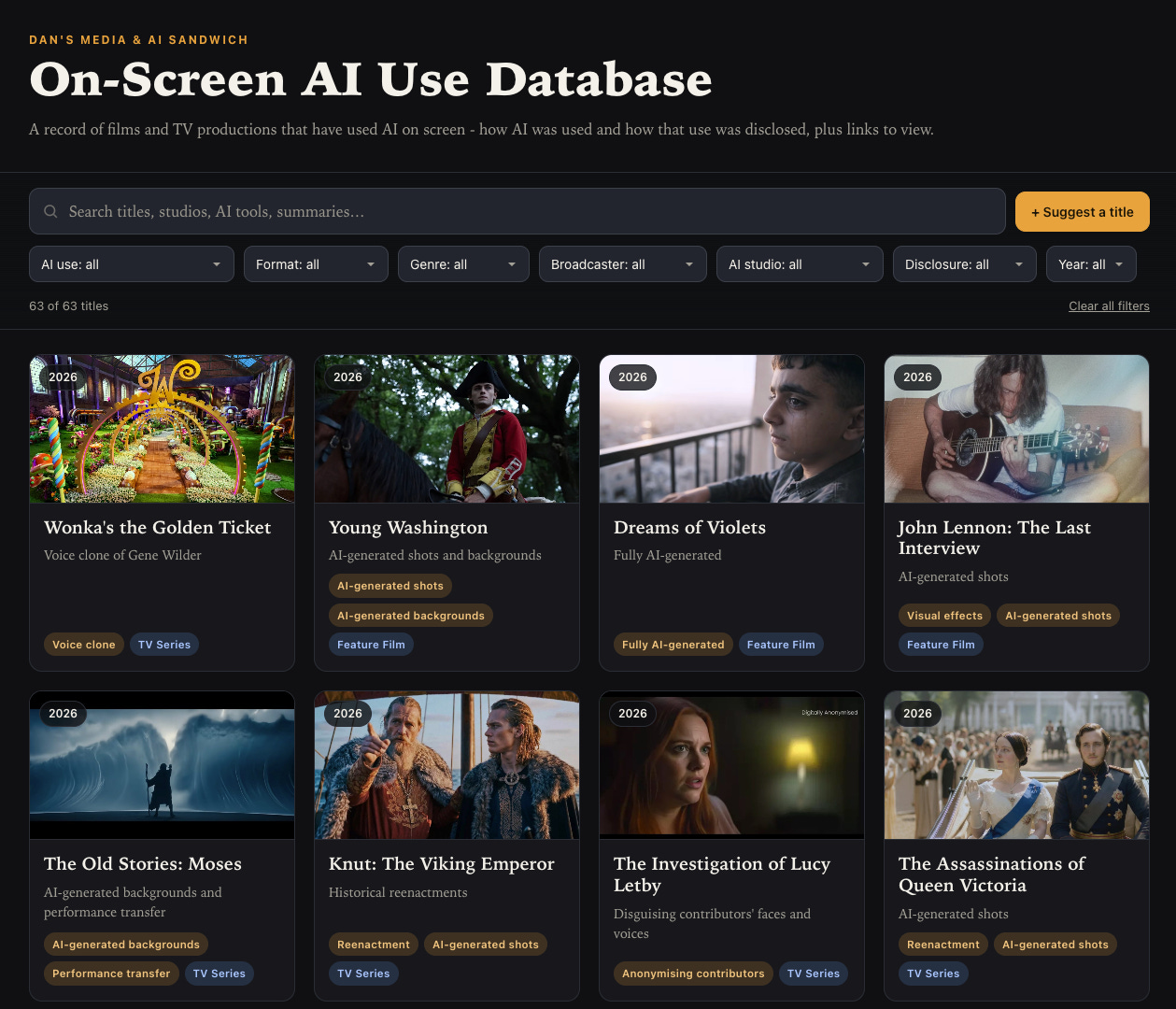
Lots of declared AI use for reconstructions (e.g. Channel 5’s The Assassinations of Queen Victoria, Sky History’s Knut: The Viking Emperor) and backgrounds (e.g. Amazon’s The Old Stories: Moses, Angel’s The Young Washington).
And lots of undeclared use. Netflix’s Q2 2026 letter to shareholders revealed “In 2026, GenAI workflows have been used in roughly 300 of our titles, with the largest concentration of work in post-production”. ‘Glory’ (India), ‘Brasil 70: A Saga do Tri’ (Brazil), and ‘The American Experiment’ (US) were called out as titles which “utilized GenAI tools to create highly complex sequences (e.g., enhanced crowds, historical battle sequences, and worldbuilding establishing shots).”, leaving 290+ titles’ AI use undeclared.
I’ll be continuing to log declared on-screen uses of AI in the On-Screen AI Use Database.
Mid-year grade: 9/10
8.) AI video models will learn to determine scene duration, not just generate to a preset lengths
What did I predict? “I anticipate we’ll see tools emerge in 2026 which use reasoning capabilities to determine how long a generation is needed to render a scene.”
What’s happened? Whilst clip durations have continued to increase, with the imminent Seedance 2.5 promising high fidelity 30-second generations, we haven’t yet seen a model which uses reasoning to determine how long a generation to produce.
Mid-year grade: 0/10
9.) A feature-length film made by one person using AI tools will secure distribution from a major streaming platform
What did I predict? “I predict one of those creators will produce a feature-length film using AI tools that secures distribution from a major streaming platform”
What’s happened? Feature-length films made using AI tools are starting to tiptoe into the mainstream.
‘Dreams of Violets’, made by Ash Koosha, premiered at the Tribeca Film Festival. The 74-minute docudrama uses AI-generated visuals to tell stories of civilian resistance in Iran. However, it hasn’t secured distribution from a major streaming platform (you can rent it for $9.99 via the production company’s website).
Mid-year grade: 2/10
10.) A proliferation of AI-native production studios, often working in partnership with more established studios
What did I predict? “I expect more AI-native studios to emerge in 2026, typically providing more established studios with AI production as a service in parallel with developing their own IP. We can also expect to see more super-indies follow Fremantle in establishing dedicated AI production labs.”
What’s happened? Yes to more AI-native studios (e.g. The FOURTHE, Barley Studios, Amersia) and AI production as a service (with Wonder Studios spin-off Innovative Dreams as poster child).
A dedicated AI production lab has been created at Netflix and Google has announced a major partnership with A24 to develop AI-powered filmmaking tools.
Banijay announced a partnership with Toon Boom Animation, but hasn’t announced a dedicated AI production lab.
Mid-year grade: 7/10
11.) Sora’s sanctioned use of Disney IP will vex both creators and Disney
What did I predict? “I think [it’s] going to be hard to deliver on in practice and it’s likely Sora users will be frustrated by the safeguards put in place and Disney will be frustrated by the questionable generations that will inevitably slip through the net.”
What’s happened? We didn’t get to find out. In March, OpenAI pulled the plug on Sora and the $1bn Disney deal.
Whilst OpenAI’s need to focus may have been the primary driver, the fact nothing went live between December and March suggests it was proving hard to deliver on in practice.
Mid-year grade: N/A
12.) Focus will shift from trying to identify and flag AI-generated/assisted media to foregrounding human craft and connection
What did I predict? “Detection tools will continue to be outflanked by tools designed to mask AI’s involvement…the onus will increasingly be on individuals and brands to earn trust through bringing something uniquely human to the party…the absence of a human spark in content will increasingly be noticed and penalised by consumers”
What’s happened? Awareness and usage of AI ‘humaniser’ tools has grown, publishers are struggling to detect AI use by authors, and researchers are concluding detectors are “poorly suited for deployment in academic or high-stakes contexts.”
Meanwhile, there’s some evidence of a shift toward signposting human artistry. Spotify introduced ‘Verified by Spotify’ badges, “a Signal of Authenticity and Trust for the Artists Behind the Music”.
Mid-year grade: 5/10
13.) The music industry will act as a bellwether for a new mixed economy of predominantly AI-generated and predominantly human-generated media (with lots of shades of grey)
What did I predict? “once the record labels are confident they’ll get their share of the spoils, I anticipate AI-generated music will become increasingly commonplace. As with most aspects of AI, this won’t be a binary equation. We’re also going to see increasing amounts of ‘co-created’ music, with humans casting AI as collaborator, with the percentage contributions of each impossible to determine”
What’s happened? Universal Music Group announced a licensing deal with Spotify enabling AI-powered ‘fan-made covers and remixes’.
The BBC published its policy on the use of AI in Music, stating that“artists using AI tools will be considered in our programming…but these tools must be used to support human creativity”.
Josh Fawaz’s AI-assisted cover of Madonna’s ‘Like a Prayer’ became the most-played song on Australian radio and clocked up 39 million plays on Spotify before pressure prompted Fawaz to add AI-credits.
A collective of industry bodies proposed labels to distinguish AI-generated and AI-assisted music.
Mid-year grade: 7/10
14.) ‘AI-free’ will become a marketable product promise in a number of sectors
What did I predict? “I anticipate ‘AI-free’ to become an increasingly marketable product promise in certain sectors…I predict an increase in toys being actively positioned/marketed as having fewer, rather than more, tech smarts.”
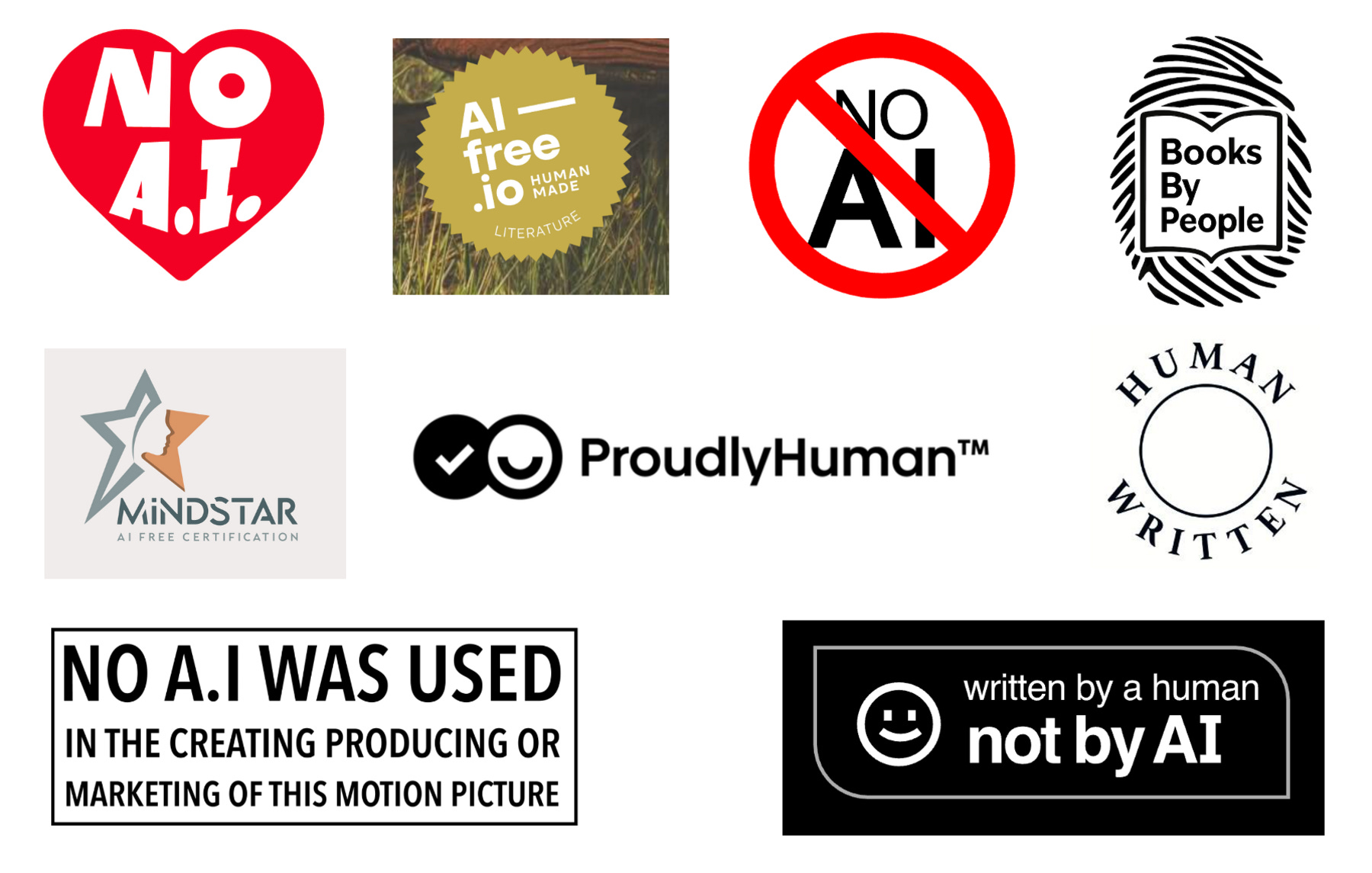
What’s happened? ‘AI-free’ labelling gained momentum in film & TV (see May post).
LEGO tagged its star-studded World Cup ads with #HonestlyItsNotAI.
The Authors Guild launched an expanded ‘Human Authored’ certification programme and ProudlyHuman certified its first columnist.
Mid-year grade: 7/10
15.) AI-generated casual games will proliferate rapidly whilst adoption in hardcore game production will continue to divide the industry
What did I predict? “I suspect existing scale players in gaming and/or video will be the big winners here. I expect Roblox to move deeper into vibe-based AI asset generation and launch an official equivalent of Lemonade.”
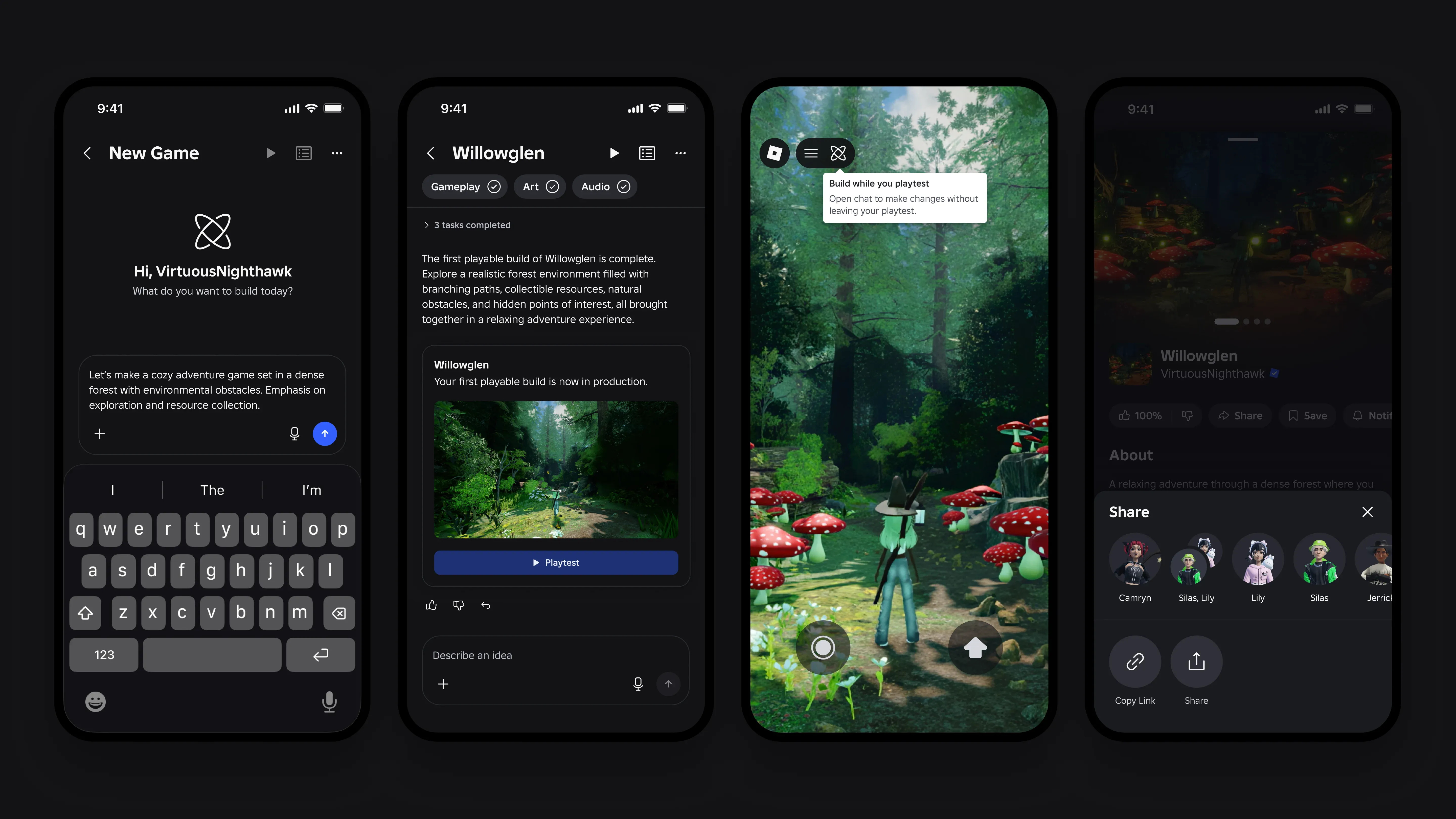
What’s happened? Roblox added a bunch of agentic tools to Roblox Assistant and announced Build “a new mobile-first creation tab within the Roblox app, and a new suite of AI-powered tools within Studio for creators of every level.”
Meta quietly released Pocket, “an app from Meta where you can create, share and discover gizmos with friends. A gizmo is an interactive, playable AI-generated experience.”
According to a June FT article “AI drives a boom in new games but big developers dominate”. Meanwhile the 2026 State of the Game Industry report suggests adoption in hardcore game production remains divisive: 36% of games industry professionals use generative AI at work and 52% believe it is having a negative effect on the industry (up from 30% in 2025, and 18% in 2024).
Mid-year grade: 8/10
16.) The Magnificent Seven will kneecap some AI unicorns
What did I predict? “I think it’s likely Google, Microsoft and Apple will AI-ify Slides, PowerPoint and Keynote sufficiently to shore up their respective customer bases.”
What’s happened? The AI-ification of established presentation software is in full swing but no unicorn scalps have been claimed as yet.
Mid-year grade: 0/10
Average grade across all predictions: 5.7, which feels reasonable for mid-year and in line with last year’s 5.8 mid-year average.
See you back here in 6 months for my end of year review and a brand new set of predictions for 2027.
Comments
Nothing yet. Say the first thing.
Sign in to join the conversation.