

My kids, at 6 and 8, haven’t truly experienced death yet. For that I'm grateful. Our cat died two springs ago, and the kids loved her in a way, but she had already existed for them as a sort of phantom, never letting them get too close. One moment she was napping in an adjoining room, and the next she was napping underground in the backyard. Her departure didn’t register for them as a major catastrophe; it was more of a curiosity. On the morning we buried her, I saw how closely they studied my wife’s and my sadness, trying to emulate and make sense of it.
I learned something important from each death of my own childhood. In navigating those events, I began to understand the hidden depths of the people around me. Each death allowed me to witness, if not fully comprehend, the grief of others, my own grief, illness and how it can change a person, what a dead body looks and feels like, how to say goodbye to someone you love, as they lay in their final moments, how to cope with sudden, unexpected loss. In many ways I was incredibly fortunate: I didn’t lose a parent or sibling, I didn’t encounter war or famine or disaster during my formative years, but still death was all around me.
Yet none of this made me worry that I myself would ever die. The illusion of immortality, that feeling of being unconquerable, is one of the most magical things about being young. I remained certain that death was something that happened to other people.
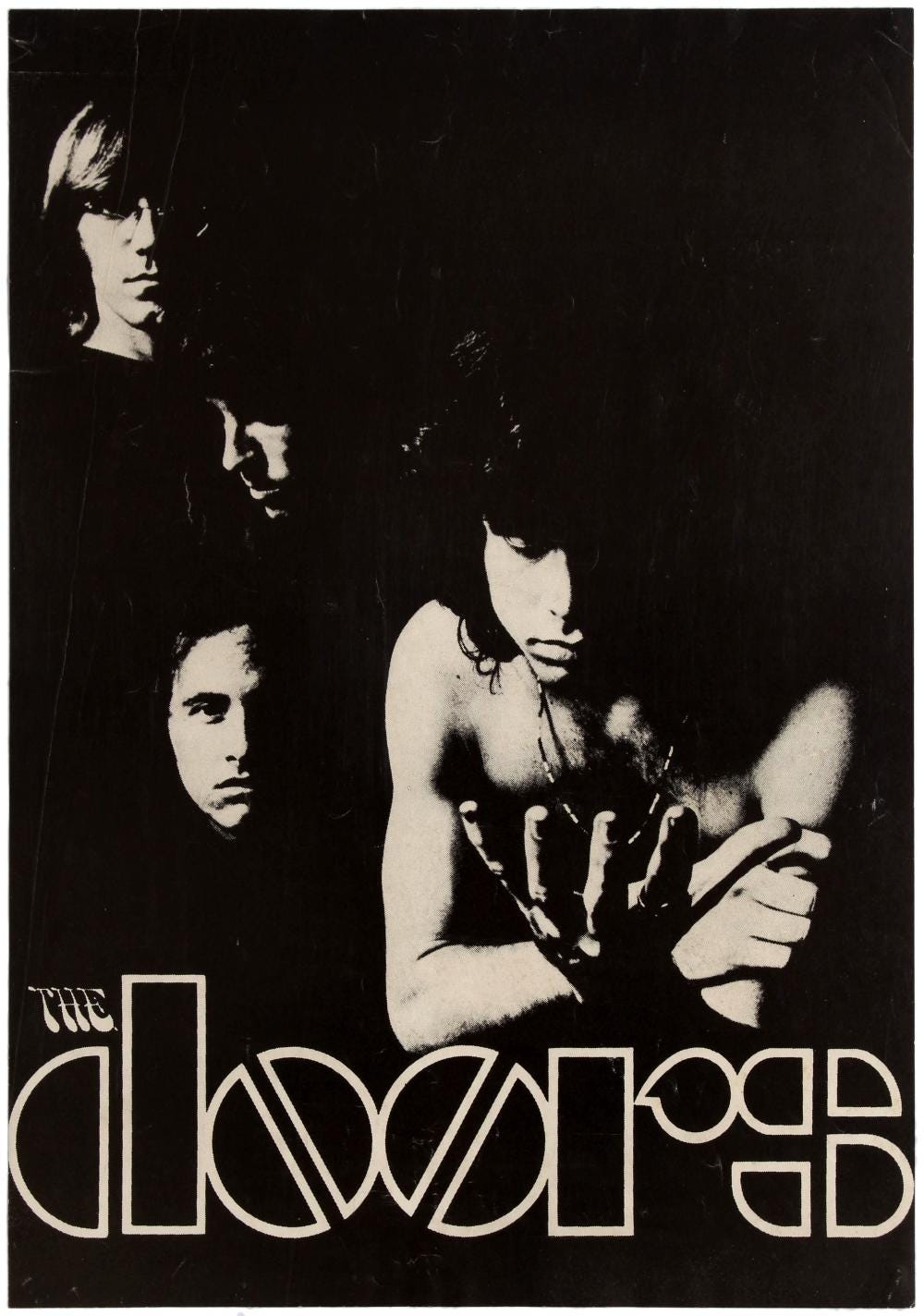
My early teenage years were marked by an obsession with the Doors. My first heartbreak, around that time, produced a stack of notebooks scrawled with dark teenage poetry, Morrison-esque in the extreme. If I could stand to peek at those pages now (I can’t), they would reveal what appeared to be an infatuation with death—reptiles, skulls, car crashes, candles, and all the other overworked metaphors.
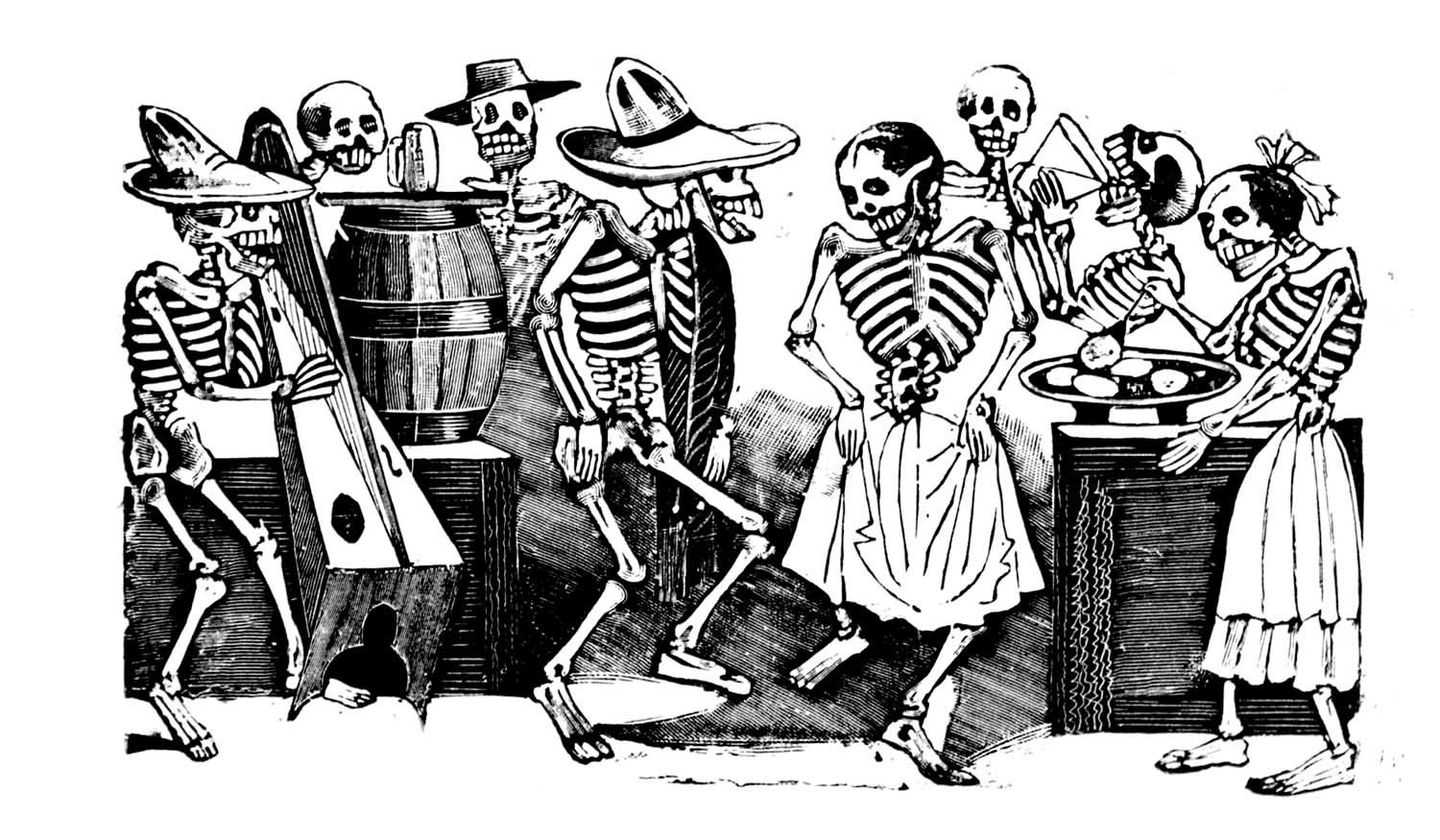
I started collecting Dia de los Muertos art around that time. I read the Tibetan Book of the Dead, debating with friends about religion and the concept of afterlife. Death became a central component of my identity.
Part of this was posturing—I likely thought it added a sheen of mystique to my persona, however forced and calculated. Another part of it was trying to manufacture a kind of comfort over the recurring mystery of friends and relatives exiting the world. And finally, I probably was pretending that I’d come to terms with my own mortality and was cool with it. The Grim Reaper was my homey. And yet I awoke each day feeling invincible.
As I got deeper into music and broadened my altar of worship to include more rock stars who had flashed out in their primes, as I read their biographies and memorized their lyrics and wore their t-shirts—even then, 27 years old seemed like a lifetime away.

That all changed in high school when a close friend’s little brother died in a freak accident. I’ll call him Tommy. He was part of our coterie, only a couple years younger, a beautiful kid, funny and smart and kind, seemingly always there with us, and quite suddenly he was dead.
Of the deaths of my childhood, this was the most difficult to make sense of. Tommy wasn’t sick; he wasn’t bad; all in all, he’d lived a charmed life. He was younger than us. It was the first moment that I truly grasped that death was not, on an individual level, about order or justice or reason. Death was a falling leaf that might land anywhere, an expression of the chaos of the natural world. Any one of us could be struck down, in an instant.
At least, in my selfish adolescence, that’s how Tommy’s death touched me. For his family, of course, the event devastated them in a way that I won’t try to describe, since it wasn’t and isn’t mine. I can only imagine—now that I’m a father, worrying through the nights while my kids sleep upstairs—the horror of such a loss.
On the day of Tommy’s funeral, once the service concluded, I filed out of the church with my sisters and parents. We were close with the bereaved, so we turned to attend to the other solemn ceremonies of the day.
I don’t recall if I saw them myself, but five of my friends packed into a Nissan and pulled out of the church parking lot, music blaring from the open windows. I learned later that they drove around all that afternoon and evening, smoking cigarettes and blasting “Alive” by Pearl Jam on repeat. This upset me for years, though I never said anything to them about it. It seemed the ultimate disrespect to the deceased and to the mourners, to play this anthem to life on a day meant to honor the death of another kid, a friend of ours. It felt, at the time, almost like bragging.
But of course that’s not what it was. I finally came to recognize something that’s so obvious to me now: that “Alive” was their way of coping with the terrible epiphany that they were not immortal.
And I’d bet that Nissan is exactly where Tommy would’ve wanted to be. Not in a suit and tie in the sad, tragic rooms of hors d’oeuvres and tissues, but more than anything he would have wanted to be in that car, speeding along country roads with all four windows down, going nowhere in particular, shouldered in among a pack of friends lighting each cigarette off the last, singing until their voices were raw and their faces windburned and the cassette tape started to distort and the gas-tank light blinked in warning. They were alive for the moment. They were the lucky ones. And they weren’t gonna squander it.

Is something wrong, she said
Well of course there is
You're still alive, she said
Oh, and do I deserve to be
Is that the question
And if so… if so… who answers… who answers…
I, I'm still alive
Hey I, I'm still alive

Comments
Nothing yet. Say the first thing.
Sign in to join the conversation.