
On today’s episode of Critical Conditions, Claire and I talked to Tom Kent, author of the new book The Propaganda Manual of the Ukraine War, about a dimension of the conflict that may prove almost as important as what happens on the battlefield: the struggle to persuade people about the essence of what’s happening.
To unlock full access to Ask Questions Later — and the Critical Conditions podcast coproduced with Claire’s Cosmopolitan Globalist — upgrade to a Paid Subscription
Kent knows something about both Russia and the media. He was Moscow bureau chief, international editor and later standards editor at the Associated Press, and went on to become president of Radio Free Europe/Radio Liberty. He now teaches at Columbia and works on Russian affairs and propaganda. There is also a personal connection: Kent was international editor at the AP when I joined the company in 1990, and bears, as I noted on the podcast, a significant amount of the credit — or blame — for what has become of me since.
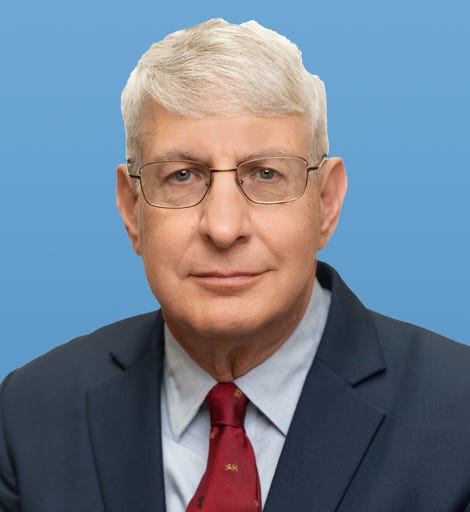
His argument is more complicated than the familiar observation that Russia lies. Of course Russia lies. The Kremlin operates a vast propaganda apparatus, suppresses independent information at home and devotes considerable resources to influencing opinion abroad. But Kent’s point is that the information war is larger than Russian disinformation. Russians themselves must be persuaded that their country can win. Ukrainians must continue believing that they can defeat a much larger neighbor. Western publics must believe that supporting Ukraine is worthwhile and that it can succeed without their own soldiers being sent into battle. What people believe is therefore not merely commentary on the war but — as it affects policy — one of the things that will determine its outcome.
Kent also has a criticism of Western journalism that I think deserves attention. He believes the media have repeatedly overinterpreted battlefield developments, treating each Ukrainian advance as evidence that victory may be near and each Russian advance as evidence that Ukraine may be doomed. This is fundamentally a war of attrition. Front lines can move painfully slowly, and the significance of a particular town, offensive or reversal may not become apparent for months.
There is an obvious reason for the exaggeration: journalism is a business.
“The front moved three kilometers and we have no idea what it means” is not an especially enticing headline. “Ukraine Turning the Tide” is considerably better for “engagement.” So is “Ukraine on the Brink.” The incentives of the modern information economy push toward drama, certainty and instantaneous conclusions about events whose significance may be neither dramatic nor certain.
Kent would like less obsession with the daily battlefield scorecard and more attention to the forces that may actually decide the war: the Russian and Ukrainian economies, military morale, Western assistance, Russia’s ability to sustain its enormous losses, and what’s actually happening inside Russia. And sometimes, he argued, a perfectly respectable conclusion to an analytical article is: we’ll have to see.
That last formulation may be sensible journalism, but it is catastrophically ill-suited to the internet.
This led us to a larger problem that goes well beyond Ukraine. The world has become more complicated at precisely the moment when much of the audience has become less interested in complexity. International news has withered. Foreign bureaus have disappeared. Social media rewards certainty, outrage and brevity. Propaganda has become cheaper and technologically easier to manufacture, while artificial intelligence makes convincing fabrications available not merely to governments but to practically anyone.
Claire worried that Russia’s ability to exploit this environment is being underestimated. I tended to agree. Kent was somewhat more skeptical. Russia can influence elections and public opinion at the margins, he said, and in an election decided by one or two percentage points the margins can obviously decide everything. But Moscow is hardly alone in manufacturing falsehoods, and people are not simply passive vessels into which Vladimir Putin pours opinions. Propaganda tends to work best when it reinforces attitudes people already possess. That strikes me as both reassuring and alarming.
The deeper problem is that democracies depend upon citizens maintaining at least some interest in a factual universe beyond their immediate lives. Kent noted that many people increasingly ask of foreign events: What does this mean to me? Why should I care about Ukraine rather than Sudan or Taiwan — or any of them at all?
There are perfectly good answers to those questions. But they require more than 20 seconds, preferably without a backbeat. And it does leave me wondering: Is there any room any more for intellectual curiosity about the world? And what will be of journalism if the answer is basically no?
We ended by forcing Kent to violate one of the commandments apparently drilled into generations of AP journalists (more from his era then, err, mine): don’t predict the future. His prediction, suitably hedged, was that the Ukraine war may end through a deus ex machina — some development in Moscow, Washington, the Middle East or somewhere else that we cannot presently foresee. Long wars have a way of being transformed by events that looked peripheral until suddenly they weren’t. That, in a way, reinforced the central point of our discussion.
The world is complicated, uncertainty is real, and sometimes the most intelligent answer available is that we do not yet know. Which is precisely why propaganda has such an advantage: it always does.
As said, Tom has just published a book titled The Propaganda Manual of the Ukraine War: Information Warfare by Russia, Ukraine, and Western Nations, Lessons Learned for Future Conflicts. Here’s the blurb:
THE PROPAGANDA MANUAL OF THE UKRAINE WAR takes readers inside the new battlefield where wars are increasingly won or lost-not with tanks and missiles alone, but with propaganda, disinformation, psychological warfare, and cyber operations.
The Russia-Ukraine war has been fought as fiercely in the information sphere as in on-the-ground combat. Russia has relied on Vladimir Putin’s propaganda machine to sustain domestic support despite staggering military losses. Ukraine has used strategic communication and influence campaigns to strengthen national resolve while persuading Western democracies that continued military and financial assistance is essential. Across Europe, North America, and the Global South, governments, intelligence services, media organizations, and private actors have competed to shape public opinion around the war.
Drawing on extensive research and decades of experience studying Russia and international media, Thomas Kentreveals how Russia, Ukraine, and Western governments employ disinformation, psychological operations (PSYOP), cyber warfare, covert influence campaigns, media manipulation, strategic communications, and digital propaganda to influence both domestic and international audiences.
The book examines forged websites, hacked broadcasts, manipulated social media algorithms, anonymous influence operations, deception campaigns, and coordinated messaging designed to alter public perception and political decision-making. It also explores how violence against civilian targets serves as propaganda, with Ukraine striking infrastructure deep inside Russia and the Kremlin directing arson and assassinations in Western Europe.
Kent analyzes the propaganda successes and failures of each participant in the Ukraine conflict while offering practical recommendations for defensive and offensive information operations by Western countries. Essential reading for anyone interested in geopolitics, international security, Russia, Ukraine, NATO, intelligence, cyber conflict, journalism, and the future of information warfare, THE PROPAGANDA MANUAL OF THE UKRAINE WAR explains how the struggle to control information has become one of the defining weapons of the twenty-first century.
The book also treats Western media coverage of the war. As Tom says on his LinkedIn page,
The book represents two years of research. It describes Russian, Ukrainian, and what have passed for Western information operations in the course of the war. It attempts to judge what tactics were the most and least successful for each side. The book also assesses an array of “resilience” tactics to protect civilian populations from foreign propaganda efforts.
The book addresses as well Western media coverage of the war. Ukrainian and outside reporters have worked bravely in extraordinarily dangerous conditions. The book notes, however, a tendency by news outlets to exaggerate both victories and defeats for Ukraine, and a failure to focus sufficiently on events inside Russia that have caused serious trouble for the Kremlin’s war effort.
Comments
Nothing yet. Say the first thing.
Sign in to join the conversation.