
“I’m curious. Period. I find everything interesting. Real life. Fake life. Objects. Flowers. Cats. But mostly people. If you keep your eyes open and your mind open, everything can be interesting.” - Agnes Varda
I didn’t start watching Varda’s films until a few years ago, but I basically think she’s the greatest. I’m pretty drawn to anyone who has an insane love and passion for the thing they’re doing. She’s the pinnacle of that.
I love making short films. There’s no money in it. You can call it an investment — and it’s successfully served as that for me, as proof-of-concepts for bigger projects — but that’s largely been good fortune and persistence, rather than careful strategy. I’m not great at the latter. I work very deliberately and meticulously, but I also get antsy and have an urgent need to just get the thing out there. I believe in taking all the time you need to make the work as good as can be. I’m maybe less supportive of letting others take all your time to sit around and let the work languish. You need to express your ideas, to clear brain space for the next ideas.
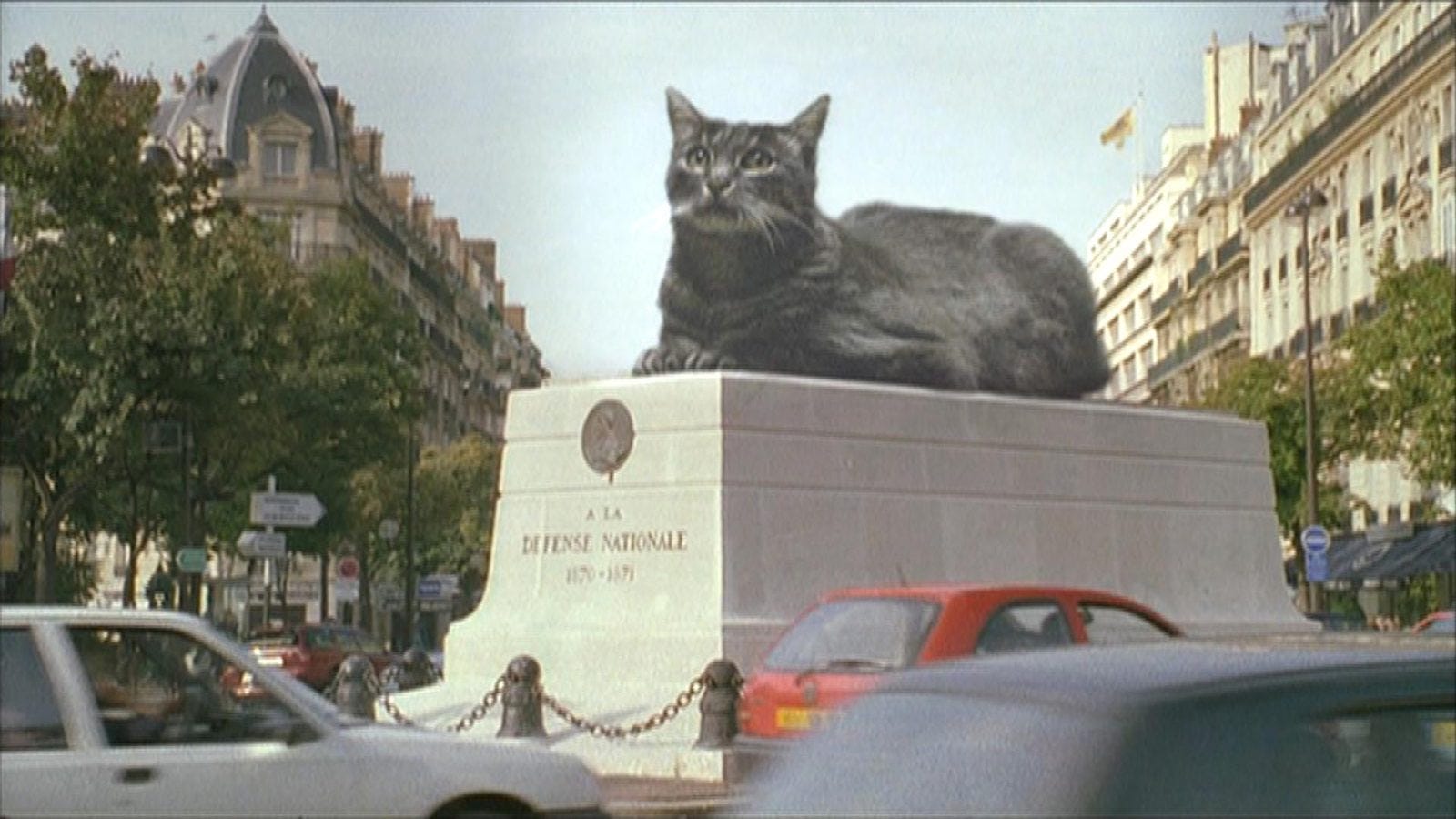
That’s one reason I’m so drawn to Varda’s work. She made great features – Le bonheur (1965), One Sings The Other Doesn’t (1977), Vagabond (1985), The Gleaners and I (2000) – but she also continued to make short films in between these bigger projects. Some of these shorts were bravely political, like her short docs, Hello Cubans (1963) and Black Panthers (1968). Some were personal, like Uncle Yanco (1967), where she discovered she had an uncle she’d never met and just went and met the guy. One short is just a two-minute tribute to her cat. In another short, she reconnects with an older actress who had played a minor role in one of her films eighteen years earlier and interviews her. Some of these shorts were weird, like The Vanishing Lion (2003), which at some point shows a bronze lion statue turn into an enlarged living cat. She loved cats.
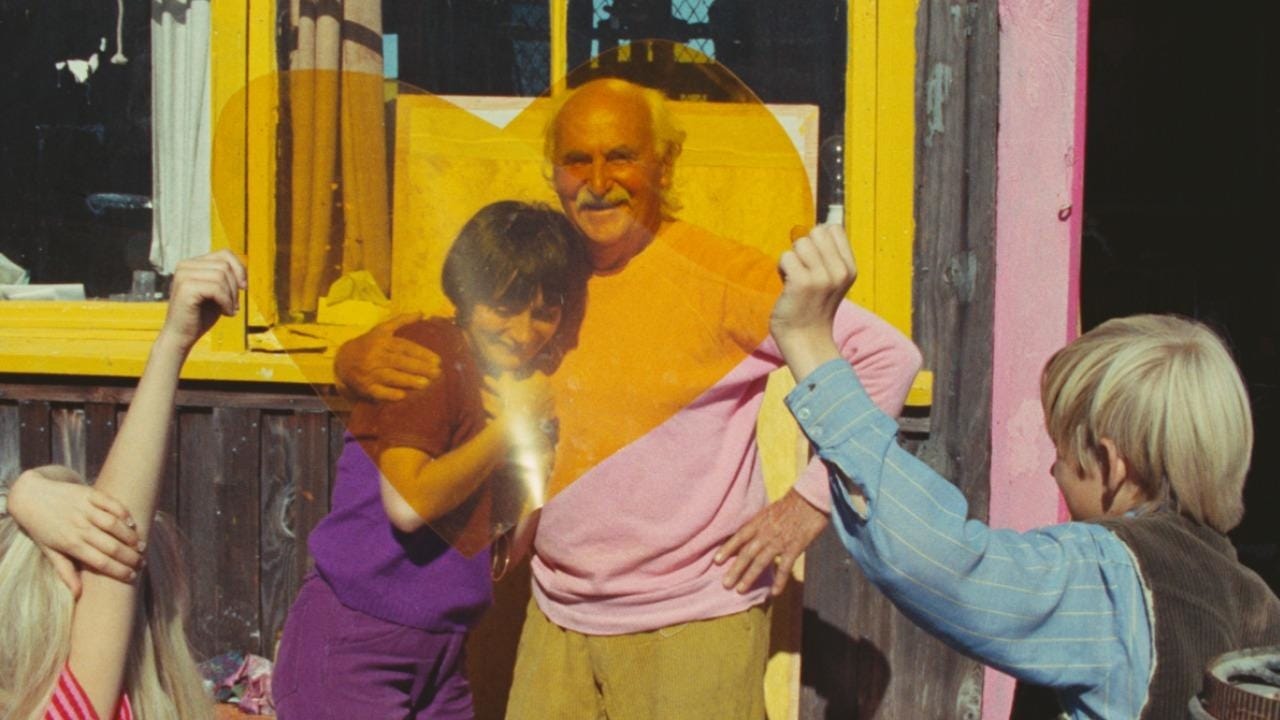
She was asked once in an interview why she continued to make these strange little shorts throughout her life, even after she was acclaimed as a feature filmmaker. She liked it. She compared it to doodling. She spoke about how these bigger projects take so long, that she wants to continue to create in between. Plus, she feared that if she only made the larger projects, she would simply start to do an impression of herself, of the last major project she did. These smaller projects — which ranged in tone and subject and quality — let Varda continue to create, to follow her curiosity, to stay active and present with where she is at the time. When she met that uncle, she made the film about her uncle. When she was pregnant with her first child, she made Diary of a Pregnant Woman (1958), which explores class and inequality, in her reflective, empathetic, offbeat way.
Her way of working is such a nice model. It can be such a struggle when you’re aiming for something bigger, to continue to be present and active and creative in the day-to-day. We set these goals and look at people online who are seemingly accomplishing something and it’s tough not to define yourself by that standard. I know talented people who seem to live as if they’re only as worthwhile as their last Deadline announcement or the last time they went viral, who view those who make the most noise with envy, even if the noise is empty screeching or a song they wouldn’t even want to sing.
—
Varda’s second feature, Cleo from 5 to 7, is her most famous. A woman wanders the streets of Paris for 90 minutes — not even ‘til 7, but that title just flows better than Cleo from 5 to 6:30 — while she waits for the results of a biopsy to see if she has cancer. Varda places the Algerian War in the background. The protagonist is amongst other characters, in the city. The story unfolds in ‘real time’ on Parisian streets in early evening, with natural light. It incorporates a lot of stuff I love in stories: empathy for the characters, love for an environment, saying a lot without trying to say a lot.
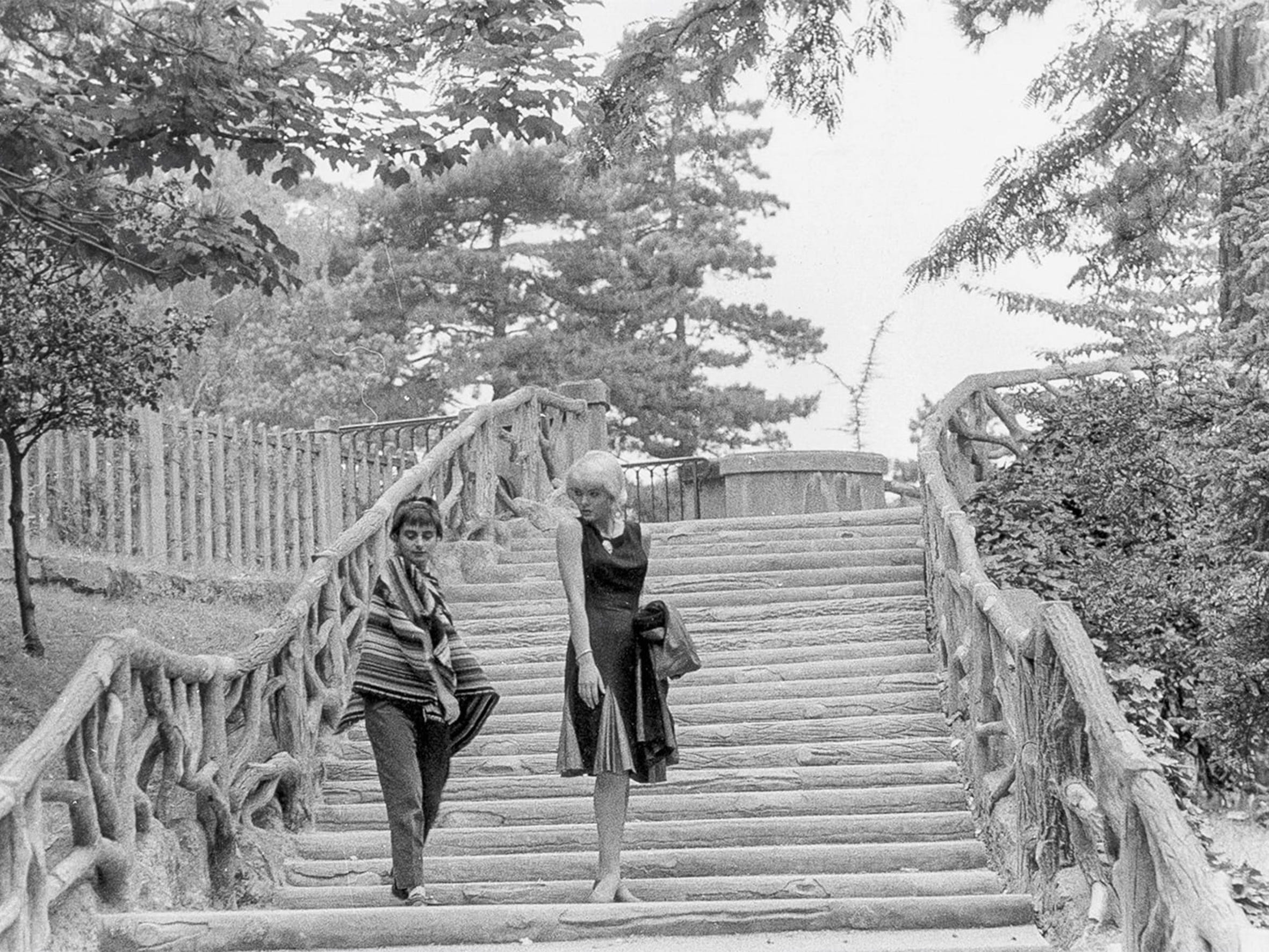
The work came out of the constraints she had for production. Varda had little money to make the movie, so it’s set largely in these outside exteriors, in this limited timeframe. Those same constraints also give it the natural look and urgency underneath, despite its deliberate pace. One reason some artists’ later work is weaker is because those constraints are removed. No one’s telling them no. So the comic isn’t working on their jokes as much, but the specials come quicker, and it shows. The filmmaker isn’t editing anything, but the budgets are bigger, so their film is bloated and bad. When you don’t have to continue to hone, over and over, to barrel something over the line, it’s likely going to be more half-baked. Honestly, there are days where that sounds pretty good. Pushing boulders up hills can be tiring. Sounds cool to burp something out for a big check.
—
One Varda feature that really sticks with me is Jacquot de Nantes (1991). In real life, Varda’s husband, fellow director Jacques Demy, was dying of cancer. So, Varda made what starts as this coming-of-age film based on Demy’s childhood, reenacting stories he’s told her, as she’s heard them. The movie is such an act of love and such an effort from Varda to see the person she loves. To re-create and reimagine moments from your partner’s childhood, as you’ve imagined and interpreted them, with their collaboration — because you both know their time is limited.
I don’t know why even talking about the concept makes me emotional. I think it’s in part because so many artists’ sole objective seems to be, “Look at me.” Especially today, everyone has to brand themselves, center themselves, to demand attention when you’re not even sure what you want to do with that attention. That film just felt like a gift they’re giving to each other. Varda’s making this film to preserve her husband and his memories, to make what should be a sad time into this beautiful act of making something through their shared language. Demy, a director himself, is entrusting her to recreate his childhood and allowing her to film him in the present. Varda intersperses recreated scenes with doc elements, interviews and footage of Demy near the end of his life. He died before the film came out.
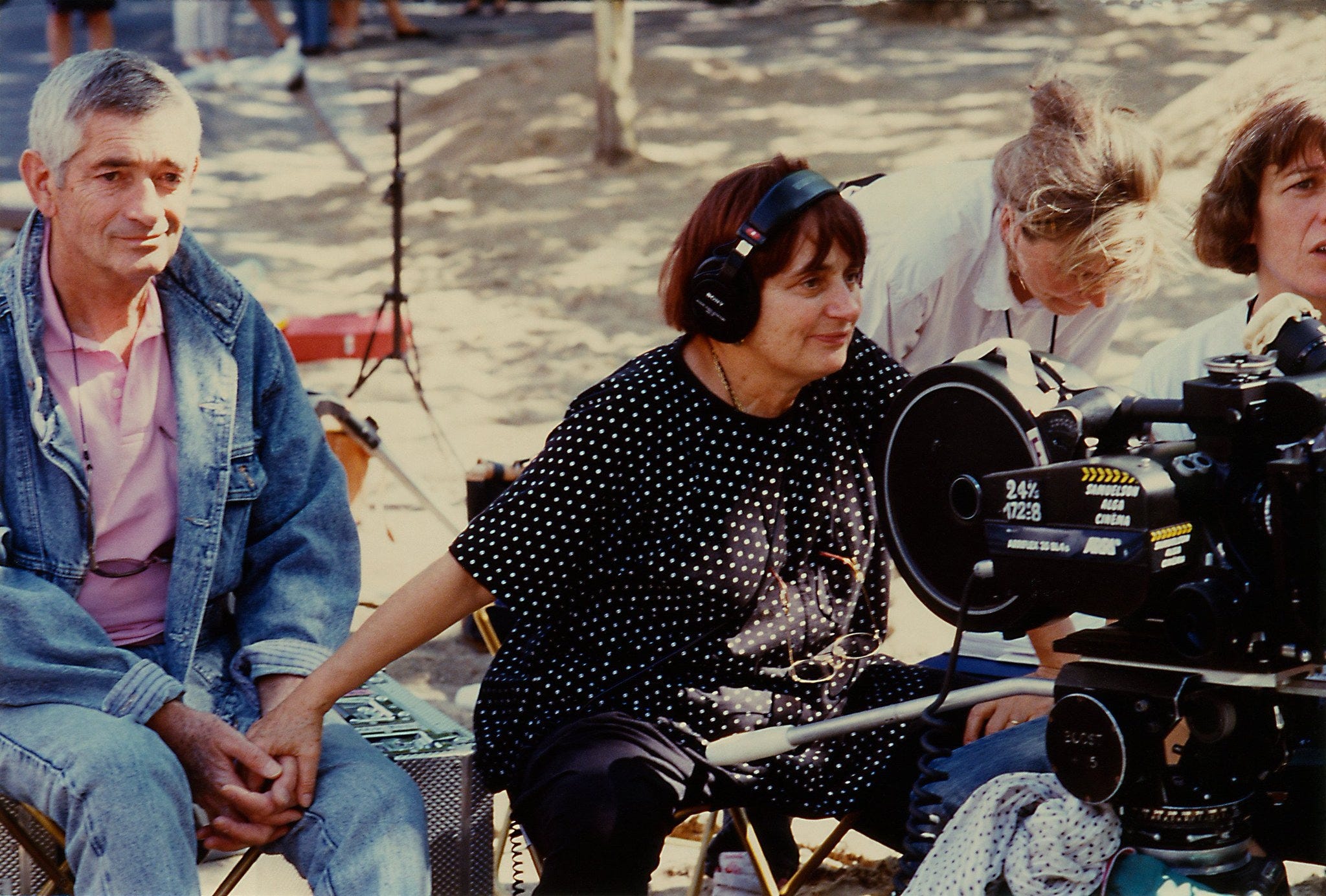
Varda merged doc and fiction in her work. Her first feature, La Pointe Courte (1955), did that, wildly ahead of her time. It’s funny today how a lot of people market their stories as fully “true” when they’re entirely made-up. Meanwhile, a lot of people ostensibly writing “fiction” are pretty much writing exactly what’s happened to them, with maybe some names changed. So much fiction is nonfiction, so much nonfiction is fiction. Varda merged these in a way that did not feel manipulative. She blended them in a way that felt truthful and exploratory and sincere.
I think part of my romanticization of her work is this idea that you can make a career out of following these creative urges and impulses. We’re in such a tough climate for that, it’s damn-near impossible, especially in the U.S. But what does hold true is the joy of creating for the sake of itself. The most rewarding things I’ve done creatively is when I’ve just followed my instincts and worked impulsively but thoroughly. When I’ve made stuff in those “in between” spaces, just for the sake of it. It feels like a very American, ego-centric mindset to think once you’ve done something, everything you do has to be at least at that externally-perceived level or bigger. That you can’t do anything that makes you seem “less” than a level you’ve reached. I’ve made a feature, I can’t go back to making shorts. I’ve sold a pilot, I can’t make some small thing for YouTube. I’ve seen comedians of a certain stature not want to have their names listed on showcase lineups, because they think that’s beneath them. They’re doing the showcase, but what they’re worried about is the external perception. It’s nice to strive for something bigger in the future. But when you’re solely doing that, you’re closing yourself off from embracing the present, from looking around and trying to create from where you are.
I’ve pulled so much joy from my shorts – Cramming, Practice Space, the forthcoming Being Bublé, which IMHO, should be in the National Film Registry. But even if only one-thousand people see any of these things, they’ve given me more than enough enjoyment in the process, the collaborations and growth that came from making them, the pride in the final product.
I love Varda’s work, because she so clearly creates from what she sees in front of her. You can feel her love in all of her stuff, no matter the subject. Whether it’s about those suffering from political or economic oppression, her love for her partner, or that she likes her cat and thinks beaches are cool. She’s following her passions and allowing those passions to fuel and attract. To have such a love for the process of creating and exploring every nook and crevice that interested her, while maintaining this clear curiosity for others around her. She once said, “Nothing is banal if you film people with empathy and love. If you find them extraordinary, as I did.” Something to aim for.
Follow Dan on Substack and Instagram @danjperlman.
No posts
Comments
Nothing yet. Say the first thing.
Sign in to join the conversation.