
When we talk about migration, we risk flattening the story into nation of origin or age or residence permit but when we do that we lose necessary nuance. There are two Turkish workforces in Denmark. The first were the original guest workers who arrived before 2001 and made their lives here. The second is a young, fast-growing group who arrived in the last three years.
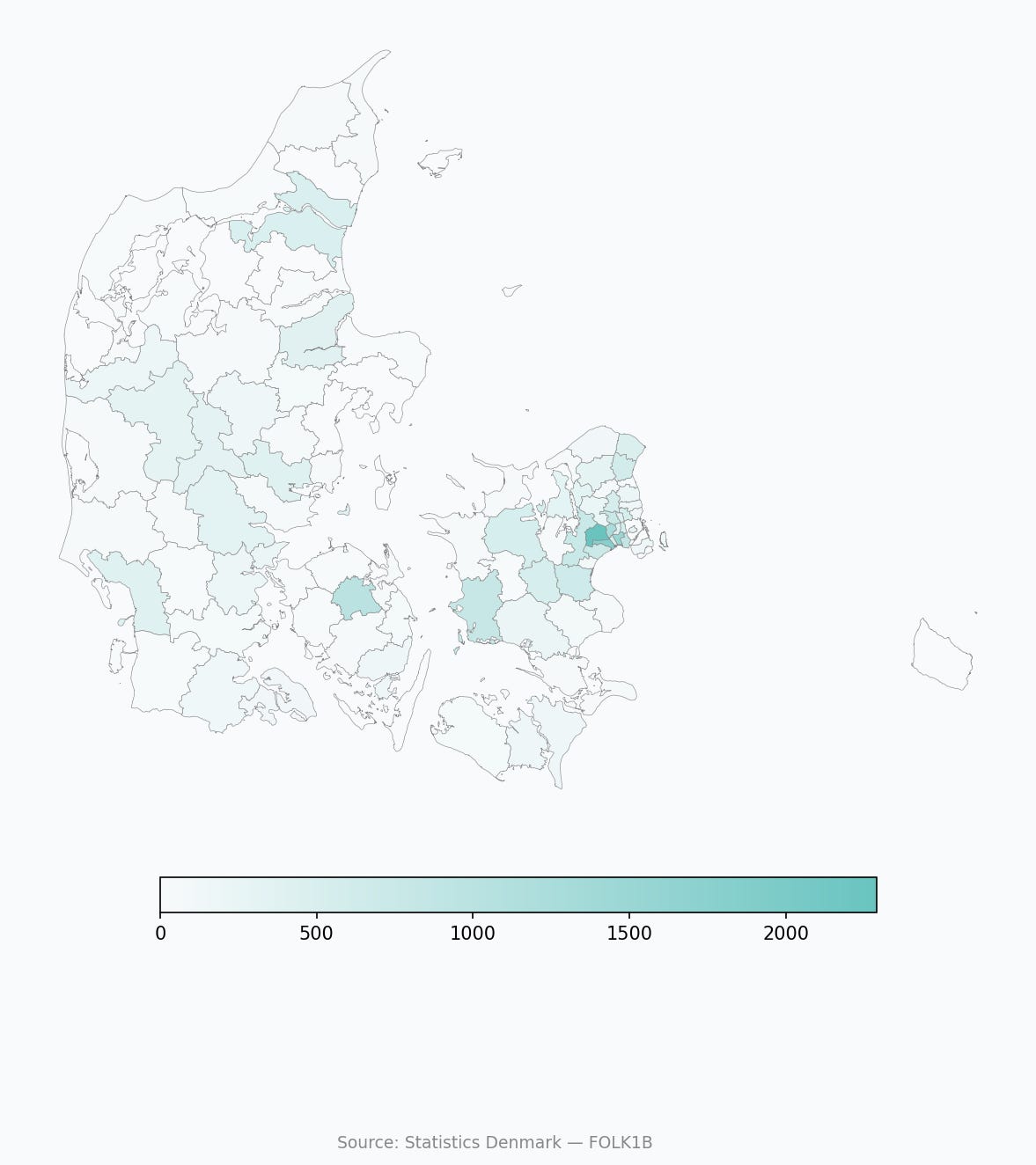
Just looking at those with only Turkish citizenship (as in, losing those who have Danish citizenship with Turkish origin or those with dual citizenship… which is a problem because as we will see nearly thirty thousand people acquired Danish citizenship over the years), we can see the largest community of Turkish people is in and around Copenhagen without much presence in the provinces.
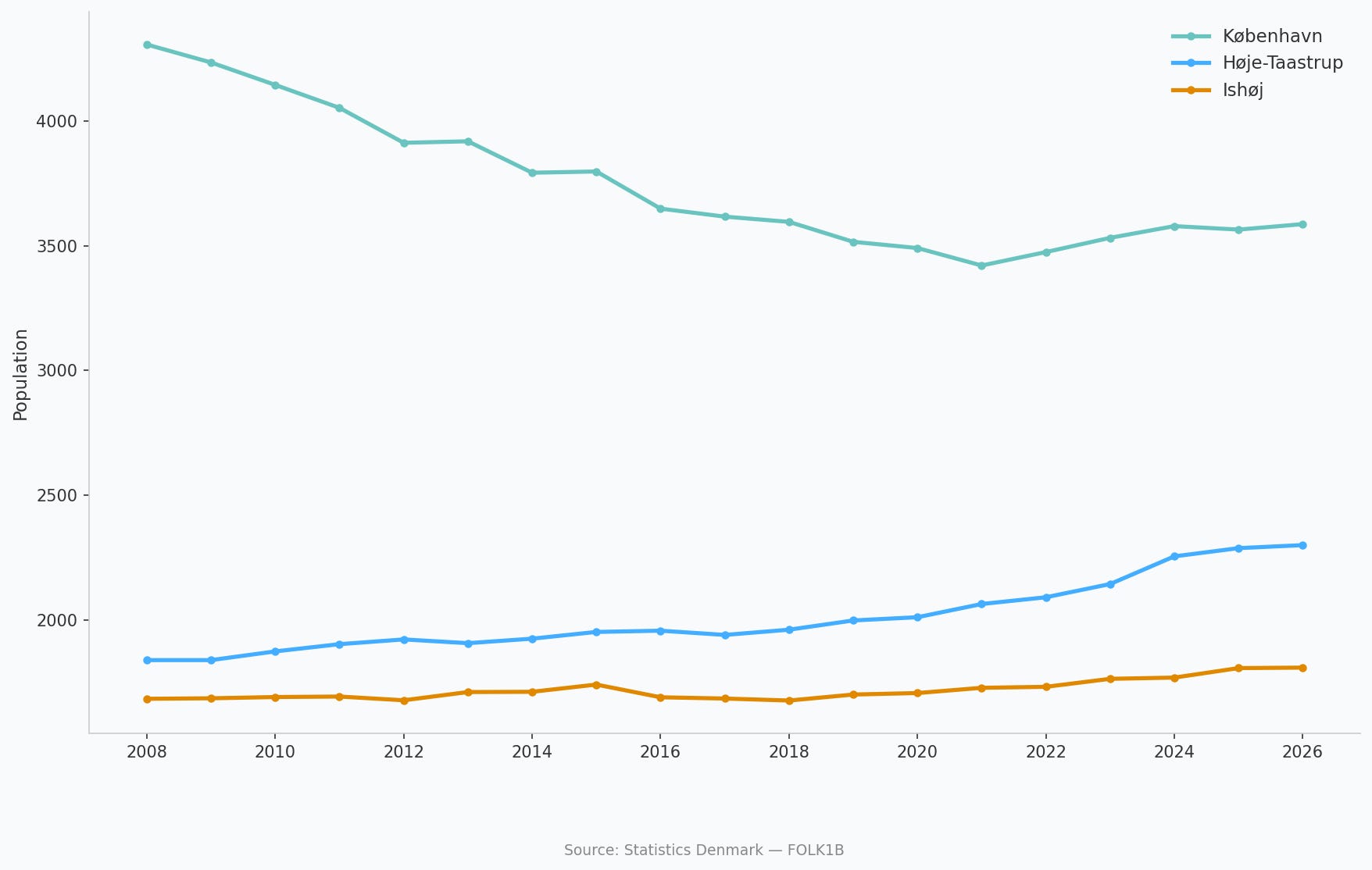
Tracking movement over time, we can see that suburbs of Copenhagen have been increasing their Turkish cohorts while Copenhagen lost theirs and stabilised. It would be nice to know which cohorts are moving, is it the new arrivals in search of a place to start a family or the original group who are looking for a place to retire to?
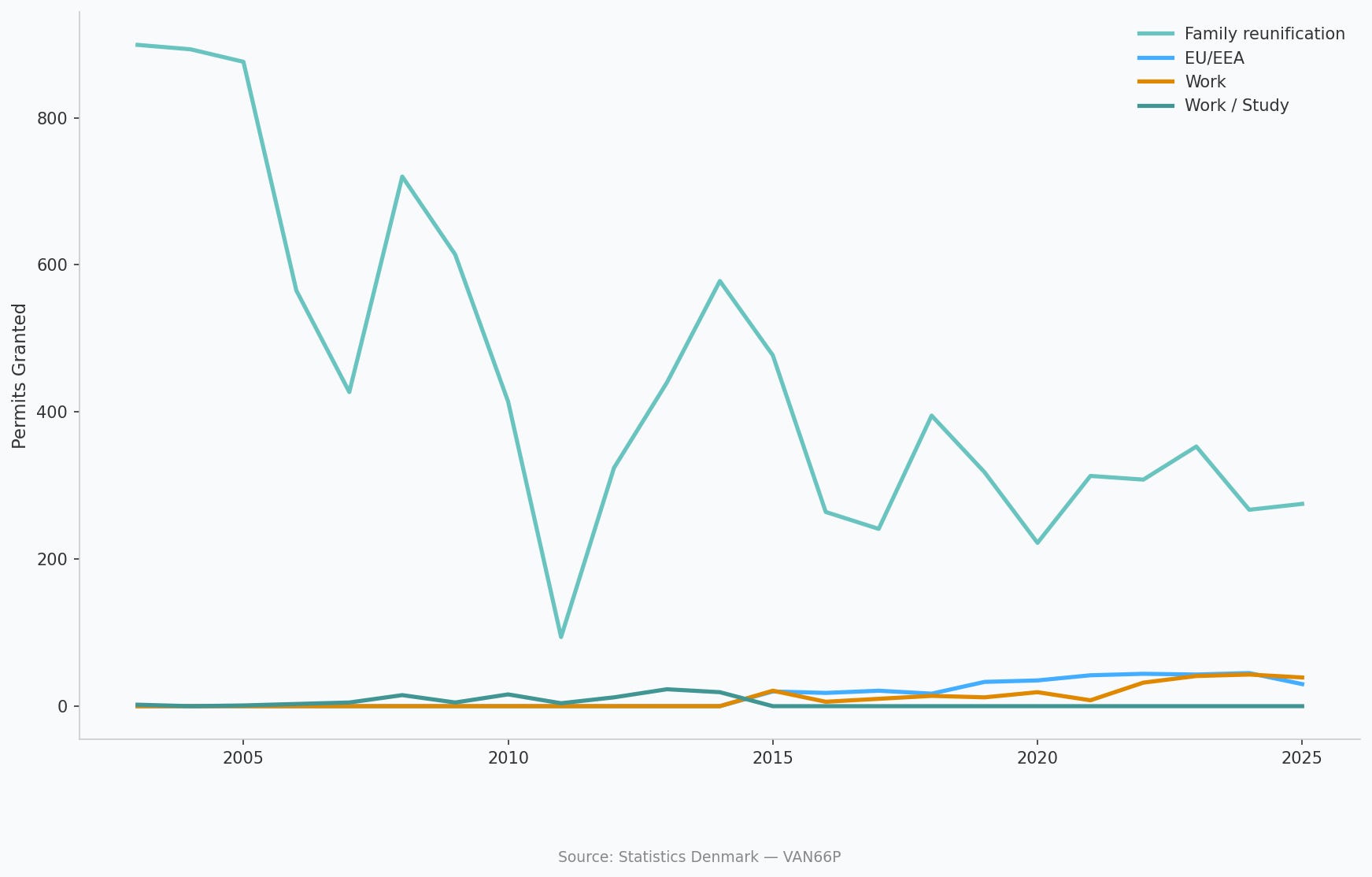
These are the first residence permits people arrived on, family reunification is by far the most popular but you can certainly see where policies have been sharpened and how that has changed migration patterns. Work permits have increased by more than seven fold in the past decade, this is the new cohort arriving.
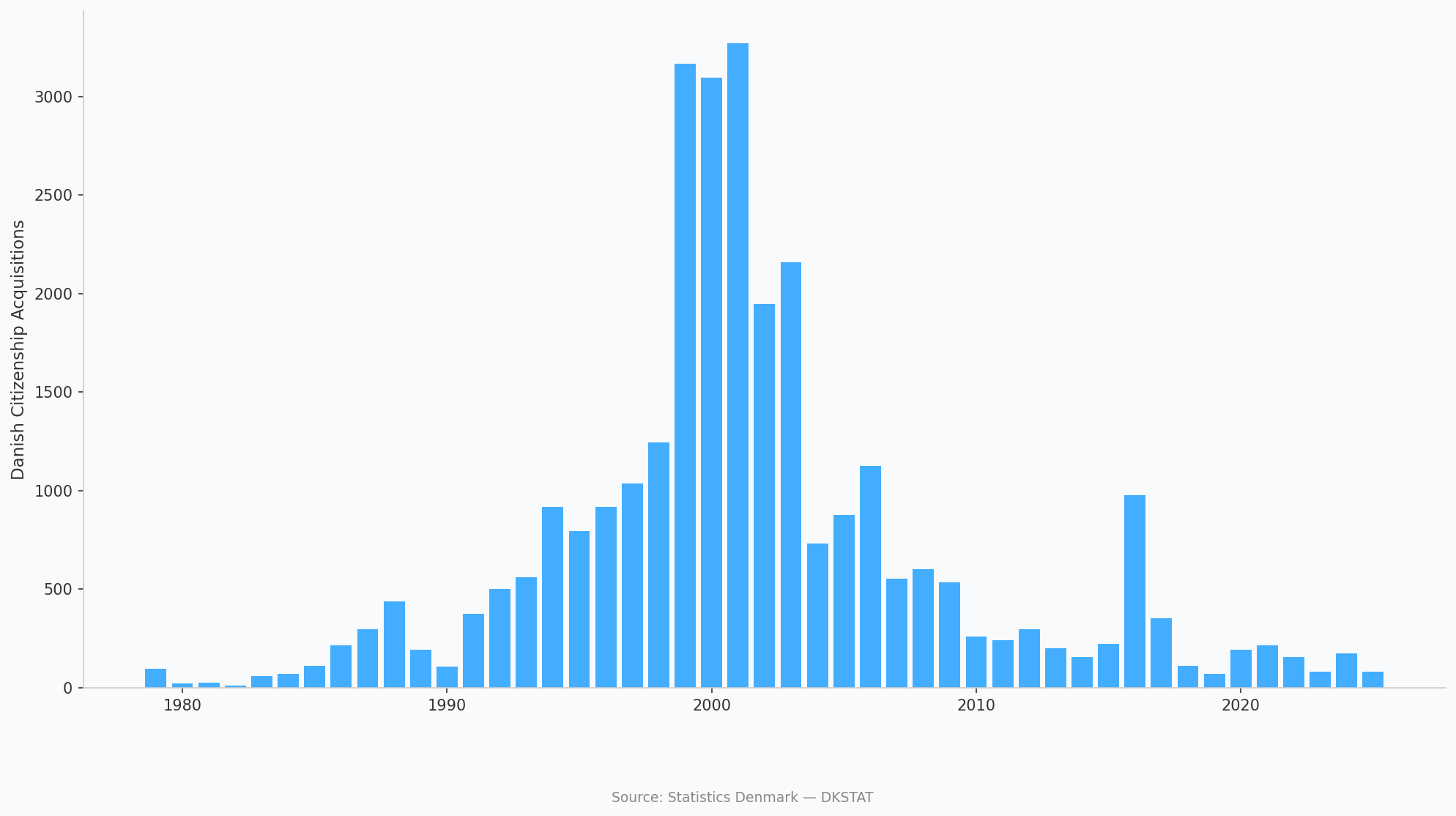
This is my favourite graph of the post, look at this! Nearly a third of all Danish citizenship acquisitions by Turkish people since 1979 occurred over the three years of 1999-2001. There is a story there, right? It is much rarer these days. Is that because those that wanted it already have it?
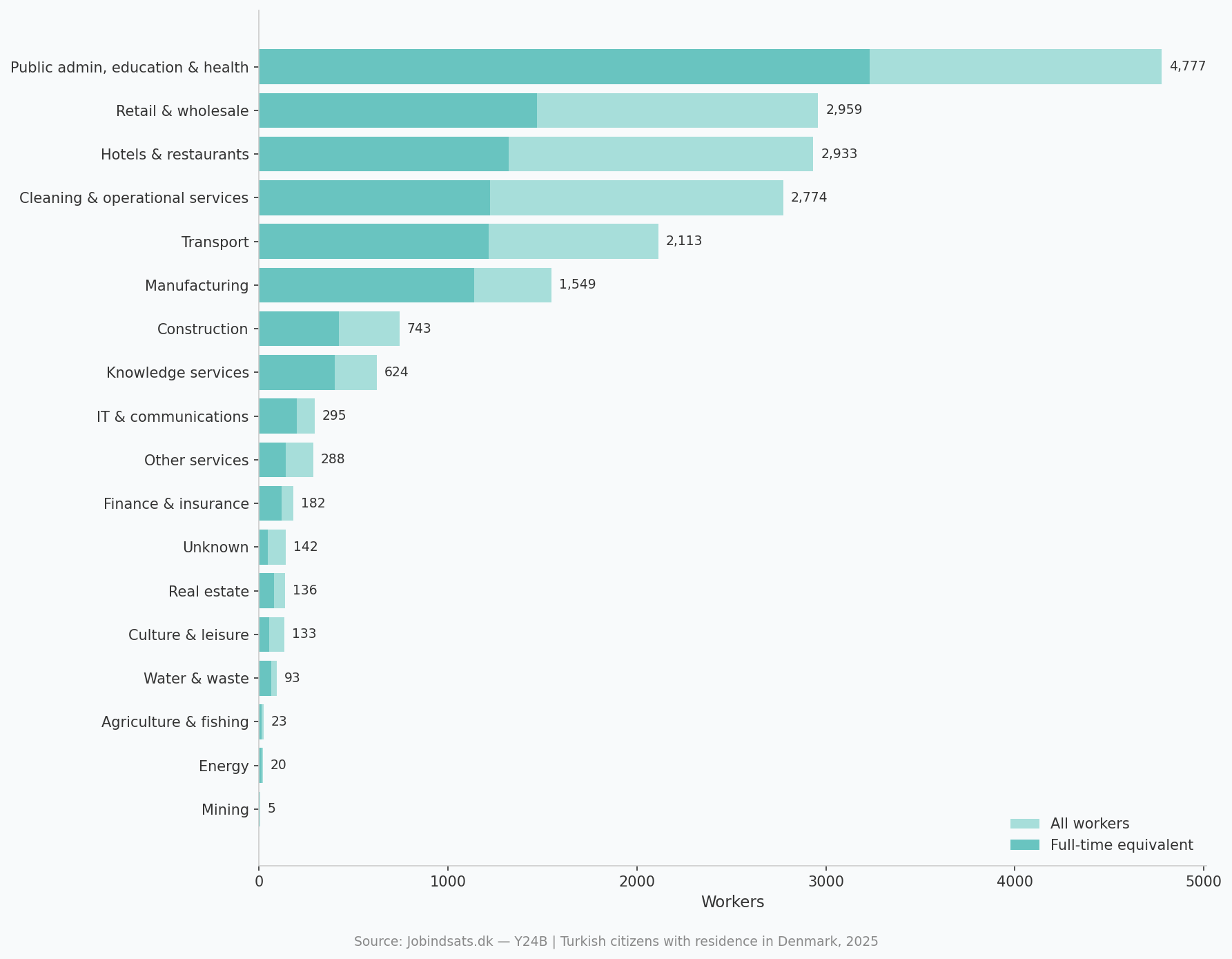
These are the sectors that Turkish people worked in last year. Not shown on the graph is that women are much more likely to work part time than men and that male employment grew twice as fast as female in the past 17 years. There is a 51:49 male:female gender split in general but new arrivals are more likely to be male.
I think it is a genuine menace to information that public administration, education and health are under one heading. They are very different sectors.
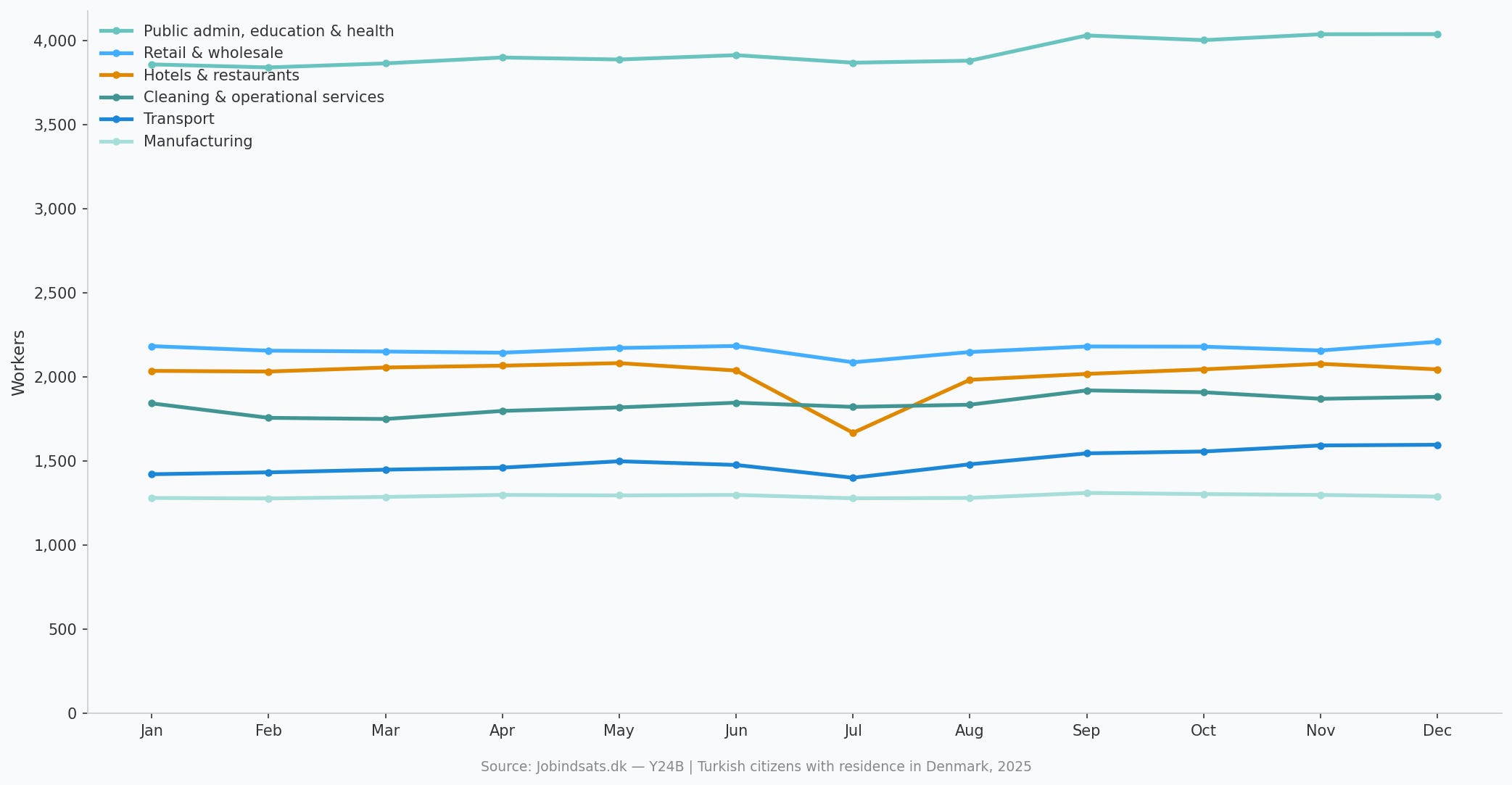
Here we can see how employment in the different sectors varied over the previous year with hotel and restaurant, retail and transport staff reducing in the summer period but manufacturing and cleaning remaining steady while public admin et al lightly increased after the summer (is that people graduating their courses and starting work in schools, daycare and hospitals?)
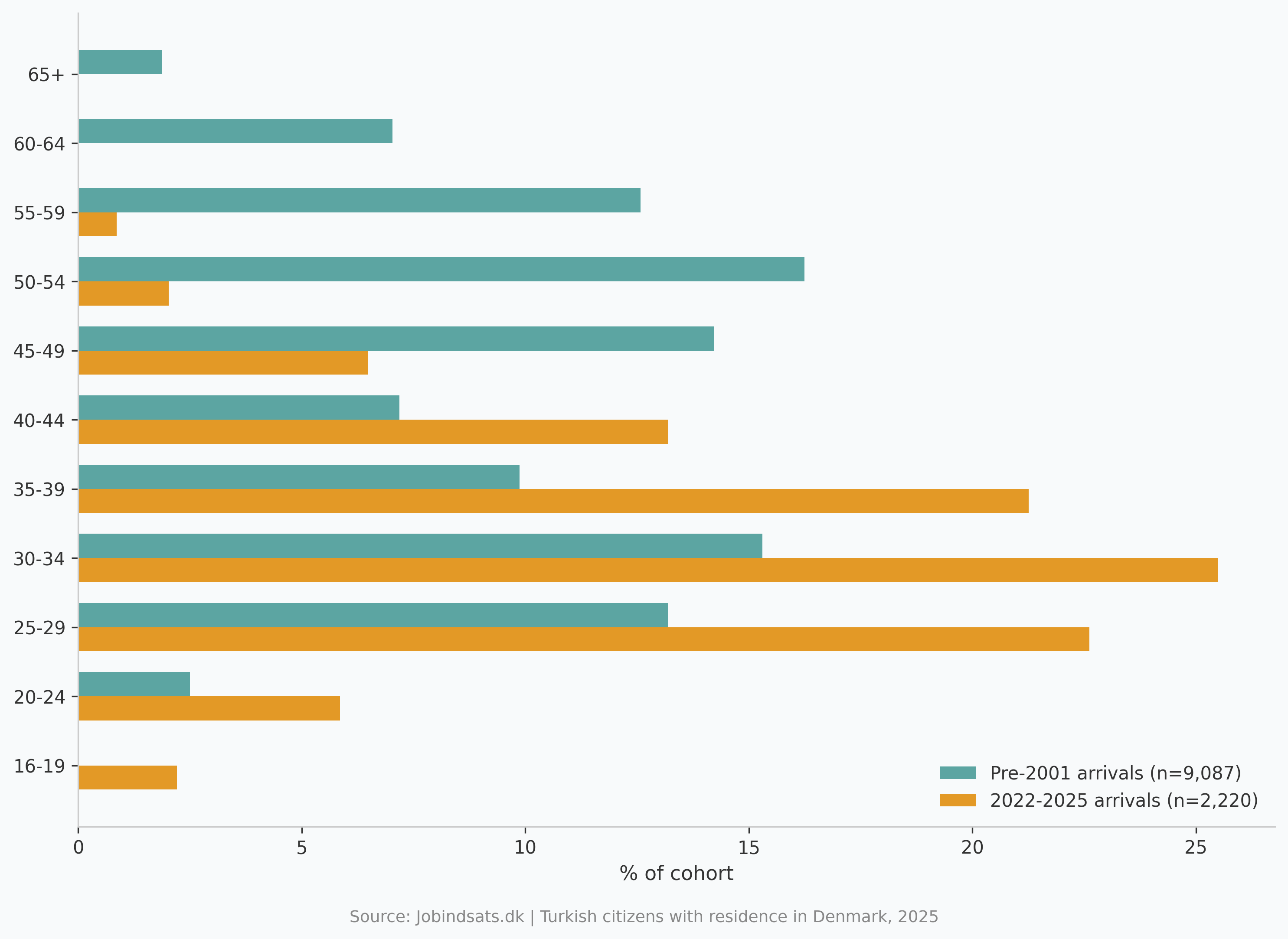
Here is the age breakdown of the two different cohorts. The OG guest workers are beginning to retire and approach retirement age while young working age people are arriving straight from Türkiye.
This is something for the town planners of Copenhagen and its suburbs to be aware of. Parents of small children and school age children of Turkish background are not (and never were), a homogenous group but now there is a major differentiation of groups. Some of them were born here or had the majority of their childhood here. Some of them are freshies. Some of them speak Danish fluently (and maybe it is the home language), and some of them don’t.
This also has similar effects on other types of services and approaches to cultural integration. There is an opportunity here to think and plan ahead, so that the next crop of arrivals thrive and want to build their lives here too.
Here’s my data consultancy website if you want to book me for a data consult.
You can also subscribe to this newsletter for more like this automatically in your inbox
There are paid subscriptions available but the only extra benefit you get from subscribing at the moment is the warm fuzzy feeling of supporting someone’s work that you value.
Comments
Nothing yet. Say the first thing.
Sign in to join the conversation.