
Last time, we looked at four case studies of Danish kommuner where increasing numbers1 of foreigners of working age had different effects depending on the presence and flow of Danish people of working age.
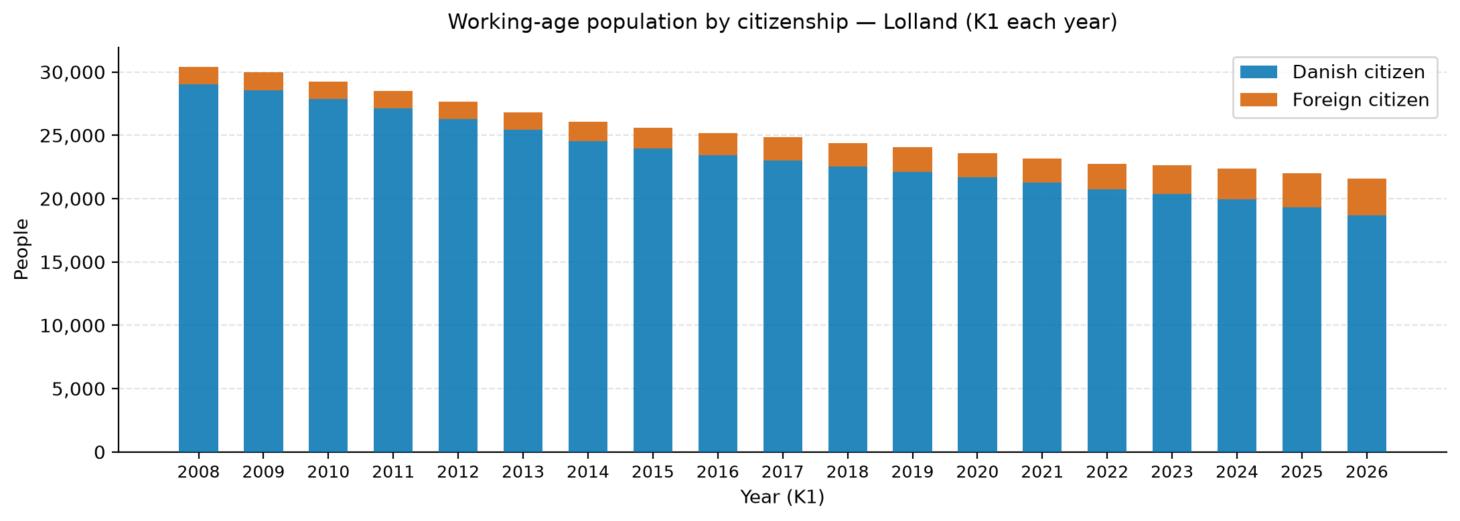
Lolland is an interesting case study to look at in detail. It is a Type 4 (as in, the arrival of working age foreigners isn’t enough to increase or stabilise the working age population as a whole).
We will also have a look at another Type 4, its neighbour Guldborgsund who aren’t struggling as much financially.

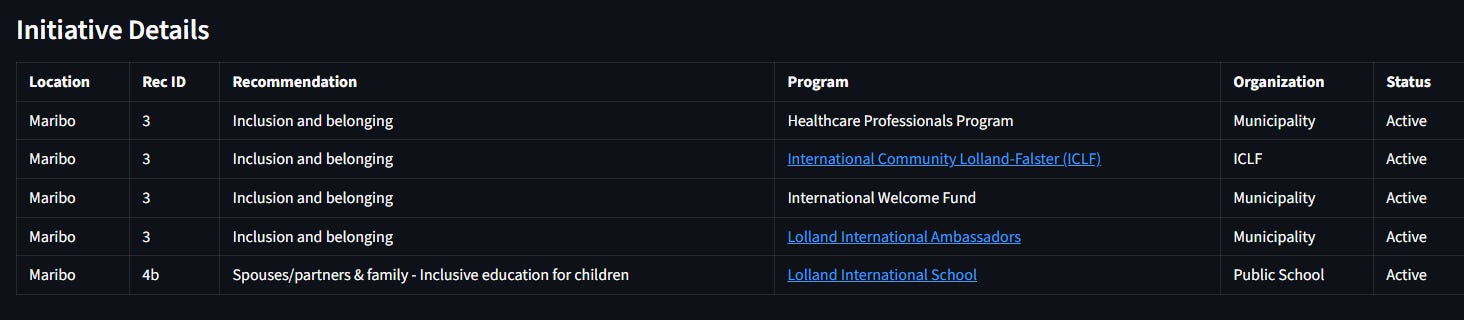
Lolland kommune is the western side of an island connected to the rest of Denmark by bridges and a tunnel. Another tunnel which will connect Denmark to Germany is being built. They have made a lot of effort to recruit and retain foreign families, including starting an international folkeskole.
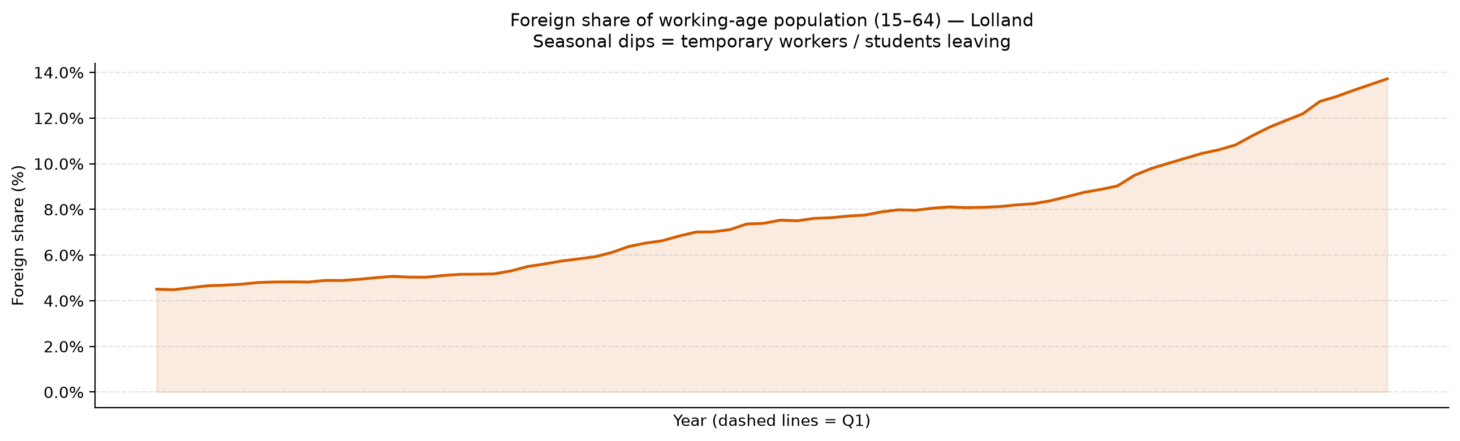
It worked!
But!
Lolland still needs to cut programmes, merge services and make significant savings.
Budget Cuts (in Danish on DR)2
Between three fifths and three quarters3 of the foreign workforce commutes in from abroad, but as such do not show up on either of these two charts. This is an echo of the so-called roepolakker from the 1800 and 1900s where foreign workers (usually from Poland and Sweden), would work in agriculture, construction and service but not live in Denmark year-round. Lolland only gets money from central government for its resident population. Workers with no registered Danish address still need services while they are in Denmark, so when that is thousands of people, budgets can get a little frayed.

Next-door Guldborgsund kommune (which includes the eastern side of Lolland island), is not in the same financial position. Is it because they have cracked a code that Lolland couldn’t? Are they attracting more working age people from foreign backgrounds to become residents?
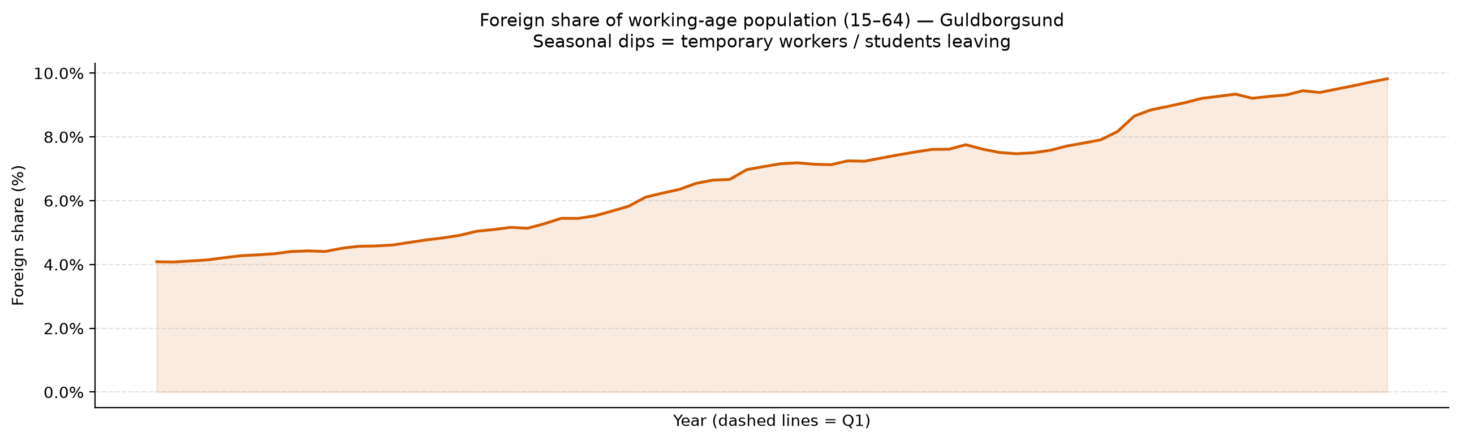
Not really. Not as well as Lolland is doing anyway.
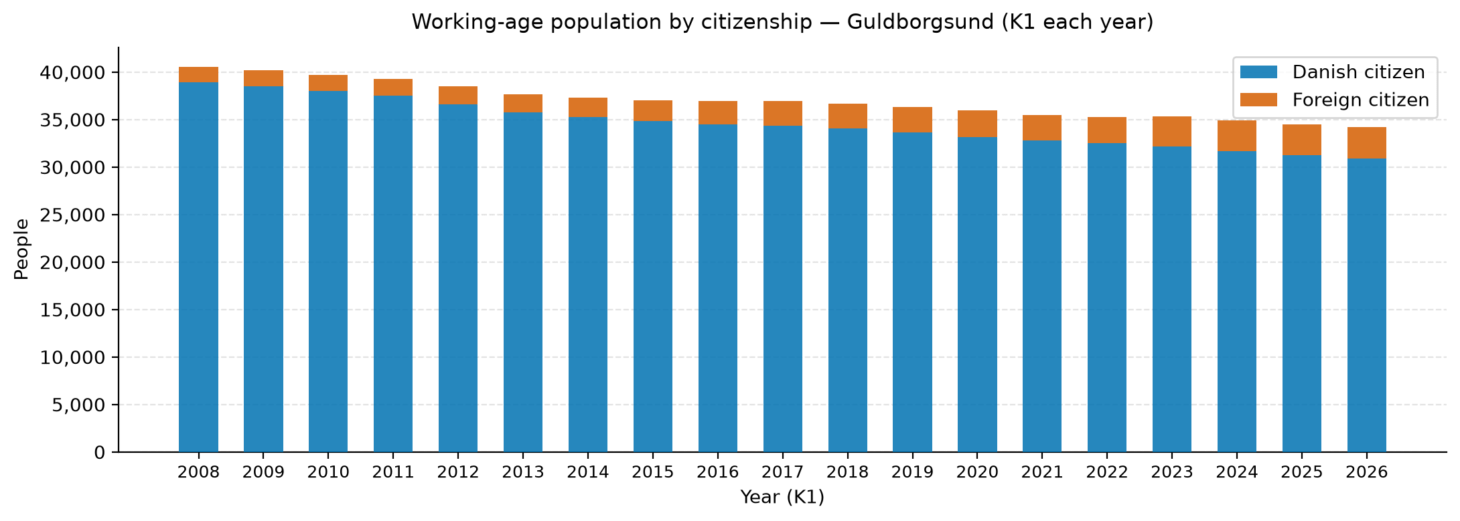
The boring reason is that it is losing Danish working age people at a lower rate and happens to have more people. At current rates of replacing only a quarter of the Danish working people they lose with those from abroad, they are going to run into the same issues down the road in a couple of decades.
Another case study that I covered in The International back in January is Sønderborg. They have similarities with Lolland: similar loss of Danish working age population, similar rates of attraction of foreign resident workers. The differences are that Sønderborg started with more resident foreign workers and so the arrival of more internationals offsets the loss of Danes, and they are able to increase the quality of public services because of the extra tax money available.
Lolland has to make these cuts but keep its eye on the future. When the tunnel is built and the temporary workers move on, they need to attract international families to stay and work. Their housing stock needs to be built up and attractive international companies attracted now, in readiness. In the meantime, if central government haven’t already offered, it could be a good idea to make a special exception and award a grant to cover the exceptional outgoings of having thousands of project workers living there without a registered Danish address.
Which is the overwhelming majority of all Danish kommuner, by the way
H/t to Last Week in Denmark:
The range is because of the two ways you can count workers. 5000 heads working full time 6 months of the year or 2500 ‘full-time equivalent’
Comments
Nothing yet. Say the first thing.
Sign in to join the conversation.