
Seth Godin recently wrote about the decision writers and creatives face when it comes to AI tools.
He said we have two valid choices (both can work): walk away or dance.
As someone building an AI tool for lawyers, I see this choice playing out for lawyers every day. Some lawyers are refocusing on work where being "more human" is the main requirement. Others are embracing AI and finding ways to add value on top of it.
Both paths can work, but only if you're honest about what each one requires.
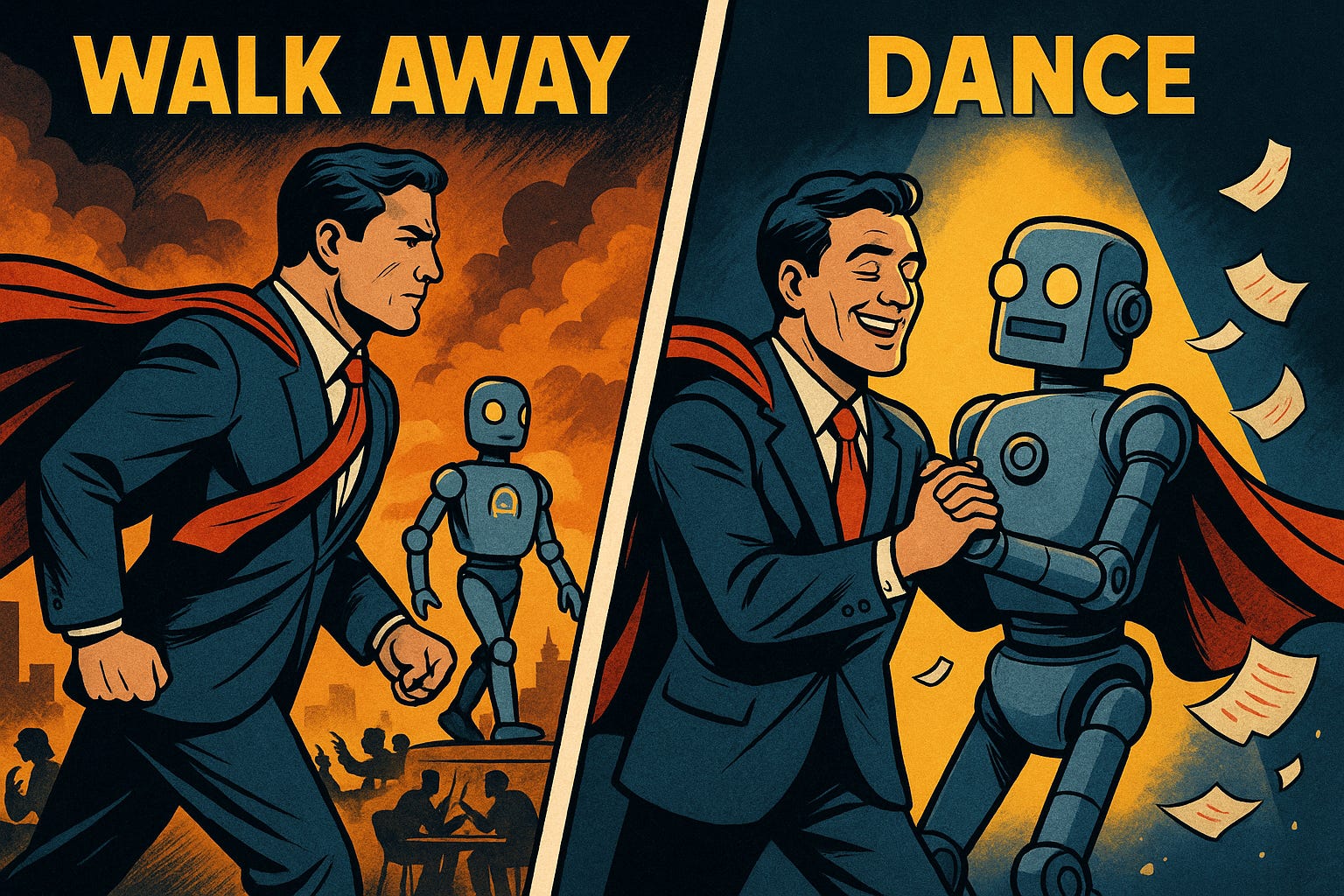
If you're going to walk away from AI, you need to move to legal work that is inherently unpredictable and where human output isn’t just optional but required.
Eg stubbornly continuing to manually redline NDAs won’t cut it. So think about the kinds of legal work where AI struggles:
Bet-the-company decisions: When the CEO calls at 10pm asking "Can we really do this deal?" You need to understand the business context, the regulatory landscape, and how it all fits together. More importantly, you need to convey this on a call, not in an advisory memo.
Live negotiations: Reading the room during a tense board meeting or acquisition call. Knowing when to push and when to fold based on body language and tone.
Strategic risk management: Not just spotting risks, but helping leadership decide which ones are worth taking. This requires understanding the business model, market conditions, and company culture.
Crisis management: When something goes wrong, you need to think fast, coordinate multiple stakeholders, and make judgment calls under pressure.
This is a totally valid strategy. You're strategically positioning yourself where your human skills matter most.
So look at all the legal tasks in your current role (or roles you could move into) that aren't a good fit for AI.
Maybe that's employment law where you're dealing with sensitive HR situations. Or regulatory compliance where you need to interpret guidance and lobby regulators.
Or M&A work where reading between the lines of management presentations matters as much as the legal docs.
Then figure out how to get yourself into those positions. This might mean having conversations with your boss about reshaping your role, or it might mean a strategic career move.
The other option is to dance with AI. Use it to help with the routine stuff so you can focus on higher-value work. This sounds easy, but like most things, it’ll require a bit of experimentation.
Reason being that most of us have never been forced to learn what exactly this ‘higher-value’ work is.
But here are some ideas.
Become the translator between legal and business:
Instead of just flagging risks, kickstart conversations about which risk/reward trade-offs are worth it. Then codify the outcome in your playbooks.
You can attend more business meetings and provide real-time legal guidance
You can help the sales team understand why certain contract terms might matter to them (instead of just saying "no")
Build better processes:
Figure out which low value contracts can be self served by the business + AI. Won’t be perfect, but might be good enough?
Redesign how different departments work with legal to reduce friction
Streamline approval processes now that you have more bandwidth. Are there areas where we’re always asking for approval and always getting it? If so, can we get rid of those escalations?
Focus on the human stuff:
Manage relationships with external counsel more strategically
Mentor junior team members (now that you have time)
Get proactive instead of reactive:
Spot legal issues before they become problems
Help shape business strategy instead of just reviewing the output
Build better legal infrastructure for the company.
Note: both paths may require getting out of your comfort zone and learning new skills.
If you’re consciously walking away from AI work, the legal skills that got you here, may not be sufficient to ensure you’re invaluable as a purely (and consciously!) human lawyer in an AI world.
If you’re opting to dance with the AI, you need to understand what the tools can and can't do. You need to get comfortable reviewing AI output instead of creating everything from scratch.
The lawyers who are thriving with AI aren't the ones who blindly trust it. They're the ones who use it as a starting point, then layer on their judgment, business knowledge, and relationship skills. And figure out how to do assemble that in efficient way.
For me it was similar to learning how to manage a team for the first time. It initially felt less efficient than doing everything myself. It required a new skillset to get the most out of a team. I think the same is true for AI tools.
I guess my main point is: doing nothing isn't really an option.
If you're not walking away or dancing, you're just... standing still. And that's probably the riskiest position of all.
Movement creates opportunity, regardless which direction you walk.
Thanks for being here,
Daniel
Daniel van Binsbergen
CEO at DraftPilot
Comments
Nothing yet. Say the first thing.
Sign in to join the conversation.