
There’s been a lot of discussion lately about the legacy of French theory and at the root of these debates is the conundrum of its anti-Marxist foundation. The philosophical heavy weights that continue to shape our views of liberation from Foucault, Deleuze, Lacan, etc. developed their thought in a social and political context that differs profoundly from our own. These thinkers may have given rise to a bona fide renaissance in thought and philosophy but they also, importantly, attempted to fundamentally revise (and in many cases completely discard) Marxism and its political practice. Scholars today tend to be of two minds regarding this problem: some indeed acknowledge the extent to which these thinkers strayed from Marxist practice while others argue that while they may have veered from Marxism, this veering was a necessary corrective to a social order that had fundamentally changed after the war.
It is crucial that this second claim be dealt with so that we maintain a foothold in social reality. While it is true that the capitalist order transformed after the war, and it is also true that in western Europe, American imperialist subsidies combined with social re-engineering from 1945 - 1975 gave rise to a new liberalized society. This was a political project of American imperialism known as the Marshall Plan, a massive social and political reengineering of capitalist society that dumped billions of development funds into these societies. It contributed to the “Trente Glorieuses”, or the thirty glorious years of intense economic growth across France. It is undeniable that a new consumer society was created in this context, one in which the problem of scarcity based on serial production and mass consumption was effectively solved.
It is from out of this transformation of western society that what we today know as “French Theory” began to propose a new conception of the revolutionary subject, one that discarded the working class to the dustbin of history. The social order had become what the philosopher Jean Baudrillard referred to as “neo-capitalism”, a concept which argues, wrongly, that the productive sphere no longer animates a separate or autonomous sphere of economic activity in social life and labor. In his writings on political economy in the 60s and 70s, Baudrillard argued that the dialectic between relations of production and the forces of production had become a mirror of society, that the very distinction between use value and exchange value had disappeared entirely before the pure reproduction of exchange value. Baudrillard also argued that Marxism had nothing to offer to revolutionary practice. There is a profound anachronism to the ideas of so-called ‘neo-capitalism’ that drove French Theory at its peak. It must also be noted that this postwar re-structuring of society was not localized only to France; these changes shaped the class composition of postwar society across the west, including the United States.
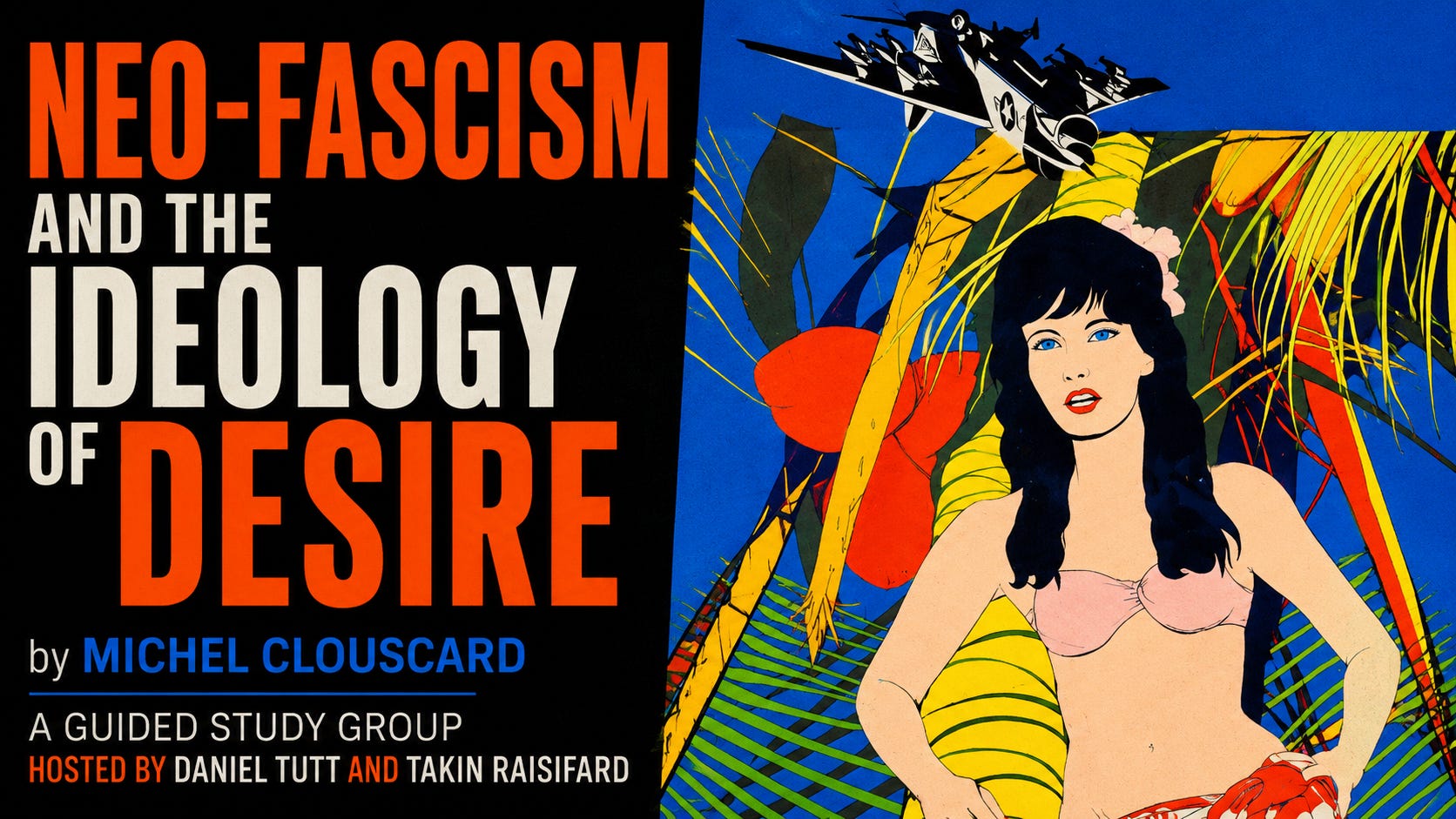
There is no better guide to navigating the precise inadequacies of the theorists that sought to adapt and discard Marxism — from Herbert Marcuse, Deleuze and Guattari, to Baudrillard and Wilhelm Reich — than Michel Clouscard. It is exciting news that his book Neo-Fascism and the Ideology of Desire, originally published in 1973, has finally been translated in 2026! This book is an original and penetrating Marxist critique of the new society after the war. It takes aim at the models of liberation proposed by Freudian-Marxism, particularly of Marcuse and Deleuze and Guattari but its focus goes beyond these thinkers by presenting a more far-reaching account of the situation of modern capitalism and how fascism emerges out of the contradictions of the new social order.
On June 10th, and then every other week from that time, I will lead a study group on this book. Along with the translator Takin R., this group will consist of presentations on the book chapter-by-chapter followed by discussions and Q and A. The Clouscard circle of scholars in France have approved our hosting of this group. I have written a review essay on the book to give you a sense of it:
·
March 1, 2025
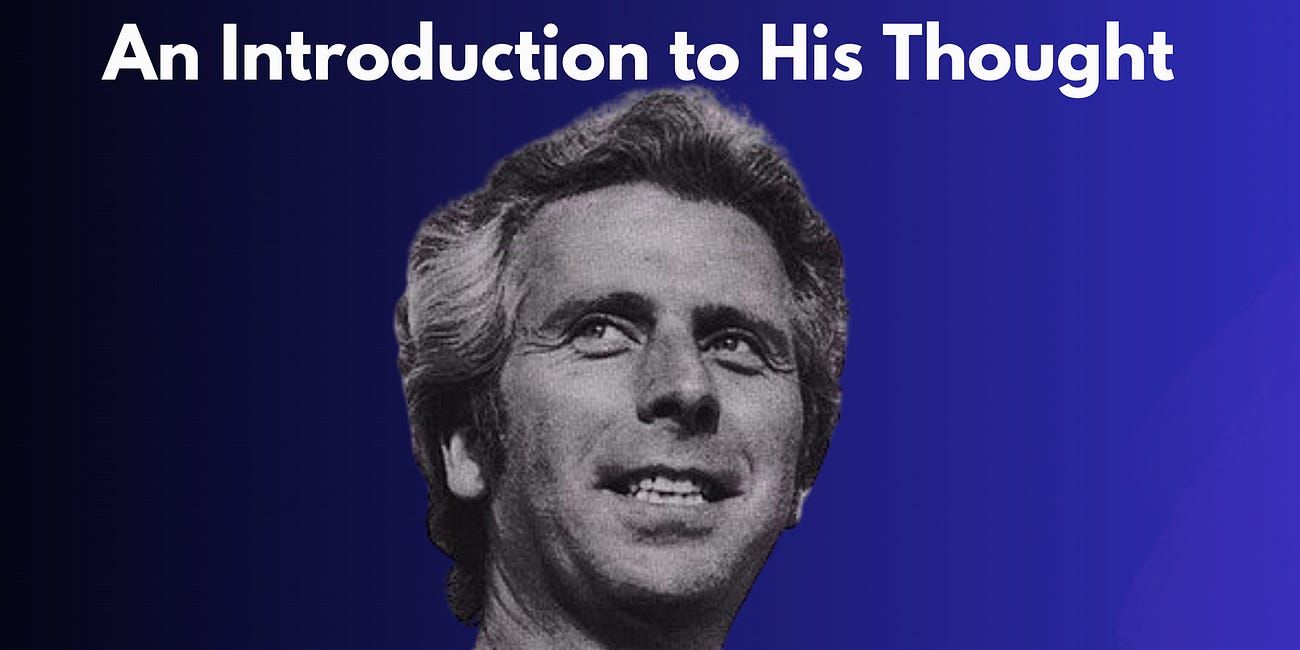
When Nietzsche discovered Stendhal it was rather late in his life but he remarked that reading him was “one of the most beautiful strokes of fortune of my life.” This is exactly how it felt for me to discover Michel Clouscard. It was Marx who woke me from a dogmatic slumber out of left-Nietzscheanism. . . Clouscard set off a different alarm bell for me. He is a thinker that identifies the unifying logic of entire systems of thought that have seduced me, from French Theory to Freudo-Marxism. It is a tragedy, if not a minor conspiracy, that his work has never been translated into English. This is a fact that warrants our consideration.
We will meet every other Wednesday starting on June 10th from 7 - 9 pm EST. These meetings will take place on Zoom and once you register we will provide a PDF of the translated book with a reading schedule. Each session will consist of a guided set of remarks followed by discussion. Once you sign up you will gain access to the Zoom link to register.
We are charging a very modest fee to join and a percentage will be shared with the Clouscard circle in France.
Comments
Nothing yet. Say the first thing.
Sign in to join the conversation.