
Greetings to all,
There was a time when some of medicine’s most innovative physicians believed that the most important diagnostic instrument in the room was not the MRI, the laboratory, or even the physician’s expertise. It was the patient’s own inner experience.
They believed that every patient carried a unique map—one that could not be found in a textbook, a laboratory value, or a treatment protocol. Their role was not simply to diagnose disease. It was to help each person learn to read that map.
They didn’t ask, “What treatment fits this disease?” They asked, “What approach fits this person?”
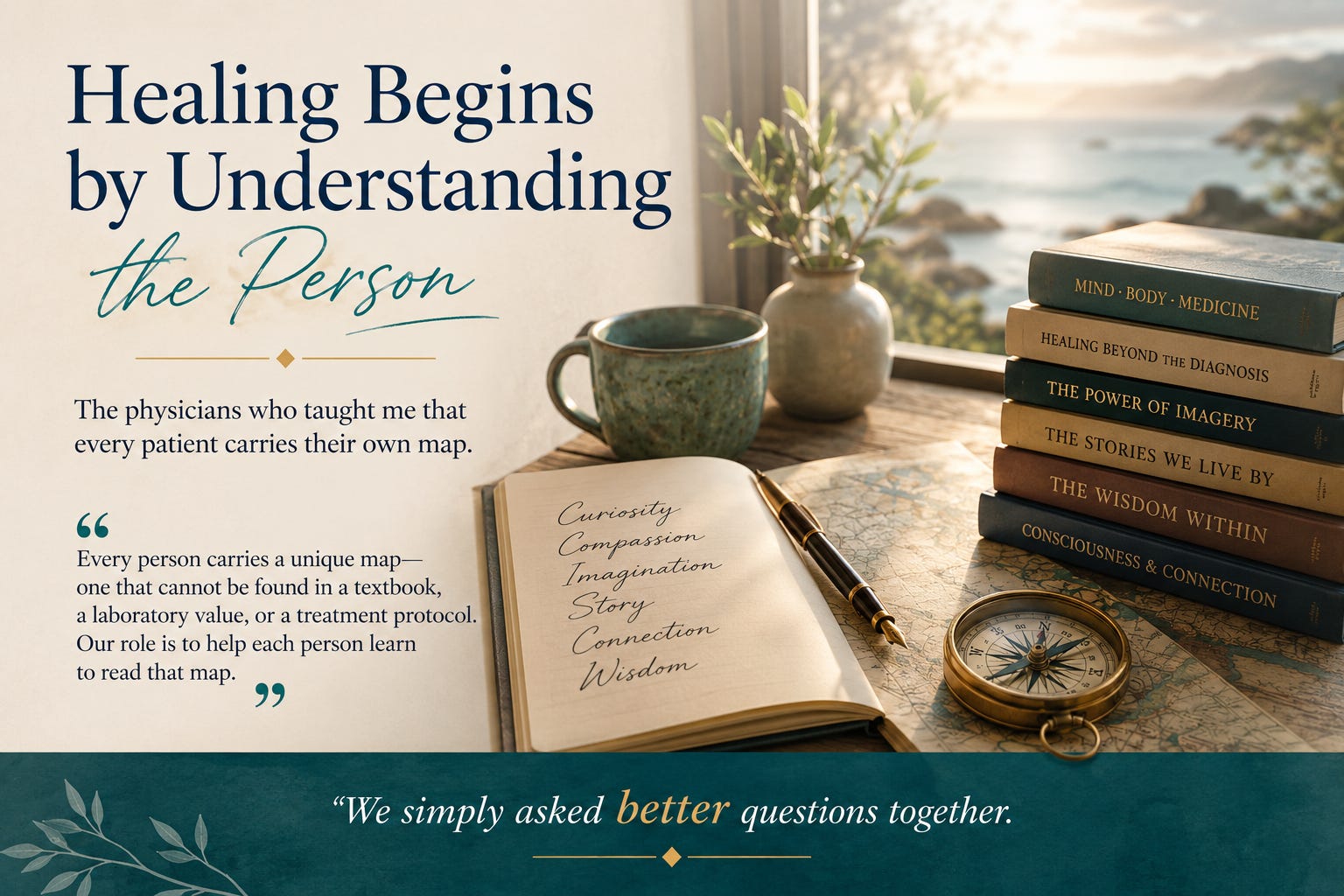
In the late 1990s, I had the privilege of studying with physicians who practiced a very different kind of medicine. They certainly respected science, but they also respected something that is becoming increasingly rare today: the uniqueness of the individual sitting in front of them.
Most people have probably never heard their names. They weren't building brands or social media followings. They were building a body of clinical knowledge, teaching other healthcare professionals, and asking questions that medicine is still exploring today.
Their influence was measured less by public visibility than by the number of practitioners whose thinking they transformed.
I’d like to introduce you to a few of them.
One of the stories often associated with Dr. Carl Simonton’s work involved a child with an inoperable brain tumor. To help the child visualize healing, Simonton introduced the image of Pac-Man characters eating away at the tumor. Whether one attributes the outcome to the imagery itself, the medical treatment, the child’s own biology, or a combination of many factors, the story helped inspire a generation of physicians to explore the therapeutic potential of mental imagery.
In the years that followed, Drs. Martin Rossman and David Bresler took the work a step further. Rather than providing imagery, they often invited patients to discover the images that emerged naturally from their own minds. Their experience suggested that imagery arising from a person’s own inner world was often more meaningful—and potentially more powerful—than imagery supplied by someone else.
Rossman and Bresler later co-founded the Academy for Guided Imagery, where I spent two years studying and training in their approach. It was there that I came to appreciate one of the field’s most important lessons: the therapist’s role is not to create the patient’s inner experience, but to help uncover the wisdom that is already present. Every person’s inner landscape is unique, and so is the imagery that emerges from it.
Then there was Lewis Mehl-Madrona.
Of all the physicians I met during those years, he may have been the one who most embodied quiet courage. Soft-spoken and remarkably humble, he was never afraid to question accepted thinking when it conflicted with what he believed was right. That willingness came at a personal cost early in his medical training, yet he never seemed interested in challenging the system for its own sake. His commitment was always to the patient.
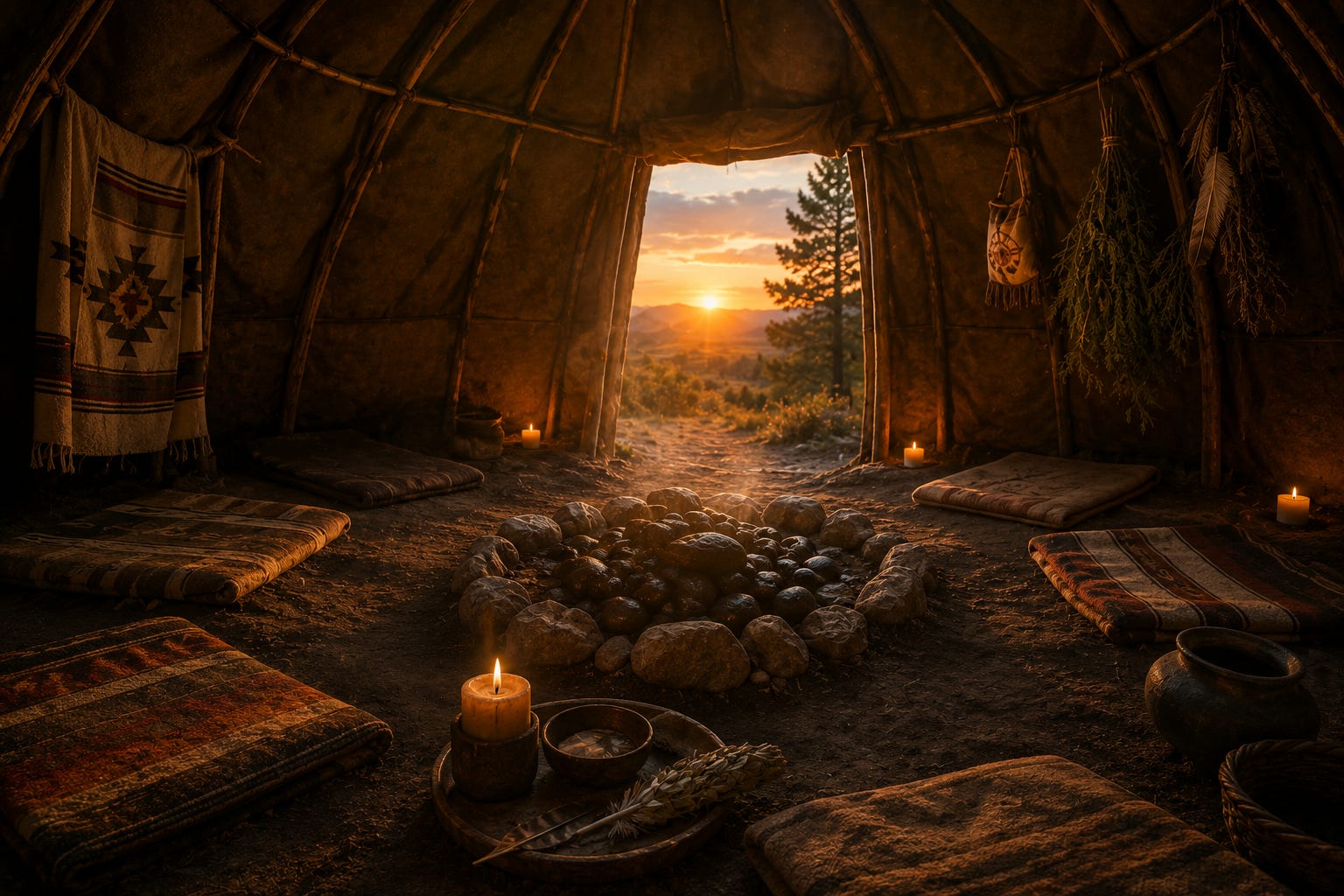
An emergency physician, psychiatrist, mathematician, and student of Indigenous healing traditions, he also led sweat lodges as part of his work as a ceremonial leader. Rather than seeing these as contradictory roles, he viewed them as different ways of understanding what it means to be fully human.
What I learned from Lewis was that healing is not only biological. It is also relational. The stories we inherit, the stories we tell ourselves, and the stories our communities carry can shape our health in ways that laboratory tests cannot measure.
Although I never had the opportunity to meet Dr. Rachel Naomi Remen personally, I came to know her work through Martin Rossman, who spoke of her with great respect. I went on to read her books, and they left a lasting impression on me.
Remen reminded us that curing and healing are not always the same thing. A disease may not always be curable, yet a person can still experience profound healing—through meaning, connection, reconciliation, purpose, or simply by being deeply seen and heard. In a healthcare system often focused on fixing problems, she gently reminded us that caring for the human being is every bit as important as treating the disease.
Recently, I found myself re-listening to some of my InterActive Guided Imagery (IGI) training recordings. That journey led me back to the books of Irving Oyle, whose work rekindled memories of an extraordinary generation of physicians and pioneers of the mind.
Oyle was both a mentor and a colleague to many of them. They gathered regularly to exchange ideas, challenge one another’s assumptions, and discuss what they were learning from their patients. It was a remarkable meeting of curious minds—physicians, surgeons, and psychologists who understood that biology was only part of the healing story, and who never stopped asking thoughtful questions about the rest.
Although I wasn’t present at the original conversations among Rossman, Bresler, Simonton, Oyle, Remen, and others, I was fortunate to experience a small part of that same spirit years later. As I began building my practice in Marin County, a group of surgeons, physicians, psychologists, and therapists gathered once a month for a Saturday potluck. We were all studying InterActive Guided Imagery. We worked with one another, discussed our professional experiences, shared difficult cases, and explored new ways of understanding healing.
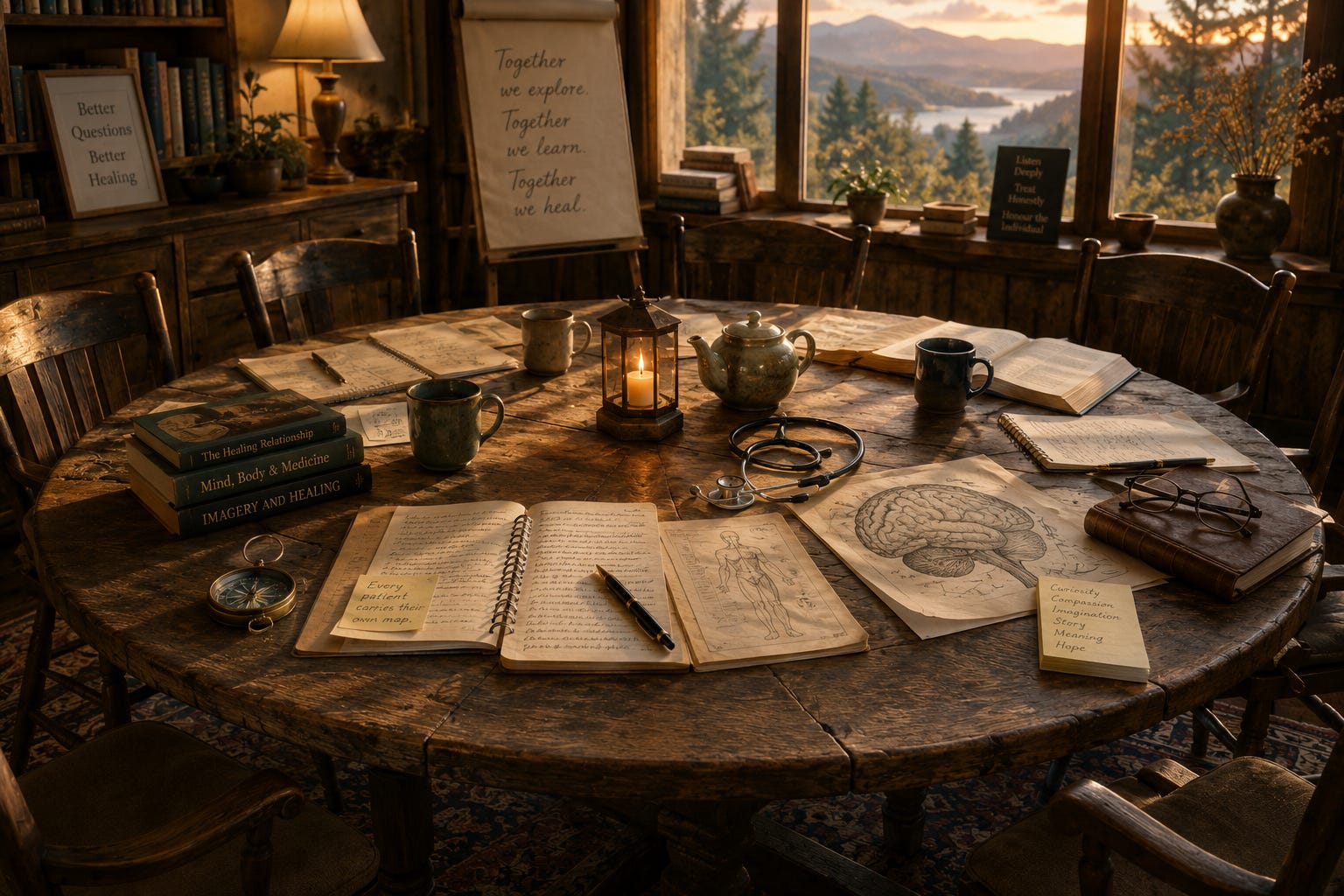
Looking back, I realize those afternoons were never just about learning a technique. They were about cultivating curiosity. No one claimed to have all the answers.
We simply asked better questions together.
These are only a few of the remarkable people who influenced me. While researching my PhD thesis, The Power of the Mind in Healing, I spent years reading the work of many pioneers who were exploring the relationship between mind, body, and healing. I could easily have filled this article with many more names. The ones I’ve shared here are those whose teachings and example left the deepest imprint on my own professional journey.
Looking back, I realize that these remarkable people came from very different specialties and used very different methods. Yet they all shared one conviction:
Healing begins by understanding the person, not merely the diagnosis.
None of these physicians practiced cookie-cutter medicine. They practiced curiosity.
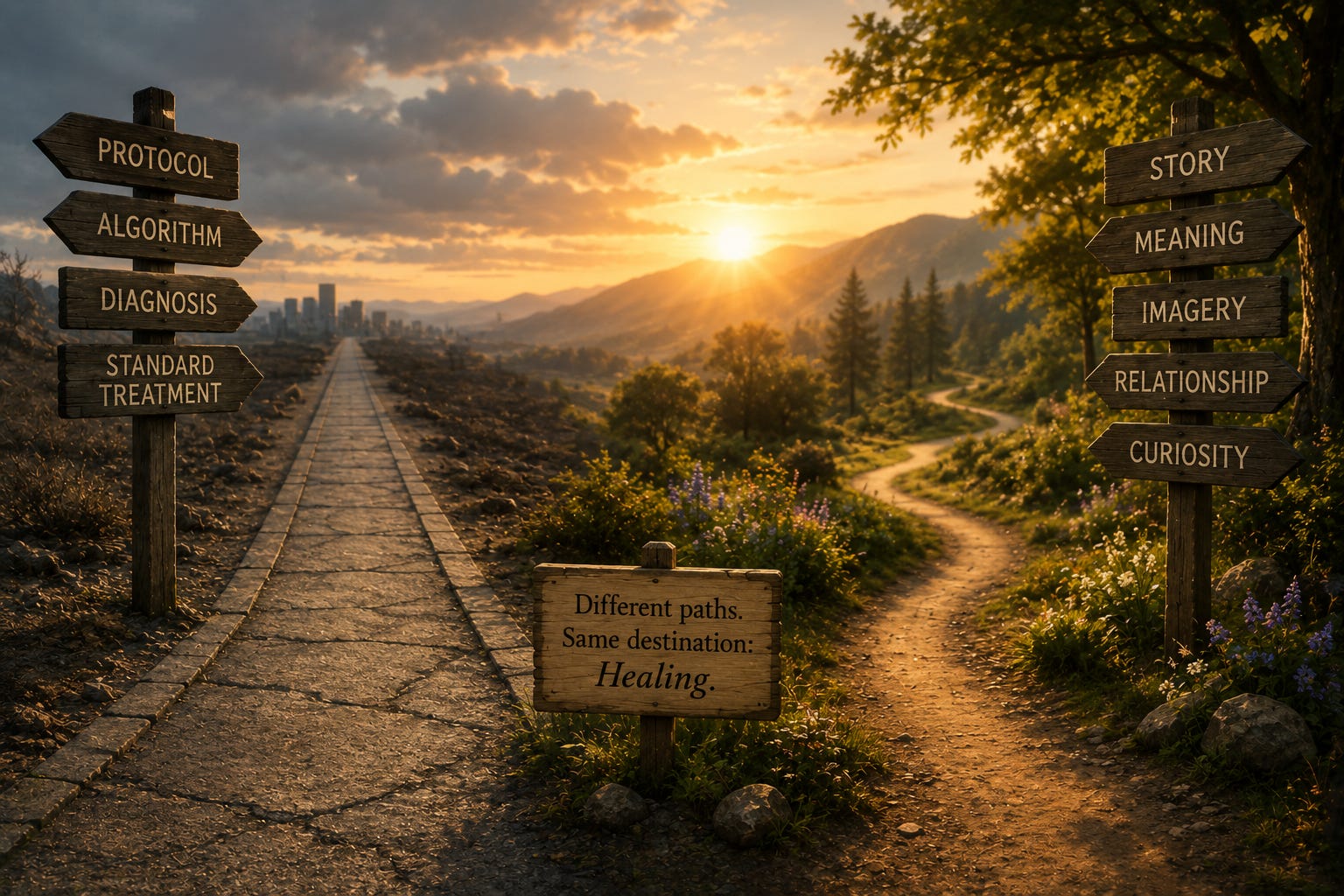
Looking back, I realize that each of them left me with a different lesson.
Martin Rossman taught me to trust the patient’s own imagery more than my own interpretations.
David Bresler taught me that treatment should follow the person, not the protocol.
Carl Simonton taught me that hope and imagination deserve a place alongside medicine.
Rachel Naomi Remen taught me, through her writings, that sometimes the greatest gift a physician offers is not another treatment, but a compassionate presence.
Lewis Mehl-Madrona taught me that the stories we live by shape the lives we live.
Irving Oyle taught me that consciousness may be far more interconnected than we have yet begun to understand.
Somewhere along the way, medicine became increasingly sophisticated. We gained extraordinary technologies, more precise diagnostics, and treatments our predecessors could scarcely imagine. Yet I sometimes wonder if, in becoming more technologically advanced, we have allowed some of these quieter qualities—curiosity, hope, imagination, individuality, story, compassion, and wonder—to fade into the background.
Perhaps the future of integrative medicine lies not in choosing between science and humanity, but in remembering that we were never meant to separate them in the first place.
P.S. The physicians I mention in this article profoundly shaped the way I approach healing. If you'd like to learn more about InterActive Guided Imagery and how I integrate these principles into my own work, I invite you to visit my Guided Imagery page on my website. If you have questions or would simply like to continue the conversation, I'd also be delighted to hear from you.
LIVE with PASSION, PURPOSE, and DELIGHT!
Danielle J. Duperret, ND/PhD — Bridging Science, Consciousness, and Human Resilience
📞Phone: 702-900-6730
📧 Email: danielle@healthwisdomacademy.com
🌐Website: Health Wisdom Academy
🎤Speaker Page: Speaking
📅Let’s Chat (Complimentary & Confidential): Schedule a Call
The Vault isn’t content. It’s mental fitness conditioning.
If you’d like to see what’s inside — and how it builds steadiness, resilience, and high-level mental clarity — you can
👉 Explore it here.
Paid Subscribers:
You should have received an email with instructions to access The Vault at no charge. Please check your inbox (and spam folder, just in case).
If you didn’t receive it, let me know and I’ll get you in right away.
Comments
Nothing yet. Say the first thing.
Sign in to join the conversation.