
Greetings to all,
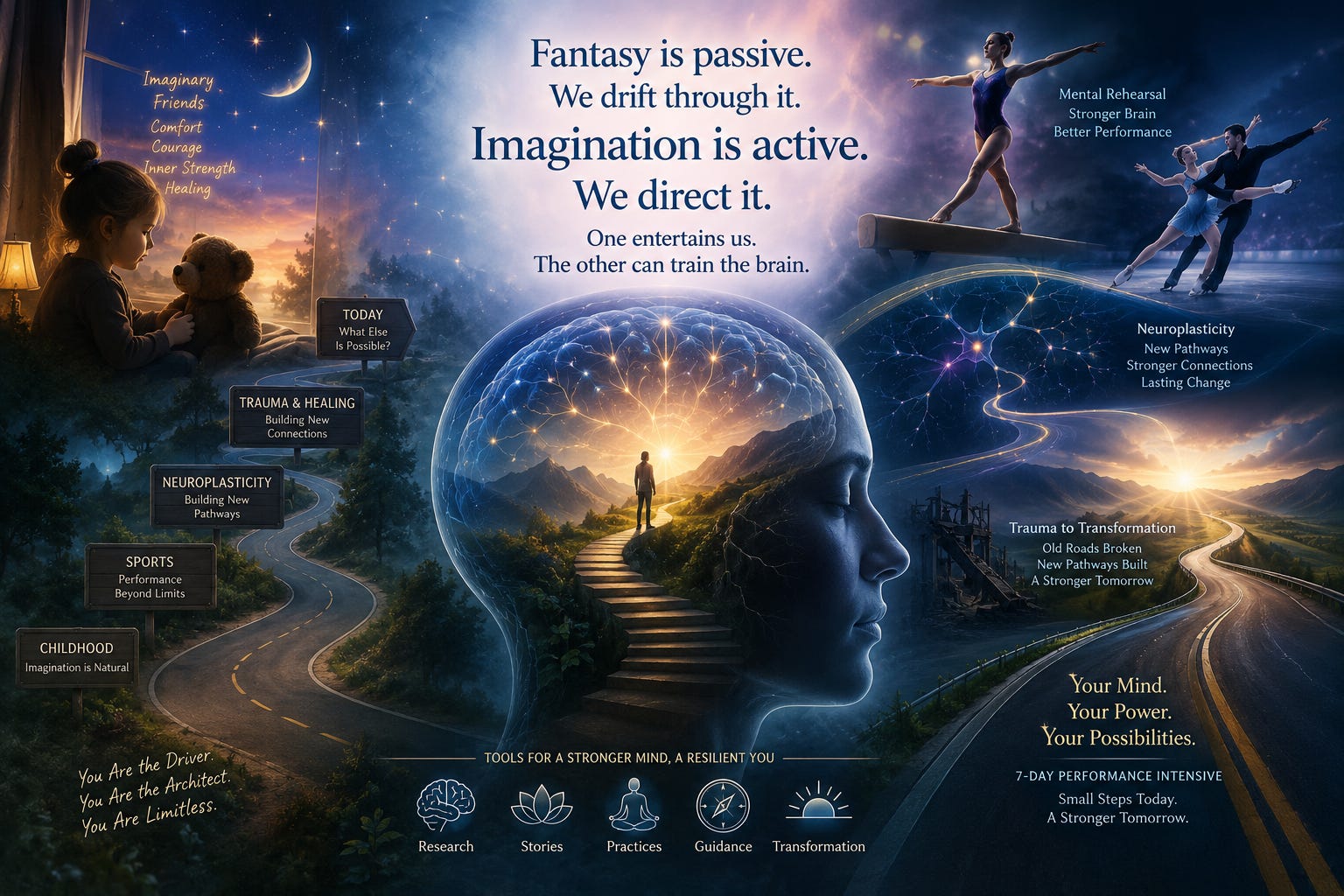
Fantasy is passive. We drift through it.
Imagination is active. We direct it.
One entertains us. The other can train the brain.
I have been fascinated by the relationship between the brain and the mind since I was a teenager. At one point, I dreamed of becoming a neurosurgeon. I imagined that by cutting or reconnecting pathways in the brain, it might be possible to cure many forms of mental illness.
Reality proved to be far more complex.
Years later, my curiosity led me in a different direction. My PhD thesis explored The Power of the Mind in Healing, and that question has remained at the heart of my work ever since.
Today, I no longer think about performing surgery with a scalpel. Instead, I see my role as helping people perform a different kind of surgery—without a knife. My passion is to empower people to understand and intentionally use their own minds to foster healing, resilience, and personal transformation.
That is why I continue to be fascinated by what neuroscience is beginning to reveal about imagination. Perhaps it is far more than fantasy.
Many of us have known children with “imaginary” friends. Others find comfort in a favorite blanket or a well-loved teddy bear. As adults, we often smile and assume they will eventually outgrow these companions.
But what if we have been looking at them from the wrong perspective?
What if these experiences reveal a natural ability to use the imagination as a source of comfort, courage, and inner wisdom?
Rather than dismissing this capacity, perhaps we could nurture it more intentionally. Imagine teaching children not only to talk to their imaginary friend, but also to pause and listen. Not because an invisible being is necessarily speaking to them, but because that quiet space may help them discover their own inner resources. In moments of pain, grief, fear, or trauma, that simple conversation might become the beginning of resilience rather than the end of innocence.
Perhaps the greatest gift we could give our children is not to teach them to stop imagining, but to help them use their imagination wisely.
The next breakthrough came in the world of sports.
Today, mental rehearsal is an accepted part of training for many elite athletes. Whether it is a young gymnast preparing to perform on the balance beam or an Olympic ice dancing couple rehearsing every movement of their routine, they are encouraged to see the performance in their minds before stepping onto the competition floor.
The goal is not wishful thinking. It is deliberate practice.
By repeatedly imagining each movement with precision, athletes strengthen the neural pathways involved in the skill they are about to perform. When the moment arrives, the routine already feels familiar.
Stories have also emerged from prisoners of war who spent years in captivity mentally playing rounds of golf every day. Although these accounts are largely anecdotal, they illustrate a fascinating idea: while their bodies were confined, they continued practicing the game in their minds. Upon their release, some reportedly returned to the golf course with their skills remarkably well preserved—and in some cases, even improved.
Perhaps the lesson extends far beyond sports. Our imagination is not merely a source of entertainment. It may also be one of the most powerful training tools we possess.
Is there a habit you would like to change?
What if a habit is simply a well-traveled highway in the brain—a network of neural connections strengthened by years of repetition?
Now imagine a new highway being built. At first, only a few cars travel on it. The old road remains the preferred route because it is familiar. But as more traffic begins using the new highway, the old one gradually sees less and less use. Eventually, weeds and brush begin to reclaim it.
Our brains work in much the same way.
Neural pathways that are used repeatedly become stronger and more efficient. Pathways that are rarely used gradually weaken. Neuroscientists call this neuroplasticity—the brain’s remarkable ability to reorganize itself throughout life.
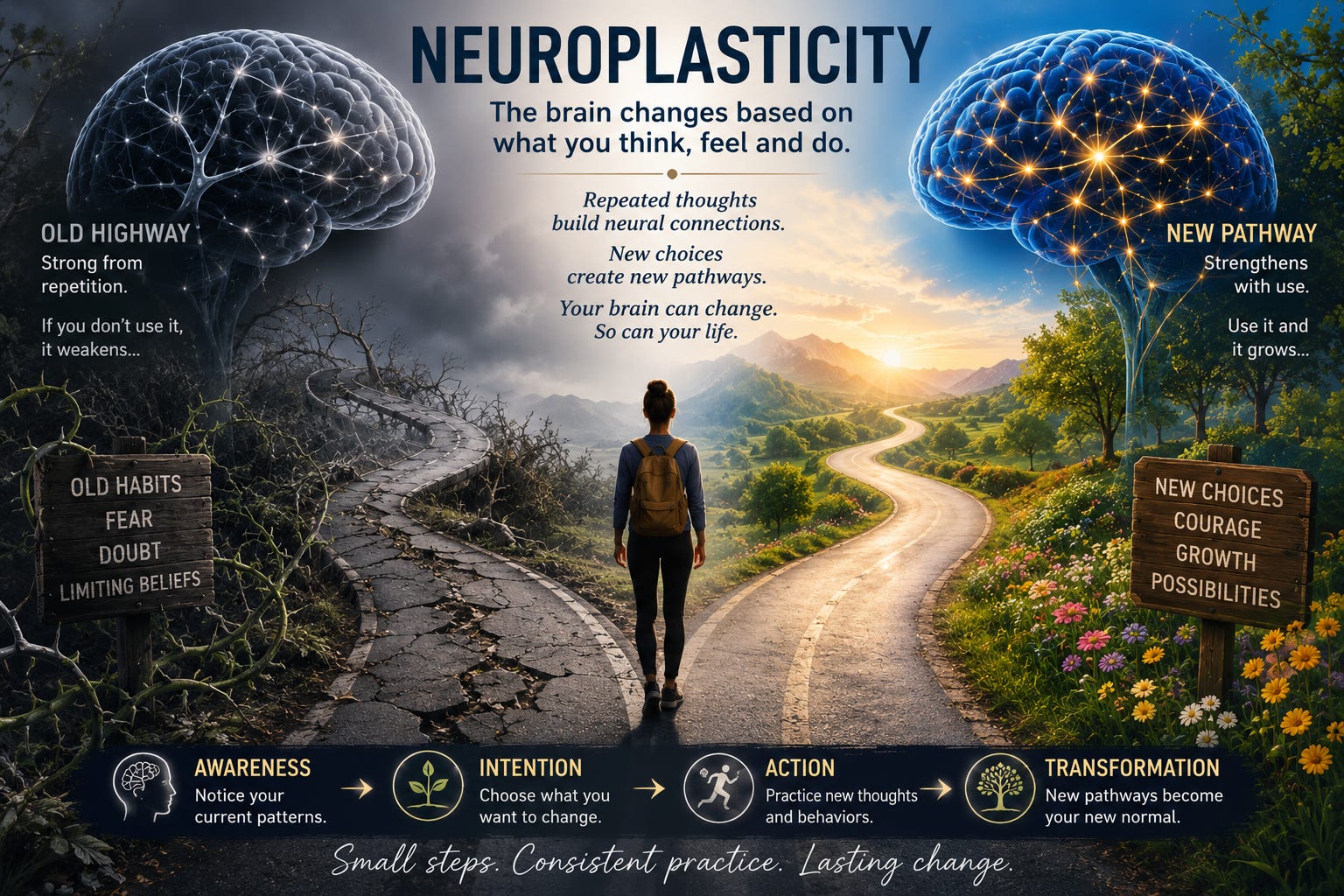
This is where imagination becomes so intriguing. Every time we intentionally rehearse a new way of thinking, feeling, or responding, we are helping to build a new neural highway. At first, it may feel awkward. The old route still calls to us because it is familiar. But with repetition, the new pathway becomes easier to travel.
Transformation rarely happens overnight.
It happens one journey at a time, until the new road becomes the one we naturally choose.
There is another side to this metaphor.
Sometimes, a highway is destroyed by an earthquake, a flood, or another catastrophic event. Traffic can no longer follow its familiar route. Engineers must design and build a new road.
Something similar can happen in the brain.
A traumatic event can disrupt the neural pathways that once helped us make sense of the world. The familiar route no longer works. We may find ourselves reacting with fear, anxiety, hypervigilance, or emotional numbness, even when danger has passed.
Healing is not about pretending the old highway was never damaged. It is about gradually building new connections—new ways of thinking, feeling, and responding. At first, these new pathways may seem unfamiliar and require conscious effort. But with repetition, patience, and the right support, they can become the brain’s preferred route.
Perhaps this is one of the most hopeful discoveries of modern neuroscience: our past may shape our brains, but it does not have to define their future.
If imagination can strengthen athletic performance, reshape neural pathways, and help us recover from trauma, perhaps we have only begun to discover its potential.
In a previous newsletter, I explored the fascinating Two Milkshakes Study, where what participants believed they were drinking influenced measurable physiological responses. It is one more reminder that our expectations can affect our biology in ways we are only beginning to understand.
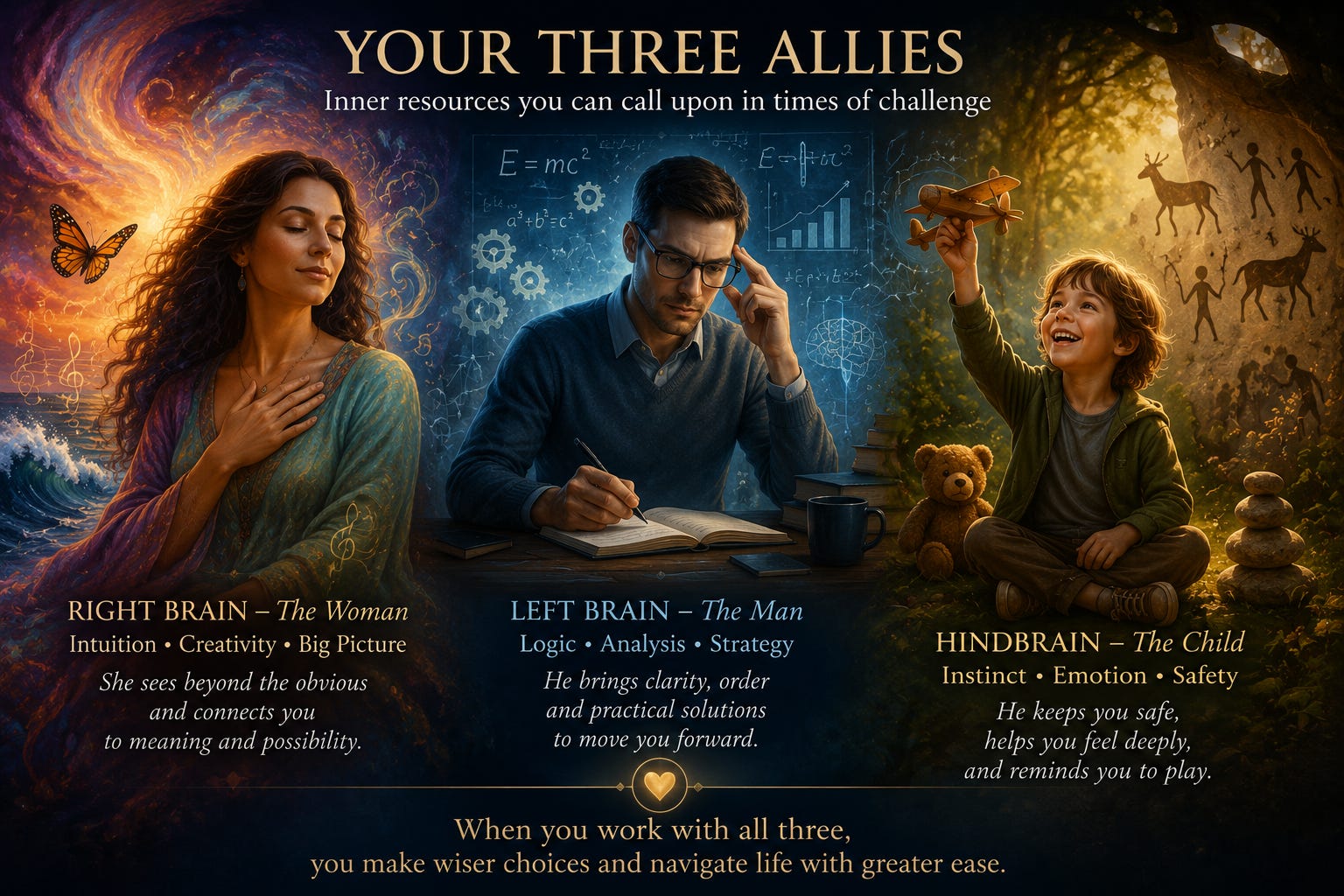
One of the concepts Dr. Kyle Oyle explores is the idea that we can intentionally cultivate inner allies—mental resources we can intentionally access when facing challenges. Whether we call them allies, inner mentors, or simply trained mental states, the principle is remarkably similar: imagination can become a practical tool rather than an idle fantasy.
Over the years, I have collected many examples from neuroscience, psychology, medicine, and my own clinical experience that point in the same direction. They don’t suggest that imagination replaces reality. They suggest that it influences how we experience reality—and how we respond to it.
Perhaps the question is no longer whether imagination matters.
Perhaps the better question is this:
How intentionally are we using it?
If this topic intrigues you, I invite you to continue exploring. You’ll find additional articles, research, and practical examples on my website.
And if you’re ready to move beyond simply understanding these ideas to actually practicing them, I’d love to have you join my 7-Day Performance Intensive. In just 15 to 20 minutes a day, you’ll begin training one of the most powerful tools you already possess—your own mind.
LIVE with PASSION, PURPOSE, and DELIGHT!
Danielle J. Duperret, ND/PhD — Bridging Science, Consciousness, and Human Resilience
📞Phone: 702-900-6730
📧 Email: danielle@healthwisdomacademy.com
🌐Website: Health Wisdom Academy
🎤Speaker Page: Speaking
📅Let’s Chat (Complimentary & Confidential): Schedule a Call
The Vault isn’t content. It’s mental fitness conditioning.
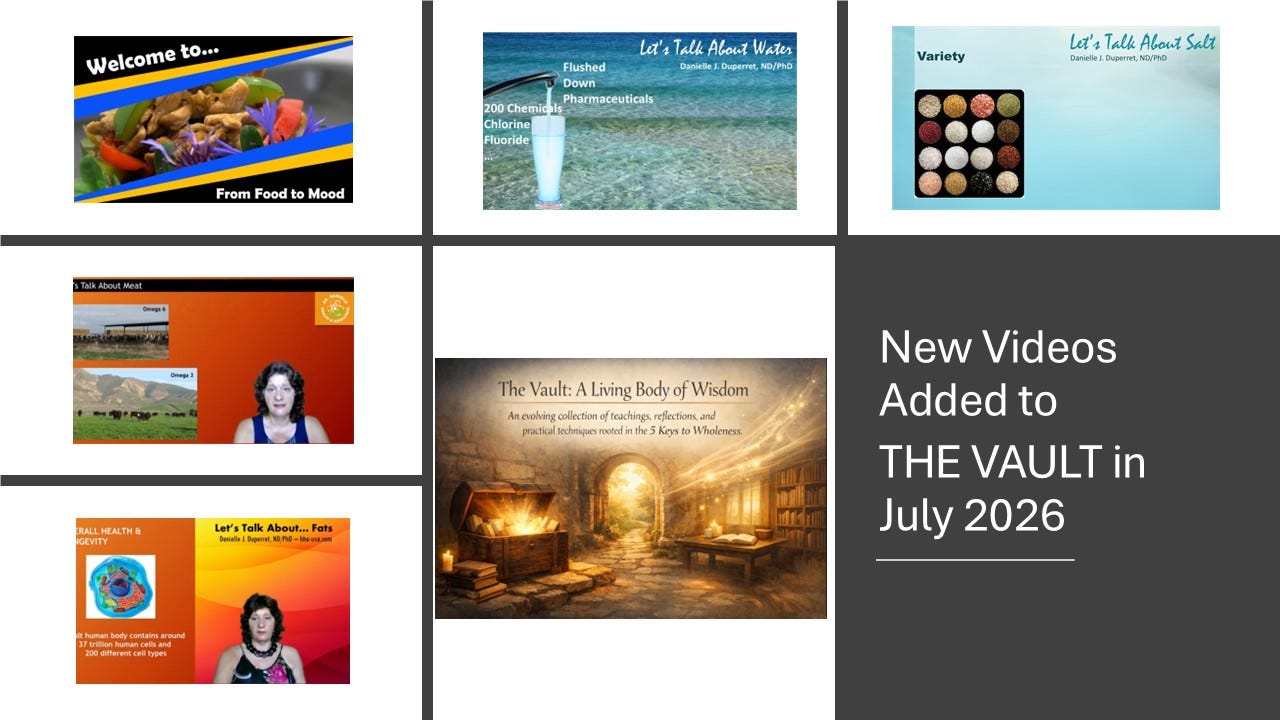
If you’d like to see what’s inside — and how it builds steadiness, resilience, and high-level mental clarity — you can
👉 Explore it here.
Paid Subscribers:
You should have received an email with instructions to access The Vault at no charge. Please check your inbox (and spam folder, just in case).
If you didn’t receive it, let me know and I’ll get you in right away.
Comments
Nothing yet. Say the first thing.
Sign in to join the conversation.