
Greetings to all,
You’ve probably heard of the cardiovascular system, the skeletal system, the nervous system, the lymphatic system, and many more.
But have you ever heard of the Healing System?
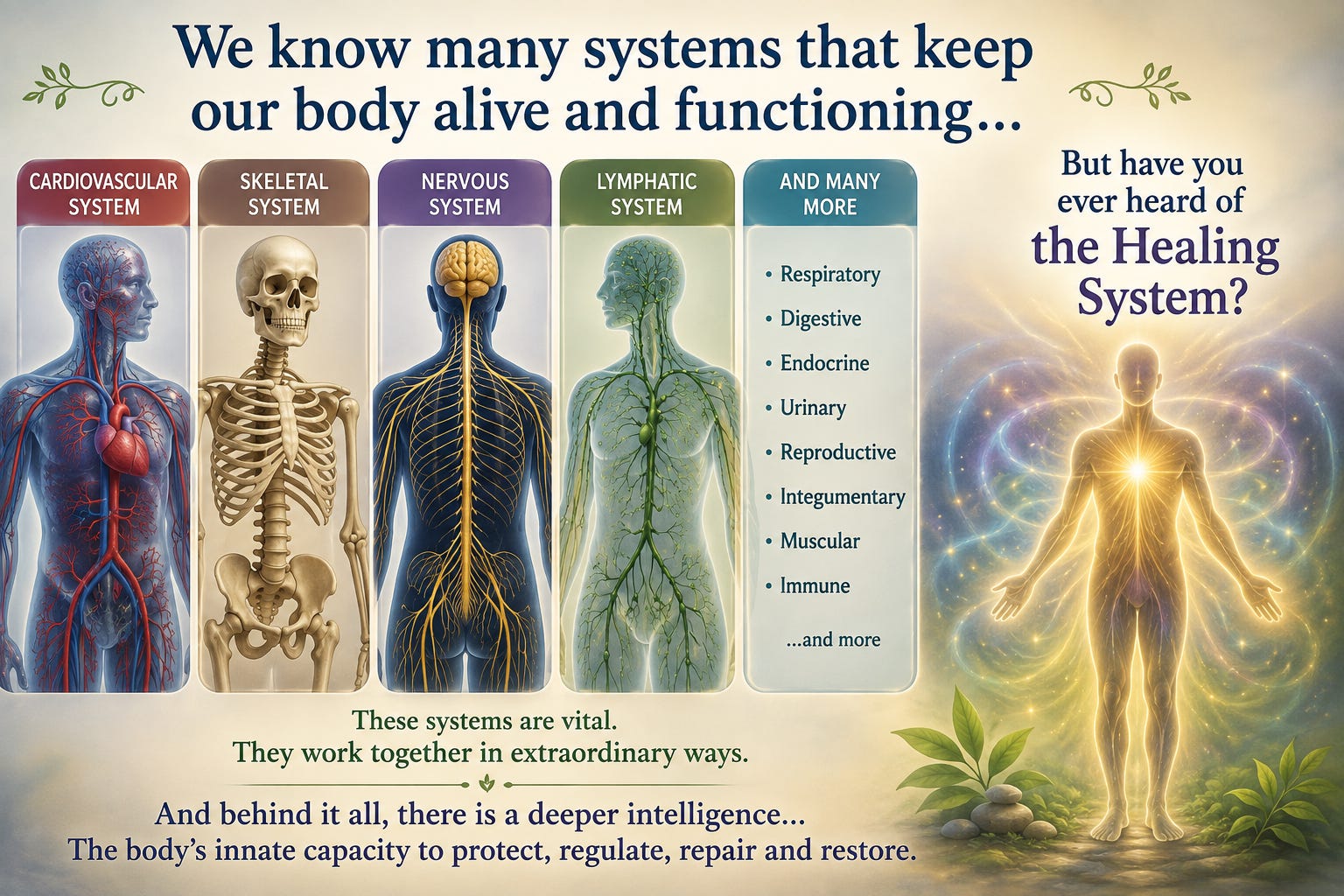
We learn about the systems that keep our bodies functioning. We study them, test them, measure them, and treat them when something goes wrong.
Yet there is another remarkable capacity within us—one we depend on every single day, often without giving it much thought:
the capacity to heal.
Go back in time, to when you were just a single cell in your mother’s womb.
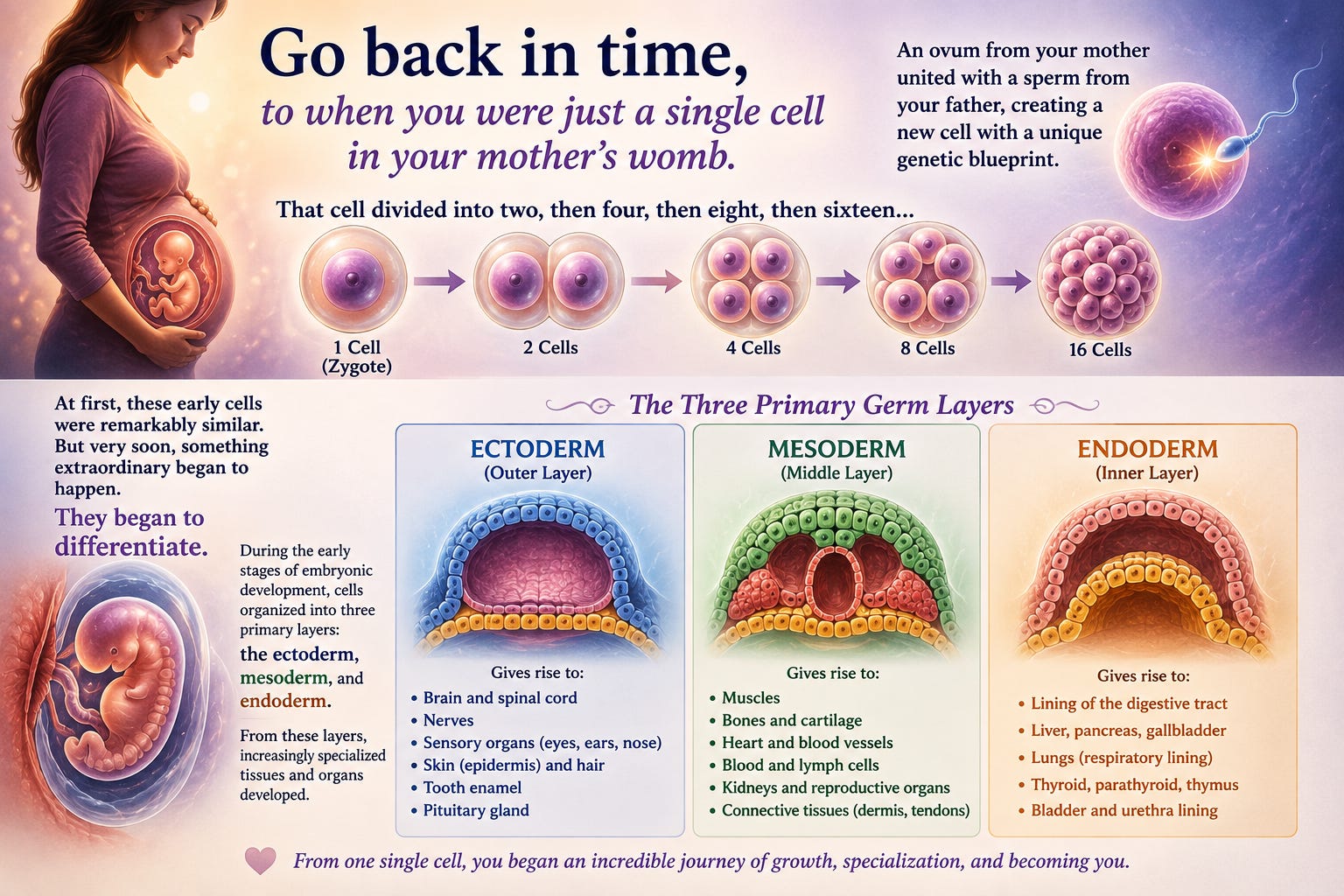
An ovum from your mother united with a sperm from your father, creating a new cell with a unique genetic blueprint. That cell divided into two, then four, then eight, then sixteen...
At first, these early cells were remarkably similar. But very soon, something extraordinary began to happen.
They began to differentiate.
During the early stages of embryonic development, cells organized into three primary layers: the ectoderm, mesoderm, and endoderm. From these layers, increasingly specialized tissues and organs developed.
Some cells became part of your brain and nervous system. Others formed your skin. Others became muscle, bone, blood, and connective tissue. Still others developed into the tissues of your digestive tract, lungs, liver, pancreas, and other organs.
Think about that for a moment.
Nobody stood over those cells giving instructions:
You become a neuron.
You become a heart cell.
You build a kidney.
You make some skin over here.
And yet, through an astonishingly complex interplay of genes, chemical signals, cell-to-cell communication, and the surrounding environment, those cells organized themselves.
A heart began to form.
A brain and spinal cord developed.
Blood vessels branched.
Bones, muscles, nerves, organs, and skin emerged.
Eventually, one fertilized cell became you.
Science has learned an enormous amount about how this happens. We can describe genes, signaling molecules, developmental pathways, and the chemical conversations occurring between cells.
But there is another question that has fascinated me for decades:
What happened to that organizing capacity after we were born?
It didn’t simply disappear.
Cut your finger, and you don’t have to consciously tell platelets to stop the bleeding, immune cells to protect the wound, or skin cells to begin repairing the damage.
Break a bone, and—given the right conditions—the body begins rebuilding it.
Every day, damaged cells are removed, tissues are repaired, and countless adjustments are made without our conscious direction.
We have names for many of the individual mechanisms involved.
But when I use the term Healing System, I am referring to the larger, coordinated capacity of the organism to protect itself, regulate itself, repair itself, and move toward balance.
And that raises a fascinating question:
If we have spent so much time learning about the cardiovascular system, nervous system, skeletal system, digestive system, and lymphatic system...
why haven’t most of us learned how to work with our Healing System?
We readily recognize systems such as the cardiovascular, nervous, and lymphatic systems because we can identify their structures, study their components, and measure many aspects of how they function.
The Healing System is different.
It is not a separate anatomical system with its own set of organs. Rather, I use the term Healing System to describe the remarkable capacity of the whole organism to protect, regulate, repair, and restore itself.
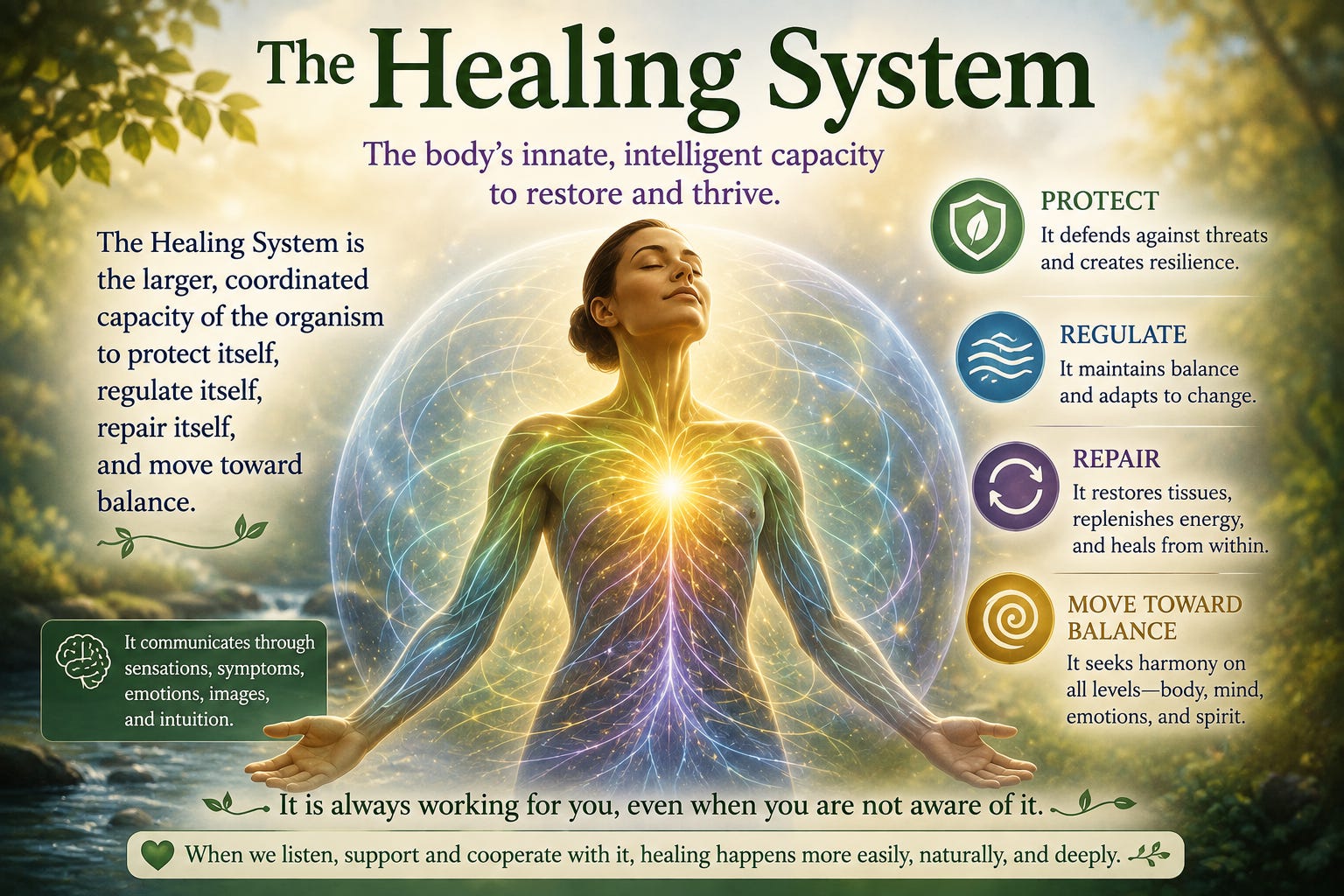
And much of that activity takes place outside our conscious awareness.
We cannot simply give our bodies verbal instructions:
Lower my heart rate.
Relax that muscle.
Increase circulation to my hands.
Repair this tissue.
Calm my stress response.
The conscious, analytical mind does not have that kind of direct access.
But more than 30 years ago, while studying with pioneers in mind-body medicine, I learned another way of approaching this remarkable inner intelligence:
Imagery is the language of the Healing System.
An image can sometimes reach where words and intellectual analysis cannot.
Imagine biting into a fresh, juicy lemon. See yourself cutting it open. Smell it. Now imagine squeezing some of that tart lemon juice onto your tongue.
Did your mouth begin to water?
There is no lemon.
Yet your body may have responded to the image of one.
That simple experience opens the door to a much larger question:
If an imagined lemon can produce a physical response, what else might the images we hold in our minds be communicating to the body?
Recently, I have been listening again to lectures by Drs. Martin Rossman and David Bresler that were recorded more than 30 years ago. These were two of the pioneers who profoundly influenced my understanding of the mind-body connection and the role of imagery in healing.
One of the lectures had a provocative title:
Can Healing Survive Medicine?
Listening to it more than three decades later was fascinating.
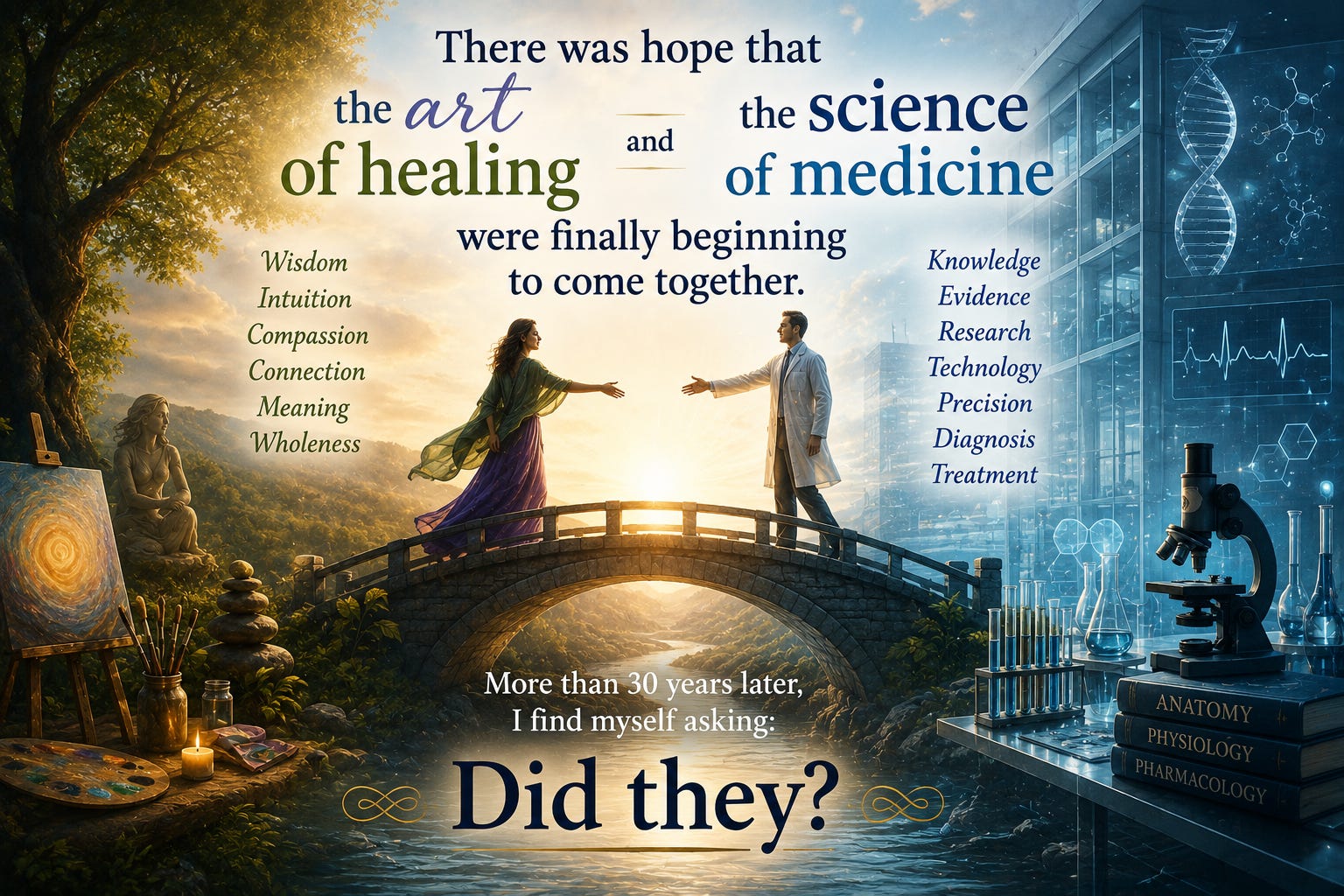
There was a sense of optimism in those recordings. Mind-body medicine was gaining recognition. Researchers were beginning to take seriously the connections among thoughts, emotions, stress, the nervous system, and physical health. There was hope that the art of healing and the science of medicine were finally beginning to come together.
More than 30 years later, I find myself asking:
Did they?
Medicine has advanced tremendously. We have extraordinary diagnostic tools, sophisticated imaging, remarkable surgical techniques, medications that can save lives, and emergency interventions that would have seemed almost miraculous not so long ago.
Dr. Rossman certainly understood their value. He spent seven years working in an emergency room. He wasn’t advocating replacing medicine with imagery. When someone is bleeding, having a heart attack, or has suffered a serious injury, medical intervention can be lifesaving.
But he also made an important distinction:
Curing and healing are not necessarily the same thing.
We can cure a disease without necessarily healing the person.
And sometimes a person can heal even when medicine cannot cure the disease.
Healing can involve the body, but it can also involve our relationship with ourselves, our fears, our losses, our relationships, our sense of meaning, and the way we experience our lives.
Perhaps the question was never whether healing should replace medicine.
It was whether the two could learn to work together.
Medicine asks, “What is wrong, and what can we do about it?”
Healing adds another question:
“What resources already exist within this person, and how can we help engage them?”
More than 30 years after Rossman and Bresler were asking these questions, I think they are still worth asking.
The work of many pioneers in mind-body medicine helped give rise to a field with a rather formidable name: psychoneuroendocrinoimmunology, or PNEI.
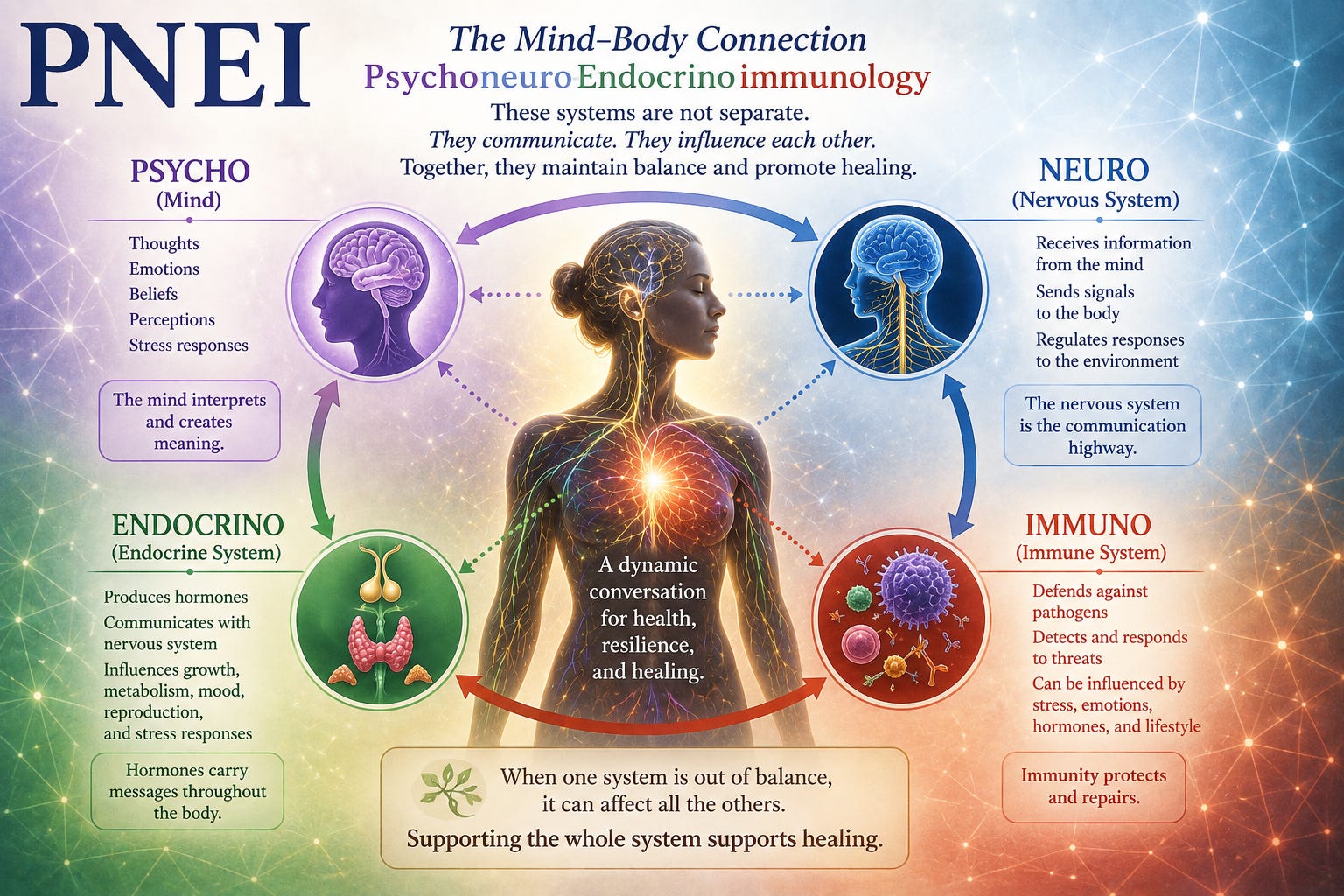
Behind that long word is a relatively simple idea: the mind, nervous system, endocrine system, and immune system do not operate independently. They are constantly communicating with and influencing one another.
Our thoughts, emotions, perceptions, and responses to stress can influence the nervous system. The nervous system communicates with the endocrine and immune systems, and those systems, in turn, send signals back to the brain. Rather than a one-way street, it is an ongoing conversation.
This helped provide a scientific framework for something mind-body practitioners had been observing for years: what happens in the mind can affect what happens in the body—and what happens in the body can affect the mind.
But Drs. Martin Rossman and David Bresler took the conversation in another fascinating direction.
Instead of simply using imagery to tell the body what we wanted it to do, they taught people to listen.
Through Interactive Guided Imagery, a person could create an image of a symptom and begin a dialogue with it.
What are you trying to tell me?
Why are you here?
What do you need?
Is there something I need to understand?
What might help?
The answers were not treated as literal medical diagnoses. They were information—images, associations, memories, emotions, metaphors, and sometimes surprisingly practical insights arising from within the person.
This was a very different relationship with the Healing System.
Instead of approaching the body as something broken that the conscious mind needed to command or fix, we became curious about what it might have to say.
Imagery became a language through which we could listen as well as speak.
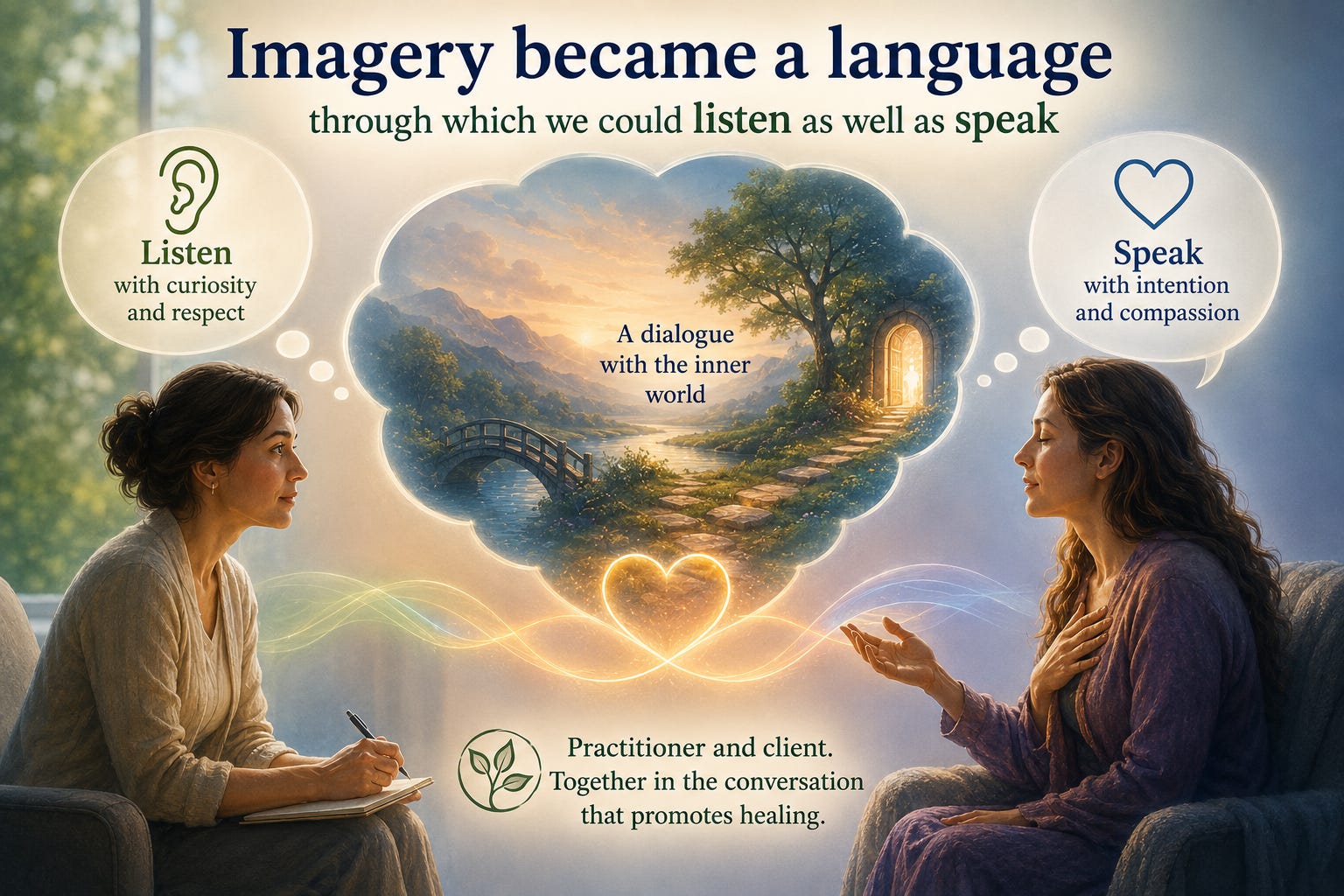
Working with InterActive Guided Imagery is fascinating because the images that emerge are deeply personal. Two people can experience a similar physical symptom and describe it in completely different ways.
Take a backache, for example.
A surgeon, accustomed to thinking anatomically, might visualize a slipped disc exactly as it would appear in the body.
Another person might see a cord with a large knot in it.
Someone else might describe a knife stabbing them in the back.
The symptom may be similar. The images are not.
And that is precisely the point.
There is no “right” image. We don’t impose an image or interpret it for the person. Instead, we become curious about the image that their mind has produced and begin a dialogue with it.
What does the knot need? Can it be loosened? What happens if we ask the knife why it is there? Does the anatomical image change when we ask what would help?
Sometimes the image changes. Sometimes it speaks. Sometimes another image appears altogether. And sometimes an unexpected memory, emotion, association, or possible solution emerges.
This is what makes the work so fascinating: we don’t know beforehand what the Healing System will show us.
You can read dozens of examples here.
Perhaps one of the reasons this kind of inner dialogue can be so surprising is that we are accustomed to thinking our way through problems.
We analyze. We research. We compare. We look for explanations. We try to figure out what went wrong and what we should do about it.
There is nothing wrong with thinking. Our analytical mind is an extraordinary tool.
But sometimes, we can think too much.
Dr. David Bresler illustrated this with a delightful little story about a centipede.
A centipede was happily walking along, effortlessly coordinating all those legs, when someone asked him:
“How do you know which leg to move first?”
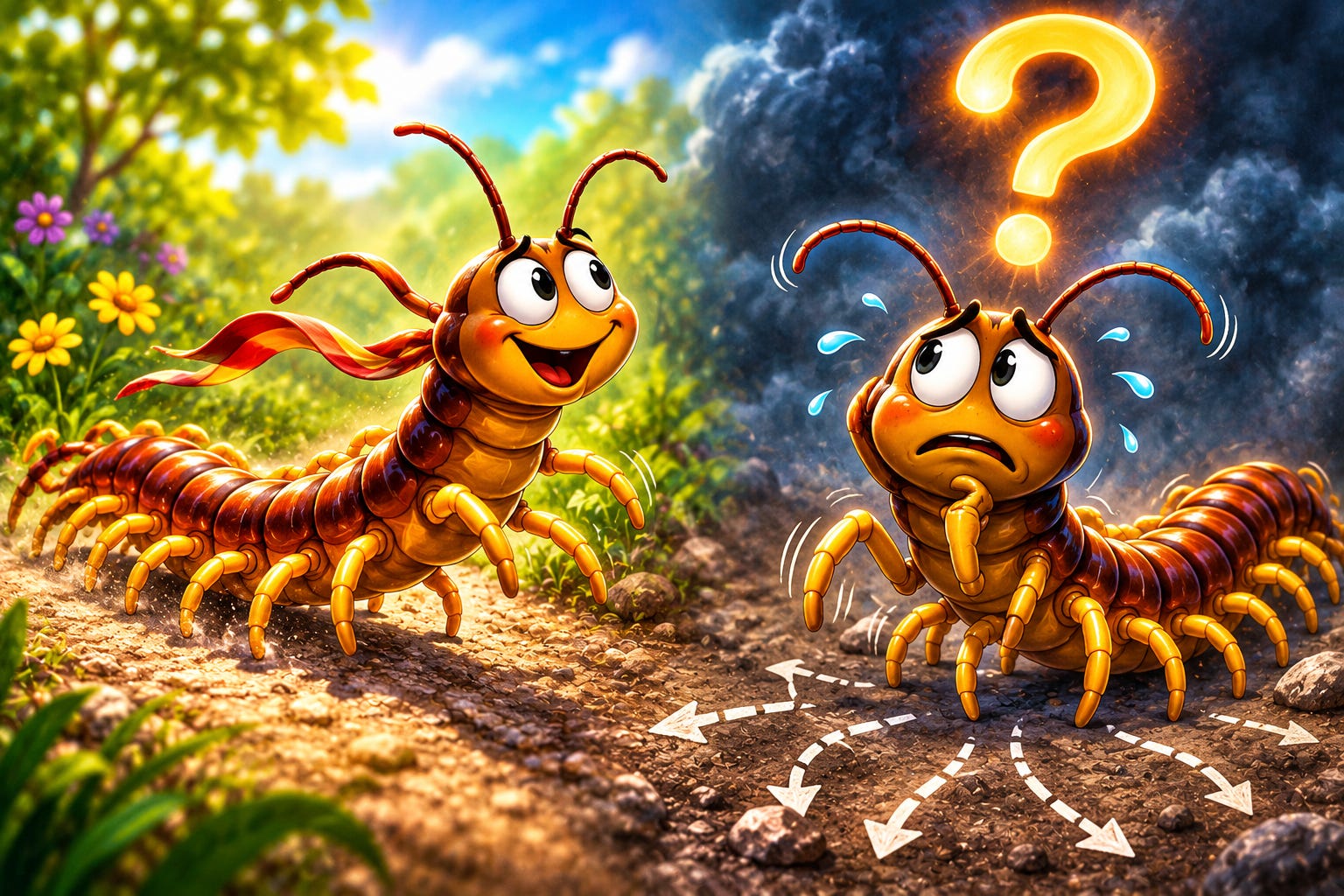
The centipede stopped.
He had never thought about it before.
So he began trying to figure it out.
Does leg number 17 move before leg number 18? What is leg number 43 doing while leg number 6 is moving? Which one comes next?
And suddenly...
the centipede couldn’t walk.
Something his body had known how to do perfectly well became almost impossible once his conscious mind tried to take over the process.
I love that metaphor.
Our analytical mind is invaluable. It helps us reason, plan, evaluate, learn, and make decisions.
But perhaps it was never meant to supervise every one of our metaphorical hundred legs.
The body has been organizing, adapting, regulating, and repairing itself since long before we had words to describe what it was doing.
Sometimes the most useful question may not be:
“How can I figure this out?”
but rather:
“What happens if I become quiet enough to listen?”
Is there a problem that has been haunting you—something you have thought about, analyzed, and tried to solve, perhaps without finding an answer?
Maybe it’s time to let the centipede stop thinking about its feet.
If you’re curious about what InterActive Guided Imagery might reveal, I invite you to contact me for a complimentary and confidential conversation.
Sometimes a different kind of conversation can open a door we didn’t even know was there.
LIVE with PASSION, PURPOSE, and DELIGHT!
Danielle J. Duperret, ND/PhD — Bridging Science, Consciousness, and Human Resilience
📞Phone: 702-900-6730
📧 Email: danielle@healthwisdomacademy.com
🌐Website:Health Wisdom Academy
🎤Speaker Page: Speaking
📅Let’s Chat (Complimentary & Confidential): Schedule a Call
The Vault isn’t content. It’s mental fitness conditioning.
If you’d like to see what’s inside — and how it builds steadiness, resilience, and high-level mental clarity — you can
👉 Explore it here.
Paid Subscribers:
You should have received an email with instructions to access The Vault at no charge. Please check your inbox (and spam folder, just in case).
If you didn’t receive it, let me know and I’ll get you in right away.
Comments
Nothing yet. Say the first thing.
Sign in to join the conversation.