
Greetings to all,
For more than forty-five years, I have been fascinated by one question:
How much influence does the mind have over our health and our lives?
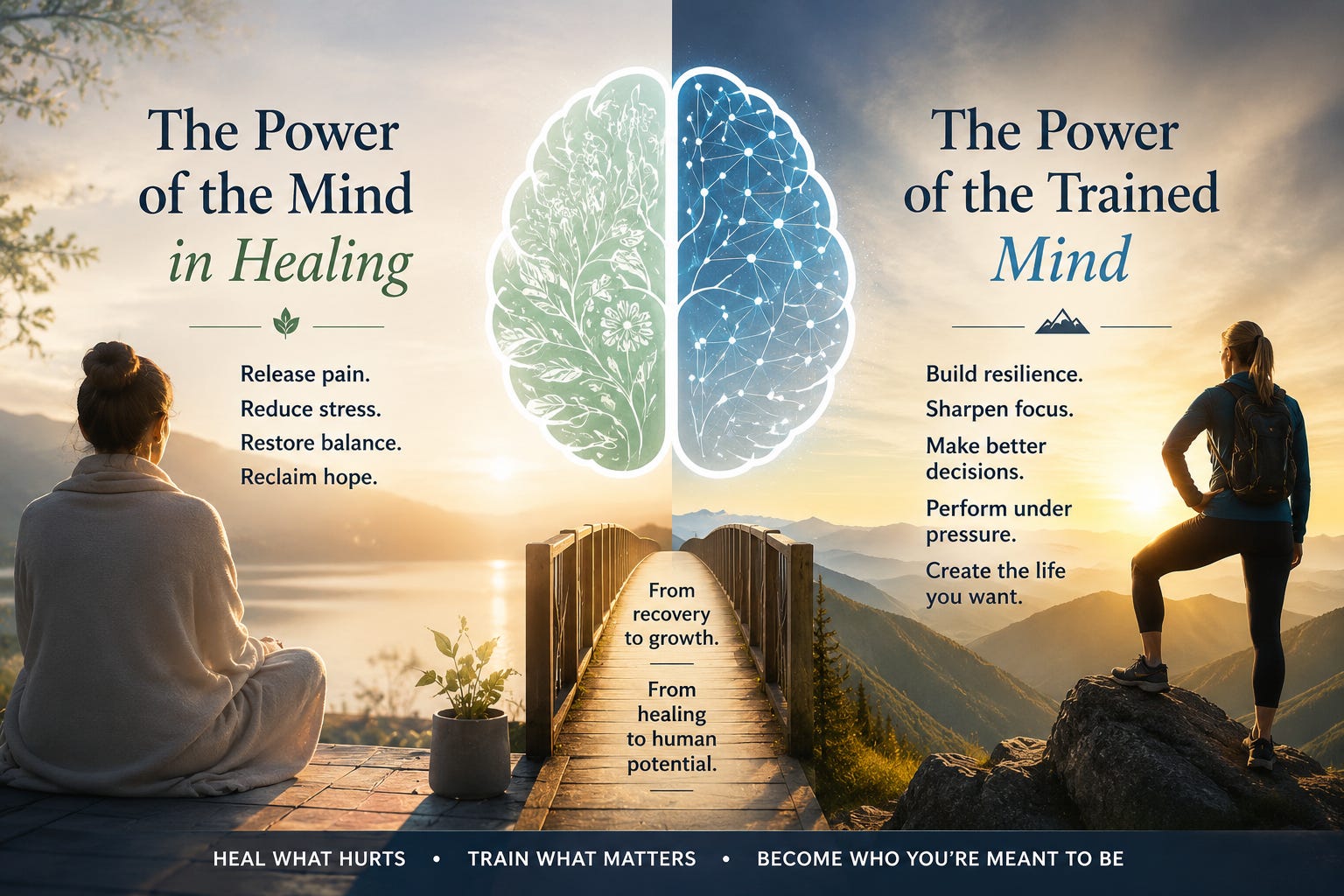
That question eventually became the focus of my PhD dissertation, The Power of the Mind in Healing. At the time, the idea that thoughts, beliefs, expectations, and mental imagery could influence the body was often dismissed. Many people considered it interesting—but hardly scientific.
Over the years, research has steadily changed that conversation. Neuroscience has shown us that the brain is remarkably adaptable. We now know that our expectations, emotions, and experiences influence not only how we think, but also how we perceive pain, respond to stress, recover from illness, and even reshape neural pathways through neuroplasticity.
Watching that scientific journey unfold has been deeply rewarding.
Yet something else began to capture my attention—not in the laboratory, but in my practice.
Again and again, I watched people come to me because they were suffering. Sometimes it was physical pain. Sometimes it was trauma, anxiety, grief, or chronic stress. Together, we would work through the problem, and many experienced profound changes. They felt better. They viewed themselves differently. They rediscovered hope. Occasionally, they surprised even themselves with what they were able to accomplish.
But after a while, I began noticing a pattern that I hadn’t expected.
Once the immediate problem had been resolved, most people simply returned to living their lives. Very few paused to ask themselves, “If these mental skills helped me here, where else might they make a difference?”
That question stayed with me.
Why wouldn’t someone who had learned to calm an anxious mind also use those same skills before an important presentation? Why wouldn’t someone who had discovered the power of mental imagery use it to prepare for a difficult conversation? Why wouldn’t a person who had learned to interrupt destructive thought patterns continue applying that ability to relationships, decision-making, leadership, or creativity?
Little by little, I realized that healing and training are not the same thing.
Healing is essential. It helps us recover from yesterday. It allows us to release needless pain—physical, emotional, and psychological—that no longer serves us. Healing restores possibilities that may have seemed lost.
But healing, by itself, doesn’t necessarily prepare us for tomorrow.
That requires training.
A healthy mind isn’t necessarily a trained mind.
Two people can possess the same knowledge, read the same books, attend the same seminars, and genuinely understand what they should do. Yet when life suddenly becomes demanding, one remains thoughtful while the other reacts automatically. One finds clarity while the other freezes.
The difference often isn’t intelligence.
It’s what has been practiced.
Athletes understand this. So do musicians, pilots, surgeons, and astronauts. They don’t train because they lack knowledge. They train because they know that, under pressure, we rarely rise to the level of our intentions. We fall back on what has become familiar through repetition.
The more I reflected on this, the more I realized that the same principle applies to everyday life.
Whether we realize it or not, our brains are always learning. Every reaction reinforces something. Every avoidance strengthens a habit. Every courageous conversation lays down another pathway. Every time we pause instead of reacting impulsively, we are quietly teaching our nervous system a different way to respond.
In other words, we are always training our brains.
The real question is not whether we are training them.
The question is: What are we training them to do?
That realization has shaped the next chapter of my work.
For many years, my passion was helping people discover the mind’s remarkable capacity to support healing. It still is. But today I find myself equally interested in another question:
How do we intentionally train the mind so that calm, clarity, resilience, and good judgment become more natural when life places us under pressure?
That question is what inspired me to create the Performance Intensive Challenge. Not because I believe everyone needs fixing, but because I believe we all continue learning for as long as we live.
Healing allows us to recover from yesterday.
Training prepares us for tomorrow.
Perhaps another way to think about it is through navigation.
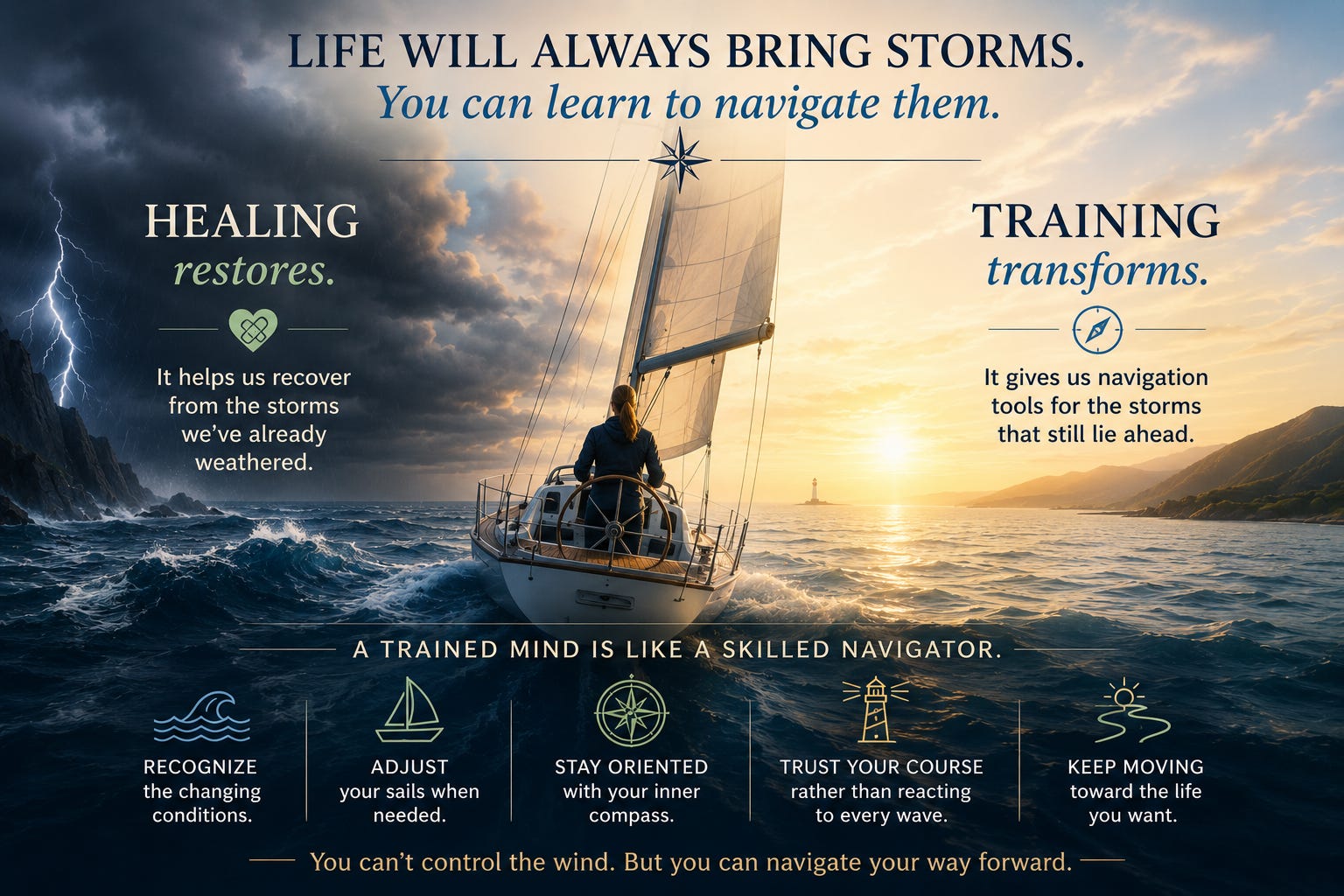
None of us can prevent every storm from entering our lives. We all encounter unexpected losses, difficult conversations, health challenges, and moments when the way forward isn’t immediately clear.
Healing helps us recover from the storms we’ve already weathered.
Training gives us navigation tools for the storms that still lie ahead.
We learn to recognize the changing conditions, adjust our course when necessary, and trust our inner compass rather than reacting to every wave.
To me, that’s what a trained mind really is—not a mind that never encounters storms, but one that has learned how to navigate them with greater wisdom, resilience, and confidence.
Perhaps both are essential—not only for living longer, but for living wiser.
I’d love to hear your thoughts.
I'd love to have you check out my 7-Day Performance Intensive Challenge. In just 15–20 minutes a day, you'll begin practicing simple exercises designed to help you recognize automatic reactions, interrupt unhelpful patterns, and build greater calm, clarity, and resilience under pressure.
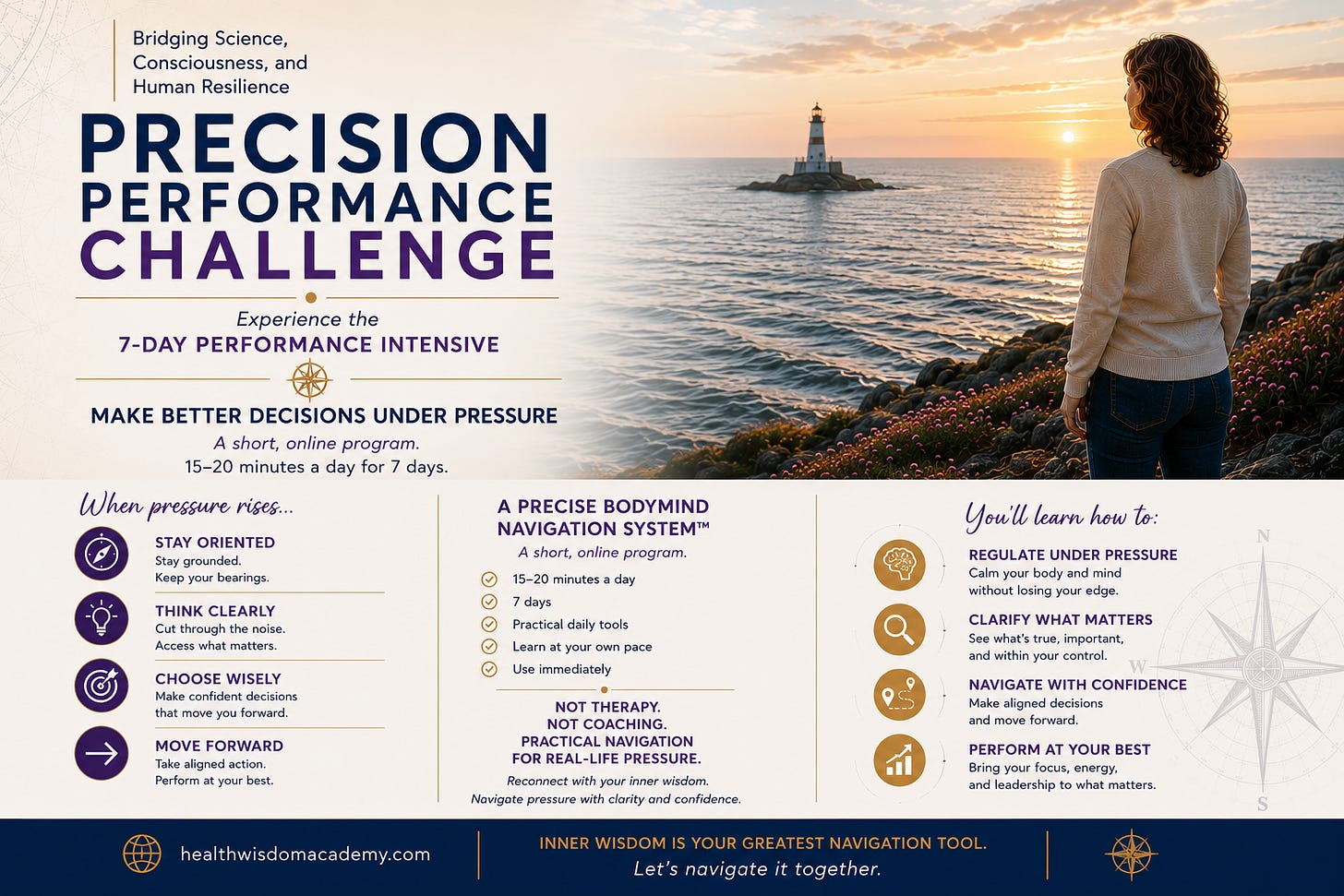
Click on the picture to learn more (or to join the Challenge).
LIVE with PASSION, PURPOSE, and DELIGHT!
Danielle J. Duperret, ND/PhD — Bridging Science, Consciousness, and Human Resilience
📞Phone: 702-900-6730
📧 Email: danielle@healthwisdomacademy.com
🌐Website: Health Wisdom Academy
🎤Speaker Page: Speaking
📅Let’s Chat (Complimentary & Confidential): Schedule a Call
The Vault isn’t content. It’s mental fitness conditioning.
If you’d like to see what’s inside — and how it builds steadiness, resilience, and high-level mental clarity — you can
👉 Explore it here.
Paid Subscribers:
You should have received an email with instructions to access The Vault at no charge. Please check your inbox (and spam folder, just in case).
If you didn’t receive it, let me know and I’ll get you in right away.
Comments
Nothing yet. Say the first thing.
Sign in to join the conversation.