
“Excellence is never an accident. It is always the result of high intention, sincere effort, and intelligent execution.” - Aristotle
It’s fair to say we all want to get better at what we do. We want to grow, improve, and feel we’re moving forward. When we look for inspiration, we often look at CEOs of big companies and assume they’ve mastered it. While there’s much to learn from them, I believe the real key to growth lies in the effort we each put into learning and improving a little every day.
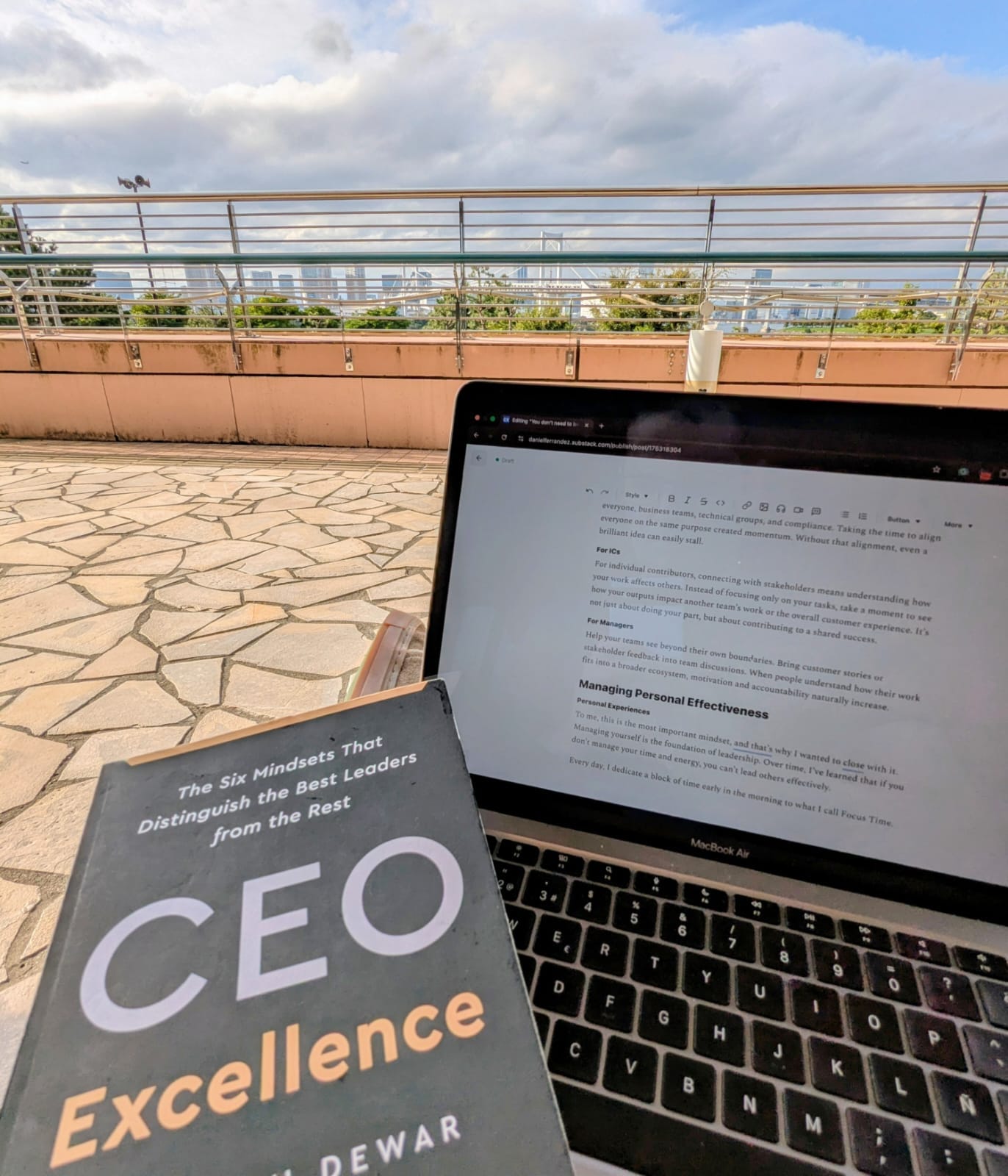
That’s why I decided to dive into CEO Excellence and the more I read, the more I recognized patterns I had already lived, working inside Japanese corporations for over a decade, where many of these leadership principles aren't frameworks. They're just how things are done. The book analyzes six competencies that define great CEOs. I will not say this is a light read, it is dense, but it’s full of valuable lessons. In these two articles, I share what I learned and how anyone, regardless of title, can apply these mindsets to grow both professionally and personally.
In Part 1, I explored the first three: setting the direction, aligning the organization, and mobilizing leaders.
Link to Part 1: https://substack.com/home/post/p-159112191
In this second part, I’ll go through the last three: engaging the board, connecting with stakeholders, and managing personal effectiveness, adding some of my own experiences along the way.
Personal Experiences
In the first Japanese company I worked for, I was taught that making a habit of sharing progress regularly was essential. At first, I didn’t quite understand why it was needed. I thought results should speak for themselves. But later, when I started to hold management positions, I realized the importance of engaging regularly with stakeholders.
Sometimes I would assign a project or task to a team member and only check in near the end. It worked at times, but other times I’d find out about challenges too late. I learned that this wasn’t about control, it was about alignment. Regular check-ins ensure that everyone stays updated on changing priorities or variables. They also require managers to be concise and clear about goals and expectations so team members understand exactly what success looks like.
From a manager’s perspective, I also learned how much communication can get lost between leadership and operational teams. Acting as a bridge between both sides became one of the most valuable (and challenging) things I have experienced. It helped leadership understand the challenges my members were facing with clients, and helped my team understand leadership’s direction and reasoning. Finding that middle ground where everyone moves forward together is what true engagement means. Also, I would say what makes middle-management work particularly rewarding.
For ICs
For individual contributors, engaging your own “board” means proactively communicating with your manager or stakeholders, even if they haven’t asked. Don’t wait for them to check in. Share progress, flag risks early (very important!), and invite feedback before decisions are final. It shows accountability and builds trust.
For Managers
Create a rhythm of open communication. Encourage updates not as a formality, but as a way to strengthen collaboration. And when your team reports progress, listen closely and guide them with clarity.
Personal Experiences
In large organizations, you rarely operate alone. At Rakuten, especially while working on AI-related projects, I learned that aligning with stakeholders is crucial to make things work. I often tell my team that even the best idea won’t move forward without alignment.
For example, when we developed GenAI solutions for different business units, progress didn’t come from the technology alone. It came from how well we involved everyone, business teams, technical groups, and compliance. Taking the time to align everyone on the same purpose created momentum. Without that alignment, even a brilliant idea can easily stall.
For ICs
For individual contributors, connecting with stakeholders means understanding how your work affects others. Instead of focusing only on your tasks, take a moment to see how your outputs impact another team’s work or the overall customer experience. It’s not just about doing your part, but about contributing to a shared success.
For Managers
Help your teams see beyond their own boundaries. Bring customer stories or stakeholder feedback into team discussions. When people understand how their work fits into a broader ecosystem, motivation and accountability naturally increase.
Personal Experiences
To me, this is the most important mindset, and that’s why I wanted to close with it. Managing yourself is the foundation of leadership. Over time, I’ve learned that if you don’t manage your time and energy, you can’t lead others effectively.
Every day, I dedicate a block of time early in the morning to what I call Focus Time. At first, honestly, I used it more as a backup slot than a real focus time, something I could replace if an urgent meeting appeared. But recently, I started treating it less as a flexible time slot and more as non-negotiable, as important as any other meeting. During that time, I reflect, prioritize, and think from a higher perspective. It helps me separate what’s truly important from what’s merely urgent.
For ICs
For individual contributors, managing personal effectiveness means protecting time for deep thinking and learning. Don’t let your calendar control your day. Spend a few minutes every morning reviewing what’s most impactful and what can wait.
For Managers
For managers, it’s about setting the example. If you’re always running from one meeting to another without reflection time, your team will follow that pattern. Protecting your focus time shows others that discipline and self-management are part of high performance.
The more I grow in my career, the more I realize leadership isn’t granted by title, it’s earned through consistency. And that consistency comes from staying curious, being intentional, and never stopping the process of learning and reflection.
Really, you don’t need permission to lead. You just need the habit of doing it every day. Remember, you’re the captain of your own boat, you decide the direction, the pace, and the harbors you want to explore along the way.
Comments
Nothing yet. Say the first thing.
Sign in to join the conversation.